Which Outdoor Activities Are Kids Sunglasses Suitable For?
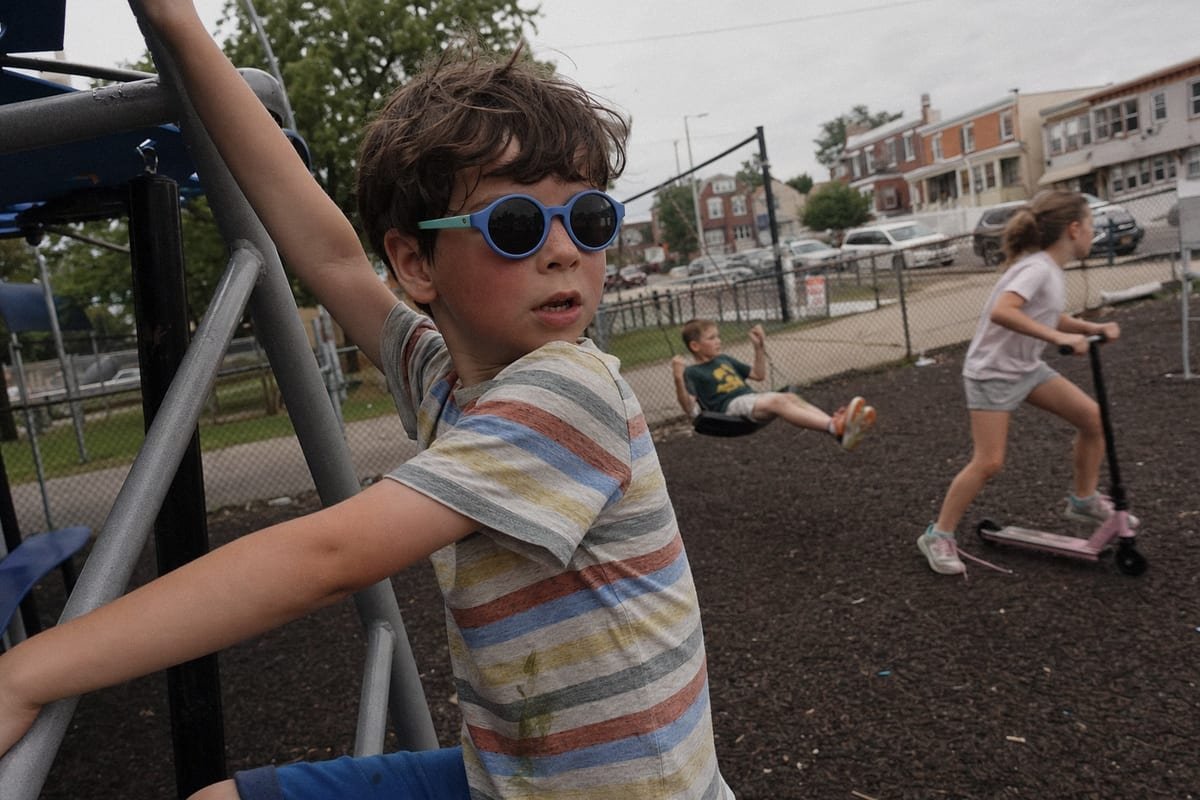
Kids sunglasses often break on the first bike ride. I have seen countless returned samples on our production line in Taizhou. Parents blame the brand, buyers lose reorders, and children lose UV protection when it matters most.
Kids sunglasses are suitable for nearly all outdoor activities, including playground play, cycling, running, baseball, soccer, hiking, beach days, boating, fishing, and snow sports. The key is matching lens features and frame durability to the activity, with 100% UVA/UVB protection as the non-negotiable baseline.
The real question is not whether kids sunglasses work outdoors. It is which features fit which activity. Let me break this down the way we do it for our B2B clients.
Which sports and outdoor activities can my kids sunglasses withstand without breaking?
A distributor in Australia once sent me a box of his previous supplier's frames, all snapped at the hinge. His customers' kids were cycling and playing soccer, not sitting still. That failure shaped how we test every style.
Kids sunglasses built from flexible TR90 or TPEE materials can withstand cycling, running, baseball, soccer, playground climbing, hiking, and beach play without breaking. Rigid, cheap acrylic frames typically survive only low-motion activities like walks, car rides, and casual park visits.
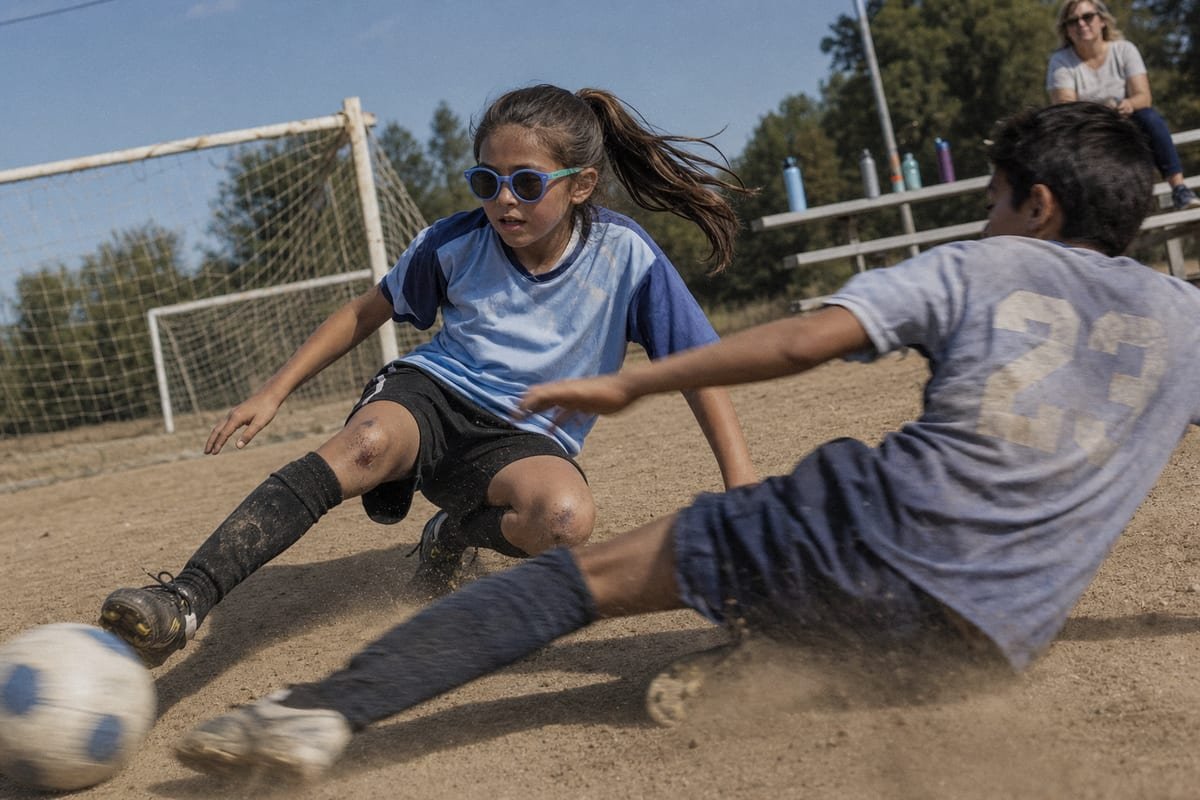
The honest answer depends on motion intensity. At our factory, we group outdoor activities into three tiers, and we advise buyers to match frame construction to the tier their customers actually live in.
The three activity tiers we use in product development
Low-motion use covers strolls, errands, car rides, and quiet park time. Almost any well-made frame survives here. The priority is UV400 protection and comfort, not toughness.
Moderate-motion play covers playgrounds, school field days, hiking trails, and general running around. Frames get dropped, sat on, and stuffed into backpacks. This tier demands flexible materials that bend and bounce back.
High-motion sports cover cycling, skateboarding, baseball, soccer, and snow play. Here you need impact-resistant polycarbonate lenses, a wraparound frame design, and a grip that survives sweat and sudden direction changes.
| Activity tier | Example activities | What breaks cheap frames | What survives |
|---|---|---|---|
| Low-motion | Walks, car rides, picnics | Sitting on them, drops | Most quality frames |
| Moderate-motion | Playground, hiking, recess | Twisting, backpack crushing | Flexible TR90/TPEE frames |
| High-motion | Cycling, baseball, soccer, sledding | Falls, ball impact, collisions | Wraparound sport frames with polycarbonate lenses |
In our 15 years making children's eyewear, the failure point is almost never the lens. It is the hinge and the temple. That is why we pair Façades en TR90 1 with TPEE temples on many of our roughly 800 styles. The material flexes instead of snapping when a toddler twists it or a nine-year-old crashes a bike. One important caveat: for contact sports 2 like basketball, or high-risk positions in soccer, sunglasses are not enough. Sports goggles or eye guards are the safer recommendation, and I tell buyers to say so honestly in their marketing.
How do I choose lens features that protect my customers' children during outdoor play?
Lens selection is where I see the biggest gaps in buyer briefs. Many purchase orders I receive specify color and shape in detail, then say nothing about UV rating or polarization. We always push back and ask about the end use first.
Choose lenses with certified UV400 protection first, since children's developing eyes absorb more UV than adult eyes. Add polarized lenses for water, snow, and beach environments where glare reduction matters, and specify impact-resistant polycarbonate for cycling and ball sports.

Pediatric eye health is the reason this matters so much. Children's eyes are still developing, and their lenses filter less UV than adult eyes 3 do. Damage is cumulative. Every sunny recess, every bike ride, every beach afternoon adds up. That is why eye-care specialists insist on 100% UVA/UVB blocking as the baseline, regardless of price or tint.
Tint darkness does not equal protection
This is the single most common misconception I correct for new buyers. A very dark lens without proper UV coating is actually worse than no sunglasses. The dark tint dilates the child's pupils 4, letting more unfiltered UV reach the retina. Always specify UV400 protection in writing on your purchase order, and ask your supplier for lens test documentation.
Quand la polarisation justifie son coût
Les verres polarisés cut reflected glare from flat surfaces. They matter most in these settings:
- Beach and coastal play, where glare bounces off both water and sand
- Boating and fishing, where reflected light off water strains young eyes for hours
- Snow activities like sledding and skiing, where high UV reflectivity can cause photokeratitis, so snow blindness prevention becomes a genuine safety issue
- Bright pavement during summer city play
For everyday playground use, standard verres UV400 5 are sufficient. For a water sports safety or winter line, polarized lenses are worth the upgrade, and families increasingly search for them by name.
| Lens feature | Idéal pour | Skip it when |
|---|---|---|
| protection UV400 | Every activity, always | Never skip this |
| Les verres polarisés | Beach, boating, fishing, snow | Budget everyday lines with limited outdoor glare |
| Impact-resistant polycarbonate | Cycling, baseball, soccer, skateboarding | Low-motion casual wear only |
| Mirrored coating | Bright snow and open-water conditions | Indoor-outdoor transitional use |
One more emerging niche worth noting: some of our clients now request gentle tints for sensory regulation 6, helping neurodivergent children manage visual overstimulation in busy outdoor settings. It is a small but growing category, and lens choice drives it entirely.
What frame materials keep kids sunglasses comfortable and secure during active movement?
Comfort is the trade-off I weigh every single day when we develop a new style. A frame can be indestructible, but if it pinches behind the ears, the child pulls it off within minutes, and all that UV protection sits in a backpack.
TR90 and TPEE are the best frame materials for active kids because they are lightweight, flexible, hypoallergenic, and shatter-resistant. Combined with rubberized temple grips, snug wraparound geometry, and optional adjustable elastic straps, they stay secure during running, cycling, and climbing.

Weight comes first. A child's nose bridge is small and still forming. Heavy frames slide down constantly, and kids compensate by tilting their heads or just removing the glasses. TR90 is a thermoplastic that weighs noticeably less than traditional acetate, so the frame almost disappears on the face. TPEE goes further. It is a soft, rubber-like elastomer we use for temples and full toddler frames, because it can be bent nearly flat and still spring back.
Why we avoid glass and metal for children
Glass lenses shatter into sharp fragments on impact. Metal frames bend permanently, develop sharp edges, and get cold or hot outdoors. Neither belongs on an active child's face. Lightweight plastic frames with impact-resistant polycarbonate lenses are the accepted safe standard across the industry, and it is the only combination we recommend for youth sports eyewear.
Fit features that keep frames in place
Security during movement comes from small design details working together:
- Wraparound frame design that follows the head's curve, adding side coverage and grip.
- Rubberized temple tips that hold on light sweat instead of slipping.
- Molded or soft nose pads sized for low pediatric nose bridges.
- Adjustable elastic straps for toddlers and for high-motion sports where slipping is unacceptable.
- Correct sizing by age band, because a frame that fits a seven-year-old will bounce off a three-year-old.
There is a pleasant bonus here for eco-conscious brands. Our TPEE and TR90 materials 7 are environmentally friendly, and buyers serving sustainability-focused families in Europe and Japan increasingly ask about material sourcing as part of their brand story. A wraparound fit also acts as a physical shield against wind, dust, and airborne pollen, which several of our clients now highlight for allergy-season marketing.
Can I source one flexible style that suits multiple outdoor activities for my brand's collection?
A Japanese kids' brand asked me exactly this last year. They wanted one hero style that could carry their whole summer campaign, from playground to bike path to beach. We built their answer from our existing catalog, and it is a strategy I now recommend often.
Yes. A flexible TR90 frame with TPEE temples, UV400 polarized lenses, and a secure wraparound or snug rounded fit covers playground play, hiking, cycling, beach days, and casual sports in one SKU. Only specialized sport and snow niches need a dedicated second style.
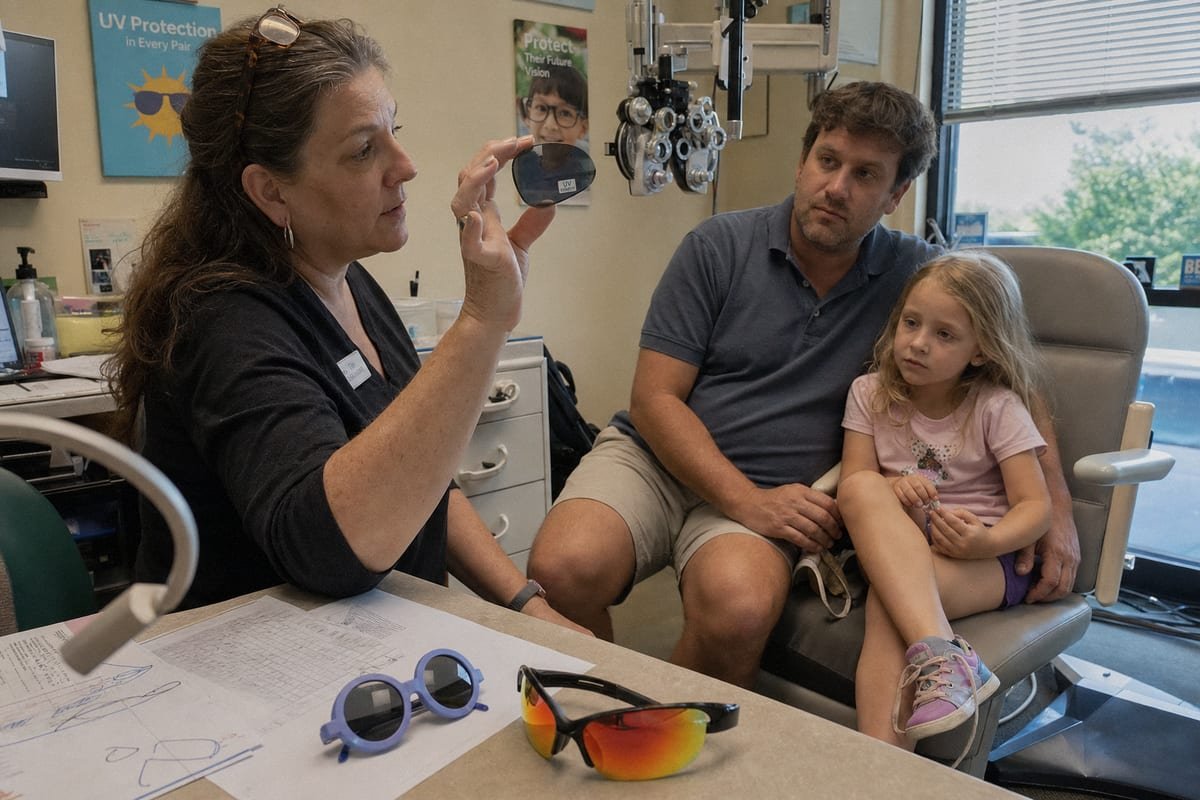
A true multi-use style reduces inventory risk, simplifies your marketing message, and matches how families actually behave. Parents buy one pair and expect it to survive everything. The trend data supports this too: multi-use kids sunglasses that move from park to bike ride to beach day are one of the strongest current consumer preferences.
The two-style collection strategy
In practice, I advise most new brands to launch with two complementary silhouettes rather than one. Consider the two designs we ship most often:
| Collection role | Design profile | Activities covered | Ideal age focus |
|---|---|---|---|
| Everyday hero style | Soft rounded pastel frame, flexible matte plastic, dark UV400 lenses | Playground, park, walks, beach, car rides, casual play | Toddler to early school age |
| Active sport style | Wraparound shield lens, mirrored gradient coating, rubberized temple grips | Cycling, running, field sports, sledding, boating | School age and older kids |
The rounded everyday style wins on cuteness and all-day comfort. The wraparound sport style wins on coverage, glare reduction, and stay-put fit at speed. Together, they cover essentially every outdoor scenario a family encounters in a year.
How sourcing from existing molds lowers your risk
This is where our model helps buyers directly. With around 800 existing styles at our Taizhou factory, a brand can select proven shapes, then customize colors, logos, lens specs, and retail packaging through our OEM/ODM process. There is no heavy mold investment before you know what sells. You can test a multi-activity hero style in one market, read the sell-through, then expand into polarized beach editions or strap-equipped toddler versions from the same platform. Our clients across 20-plus countries have used this route to launch faster and reorder with confidence, because the frames were already validated for flexibility, comfort, and durability before their logo ever touched them.
Conclusion
Kids sunglasses fail when features do not match the activity. Match UV400 lenses, flexible frames, and secure fit to real play, and one smart collection protects children everywhere outdoors.
Notes de bas de page
1. Technical details on the high-performance polyamide material used for lightweight, flexible eyewear frames. ↩︎
2. Defines the high-impact activity category where standard sunglasses are insufficient for eye safety. ↩︎
3. Official resource for pediatric eye health standards comparing children’s vision development to adult eyes. ↩︎
4. Medical explanation of how the pupil reacts to light and the risks of unfiltered UV exposure. ↩︎
5. Authoritative guidance on UV protection standards for maintaining long-term eye health in children. ↩︎
6. Explains sensory processing needs and how environmental adjustments support neurodivergent children. ↩︎
7. Overview of thermoplastic elastomers, highlighting their flexibility and durability for high-motion product applications. ↩︎
Plus d'articles que vous pourriez aimer


Vous recherchez un partenaire fiable en lunetterie pour enfants ?
Explorez plus de 800 styles prêts et un support OEM/ODM complet adapté à votre marque.
Contactez-nous English
  Español de México
  Deutsch
  Français
  日本語
日本語  العربية
  Português do Brasil