When Would the TGA Classify Imported Kids’ Optical Frames as Class I Devices in Australia?
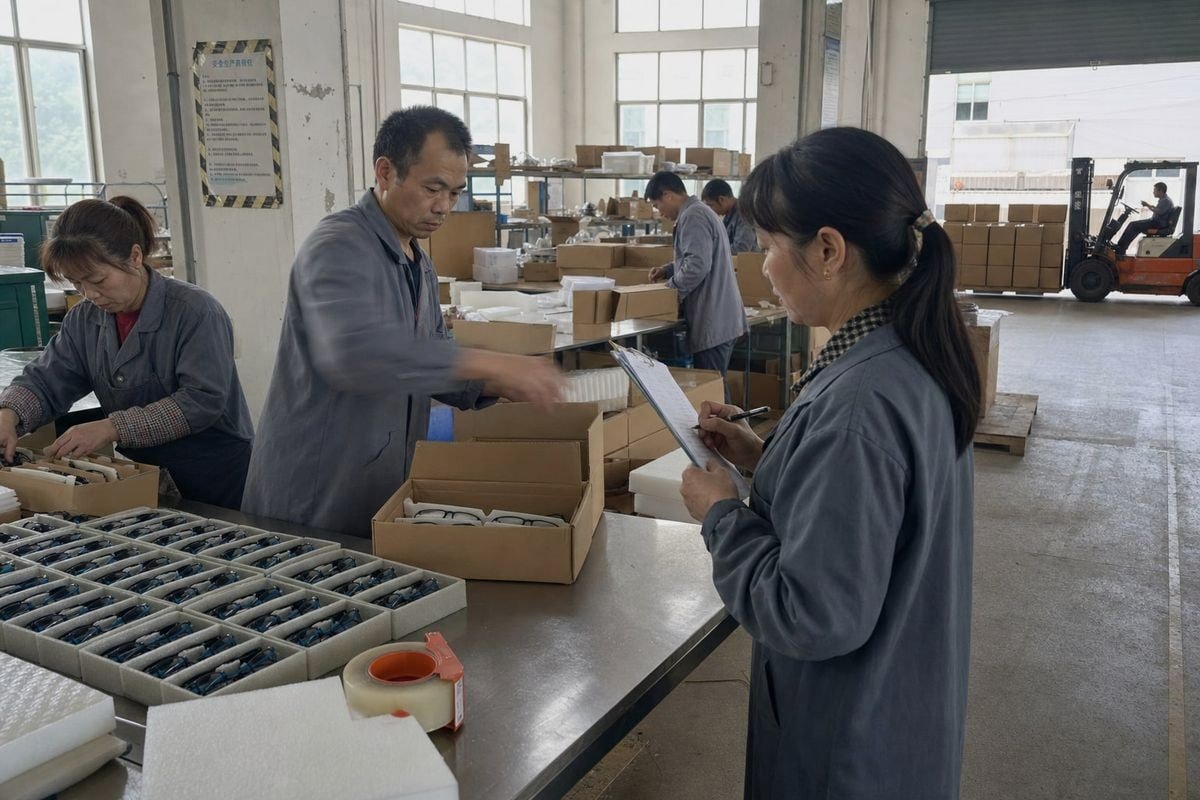
Imported kids’ optical frames confuse many of our Australian buyers children’s product safety standards 1. On our production line in Taizhou, this TGA question comes up before almost every first shipment we prepare.
The TGA generally does not classify imported kids’ optical frames as Class I devices. Since June 2024, frames supplied without lenses are excluded goods under Australian medical device regulation. Only prescription lenses, or frames marketed with a medical intended purpose, fall into the Class I pathway.
That short answer hides some important detail. The wrong assumption can stall a shipment at customs or delay a retail launch. Let me walk you through how the rules actually work, step by step.
What criteria does the TGA use to determine if my kids' optical frames qualify as Class I devices?
A procurement manager from Melbourne once asked me to stamp "Class I medical device" on cartons of our TR90 2 frames. I had to explain why that label would actually be wrong.
The Therapeutic Goods Administration uses intended purpose, risk level, invasiveness, and duration of use to classify devices. Frames without lenses have no therapeutic purpose, so they sit outside medical device regulation entirely. Prescription spectacle lenses, by contrast, are Class I because they correct refraction.
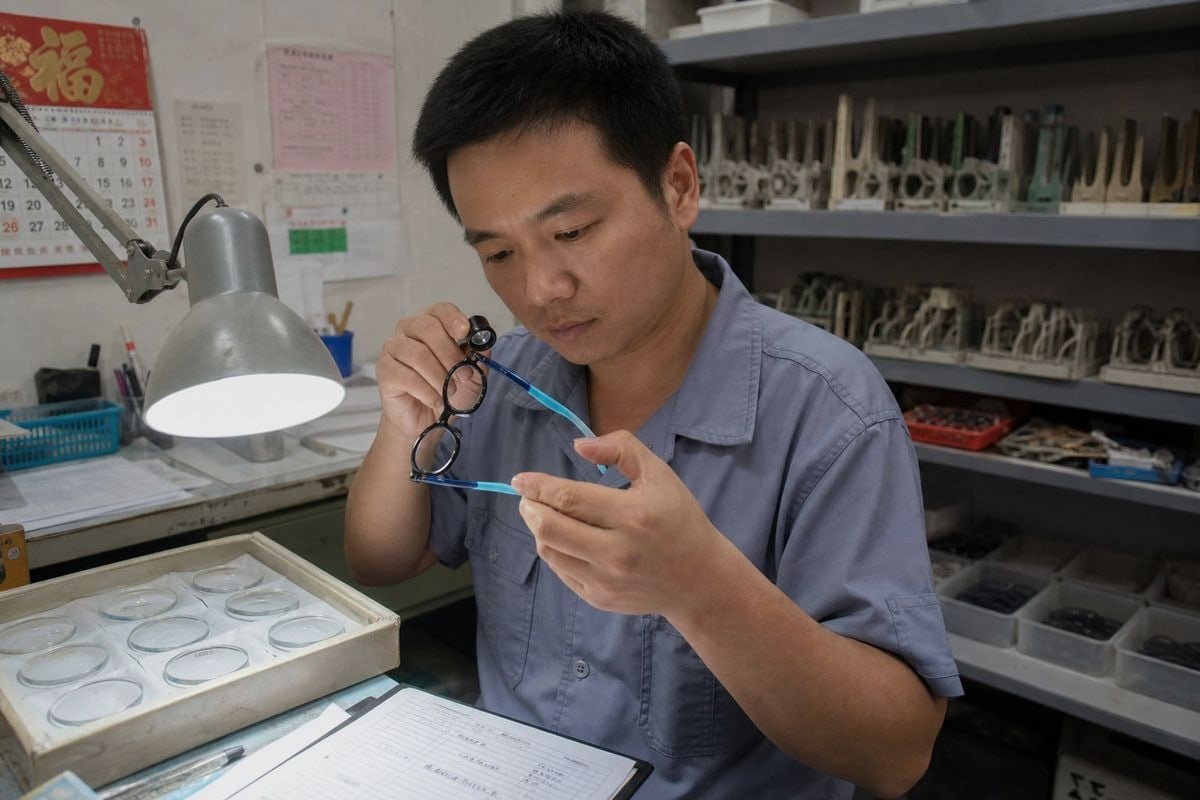
The legal starting point is the Therapeutic Goods Act 1989 3. Under that Act, a product is only a medical device if it has a medical intended purpose 4. This means diagnosis, treatment, monitoring, or correction of a condition. A bare frame does none of those things. It simply holds lenses. So the TGA treats it as a consumer product, not a therapeutic good.
This was made even clearer in mid-2024. Spectacle frames supplied without lenses became formally excluded goods. Excluded goods do not need Australian Register of Therapeutic Goods 5 listing at all. Historically, some in the industry treated frames as low-risk Class I items. That older view no longer applies.
How the risk classification ladder works
The TGA uses a risk classification system 6 with several tiers. Class I is the lowest-risk tier. Here is how optical products map onto it:
| Product | TGA status | Pourquoi |
|---|---|---|
| Kids' frames without lenses | Excluded goods | No therapeutic intended purpose |
| Prescription spectacle lenses | Class I medical device | Corrects refractive error |
| Complete prescription spectacles | Regulated via the lens component | The lens carries the medical function |
| Non-prescription spectacles (fashion demo lenses) | Consumer product | No corrective claim |
Why intended purpose can still pull a frame in
There is one trap. The TGA assesses intended purpose from labels, instructions, advertising, and technical files. If your website claims a frame "treats" or "corrects" a vision condition, you may argue the product into the medical device framework yourself. In our fifteen years of exporting children's eyewear to more than twenty countries, we have seen marketing copy cause more regulatory trouble than the physical product ever did. Keep frame descriptions focused on fit, comfort, durability, and children’s eyewear safety. Leave medical claims to the dispensing optician who fits the prescription lenses.
How can I confirm my TR90 frames meet Australian regulatory requirements before importing?
The trade-off we weigh most often in our workshop is not price versus quality. It is documentation depth versus launch speed, and Australian buyers feel this tension keenly.
Confirm compliance by verifying three things: your frames ship without prescription lenses, your marketing makes no therapeutic claims, and the product meets Australian consumer law and children's product safety standards. If those hold, no ARTG inclusion or conformity assessment is required for the frames.
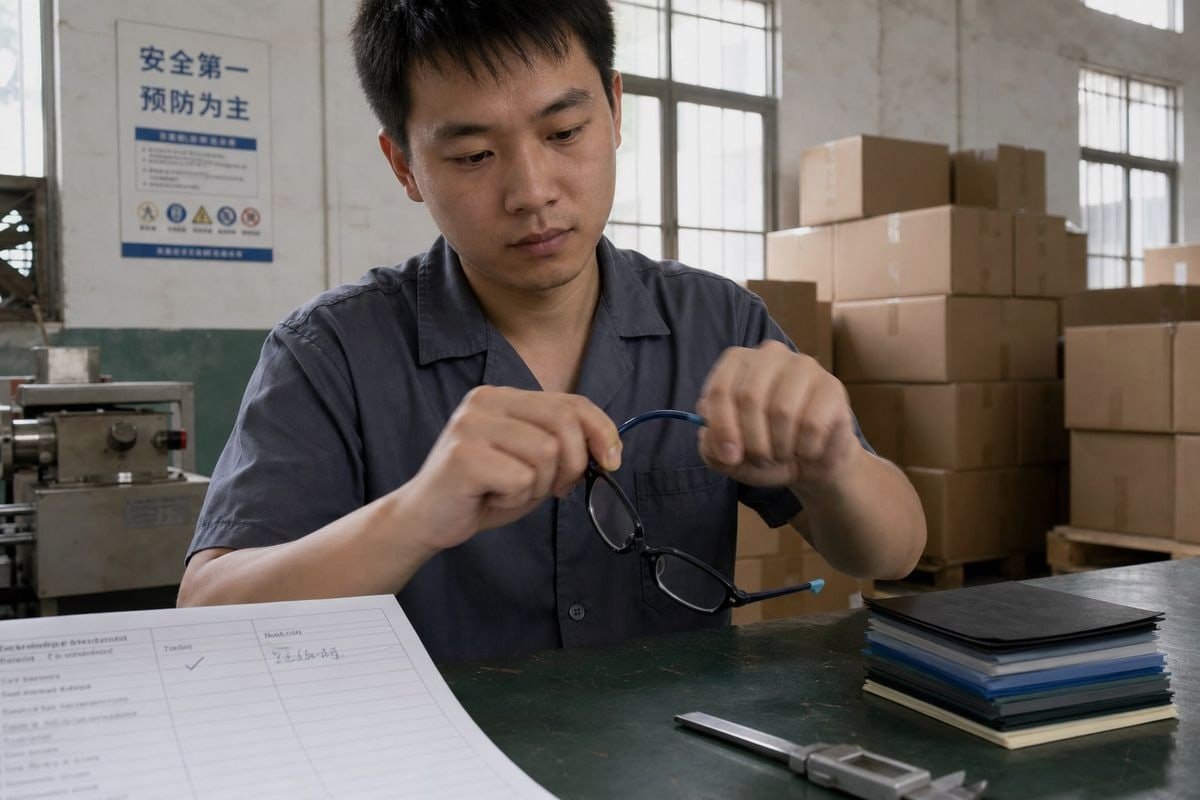
TR90 is a thermoplastic material we have worked with for years, usually paired with flexible TPEE temples for active kids. It is lightweight, bendable, and hard to snap. None of those qualities are medical. So your compliance path for import requirements Australia runs through consumer law, not the TGA — as long as the product stays a bare frame or carries only demo lenses.
A practical pre-import verification sequence
- Check the product configuration. Frames with demo lenses or plano lenses carry no corrective function. Non-prescription spectacles marketed as fashion items stay outside the therapeutic goods framework.
- Audit your own copy. Review packaging, invoices, product pages, and hangtags. Remove any language about correcting, treating, or improving vision.
- Verify material safety. Australian buyers expect evidence that materials are safe for children. We supply material test reports on TR90 and TPEE for exactly this reason, covering heavy metals and skin-contact safety.
- Separate customs from TGA. Frames still need correct tariff classification under Chapter 90 at the Australian Border Force. Customs classification and medical device classification are two different systems. Clearing one does not clear the other.
- Confirm the end-use plan. If your Australian optical partner glazes prescription lenses into the frames later, the lens supplier and dispenser handle the Class I obligations, not you as the frame importer.
One more nuance is worth flagging. Personal importation rules differ from commercial importing. An individual bringing in spectacles for personal use may rely on exemptions, but a business importing stock for resale cannot borrow that logic. Always plan as a commercial importer.
What documentation should my supplier provide to support TGA compliance for children's eyewear?
Early in my career at our factory, a shipment sat in a distributor's warehouse for weeks because we sent quality certificates but no intended-purpose statement. That mistake taught us to build a complete document pack.
Your supplier should provide a product specification stating the frames contain no corrective lenses, material safety test reports, a declaration of no therapeutic intended purpose, commercial invoices describing goods as spectacle frames, and quality documentation supporting children's eyewear safety under Australian consumer law.

Documentation does two jobs. First, it proves what the product is. Second, and just as important, it proves what the product is not. For excluded goods like lens-free frames, the second job matters more. If a border or regulatory question ever arises, your paperwork should make it obvious that no medical device regulation applies.
The document pack we prepare for Australian buyers
| Document | What it shows | Who uses it |
|---|---|---|
| Product specification sheet | Frame-only configuration, demo lenses, dimensions, materials | Importer, retailer |
| Intended-purpose declaration | No therapeutic claims; fashion/optical frame accessory | Regulatory review, records |
| Material test reports | TR90 and TPEE safety for skin contact and child use | Brand QA, retail buyers |
| Commercial invoice and packing list | Goods described as "spectacle frames without lenses" | Customs broker |
| QC inspection report | Hinge durability, temple flexibility, surface finish | Importer quality team |
| Packaging and labeling artwork | Copy free of medical claims | Marketing compliance |
Why wording on invoices matters so much
A vague invoice line like "optical products" invites questions. A precise line like "children's spectacle frames, no lenses fitted, TR90/TPEE" answers them before they are asked. We standardized our invoice wording after that early warehouse delay, and clearance questions dropped sharply. The same discipline applies to your website. The TGA reads intended purpose from every public-facing statement, so your supplier's documents and your retail copy must tell the same story.
If you later decide to sell complete prescription spectacles, the picture changes. The lens component becomes a Class I device, and someone in the supply chain must hold ARTG inclusion for it. Agree early on who carries that responsibility.
Could choosing the wrong classification delay my product launch in the Australian market?
The most painful lesson we have learned in fifteen years of exporting is that over-compliance can hurt as much as under-compliance. Both burn time you cannot get back.
Yes. Wrongly declaring frames as Class I devices triggers unnecessary ARTG inclusion work, fees, and sponsor obligations, delaying launch by weeks or months. Conversely, adding medical claims to frames without registration risks compliance action, stock holds, and forced relabeling before sale.

Classification errors cut both ways, and each direction carries a different cost. Let me break down both failure modes, because we have watched buyers stumble into each one.
Over-classification: treating frames as medical devices
Some importers, relying on outdated pre-2024 guidance, prepare a full Class I pathway for plain frames. They appoint a sponsor, prepare essential principles evidence, and pursue ARTG inclusion. None of it is needed for excluded goods. The direct cost is fees and paperwork. The hidden cost is time: sponsor arrangements and register entries can add many weeks to a launch calendar. One of our distributor clients budgeted a full quarter for regulatory work that, on review, took a single afternoon of document checks.
Under-classification: medical claims without registration
The opposite error is worse. If your packaging or website presents frames as correcting vision, and the products lack proper registration, you risk regulatory attention, stock quarantined in warehouses, and mandatory relabeling. Retail chains may also delist you. Fixing copy across thousands of printed boxes is slow and expensive.
Comparing the two failure paths
| Error type | Typical cause | Launch impact | Fix |
|---|---|---|---|
| Over-classification | Outdated guidance, excess caution | Weeks to months of needless process | Confirm excluded-goods status; drop the Class I pathway |
| Under-classification | Marketing overreach, bundled prescription lenses without ARTG inclusion | Stock holds, relabeling, possible compliance action | Remove claims or register the lens product properly |
| Customs mismatch | Invoice wording conflicts with product description | Border delays, broker queries | Align tariff description with actual goods |
Our advice to every Australian buyer is simple. Decide the product configuration first — frames only, or complete spectacles. Then match the regulatory path to that decision, and keep every document and marketing line consistent with it. With roughly 800 existing styles available without mold investment, we often suggest launching with frame-only stock first. It gets you to market fast while your optical partners handle the prescription lenses exemption questions and any lens-side registration on their end.
Conclusion
Confusion over TGA rules stalls too many kids' eyewear launches. The fix is simple: frames alone are excluded goods; only lenses and medical claims trigger Class I. Classify once, correctly, and launch on schedule.
Notes de bas de page
1. Highlights the importance of safety regulations for products designed for children. ↩︎
2. Provides information on a common material used in optical frames. ↩︎
3. Provides the foundational legislation for medical devices in Australia. ↩︎
4. Explains the core criterion for a product to be classified as a medical device. ↩︎
5. Clarifies the official database for therapeutic goods in Australia. ↩︎
6. Describes the tiered approach used by the TGA to categorize medical devices. ↩︎
Plus d'articles que vous pourriez aimer
août 5, 2026
Bio-Based vs Regular Cellulose Acetate: What's the Difference for Kids' Frames?
août 5, 2026
How Recyclable Are Kids' Optical Frame Materials, and What Eco-Friendly Alternatives Exist?
août 5, 2026
Do Kids Optical Frames Whiten or Age in Storage, and How to Control Warehouse Conditions?
Vous recherchez un partenaire fiable en lunetterie pour enfants ?
Explorez plus de 800 styles prêts et un support OEM/ODM complet adapté à votre marque.
Contactez-nous English
  Español de México
  Deutsch
  Français
  日本語
日本語  العربية
  Português do Brasil