What AS/NZS 1067.1 Compliance Documents Should Australian Eyewear Distributors Verify and Retain?
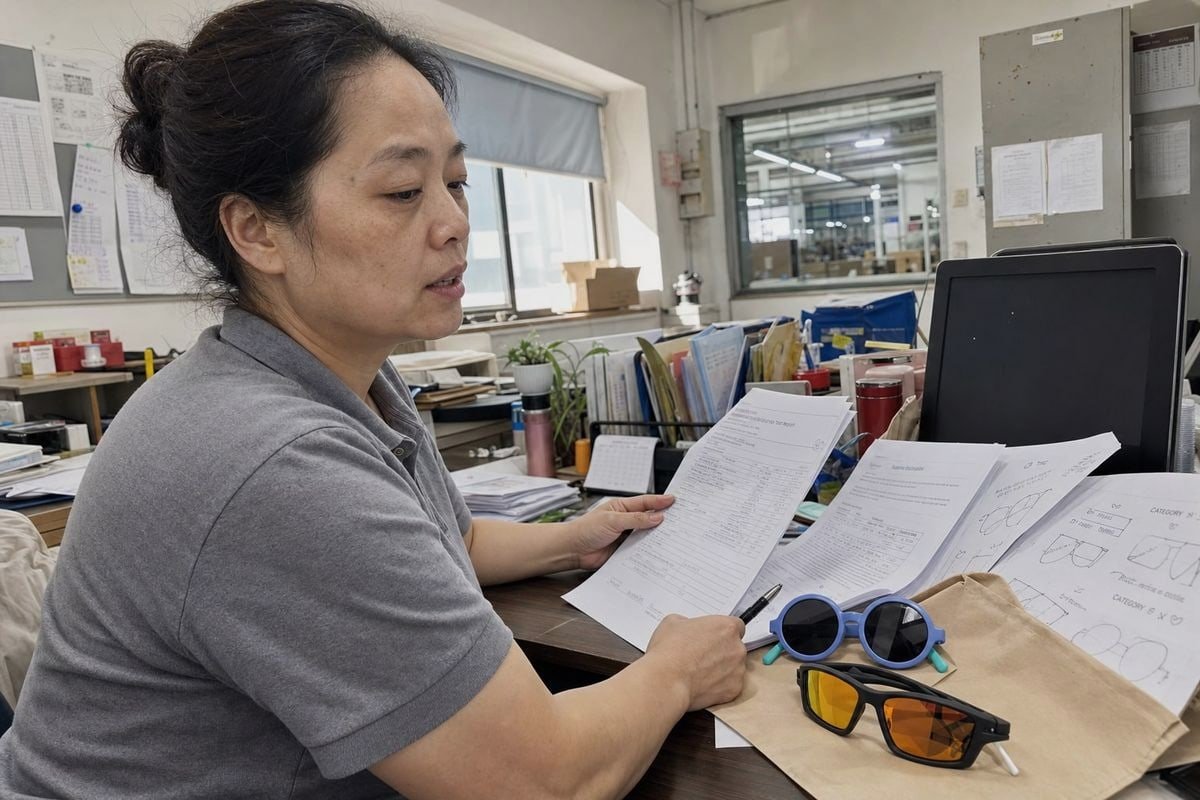
Missing AS/NZS 1067.1 compliance documents can freeze your shipment at customs, trigger recalls, and destroy retailer trust. I have watched it happen to buyers before they found our Taizhou factory.
Australian eyewear distributors should verify and retain AS/NZS 1067.1 compliance documents including accredited test reports, a Supplier Declaration of Conformity, lens category markings evidence, UV400 transmittance data, label and packaging proofs, batch testing documentation, and import records, kept for at least seven years.
That sounds like a lot of paper. It is. But each document plays a specific role. Below, I break down what to verify, what to keep, and why it matters.
What documents do I need to verify AS/NZS 1067.1 compliance before importing kids' sunglasses into Australia?
A buyer from Melbourne once told me she had a "certificate" from her previous supplier. It was one page, no lab name, no model number. We rebuilt her whole compliance file from scratch.
Before importing, verify an accredited laboratory test report citing AS/NZS 1067.1:2016, a Supplier Declaration of Conformity linking the report to your exact model, lens category markings on artwork, UV transmittance data to 400nm, warning labels, and supplier identification records for packaging.
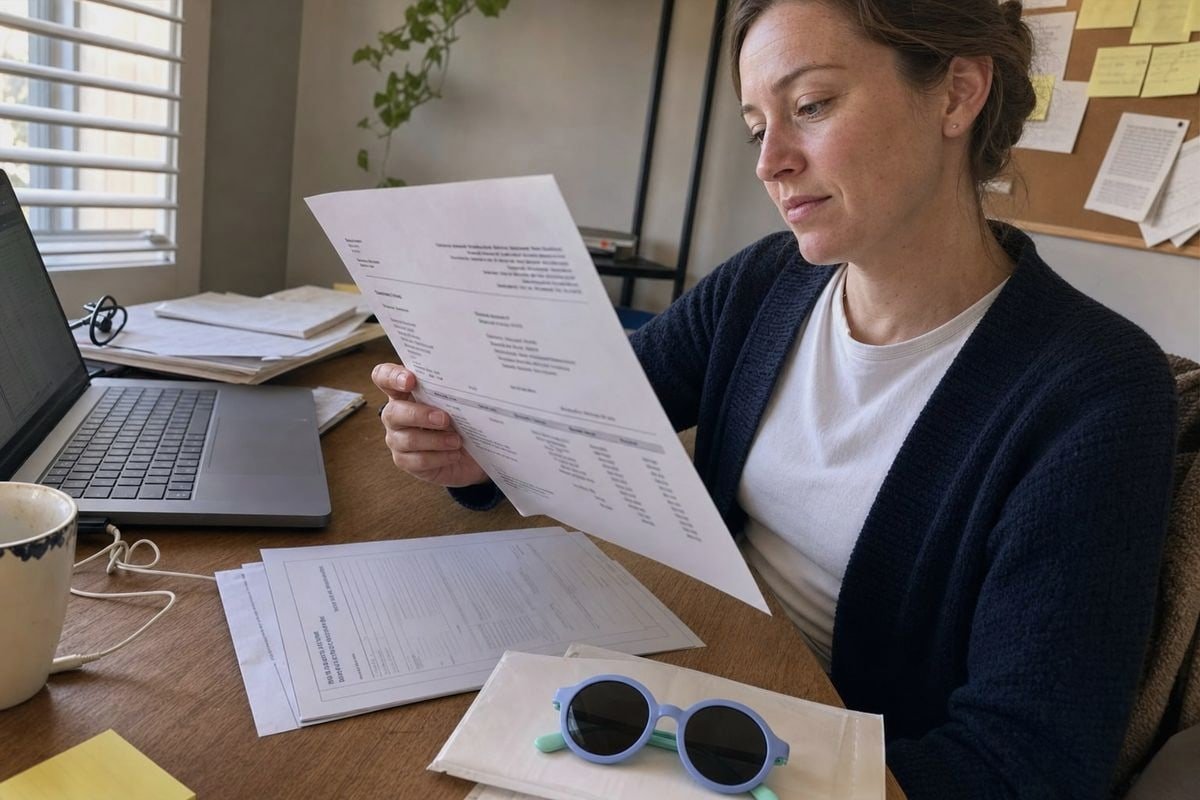
Compliance in Australia is not a single certificate. It is a package of evidence tied to the Consumer Goods (Sunglasses and Fashion Spectacles) Safety Standard 2017, which is based on selected sections of AS/NZS 1067.1:2016. The ACCC mandatory safety standards 1 place the burden on you — the importer or distributor — not on your overseas factory. So you must check the file yourself before the goods ship.
The core document set
Here is what we prepare for our Australian clients at our factory, and what you should demand from any supplier:
| Document | What it must show | Common failure point |
|---|---|---|
| Accredited test report | Testing against AS/NZS 1067.1:2016 sections: construction, filter quality, transmittance, filter categories, eye coverage | Report cites only ISO 12312-1 international standard, not the Australian pathway |
| Supplier Declaration of Conformity | Exact model, colourway, lens type, and batch tied to the test report | Generic declaration covering "all sunglasses" |
| Artwork and label proofs | Lens category markings (0–4) and category descriptions at point of sale | Category on packaging does not match tested lens |
| Transmittance data | UV radiation protection levels up to 400nm | Data only reaches the 380nm international baseline |
| Supplier ID records | Name and contact details of the Australian importer or local supplier | Missing entirely from packaging |
Why the standard version matters
AS/NZS 1067.1:2016 sets the product requirements, while AS/NZS 1067.2:2016 2 covers the test methods. The 2017 mandatory standard replaced references to the older 2003 edition. Many overseas test reports still cite the wrong version. Check the date on every report. If it references the 2003 edition or only a foreign standard, it is not usable evidence for Australia.
When we run pre-production samples of our TR90 and TPEE kids' frames, we align the test scope to the mandatory Australian sections specifically. A report built for the EU market will not automatically cover you.
How long should I retain compliance records for children's eyewear I distribute in Australia?
Record retention is a trade-off we discuss with buyers constantly: storage discipline costs a little time now, but a missing file during an ACCC audit costs far more later.
Retain compliance records for children's eyewear for a minimum of seven years in a compliance substantiation folder. This covers ACCC section 155 information notices, product safety audits, and potential recall investigations, and should include test reports, declarations, invoices, shipping records, and final packaging samples.
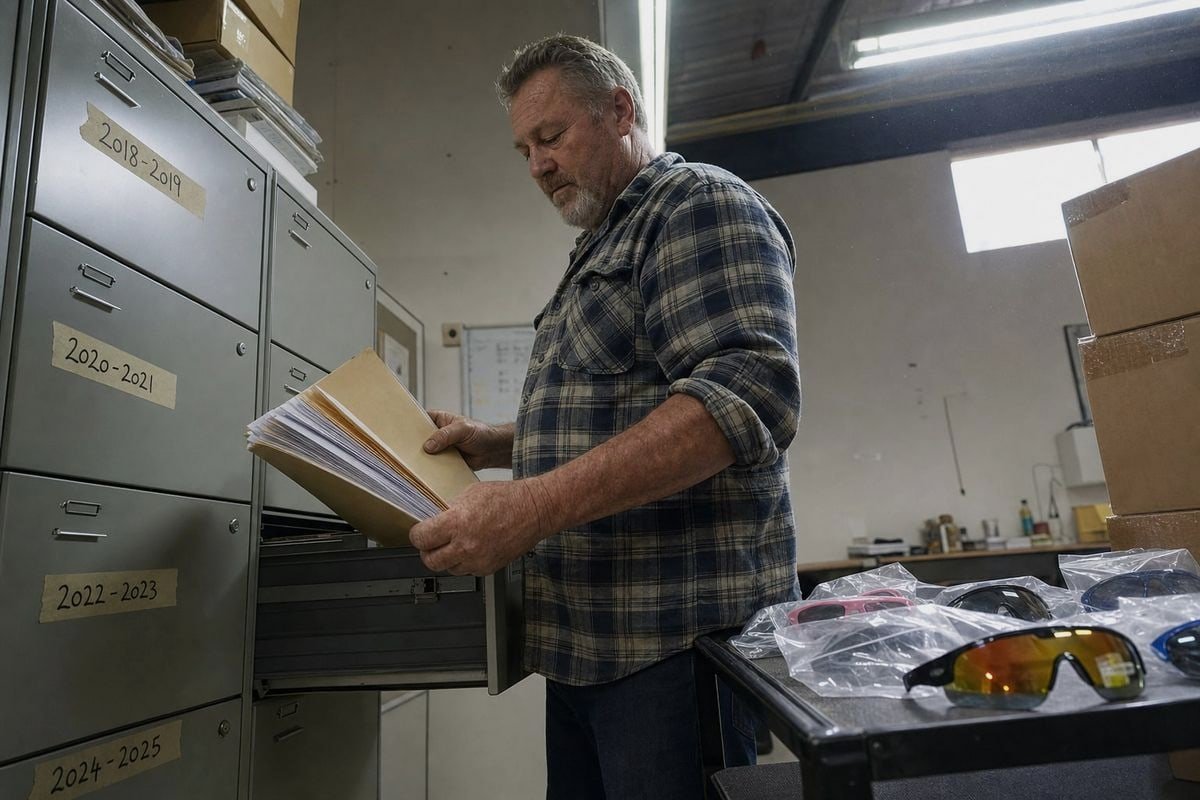
Seven years is the practical benchmark most distributors adopt. Why so long? Sunglasses have long retail lives. A pair sold today may sit in a child's drawer for years before a complaint surfaces. If a regulator asks you to substantiate compliance for a product sold three years ago, "the supplier had it tested" is not an answer. You need the paper.
Onboarding records versus retention records
I find it helps to split the file into two stages. Verify one set before you list a product. Retain another set after sales begin.
| Étape | Documents | Purpose |
|---|---|---|
| Before listing | Valid test report, correct standard cited, accredited lab credentials, Supplier Declaration of Conformity, artwork proof with category label | Gatekeeping — prove the product may legally be sold |
| After listing | Final product photos, packaging samples, purchase orders, invoices, shipping records, design change logs, updated test evidence | Audit readiness — prove which version was sold, when, and by whom |
Practical storage habits that survive an audit
Keep records per SKU, not per range. Our clients who handle this well use a simple digital folder per style, named by model number and production date. Some of our brand customers now add QR codes on packaging linking to a digital Declaration of Conformity, so retailers and regulators can verify instantly. That is not mandatory, but it signals seriousness.
Also log design changes. When one of our Australian distributors switched a lens tint on a reorder, we retested and issued a fresh declaration. That version-control habit is exactly what keeps a seven-year file defensible.
Which lens category and UV protection test reports should I request from my manufacturer for AS/NZS 1067.1?
A lesson we learned early in exporting: one test report never covers a whole range. A dark grey Category 3 lens and a light fashion tint are different products in the regulator's eyes.
Request an ISO/IEC 17025 accredited test report — NATA accredited or equivalent — covering lens category classification (0–4), luminous transmittance, UV transmittance to 400nm, filter material quality, construction, and eye coverage under AS/NZS 1067.1:2016, plus separate reports for each lens variant.
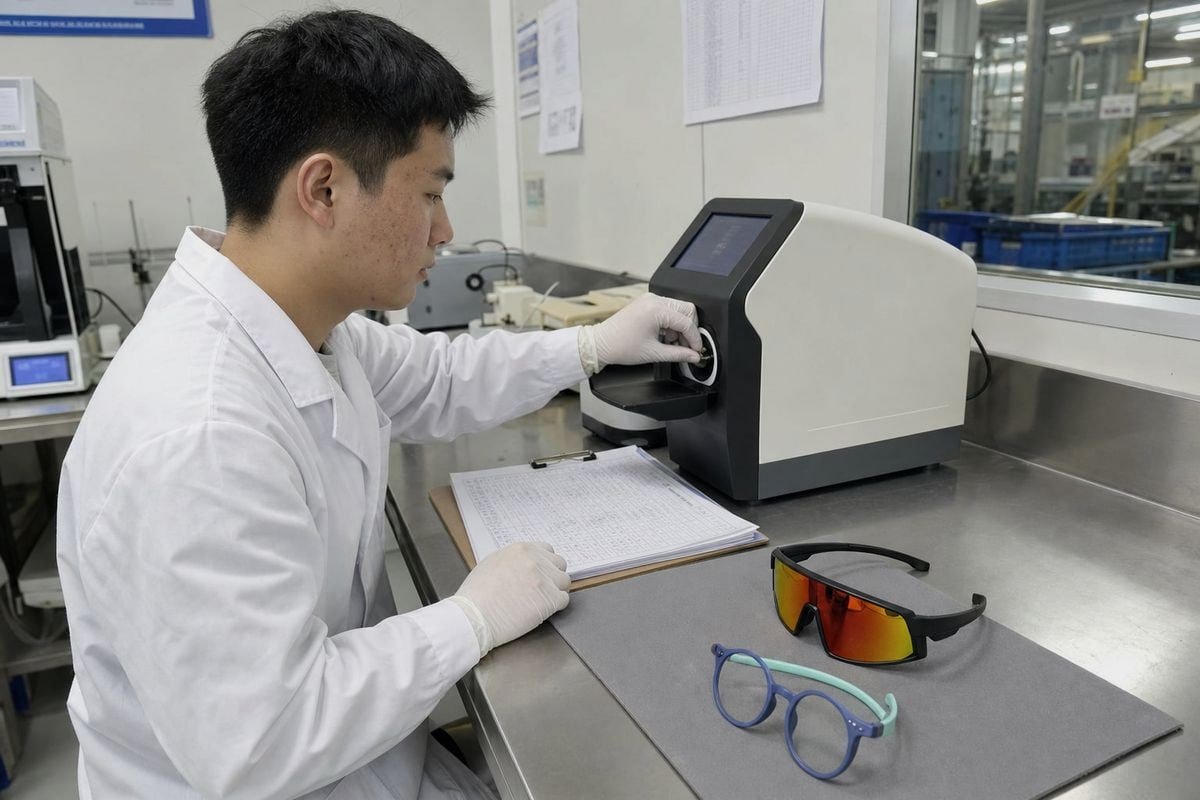
The lab matters as much as the report. Australian import guidance emphasizes accredited testing. NATA accredited 3 test reports, or reports from an ISO/IEC 17025 4 laboratory with equivalent recognition, carry weight. A report from an unaccredited factory lab does not. When buyers audit us in Taizhou, we show them exactly which external accredited labs run our AS/NZS testing, alongside our internal QC data.
Understanding lens category markings
Lens category markings must be permanently attached to the frame or displayed on a durable tag, with a legible category description at the point of sale.
| Catégorie | Description | Key document to verify |
|---|---|---|
| 0 | Fashion spectacles, minimal glare reduction | Fashion spectacles safety requirements still apply — do not skip testing |
| 1 | Limited sun glare reduction | Warning if not suitable for driving |
| 2 | Medium sun glare reduction | Transmittance data matching the marked category |
| 3 | High sun glare reduction (most kids' sunglasses) | Full UV400 transmittance report |
| 4 | Very high glare reduction | Mandatory "not suitable for driving and road use" warning |
Test every variant, not just one hero sample
Each lens colour, coating, mirror finish, and polarization option changes the transmittance result. Our sport-style shield lenses with orange-to-yellow mirror gradients test differently from the solid dark grey lenses on our round kids' frames. Request batch testing documentation or a batch-specific Certificate of Analysis 5 so mass-produced units match the tested prototype's transmittance and polarization efficiency. ARPANSA recommends testing each batch of imported glasses, and its testing service can support your UV protection and label verification evidence.
Can my factory provide the traceability and quality control documentation Australian regulators expect?
Prospective buyers often ask us this exact question during factory audits, and it is the right question. Traceability is where generic suppliers fail and genuine factories prove themselves.
A capable factory should provide batch and lot coding, production records linking each shipment to raw materials and tested samples, in-line and final QC inspection reports, Certificates of Analysis per batch, and correspondence confirming ongoing conformity — all forming the product traceability records Australian regulators expect.
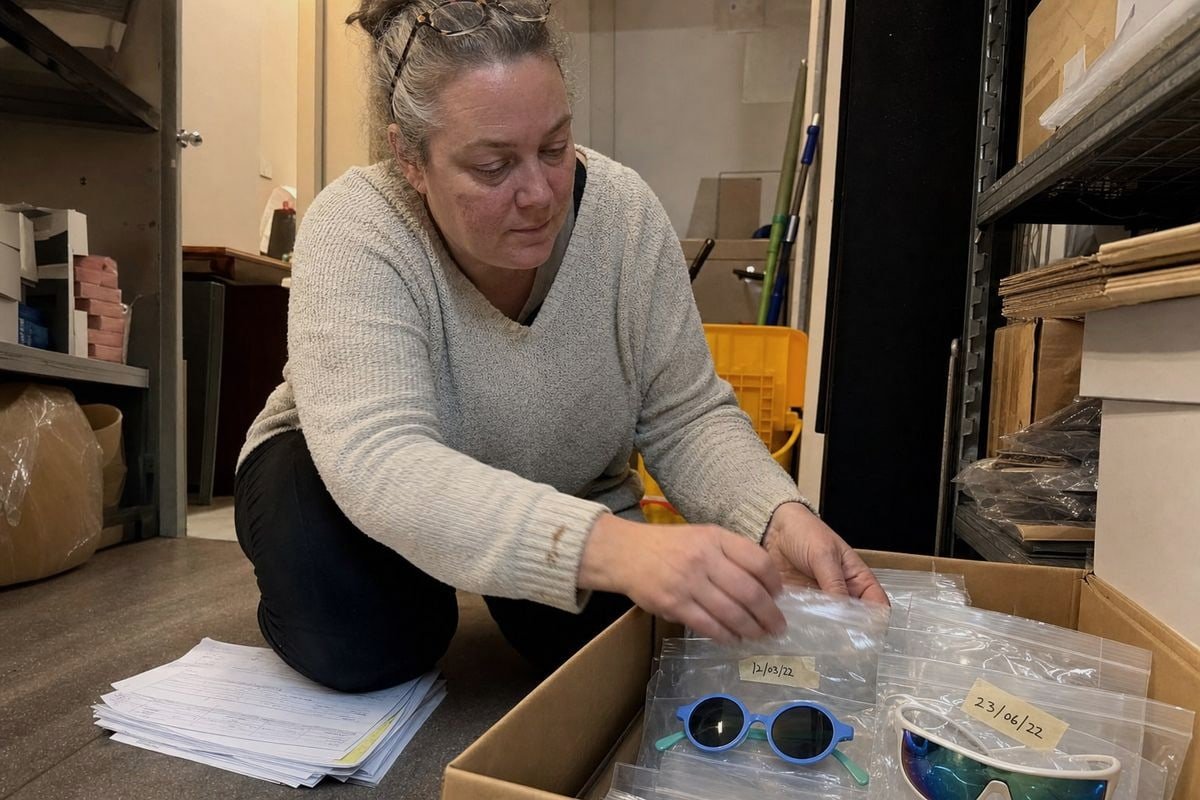
Traceability answers one question: can you prove the pair sold in Sydney is the same product the lab tested? If the answer is no, your test report is nearly worthless. That is why chain-of-custody records — purchase orders, invoices, packing lists, shipping documents — belong in your compliance file alongside the technical reports.
What to ask your factory for, step by step
- Ask how batches are coded. Every production run of our children's frames carries a lot reference that links back to material certificates for our TPEE and TR90 inputs.
- Ask for QC inspection reports. A Réalités du transit par mode 6 should produce in-line checks on hinge screws, lens fit, and flex durability, plus a final AQL inspection report 7 per order.
- Ask for a batch Certificate of Analysis confirming the shipped lenses match the tested transmittance and polarization values.
- Ask for written confirmation of conformity on every reorder, especially if you source multiple runs of the same frame-and-lens combination.
- Ask how design changes are documented. Any change to lens, coating, or material should trigger a documented review and, where needed, retesting.
The honest objection: "my supplier already gave me a compliance certificate"
Some suppliers hand over broad "compliance certificates" and treat the matter as closed. Australian guidance points the other way: regulators want actual testing to the mandatory standard and traceability to the sold product, not a generic certificate. In fifteen years of making eyewear for brands in over twenty countries, I have never seen a one-page certificate survive scrutiny. A defensible paper trail beats a pretty certificate every time. When we onboard a new Australian distributor, we build the file together — test scope, declarations, artwork, labels, batch records — so their compliance gate is closed before the first container leaves.
Conclusion
AS/NZS 1067.1 compliance documents are a defensible paper trail, not one certificate. Verify accredited reports, declarations, labels, and batch traceability — then retain everything for seven years. We help buyers build that file.
Notes de bas de page
1. Official regulator source confirming importer responsibility under Australian product safety law. ↩︎
2. Standards Australia is the official body publishing the AS/NZS standards discussed. ↩︎
3. NATA’s official site verifies Australian laboratory accreditation status mentioned in the article. ↩︎
4. Official ISO page explaining the laboratory accreditation standard referenced for test reports. ↩︎
5. Background reference defining the Certificate of Analysis document type discussed in traceability. ↩︎
6. Explains the 5S workplace organization methodology referenced for factory quality control. ↩︎
7. Background reference explaining acceptable quality limit inspection methodology used in QC reports. ↩︎
Plus d'articles que vous pourriez aimer
1 août 2026
L'usine doit-elle gérer l'emballage et l'étiquetage des lunettes pour enfants, ou utiliser un fournisseur désigné ?

1 août 2026
Entrepôt propre vs. exécution directe par le fournisseur : lequel réduit les coûts de retour pour les marques de lunettes pour enfants ?

1 août 2026
Entrepôt direct au port ou staging outre-mer : lequel permet d'économiser le plus sur l'expédition des lunettes pour enfants ?
Vous recherchez un partenaire fiable en lunetterie pour enfants ?
Explorez plus de 800 styles prêts et un support OEM/ODM complet adapté à votre marque.
Contactez-nous English
  Español de México
  Deutsch
  Français
  日本語
日本語  العربية
  Português do Brasil