What Are Common Kids Sunglasses Complaints and How to Avoid Them When Sourcing?
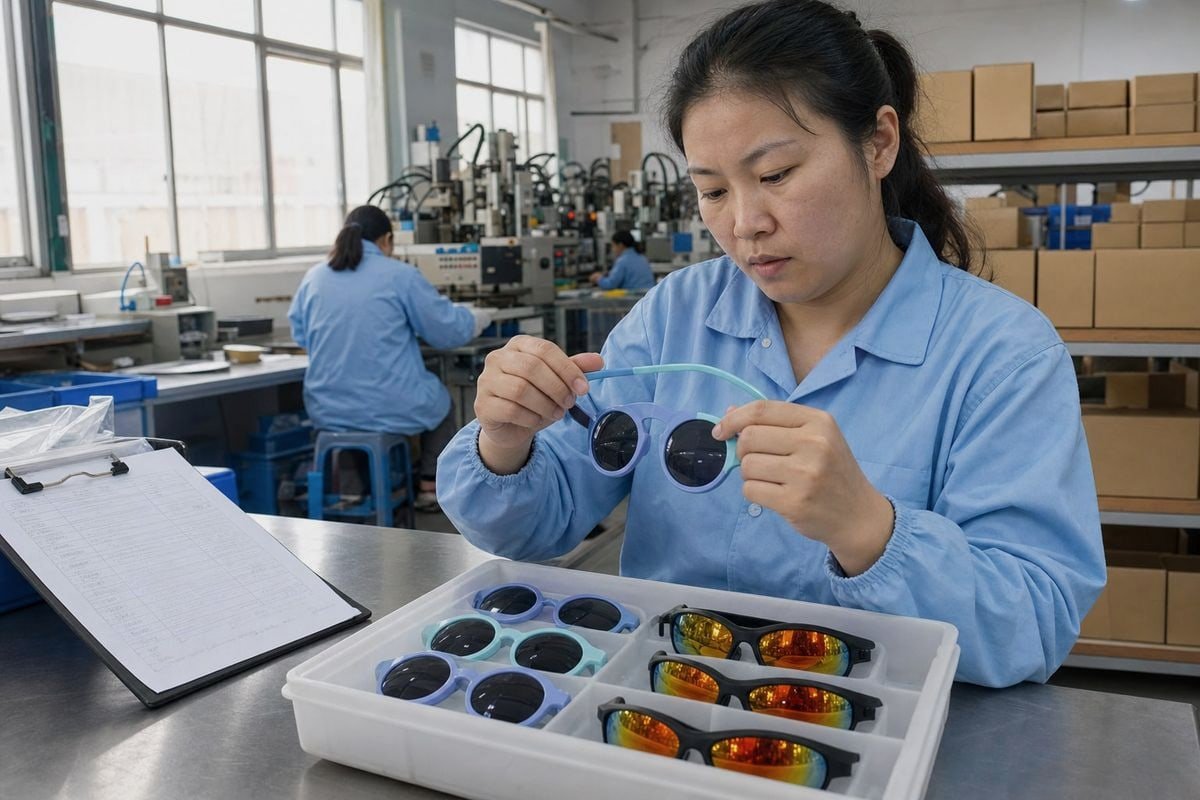
Kids sunglasses complaints land on my desk from buyers almost weekly. On our production line in Taizhou, I have seen how one bad batch can sink a brand’s reputation overnight.
Common kids sunglasses complaints include poor fit, broken frames, lenses that are too dark, headaches from cheap polarized film, and fake UV claims. Buyers avoid them by sourcing flexible TPEE or TR90 frames, verifying UV400 protection standards, and demanding batch-level quality control inspection.
Let me walk you through each complaint category. Then I will show you what to check before you place a bulk order.
What complaints do parents most often have about kids sunglasses breaking or hurting their child?
A buyer from Australia once forwarded me twenty customer reviews of a competitor's product. Reading them at our factory, I noticed the same three words repeated: pinch, snap, and refuse.
Parents most often complain that kids sunglasses pinch the nose, rub behind the ears, snap at the hinges, fall off during play, or feel too dark to see through. The result is the same in every case: the child simply refuses to wear them.
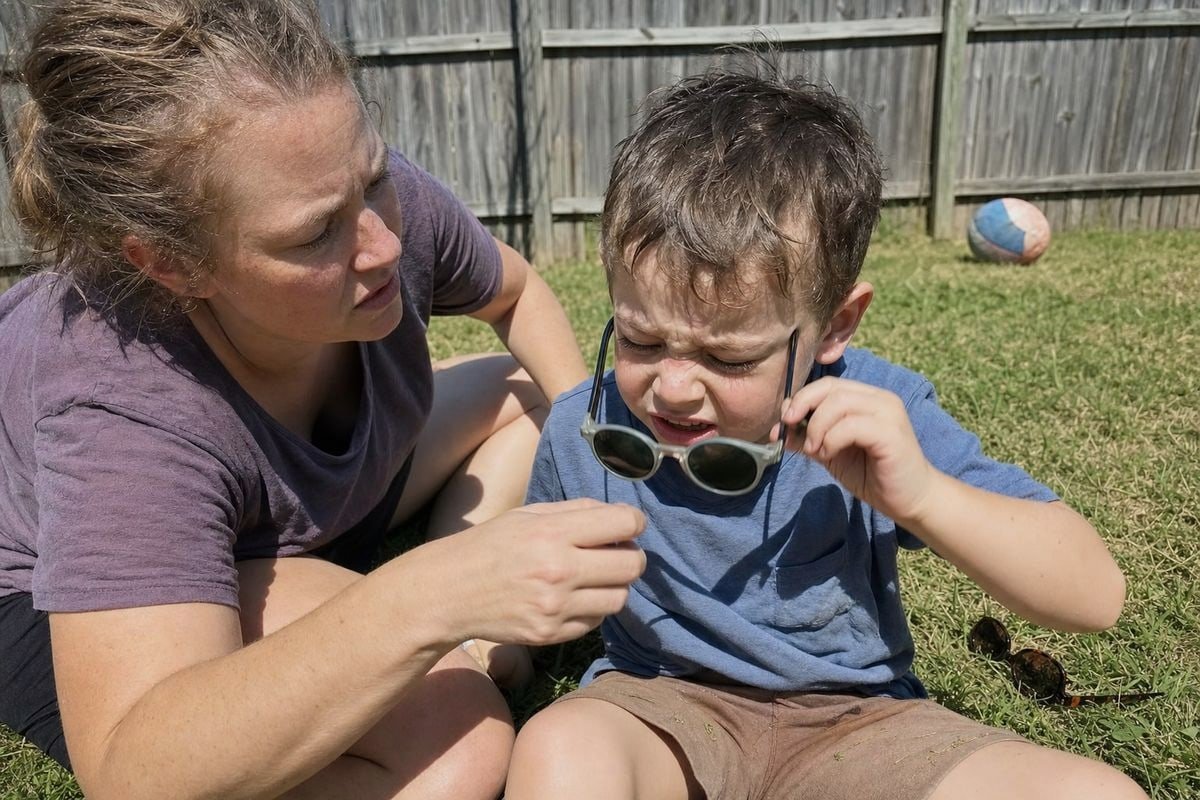
The single biggest complaint is non-wearability. A child who feels discomfort will pull the sunglasses off within minutes. Even when bright light bothers them, kids will not tolerate frames that hurt. That means the parent wasted money, and your brand takes the blame in the review section.
The complaint categories we see most
After fifteen years of making children's eyewear, we can group nearly every complaint into six buckets:
| Complaint | Root Cause | What Parents Say |
|---|---|---|
| Pinching or pressure | Adult frame geometry shrunk down | "My son rips them off after five minutes" |
| Frames break | Rigid plastic, weak hinges | "Snapped the first week" |
| Falls off constantly | No ergonomic bridge fit for small noses | "We lost two pairs in one month" |
| Too dark indoors | Wrong lens category or uneven tint | "She can't see and trips over things" |
| Headaches or dizziness | Low-grade polarized TAC film that warps | "He complains his eyes hurt" |
| No trust in UV claims | Missing markings, no test reports | "Is this even real protection?" |
Why fit complaints dominate
Children's faces are not miniature adult faces. Kids have flatter nose bridges, rounder cheeks, and lower-set ears. A frame designed by scaling down an adult mold will slide, pinch, or sit crooked. When we developed our Montures flexibles TPEE 1, we started from pediatric face scans, not from shrunken adult tooling. That single decision eliminates most fit complaints before the product ever ships.
Breakage is the second-largest bucket. Kids bend frames, sit on them, and throw them into backpacks. Standard rigid acetate with screw hinges cannot survive that treatment. Flexible materials and screwless or 180-degree hinge designs can.
How can I tell if a supplier's materials will actually hold up to rough daily use?
There is a trade-off I weigh on every new project: material cost versus return rate. Saving a few cents per frame with cheap resin almost always costs a buyer far more in refunds later.
Ask for material certifications, then physically test samples: twist the temples 180 degrees, drop-test the lenses, and check for BPA-free materials documentation. Genuine TPEE and TR90 frames flex without cracking; cheap petroleum plastics whiten at stress points or snap outright.
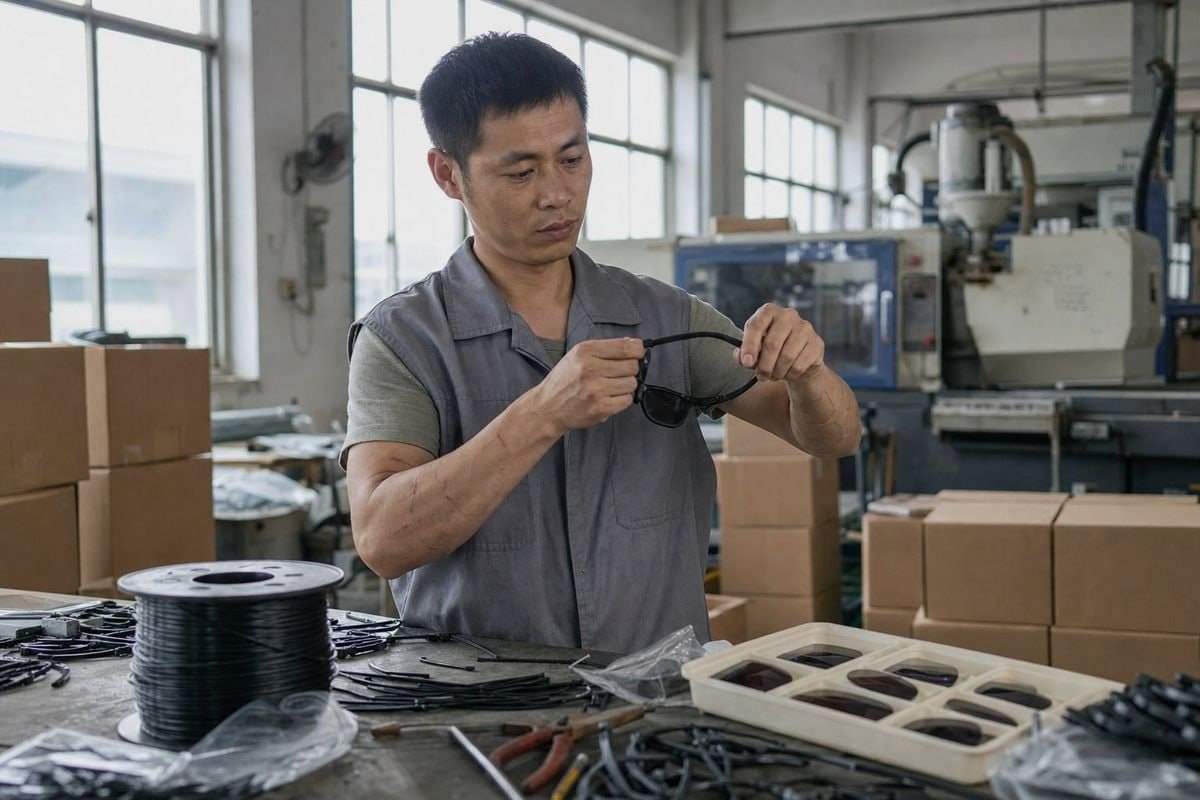
Material claims are cheap. Verified material performance is not. Many wholesale eyewear suppliers list "flexible frame" on a spec sheet while shipping brittle recycled resin blends. You need a simple, repeatable way to separate the two before your purchase order is signed.
A hands-on sample test you can do yourself
- The twist test. Grip the frame at both temples and twist. Real TR90 and TPEE return to shape. Cheap plastic shows white stress lines or cracks.
- The temple bend test. Fold the temple arms fully backward. Quality flexible hinges or screwless designs survive; standard hinges loosen or snap.
- The lens tap test. Impact-resistant polycarbonate lenses 3 resist a firm tap with a metal object. Thin acrylic lenses chip or scratch immediately.
- The coating check. Rub the lens with a microfiber cloth and light pressure. A proper scratch-resistant coating shows no marks; uncoated lenses haze quickly.
- The chew factor. Small children mouth their frames. Demand documentation for Matériaux sans BPA 4 and lead-free paint certification on any colored coating.
Material comparison for children's frames
| Matériel | Flexibilité | Résistance aux chocs | Profil de sécurité | Typical Complaint Risk |
|---|---|---|---|---|
| TPEE | Excellent — bends fully | Très élevé | Food-grade options, BPA-free | Très faible |
| TR90 | Élevé | Élevé | Léger, hypoallergénique | Bas |
| Standard PC frame | Modéré | Modéré | Depends on grade | Moyen |
| Cheap recycled resin | Mémoire de forme | Bas | Often unverified | Élevé |
At our workshop, we run frames through repeated flex cycles before approving any new mold. One lesson we learned early: a frame that passes one bend can still fail after two hundred. Durability testing must simulate months of rough handling, not a single showroom demonstration. Ask your supplier what their cycle count is. If they cannot answer, that tells you everything.
What sourcing mistakes lead to safety or quality complaints after products reach the market?
A European importer once came to us after a painful recall. He had sourced a container of kids sunglasses from a marketplace seller, and the lenses failed UV testing at customs. The entire shipment was destroyed.
The costliest sourcing mistakes are trusting unverified UV claims, skipping compliance markings like CE or CPSIA documentation, approving only a golden sample, buying on price alone, and treating polarized labels as proof of eye safety. Each one produces complaints or legal exposure after launch.
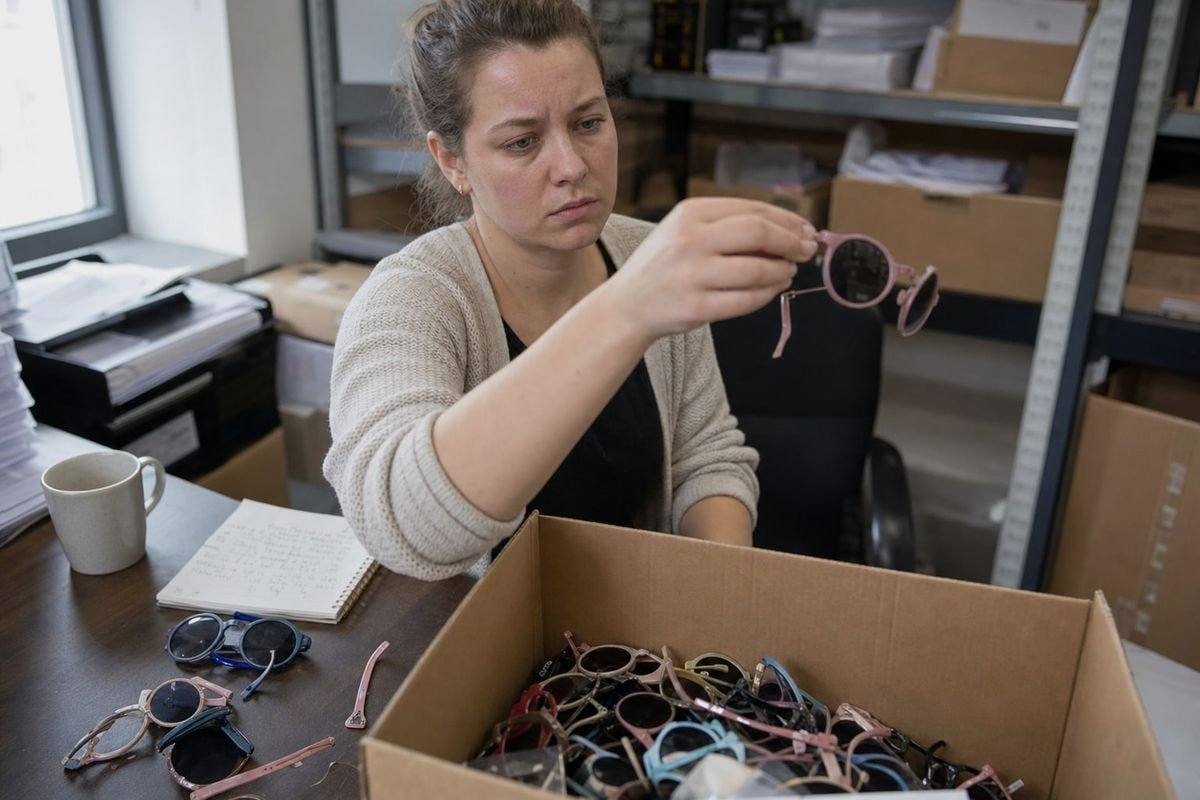
Independent testing has repeatedly found that a large share of cheap children's sunglasses bought from online marketplaces fail to deliver adequate UV protection. Many also lack the CE or UKCA markings legally required in their destination market. That is not a cosmetic problem. Sunglasses without real UV filtration are worse than no sunglasses at all, because a dark tint dilates a child's pupils and lets more harmful radiation in.
The five mistakes we see buyers make
Mistake 1: Accepting UV400 claims without lab reports. A printed sticker costs nothing. Demand a batch-specific spectrophotometer test report, not a generic certificate from three years ago.
Mistake 2: Ignoring destination-market compliance. US buyers need conformité CPSIA 5 covering lead and phthalate limits. EU buyers need Marquage CE 6 under PPE regulations. Australian buyers have their own sunglasses standard. One product, different rules.
Mistake 3: The golden sample trap. Some factories send a perfect sample, then cut corners in mass production. Without an AQL-based quality control inspection before shipment, you will not know until customers do.
Mistake 4: Buying "polarized" as a safety feature. Polarized lens quality varies enormously. Cheap warped TAC film causes eye strain and headache complaints. Polarization also has nothing to do with UV filtration — they are separate functions.
Mistake 5: Chasing the lowest unit price. Suspiciously cheap quotes usually mean unverified resins, no lead-free paint certification, and zero recourse when complaints arrive.
Compliance checklist by market
| Marché | Key Requirement | What to Request |
|---|---|---|
| États-Unis | CPSIA compliance, FDA impact resistance | Third-party lab report, drop-ball test |
| EU/UK | CE / UKCA marking, EN ISO standards | Declaration of Conformity, technical file |
| Australie/Nouvelle-Zélande | AS/NZS sunglasses standard | Lens category certification |
| Approuvé dans le monde entier | Voluntary but strict retail expectations | Full material and UV documentation |
How do I choose a manufacturer that helps me avoid these complaints before I place an order?
When new buyers contact us, the best ones never ask about price first. They ask about our testing process, our material sourcing, and how we handle defects. That question order predicts a successful partnership almost every time.
Choose a factory with proven children's eyewear specialization, an existing style library to reduce mold risk, documented material certifications, in-house flex and UV testing, AQL inspections, and full OEM/ODM support. A true partner prevents complaints during development, not after shipment.
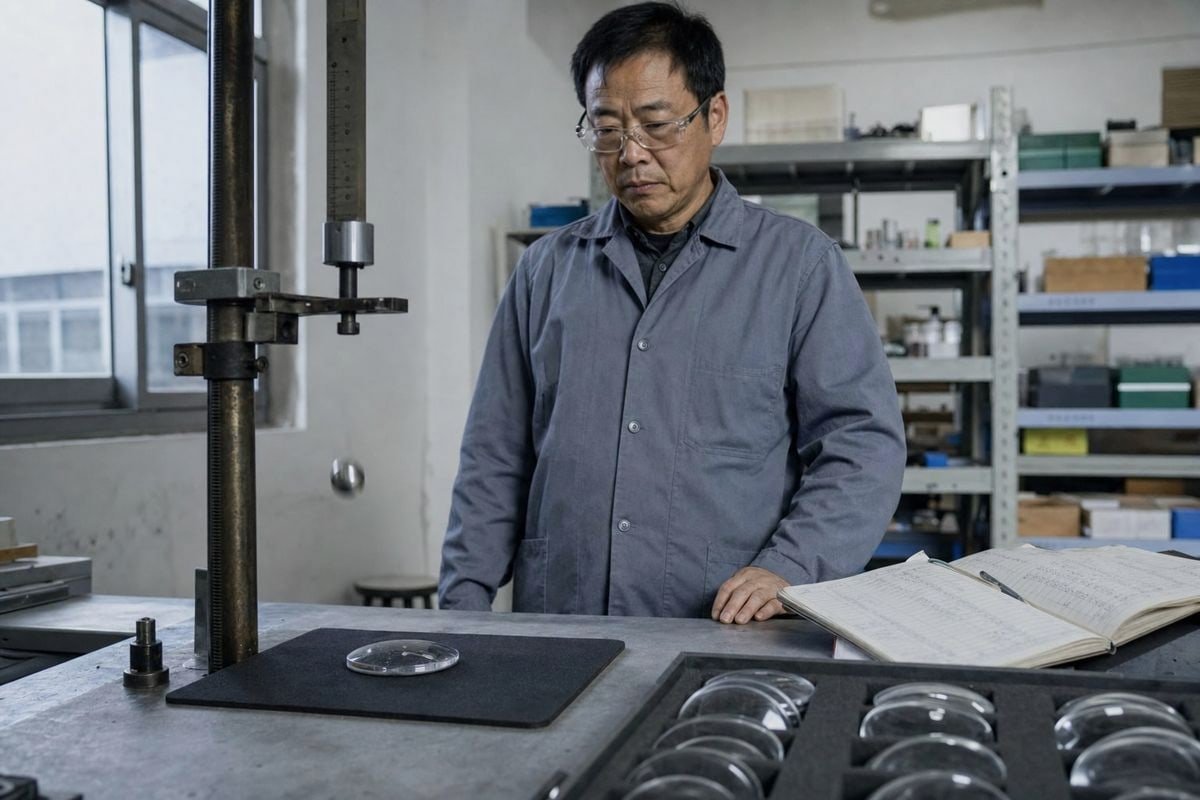
A trader forwards your complaint to someone else. A factory fixes the root cause. That distinction matters more in children's products than anywhere else, because the stakes are a child's eyes and your brand's survival.
What separates a partner from a vendor
Start with specialization. General eyewear factories treat kids' frames as shrunken adult products. A children's specialist designs around pediatric anatomy 7: flatter bridges, an ergonomic bridge fit, shorter temple lengths, and softer contact points. At our Taizhou facility, roughly 120 workers focus mainly on children's frames, and that focus shows up in the details — like adjustable strap design options that hold frames on active toddlers without creating pressure points behind the head.
Next, look at development risk. New brands often cannot afford custom molds for an unproven product line. We maintain around 800 existing styles precisely so importers and kids' brands can test the market with custom colors, logos, lenses, and retail-ready packaging instead of heavy tooling investment. That lowers your risk and shortens your launch timeline.
Questions to ask before signing a purchase order
- Can you provide UV400 and material test reports for my specific batch, not a generic sample?
- What is your frame flex-cycle testing standard?
- Do you offer impact-resistant polycarbonate lenses as standard for children's styles?
- How do you run pre-shipment quality control inspection, and can my third-party inspector access the factory?
- Can you support CPSIA compliance documentation and lead-free paint certification for my market?
- What happens if a defect rate exceeds the agreed AQL?
A manufacturer that answers these questions quickly and in writing is a manufacturer that has heard them before. Hesitation, vagueness, or "trust us" answers are your signal to walk away. Complaints are avoided in these conversations — months before any child puts your sunglasses on.
Conclusion
Kids sunglasses complaints trace back to sourcing decisions: fit, materials, verified UV400 protection, and factory quality control. Choose a specialized partner early, and the complaints never happen.
Notes de bas de page
1. Background on thermoplastic elastomers explains why TPEE resists cracking under repeated stress. ↩︎
2. EPA guidance explains UV radiation risks and why proper UV filtration protects children’s eyes. ↩︎
3. Reference on polycarbonate’s impact resistance supports why it outperforms acrylic in lenses. ↩︎
4. FDA overview of BPA safety concerns supports why buyers should demand BPA-free certification. ↩︎
5. Official CPSC page detailing the US law governing lead and phthalate limits in children’s products. ↩︎
6. Explains the EU conformity marking required for personal protective equipment like sunglasses. ↩︎
7. NIH resource on children’s eye health supports the case for designing frames around pediatric anatomy. ↩︎
Plus d'articles que vous pourriez aimer

Vous recherchez un partenaire fiable en lunetterie pour enfants ?
Explorez plus de 800 styles prêts et un support OEM/ODM complet adapté à votre marque.
Contactez-nous English
  Español de México
  Deutsch
  Français
  日本語
日本語  العربية
  Português do Brasil