What Bridge Width and Temple Length Gaps Exist in Kids Optical Frames Inventory?

Bridge width 1 and temple length gaps in kids optical frames inventory cost brands real sales. At our Taizhou factory, I see returned samples every month where the numbers looked right but the fit failed.
Kids optical frames inventory typically clusters at 13–18 mm bridge widths and 110–130 mm temple lengths, stepping in 1–2 mm and 5 mm jumps. Gaps appear below 14 mm bridges for toddlers, between 130–135 mm temples for preteens, and at every in-between increment.
Those gaps sound small on paper. On a child’s face, they decide whether glasses stay put or slide off. Let me walk you through where the gaps sit and how to close them.
How Do I Match Bridge Width and Temple Length to Different Age Groups in My Kids Frame Line?
A buyer from Australia once asked me why her best-selling frame worked for six-year-olds but failed for four-year-olds. The answer was two millimeters of bridge width.
Match age groups by pairing bridge and temple ranges: toddlers need roughly 14–16 mm bridges with 115–125 mm temples, preschoolers need 14–17 mm bridges with 120–125 mm temples, and school-age children need 15–18 mm bridges with 120–130 mm temples, adjusted for individual nose bridge fit.

Age is a starting point, not a rule. In our fifteen years of building children's eyewear 2, we have measured enough heads to know that two five-year-olds can need frames two sizes apart. Still, your line needs a structure, and age bands are the most practical way to organize a frame sizing guide for retail buyers and parents.
A Practical Age-to-Size Map
Here is the baseline we use when we help brands plan a collection across our roughly 800 existing styles:
| Age Group | Lens Width | Bridge Width | Temple Length |
|---|---|---|---|
| Toddler (1–3 yrs) | 38–42 mm | 14–16 mm | 115–125 mm |
| Preschool (3–5 yrs) | 40–44 mm | 14–17 mm | 120–125 mm |
| School-age (6–9 yrs) | 44–48 mm | 14–17 mm | 120–130 mm |
| Preteen (10–13 yrs) | 46–50 mm | 16–18 mm | 125–135 mm |
Notice the overlap between bands. That overlap is deliberate. Children's eyewear fit depends on the nose, the ear position, and head width — not the birthday. When we develop montures TR90 3 with TPEE temples, we often keep the front identical and vary only the temple arm length. This gives one style two or three fit points without a new front mold.
Why Bridge Comes First
I always tell buyers to prioritize the bridge. Temples can flex, and our TPEE temples bend without breaking. But a bridge that is too wide lets the whole frame slide down, and no temple can fully rescue that. Pupillary distance (PD) also matters here: if the frame sits low because the bridge is wrong, the optical center of the lens no longer aligns with the child's eyes, and the prescription underperforms. So build your line around bridge steps first, then layer temple options on top.
Why Do Standard Size Charts Leave Gaps for Toddlers and Preteens in My Optical Inventory?
During a QC review last year, our team lined up every toddler frame we produce and measured the bridges. Almost everything sat at 15 or 16 mm — and that pattern repeats across the whole industry.
Standard charts leave gaps because manufacturing standardizes around 14–16 mm bridges and 120/125/130 mm temples. Toddlers with flat, undeveloped noses often need sub-14 mm bridges, while preteens fall between kids' 130 mm temples and adult 135–150 mm stock, so both groups land between sizes.
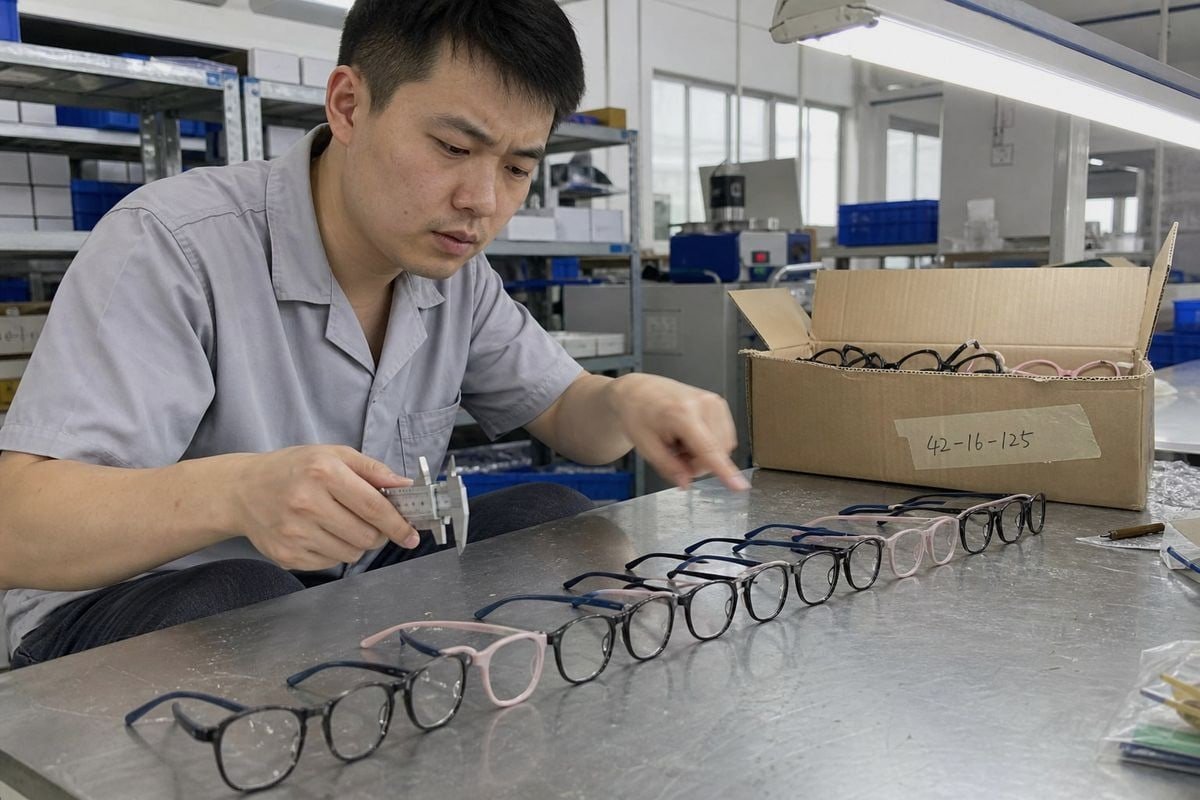
The root problem is that inventory follows manufacturing bins, while faces follow biology. Most catalogs step bridges in 1–2 mm increments and temples in 5 mm increments. That sounds granular until you remember how sensitive children's eyewear fit is. A bridge that is 1 mm too wide on a toddler's flat nose means kids glasses slipping every few minutes, and a child who pushes frames up all day eventually stops wearing them. That is a compliance failure, not just a comfort issue.
The Two Compression Zones
The gaps concentrate at both ends of the kids' range:
| Fit Need | What Inventory Offers | The Gap |
|---|---|---|
| Toddler flat nose bridge (12–14 mm ideal) | Mostly 14–16 mm bridges | Frames slide; child looks over lenses |
| Small preschool heads | Temples anchored at 120/125 mm | 122–123 mm needs are unserved |
| Preteen transition heads | Kids' temples top out at 130 mm | Adult stock jumps to 135–150 mm |
| Diverse facial structures | One bridge height per style | Low-bridge fits need different geometry |
The preteen zone deserves special attention. A ten-year-old with a growing head often needs a 132 mm temple. Kids' inventory stops at 130 mm; small-adult inventory starts around 135 mm. That transition gap pushes families into adult frames that overhang the face and sit wrong on the PD.
The Scaled-Down Adult Problem
There is a deeper flaw underneath the number gaps. Many children's frames are simply shrunken adult designs. But children have wider heads relative to their face width, flatter nose bridges, and different ear angles. When we design our own kids optical frames, we adjust the temple splay and the bridge geometry — not just the dimensions. A scaled-down adult frame with "correct" measurements can still create pressure points behind the ears and a gap at the top of the nose. This is also why some ethnic facial structures are underserved: bridge height and temple curvature vary by population, and single-geometry inventory misses them entirely.
What Sizing Data Should I Request From My Manufacturer to Avoid Fit Issues Across My Collection?
One lesson I learned early in our export business: the buyers who ask us for detailed pediatric frame measurements before ordering almost never face fit complaints later. The buyers who order from photos often do.
Request the full measurement set per SKU: lens width, bridge width, temple arm length, total frame width, bridge height and style, temple drop angle, weight, and material flex ratings. Also ask for measurement tolerances and how sizes were verified on real head forms.
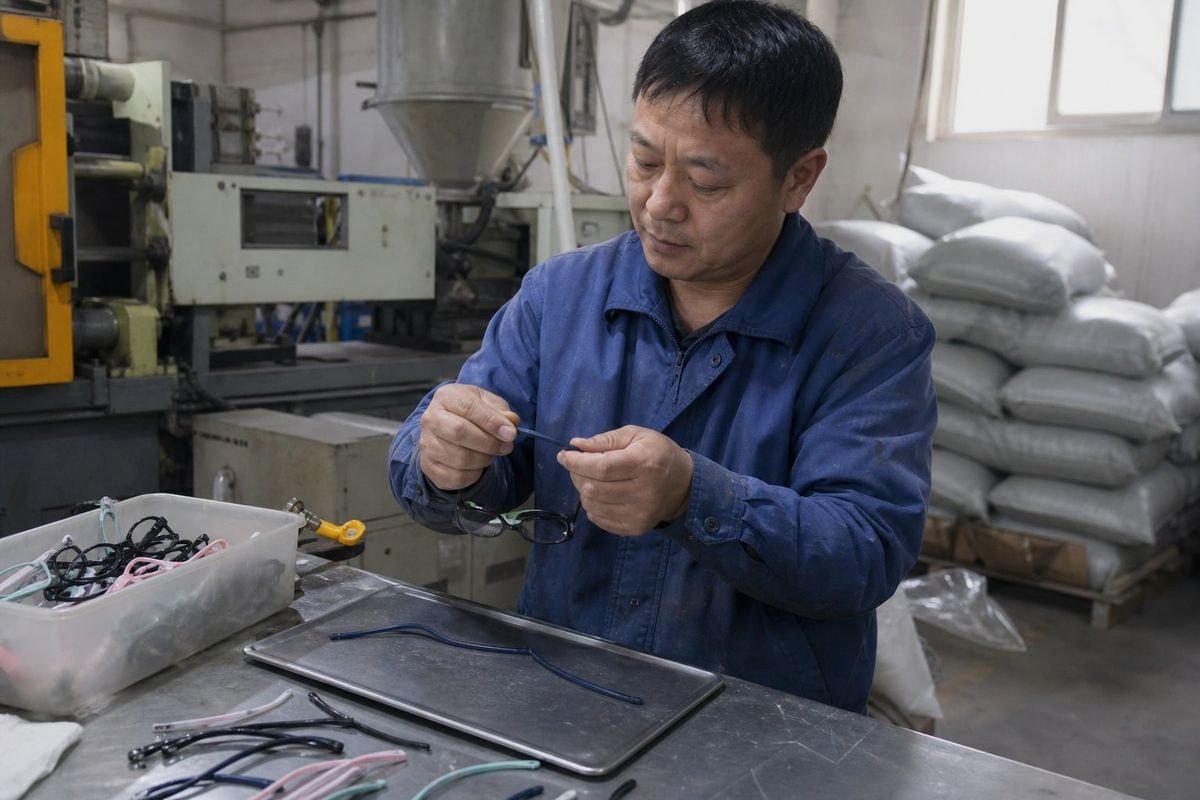
Most spec sheets stop at three numbers: lens, bridge, temple. Those three numbers are necessary but not sufficient. Clinical fit guidance is clear that a frame can carry the "right" numbers and still fit poorly if the bridge sits too high, the temples flare outward, or the front overhangs the face. So your data request needs to go beyond the stamped digits on the inner temple.
The Full Data Checklist
Here is what I recommend every procurement manager request, and what each item protects you from:
| Data Point | Why You Need It |
|---|---|
| Largeur de la lentille, largeur du pont, longueur de la branche | Baseline sizing and catalog comparison |
| Total frame width (temple to temple) | Prevents front overhang on narrow faces |
| Bridge height and style (saddle vs. keyhole) | A plastic saddle bridge must not leave a gap at the nose top |
| Temple drop point and ear-hook curve | Ensures temples end behind the ear, not past it |
| Frame weight in grams | Heavy fronts slide regardless of bridge fit |
| Material flex data (TR90/TPEE) | Confirms temples flex rather than splay permanently |
| Measurement tolerance (e.g., ±0.5 mm) | Tells you if batch variation will break your size steps |
That last row matters more than most buyers realize. If your line steps bridges in 1 mm increments but your supplier's tolerance is ±1 mm, your size steps are fiction. In our 5S-managed workshop, we hold measurement checks at incoming molding and final QC precisely because eyewear inventory management collapses when tolerances swallow the size increments.
Ask How Sizes Were Validated
Numbers on a spec sheet describe the frame, not the fit. Ask your supplier whether sizes were tested on children's head forms or in wear trials, and ask for photos of temples lying flat — temples should run straight back without bowing outward. When a buyer visits our factory, we put samples on graded head forms in front of them. Any factory confident in its children's eyewear fit should be willing to do the same, even remotely by video.
How Can I Fill Bridge Width and Temple Length Gaps Without Investing in New Molds for Every Size?
The trade-off I discuss most often with new brands is this: a full custom mold set per size can be a heavy upfront cost, yet gap-free sizing is exactly what sells kids' frames. Fortunately, you rarely need both.
Fill gaps without new molds by using flexible TPEE temples that adapt to head width, adjustable silicone nose pads and ear hooks, shared fronts with multiple temple lengths, and selecting from a manufacturer's existing style library instead of tooling every size from scratch.

This is where material choice quietly solves an inventory problem. A rigid acetate temple fits one head width. A flexible TPEE temple fits a range. When we pair a TR90 front with TPEE temples — like our rounded rectangular style with a glossy black front, flexible two-tone temples, and cable-style silicone ear hooks — one SKU covers head widths that would need two or three rigid SKUs. The soft ear hook holds the frame on active kids even when the temple arm length is slightly long, which effectively bridges the 5 mm temple increments that cause so many fit misses.
Four Mold-Free Strategies
- Lean on flexible materials. TPEE temples and silicone tips absorb small mismatches in head width and ear position, reducing pressure points without changing the mold.
- Add adjustable components. Silicone nose pads raise the effective bridge fit for flat toddler noses. Cable ear hooks compensate for temple length that sits between standard steps.
- Mix and match existing tooling. One front mold plus two temple lengths creates two fit points at a fraction of full tooling cost. We do this routinely across our existing styles.
- Start from a large existing library. With roughly 800 existing styles in our catalog, most brands can map an age-band matrix — toddler through preteen — entirely from proven tooling, then customize colors, logos, lenses, and packaging through OEM/ODM work. You test the market first and invest in custom molds only where sales data justifies it.
Where Custom Tooling Still Makes Sense
I will be honest about the limits. Adjustability cannot fix a badly proportioned front, and it cannot create a true sub-13 mm toddler bridge from a 16 mm mold. If your data shows repeat demand in a genuine gap zone — say, low-bridge fits or the preteen 130–135 mm transition — that is when a targeted new mold pays for itself. Modular thinking helps here too: designing temples as interchangeable components lets one investment serve several fronts. Filling gaps intelligently is what turns a sizing problem into optical practice profitability for your retail partners, because well-fitting frames come back for reorders, not returns.
Conclusion
Kids' frame inventory covers the main age bands, but standard bridge and temple increments still leave toddlers and preteens between sizes. Map the gaps, demand full sizing data, and use flexible materials to close them.
Notes de bas de page
1. Explains what bridge width is and how it affects eyeglass fit. ↩︎
2. Provides tips and guidelines for children’s eyewear, emphasizing proper fit and care. ↩︎
3. Lens.com provides a detailed definition and benefits of TR90 frame material. ↩︎
Plus d'articles que vous pourriez aimer

août 5, 2026
Bio-Based vs Regular Cellulose Acetate: What's the Difference for Kids' Frames?

août 5, 2026
How Recyclable Are Kids' Optical Frame Materials, and What Eco-Friendly Alternatives Exist?

août 5, 2026
Do Kids Optical Frames Whiten or Age in Storage, and How to Control Warehouse Conditions?
Vous recherchez un partenaire fiable en lunetterie pour enfants ?
Explorez plus de 800 styles prêts et un support OEM/ODM complet adapté à votre marque.
Contactez-nous English
  Español de México
  Deutsch
  Français
  日本語
日本語  العربية
  Português do Brasil