Do US Importers Need FDA Establishment Registration for Kids Optical Frames?

FDA establishment registration for kids optical frames confuses many buyers we ship from our Taizhou factory. Get it wrong, and your first container can sit detained at a US port.
Yes, in most cases. If you act as the initial importer of kids optical frames — which FDA treats as spectacle frames, a Class I medical device — you must complete annual FDA establishment registration, even though the frames are exempt from 510(k) premarket notification.
The rule depends on your role in the supply chain, not on the age group. Let me walk you through what applies, who registers, and what to ask your supplier.
What FDA requirements apply when I import kids optical frames into the US?
A US buyer once emailed me in a panic after Customs flagged her first shipment of our TR90 kids frames. She had assumed "eyeglass frames" were a simple fashion product. FDA disagreed.
Kids optical frames are regulated as spectacle frames, a Class I medical device under FDA's medical device classification. They are exempt from 510(k) premarket notification, but establishment registration, correct labeling, import entry declarations, and — for complete glasses — lens impact resistance testing still apply.

Here is the part that surprises most first-time buyers: the word "kids" changes nothing in FDA's device rules. A children's spectacle frame is treated the same way as an adult one. FDA's eyewear guidance names spectacle frames 1, spectacle lenses, sunglasses, and magnifying spectacles as medical devices. All of them benefit from the 510(k) premarket notification 2 exemption. So you do not need premarket clearance. But the exemption is narrow. It removes one duty and leaves the rest in place.
The core FDA duties for imported kids frames
In our fifteen years exporting children's eyewear, these are the requirements that actually come up at entry:
| Exigence | Applies to kids optical frames? | Who is responsible |
|---|---|---|
| Establishment registration (21 CFR Part 807 3) | Yes, annually | Foreign manufacturer and initial importer |
| Device listing | Yes | Foreign manufacturer (not the initial importer) |
| 510(k) premarket notification | No — exempt | N/A |
| Impact resistance testing (drop-ball) | Yes, when lenses are fitted | Manufacturer, with certification records |
| English labeling with manufacturer/distributor info | Yes | Manufacturer and importer together |
Do not forget CPSIA
Because these frames are made for children, the Consumer Product Safety Improvement Act (CPSIA) also applies on top of FDA rules. That means third-party testing for lead and phthalates and a Children's Product Certificate. FDA and CPSC are separate agencies. Passing one does not satisfy the other. We prepare CPSIA test reports for our US-bound orders precisely because buyers get caught between the two frameworks.
Do I need FDA establishment registration if I'm just importing, not manufacturing?
One trade-off we discuss with new US clients every season: some want us to handle everything, but FDA assigns duties by role, and an importer cannot outsource its own registration obligation to us.
Yes, if you are the initial importer. FDA's rules under 21 CFR Part 807 require the initial importer of a device to register its establishment annually. You do not list devices — instead, you identify the foreign manufacturer of each device you import.

The key term is "initial importer." FDA defines it as the party that first furthers the marketing of a device from the foreign manufacturer toward the person who makes final delivery or sale — without repackaging or relabeling it. If that describes you, registration is your legal duty, not your supplier's.
Some compliance websites claim that "all eyewear importers" must register. That is broader than what FDA actually says. The rule targets the initial importer specifically. A downstream distributor who buys from a registered US importer, and who does not further market the device in the way FDA defines, may not carry the same registration duty. I raise this because I have seen buyers over-register out of fear, and I have seen others skip registration assuming their wholesaler covered it. Both mistakes cost money. Check your actual position in the chain first.
Registration timing and maintenance
Registration is not one-and-done. Here is how the timeline works in practice:
| Étape | Rule |
|---|---|
| Before first import | Domestic initial importers must register before importing |
| Within 30 days | Updates due within 30 days of starting an activity or commercial distribution |
| October 1 – December 31 | Annual renewal window, with an annual fee |
| Ongoing | Update FDA when your role, address, or details change |
Registration is not approval
One more point buyers misunderstand. FDA establishment registration does not mean FDA has approved, cleared, or endorsed your kids optical frames. It simply tells FDA who you are and what you do. You should never market registered frames as "FDA approved." That claim can itself become a violation.
How can my supplier help me stay compliant with US import regulations?
Last year, a startup brand in California ordered from our catalog of roughly 800 existing kids styles. Their entire compliance package came together in two weeks because our side of the paperwork was already done.
A compliant supplier completes foreign manufacturer registration, handles device listing, designates a U.S. Agent, maintains quality systems, provides impact resistance and CPSIA test documentation, and applies correct English labeling — so FDA's import screening matches your entry declarations against a clean database record.
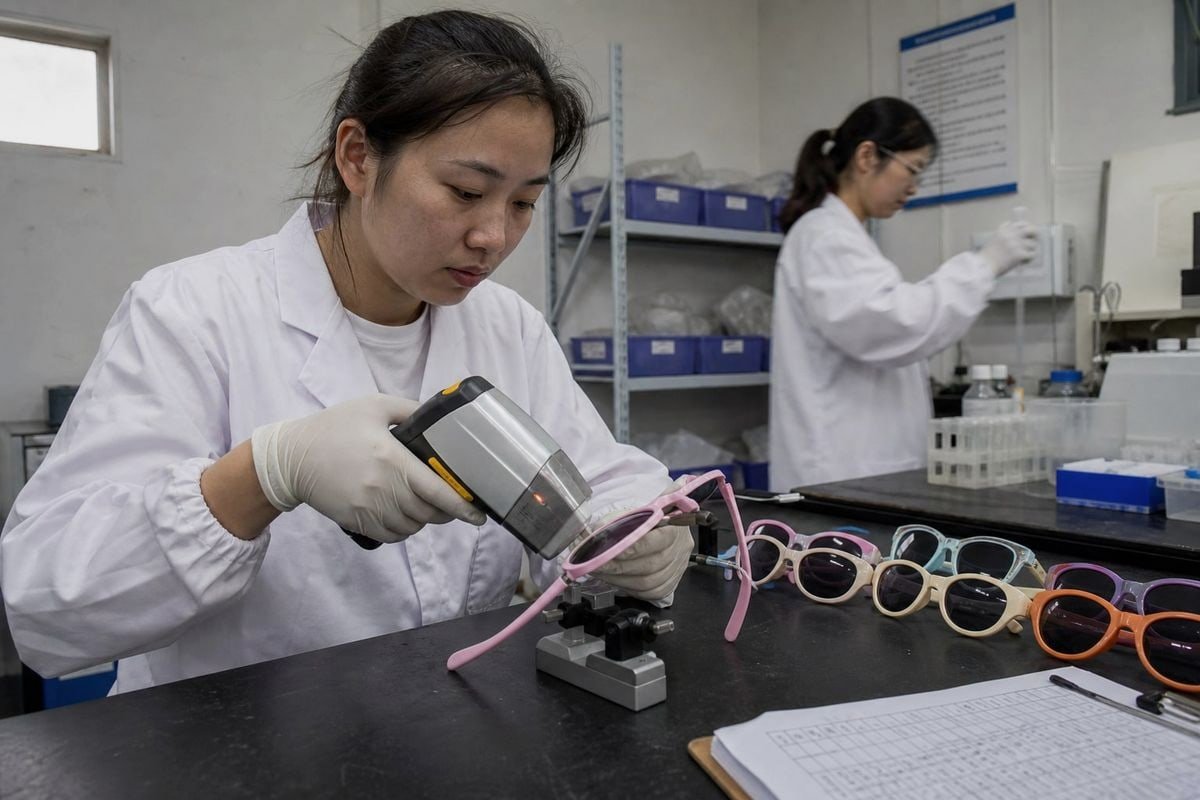
FDA verifies registration and listing at the time of importation. Its systems compare the declared manufacturer and shipper against the registration database. If your foreign factory never registered, or the names do not match, your shipment can be detained or held. That is why the supplier's compliance status matters as much as your own.
What the factory must do before exporting
Foreign manufacturer registration must happen before the first shipment leaves for the US. On top of that, the factory must complete device listing for each device type — for example, spectacle frames — and complete a U.S. Agent designation. The U.S. Agent acts as FDA's contact point inside the United States for communication and inspections. When we onboard a new US-bound client, we confirm these three items are current before we quote production timelines, because a paperwork gap can erase weeks of lead-time planning.
Quality systems behind the paperwork
Registration alone does not make eyewear safe. FDA expects device manufacturers to follow the Quality System Regulation (21 CFR 820), which governs production methods and controls. In our 5S-managed workshop, that translates into incoming material checks on our TR90 and TPEE stock, in-process inspection at injection and assembly, and outgoing QC before packing. Manufacturers should also understand Medical Device Reporting (MDR) duties, so serious problems get reported through the right channel rather than buried. Ask your supplier how they handle complaints. The answer tells you a lot about whether their quality system is real or just a certificate on a wall.
What documents should I request from my manufacturer for FDA compliance?
Early in my export career, I learned a hard lesson: a buyer's broker rejected a shipment file because our test report referenced the wrong style number. Since then, we audit every document set against the commercial invoice before booking.
Request the manufacturer's FDA registration number, device listing confirmation, U.S. Agent details, impact resistance test certification for fitted lenses, CPSIA third-party test reports with a Children's Product Certificate, labeling samples, and quality system documentation. Keep all records for at least three years.

Think of this as your import file. FDA or Customs and Border Protection can ask for these records, and a complete, consistent file is the fastest way through a document review. Here is the checklist we prepare for our own US buyers:
| Document | What it proves | Common mistake |
|---|---|---|
| FDA establishment registration number (factory) | Foreign manufacturer registration is current | Registration lapsed after annual renewal window |
| Device listing confirmation | The spectacle frame device type is listed | Importer assumes they must list it themselves |
| U.S. Agent designation details | FDA has a US contact for the factory | Agent named but contact details outdated |
| Drop-ball impact resistance testing certification | Lenses meet FDA impact standards | Missing when frames ship with fitted lenses |
| CPSIA test reports + Children's Product Certificate | Lead and phthalate compliance for a children's product | Buyer assumes FDA paperwork covers CPSC rules |
| Labeling and packaging samples | English common name and manufacturer/distributor info shown | Labels list only the brand, not the responsible party |
| Quality System Regulation (21 CFR 820) evidence | Controlled, repeatable manufacturing | Supplier offers only a generic ISO certificate |
A simple decision tree before you file
Match your role, then act:
- Foreign manufacturer? Register, list your devices, and name a U.S. Agent before exporting.
- US initial importer? Register your establishment before your first import; identify your manufacturers.
- Downstream distributor buying from a registered US importer? Verify the chain's registration status; your own duty may differ.
- Unsure? Ask your customs broker or regulatory consultant before the goods ship, not after they land.
Our team shares this framework with every new US buyer, whether they choose a stock style or a full OEM/ODM program with custom colors, logos, and packaging. FDA import compliance is easier to build in at the purchase order stage than to fix at the pier.
Conclusion
If you are the initial importer of kids optical frames, FDA establishment registration is usually required — and a supplier with clean registration, listing, and test records makes the whole process painless.
Notes de bas de page
1. Direct link to the FDA regulation classifying spectacle frames as medical devices. ↩︎
2. Found a working and authoritative FDA page specifically for 510(k) Premarket Notification. ↩︎
3. Direct access to the electronic Code of Federal Regulations for establishment registration. ↩︎
4. Provides FDA’s definition and examples of Class I medical devices. ↩︎
Plus d'articles que vous pourriez aimer

août 5, 2026
Bio-Based vs Regular Cellulose Acetate: What's the Difference for Kids' Frames?

août 5, 2026
How Recyclable Are Kids' Optical Frame Materials, and What Eco-Friendly Alternatives Exist?
août 5, 2026
Do Kids Optical Frames Whiten or Age in Storage, and How to Control Warehouse Conditions?
Vous recherchez un partenaire fiable en lunetterie pour enfants ?
Explorez plus de 800 styles prêts et un support OEM/ODM complet adapté à votre marque.
Contactez-nous English
  Español de México
  Deutsch
  Français
  日本語
日本語  العربية
  Português do Brasil