Polarized vs Tinted Kids Eyewear: Do Kids Really Need Polarized Lenses?
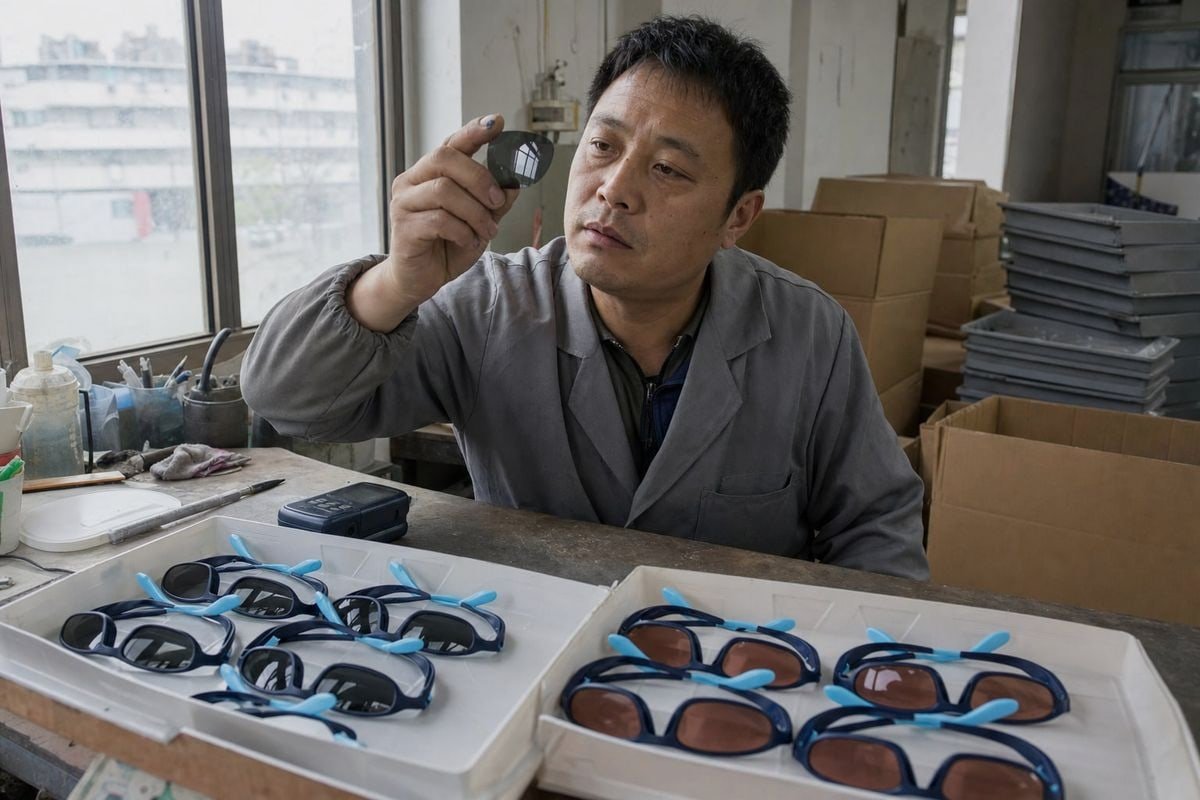
Buyers ask me about [polarized vs tinted kids eyewear](https://okayeyewear.com/kids-sunglasses-polarized-vs-regular-lenses-what-s-the-difference/) almost weekly. Choose wrong, and your brand ships product parents distrust. On our production line, we solved this by separating glare from brightness.
Kids do not need polarized lenses for basic eye safety. Polarized vs tinted kids eyewear comes down to glare: polarization cuts reflected light from water, snow, and pavement, while tint only dims brightness. UV400 protection matters most, and both lens types can include it.
That short answer hides real sourcing decisions. Below, I break down how each lens works, what your customers will actually value, and how to source both reliably.
How do polarized lenses actually protect my young customers' eyes outdoors?
A distributor in Australia once sent us photos of kids squinting on a beach while wearing dark sunglasses. The lenses were tinted, not polarized. That gap explains a lot.
Polarized lenses contain a chemical filter that blocks horizontal reflected light — the harsh glare bouncing off water, snow, sand, and roads. They sharpen visual clarity and reduce eye strain, but they do not add UV protection by themselves; UV400 coating handles UVA and UVB rays separately.
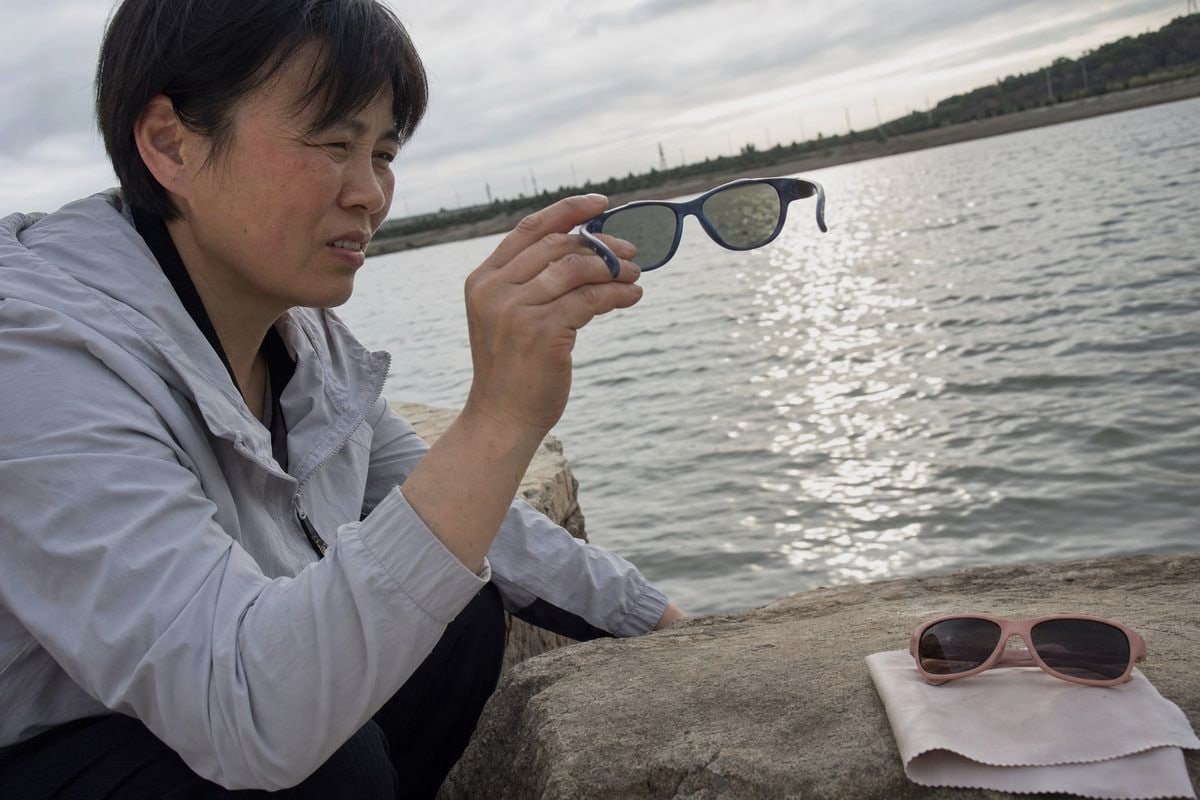
Light behaves in two ways outdoors. Direct sunlight scatters in all directions. Reflected light, however, bounces off flat shiny surfaces and travels mostly in a horizontal plane. That horizontal light is what we call glare. It is intense, concentrated, and uncomfortable for young eyes.
A polarized filter 1 works like a set of vertical blinds. It sits inside or on the lens and only lets vertical light waves through. The horizontal glare gets blocked. The result is a calmer, sharper view with far less squinting.
What polarization does — and does not — do
This distinction matters for your product claims, so let me make it plain:
| Feature | What it controls | Does it protect the retina from UV? |
|---|---|---|
| Polarized filter | Reflected glare from horizontal surfaces | No — glare comfort only |
| Lens tint (darkness) | Overall visible brightness | No — brightness comfort only |
| UV400 coating | rayons UVA et UVB 2 up to 400nm | Yes — this is the safety layer |
| Polycarbonate 3 lens material | Impact resistance and shatter safety | Partially — it naturally absorbs some UV |
When we build polarized kids' sunglasses in our Taizhou factory, we laminate the polarizing film 4 into a polycarbonate lens and then verify protection UV400 5 separately. One feature never substitutes for the other. Pediatric eye health depends on the UV layer; comfort depends on the glare layer.
There is also a developmental angle worth noting. Some optical guidance suggests that sharper contrast and reduced glare may support healthy contrast sensitivity 6 while a child's vision is still maturing. I treat that as a supporting benefit, not a headline claim. The proven benefits are simpler: less light sensitivity, less squinting, and less eye strain during long outdoor days.
Is tinted eyewear a cheaper alternative that still meets my brand's safety standards?
Cost engineering is a trade-off we weigh on almost every OEM project. When a European baby brand asks us to hit a retail price point, tinted lenses are usually the first lever we discuss.
Yes. Tinted lenses with verified UV400 protection meet the same eye-safety standard as polarized lenses at a lower cost. Tint reduces brightness, not glare, so quality tinted kids' sunglasses are fully safe for everyday outdoor play — provided the UV coating is tested and certified.
The safety question and the comfort question are different questions. Regulators and optometrists agree on the safety side: what protects a child's retina is blocking UVA and UVB rays, not the darkness of the lens. A pale amber tinted lens with UV400 protection is safer than a nearly black lens without it.
The dark-lens trap every buyer should know
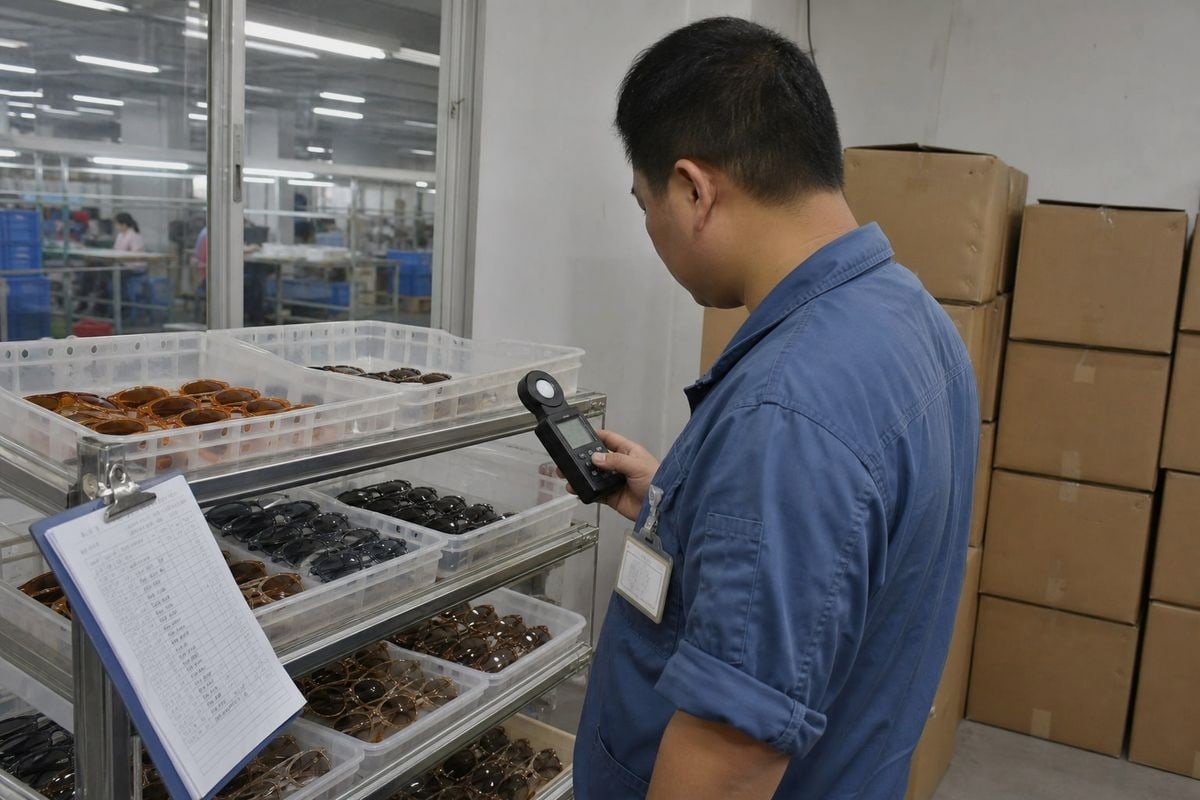
Here is the risk I warn new buyers about. A dark tint makes the pupil dilate. If that dark lens has no verified UV coating, the dilated pupil actually lets in more harmful rays than wearing no sunglasses at all. Cheap, uncertified dark sunglasses are the worst option on the market. This is why we never quote lenses without a UV specification, and why we keep test documentation on file for every lens batch.
Where tinted lenses genuinely fit
Tinted lenses are not a compromise for many use cases. They fit well when:
- The child mostly plays in the neighborhood, park, or garden.
- Glare from water or snow is not part of the daily environment.
- Your brand targets an accessible price point for first-time buyers.
- The child frequently looks at tablets or screens, where polarization can distort LCD displays.
| Criteria | Quality tinted lens | Polarized lens |
|---|---|---|
| UV400 protection possible | Yes | Yes |
| Brightness reduction | Yes | Yes |
| Glare reduction | No | Yes |
| Screen visibility | Normal | Can darken LCD screens |
| Typical FOB cost impact | Baseline | Higher |
| Best fit | Everyday casual wear | Water, snow, sports |
On our line, both lens types go into the same flexible TR90 and TPEE frames. The frame safety story — impact resistance, no sharp edges, bendable temples — stays identical. Only the optical package changes. That lets you build a two-tier range on one frame platform, which keeps tooling costs down for your brand.
Which lens option will my customers value most for outdoor and sports use?
A Japanese kids' outdoor brand taught me a useful lesson here. They launched tinted styles first, then added polarized versions after parents kept asking why their children removed sunglasses at the beach.
Parents value polarized lenses most for water, snow, sand, and sports settings where glare reduction keeps kids comfortable and compliant. For casual everyday wear, tinted UV400 lenses deliver equal safety at better value. The smartest retail range offers both, positioned by activity.
The buying decision your customers face is really an activity decision. So the clearest way to guide them — and to structure your product range — is by environment.
Match the lens to the child's day
| Activity or setting | Better choice | Pourquoi |
|---|---|---|
| Beach, pool, lake, boating | Polarized | Water reflects intense horizontal glare |
| Skiing, sledding, snow play | Polarized | Snow is one of the strongest glare surfaces |
| Cycling, running, field sports | Polarized | Reflected light off pavement causes squinting |
| Park play, school run, errands | Tinted UV400 | Brightness control is enough; lower cost |
| Long car rides with tablets | Tinted UV400 | Polarization can black out LCD screens |
| Light-sensitive children | Polarized | Stronger relief from eye strain and squinting |
The compliance benefit brands underrate
Here is the argument I make to buyers who hesitate at the polarized price premium. The hardest problem in kids' eyewear is not optics — it is getting children to keep the glasses on. Polarized lenses give an immediate, noticeable cooling effect on the eyes. Kids feel the difference, so they wear the product longer. For a brand, that means fewer returns, better reviews, and more sunglasses actually protecting eyes instead of sitting in backpacks.
Two honest caveats, because I would rather you hear them from your supplier than from a customer review. First, polarization makes tablets, handheld game screens, and some car displays look dark or distorted. Second, a small number of children with sensory sensitivities notice rainbow patterns in car windows and tempered glass, which some find distracting. Neither issue is a safety problem, but both belong in your product FAQ. Our sport-style wraparound shields with mirrored polycarbonate lenses handle the high-glare sports niche, while our pastel round tinted frames cover the everyday segment — the two products answer two different customer moments.
How do I choose the right supplier to source polarized or tinted kids eyewear reliably?
Fifteen years of eyewear production have taught our team one blunt truth: lens claims are easy to print and hard to verify. Your supplier selection process has to close that gap.
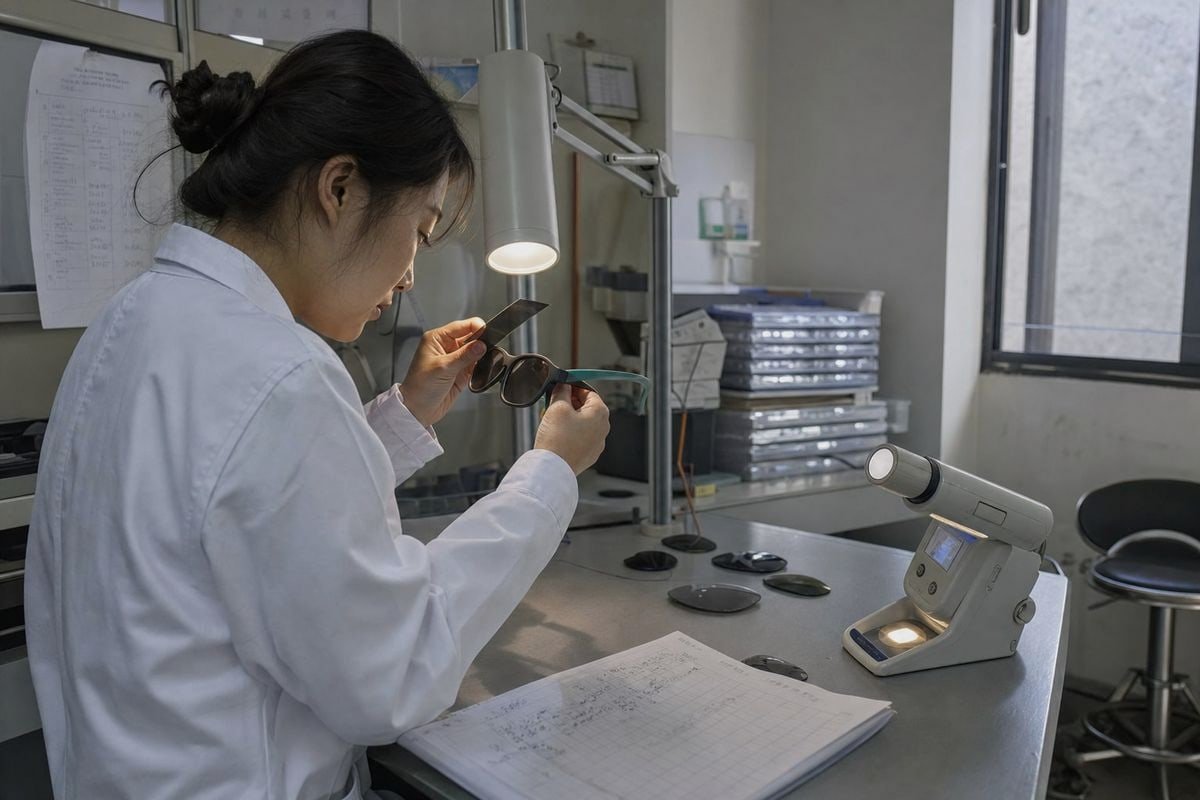
Choose a factory that verifies UV400 protection with test reports, specifies polarizing film quality, uses child-safe flexible materials like TR90 and TPEE, and offers a broad existing style library. Ask for lens documentation, sample validation, and clear OEM support before committing to any order.
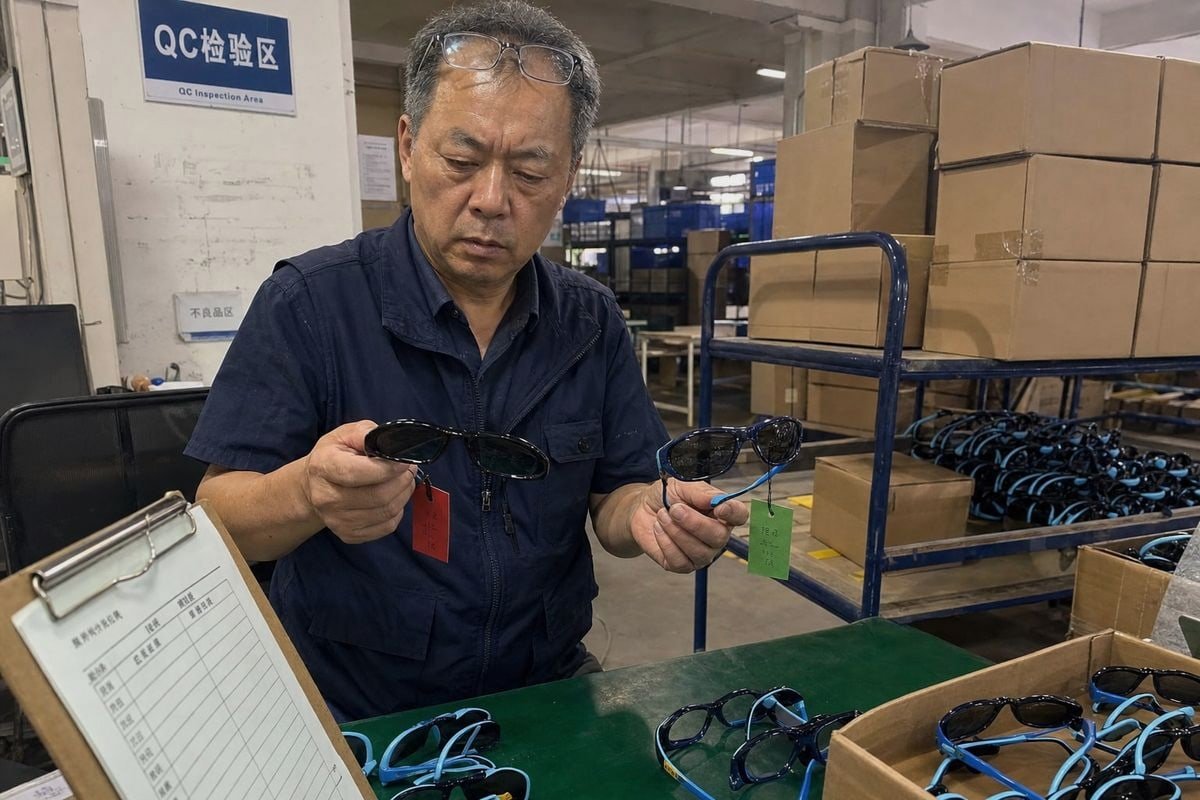
Sourcing kids' eyewear carries more risk than sourcing adult sunglasses. The end user cannot judge quality, the buyer is an anxious parent, and safety claims are legally sensitive in most markets. So your supplier audit should go deeper than price and lead time.
Questions I recommend every buyer ask
- Can you provide UV400 test documentation for the actual lens batch, not just a generic certificate?
- Is the polarizing film laminated properly, and can you demonstrate the polarization effect during sample review?
- Are lenses polycarbonate or another material with real impact resistance for active kids?
- Are frame materials flexible and child-safe — TR90, TPEE, or similar — rather than rigid brittle plastic?
- Do you manufacture in-house, or trade through other factories?
That last question matters more than buyers expect. A trading company cannot control lamination quality or coating consistency batch to batch. A factory can. At our 5S-managed workshop in Taizhou, around 120 workers run frame injection, lens assembly, and QC under one roof, which is exactly what lets us stand behind lens specifications.
Reducing launch risk without cutting corners
New brands often assume polarized kids' eyewear requires heavy mold investment. It usually does not. We maintain roughly 800 existing styles — optical frames, tinted sunglasses, and polarized sport shields — that buyers can customize with their own colors, logos, lens packages, and retail-ready packaging. That means you can test a polarized line and a tinted line in the same season, read real sell-through data, and only invest in custom molds once the market answers.
A practical validation path we walk buyers through: request samples of both lens types, run your own glare test on water or a car hood, check the fit on real children's faces, review packaging mockups, and confirm the pre-shipment inspection process 7. A supplier who welcomes that scrutiny is a supplier you can build a long-term range with. One who resists it is telling you something important.
Conclusion
Polarized vs tinted kids eyewear is not a safety debate — UV400 protection settles safety. Polarization buys comfort and glare reduction; tint buys value. Source both, verified, from a factory you trust.
Notes de bas de page
1. Background explanation of how polarizing filters selectively block light waves. ↩︎
2. WHO fact sheet explains health risks of UVA/UVB exposure requiring protective eyewear. ↩︎
3. Explains the impact-resistant material commonly used in protective children’s lenses. ↩︎
4. Technical overview of how polarizing filters and films manipulate light waves. ↩︎
5. FDA guidance confirms UV400 lenses are the standard for blocking harmful UV rays. ↩︎
6. Defines the visual concept referenced regarding children’s developing eyesight. ↩︎
7. WTO trade facilitation resource explains standard inspection practices for exported goods. ↩︎
Plus d'articles que vous pourriez aimer
Vous recherchez un partenaire fiable en lunetterie pour enfants ?
Explorez plus de 800 styles prêts et un support OEM/ODM complet adapté à votre marque.
Contactez-nous English
  Español de México
  Deutsch
  Français
  日本語
日本語  العربية
  Português do Brasil