Are Kids Optical Frame Parts Interchangeable? How to Confirm the Right Model?
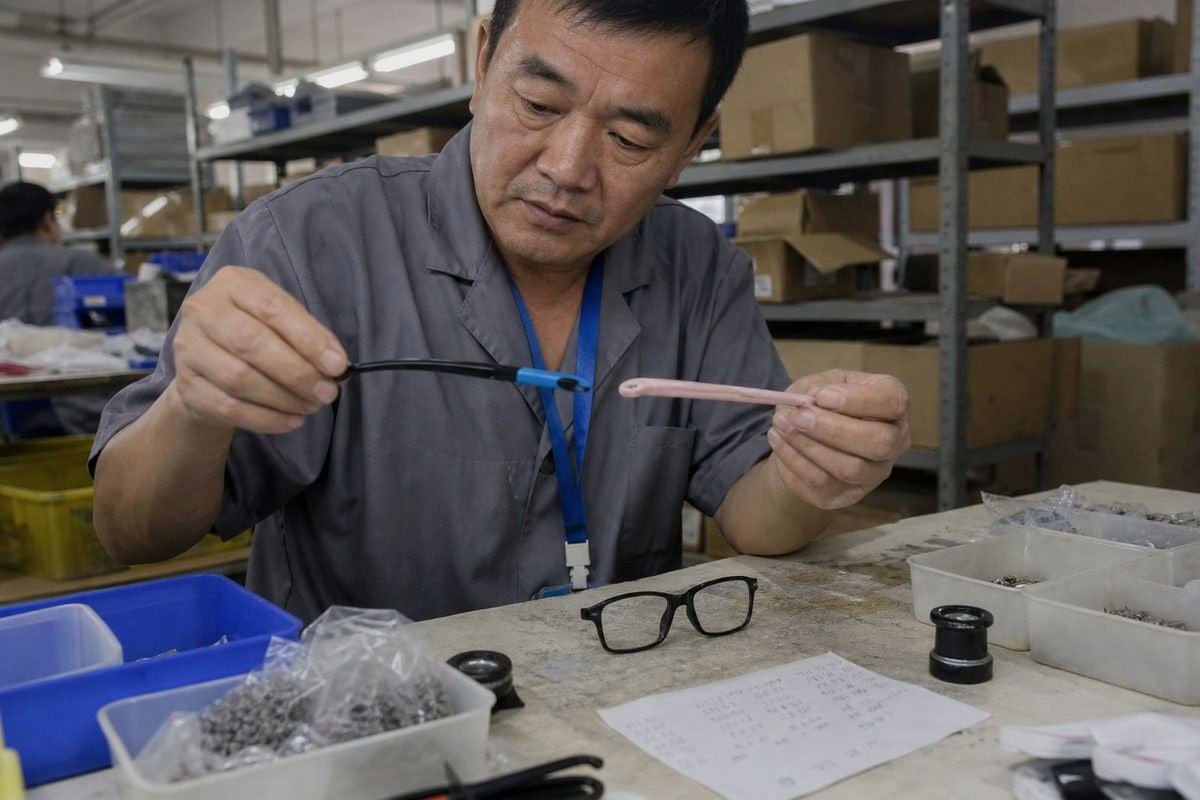
Kids optical frame parts 1 are a constant topic on our production line in Taizhou. A buyer orders replacement temples 2, the parts arrive, and nothing fits. Time and money are wasted. There is a better way.
Kids optical frame parts are not universally interchangeable. Most components — temples, fronts, bridges, and hinges — only fit within one brand’s specific model line. To confirm the right model, check the model number and size markings printed inside the temple arm before ordering any replacement.
That short answer hides a lot of detail. Below, I break down which parts can be swapped, how to identify a frame model, and what to tell your supplier so your order fits the first time.
Which parts of a kids optical frame can I actually replace or swap?
A few years back, one of our European buyers sent us a box of mismatched temple arms from three suppliers. None fit their frames. Our engineers spent an afternoon explaining why — and that lesson shapes this section.
On most kids optical frames, only small hardware — screws and nose pads — is close to universal. Temples, frame fronts, bridges, and decorative parts are usually brand-specific. Modular systems allow swapping temples or magnetic fronts, but only within that same manufacturer's ecosystem.
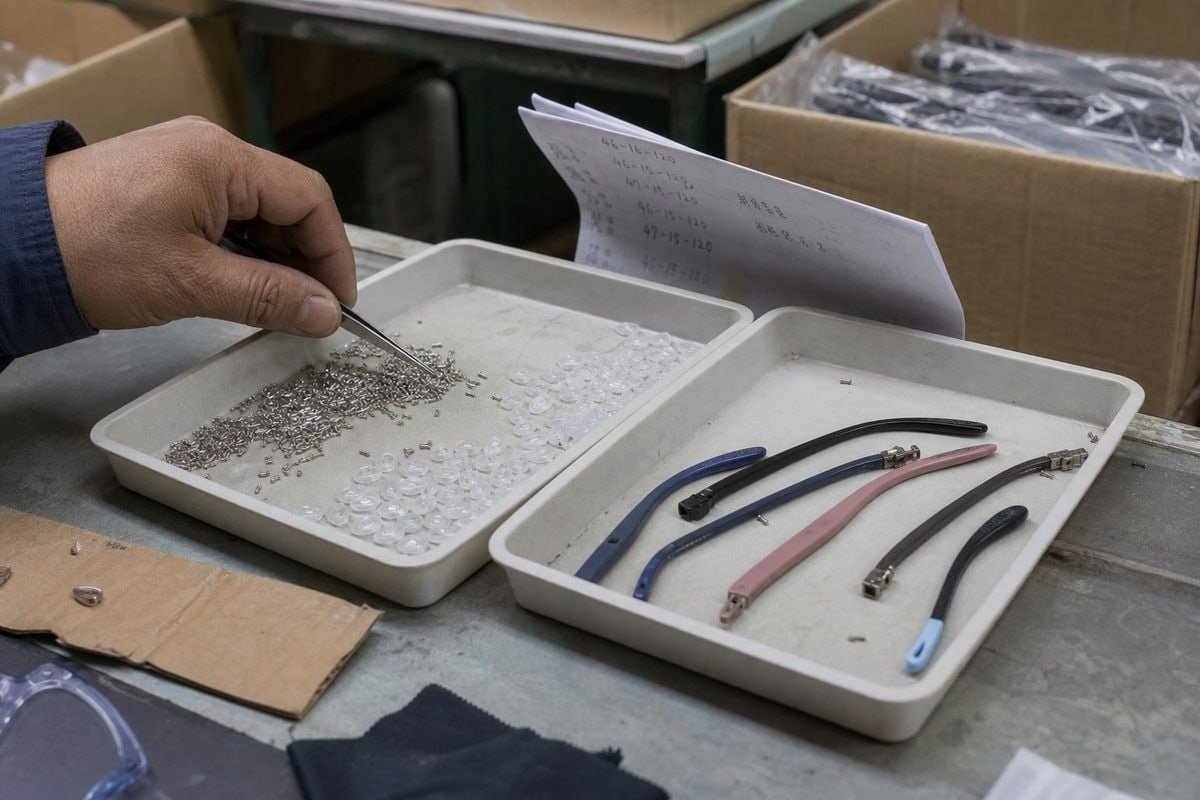
Think in terms of two categories: repair parts and design parts. Repair parts are things like screws and nose pads. Optical suppliers sell them in bulk, and a good eyeglass repair kit covers many common cases. But even here, pediatric frames often need specialized miniature screw thread sizes such as M1.0 or M1.2 — a standard adult screw will strip the barrel or fall out. Design parts are different. Magnetic fronts, snap-on facades, and interchangeable temple arms are tied to proprietary systems like Pair Eyewear or Roshambo Pops. They swap easily — but only inside that one platform.
Repair parts vs design parts at a glance
| Part | Type | Interchangeable? | Notes |
|---|---|---|---|
| Screws | Repair part | Mostly, by size | Kids frames often use M1.0 / M1.2 screw thread size |
| Nose pads | Repair part | Often, by mount type | Tomato Glasses offers 11 nose pad sizes, interchangeable within its own frames |
| Temple arms | Design part | Rarely across brands | Hinge type and barrel count must match |
| Frame front | Design part | Almost never | Lens groove, hinge spacing are proprietary |
| Bridge inserts | Design part | Brand-specific | Dilli Dalli offers interchangeable bridges with multiple positions |
| Magnetic top-frames | Design part | Same brand line only | Pair Eyewear, Roshambo Pops style systems |
Why temples are the hardest part to swap
Hinge compatibility is the primary barrier. A replacement temple must match the original's hinge type — spring hinge mechanism, static hinge, or integrated flex hinge — or the frame can snap under stress. Two temples may look identical in a photo but differ in barrel count, hole spacing, curvature, or length. There is also material memory to consider. In high-flex frames made from TR90 or TPE, the original frame front may have microscopically stretched over years of use. A brand-new replacement temple can then feel loose or fail to lock securely, even when the part number is correct. TR90 material durability is excellent, but flex materials do age around the hinge points.
How do I confirm the exact frame model before ordering replacement parts?
There is a trade-off we weigh in every OEM project: mark the frame clearly with model and size codes, or keep the temple clean for branding. We always push for clear markings — they save buyers from ordering blind later.
Find the model number location on the inside of the temple arm or bridge. Record the brand name, model code, and the three size numbers: lens width, bridge width, and temple length. Match the replacement part to that exact model and variant, never to a lookalike.
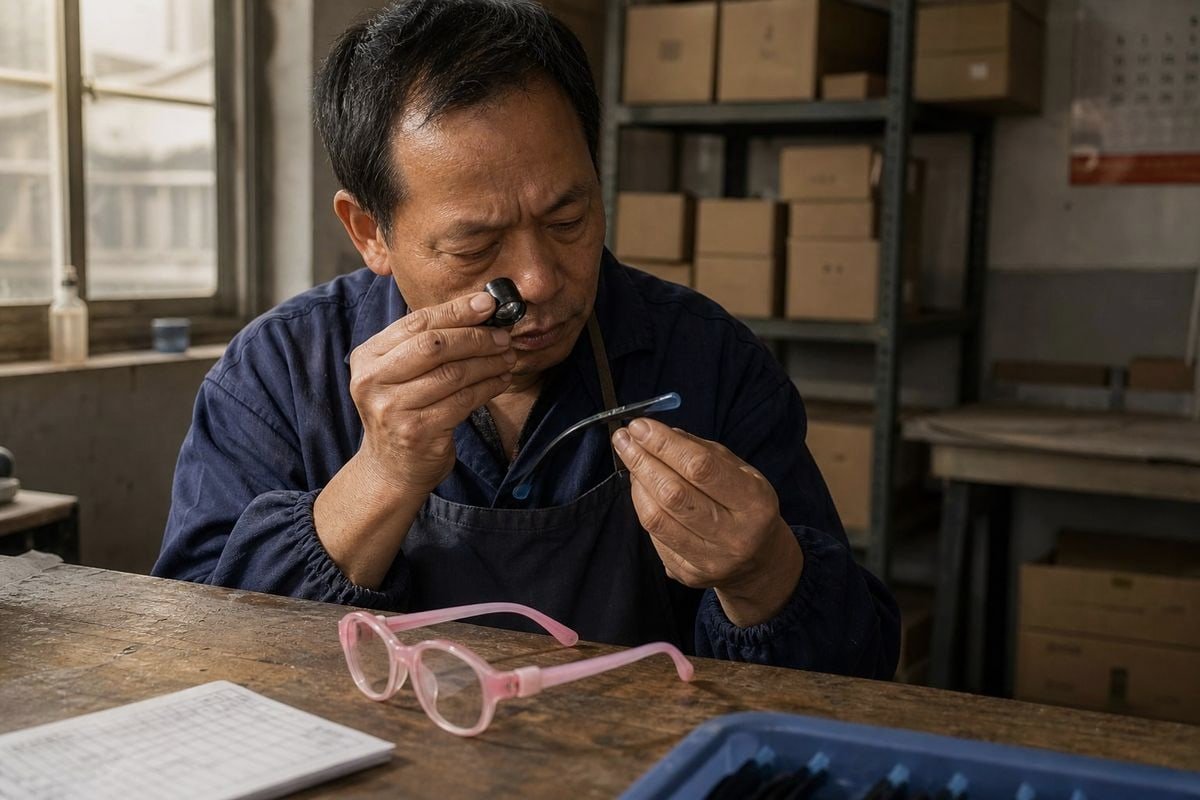
Every legitimate optical frame carries an alphanumeric string, usually laser-printed inside the left temple. Kids' models from big brands often use unique prefixes — "RJ" for Ray-Ban Junior, "O" for Oakley youth lines. On our own OEM frames, we print the style number, colorway code, and the three standard measurements. Learn to read them, and half the compatibility problem disappears.
A simple frame measurements guide
The three numbers usually appear in a format like 46□16-125. Here is what each one means:
| Marquage | Measurement | Typical kids range | Why it matters for parts |
|---|---|---|---|
| First number (46) | Lens width in mm | 40–48 mm | Determines front and lens compatibility |
| Second number (16) | Bridge width measurement in mm | 14–18 mm | Wrong bridge width ruins fit and lash clearance |
| Third number (125) | Temple length in mm | 115–130 mm | A temple arms replacement must match exactly |
One warning: these three measurements confirm the frame's fit for the child, but they do not guarantee that parts from a different model will align. Two frames can share 46□16-125 sizing and still use completely different optical hinge types.
Step-by-step confirmation process
- Check the inside of both temple arms and the bridge for printed codes.
- Photograph the markings in good light before they wear off.
- Note the colorway code — some brands change hinge hardware between color variants.
- Decide whether you need a service part or a modular component.
- Contact the retailer or optician and ask whether that part is still stocked as an official manufacturer spare part for that model.
If the markings have rubbed away, an optician can measure the frame with a caliper. For discontinued pediatric frames, 3D scanning and biocompatible resin printing are emerging as viable ways to replicate exact-fit parts that are no longer in production — a real option for a beloved frame a child refuses to give up.
A procurement manager from Australia once emailed us asking for "spare arms for the blue kids frame." We stock about 800 styles, and dozens are blue. That single email turned into a week of back-and-forth photos. A complete spec sheet would have solved it in an hour.
Share the exact model number, colorway code, the three frame measurements, the hinge type, the connection system, and clear photos of the part and its markings. Also state the lens prescription range, since lens thickness can change how parts seat in the frame front.
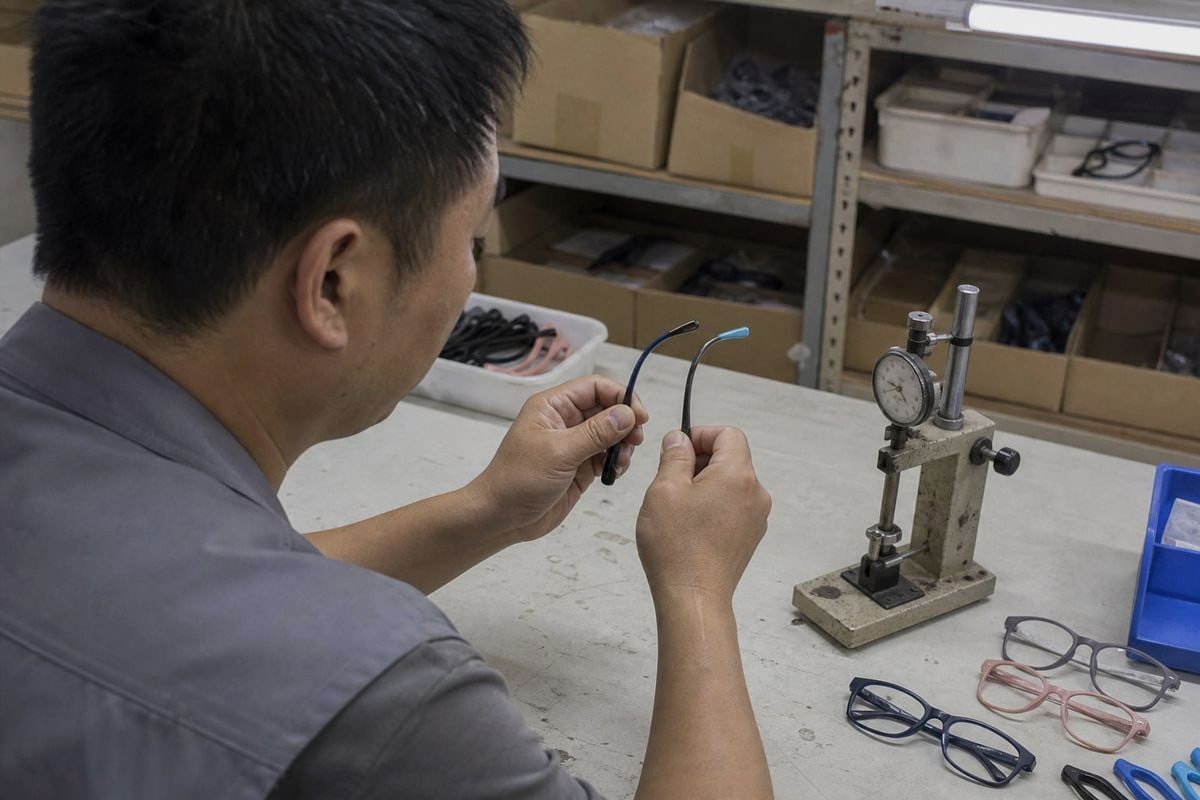
In our fifteen years of exporting children's eyewear to buyers in more than 20 countries, the orders that go wrong almost always started with incomplete information. The orders that go right follow a checklist. Here is the one we ask our own B2B clients to use.
The compatibility checklist we send buyers
| Information | Why the supplier needs it |
|---|---|
| Brand and model number | Locks the request to one exact frame line |
| Colorway or variant code | Hardware can differ between color variants |
| Largeur de la lentille, largeur du pont, longueur de la branche | Confirms the physical dimensions of the part |
| Hinge type (spring, static, integrated) | Prevents shipping a mechanically incompatible temple |
| Screw thread size if known | Kids frames often use M1.0 or M1.2 miniature screws |
| Connection type (magnetic, snap-on, clip-on) | Modular parts must match the connection, not just the look |
| Photos: full frame, hinge close-up, inner temple markings | Lets the factory verify against tooling records |
| Prescription / lens thickness | High-index vs standard lenses change frame front tension |
That last row surprises people. Even within the same model, variations in lens thickness change the internal tension of the frame front. A thick standard lens spreads the groove slightly; a thin high-index lens does not. This lens groove tension variance occasionally makes parts from a "spare" frame non-transferable, even though the model numbers match perfectly.
One more detail: connection type, not appearance
If the frame uses a magnetic top-frame, snap-on facade, or clip-on sun lens, always verify the connection mechanism. Magnet polarity, snap tab dimensions, and clip geometry are all proprietary. Two magnetic fronts can look identical and still repel each other. When our QC team inspects modular components, we test the actual connection under load — a visual check alone is never enough for a product that lives on a child's face.
Can I request custom or interchangeable components when developing my own frame collection?
The most rewarding projects on our development bench are modular ones. When a Japanese baby-brand buyer asked us to build a growth-adaptable frame, we designed TPEE temple tips in three lengths on a single TR90 front — one mold, three fit stages.
Yes. An OEM/ODM factory can engineer interchangeable temples, swappable nose pad sizes, adjustable bridges, or magnetic fronts into your own collection. You define the shared connection standard across your line, which turns interchangeability from a repair problem into a brand feature.
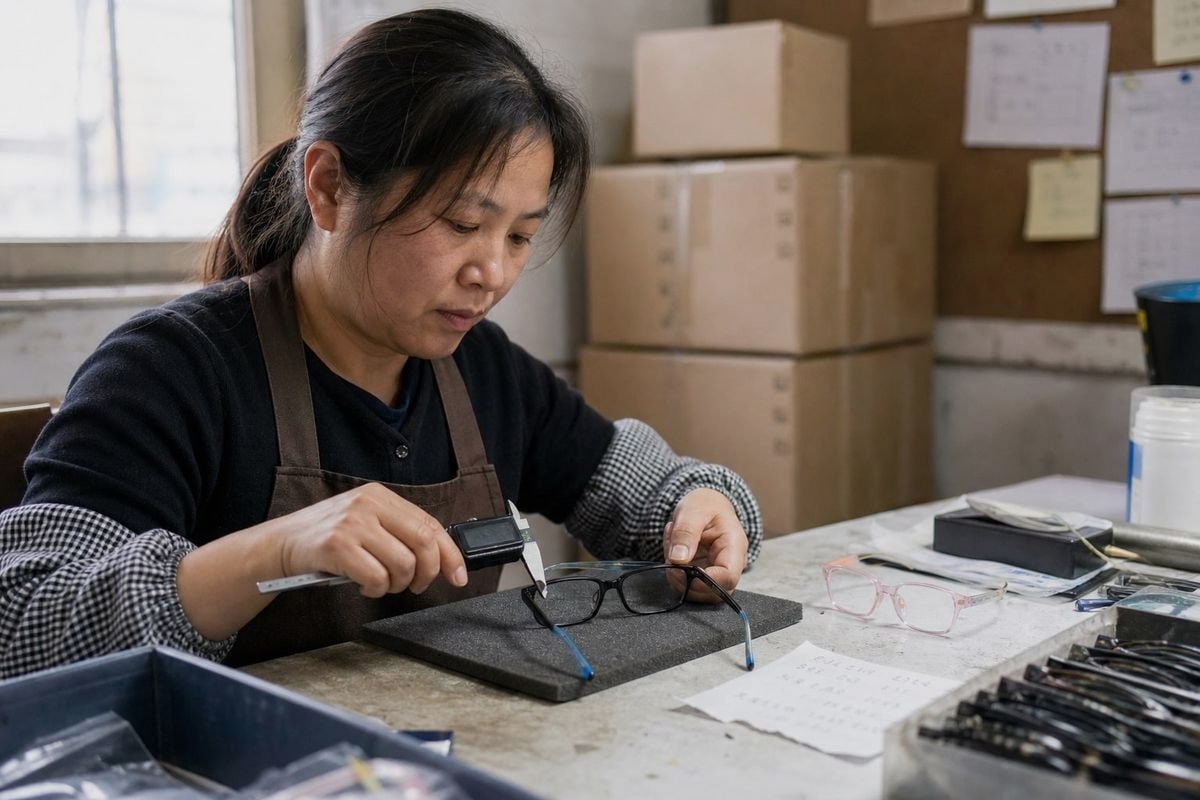
Here is the reframe I offer every brand founder: interchangeability is not a property you find in existing frames. It is a property you design in. Tomato Glasses proves the point — it offers 11 nose pad sizes across baby, Asian, and wide fits, all interchangeable within its own frames, with practical guidance like using a wider pad if the frame sits too far from the eyes or a spacer kit if it sits too close to the lashes. Dilli Dalli does the same with interchangeable bridges, adjustable temples, and multiple bridge positions for growth. Neither system works across brands. Both work beautifully within their own.
What we can build into a custom collection
- Interchangeable temple arms in multiple lengths, sharing one hinge standard across your whole line, so one SKU of spares services every frame.
- Swappable nose pad sizes for different face shapes and age stages, molded in soft TPEE for comfort and safety.
- Adjustable or interchangeable bridges so one front fits a child from age three to six.
- Color-swap components — a marketing angle, since kids love choosing their own temple colors.
One honest caution. Modular systems create brand lock-in: your parts only work on your platform. That is a benefit for customer retention, but it means you must commit to stocking manufacturer spare parts long-term. Sometimes a standard frame with well-stocked service spares is actually more repairable than a flashy interchangeable system whose parts go out of production. We raise this trade-off with every buyer before tooling begins.
There is also a practical shortcut. Because we maintain roughly 800 existing styles, a new brand can start with proven frames — including TR90 fronts 3 with flexible TPEE temples — and add modular features gradually, without heavy mold investment on day one. One subtle engineering point we always flag: swapping temples from a similar but non-identical model can alter the pantoscopic tilt 4, the vertical angle of the lens. For a child's developing visual system, even small peripheral distortion matters, so we validate tilt on every interchangeable design before it ships.
Conclusion
Kids optical frame parts fit only their exact model — so identify the frame, verify hinge and connection type, and share full specs with your supplier. Or design interchangeability into your own collection from day one.
Notes de bas de page
1. Authoritative Wikipedia entry detailing the anatomy and components of optical frames. ↩︎
2. ISO 7998 provides the international standard for vocabulary and parts of spectacle frames, including replacement temples. ↩︎
3. TR90 is a specialized polyamide (nylon) used in eyewear for its high flexibility and durability. ↩︎
4. Pantoscopic tilt is a fundamental optical measurement that determines the angle of the lens relative to the face. ↩︎
Plus d'articles que vous pourriez aimer

août 5, 2026
Bio-Based vs Regular Cellulose Acetate: What's the Difference for Kids' Frames?

août 5, 2026
How Recyclable Are Kids' Optical Frame Materials, and What Eco-Friendly Alternatives Exist?

août 5, 2026
Do Kids Optical Frames Whiten or Age in Storage, and How to Control Warehouse Conditions?
Vous recherchez un partenaire fiable en lunetterie pour enfants ?
Explorez plus de 800 styles prêts et un support OEM/ODM complet adapté à votre marque.
Contactez-nous English
  Español de México
  Deutsch
  Français
  日本語
日本語  العربية
  Português do Brasil