In-House Team vs Sourcing Agent: Lower Cost for Kids Optical Frames from China?
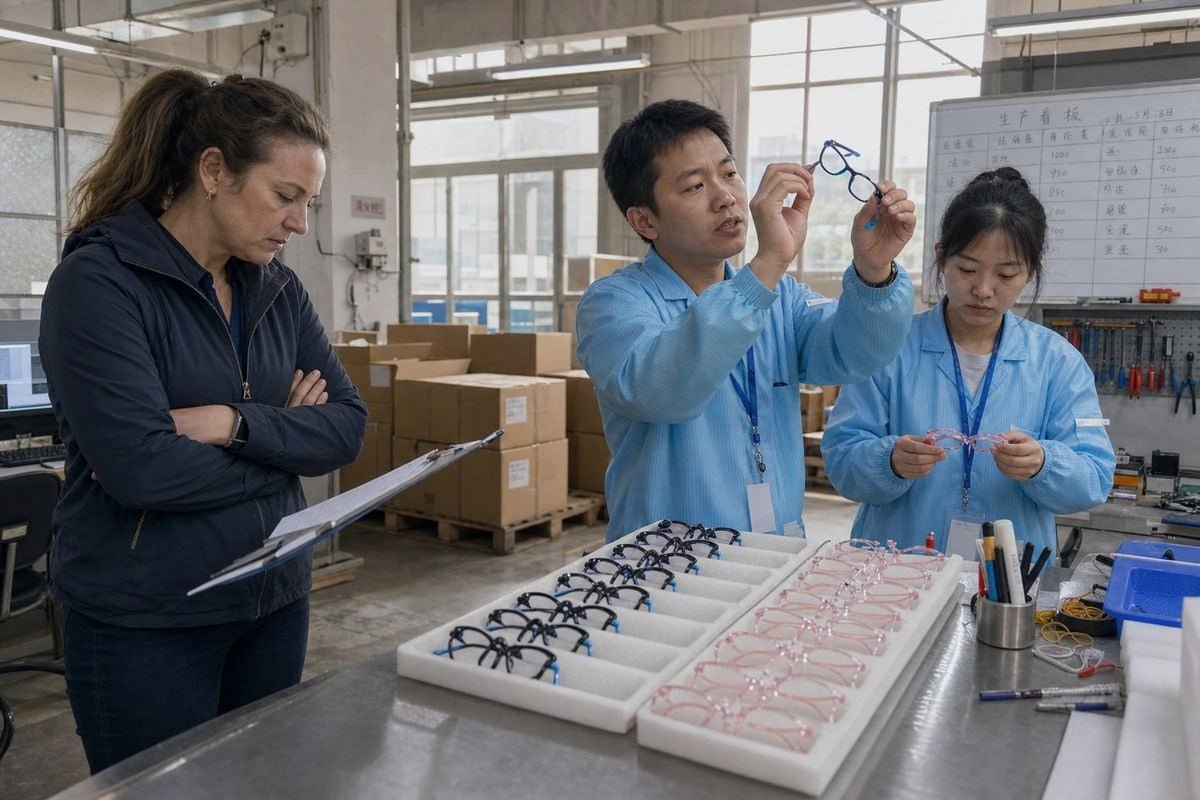
Buyers weighing an in-house team vs sourcing agent for kids optical frames from China often chase the wrong number — and our factory in Taizhou sees the fallout constantly.
For kids optical frames from China, a sourcing agent is usually cheaper for first-time or small-volume buyers because it reduces defects, delays, and internal labor. An in-house team only becomes the lower-cost option once you have high volume, stable suppliers, and real China sourcing expertise.
The real question is not agent fee versus no fee supply chain management process 1. It is total landed cost versus internal handling cost. Let me break down both models honestly, from the factory side.
How much can I really save using a sourcing agent versus building my own in-house team?
Last year, a buyer visited our workshop after firing her agent to "save the commission." Six months later, her internal costs had eaten every cent of that saving — and more OEM ODM manufacturing 2.
A sourcing agent typically charges 3%–10% of order value, or a flat fee of roughly $300–$2,000 per project. An in-house team avoids that fee but adds salaries, travel, sampling, and QC labor, which often totals 8%–15% of order value for smaller importers.
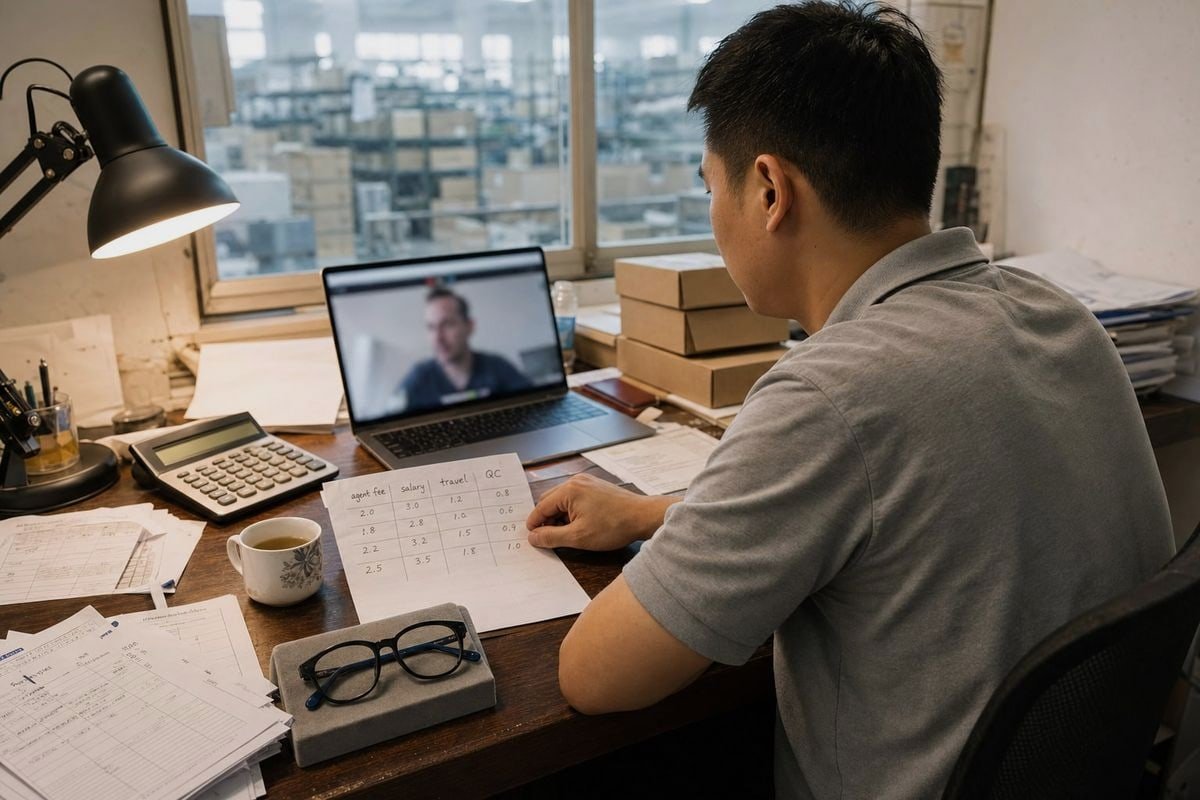
The honest math starts with what each side actually costs. From our experience working with brands in 20+ countries, most buyers only count the visible fee. That is a mistake. The invoice fee is the easy number. The internal handling cost is the hidden one.
What the agent fee actually covers
A good sourcing agent in China handles supplier screening, price negotiation, sample coordination, factory audit visits, quality control eyewear inspections, and international shipping logistics 3. Some agents only introduce suppliers and disappear. Others manage the full supply chain management process 4. The fee ranges reflect that difference.
What an in-house team actually costs
If you go direct, you absorb all of that work. You pay salaries. You pay for translation or Mandarin-speaking staff. You pay for flights to Taizhou or Wenzhou for factory visits. You pay for third-party inspections. And you pay — in defect losses — for every mistake your team makes while learning.
| Élément de coût | In-house team | Sourcing agent |
|---|---|---|
| Visible fee | Aucun | 3%–10% commission or $300–$2,000 flat |
| Internal labor | High (salaries, time) | Bas |
| Supplier vetting | Your team's job | Usually included |
| QC inspections | Arranged and paid by you | Often bundled |
| Travel and audits | Your budget | Agent's local presence |
| Mistake risk | Higher while learning | Lower with a proven agent |
One industry framing puts it well: the 5%–10% you save by going direct can be offset by 8%–15% in operational costs if you must do the work yourself. Some agents even claim total landed cost reductions of 10%–30%, though I treat that as a vendor claim, not a market fact. Either way, the direction is clear. For orders under roughly $5,000, neither model saves you much — the fixed costs dominate. Above that, the comparison gets serious, and your internal capability decides the winner.
A distributor once told us his agent had quietly added a markup on top of the commission — on frames we had quoted him directly two years earlier. He never knew until he compared invoices.
The main hidden risks of a sourcing agent China are opaque markups, kickbacks from factories, conflicts of interest, and shallow service that stops at introductions. Vet agents like suppliers: demand fee transparency, factory names, inspection reports, and references before committing.

Not all agents are equal, and I say that as someone who works with both good and bad ones on the factory floor. Some agents are true partners for their buyers. Others are just middlemen collecting margins from both sides. You need to know the difference before you sign anything.
The four hidden sourcing costs to check
- Double dipping. The agent charges you a commission and also takes a kickback from the factory. You pay twice, invisibly. Ask factories directly whether the agent receives a rebate.
- Hidden markups. Some agents quote you a "factory price" that already includes their margin, then add the official fee on top. Insist on seeing the factory's own quotation.
- Shallow scope. Some agents only make introductions. They do not manage sampling, quality control eyewear checks, or shipment coordination. If a batch fails, they vanish. Define the service scope in writing.
- Loyalty drift. An agent who works with the same few eyewear manufacturers China for years may push you toward those factories even when they are not the best fit for children's frames.
How to protect yourself
Ask for the factory's real name and business license. Request the right to visit or commission your own factory audit China. Require third-party inspection reports before final payment. And structure the agent's fee as a transparent percentage or flat project fee — never as an undisclosed spread inside the unit price. From where we sit in Taizhou, the buyers who do this get honest service. The buyers who don't often pay a quiet tax on every order without ever seeing it.
Can I get better quality control and communication by working directly with the factory instead?
When we develop a new TR90 frame with TPEE temples, the buyers who talk to us directly catch design details in days that would take weeks through a middle layer.
Yes — direct factory relationships usually improve communication speed and technical accuracy, especially for OEM ODM manufacturing. But better quality control only follows if you can define specs, run inspections, and enforce children's eyewear safety standards yourself, or your factory has proven internal QC.
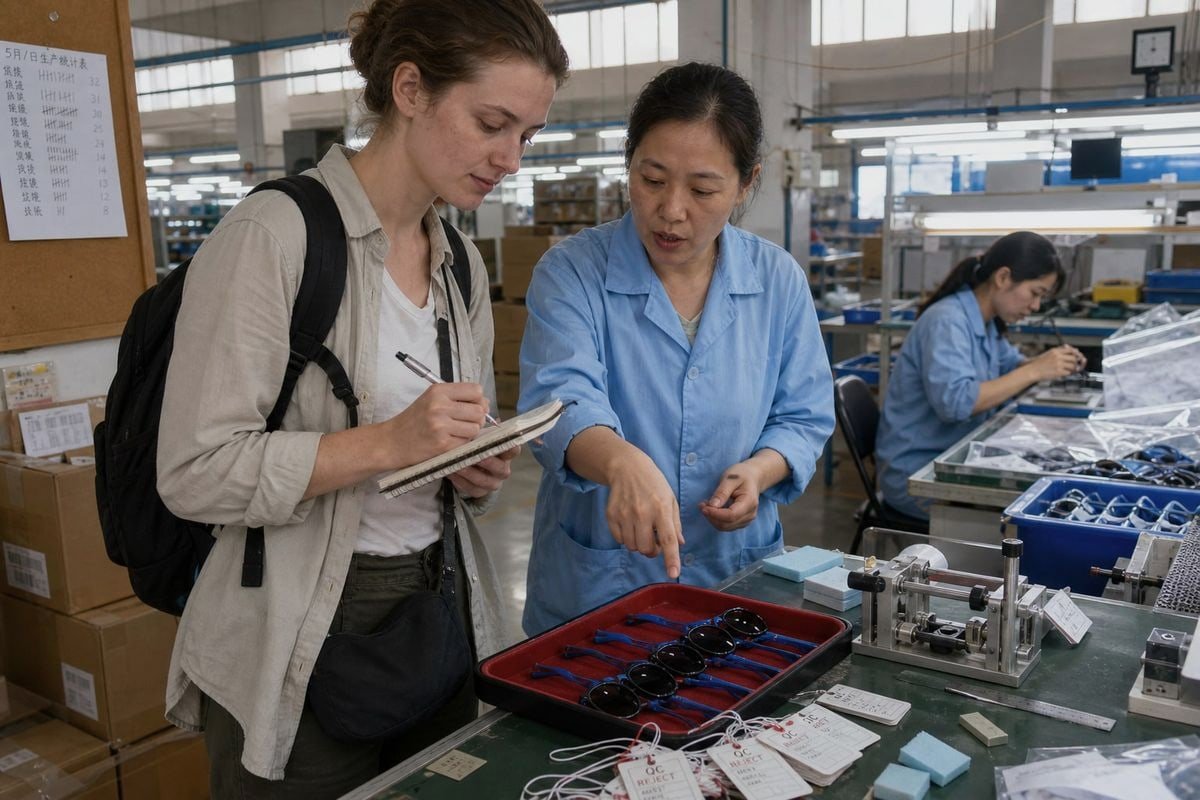
Direct communication is genuinely powerful for a technical product like kids optical frames. On our production line, the difference between a comfortable frame and a returned frame often comes down to millimeters — temple flexibility, nose bridge width, hinge tension for small faces. When a buyer explains their fit requirements to our engineers directly, nothing gets lost in translation. When the same message passes through an agent who does not understand optical frame materials, details get flattened.
But here is the caveat I always give buyers: direct communication is not the same as quality control. QC requires someone to check the goods — measuring frames against your spec sheet, testing temple flex cycles, verifying lens clarity, and confirming compliance with children's eyewear safety standards 5 for your market. If you go direct, that someone is you, your hired inspector, or the factory's own QC team.
What actually determines quality when you go direct
| Facteur | What direct buyers must verify |
|---|---|
| Material authenticity | Is it real TR90 and TPEE, or cheap substitutes? |
| Safety compliance | Test reports for your market (EU, US, AU, JP) |
| Factory discipline | Organized workshop, documented QC steps, 5S or similar 6 |
| Sample-to-bulk consistency | Does mass production match the approved sample? |
| Defect handling | Clear rework and replacement terms in writing |
In our 15 years of eyewear experience, the factories that welcome audits, share test reports without hesitation, and run structured workshops are the ones direct buyers can safely rely on. If a factory resists inspection or dodges compliance questions, no amount of direct communication will save the batch. Choose the factory first. The communication advantage follows.
When does it make more sense for my brand to build an in-house sourcing team rather than use an agent?
We supply several long-term brand clients who started with agents years ago and now email our sales team directly. Their transition followed a clear pattern, and volume drove all of it.
Build an in-house team when you order frequently at high volume, work with a stable set of vetted suppliers, and can justify dedicated staff — ideally with Mandarin capability. Until then, an agent or a strong OEM ODM factory partner is the lower-cost, lower-risk procurement strategy.

The decision is not ideological. It is arithmetic plus capability. An in-house team is a fixed cost. It only wins when you can spread that cost across enough orders, SKUs, and reorders that the per-order burden falls below an agent's fee.
A simple decision framework by buyer stage
| Buyer profile | Typical order pattern | Cheaper model | Pourquoi |
|---|---|---|---|
| First-time importer | One small trial order | Sourcing agent or direct factory with low minimum order quantity | No expertise yet; mistake risk is the biggest cost |
| Growing brand | Several orders per year, expanding SKUs | Hybrid: in-house strategy, outsourced execution | Volume rising, but fixed team cost not yet justified |
| Established importer | Frequent, high-volume reorders from known factories | In-house team | Fixed labor spreads across many orders; suppliers already vetted |
Signals that you are ready to go in-house
- You reorder from the same two or three vetted eyewear factories, so supplier discovery is no longer the main job.
- Your annual order value makes a 5%–10% agent fee larger than a sourcing manager's salary.
- You have — or can hire — staff who understand Chinese business culture, contracts, and international shipping logistics 7.
- You have standing QC arrangements, whether third-party inspectors or a factory whose internal checks you have audited and trust.
- Your product specs are stable, so you are managing repetition rather than constant new development.
One more honest point from our side of the table. Many of our best long-term buyers use a hybrid model. They keep procurement strategy, product design decisions, and supplier relationships in-house, but they lean on the factory for execution — sampling, custom colors and logos, packaging, and pre-shipment inspection. Because we offer around 800 existing styles, new brands can also skip mold investment entirely and test the market before committing to a full sourcing infrastructure. That path often makes both the agent and the in-house team unnecessary in the early years.
Conclusion
Chasing the lowest visible fee for kids optical frames from China often raises your true cost. Count total landed cost, match the model to your volume, and choose partners you can verify.
Notes de bas de page
1. Explains core supply chain concept referenced when comparing agent versus in-house scope. ↩︎
2. Clarifies the fundamental differences between OEM and ODM manufacturing models. ↩︎
3. Explains key concepts and processes involved in international shipping and logistics. ↩︎
4. Provides a comprehensive definition and overview of supply chain management. ↩︎
5. CPSC outlines regulatory standards relevant to children’s product safety compliance. ↩︎
6. Provides a definition and overview of the 5S methodology for workplace organization and efficiency. ↩︎
7. Background reference on logistics management, a core sourcing agent responsibility. ↩︎
Plus d'articles que vous pourriez aimer
août 5, 2026
Bio-Based vs Regular Cellulose Acetate: What's the Difference for Kids' Frames?
août 5, 2026
How Recyclable Are Kids' Optical Frame Materials, and What Eco-Friendly Alternatives Exist?
août 5, 2026
Do Kids Optical Frames Whiten or Age in Storage, and How to Control Warehouse Conditions?
Vous recherchez un partenaire fiable en lunetterie pour enfants ?
Explorez plus de 800 styles prêts et un support OEM/ODM complet adapté à votre marque.
Contactez-nous English
  Español de México
  Deutsch
  Français
  日本語
日本語  العربية
  Português do Brasil