How to Verify a Supplier’s Production Capacity for Kids’ Optical Frames from China?
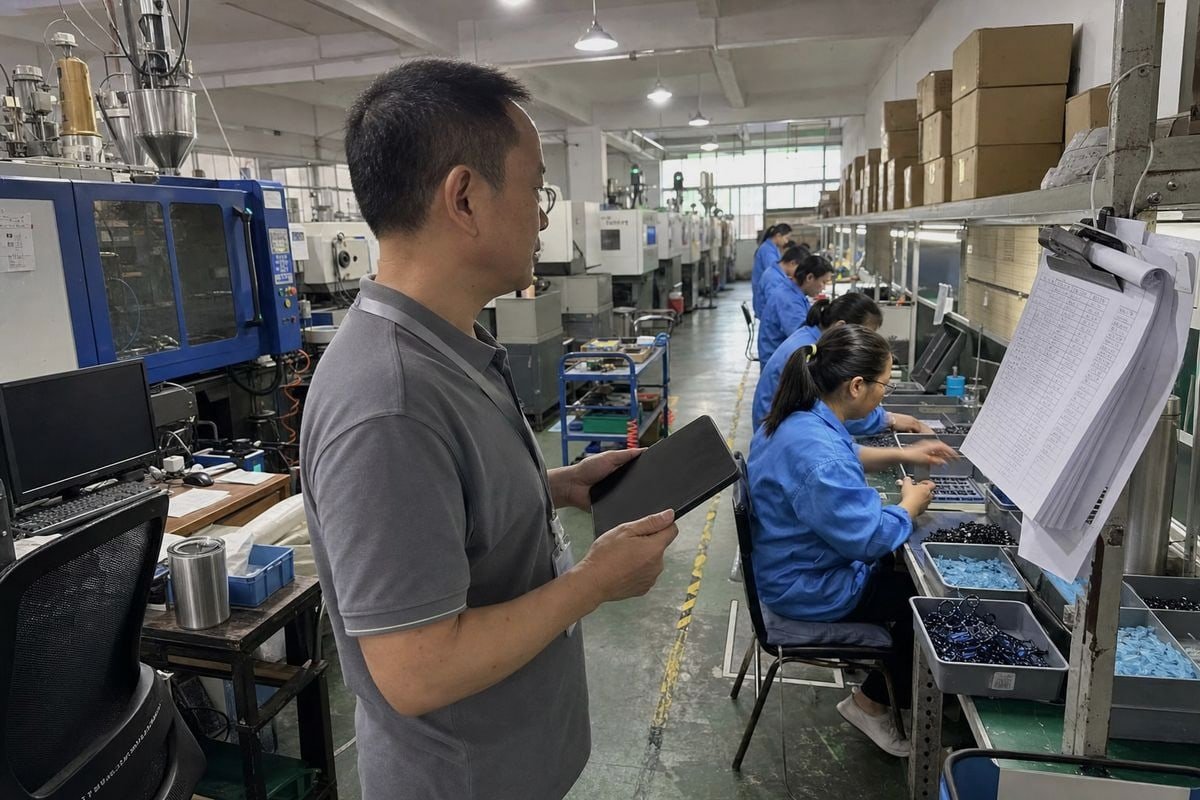
Verifying a supplier’s production capacity for kids’ optical frames is where I see most buyers stumble. Running our Taizhou workshop, I watch impressive catalogs hide empty production floors every season.
To verify a Chinese supplier’s production capacity for kids’ optical frames, check the business license and factory address, request live video of the actual production line, ask for daily output per process, review safety certifications, and place a trial order at 10–20% of claimed monthly capacity.
That single paragraph is the summary. The real work sits in the details. Below, I break the verification process into four practical questions, in the order I recommend you ask them.
How can I confirm a Chinese factory really has the workshop and workforce to handle my order volume?
A buyer from Australia once told me she had been quoted 200,000 frames per month by a "factory" that turned out to rent a single office room. Our team hears stories like this constantly, so we always invite live walkthroughs.
Confirm workshop and workforce by cross-checking the business license and Unified Social Credit Code against the physical factory address, then requesting a live, unedited video walkthrough showing active machinery, staffed lines, raw material stock, and work-in-progress that matches the claimed monthly output.
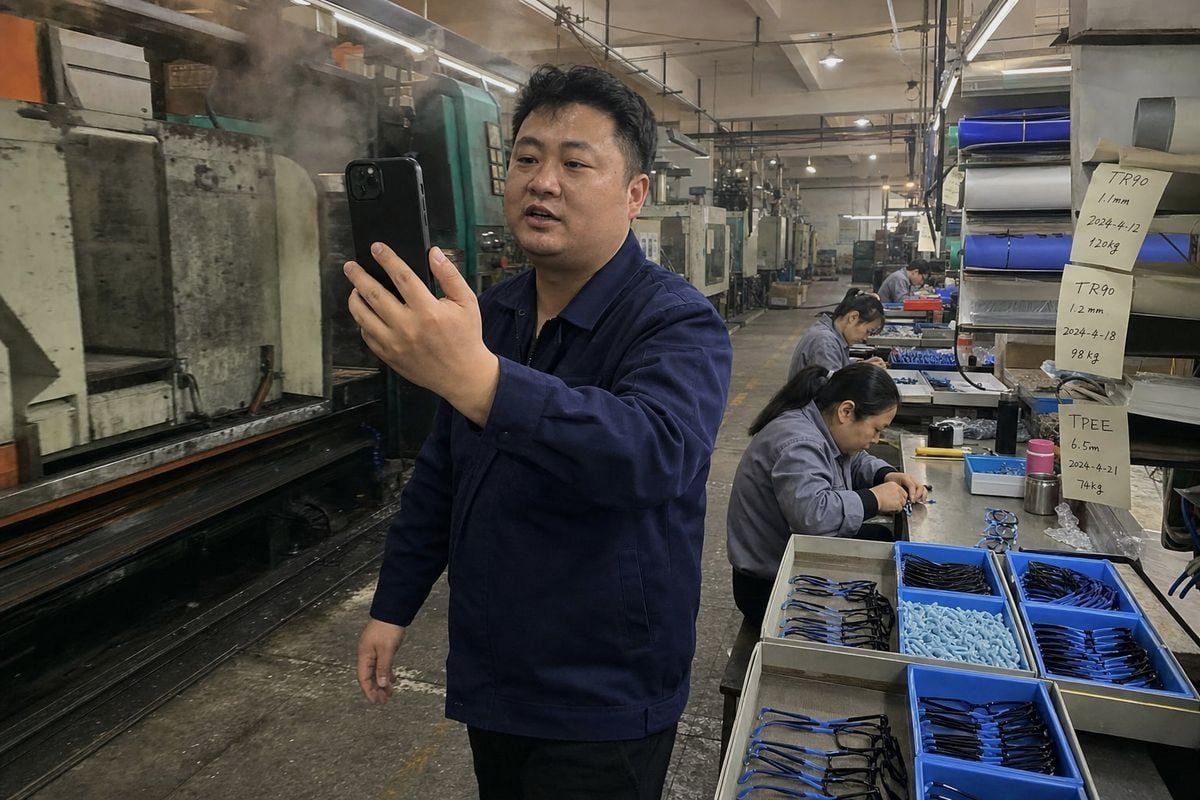
Start with paperwork, but do not stop there. A valid business license proves legal identity. It does not prove usable capacity. Some buyers argue documents matter most; others say operational proof is everything. In my experience, you need the sequence: legal identity first, then physical proof. A legally registered trading company can still have zero machines.
Match the registered address to the real factory
Pull the Unified Social Credit Code 1 (USCC) from the business license. Check whether the registered address aligns with the claimed production site. If they differ, ask why. Legitimate reasons exist, such as a subsidiary plant or authorized contract manufacturing 2. But the supplier should explain the mismatch clearly and without hesitation. Vague answers here are a serious warning sign.
Demand live video, not marketing clips
Pre-recorded videos prove nothing. Ask for a live, time-stamped walkthrough on a video call. When buyers request this from us, we walk them through le moulage par injection 3, assembly, our QC station, and packaging in real time. A genuine factory can do this on short notice. During the call, count workers, look for running machines, and check for raw material inventory and work-in-progress on the line.
Cross-check scale indicators
Claimed output must match visible scale. Use this quick consistency test:
| Scale Indicator | What It Should Match | Red Flag Example |
|---|---|---|
| Worker count | Claimed monthly output | 20 workers claiming 500,000 frames/month |
| Factory floor size | Number of production lines | Huge output claim, one small room |
| Injection molding capacity | Daily frame front output | No molding machines visible on video |
| Current order queue | Quoted manufacturing lead times | "We can start tomorrow" during peak season |
| Registered capital | Overall business scale | Tiny registration, giant volume claims |
Our own operation runs with roughly 120 workers in a Réalités du transit par mode 4, and after 15 years we can map every output claim to a specific line. Any real factory should be able to do the same for you.
What documents or certifications should I request to verify safety and quality control for kids' optical frames?
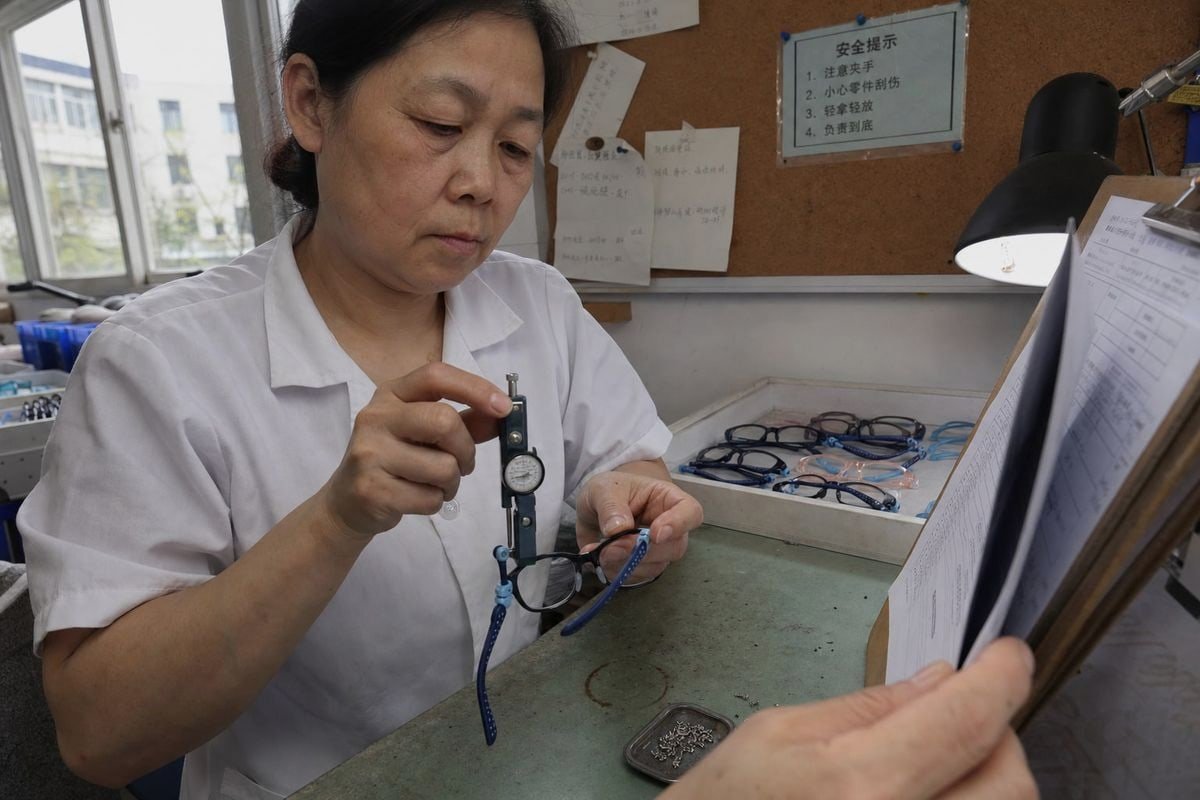
Last year our QC team rejected an entire batch of hinge screws from a sub-supplier because they failed our internal tension test 5. That moment reminded me why documentation alone never satisfies a serious children's eyewear buyer.
Request the business license, ISO 9001 certification with scope covering eyewear, test reports for CPSIA or EN safety compliance including lead and phthalate limits, FDA registration for US-bound frames, recent third-party inspection reports, and three to six months of production records for children's frames.
Kids' optical frames carry higher compliance stakes than adult eyewear. Children chew temple tips. Small parts can detach. Materials touch sensitive skin for hours daily. So your document request list must go beyond a generic factory audit checklist.
The core document set
| Document | What It Verifies | Watch Out For |
|---|---|---|
| Business license + USCC | Legal identity and registration | Mismatched addresses |
| ISO 9001 certification | A working quality management system | Expired or out-of-scope certificates |
| CPSIA / EN test reports | Lead and phthalate limits on accessible parts | Reports for a different product model |
| FDA registration | Eligibility for US import | Missing registration for US buyers |
| BSCI social compliance audit | Ethical labor practices | No audit for brand-sensitive markets |
| Production logs (3–6 months) | Real track record on kids' frames | Logs showing only adult frames or sunglasses |
Check the scope on every certificate. An ISO 9001 certificate 6 that covers "plastic toys" does not verify a quality management system for optical frames. When buyers audit us, they check that our documentation matches our actual TR90 and TPEE children's frame production, not a general category.
Ask about in-house testing
Paper certificates describe past tests. In-house testing capability predicts future consistency. Ask whether the factory runs its own physical testing lab with tension tests for hinges and small-parts checks for screws and nose pads. Ask how often they test during production, not just at final inspection. For children's frames, we test hinge durability and temple flexibility on every production run, because a certificate from last year says nothing about the batch shipping next week.
Cross-verify with third parties
For meaningful orders, commission third-party inspection services 7 such as SGS, BV, or QIMA to verify documents on-site. An independent inspector can confirm the certificates hang on the right factory's wall.
How do I check if a supplier's material expertise in TR90 or TPEE matches what my brand needs?
There is a trade-off I discuss with nearly every new brand: TR90 gives structure and shape memory, while TPEE gives softer flexibility for temples. Getting this balance wrong is why our engineers spent years refining TR90-front, TPEE-temple combinations.
Check material expertise by asking for the exact resin grades used, requesting samples that demonstrate flexibility and rebound, verifying injection molding parameters for TR90 and TPEE, reviewing TR90 material sourcing documentation, and confirming the factory has produced children's frames in these materials for several years.
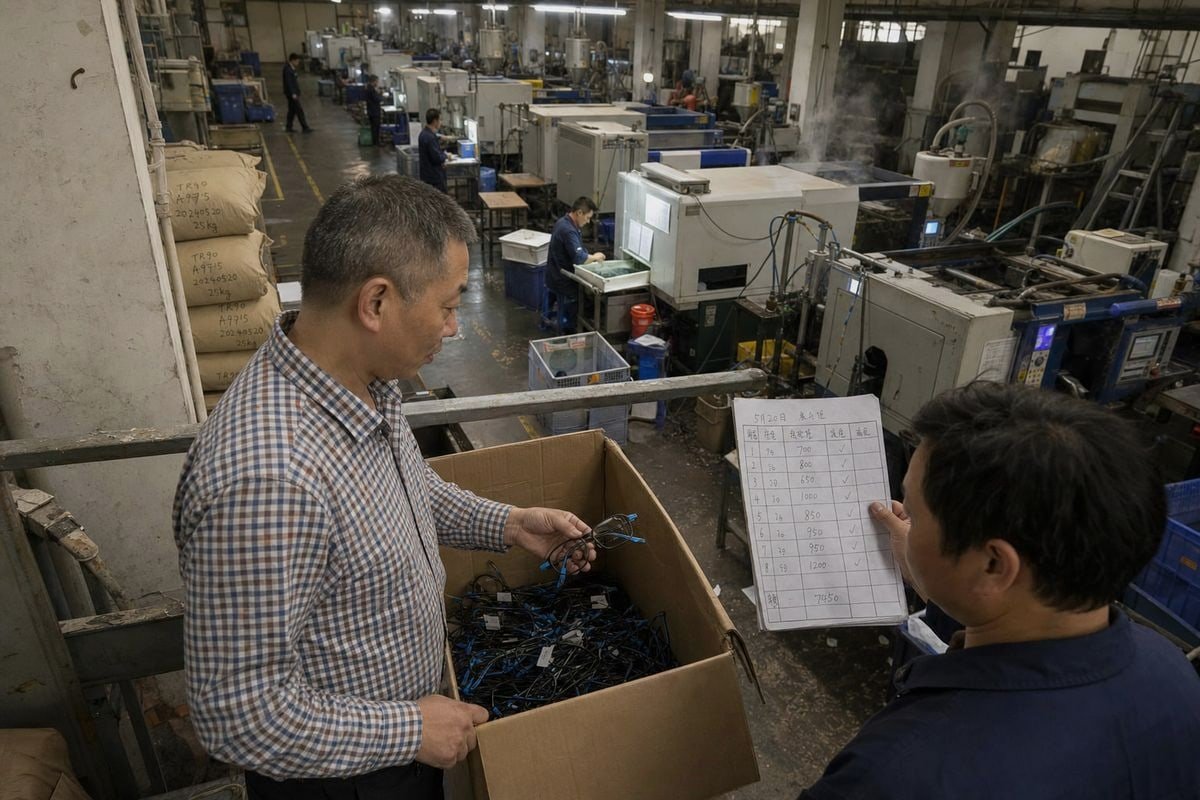
Material expertise is where trading companies get exposed fastest. Anyone can say "we use TR90." Few can explain how they process it. Here is a quick comparison to frame your questions:
| Property | TR90 | TPEE |
|---|---|---|
| Best use in kids' frames | Frame fronts, structured styles | Flexible temples, soft-touch parts |
| Flexibility | High, with shape memory | Very high, rubber-like |
| Weight | Very light | Very light |
| Safety benefit | Resists snapping into sharp edges | Bends fully without breaking |
| Processing difficulty | Moderate; needs precise molding temps | Higher; sensitive to molding conditions |
Questions that reveal real expertise
Ask the supplier which resin grades they buy and from which suppliers. TR90 material sourcing 8 varies widely in quality, and cheap substitutes become brittle in cold climates. Ask how they control injection molding temperature and cycle time for each material. Ask how they bond or join TR90 fronts with TPEE temples. A factory that genuinely runs these materials will answer in specifics within minutes. A reseller will stall and "check with the engineer."
Test the samples physically
Request samples and abuse them. Twist the temples flat. Bend the bridge. A proper TR90 kids' frame should flex and return to shape. TPEE temples should fold without whitening or cracking. Look at the details in real products too: on one of our sporty black frames, the navy TPEE temples carry silicone hinge connectors and adjustable ear hooks, all of which require multi-material assembly know-how. On our translucent pink acetate-look styles, the two-tone temples combine glossy and matte finishes in one part. These construction details are hard to fake and easy to inspect.
Confirm depth of catalog
A supplier with genuine material expertise usually shows range. Our library holds roughly 800 existing styles across TPEE and TR90, which lets brands launch without heavy mold investment. Thin catalogs with recycled stock photos suggest outsourced production.
What's the best way to evaluate a factory's production capacity before placing a large order?
Early in my career at our factory, we accepted an order that pushed one polishing station past its limit, and delivery slipped by a week. That lesson shaped how we now advise buyers: capacity lives at the bottleneck, not in the brochure.
The best evaluation is layered: verify documents, conduct a live or on-site audit, ask for daily output per process to find the bottleneck, review the current order queue, then place a trial order of 50–100 units or 10–20% of monthly capacity and measure first-pass yield.
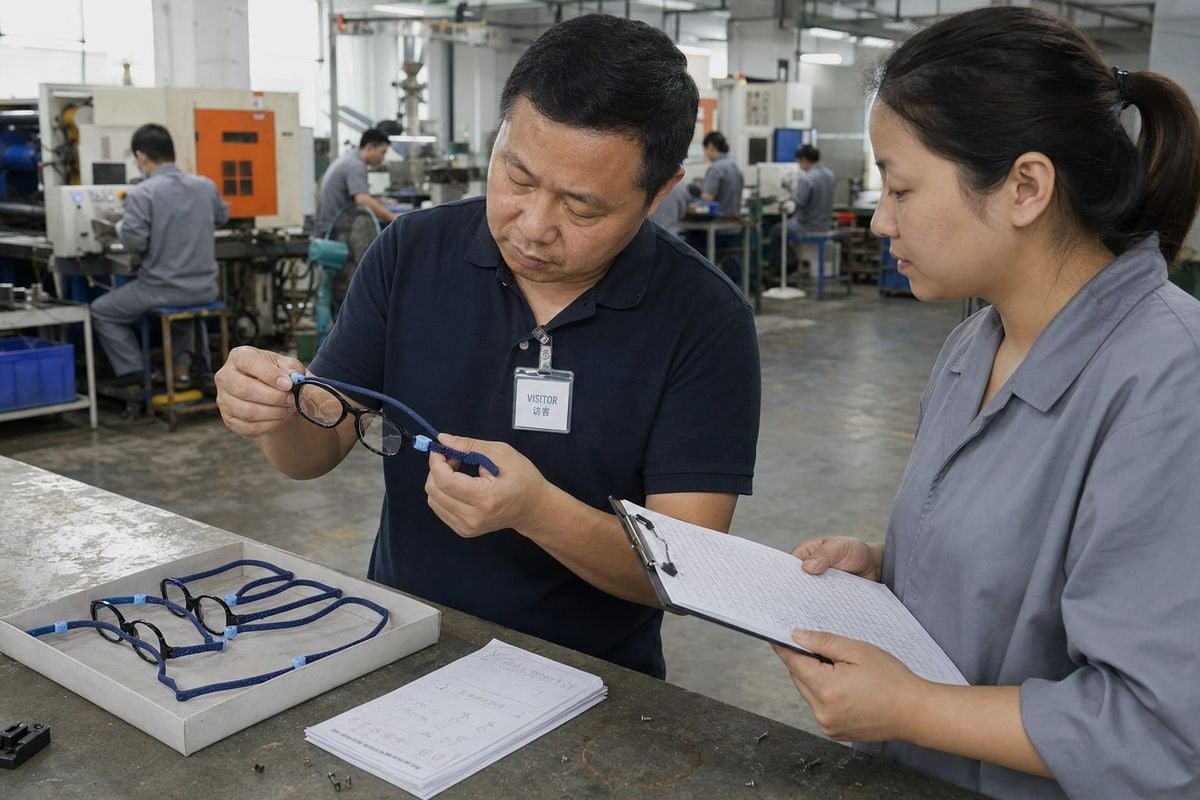
Never rely on one method. Each layer catches problems the others miss. Here is the sequence I recommend to buyers evaluating any children's eyewear factory, including ours:
- Convert "rated capacity" into math. Ask for daily production output per process: molding, tumbling, polishing, painting, assembly, and packaging. Ask about mold cavity counts and shift schedules. Multiply and compare. The slowest process is the real capacity, and a competent factory can name its bottleneck instantly.
- Separate in-house from outsourced work. Ask which steps happen inside the building. Tumbling and polishing matter especially for kids' frames, because smooth edges are a safety feature. Outsourcing these to unverified workshops breaks quality control.
- Check the order queue against quoted manufacturing lead times. A factory running near full capacity that promises instant delivery is either exaggerating capacity or deprioritizing someone else's order. Yours could be next.
- Look for pediatric-specific tooling. Children's frames need smaller QC jigs, dedicated sizing checks, and assembly lines set up for compact dimensions. Adult-frame lines do not convert automatically.
- Clarify minimum order quantity and scaling time. Ask how long it takes to add a shift or a line if your volume grows. The answer reveals whether flexibility is real.
- Run a trial order. Start with 50–100 units, or up to 10–20% of stated monthly capacity for a stress test. Compare promised versus actual lead time. Measure first-pass yield: above 95% is acceptable, and 98%+ signals a top-tier line.
- Escalate to a third-party audit for large orders. Independent auditors can verify equipment maintenance, worker training, and whether any ERP-based monitoring actually tracks machine uptime in real time.
Remote verification is cheaper and faster. On-site audits give stronger evidence. For a large first order, I always suggest combining both rather than choosing one.
Conclusion
Catalog claims are cheap; broken delivery promises are expensive. Verify identity, demand live proof, question every process, and test with a trial order before you commit real volume.
After 15 years running children’s eyewear production in Taizhou, I have learned that trustworthy factories welcome scrutiny. We open our lines, our documents, and our QC records to buyers because verification protects both sides. If you are developing kids’ optical frames and want a partner who can answer every capacity question in this article on a live call, reach out to Alan Kong at sales@okayeyewear.com. We would be glad to show you, not just tell you.
Notes de bas de page
1. Explains China’s official business registration identifier used to verify a supplier’s legal identity. ↩︎
2. Reliable Wikipedia entry defining the contract manufacturing business model and industry practices. ↩︎
3. Background on the manufacturing process buyers must question suppliers about for TR90 parts. ↩︎
4. Defines the lean workplace organization system referenced as evidence of factory discipline. ↩︎
5. ASTM sets standardized mechanical testing methods relevant to hinge and component tension testing. ↩︎
6. Authoritative Wikipedia overview of the ISO 9001 quality management standard and certification process. ↩︎
7. SGS is a leading inspection provider named as an example for verifying supplier claims. ↩︎
8. Alibaba is a major sourcing platform relevant to verifying material suppliers and grades. ↩︎
Plus d'articles que vous pourriez aimer
août 5, 2026
Bio-Based vs Regular Cellulose Acetate: What's the Difference for Kids' Frames?
août 5, 2026
How Recyclable Are Kids' Optical Frame Materials, and What Eco-Friendly Alternatives Exist?
août 5, 2026
Do Kids Optical Frames Whiten or Age in Storage, and How to Control Warehouse Conditions?
Vous recherchez un partenaire fiable en lunetterie pour enfants ?
Explorez plus de 800 styles prêts et un support OEM/ODM complet adapté à votre marque.
Contactez-nous English
  Español de México
  Deutsch
  Français
  日本語
日本語  العربية
  Português do Brasil