How to Use Split Shipments to Ease Upfront Payment for Kids’ Optical Frames?
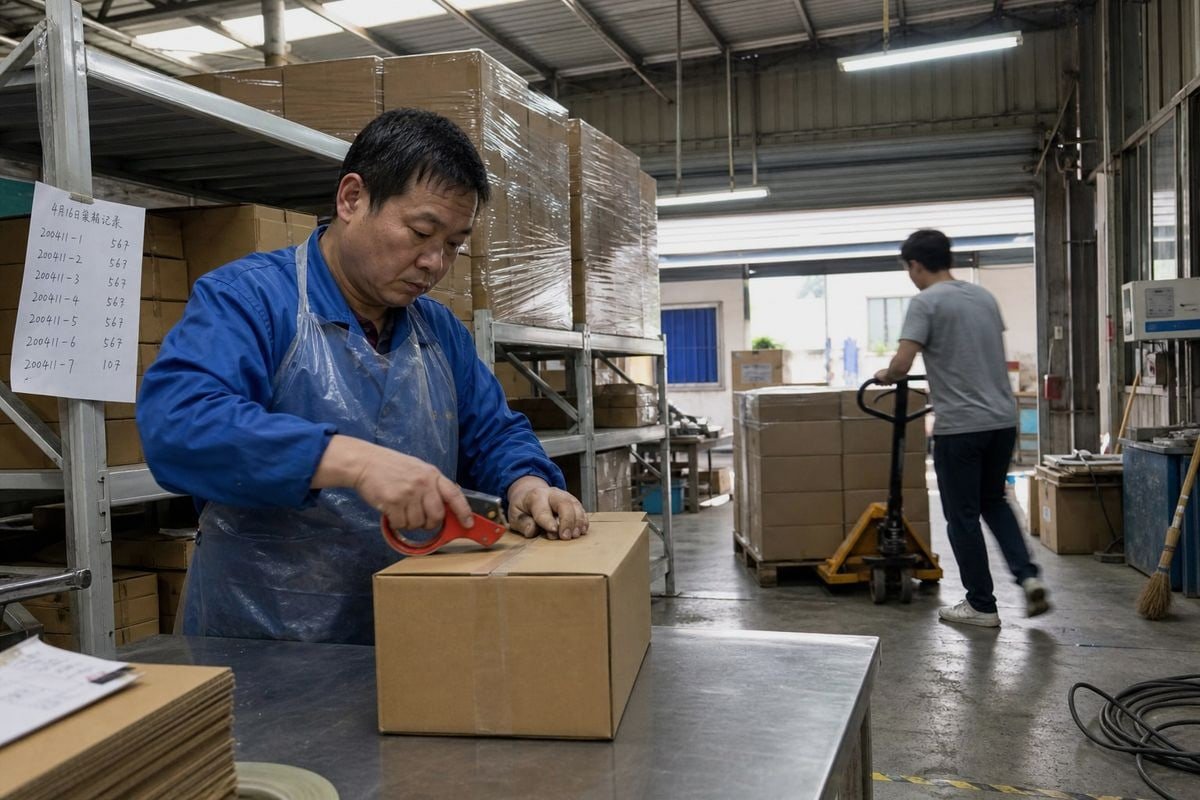
Split shipments for kids’ optical frames come up in almost every negotiation at our Taizhou factory. Tying up your whole budget in one wholesale order is stressful — and avoidable.
Split shipments ease upfront payment for kids’ optical frames by dividing one purchase order into smaller batches, each with its own deposit and balance. You pay roughly 30% down per batch and settle the rest as each shipment leaves, instead of financing the entire order at once.
That is the short answer. The longer answer covers how to negotiate the schedule, what payment ratios are fair, how to protect quality, and how to use batches to test new styles. Let me walk you through each part.
How can I negotiate a split shipment schedule with my kids' eyewear manufacturer?
Last spring, a buyer from Australia asked us to break a 6,000-piece order into three deliveries. We said yes in one email. Most factories will — if you ask the right way.
Negotiate a split shipment schedule by proposing batch quantities, delivery dates, and a payment amount per batch in writing before the proforma invoice is issued. Frame it as a phased delivery plan tied to your sales cycle, and confirm each term on the purchase order.
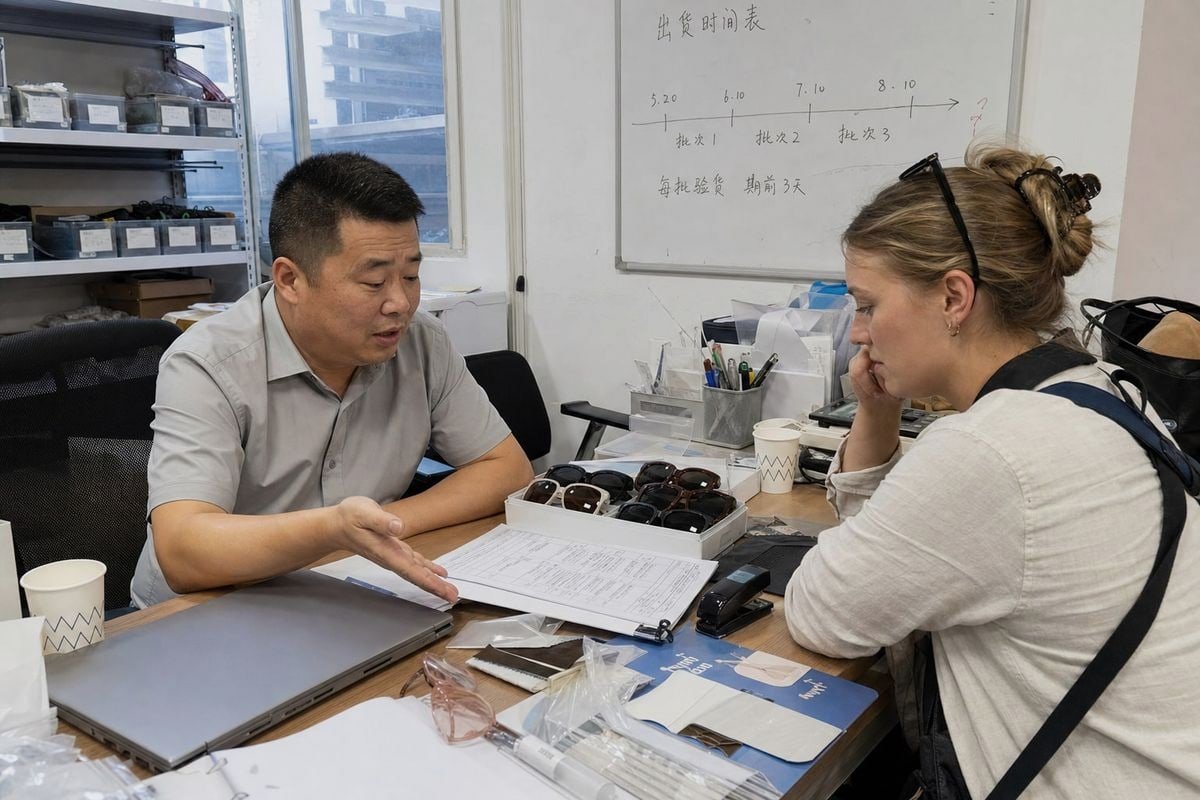
The most important thing I can tell you is this: negotiate the split before production starts, not after. Once we have scheduled molds, materials, and workshop time for a single run, restructuring is much harder. When the request comes early, we can plan production in waves and hold finished goods in staging without disrupting our 5S-managed workflow.
What to put in writing
A verbal agreement is not enough. Every split shipment deal we run is written into the proforma invoice 1 line by line. Here is what your document should cover:
| Term | What to specify | Why it matters |
|---|---|---|
| Batch quantities | Exact pieces per style, size, and color per batch | Kids' frames have MOQs per SKU; vague splits cause disputes |
| Delivery dates | A date or window for each shipment | Protects your retail calendar |
| Payment per batch | Deposit and balance for each shipment | Prevents the factory demanding full payment early |
| Shipping terms | Who pays freight on each batch | Staggered shipping can multiply freight costs |
| Backorder handling | What happens if one style is delayed | Keeps one late SKU from blocking the whole batch |
Frame it as a partnership, not a favor
In our experience exporting to 20+ countries, buyers who explain why they need staggered shipping get better terms. Tell your supplier your cash flow reality: you are timing payments to back-to-school demand, or you are a new brand managing children's eyewear financing carefully. A factory that wants a long-term customer — as we do — will treat a phased delivery plan as normal supply chain optimization 2, not a red flag. Also ask whether the factory will consolidate later batches with a freight forwarder near the destination. That preserves the cash flow benefit while lowering per-unit freight cost.
What deposit and balance ratio should I expect when splitting payments across shipments?
There is a trade-off we weigh on every quote: a lower deposit eases the buyer's cash flow, but it raises our exposure on materials we have already purchased. Understanding both sides helps you negotiate realistically.
Expect the standard 30% deposit and 70% balance-before-shipment structure, applied per batch rather than to the whole order. New buyers may see 40–50% deposits on the first batch; established buyers can often negotiate 20–30% or balance-on-delivery terms for later shipments.

The classic wholesale structure is 30/70: thirty percent down to start production, seventy percent before goods leave the factory. Split shipments do not change that ratio — they change what it applies to. Instead of 30% of a large order, you pay 30% of batch one. That difference is where the real cash flow relief lives.
Typical ratios by relationship stage
| Buyer situation | First batch | Later batches | Notes |
|---|---|---|---|
| First-time buyer | 40–50% deposit | 30% deposit | Factory carries more risk on unknown buyers |
| Second or third order | 30% deposit | 30% deposit | The standard structure |
| Long-term partner | 20–30% deposit | Balance against shipping documents | Trust earned over repeat orders |
| Custom molds or heavy OEM work | Higher, or mold fee upfront | Standard | Tooling cost cannot be recovered if you cancel |
Tools that make split payments safer
If you are nervous about paying deposits across multiple batches, formalize the arrangement. A letter of credit 3 with partial shipment allowances lets your bank release funds batch by batch. Escrow-based services and trade assurance platforms can auto-release payment for each shipment only after tracking or delivery confirmation. We have worked under all of these structures, and none of them offends a serious factory. What matters to us is clarity: how much, when, and triggered by what event.
One caution from our side of the table. If a buyer pushes the deposit below 20% while also requesting custom colors, logos, and packaging, we usually decline. Custom work means we buy materials that cannot be resold. Fair eyewear payment plans balance your cash flow against the factory's real costs — that balance is what keeps a partnership stable.
How do I protect quality and delivery timelines when paying in multiple installments?
Years ago, we learned a hard lesson from the other direction: a batch shipped without a joint pre-shipment check led to a color-matching dispute that took weeks to resolve. Now every split order at our factory follows a fixed inspection rhythm.
Protect quality across installments by writing an approved golden sample, per-batch inspection rights, and delivery penalties into the contract. Inspect and approve each batch before releasing its balance payment, so every installment is conditional on the goods meeting your standard.
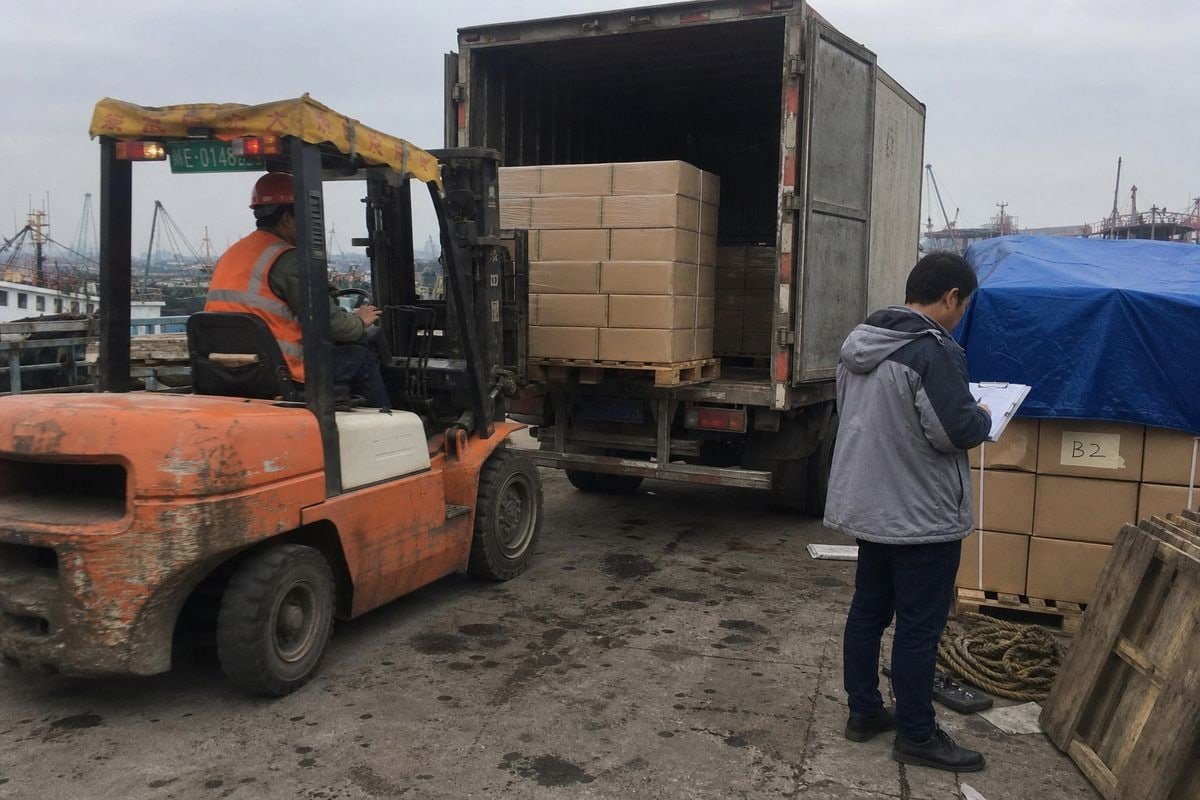
The risk with installments is drift. Batch one is perfect. Batch three, produced months later, uses a slightly different pigment lot or a rushed assembly shift. For prescription glasses for children, drift is unacceptable — parents notice, and safety tolerances on hinges and temple flexibility leave no room for shortcuts. Here is the process we recommend, and follow ourselves.
A five-step protection process
- Lock a golden sample. Before batch one, both sides sign off on a physical reference sample covering color, flexibility, logo placement, and packaging. Every later batch is measured against it.
- Tie balance payments to inspection. Your contract should say the 70% balance for each batch is due after inspection passes, not simply "before shipment." That single clause keeps quality leverage in your hands for the entire program.
- Inspect every batch, not just the first. Use a third-party inspector or request detailed QC photos and videos. At our workshop, we run the same checks on batch four as on batch one, because we know buyers will.
- Set delivery windows with consequences. Define what happens if a batch slips: a discount, expedited freight at the factory's cost, or the right to cancel remaining batches. Reasonable factories accept reasonable penalties.
- Plan lens coordination early. If your optical lab services will glaze the frames locally, share your lab's schedule. A frame batch arriving two weeks late can idle your lab and delay finished glasses for children who need them — and for families timing purchases around insurance or FSA HSA eligibility windows, missed timing means lost sales.
Good optical inventory management 4 also means keeping a small safety buffer from each batch. If a retailer needs urgent replenishment between shipments, that buffer bridges the gap without emergency air freight.
Can split shipments help me test new kids' optical frame styles before a full inventory commitment?
A Japanese buyer once told me the smartest thing I have heard about kids' eyewear: "Children's trends move faster than adult trends, but parents replace glasses more often." Both facts favor small, staggered orders.
Yes. Split shipments let you order a small first batch of new styles, gauge sell-through for four to eight weeks, and then confirm, adjust, or cancel later batches. You validate demand with limited capital instead of committing your full budget to unproven designs.
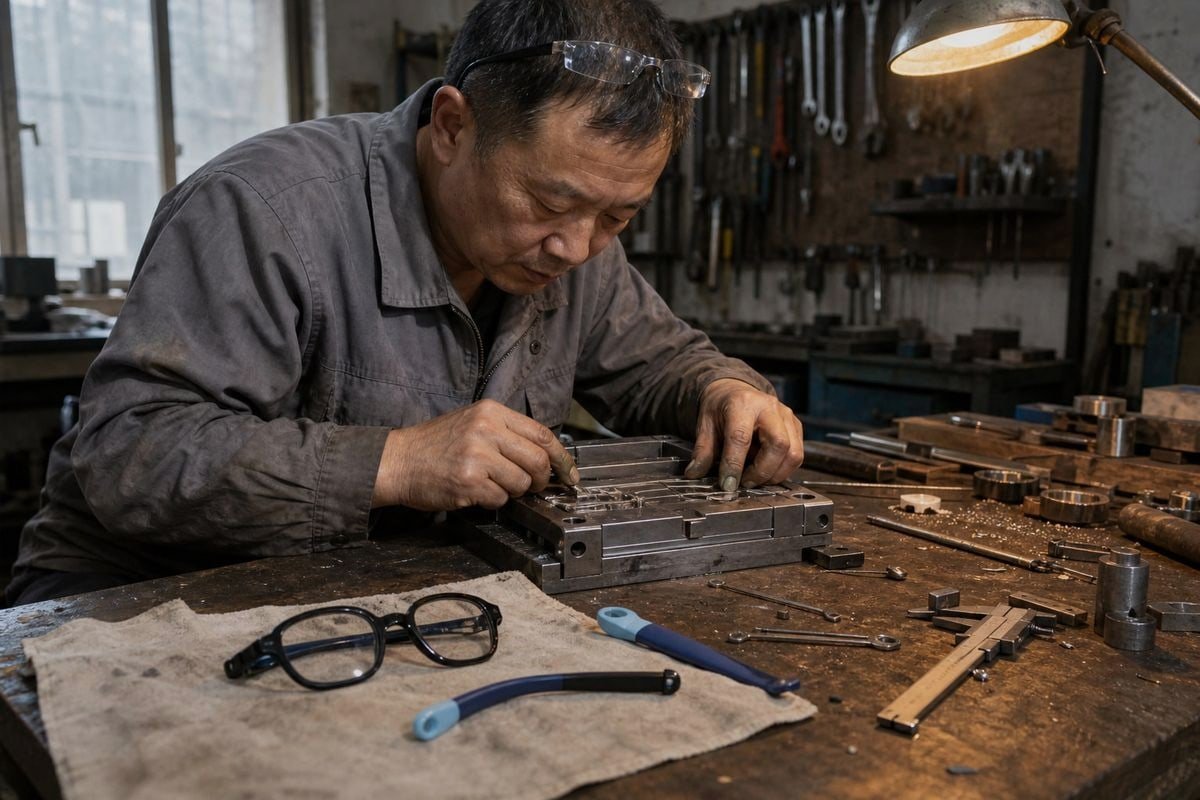
Kids' frames carry higher SKU complexity than adult frames. You are juggling age-based sizing, trend-driven colorways, and material choices all at once. Take two styles from our own catalog: a glossy black TR90 frame with navy TPEE temples and cable-style ear hooks, built for active kids, and a translucent blush-pink acetate-look frame with a soft cat-eye shape. Both are strong sellers — but for different markets. A sporty outdoor brand and a fashion-led kids' boutique will see opposite results. You cannot know your mix until real customers vote.
How a test-and-scale split works
| Phase | Batch size | What you learn | Payment exposure |
|---|---|---|---|
| Test batch | Minimum viable quantity per style | Which styles, sizes, and colors sell | 30% deposit on a small batch only |
| Read period | 4–8 weeks of sell-through | Reorder winners, drop losers | Nothing new committed |
| Scale batch | Larger replenishment orders of winners | Margin improves with volume | Deposit on proven styles only |
| Seasonal batch | Timed to back-to-school or holidays | Payments align with revenue spikes | Balance paid as sales peak |
This is also why we maintain roughly 800 existing styles at our factory. A new brand can build a test assortment without any mold investment, run a first split batch, and only then commit to custom colors, logos, and retail-ready packaging on the styles that earned it. Some of our seasonal programs align later batches with back-to-school buying cycles, so retailers time their balance payments to match expected demand.
One honest caution: testing through split shipments still requires respecting per-SKU MOQs, and multiple small shipments can raise per-unit freight. Consolidating later batches, or mixing test styles into a replenishment container, usually solves both.
Conclusion
Paying for a full kids' frame order upfront strains any budget. Split shipments — with per-batch deposits, written terms, batch-level QC, and small test runs — turn one heavy payment into manageable steps. If you want to structure a phased order with us, I am glad to help.
Notes de bas de page
1. Defines a proforma invoice as a preliminary, non-binding sales document. ↩︎
2. Found a clear and authoritative definition of ‘supply chain optimization’ from IBM. ↩︎
3. Provides a legal definition of a letter of credit as a bank-issued payment guarantee. ↩︎
4. Discusses best practices for managing inventory in optometry practices. ↩︎
Plus d'articles que vous pourriez aimer
août 5, 2026
Bio-Based vs Regular Cellulose Acetate: What's the Difference for Kids' Frames?

août 5, 2026
How Recyclable Are Kids' Optical Frame Materials, and What Eco-Friendly Alternatives Exist?
août 5, 2026
Do Kids Optical Frames Whiten or Age in Storage, and How to Control Warehouse Conditions?
Vous recherchez un partenaire fiable en lunetterie pour enfants ?
Explorez plus de 800 styles prêts et un support OEM/ODM complet adapté à votre marque.
Contactez-nous English
  Español de México
  Deutsch
  Français
  日本語
日本語  العربية
  Português do Brasil