How to Secure Exclusive Regional Distribution Rights When Purchasing Kids Optical Frames?

Exclusive regional distribution rights for kids optical frames sound simple until a competitor imports the same frames into your territory. I’ve watched buyers on our production line tours worry about exactly this. The fix is structure, not trust.
To secure exclusive regional distribution rights for kids optical frames, qualify the manufacturer first, then sign a written distribution agreement that defines the exact territory, bans active sales by others, ties exclusivity to realistic minimum purchase obligations, and adds NNN, mold ownership, and serialization safeguards.
Each of those steps has traps hiding inside it. Below, I walk through them one by one, from the factory side of the table, so you know what actually holds up.
How do I qualify a kids' optical frame manufacturer before requesting exclusivity?
A distributor from Australia once asked our team for country-wide exclusivity in his first email — before he had even seen a sample. That request went nowhere, and here is why.
Qualify a manufacturer by verifying factory ownership, production capacity, child-safety compliance such as CPSIA and EN71, material expertise in TR90 and TPEE, financial stability, and existing style range. Only a supplier who controls production and intellectual property rights can legally grant durable exclusivity.
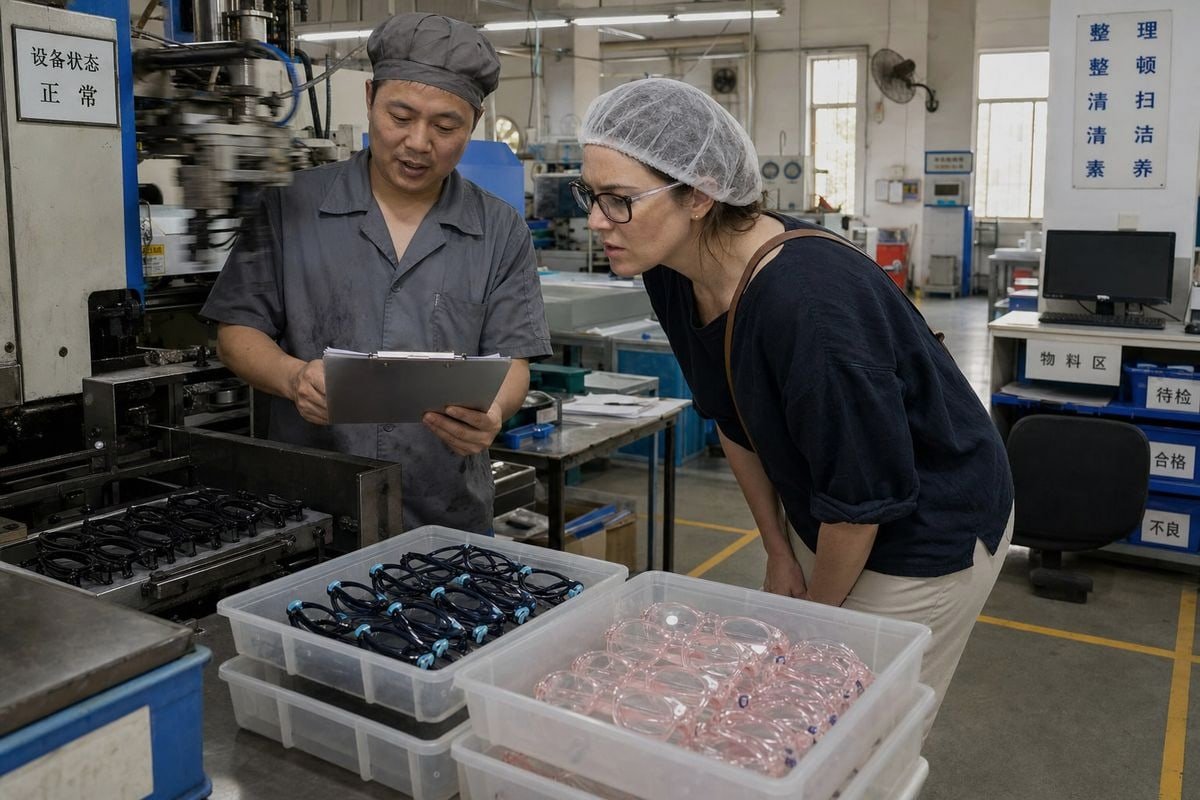
Exclusivity is only as strong as the company granting it. Many "suppliers" in the eyewear wholesale space are actually traders. A trader cannot promise you that the same molds will not be sold to your competitor, because the trader does not own the molds, the factory relationship, or the droits de propriété intellectuelle 1 behind the frames. So step one of any contract negotiation is confirming you are dealing with the real source. At our Taizhou facility, we invite serious buyers to audit the workshop — around 120 workers, a 5S-managed floor, and fifteen years of children's eyewear experience — precisely because that verification protects both sides later.
What to check before you even mention exclusivity
Work through this checklist in order. Each item removes a specific risk.
| Qualification area | What to verify | Why it matters for exclusivity |
|---|---|---|
| Legal identity | Factory license, not a trading company | Only the rights holder can grant territory rights |
| Safety compliance | CPSIA, EN71 test reports for kids' frames | Non-compliant stock kills your market before rivals do |
| Frame materials | Genuine TR90 and TPEE 2 flexibility expertise | Copycats using cheap materials undermine your positioning |
| Capacity | Monthly output vs. your growth plan | Exclusivity fails if the supplier cannot fill reorders |
| Style depth | Existing catalog breadth | Lets you launch without heavy mold investment |
| Licensing status | Whether frames carry licensed brands or characters | Territory rights may sit with a licensor, not the factory |
That last row matters more in the children's eyewear market than in adult optical. Many kids' programs run on licensed characters. If the factory only manufactures under someone else's license, it cannot legally hand you a territory. Ask directly: who owns the designs, the trademarks, and the molds? With our own ~800 in-house styles, we can answer that question in one sentence. Any supplier who cannot should not be granting exclusivity at all.
What terms should I negotiate to protect my exclusive distribution rights?
There is a trade-off we weigh every time a buyer requests a territory: the wider the exclusivity, the higher the commitment we need in return. Understanding that exchange changes how you negotiate.
Negotiate a precise territory definition, explicit product and SKU scope, a written ban on active sales into your region by other channels, clear online and marketplace rules, a 12–24 month term with renewal conditions, and remedies for breach — all inside one signed distribution agreement.

The single biggest mistake I see in contract negotiation is vague territory language. Recent competition-law commentary in Europe makes the point sharply: an exclusive territory must be expressly documented, not assumed from practice. "You handle Scandinavia" in an email chain is not a territory. "The Kingdom of Sweden, the Kingdom of Norway, and the Republic of Finland, including all online sales delivered into those countries" is a territory.
Active sales vs. passive sales — the hidden legal gap
Many buyers believe exclusivity means nobody else can ever sell into their region. In most legal systems, the real protection is narrower. Your distribution agreement can prohibit active sales — targeted outreach, ads, visits, and promotions aimed at your territory by other appointed sellers. But passive sales, meaning unsolicited orders arriving from your region, often cannot be fully blocked, especially under EU rules. Under the EU framework, exclusive distribution is generally permissible within guardrails, including a 30% market-share threshold and a ban on hardcore restrictions, and a supplier may appoint up to five buyers per exclusive territory under certain conditions. Draft with that reality in mind, not against it.
Core clauses to put on paper
| Clause | What to specify | Common weakness |
|---|---|---|
| Territory | Exact countries, states, or metro zones | "Region" left undefined |
| Product scope | Named SKUs, product lines, or molds | Supplier launches a "new line" outside scope |
| Channel scope | Optical shops, chains, e-commerce, marketplaces | Supplier retains broad direct-to-consumer rights |
| Term | 12–24 months with performance-based renewal | Auto-conversion to non-exclusive with no cure period |
| Online sales | Whether cross-border web sales count as territory breaches | Silence, which favors the supplier |
| Sub-distribution | Whether you may appoint sub-distributors | Ambiguity blocks your own channel building |
One more angle from our side of the table: territory definitions matter more than the discount. A buyer who wins two extra points of margin but leaves marketplace sales undefined has lost the negotiation, not won it.
How can I ensure minimum order quantities and reorder support don't jeopardize my exclusivity?
Early in my export career, I learned a hard lesson: an over-ambitious minimum purchase target killed a promising partnership faster than any competitor could have. The distributor missed year one, and the whole deal collapsed.
Set minimum purchase obligations you can realistically hit, build in quarterly reviews with cure periods, negotiate conversion to non-exclusive status rather than immediate termination if targets slip, and confirm the factory's reorder lead times and inventory support in writing before signing.

Suppliers almost never grant exclusivity for free. The standard exchange is territory protection for measurable commitment — minimum annual purchases, marketing spend, retail penetration targets, or all three. One publicized eyewear agreement tied Canadian exclusivity to roughly US$4.6 million in minimum purchases over 30 months, with rights converting away if the thresholds were missed. That structure is now common. Your job is to make sure the numbers protect you instead of trapping you.
Structure the commitment in phases
A phased model works well in the children's eyewear market, where sell-through depends on opticians, parents, and seasonal school cycles. We often suggest this to newer partners:
- Phase one: exclusivity for one product category or a sub-region, with a modest quarterly minimum.
- Phase two: expansion to the full territory once phase-one benchmarks are met, with tiered incentives for the supplier.
- Phase three: renewal at higher volumes, paired with co-funded marketing and new-style priority.
This lowers the supplier's risk, which is exactly what earns you the territory. Our ~800 existing styles help here too — you can build a broad, retail-ready assortment without funding new molds, which keeps your minimum purchase obligations tied to sellable inventory rather than sunk tooling costs.
Protect the reorder side, not just the order side
Exclusivity is worthless if replenishment fails during back-to-school season. Kids' frames break, sizes rotate, and parents expect fast replacements. Get these commitments in the distribution agreement:
- Confirmed reorder lead times for core SKUs, including flexible TPEE-temple styles that sell year-round.
- A safety-stock or priority-production commitment during your peak months.
- Consistent quality control standards on reorders, so batch two matches batch one on flexibility, color, and fit.
- A clause stating that missed supplier deliveries pause or reduce your minimums for that period.
That last point is the one buyers forget most often. If the factory causes the shortfall, the factory should not be able to use that shortfall to revoke your exclusivity.
What safeguards should I put in place to prevent my supplier from bypassing my exclusive rights?
When a European partner recently flagged suspiciously familiar frames on a marketplace in his country, our serialization records settled the question in a day. That incident shaped how I now advise every buyer.
Prevent bypass by signing an NNN agreement, securing mold ownership or exclusivity clauses for custom designs, requiring product serialization or batch coding to trace gray market goods, restricting the supplier's direct and marketplace sales into your territory, and adding audit rights with defined breach remedies.
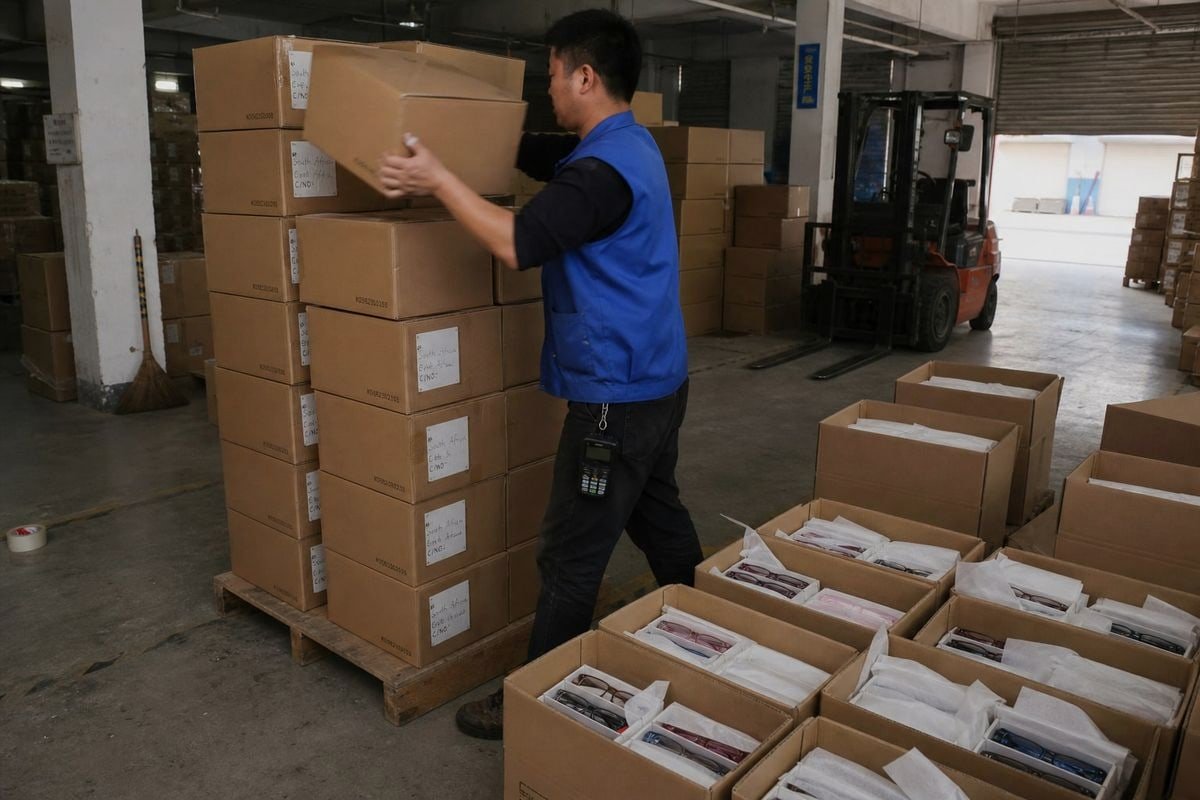
Even a well-drafted territory clause can leak. The three most common leaks are gray market goods 4 flowing in through third countries, the supplier selling directly online into your region, and near-identical private label eyewear reaching your competitors under a different name. Each leak needs its own plug.
Layered safeguards and what each one stops
| Safeguard | What it prevents | How to implement |
|---|---|---|
| NNN agreement | Circumvention and design misuse | Sign a China-enforceable Non-Disclosure, Non-Use, Non-Circumvention deal before sharing customer or design data |
| Mold ownership clause | Your custom designs sold to others | State that molds you fund belong to you, or are locked to your territory |
| Product serialization 5 | Untraceable gray market goods | Batch codes or serial marks on temples and packaging identify the diverting party |
| Channel restrictions | Supplier direct sales into your region | Written territory restrictions covering the supplier's own web store and marketplaces |
| Audit and reporting rights | Silent breaches | Periodic sales reports plus the right to audit shipments into your region |
| Remedies and cure periods | Instant, unfair termination | Defined penalties for breach, and notice periods before any status change |
Make enforcement practical, not just legal
A clause you cannot enforce is decoration. Serialization is the workhorse here: when marked frames appear in your territory, the code tells you which order they came from, which turns a vague suspicion into a documented breach. For private label eyewear programs, add color, logo, and packaging elements unique to your brand — our OEM/ODM team routinely builds these differentiators in, because a visually distinct product is far harder to gray-market quietly. Finally, choose a supplier whose business model does not depend on flooding channels. A factory positioned as a long-term partner has more to lose from bypassing you than from protecting you. That alignment of incentives, more than any single clause, is what keeps exclusivity intact over the years.
Conclusion
Exclusive regional distribution rights are earned, not asked for. Qualify the factory, define the territory precisely, commit to realistic minimums, and lock in NNN, serialization, and mold safeguards.
Notes de bas de page
1. Defines intellectual property and its global protection by WIPO. ↩︎
2. Directly compares TR90 and TPEE materials for kids’ sunglasses, matching the original content and anchor. ↩︎
3. Clarifies the legal distinction between active and passive sales in distribution. ↩︎
4. Authoritative legal firm source discussing gray market goods and their impact on brand protection. ↩︎
5. Details how unique identifiers enable product traceability in the supply chain. ↩︎
Plus d'articles que vous pourriez aimer
août 5, 2026
Bio-Based vs Regular Cellulose Acetate: What's the Difference for Kids' Frames?

août 5, 2026
How Recyclable Are Kids' Optical Frame Materials, and What Eco-Friendly Alternatives Exist?
août 5, 2026
Do Kids Optical Frames Whiten or Age in Storage, and How to Control Warehouse Conditions?
Vous recherchez un partenaire fiable en lunetterie pour enfants ?
Explorez plus de 800 styles prêts et un support OEM/ODM complet adapté à votre marque.
Contactez-nous English
  Español de México
  Deutsch
  Français
  日本語
日本語  العربية
  Português do Brasil