How Can Prescription Lenses Be Fitted Into Kids’ Eyewear Frames?
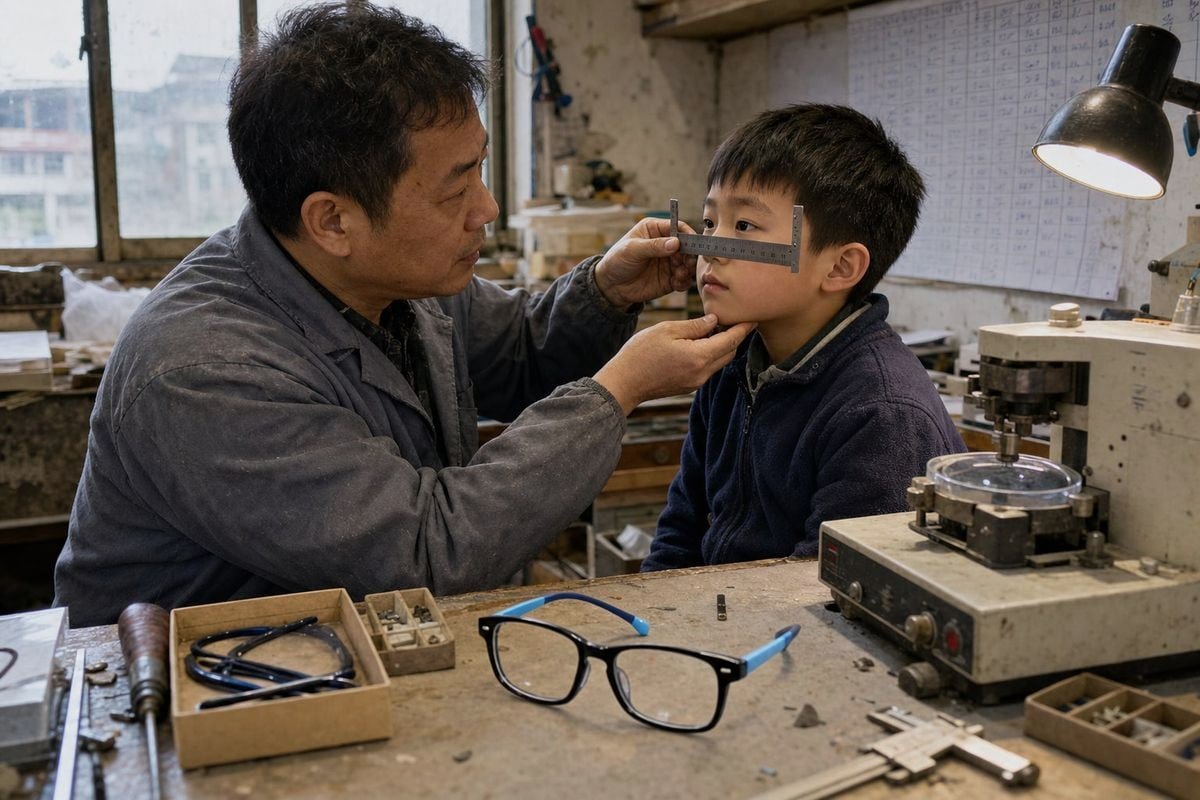
Fitting prescription lenses into kids’ eyewear frames is where I see many buyers stumble OEM/ODM development 1. On our production line in Taizhou, poorly planned frames come back as costly returns.
Prescription lenses are fitted into kids’ eyewear frames by measuring the child’s pupillary distance, selecting a frame that centers the pupils in each lens, then edging polycarbonate or Trivex lenses to the exact frame shape and glazing them securely into the rim.
That answer sounds simple. But the details decide whether the glasses actually work. Let me walk you through materials, comfort, lens choices, and how to plan this with a factory partner.
What Frame Materials Work Best for Prescription-Ready Kids' Eyewear?
A buyer from Australia once asked me why her acetate kids' frames kept cracking during glazing. Our engineers traced it back to one thing: the wrong material for the lens edging process.
Flexible, resilient materials like TR90 and TPEE work best for prescription-ready kids' eyewear frames. They tolerate lens insertion without cracking, flex safely on active children's faces, stay lightweight under thicker prescription lenses, and hold the lens groove shape reliably through years of daily wear.
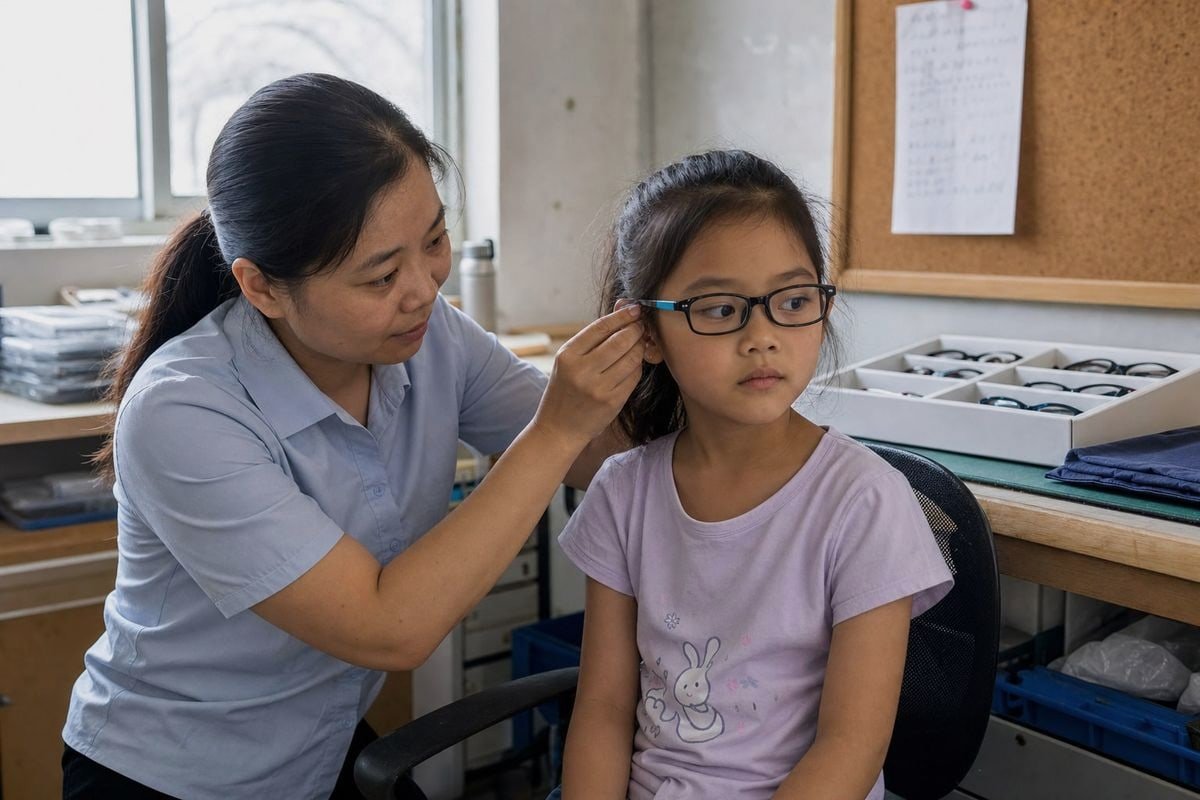
Material choice is the first decision, and it affects everything downstream. A frame that fits prescription lenses must hold a stable lens groove, survive the glazing process at an optical lab, and keep its shape when a child bends it. After 15 years of building children's frames, we lean heavily on TR90 2 and TPEE for exactly these reasons.
How Common Kids' Frame Materials Compare
| Matériel | Flexibilité | Glazing Behavior | Poids | Idéal pour |
|---|---|---|---|---|
| TR90 | Élevé, reprend sa forme | Accepts cold-glazing well, low crack risk | Très léger | Montures optiques de tous les jours |
| TPEE | Très élevé, presque incassable | Excellent for flexible temples and baby frames | Très léger | Toddlers and active kids |
| Acétate standard | Faible à moyen | Needs careful heat, can crack | Peut se fissurer ou se déformer | Fashion-led styles |
| Metal with pads | Bas | Easy lens mounting, needs pad adjustment | Moyen | Older kids, adjustable fits |
Cold-glazing matters more than most buyers realize. Traditional heat-fitting can distort sensitive materials, including newer bio-acetates. TR90 tolerates cold lens insertion, so the optical lab technician can seat the lens without warping the rim. That protects the optical center position you worked so hard to plan.
One more point from our workshop: rim depth. A prescription-ready frame needs a slightly deeper, more consistent lens groove than a fashion sunglass frame. When we develop a new optical style, we check groove depth on every cavity of the mold before approving production. Shallow grooves let lenses pop out. That is a safety issue, not just a quality issue.
How Do I Ensure Comfort and Durability When Fitting Prescription Lenses for Children?
There is a trade-off I weigh on almost every project: sizing a frame for the child today versus leaving "room to grow." In our experience, growing room usually ruins the fit.
Ensure comfort and durability by choosing a fit-for-now frame size, matching the bridge to the child's flatter nose, using spring hinges or flexible TPEE temples, and confirming correct temple length so the frame stays level without pinching, sliding, or resting on the cheeks.
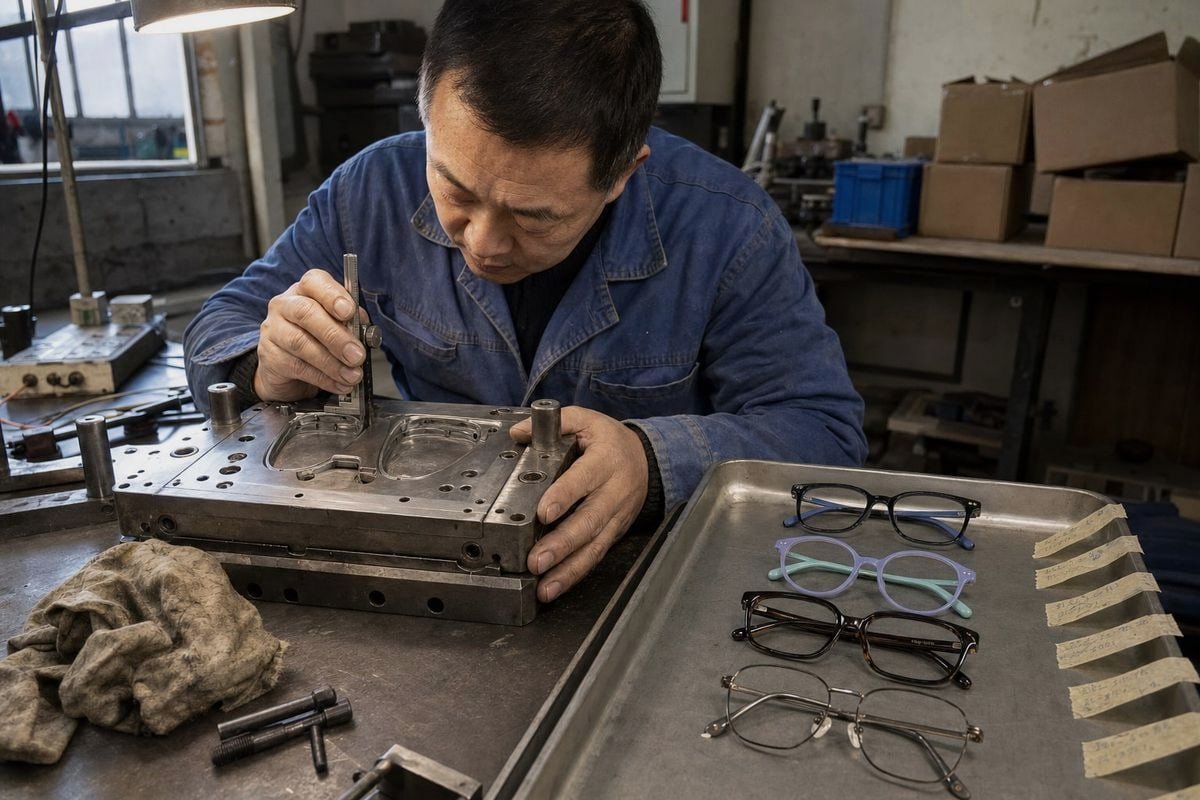
Comfort and durability are really two sides of one problem. A frame that hurts gets pushed down the nose, and a frame worn wrong wears out faster. So let me break down the mechanical fit points that matter most.
The Measurements That Decide Fit
Every frame carries three numbers inside the temple arm, such as 48-16-135. They mean lens width, bridge width, and temple length. A useful rule of thumb: lens width plus bridge width should land close to the child's distance pupillaire 3 measurement. Small deviations are fine. Large ones push the pupils away from the lens centers and create optical problems, especially with stronger prescriptions.
Bridge Fit Adjustment for Children
Children have flatter nasal bridges than adults. This is where many adult-style frames fail. Two solutions work well:
- A molded saddle bridge that spreads weight across the nose. Younger kids usually tolerate this best.
- Adjustable nose pads on metal or hybrid frames. These allow bridge fit adjustment as the child grows, but they need occasional retightening.
Neither option is universally "better." It depends on the child's nose shape and age. We often recommend brands carry both bridge styles in their range for this reason.
Durability Under Real Use
Kids pull glasses off with one hand. That twisting force destroys rigid hinges quickly. Spring hinges absorb that stress, and flexible TPEE temple sections go one step further by bending instead of breaking. On our two-tone TR90 frames with soft silicone temple tips, we also add embossed grip textures so the frame stays put during sport and play.
Quick Parent Fit Checklist
- Glasses sit level and do not slide when the child looks down.
- Pupils appear roughly centered in each lens.
- No red marks on the nose or behind the ears after short wear.
- Frame does not touch cheeks or eyelashes during normal movement.
Which Lens Options Should I Consider for Safety and Vision Correction in Kids' Frames?
When we spec demonstration lenses for our optical frames, we plan them around what the final prescription lens will be. That planning starts with impact resistance, always.
Choose polycarbonate or Trivex lenses for children, because both offer high impact resistance and built-in UV protection. Add a multi-layer scratch-resistant coating, keep optical centers aligned with the pupillary distance, and consider myopia management lens designs that require correct frame depth and centration.
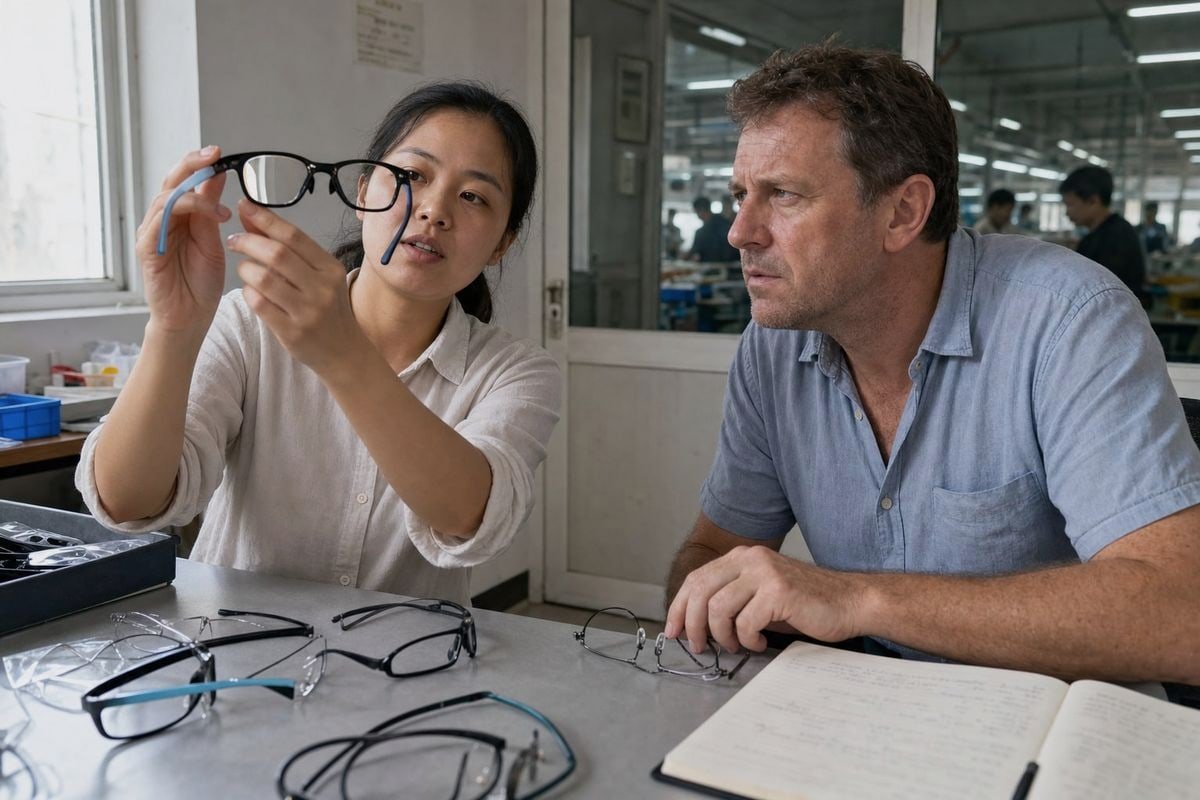
Lens choice is a safety decision before it is an optical decision. Standard plastic lenses can shatter on impact, and no responsible brand should put them in front of a child's eyes. That is why polycarbonate 4 material and Trivex material dominate pediatric eyewear worldwide.
Comparing the Two Safety Lens Materials
| Le rétrécissement des montures en acétate est le problème caché des matériaux traditionnels. L'acétate perd lentement ses plastifiants, se contractant avec le temps. Ironiquement, un léger rétrécissement peut resserrer un verre — mais il rend également la monture cassante, et les fils de lunette cassants se fissurent au niveau de la gorge. Il faut également tenir compte de la contraction thermique différentielle : lorsqu'un enfant passe de la chaleur extérieure à la climatisation, la monture et le verre se contractent à des vitesses différentes. Les polymères flexibles absorbent cette inadéquation ; les matériaux rigides transfèrent le stress au siège du verre. | Polycarbonate | Trivex |
|---|---|---|
| Conformité au test de chute de bille de la FDA | Excellent | Excellent |
| Protection UV 5 | Built-in, full | Built-in, full |
| Clarté optique | Bon | Slightly better |
| Poids | Très léger | Très léger |
| Typical cost | Plus bas | Plus élevé |
Both pass the safety bar. Polycarbonate is the common default. Trivex offers marginally clearer vision at a higher price. For most children's programs we support, polycarbonate with a hardened scratch-resistant coating hits the right balance, because kids scratch lenses far faster than adults do.
Centration Is Where Correction Succeeds or Fails
A lens only corrects vision properly when the child looks through its optical center. The optician takes a pupillary distance measurement, often during a examen ophtalmologique pédiatrique 6, and the lab edges the lens so that center sits directly in front of the pupil. Off-center lenses create unwanted prism effects, eye strain, and extra edge thickness. This is also why stronger prescriptions favor smaller, rounder frames: the lens edge stays closer to the optical center, so the lens stays thinner and lighter.
Some labs now use 3D digital centration, which accounts for pantoscopic tilt and a child's dynamic head posture. And if your brand serves the growing myopia management 7 market, note that DIMS and HALT lens designs demand specific frame depth and precise centering to be clinically effective. Frame geometry and lens technology have to be planned together, not separately.
How Can I Partner With a Manufacturer to Customize Prescription-Ready Kids' Frames?
A lesson I learned early in exporting: brands that involve our factory before finalizing their frame designs avoid almost every glazing problem later. Brands that come to us afterward often need mold revisions.
Partner with a manufacturer by defining your target age groups and PD ranges, selecting from existing prescription-ready styles to avoid mold costs, then customizing colors, logos, lens grooves, and packaging through OEM/ODM development with clear quality control checkpoints before mass production.
Working with a factory on prescription-ready kids' eyewear frames is different from ordering sunglasses. The frame must satisfy an optical lab technician months after it leaves our warehouse. So the development conversation needs to cover optical details, not just style and color.
A Practical Development Path
| Étape | Ce qui se passe | What You Should Confirm |
|---|---|---|
| 1. Brief | Define age range, PD range, prescription strength | Frame sizes match target pupillary distances |
| 2. Style selection | Choose from existing styles or new design | Lens groove depth suits prescription glazing |
| 3. Customization | Colors, logos, temple materials, coatings | Spring hinges or TPEE temples specified |
| 4. Sampling | Pre-production samples made and tested | Flex, torque, and lens retention checks pass |
| 5. Production | 5S-managed workshop runs the order | Inline QC and final inspection reports |
| 6. Delivery | Retail-ready packaging and shipment | Labeling and compliance documents complete |
Starting from an existing catalog matters more than buyers expect. With roughly 800 styles already tooled at our factory, a new brand can test the market across several sizes and bridge styles without investing in molds. That lowers risk dramatically. Once you know which sizes sell in your market, custom development makes financial sense.
I also encourage buyers to think in size families. A single style offered in two or three sizes, each matched to an age band and PD range, serves opticians far better than one compromise size. Opticians remember which brands make their glazing work easy. That reputation drives reorders.
Finally, ask your factory hard questions. How do they verify groove dimensions? How do they test hinge cycles? Can they support cold-glazing-friendly materials? Good partners answer with process details, not promises.
Conclusion
Prescription lenses fit kids' frames well only when materials, sizing, centration, and lens safety are planned together. Choose flexible frames, safe lenses, and a factory partner who understands optics.
Notes de bas de page
1. Explains the manufacturing partnership model referenced for customizing frames with factories. ↩︎
2. Wikipedia background on thermoplastics explains the material class behind TR90 frames. ↩︎
3. Explains the key measurement referenced repeatedly for lens centration accuracy. ↩︎
4. Background on the polymer material widely used for impact-resistant safety lenses. ↩︎
5. WHO fact sheet on UV radiation supports the health relevance of built-in UV protection. ↩︎
6. CDC vision health resource relevant to pediatric eye exams and children’s vision care. ↩︎
7. WHO resource on visual impairment gives authoritative context for myopia management importance. ↩︎
Plus d'articles que vous pourriez aimer
23 août 2026
Comment les lunettes pour enfants trop petites peuvent-elles être recyclées ou réutilisées ?
23 août 2026
Quelle est l'efficacité des matériaux biosourcés et recyclables dans les lunettes pour enfants ?
23 août 2026
Peut-on remplacer les verres après un changement de prescription pour les lunettes d'enfants ?
Vous recherchez un partenaire fiable en lunetterie pour enfants ?
Explorez plus de 800 styles prêts et un support OEM/ODM complet adapté à votre marque.
Contactez-nous English
  Español de México
  Deutsch
  Français
  日本語
日本語  العربية
  Português do Brasil