How to Prepare for the CPSC Electronic Filing Rule for Kids’ Sunglasses from China?

The CPSC electronic filing rule for kids’ sunglasses worries many of our US buyers. On our production line in Taizhou, we now hear this question almost every week.
To prepare for the CPSC electronic filing rule, importers of kids’ sunglasses must obtain a Children’s Product Certificate, collect seven certificate data elements from their China supplier, verify third-party laboratory testing, and set up eFiling through CBP’s ACE PGA Message Set before July 8, 2026.
Here is the real problem. If your data is not ready before the shipment leaves China, your goods can sit at customs while your competitors restock. The fix is preparation, and it starts with your supplier. Let me walk you through the whole process, step by step.
What documentation do I need from my China supplier to comply with the CPSC electronic filing rule?
Last quarter, a US buyer asked our team for a "compliance data pack" before placing a kids' sunglasses order. That request is exactly where smart importers are heading now.
You need the Children's Product Certificate (CPC), third-party lab test reports, the factory's legal name and address, manufacture date and location, testing date and location, the lab's identity, and contact details for the records custodian. These form the Certificate of Compliance data required for eFiling.

The new rule under 16 CFR Part 1110 1 does not just change paperwork format. It changes timing. In the past, many importers collected documents after the goods arrived. Under eFiling, the certificate data must be transmitted electronically at entry. That means your supplier must hand you clean, complete, accurate data weeks before the container sails.
The Seven Core Data Elements
CPSC identifies specific data points that every electronic filing must contain. When we prepare a compliance pack for our brand clients, we organize it around this exact list.
| Data Element | What It Means | Who Provides It |
|---|---|---|
| Product identifier | Exact model, description, and often HTS Code Classification | Factory + importer |
| Applicable safety rules | Each CPSC rule the product is certified to | Compliance specialist or lab |
| Certifier contact info | The party certifying compliance (usually the Importer of Record) | Importer |
| Records custodian | Person maintaining test records, with contact details | Importer or factory |
| Manufacture date and place | Must match the tracking label on the product | Usine |
| Testing date and place | When and where the most recent test happened | Test lab |
| Lab identification | The CPSC-accepted third-party laboratory | Test lab |
Ask for Data, Not Just PDFs
Here is a lesson we learned early. A scanned PDF certificate is not enough anymore. Your customs broker needs structured, "broker-ready" data to file through the ACE PGA Message Set 2. So ask your supplier for editable data fields, not just stamped documents. At our factory, we now deliver both: the formal CPC support documents and a spreadsheet your broker can load directly. One more tip: verify that the factory address on the test report matches the address on the shipping documents. Mismatches are a common cause of detention.
How can I make sure my kids' sunglasses meet CPSC safety standards before shipping to the US?
One trade-off we weigh constantly in our workshop: material softness versus structural durability. That balance matters here, because compliance for children's eyewear starts at the material level, not the paperwork level.
Confirm the product is classified as a children's product, then arrange third-party laboratory testing at a CPSC-accepted lab for lead and phthalates compliance. Test finished production samples, keep the reports current, and make sure tracking labels match the tested batch data.

Classification is the decision point most buyers miss. Not every pair of sunglasses automatically requires a CPC. The legal trigger is whether the item is a children's product, based on intended age, marketing, and design. Our round two-tone frames in periwinkle blue and mint teal are clearly designed for kids, so they sit firmly in children's product territory. A wraparound sport shield style could go either way depending on sizing and how you market it. My honest advice: assume your kids' line needs CPC-based eFiling, then verify with a compliance specialist. Overclaiming is risky, but under-preparing is worse.
Testing at the Right Time, on the Right Sample
Third-party laboratory testing must be done at a CPSC-accepted lab 3, and the test must cover the actual production version. We have seen brands test a pre-production sample, then change the temple material for cost reasons, and end up with a report that no longer matches the shipped goods. Test the finished, final-spec product. For children's eyewear, that typically means total lead content, phthalates in accessible plasticized parts, and any surface coating requirements.
Material Choices Reduce Risk
This is where flexible materials earn their keep. We build most children's frames in TPEE and TR90 4 because they are lightweight, flexible, and free of the problem substances that trip up cheaper plastics. A frame that bends instead of snapping also protects small faces from sharp edges. Safer materials do not replace testing, but they make passing far more predictable.
Tracking Label Synchronization
Physical tracking labels must align perfectly with the digital manufacture date and place you file. A one-week discrepancy between the molded date code and the filed data can flag your shipment. We coordinate label content with the buyer before mass production starts, precisely to avoid this.
What changes should I expect in customs clearance once the CPSC electronic filing rule takes effect?
A distributor client in the US recently asked us whether her broker would "handle all of this." Our answer surprised her: the broker transmits, but the importer owns the data.
Expect certificate data to be filed electronically through the CBP Automated Commercial Environment at entry, no de minimis exemption for regulated products, data-driven risk scoring of importers, and faster clearance for shipments with clean, pre-loaded data in the CPSC Product Registry.

The shift is from document-presentment compliance to data-centric compliance. Under the old model, you could fix paperwork after arrival. Under eFiling, the Certificate of Compliance data travels with the entry itself, transmitted through the ACE PGA Message Set. If the data is missing or inconsistent, the entry stalls.
Two Filing Pathways
Importers have two routes, and the choice affects your daily workflow.
| Pathway | How It Works | Idéal pour |
|---|---|---|
| CPSC Product Registry 5 + Reference ID | Pre-load certificate data once, then cite a Reference ID at each entry | Repeat shipments of the same SKUs |
| Full PGA Message Set | Transmit all data elements with every individual shipment | Occasional or one-off imports |
For a kids' eyewear brand reordering the same styles each season, the Product Registry route is usually smarter. You load the data once, keep it updated when testing renews, and clear repeat shipments faster.
Key Dates and the FTZ Carveout
The timeline has two phases. Most imported regulated products must eFile beginning July 8, 2026. Products entering from a Foreign Trade Zone 6 get a later effective date of January 8, 2027. If you use bonded logistics or FTZ strategies for your China sourcing, plan those workflows separately.
De Minimis and Risk Scoring
Two more changes matter. First, low-value Section 321 7 parcels are no longer a safe harbor; the rule covers de minimis shipments of regulated products. Second, CPSC is feeding eFiling data into its risk assessment methodology. Importers with consistently accurate data build a trust profile and face fewer physical inspections. Sloppy data does the opposite. Clean data is now a competitive advantage, not just a legal duty.
How do I choose a reliable manufacturer who can support CPSC compliance for my children's eyewear brand?
Fifteen years of running an eyewear factory has taught me one thing clearly: compliance failures almost always trace back to gaps the buyer could have spotted during supplier selection.
Choose a genuine factory with children's eyewear experience, proven third-party testing history, safe materials like TPEE and TR90, disciplined production records, and willingness to provide structured CPC data. Verify they can supply manufacture dates, tracking labels, and lab documentation before you order.
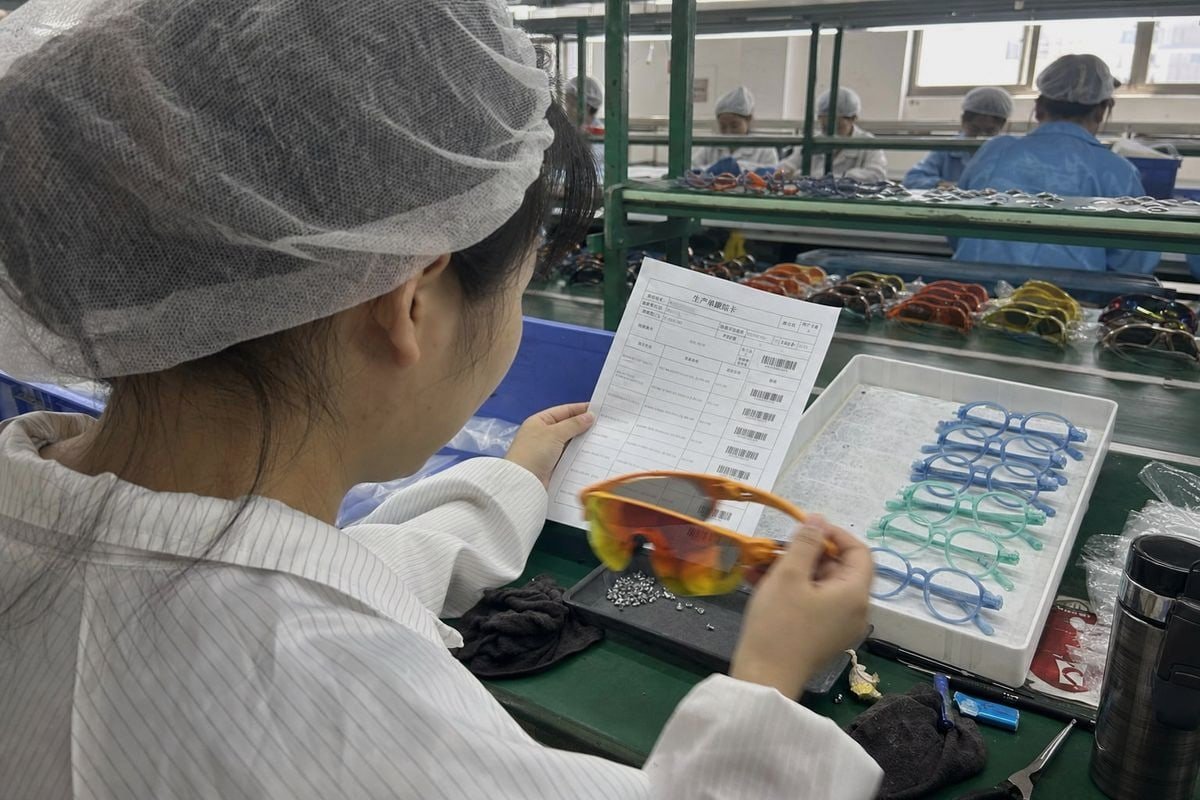
Under the eFiling rule, your manufacturer becomes a data partner, not just a production vendor. A trader who buys from unknown workshops cannot reliably tell you the true manufacture date and place, and that gap flows straight into your filing. A real factory can. Our 5S-managed workshop in Taizhou logs production batches specifically so buyers can tie tracking labels to filed data.
A Practical Supplier Vetting Checklist
Use this table when you screen candidates. We encourage buyers to put these questions to us too.
| Ce qu'il faut vérifier | Why It Matters for eFiling |
|---|---|
| Factory or trader status | Only a factory controls manufacture date, place, and batch records |
| Familiarity with CPC requirements | The supplier must know what data your broker needs |
| Existing test reports at CPSC-accepted labs | Shows a working relationship with third-party laboratory testing |
| Material documentation for TPEE/TR90 | Supports lead and phthalates compliance from the start |
| Tracking label capability | Molded or printed labels must match filed data exactly |
| Revision control on documents | Certificates must update when styles or materials change |
Lower Your Launch Risk with Existing Styles
There is a hidden compliance benefit to working from an existing catalog. When buyers choose from our roughly 800 existing styles instead of opening new molds, they start from designs already built in child-safe flexible materials with known testing behavior. That shortens the path to a clean CPC and reduces the chance of surprises at the lab. Full OEM/ODM support still applies. Custom colors, logos, UV400 or polarized lenses, and retail-ready packaging do not change the core certified construction, though you should always confirm with your lab whether a change requires retesting. A reliable partner will flag that for you before you commit, not after.
Conclusion
The CPSC electronic filing rule rewards importers who prepare early. Collect clean supplier data, test properly, set up ACE workflows, and partner with a factory that treats compliance as standard practice.
Notes de bas de page
1. Cites the actual federal regulation governing the CPSC electronic filing requirement. ↩︎
2. Official CBP page explaining the automated system used for electronic certificate filing. ↩︎
3. CPSC’s official resource on accredited third-party testing labs for compliance certification. ↩︎
4. Background on the flexible plastic materials used in children’s eyewear frames. ↩︎
5. CPSC resource covering certificate registration systems used for repeat shipment filings. ↩︎
6. CBP page describing Foreign Trade Zones relevant to the later eFiling effective date. ↩︎
7. CBP explanation of de minimis import rules referenced regarding low-value shipments. ↩︎
Plus d'articles que vous pourriez aimer

1 août 2026
L'usine doit-elle gérer l'emballage et l'étiquetage des lunettes pour enfants, ou utiliser un fournisseur désigné ?

1 août 2026
Entrepôt propre vs. exécution directe par le fournisseur : lequel réduit les coûts de retour pour les marques de lunettes pour enfants ?

1 août 2026
Entrepôt direct au port ou staging outre-mer : lequel permet d'économiser le plus sur l'expédition des lunettes pour enfants ?
Vous recherchez un partenaire fiable en lunetterie pour enfants ?
Explorez plus de 800 styles prêts et un support OEM/ODM complet adapté à votre marque.
Contactez-nous English
  Español de México
  Deutsch
  Français
  日本語
日本語  العربية
  Português do Brasil