How to Order Kids’ Sunglasses in Mixed Styles Below MOQ?
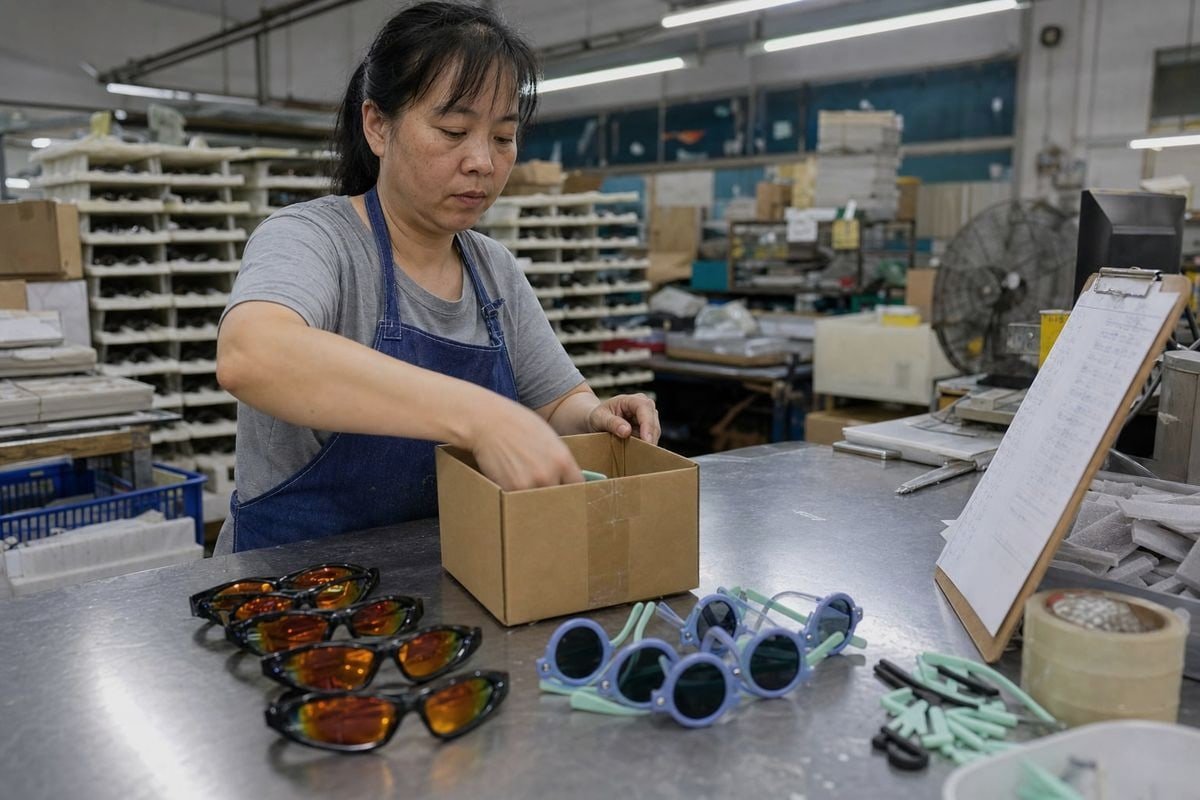
Buyers ask me weekly how to order lunettes de soleil pour enfants 1 in mixed styles below MOQ. Big minimums scare new brands, and our factory sees that fear every single day.
You can order kids’ sunglasses in mixed styles below MOQ by choosing in-stock designs, combining several styles and colors under one total quantity, buying sample packs, or negotiating a mixed-SKU threshold. Stock orders allow far lower minimums than custom logo or private label production runs.
Let me walk you through exactly how this works. I will explain what suppliers can flex on, what they cannot, and how to structure your first small order safely.
How can I order a small mixed-style batch of kids' sunglasses without meeting a high MOQ?
Last spring, a startup baby brand from Australia emailed our sales team asking for just 60 pairs across five styles. We said yes — and here is why we could.
Order a small mixed-style batch by selecting from a supplier's existing catalog of in-stock or ready-tooled designs, then splitting one total order quantity across several styles and colors. Sample orders, mixed assortment packs, and stock-only purchases all bypass the high MOQs tied to custom production.
The key insight is simple: MOQ is not one universal number. It changes depending on what you ask the factory to do. When we quote a buyer, our minimum depends on whether the frames already exist, whether the colors are in stock, and whether any custom logo printing is involved.
The main paths to a below-MOQ mixed order
There are four practical routes, and each one works differently:
| Sourcing path | Typical minimum | Mixing allowed? | Idéal pour |
|---|---|---|---|
| Commande d'échantillon | 1–5 pieces per style | Yes, freely | Evaluating quality first |
| In-stock assortment | 10–20 pieces per style | Styles and colors | Fast market testing |
| Mixed-SKU catalog order | 100–300 total, split across styles | Yes, with per-style floor | First retail launch |
| Custom logo run | 300+ per style, often more | Rarely below minimum | Established brands |
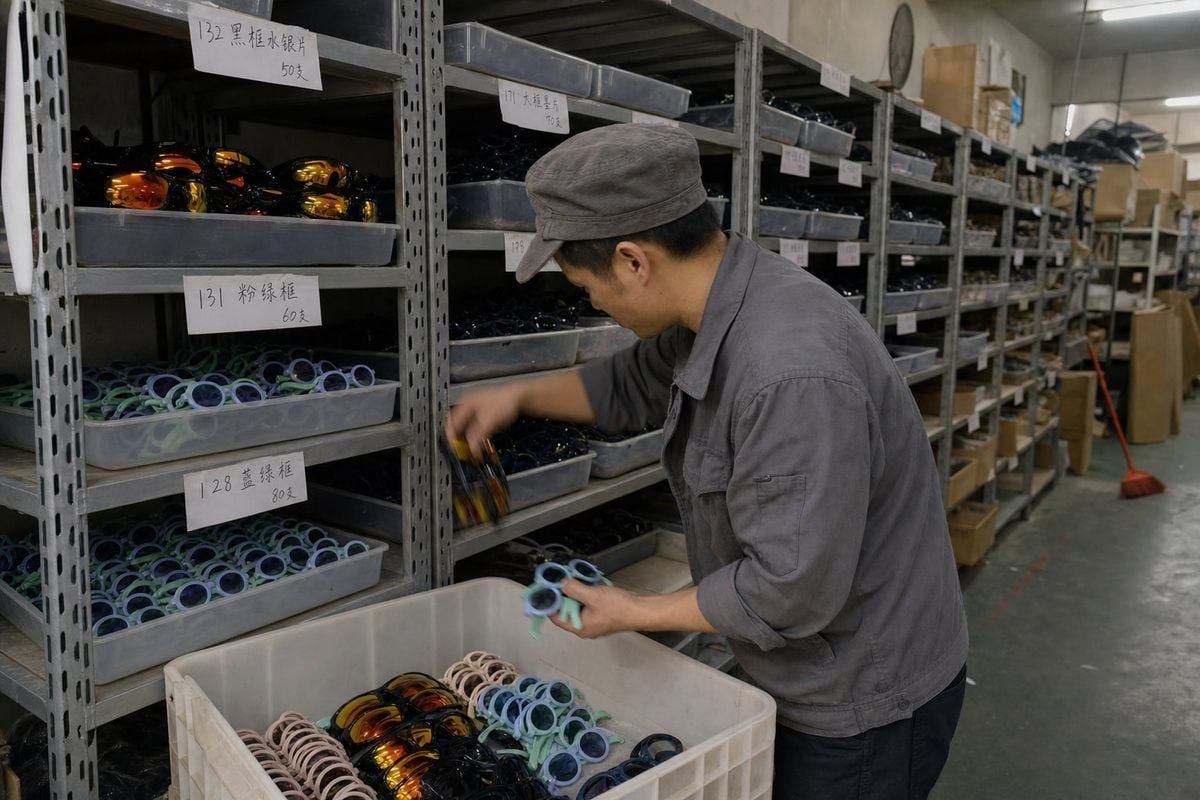
The reason stock orders are flexible is cost structure. Our warehouse already holds finished frames in hundreds of styles — sport wraparound shields with mirrored gradient lenses 2, pastel two-tone round frames, and everything between. Shipping you 15 of one and 15 of another costs us little extra labor. But firing up an injection molding line for a fresh color run is a different story entirely.
So the smartest move for a small buyer is to work with the factory's existing catalog. With roughly 800 existing styles on our shelves, most brands find enough variety to build a launch collection without paying for a single new mold. That is the whole point of low-risk bulk eyewear sourcing: use what already exists, mix intelligently, and save custom work for round two.
What options do I have to test the market with multiple styles before committing to bulk orders?
One trade-off we weigh constantly at our Taizhou workshop is flexibility versus efficiency. Testing-friendly options cost us more per unit, but they turn first-time buyers into long-term partners.
Test the market using sample orders with no minimum, mixed assortment packs of 12–24 units, small in-stock trial orders of 50–100 pairs across several styles, or boutique wholesale platforms with low minimums. Validate demand first, then scale winning styles into larger custom runs.
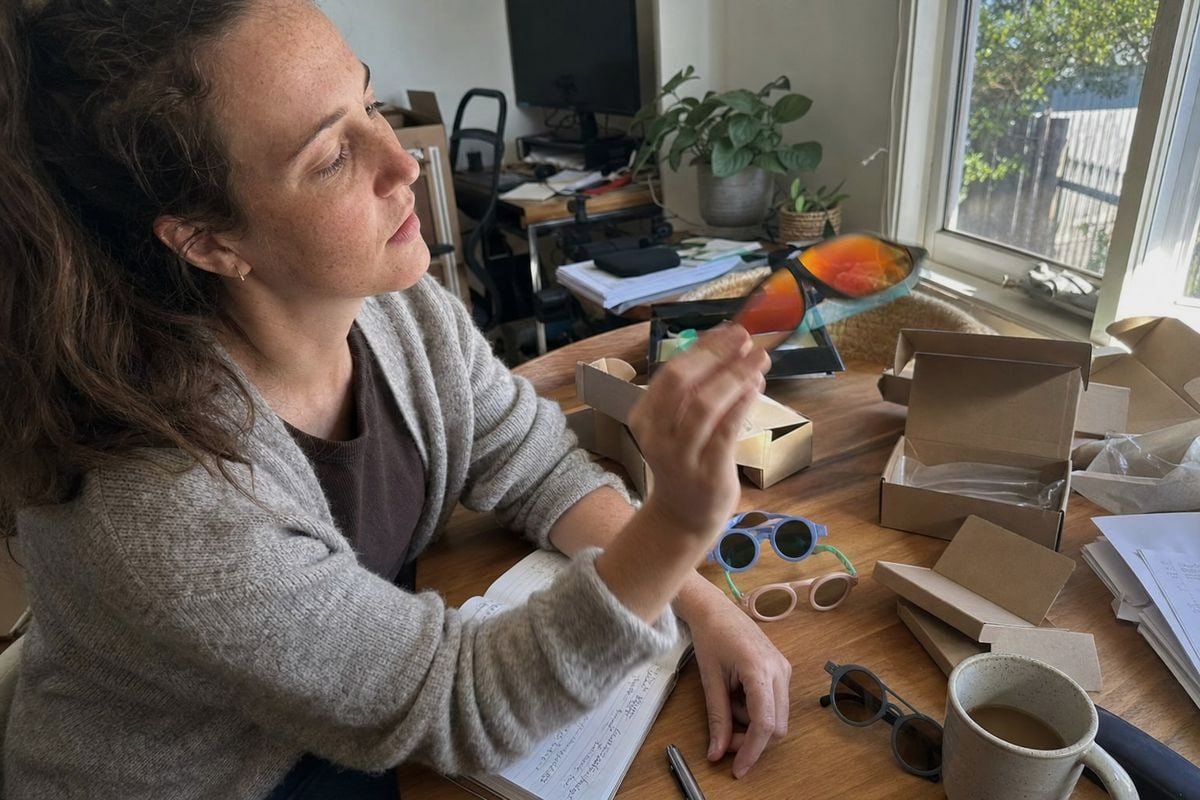
Market testing is where most new kids' eyewear brands 3 succeed or fail. I have watched buyers commit to 1,000 pairs of one style, only to discover their customers preferred a different lens shape entirely. Testing with variety prevents that expensive mistake.
A step-by-step testing workflow
Here is the process I recommend to every first-time buyer:
- Request samples of 5–10 candidate styles. Most factories, ours included, support one piece per color or model at sample pricing. Check fit, hinge quality, and lens clarity in person.
- Shortlist 3–5 styles. Look at comfort on real children's faces, not just photos. Flexible TPEE frames behave very differently from rigid acetate when a toddler bends them.
- Place a small mixed trial order. Something like 15–20 pieces per style across four styles gives you 60–80 units — enough to list online or stock one retail shelf.
- Sell for 30–60 days and track the data. Which style sells fastest? Which colorway? Which size?
- Reorder winners in volume. Now custom logo printing and branded packaging make financial sense, because you know what moves.
Why mixed assortment packs help
Some wholesale sunglasses suppliers bundle mixed dozen packs — twelve units across assorted colors and shapes under a single SKU. These bypass per-style minimums entirely because the factory treats the assortment as one product. We do something similar for event companies and promotional buyers who want visual variety at a display without managing ten separate line items.
The one thing testing cannot skip is safety. Even a 60-piece trial order should carry proper les normes de protection UV400 4 and documentation, because children's eyewear safety regulations apply regardless of order size. A small order is still a real product on a real child's face.
How do I choose the right assortment of styles, colors, and sizes for a mixed low-MOQ order?
A Japanese kids' accessory buyer once asked me to build her 100-piece assortment for her. We split it across sport shields, round pastels, and classic squares — and the pastels outsold everything three to one.
Choose your assortment by balancing style categories, color families, and age-based sizes. A proven split is 40% classic everyday shapes, 30% sport styles, and 30% fashion colors, spread across two or three size ranges matched to your target age group.
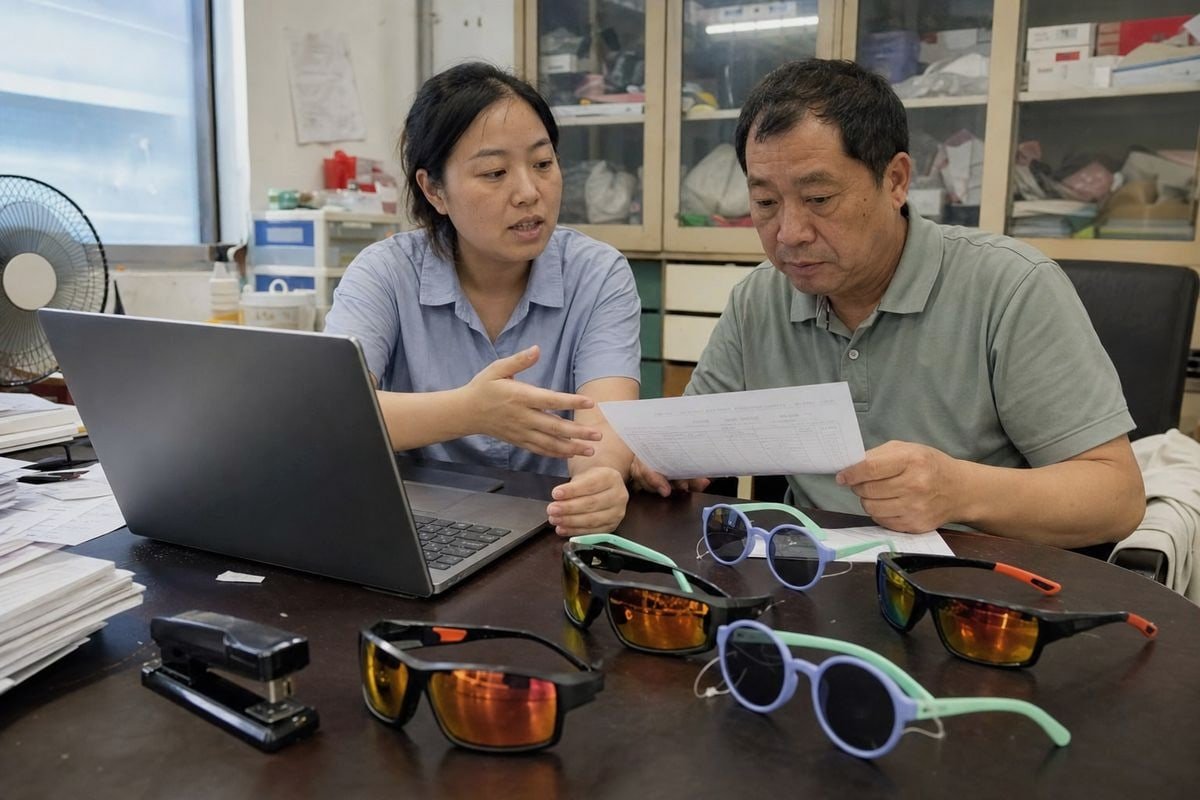
Assortment planning is more strategic than most first-time buyers realize. You are not just picking pretty frames. You are building a miniature product line that has to look coherent on a shelf or webpage.
Balance style categories first
Kids' sunglasses fall into a few clear families. Sporty wraparound shields with mirrored gradient lenses — like our glossy black frame with a fiery orange-to-gold lens, or the white shield with an orange-to-teal fade — appeal to active families and outdoor brands. Retro round frames in soft pastels, such as a periwinkle-blue front with mint-green temples 5, sell to fashion-conscious parents. Classic squares and aviators cover everyday wear.
| Catégorie | Suggested share | Typical buyer appeal | Lens options |
|---|---|---|---|
| Classic everyday shapes | 40% | Broadest parent appeal | UV400 tinted or polarized |
| Sport wraparound shields | 30% | Outdoor and active brands | Mirrored gradient, UV400 |
| Fashion pastels and rounds | 30% | Trend-driven, gift market | Solid tint, two-tone frames |
Then layer in colors and sizes
Within one style, mixing colors is usually the easiest allowance to negotiate. Many suppliers require a per-style floor but let colors float freely inside it. For sizes, children's faces change fast: a frame for a 3-year-old will not fit an 8-year-old. If your brand targets a wide age range, split your order across at least two size runs. Our team often recommends TR90 frames with TPEE flexible frames technology for younger children, because the material bends instead of snapping when small hands twist it.
Finally, think about lenses. Polarized lenses for kids cost slightly more but matter greatly for beach, snow, and water-focused brands, where glare reduction is a genuine selling point rather than a marketing extra.
Will ordering below MOQ affect the quality, customization, or pricing of my kids' sunglasses?
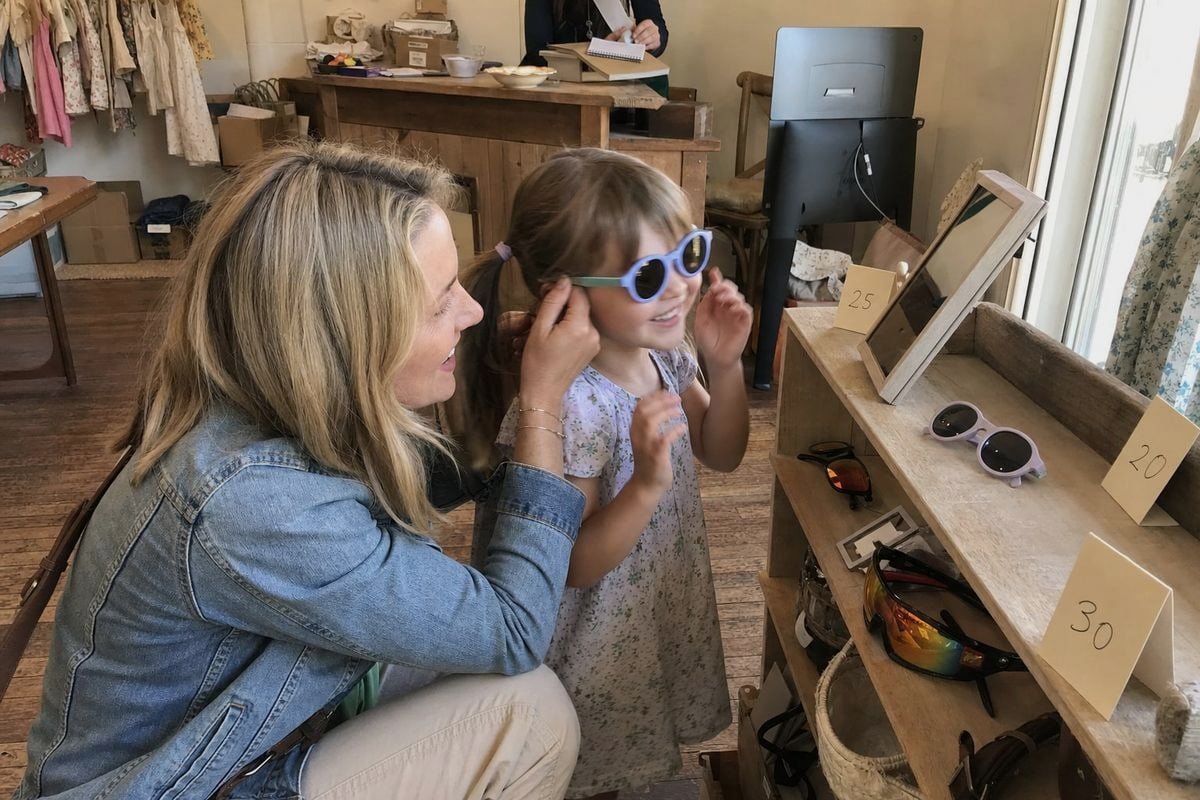
Fifteen years running production lines has taught our team one lesson: quality standards must never scale down with order size, even when quantities and prices do.
Ordering below MOQ raises the per-unit price by roughly 10–30% and limits customization to existing colors and stock designs, but it should never reduce quality. Reputable factories apply identical UV400 testing, hinge inspection, and safety checks to small and large orders alike.
Let me be honest about the trade-offs, because they are real but manageable.
What genuinely changes with a small order
Three things shift when your quantity drops below standard minimums:
| Facteur | Large order (MOQ met) | Small mixed order (below MOQ) |
|---|---|---|
| Unit price | Best tier pricing | 10–30% higher, or small batch surcharge |
| Personnalisation | Full custom colors, molds, logos | Stock designs and colors only, limited branding |
| Emballage | Fully branded retail-ready boxes | Standard or semi-custom packaging |
| Délai de livraison | 30–45 days production | Often faster if items are in stock |
| Contrôle qualité | Full inspection protocol | Identical inspection protocol |
Notice the last row. In a properly managed workshop — ours runs a 5S system 6 with around 120 workers — the inspection standard is a fixed process, not a negotiable line item. Every lens gets checked against UV400 protection standards. Every hinge gets a flex test. Small batch manufacturing runs through the same stations as a 10,000-piece container order.
Where customization gets restricted
The honest limitation is branding. Custom logo printing typically requires 100–300 pieces per model, because print setup, plate making, and color matching carry fixed costs. Below that, your options narrow to laser engraving 7 on some materials, custom hang tags, or branded outer packaging. Full private label eyewear — your logo on the temple, your box, your cleaning cloth — usually waits for your second or third order.
One workaround we support: buy unbranded stock frames now, validate your bestsellers, then apply logos only to proven styles later. Some brands even purchase blank frames and arrange local printing near their home market for fast, on-demand mixed releases.
The pricing math is fair, not punitive
A small batch surcharge exists because picking, packing, and documenting five styles takes more warehouse labor per unit than shipping one style in bulk. When a buyer understands this, negotiation becomes easy. Ask for the surcharge as a transparent line on your proforma invoice, confirm it disappears at your reorder quantity, and get every style, quantity, and specification in writing before paying any deposit.
Conclusion
Ordering kids' sunglasses in mixed styles below MOQ is entirely possible when you use stock catalogs, mix smartly, verify safety, and confirm everything in writing before paying.
The path is clear: sample first, test with a small mixed assortment, then scale your winners into branded volume orders. High minimums block buyers who ask for full customization on day one — not buyers who work with what a factory already makes well. Keep your first order simple, insist on UV400 documentation and child-safe materials, and choose a partner who treats a 60-piece trial with the same care as a container load. Do that, and a below-MOQ order stops being a compromise. It becomes the smartest, lowest-risk way to launch a children's eyewear line.
Notes de bas de page
1. Provides a general overview of sunglasses as a product category. ↩︎
2. Technical explanation of different lens types and coatings used in eyewear. ↩︎
3. Industry perspective on top-performing children’s eyewear brands and styles. ↩︎
4. Official FDA regulatory information regarding sunglasses safety and UV protection. ↩︎
5. Educational guide explaining the different components and parts of eyeglass frames. ↩︎
6. Government resource explaining the 5S lean manufacturing methodology for quality control. ↩︎
7. Comprehensive and stable overview of the laser engraving process and technology. ↩︎
Plus d'articles que vous pourriez aimer

Vous recherchez un partenaire fiable en lunetterie pour enfants ?
Explorez plus de 800 styles prêts et un support OEM/ODM complet adapté à votre marque.
Contactez-nous English
  Español de México
  Deutsch
  Français
  日本語
日本語  العربية
  Português do Brasil