How to Negotiate Try-On Samples and Display Props for Kids’ Sunglasses Suppliers?
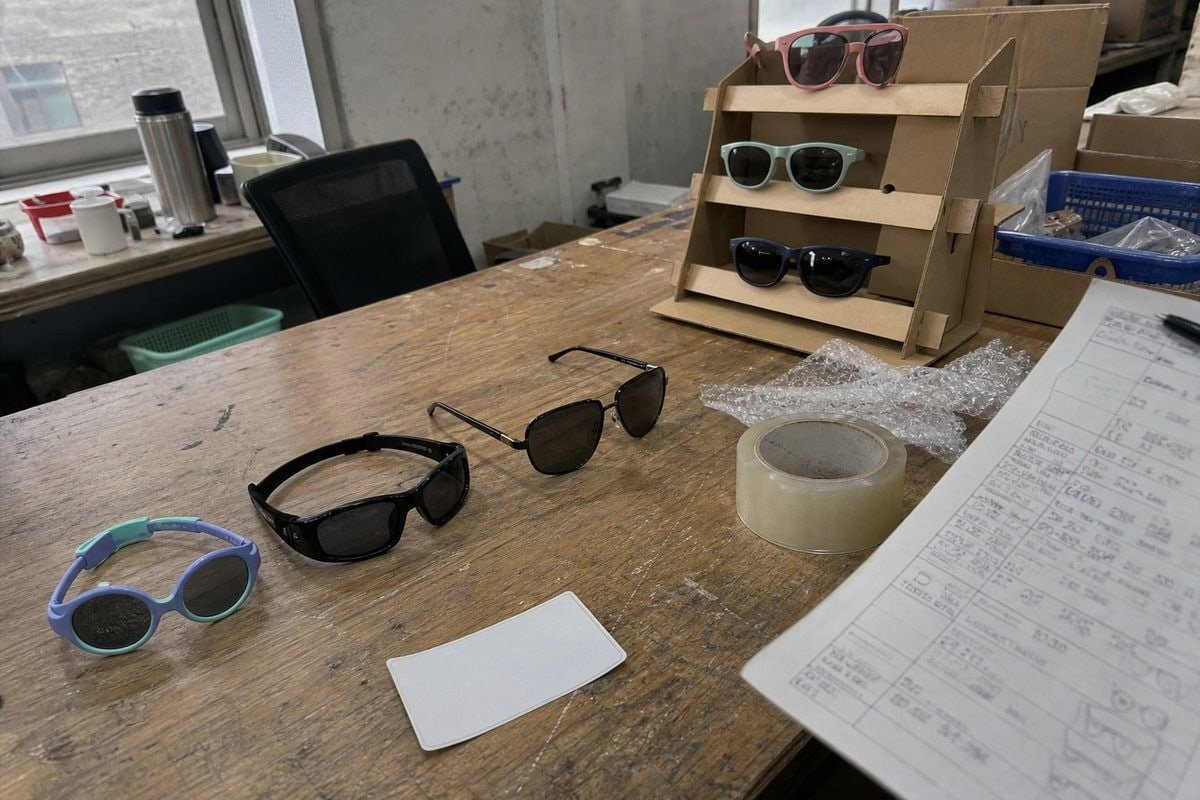
Negotiating try-on samples and display props for kids’ sunglasses suppliers 1 confuses many buyers. Too many pay for samples that never fit real children, then launch with zero retail support. Our Taizhou factory sees this weekly.
To negotiate try-on samples and display props effectively, request 2–3 random stock samples in multiple age sizes, offer to pay shipping, ask for sample fee reimbursement against your first bulk order, and bundle countertop displays into a starter package tied to a defined Minimum Order Quantity.
That is the short answer. Below, I will break down each part of the negotiation, step by step, using what actually works with factories like ours.
What Should I Ask For When Requesting Try-On Samples From a Kids' Sunglasses Supplier?
Last spring, a buyer from Australia asked us for one "hero" sample. We sent three random units in two age sizes instead. That single change saved her first order.
Request 2–3 random production units, not cherry-picked pieces, across at least two age sizes. Ask for exact measurements, close-up photos of hinges and nose bridges, material safety documentation, and confirmation of UV400 protection standards before the sample even ships.
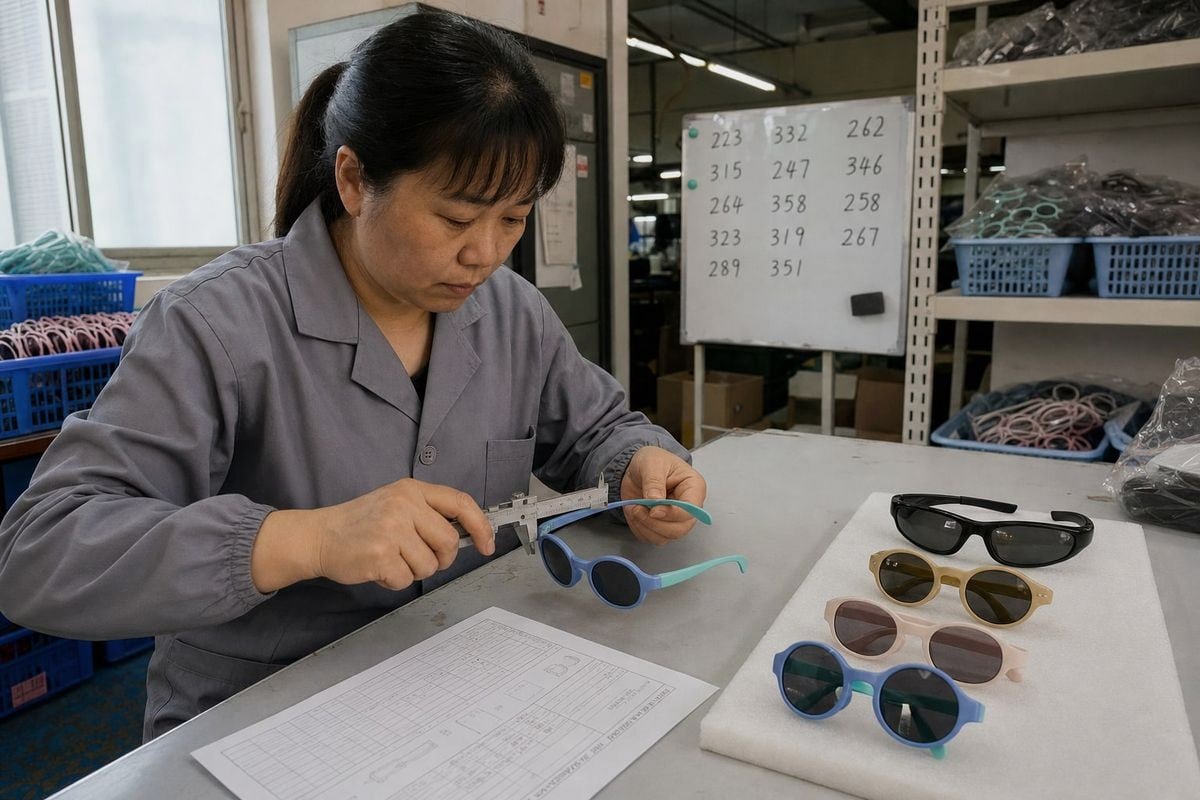
Children's eyewear is not like adult sunglasses. Fit, comfort, and safety carry far more weight than styling alone. A frame that looks perfect in a photo can pinch a four-year-old's temples or slide off a toddler's nose. That is why your sample request needs to be specific, not casual.
Ask for Random Units, Not Showpieces
A hand-picked sample tells you what the factory can do on its best day. A random stock unit tells you what your customers will actually receive. At our workshop, we encourage buyers to request random pulls because it builds trust early. If a supplier resists this, treat it as a signal.
Ask for Multiple Age Sizes
Kids' sunglasses suppliers often run different molds by age band. Our own catalog of roughly 800 existing styles splits across baby, toddler, and older-child sizing. One sample cannot verify fit across that range. Ask for at least two sizes and compare temple length, lens width, and bridge fit on real children.
Ask for Data, Not Adjectives
"Fits kids well" means nothing. Demand numbers and proof.
| What to Request | Why It Matters |
|---|---|
| Temple length and bridge width in mm | Verifies fit per age group |
| Material spec (e.g., TPEE flexible frames, TR90) | Confirms softness, flexibility, and safety on impact |
| UV400 protection standards test data | Non-negotiable for children's eyes |
| Product safety certifications 2 (CPSIA, EN, REACH) | Required for your target market |
| Close-up photos of hinges and inner surfaces | Reveals finishing quality before shipping |
Also ask for a short live video walk of sample storage and QC handling. Good factories will agree happily. We do this routinely for buyers in Japan and Europe, and it usually shortens the decision cycle rather than slowing it down.
How Many Sample Rounds Are Reasonable Before I Commit to a Bulk Order?
There is a real trade-off we weigh on every project: more sample rounds reduce buyer risk, but each round adds two to three weeks before bulk order lead times even begin.
Two sample rounds are reasonable for stock styles, and three for custom OEM projects. Round one verifies fit and quality, round two confirms corrections or custom branding options, and a third pre-production sample applies only when tooling, colors, or logos change significantly.
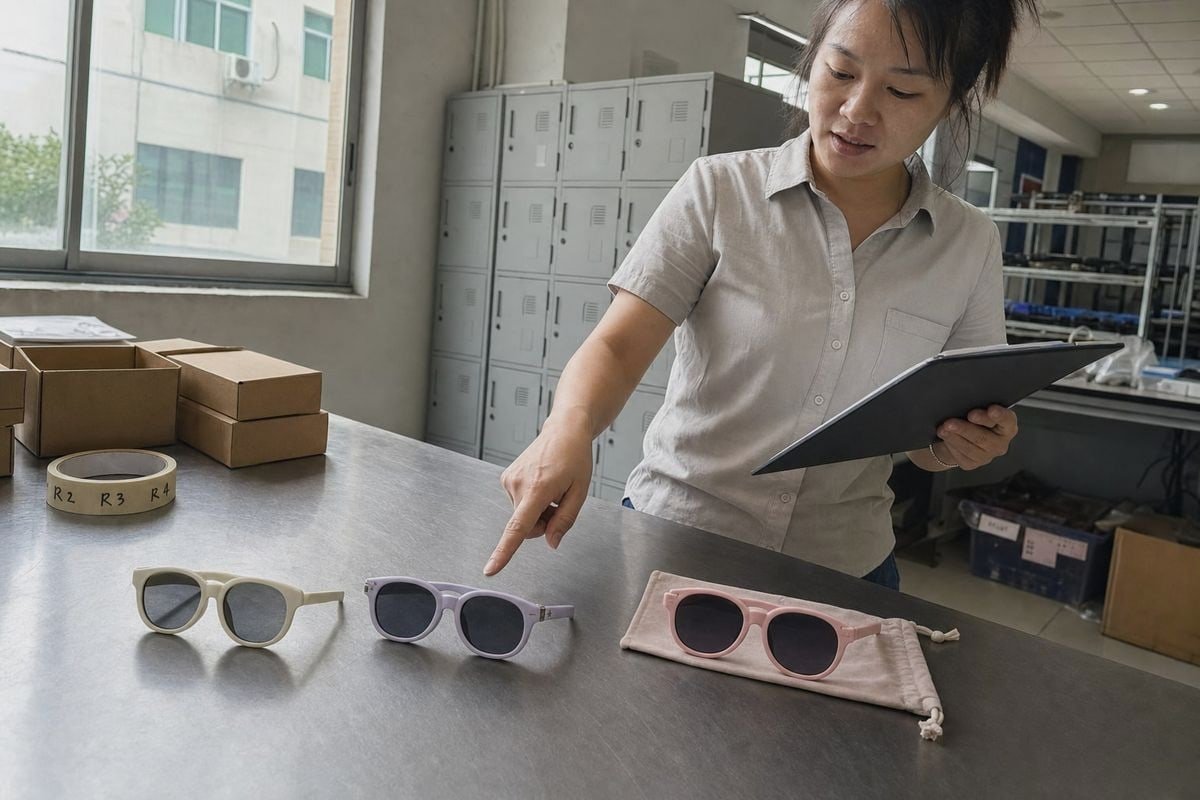
Endless sampling frustrates both sides. Suppliers lose patience, and buyers lose their launch window. A clear structure keeps everyone honest. Here is the framework we recommend to new brands sourcing from our line.
A Practical Sample-Round Structure
| Round | Purpose | Who Pays | Typical Timeline |
|---|---|---|---|
| Round 1: Stock sample | Verify fit, materials, UV lens quality | Buyer pays sample fee plus shipping | 3–7 jours |
| Round 2: Revised or branded sample | Confirm fixes, logo printing, packaging | Free if the error was supplier-caused; buyer pays for change requests | 7–14 jours |
| Round 3: Pre-production sample | Final sign-off on custom colors and molds | Usually credited into the PO | 10–15 days |
One point deserves emphasis. If the first sample misses the agreed spec because of supplier error, the replacement should be free or heavily discounted. If you change your mind on colors or lens tint, expect to pay again. That distinction keeps the negotiation fair.
Choosing Standard Production Over Prototypes
Requesting standard production samples instead of custom prototypes 3 avoids development fees and long lead times. This is exactly why we maintain a large existing-style library: a new brand can test the market without heavy mold investment, then move to full custom work once sales prove the concept.
Set a Feedback Deadline
Commit to a testing window, usually 14 to 30 days, and tell the supplier when you will respond. Some buyers also negotiate returnable sample terms with a 30-day evaluation period. Suppliers grant better sample terms to buyers who behave predictably. A defined test plan with real parent-and-child fit feedback signals that you are shortlisting seriously, not collecting free product.
Can I Negotiate Free or Discounted Display Props for My Retail Launch?
A distributor in Germany once told me he chose our quote over a cheaper one because we bundled countertop sunglasses stands 4 into his first shipment. Retail presentation closed that deal.
Yes, display props are negotiable, but rarely free with no commitment. Bundle countertop sunglasses stands and Point of Sale displays into a starter package tied to a minimum inventory commitment, or ask for props credited, loaned, or discounted against your first purchase order.
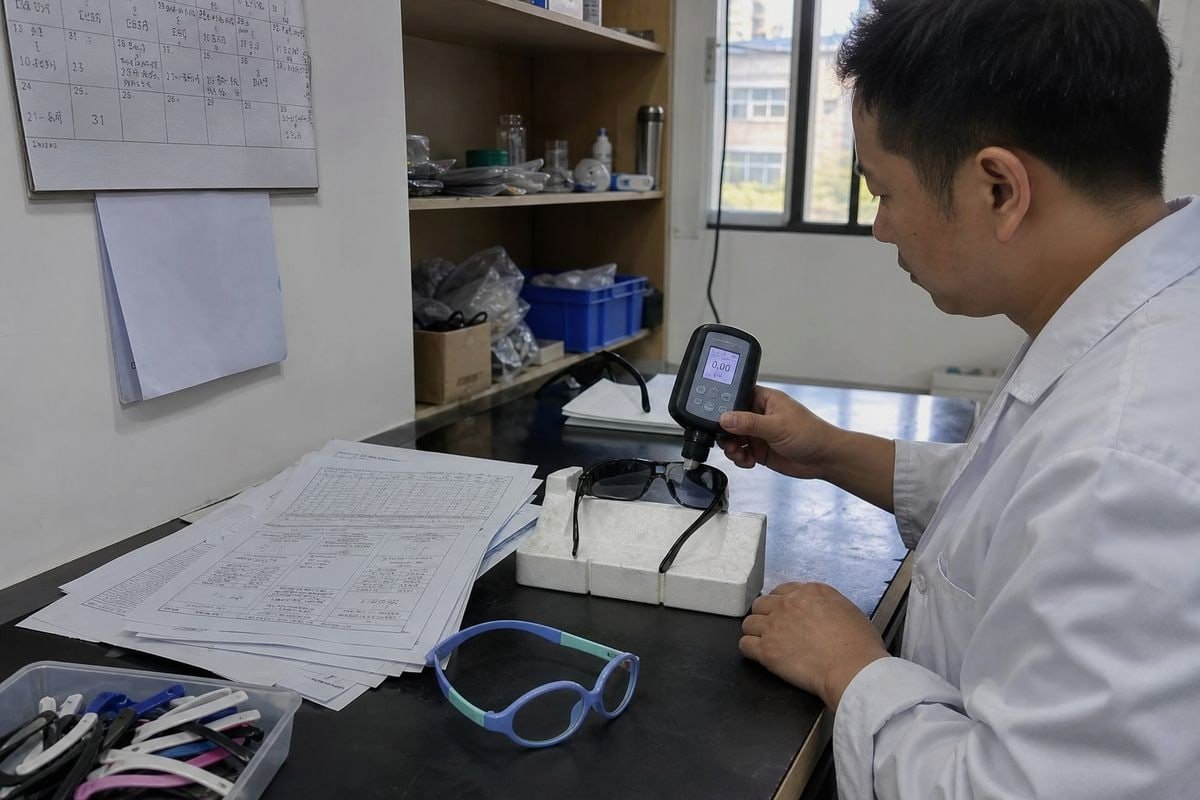
Suppliers think in incentives. Display props cost real money in materials, labor, and freight, so a supplier will not gift them to an unproven buyer. But a supplier will absolutely invest in props for a buyer who is clearly going to sell product. Your job is to look like the second type of buyer.
Frame Props as Sales Support, Not Freebies
Explain the business purpose plainly: the props will move the supplier's own product faster in your stores. When we ship Point of Sale displays 5 with a first order, we are not being generous. We are protecting sell-through, because a reordering customer is worth far more than the cost of a stand.
Structures That Suppliers Accept
- Starter package bundle. Free or discounted props included when your order meets an agreed Minimum Order Quantity.
- Credit against the PO. You pay for props upfront, and the cost is deducted from your first bulk invoice.
- Consignment or loan. The supplier retains ownership; you return or replace props if the relationship ends.
- Co-branded materials as a substitute. If physical props are refused, ask for co-branded shelf talkers, POP cards, or digital retail visuals instead.
Clarify Ownership and Maintenance
Always confirm in writing whether props are owned, loaned, or credited. Then push for a simple display maintenance clause covering replacement parts or updated signage at no extra cost. Two extra asks work well for kids' eyewear specifically: modular eco-displays in lightweight recyclable materials that cut shipping cost for both sides, and age-adjustable props with interchangeable height modules so the display sits at children's eye level. Suppliers rarely refuse ideas that lower their own freight bill.
What Sample and Prop Costs Should I Expect to Cover Myself?
Early in our export history, we offered fully free sample packages to anyone who asked. We learned quickly that buyers who share cost follow through, and buyers who demand everything free usually vanish.
Expect to pay international shipping, first-round sample fees at roughly one to three times wholesale unit pricing, courier costs for revision rounds you request, and destructive testing units at cost. Negotiate sample fee reimbursement and prop credits against your first bulk order instead of demanding zero cost.
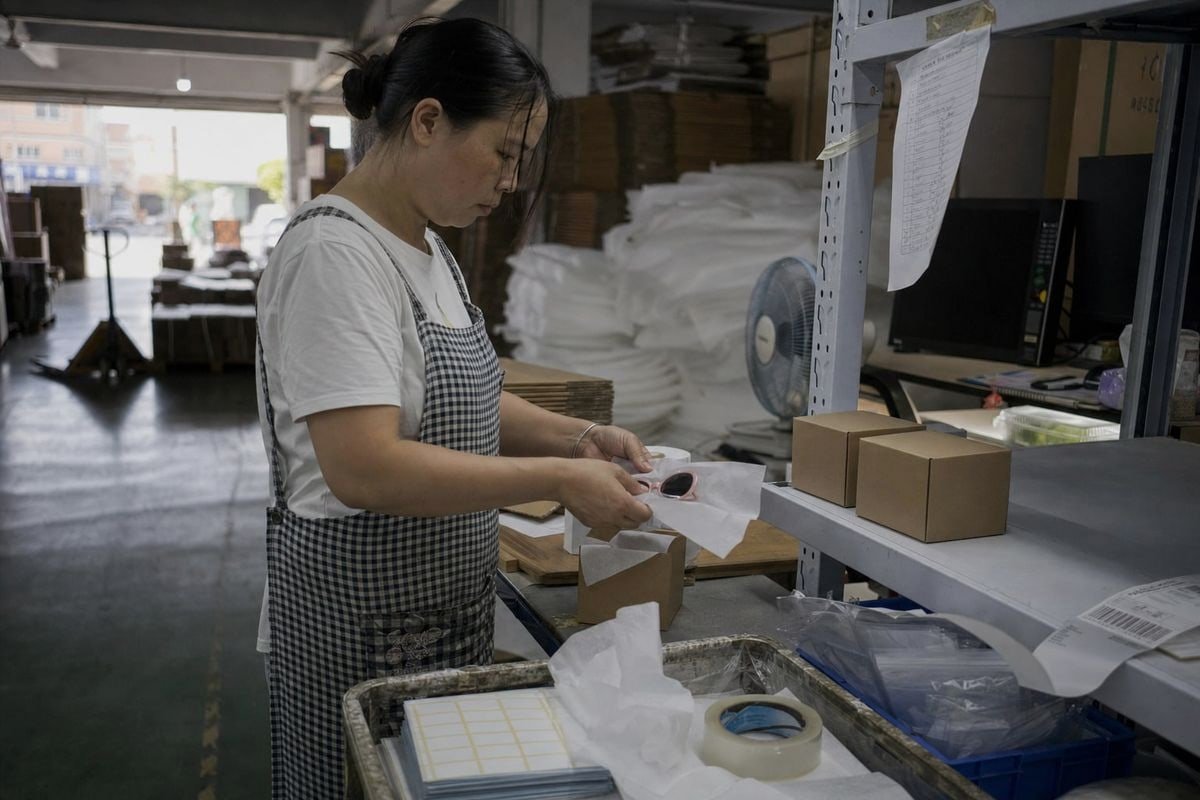
A balanced deal shares risk in proportion to your seriousness. The table below shows how costs typically split when the negotiation is handled well.
| Cost Item | Buyer Usually Pays | Supplier Usually Pays | Negotiable Middle Ground |
|---|---|---|---|
| First sample units | Yes, at 1–3x wholesale unit pricing | — | Sample fee reimbursement on first PO |
| International shipping | Yes, or use your own freight collect account | — | Supplier covers domestic leg |
| Supplier-error revisions | — | Yes | Split shipping only |
| Buyer-requested changes | Yes | — | Discounted sample fee |
| Destructive testing units | Yes, at cost | — | Supplier shares CPSIA and REACH test reports |
| Display props | Deposit or PO credit | Bundled at MOQ | Consignment or co-branding |
Smart Ways to Reduce Your Outlay
Offer your own freight collect account number. This removes the supplier's shipping risk 6 entirely, and it is often the single move that unlocks free sample units. Ask for destructive testing units at cost so you can verify product safety certifications without sacrificing sellable inventory. And request digital try-on assets, such as 3D files, alongside physical samples; they cost the supplier little and strengthen your omnichannel launch.
When Free Is Refused, Trade Terms Instead
If a supplier will not discount samples or props, pivot the conversation. Ask for extended payment terms 7, a relaxed Minimum Order Quantity for your trial order, or shipping support on the bulk shipment. In our experience exporting to buyers in more than twenty countries, these substitutions are approved far more often than outright freebies, because they cost the factory cash flow rather than cash.
Conclusion
Weak sample deals sink retail launches before day one. Negotiate structured rounds, shared costs, and bundled displays instead. Treat samples and props as partn
Plus d'articles que vous pourriez aimer
1 août 2026
L'usine doit-elle gérer l'emballage et l'étiquetage des lunettes pour enfants, ou utiliser un fournisseur désigné ?
1 août 2026
Entrepôt propre vs. exécution directe par le fournisseur : lequel réduit les coûts de retour pour les marques de lunettes pour enfants ?

1 août 2026
Entrepôt direct au port ou staging outre-mer : lequel permet d'économiser le plus sur l'expédition des lunettes pour enfants ?
Vous recherchez un partenaire fiable en lunetterie pour enfants ?
Explorez plus de 800 styles prêts et un support OEM/ODM complet adapté à votre marque.
Contactez-nous English
  Español de México
  Deutsch
  Français
  日本語
日本語  العربية
  Português do Brasil