How to Negotiate a Framework Contract for “Buy One, Get One” Optical Frames Deals?

A framework contract 1 for buy one, get one optical frames deals can build your margin — or quietly destroy it. Our factory in Taizhou has seen both outcomes many times.
To negotiate a framework contract for BOGO optical frames deals, define eligible SKUs, lock the first-frame price, set volume commitments and net payment terms, secure return and stock-balancing rights, and require quality certifications — so the free frame is funded by structure, not by your margin.
That is the short answer. The rest of this article breaks each part down. I will show you the numbers to prepare, the clauses to demand, and the manufacturer signals to check before you sign anything.
How can I structure a "buy one, get one" deal without sacrificing my profit margins?
Last spring, a buyer from Australia asked us to price a BOGO program on our TR90 kids optical frames OEM/ODM support 2. Her first draft would have lost her money. We rebuilt it together.
Structure the BOGO deal around blended unit cost, not the headline offer. Negotiate tiered pricing tied to volume commitments, use lower-cost or close-out styles as the second frame, and confirm that your blended cost of goods sold still leaves a healthy margin at the promotional retail price.

The trap in most BOGO deals is simple. Retail buyers focus on the promotion. Suppliers focus on the invoice. If you do not connect the two, the "free" frame comes straight out of your pocket. In my experience quoting for importers across 20+ countries, the buyers who protect margin all do the same thing: they calculate the blended unit cost before they talk about the offer.
Start with the blended cost math
A BOGO sale means one retail price covers two wholesale frames. So your real cost of goods sold per transaction is the sum of both frames, plus freight, plus any packaging or display costs. Your margin only survives if the negotiated framework pushes that blended cost down.
Here is a simplified comparison we walk buyers through:
| Scenario | Frame 1 cost | Frame 2 cost | Blended COGS | Retail price | Gross margin |
|---|---|---|---|---|---|
| No negotiation | $8.00 | $8.00 | $16.00 | $39.00 | 59% |
| Tiered pricing at volume | $6.80 | $6.80 | $13.60 | $39.00 | 65% |
| Full-price + close-out second frame | $8.00 | $4.00 | $12.00 | $39.00 | 69% |
The numbers are illustrative, but the logic is not. Small changes in unit cost swing the whole program.
Levers that protect margin
Three levers matter most. First, tiered pricing: ask the supplier to drop the unit price as your annual volume commitment crosses agreed thresholds. Second, second-frame sourcing: negotiate contractual access to close-out or discontinued lines at deep discounts to serve as the "get one" frame. With around 800 existing styles in our catalog, we can usually offer a buyer a dedicated pool of runout colorways for exactly this purpose. Third, a success-based rebate: if you hit the BOGO volume targets, the manufacturer issues a retroactive credit. Rebate structures like this make the supplier share the promotional risk instead of leaving it all with you.
Also watch your average order value at retail. A well-built BOGO lifts it — one prescription pair plus one sunglasses pair for the same child is a natural bundle in kids' eyewear. Bundle discounting works best when the second item has high perceived value but a lower landed cost.
What terms should I include in my framework contract to protect my brand long-term?
One lesson our export team learned the hard way: a buyer once assumed returns were covered because the salesperson "said so." Nothing was in writing. The claim went nowhere.
Include clauses covering product eligibility, price architecture, minimum order quantity, net payment terms, freight responsibility, defect and return rights, stock-balancing exchanges, marketing support, exclusivity or territory protection, and data-sharing rebates. A framework contract must document every rule for future call-off orders in writing.

A framework contract is not one purchase order. It is the rulebook for every purchase you will make over the contract period. That is why the clauses matter more than the headline discount. When we draft framework agreements with brand customers, we push both sides to answer every operational question before signing — because renegotiating mid-promotion is where relationships break.
The clause checklist that actually matters
Work through these terms one by one:
- Product eligibility. List the exact collections or SKUs that qualify for BOGO. Decide whether new releases join automatically or by amendment.
- Price architecture. Fix the first-frame price for the contract term. Define the second-frame logic: free at invoice, discounted, or credited by rebate. Insist on "free at invoice" if cash flow matters to you — rebate-only structures delay your money.
- Volume and minimums. State the minimum order quantity 3 per call-off and the annual volume commitment separately. Keep call-off minimums low so you can replenish fast-selling styles without over-ordering slow ones.
- Call-off protocol. Define how you place repeat orders under the framework — lead time, order format, and confirmation timing — so each promotional cycle does not require fresh negotiation.
- Net payment terms. Ask for Net-60 or Net-90 so payment lands after BOGO sell-through, not before. Align the payment cycle with your taux de rotation des stocks.
- Freight and backorders. Name who pays shipping, whether split shipments are allowed, and whether backordered items keep promotional eligibility or can be substituted.
- Returns and defects. Secure a clean path for damaged or defective frames — photo-based claims, credit notes, and no requirement to ship cheap defective units back across the ocean.
- Stock balancing. Negotiate the right to exchange slow-moving BOGO inventory for high-demand styles mid-contract without penalty. This single clause saves more promotions than any discount.
- Marketing support. Mandate co-op advertising funds, point-of-sale displays, and digital assets. If you sell online, ask for high-quality product imagery or virtual try-on assets in the framework.
- Data-for-discount. Offer anonymized sell-through data in exchange for exclusive rebates. Manufacturers value this more than buyers realize — it helps us plan production and SKU rationalization.
Also consider a consignment stock arrangement for a pilot phase, or a small circular-economy clause: returning end-of-life frames for recycling credits fits well with environmentally friendly materials and gives your brand a sustainability story.
How do I choose the right manufacturer for a BOGO optical frames program?
I weigh one trade-off with every new buyer who visits our workshop: a factory with deep catalogs and flexible tooling versus a trader with a lower opening quote. For BOGO, that choice decides everything.
Choose a true factory with a broad existing style library, proven flexible-material expertise, stable capacity for repeat call-off orders, full OEM/ODM support, and transparent quality control. BOGO programs need consistent replenishment and consistent quality across two frames per customer, not just a cheap first quote.
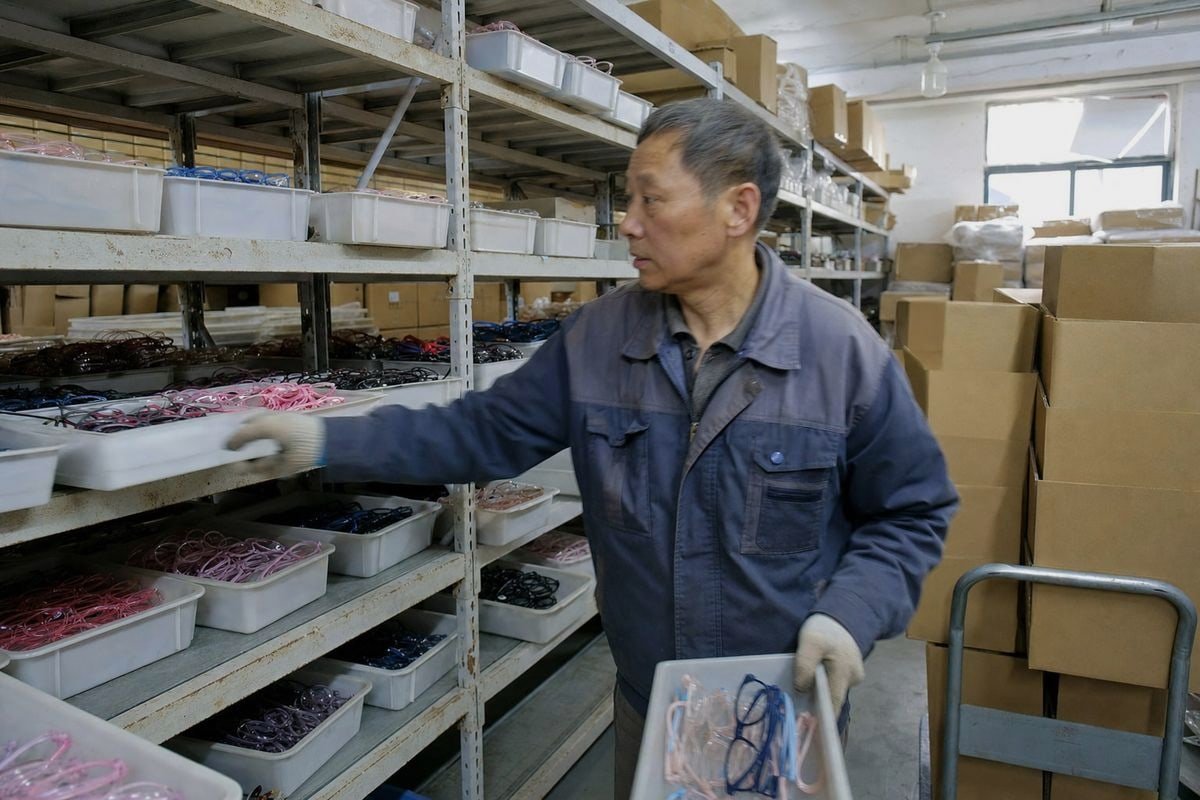
A BOGO program doubles your unit throughput. That changes what "right manufacturer" means. You are no longer buying a container of frames. You are buying a repeatable supply relationship where the second frame must be as good as the first — because the child wearing the "free" pair does not know it was free, and neither do their parents when something breaks.
Factory versus trader for a framework agreement
| Criterion | True factory | Trading company |
|---|---|---|
| Style library access | Direct — hundreds of existing molds | Limited to partner factories |
| Price stability over contract term | Controlled internally | Exposed to upstream changes |
| Quality control visibility | Auditable workshop, in-line QC | Second-hand reports |
| Custom colors, logos, packaging | Full OEM/ODM in-house | Coordination overhead |
| Call-off lead-time reliability | Production schedule you can verify | Dependent on others |
What to verify before signing
Ask for evidence, not promises. Visit or video-audit the workshop; ours runs 5S management with about 120 workers, and any serious factory should welcome that scrutiny. Check that the style library is real — a large pool of existing styles (we maintain roughly 800) means you can launch a BOGO assortment without heavy mold investment, and test the market at lower risk. That matters because BOGO programs live or die on assortment: you need traffic-driving styles and margin-protective styles in the same framework.
For children's frames specifically, confirm genuine flexible-material expertise. montures TR90 4 with TPEE temples behave very differently from cheap injection plastic. A supplier who cannot explain flex-fatigue behavior, hinge design for small faces, or slip-resistant temple grips is guessing — and a BOGO promotion built on guesswork produces double the returns.
Finally, test communication. Send a detailed clause list and see how they respond. A partner who engages with net payment terms 5, stock balancing, and rebate structures point by point will manage your framework well. One who only answers with a price will not.
What quality and safety standards should I require when negotiating a bulk frames agreement?
During a pre-shipment inspection last year, our QC team pulled an entire batch because temple flexibility drifted outside tolerance. The buyer never saw those frames. That is the standard a bulk agreement should guarantee.
Require compliance with your market's eyewear standards — such as EN ISO 12870 for frames, FDA impact requirements in the US, and UV400 verification for sun lenses — plus material safety testing for children, a defined AQL inspection level, and documented batch traceability in the contract.
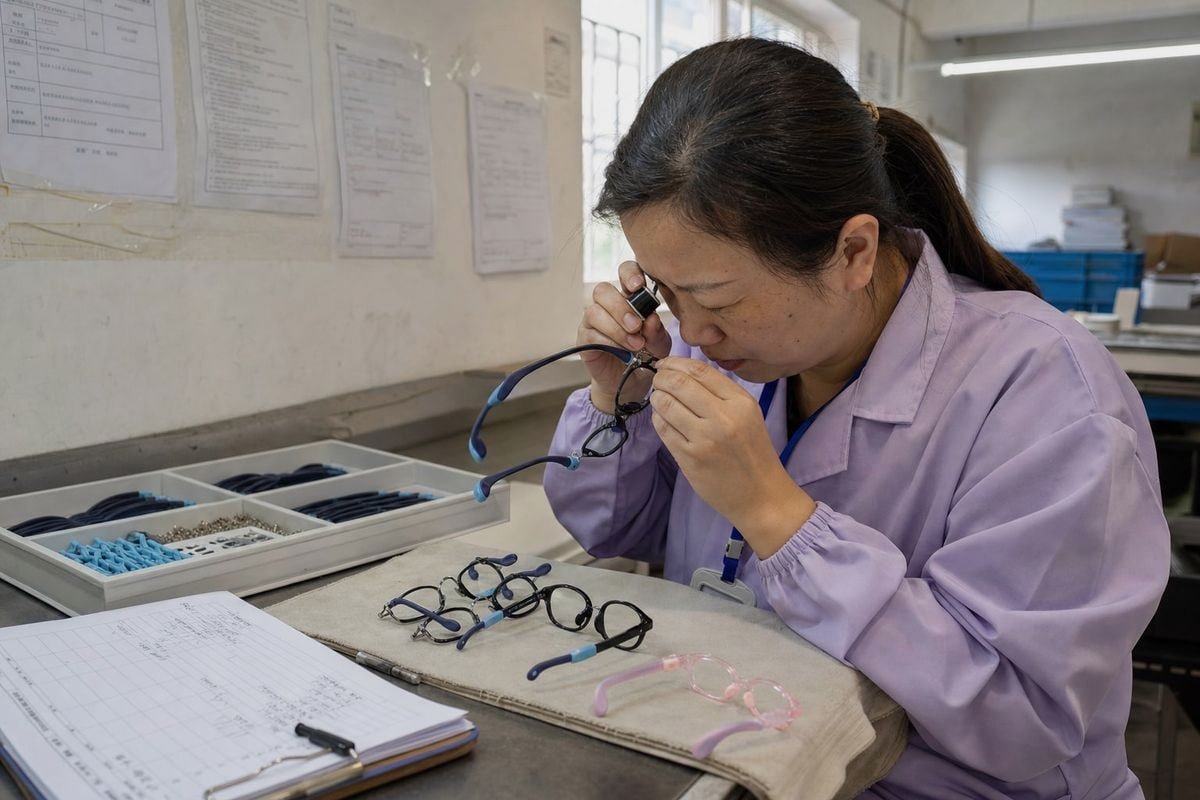
Quality clauses are where BOGO deals face their hardest test. Doubling volume tempts some suppliers to cut corners on the "free" frame — thinner walls, cheaper hinges, unverified lens blanks. Your framework contract should make that impossible by defining quality in measurable terms and attaching consequences.
Standards to name explicitly
Do not write "good quality" in a contract. Write the standard. For optical frames sold in Europe, reference EN ISO 12870 6 for frame requirements and test methods. For the US, reference FDA impact-resistance requirements 7 for lenses. For children's products, add chemical and material safety expectations 8 appropriate to your market — heavy metals, phthalates, and skin-contact safety all matter when a frame sits on a child's face for twelve hours a day. For sunglasses in a BOGO bundle, require UV400 protection with test documentation, not just a sticker.
Build inspection into the framework
| Quality element | What to specify in the contract |
|---|---|
| Inspection level | AQL sampling plan per shipment, with agreed defect classifications |
| Flex and durability | Temple flex cycles and hinge torque within stated tolerance |
| Lens verification | UV400 / impact test reports per production batch |
| Material safety | Compliance documents for child-contact materials |
| Traceability | Batch codes linking frames to production and test records |
| Failure remedy | Credit, replacement, or rework — buyer's choice, at supplier's cost |
At our factory, flexible TPEE and TR90 parts get in-line checks precisely because flexibility is the safety feature — a kids' frame that snaps instead of bending is a hazard, not a bargain. Insist that both frames in the BOGO pair meet identical specifications. Write it down: "promotional units shall meet the same standards, tolerances, and inspection levels as full-price units." One sentence, and it closes the biggest quality loophole in the whole deal. Pair it with your defect-return clause from the framework, and quality risk stays where it belongs — with the party who controls production.
Conclusion
A BOGO promotion without a real framework contract is a margin leak waiting to happen. Prepare your numbers, write every clause down, verify the factory, and demand documented safety standards. Do that, and the "free" frame becomes your most profitable marketing tool — one we would be glad to help you build.
Notes de bas de page
1. Defines the legal structure of long-term supply agreements in procurement. ↩︎
2. Explains the manufacturing relationship where a factory produces goods based on a buyer’s specifications. ↩︎
3. Explains the supplier requirement for the smallest amount of product a buyer can purchase. ↩︎
4. Official manufacturer site for Grilamid TR-90, the polymer used in high-quality TR90 frames. ↩︎
5. Explains standard commercial credit terms used to manage cash flow in supply contracts. ↩︎
6. Official BSI page for the EN ISO 12870 standard regarding spectacle frame requirements. ↩︎
Plus d'articles que vous pourriez aimer

août 5, 2026
Bio-Based vs Regular Cellulose Acetate: What's the Difference for Kids' Frames?

août 5, 2026
How Recyclable Are Kids' Optical Frame Materials, and What Eco-Friendly Alternatives Exist?

août 5, 2026
Do Kids Optical Frames Whiten or Age in Storage, and How to Control Warehouse Conditions?
Vous recherchez un partenaire fiable en lunetterie pour enfants ?
Explorez plus de 800 styles prêts et un support OEM/ODM complet adapté à votre marque.
Contactez-nous English
  Español de México
  Deutsch
  Français
  日本語
日本語  العربية
  Português do Brasil