How to Get Chinese Suppliers to Meet FDA Labeling Rules for Kids Optical Frames?
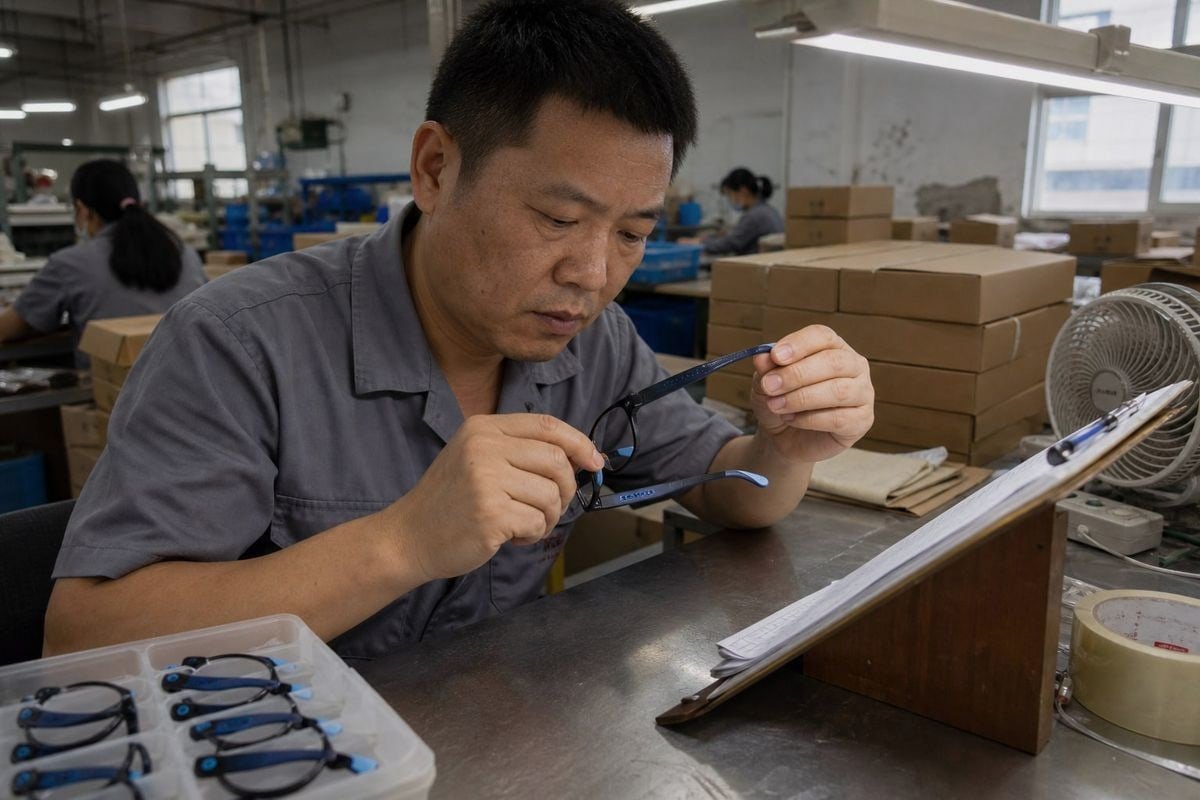
Getting Chinese suppliers to meet FDA labeling rules for kids optical frames is where I have seen good import plans fall apart. Our Taizhou factory has watched buyers learn this the hard way.
To get Chinese suppliers to meet FDA labeling rules for kids optical frames, put exact label text into your purchase order, lock approved artwork before production, verify the manufacturer or distributor statement, require English labeling with a full US address, and inspect labels during pre-shipment QC.
That sounds simple. In practice, it requires a system, not a promise. Below, I will walk you through exactly what to ask, verify, document, and inspect — step by step.
What Should I Ask My Supplier to Confirm About FDA Labeling Requirements Before Placing an Order?
A buyer from Colorado once sent us a PO that said only "labels must be FDA compliant." Nothing else. In our fifteen years of making children's eyewear, that single vague line has caused more shipment holds than any material defect.
Before ordering, ask your supplier to confirm the device identity name in bold English type, the exact manufacturer or distributor statement with full US address, permanent country of origin marking, CPSIA tracking label placement, and whether their facility holds FDA establishment registration and device listing.

Kids optical frames sit in an unusual position. The FDA treats them under medical device classification rules, even though spectacle frames are 510(k)-exempt. At the same time, the Consumer Product Safety Improvement Act (CPSIA) treats them as children's products. Then customs law adds country of origin marking 1 on top. Your supplier must handle all three rule stacks at once, and most general eyewear factories only know one — or none.
The Five Confirmations to Get in Writing
Do not accept "yes, we know FDA" as an answer. Ask for specifics. Here is the confirmation list we walk our own B2B clients through before we open a work order:
| Confirmation Item | What the Supplier Must State | Why It Matters |
|---|---|---|
| Device identity | Common name of the device in bold face type, readable font, in English | Required under 21 CFR Part 801 general labeling |
| Company statement | "Manufactured for ___" or "Distributed by ___" plus name, street address, city, ZIP | The named firm must match its actual role |
| Country of origin | "Made in China" marked conspicuously and permanently | US customs marking rules for imported goods |
| Children's product data | CPSIA tracking label with batch and date information | Enables recalls and proves traceability |
| Regulatory status | Whether the factory has FDA establishment registration, device listing, and a United States Agent 2 | Foreign device makers selling into the US need these |
One nuance many buyers miss: eyeglass frames and prescription lenses are exempt from providing directions for use, but clip-ons are not. If your kids line includes a clip-on sunglass accessory — a popular add-on for our TR90 frames with TPEE temples — the labeling scope changes. Ask about every SKU in the order, not just the core frame.
Also confirm the language question early. We still see artwork arrive with mixed Chinese-English text. The FDA expects English labeling for the US market, so lock that in your spec sheet before any printing plate is made.
How Can I Verify That a Chinese Manufacturer Actually Understands FDA Rules for Kids Optical Frames?
There is a trade-off I weigh constantly on our production line: a factory can be excellent at injection molding TR90 and still be a beginner at US regulatory work. Those are two different skill sets, and buyers must test for the second one directly.
Verify understanding by asking targeted questions: request their FDA establishment registration number, their United States Agent details, a sample of past US-market label artwork, their impact resistance testing records under 21 CFR Part 801.410, and evidence of CPSIA third-party lab testing for children's products.
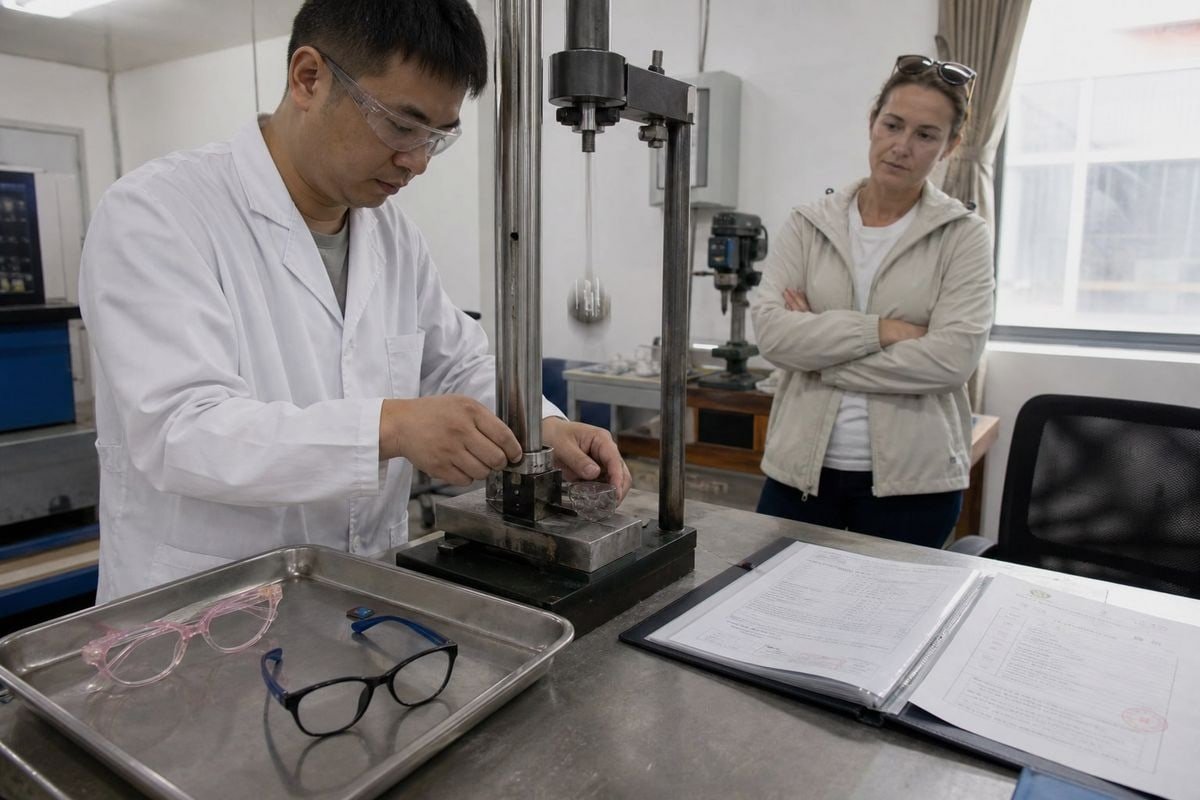
A supplier's answers reveal more than their marketing materials ever will. When a factory truly ships to the US regularly, they can produce these documents within a day or two. When they cannot, you will hear delays, deflection, or the classic line "labeling is the importer's responsibility."
Handling the "It's the Importer's Job" Objection
Let me address that objection head-on, because there is partial truth in it. Yes, the US importer of record carries legal responsibility at the border, and the importer — not the factory — issues the Children's Product Certificate 3. But the factory is the one physically printing the label, packing the cartons, and applying the tracking marks. If they print it wrong, your compliance paperwork is worthless. You need a factory that executes labeling correctly, regardless of where legal responsibility formally sits. When suppliers raise this objection with us in mind, we tell buyers: responsibility is yours, execution is ours, and both must be documented.
A Practical Verification Test
Try this three-question test on any candidate factory:
- Ask what the drop-ball test is. A competent supplier explains impact resistance testing for lenses entering the US and knows it is separate from labeling. A weak one confuses it with CE standards.
- Ask who their United States Agent is. Foreign device establishments need one. A blank stare is a red flag.
- Ask them to mark up your draft artwork. Send a deliberately incomplete label — missing the ZIP code, say — and see if they catch it. In our experience exporting to twenty-plus countries, factories that catch artwork errors before production are the ones that never cause port holds.
Also probe their quality management system. FDA quality system expectations under 21 CFR 820 apply to device makers, and a factory running a disciplined workshop — ours uses 5S management across roughly 120 workers — will have change control records, incoming material checks, and label verification steps you can actually see during an audit. Unannounced third-party audits are worth the cost for ongoing orders.
What Documentation Should I Request to Prove My Supplier's Labeling Complies with FDA Standards?
A distributor client in Japan once taught me a lesson I now repeat to every new buyer: "If it isn't documented, it didn't happen." Her team audits our TPEE frame files annually, and that discipline has saved both sides during customs queries.
Request a signed product specification sheet with all label fields, approved artwork files, pre-production label proofs, third-party lab testing reports for CPSIA and material safety, drop-ball test certifications for lenses, country of origin declarations, and confirmation of FDA establishment registration and device listing.

Documentation is your evidence chain. It protects you at the border, during retailer audits, and in any recall scenario. Here is the complete package we assemble for US-bound kids optical frame orders, organized by which rule stack each document serves:
| Rule Stack | Document to Request | Who Produces It |
|---|---|---|
| FDA device labeling | Approved artwork file with locked fields; signed label proof | Buyer approves, factory executes |
| FDA registration | Establishment registration number, device listing confirmation, United States Agent details | Factory or its regulatory agent |
| Conformité au test de chute de bille de la FDA | Drop-ball test certification per 21 CFR Part 801.410 for each lens shipment | Factory or third-party lab |
| exigences CPSIA | Third-party lab testing reports for lead, cadmium, and phthalates; tracking label spec | Accredited lab; factory applies labels |
| Customs | Country of origin declaration; commercial invoice matching marked origin | Usine |
| Quality system | QMS records: incoming inspection, change control, batch traceability | Usine |
Why Test Reports Alone Are Not Enough
Some buyers stop at test reports. That is a mistake. A lab report proves the material is safe — for example, that our non-toxic materials pass heavy-metal limits for children's products. It does not prove the label printed on carton 4,000 of 5,000 matches the approved artwork. You need both the reports and the artwork sign-off trail.
Remember also that the Children's Product Certificate is issued by you, the importer, based on the third-party lab testing data. So request the underlying reports in a format your compliance team can actually use: lab name, accreditation, test methods, and lot references. We keep these files organized by style number and batch, and we encourage buyers to mirror that filing system on their side.
Finally, establish a change control agreement. If the factory switches a temple material or a packaging vendor, the documentation package must be refreshed before the next shipment. Silent changes are how compliant products quietly become noncompliant ones.
How Do I Avoid Compliance Delays When Working With an Overseas Factory on FDA Labeling?
Years ago, we shipped a kids optical order where the retail box was perfect but the master carton origin marking was missed by a subcontracted packaging vendor. The rework cost us a week and taught us to inspect every packaging layer, not just the frame.
Avoid delays by locking artwork before production, tying payment milestones to label approval, requiring first-article samples of frames, hangtags, and cartons, running pre-shipment inspections against approved artwork, and agreeing on rework-at-supplier-cost terms for any nonconforming labels.
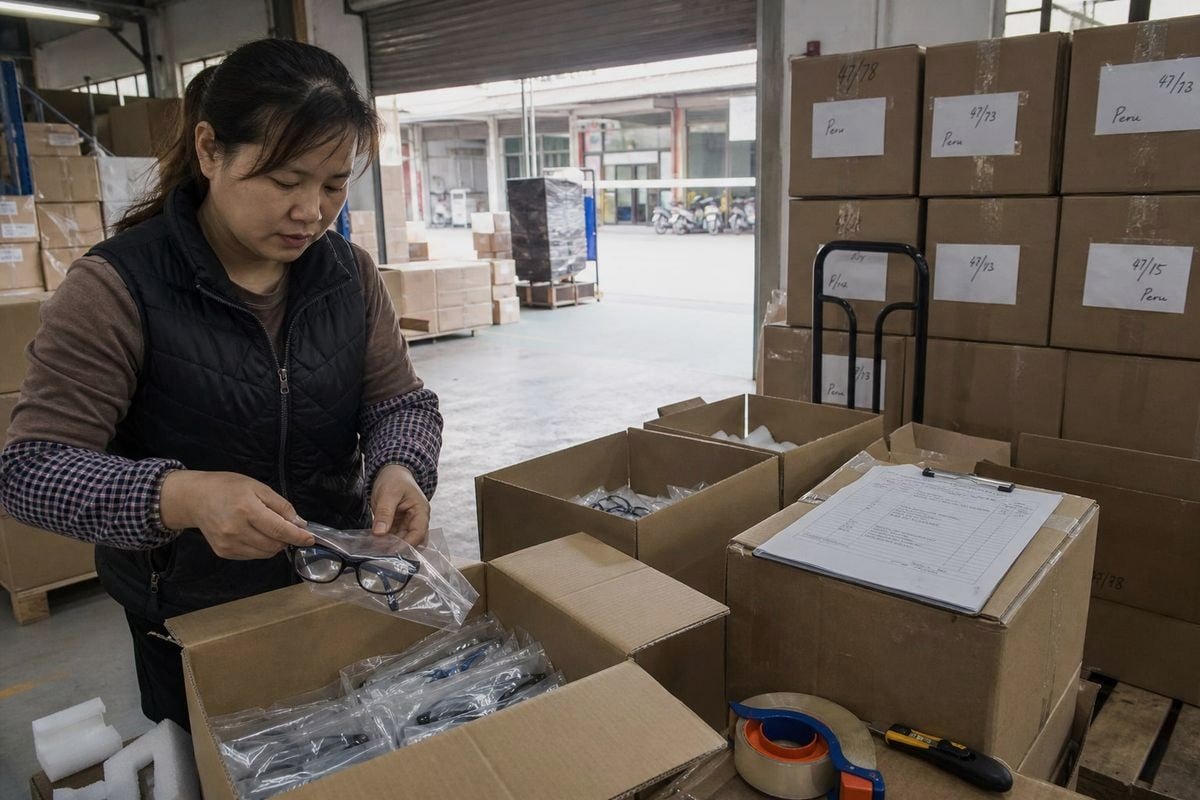
Delays almost never come from bad intent. They come from ambiguity and timing. Fix labels at the factory, not at the port — because a port fix costs ten times more and burns your retail launch window.
Build Compliance Into the Commercial Terms
Make labeling a contract term with teeth, not a footnote. Here is the sequence we recommend, with typical timing for a kids optical frame order:
| Étape | Action | Timing |
|---|---|---|
| PO issue | Exact label text, origin marking, and tracking label spec written into the PO | Day 0 |
| Artwork lock | Buyer signs final artwork; fields for identity, address, origin, warnings are frozen | Week 1 |
| First article | Factory submits physical samples of frame markings, hangtags, blister packs, cartons | Week 2–3 |
| Mid-production check | Spot-check printed labels against locked artwork | Mid-run |
| Pre-shipment inspection | Third-party or buyer QC verifies bold device name, English text, full address, conspicuous origin mark, readable CPSIA tracking data | Before freight release |
| Freight hold | Shipment releases only after inspection passes | Final gate |
Tie a payment milestone to the artwork lock and another to the passed inspection. Add explicit rejection rights for nonconforming labels and a rework-at-supplier-cost clause. A serious factory will accept these terms without friction — we do, because they protect both sides.
Small Tools That Prevent Big Delays
Two practical habits help enormously. First, maintain a bilingual compliance checklist so the workshop team and your English-speaking contact are reading the same requirements. Translation gaps cause more label errors than negligence does. Second, consider a QR code on packaging that links to batch records and material certifications. It speeds up traceability questions and makes any recall response faster. For buyers launching from our catalog of roughly 800 existing styles, this whole process moves quickly because the artwork templates already exist — the compliance fields just need your company details dropped in and locked.
Conclusion
FDA labeling compliance for kids optical frames is a supply-chain system: exact specs, locked artwork, documented verification, and inspection gates. Build that system with your supplier, and shipments clear cleanly.
Notes de bas de page
1. Official rules for marking imported goods with their country of origin. ↩︎
2. Explains the role and requirements for a U.S. Agent for foreign medical device establishments. ↩︎
3. Official CPSC information on the Children’s Product Certificate requirements. ↩︎
Plus d'articles que vous pourriez aimer
août 5, 2026
Bio-Based vs Regular Cellulose Acetate: What's the Difference for Kids' Frames?
août 5, 2026
How Recyclable Are Kids' Optical Frame Materials, and What Eco-Friendly Alternatives Exist?
août 5, 2026
Do Kids Optical Frames Whiten or Age in Storage, and How to Control Warehouse Conditions?
Vous recherchez un partenaire fiable en lunetterie pour enfants ?
Explorez plus de 800 styles prêts et un support OEM/ODM complet adapté à votre marque.
Contactez-nous English
  Español de México
  Deutsch
  Français
  日本語
日本語  العربية
  Português do Brasil