How to Evaluate a Supplier’s Production Qualifications for Kids’ Sunglasses?
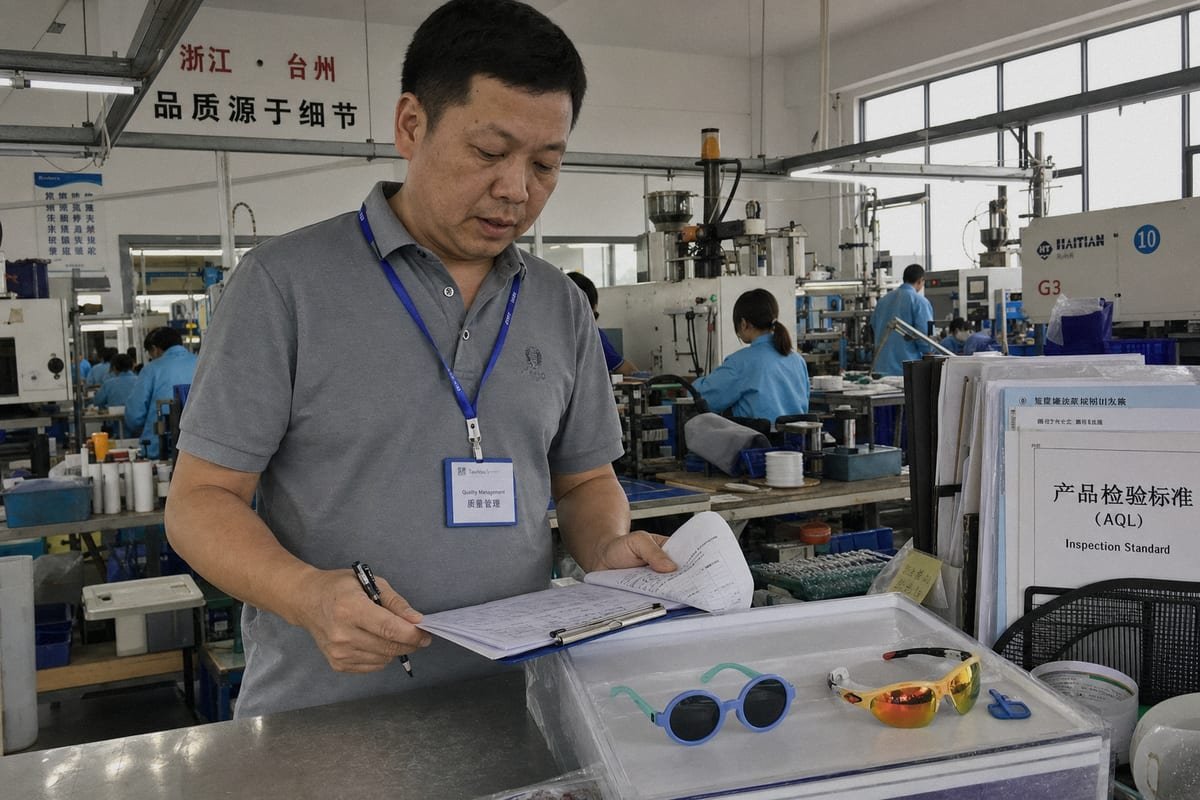
Evaluating a supplier’s production qualifications for kids’ sunglasses is where I see most new buyers stumble Marquage CE 1. A beautiful sample arrives, the price looks right, and the PO gets signed. Then the bulk order lands with loose hinges, mismatched colors, and no valid test reports. On our production line in Taizhou, we have rebuilt orders for brands burned exactly this way — and the fix is always the same: verify qualifications before you commit, not after.
To evaluate a supplier’s production qualifications for kids’ sunglasses, verify safety certifications like CPSIA and CE test reports, confirm in-house manufacturing through factory audits or video tours, inspect their multi-stage quality control system, and check documented experience with child-safe materials such as TPEE and TR90.
Each of these four checks deserves its own process. Below, I walk through them one by one, with the questions to ask and the red flags to watch for.
What certifications and documents should I request to verify a supplier's production qualifications?
A buyer from Australia once asked me to send "all our certificates" before her first order. I told her the honest answer: a stack of company certificates proves less than one product-specific test report. Documentation only matters when it ties to your exact model.
Request product-specific test reports for CPSIA (US), EN ISO 12312-1 (EU), and UV400 protection, plus a Children's Product Certificate, business license, factory audit report such as BSCI, and ISO 9001 quality system certification. Every document should match the exact model and material you plan to order.
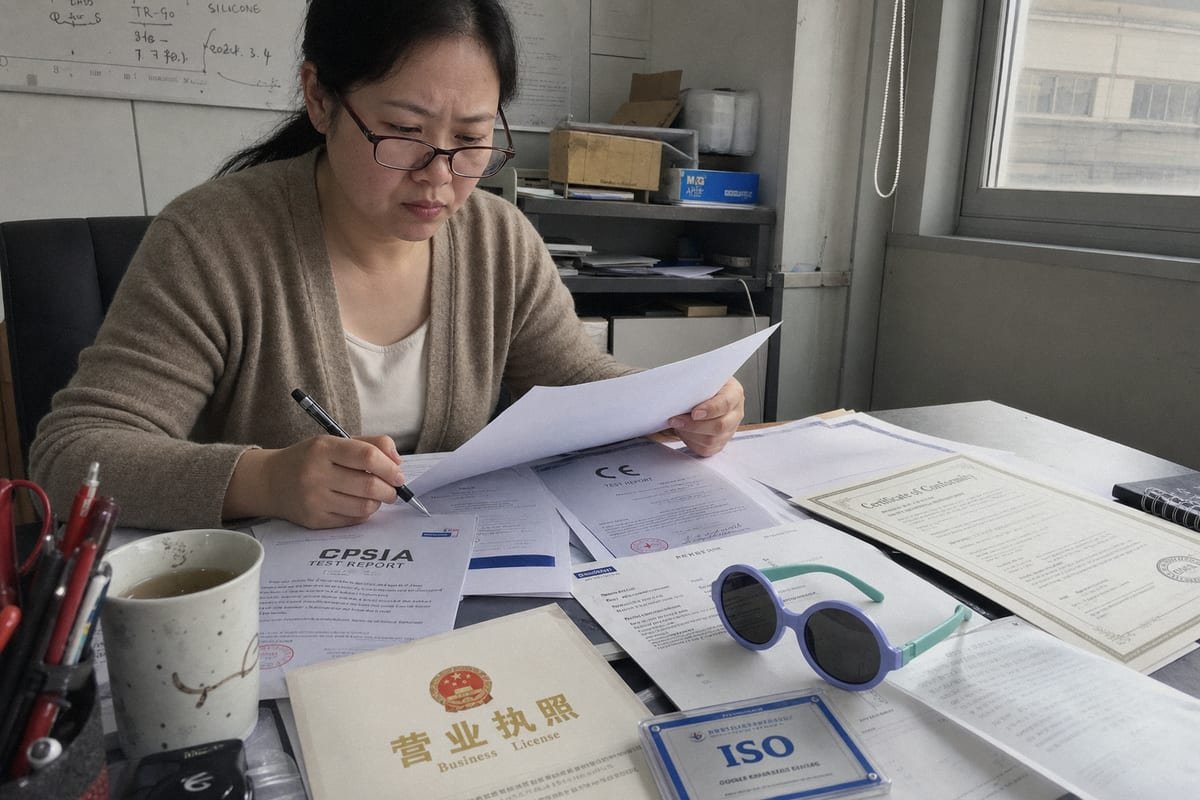
Children's sunglasses sit in a stricter regulatory category than adult fashion eyewear. In the US, conformité CPSIA 2 is mandatory, which means lead and phthalate testing performed by a CPSC-accepted third-party laboratory, plus a Children's Product Certificate and permanent tracking labels. In the EU, sunglasses are treated as des équipements de protection individuelle 3, so you need testing to the Norme ISO 12312-1 4 and a Declaration of Conformity behind the CE mark. If your lenses make certain claims in the US market, FDA registration and the drop ball impact resistance testing record may also apply.
Company-Level vs. Product-Level Documents
These two categories answer different questions. Company-level documents tell you the factory is a real, managed business. Product-level documents tell you your specific sunglasses are safe and legal to sell.
| Document Type | Exemples | Ce qu'il prouve |
|---|---|---|
| Company-level | Business license, ISO 9001, BSCI certification, factory audit report | The supplier is a legitimate, audited factory with a quality system |
| Product-level | CPSIA test report, EN ISO 12312-1 report, UV400 lab test, CPC | Your specific model passed safety and optical testing |
| Batch-level | Batch UV test data, pre-shipment inspection report | The actual goods you receive match the approved standard |
Red Flags in Paperwork
In our experience exporting to 20+ countries, weak suppliers show consistent patterns. Watch for test reports older than two years, reports listing a different product model or material, certificates issued to a different company name (a sign you are dealing with a trader), and refusal to let you verify a report number directly with the third-party laboratory. A genuine factory will hand over verifiable documents without hesitation, because we have to maintain them anyway for repeat export customers.
How can I confirm a factory actually manufactures in-house instead of outsourcing production?
There is a trade-off I explain to buyers constantly: traders can offer variety fast, but they control nothing. When a mold needs adjusting or a color drifts between batches, only the party that owns the production line can actually fix it. Our 120-worker facility exists precisely because that control matters.
Confirm in-house manufacturing by requesting a live video tour of injection molding, assembly, and QC stations, checking that certificates and audit reports carry the same company name, asking about mold ownership and production line count, and verifying the factory address against the business license.
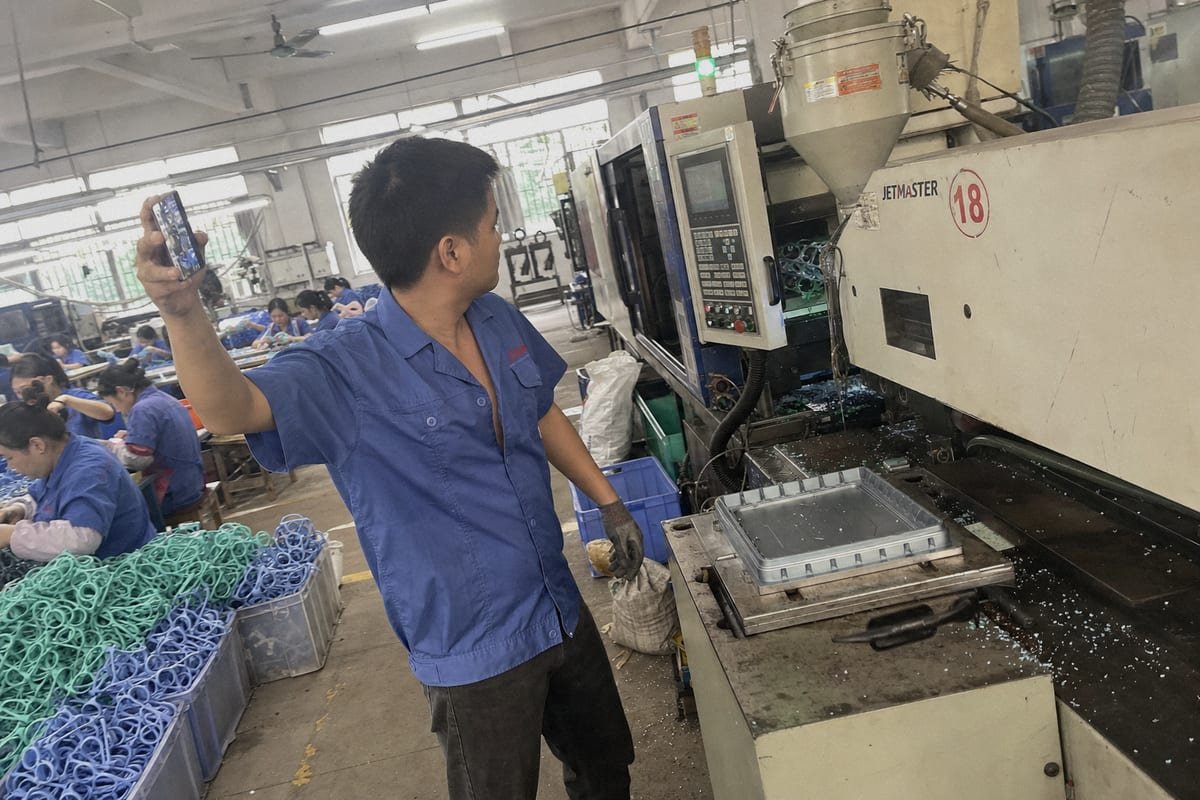
A reseller can source one good sample from anywhere. Only a real factory controls molds, tolerances, and batch quality across repeat orders. That difference stays invisible until your second or third PO, when consistency problems appear.
Un processus de vérification en cinq étapes
- Request a live video walkthrough. Not a pre-recorded promo video. Ask them to walk from le moulage par injection 5 to lens cutting to assembly to packing, in one continuous call. Real factories agree easily; traders stall or send stock footage.
- Cross-check names and addresses. The business license, the BSCI or factory audit report, and the test reports should all show the same legal entity and address. Mismatches almost always mean a middleman.
- Ask production-specific questions. How many injection machines do you run? Who owns the molds for this style? What is your monthly capacity in pieces? Which steps, if any, go to sub-tier vendors like coating or painting partners? A production manager answers these instantly; a trader has to "check with the factory."
- Ask about sub-tier vendor management. Even genuine factories outsource some steps, such as lens coating or electroplating. What matters is whether they audit those partners for the same non-toxic standards, especially paints touching a child's skin.
- Visit or commission an audit. An on-site visit is best. If travel is impractical, a third-party firm can conduct a factory audit and confirm workshop conditions, equipment, and workforce firsthand.
When buyers tour our 5S-managed workshop, they see lens installation, hinge assembly, and QC inspection zones in sequence. That physical flow is very hard to fake — which is exactly why you should ask to see it.
What should I look for during a factory audit or virtual tour to assess quality control?
Years ago, we lost a reorder because one batch of frames came out half a shade darker than the master sample. The lesson stuck: we now keep a signed master sample for every SKU and check every production run against it. That single habit is what I tell buyers to look for in any factory they audit.
During an audit, look for QC checkpoints at molding, assembly, and packing stages, retained master samples for each SKU, written pass/fail criteria for color and hinge tension, batch traceability records linking output to lines and dates, and a clean, organized workshop.
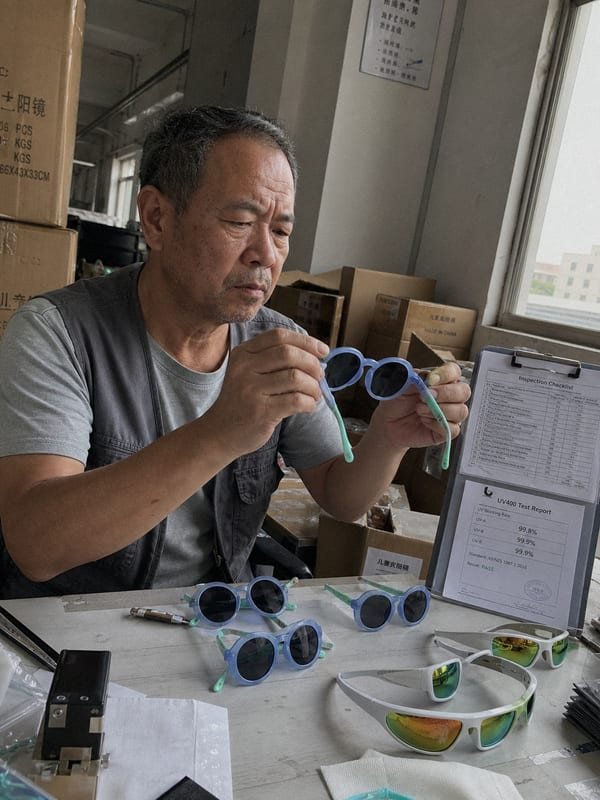
Quality control is a system, not a final inspection table. Whether you visit in person or join a virtual tour, your job is to see whether that system actually runs on the floor — or exists only in a brochure.
Stage-by-Stage QC Checkpoints to Verify
| Production Stage | What Good QC Looks Like | Question à poser |
|---|---|---|
| Moulage par injection | Operators check for flash, burrs, and short shots at the machine | How often do you sample-check molded frames? |
| Polishing & painting | Color compared to approved swatch; smooth, burr-free edges | What is your color tolerance standard? |
| Lens fitting | UV400 lens verification; secure fit without stress cracks | Do you spot-test UV protection per batch? |
| Assemblage | Hinge tension tested; screws torqued and checked for small-part risk | How do you secure screws against loosening? |
| Final packing | Master sample comparison; labels, warnings, and cartons checked | Who signs off before goods leave? |
Traceability and Housekeeping Signals
Ask one simple question: if I find a defect in month three, can you trace which line, which day, and which material batch produced it? For a children's product, traceability is not a luxury — it is your recall protection. A qualified factory keeps production records tied to batch numbers on cartons, and some brands now go further with batch-specific QR codes on packaging linking to test results.
Also watch the housekeeping. A 5S-managed workshop with labeled stations, sorted materials, and clean floors signals discipline that carries into product quality. Chaotic floors and unlabeled bins usually predict chaotic tolerances. Finally, ask how they handle rejects: a real QC system quarantines failed parts in a marked area rather than mixing them back into production.
How do I evaluate a supplier's experience with safe materials like TPEE and TR90 for children's eyewear?
Material expertise is where I have spent most of the last fifteen years. When our engineers first shifted toward TPEE temples on TR90 frames, the goal was simple: a frame that bends when a toddler sits on it and springs back, instead of snapping into sharp fragments near a child's eye.
Evaluate material experience by requesting raw material certificates proving BPA-free materials and lead-free finishes, asking the supplier to explain why they chose TPEE or TR90 for specific age groups, reviewing chemical migration and impact resistance testing, and checking their track record of kids' eyewear production runs.
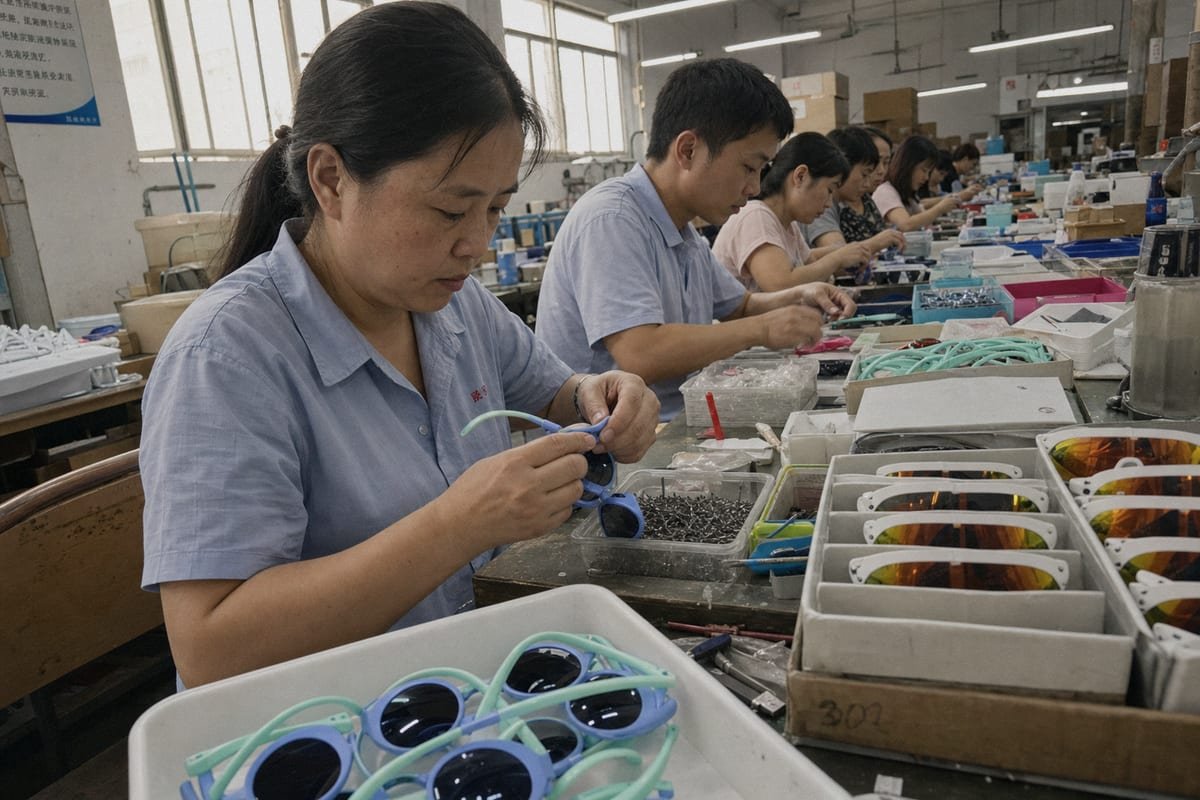
Anyone can type "TR90" into a product listing. Genuine material expertise shows up in three places: sourcing paperwork, engineering answers, and test data.
Why These Materials Matter for Kids
| Le rétrécissement des montures en acétate est le problème caché des matériaux traditionnels. L'acétate perd lentement ses plastifiants, se contractant avec le temps. Ironiquement, un léger rétrécissement peut resserrer un verre — mais il rend également la monture cassante, et les fils de lunette cassants se fissurent au niveau de la gorge. Il faut également tenir compte de la contraction thermique différentielle : lorsqu'un enfant passe de la chaleur extérieure à la climatisation, la monture et le verre se contractent à des vitesses différentes. Les polymères flexibles absorbent cette inadéquation ; les matériaux rigides transfèrent le stress au siège du verre. | TR90 | TPEE | Standard Cheap Plastic |
|---|---|---|---|
| Flexibilité | High — memory polymer returns to shape | Very high — soft, rubber-like flex | Low — brittle, snaps under stress |
| Poids | Très léger | Très léger | Modéré |
| Breakage behavior | Bends rather than shatters | Bends rather than shatters | Peut se casser sur des bords tranchants |
| Comfort on skin | Smooth, hypoallergenic | Soft, gentle grip on temples | Often rigid and hard |
| Utilisation typique | Façades de monture, montures complètes | Temples, baby frames | Lunettes de soleil promotionnelles économiques |
Questions That Expose Real Expertise
Ask the supplier why they chose a specific material for a specific age group. A qualified factory will explain, for example, why a toddler frame uses softer TPEE throughout while a frame for a seven-year-old can use TR90 avec des branches en TPEE 6 for durability plus flex. Vague answers like "it is strong material" signal a trader reading a datasheet.
Then demand proof behind the claims. That means raw material certificates from the resin supplier, third-party laboratory testing for heavy metals and phtalates 7 on painted parts, and chemical migration testing that simulates saliva exposure — because young children chew on temple tips. For lenses, ask for batch-linked UV400 documentation and impact resistance testing records, not a generic brochure claim. Finally, ask how many kids' eyewear styles they have actually produced. A factory with hundreds of existing children's molds has already solved fit problems — bridge width, temple length, weight balance — that a generalist sunglasses maker has never faced.
Conclusion
A qualified kids' sunglasses supplier proves itself through verifiable certifications, visible in-house production, systematic QC, and documented material expertise — never through a good sample and a low quote alone.
Notes de bas de page
1. Official EU source explaining what the CE mark certifies for products. ↩︎
2. CPSC is the US regulator enforcing CPSIA safety rules for children’s products. ↩︎
3. Background context on why EU regulates sunglasses under this equipment category. ↩︎
4. Official ISO page defining the sunglasses safety and optical standard cited. ↩︎
5. Background on the manufacturing process referenced during factory video verification. ↩︎
6. Explains the thermoplastic elastomer material class that TPEE belongs to. ↩︎
7. Authoritative EPA overview of phthalates, their common uses, and regulatory status. ↩︎
Plus d'articles que vous pourriez aimer
Vous recherchez un partenaire fiable en lunetterie pour enfants ?
Explorez plus de 800 styles prêts et un support OEM/ODM complet adapté à votre marque.
Contactez-nous English
  Español de México
  Deutsch
  Français
  日本語
日本語  العربية
  Português do Brasil