How to Determine Initial Order Quantity for Kids Optical Frames Across Hundreds of Stores?
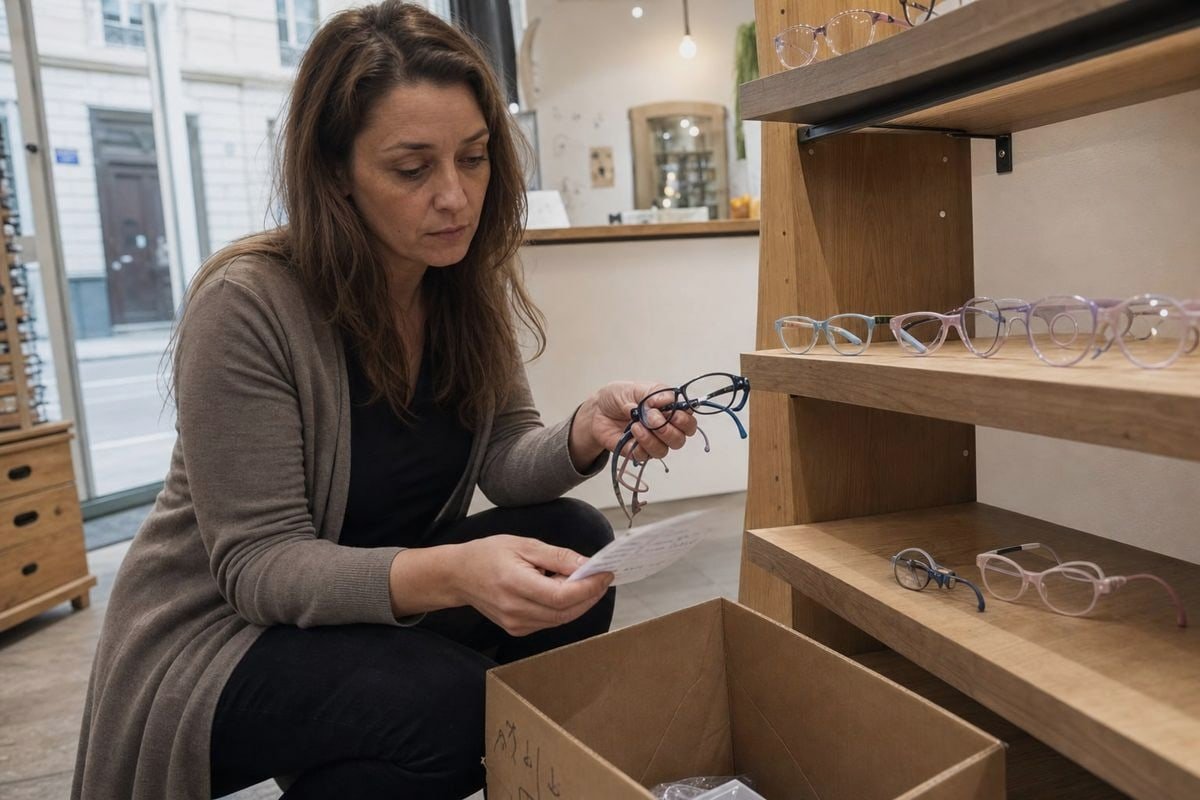
Setting the initial order quantity for kids optical frames across hundreds of stores worries every buyer I meet at our Taizhou factory pediatric eye exam 1. Overbuy, and dead stock eats your budget. Underbuy, and empty walls kill sales.
Determine initial order quantity for kids optical frames by clustering stores by demographics, forecasting demand per cluster, limiting styles and colorways, then sizing the buy as forecasted demand plus safety stock, adjusted against supplier minimum order quantity and a confirmed reorder path.
That one sentence hides a lot of moving parts. Let me break each part down, step by step, using what we see work for chains ordering from our production line.
How do I calculate the right per-store starting quantity without overstocking my retail network?
A procurement manager from Europe once asked us to quote 40 pairs per store for 300 locations, all in one uniform spread. We talked her out of it, and here is why.
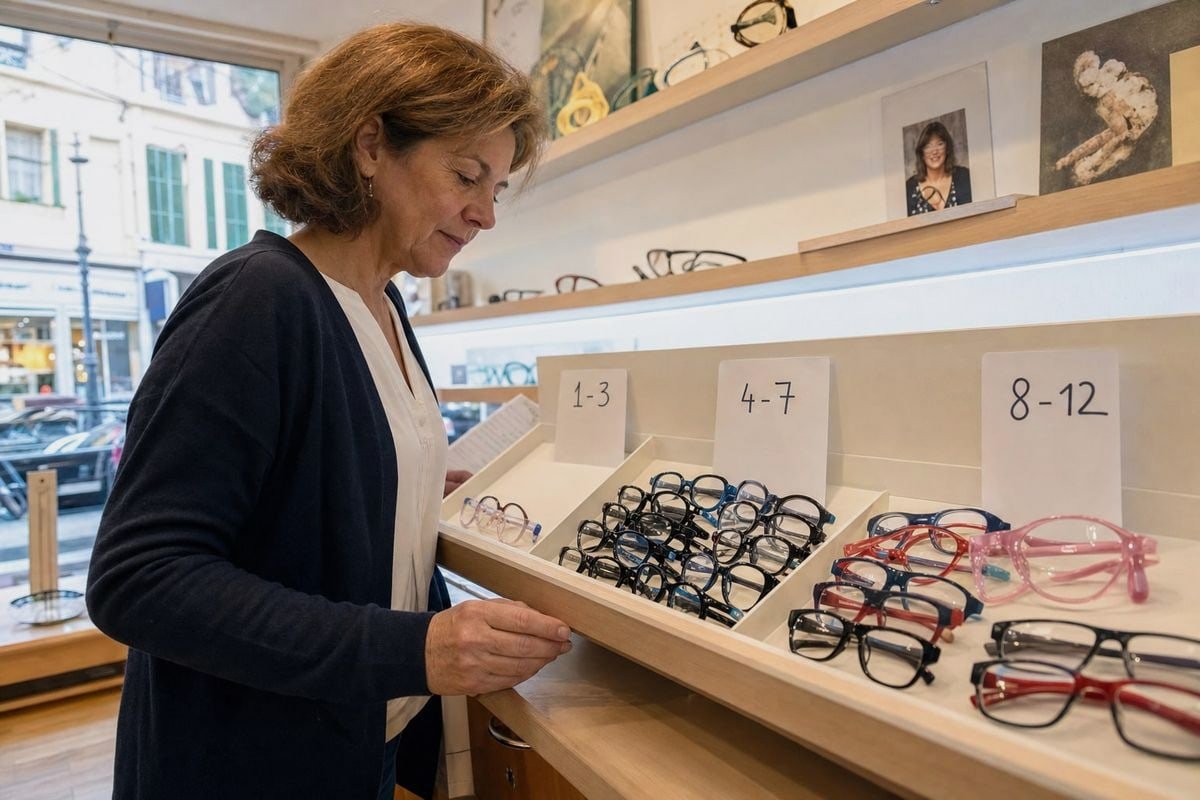
Calculate per-store quantity by dividing projected annual kids frame sales by a target inventory turnover of 3–4 turns per year, then tiering the result by store cluster. Most stores need 15–30 well-chosen pairs, not a uniform chainwide number.
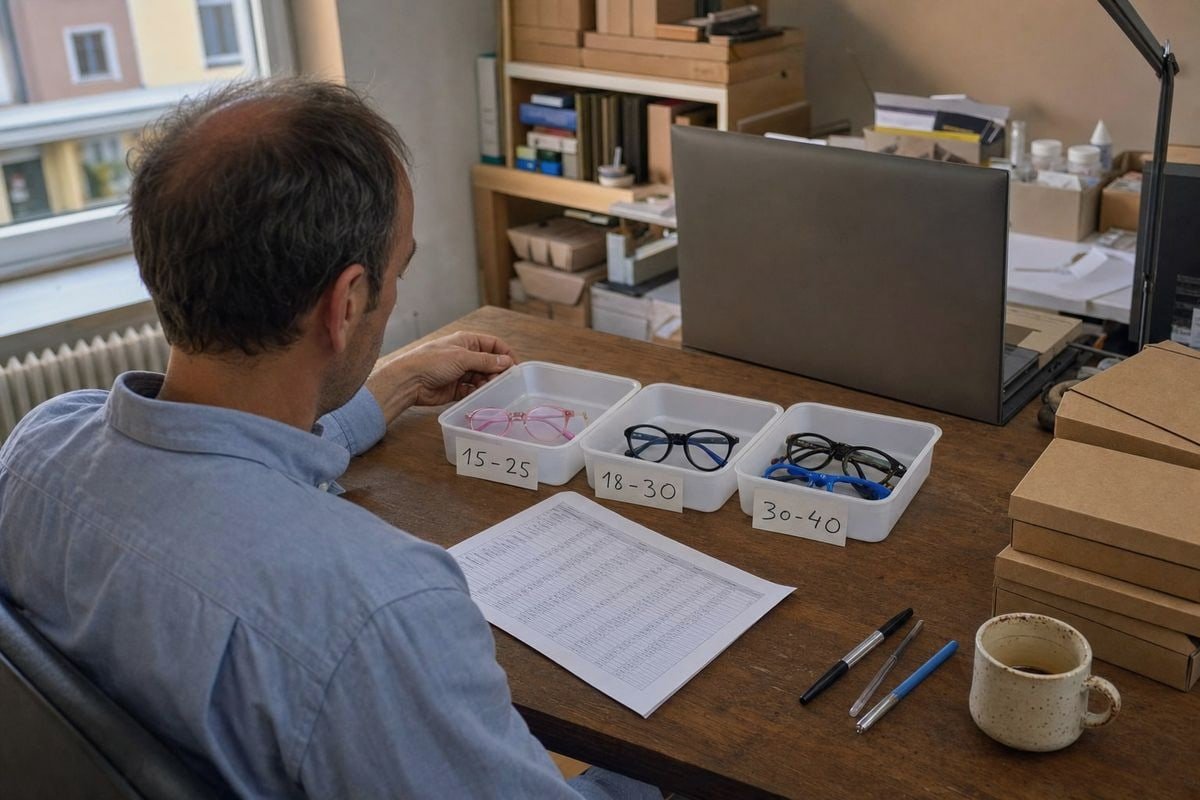
The biggest mistake we see is treating all stores as identical. A high-traffic urban store with strong pediatric exam volume needs three times the depth of a quiet suburban location. So before you think about units, think about store clustering by demographics: school-age population nearby, past children's frame sales mix, exam capture rate 2, and walk-in traffic.
Start with the turn-rate math
Take each store's projected annual kids frame sales. If a store expects to sell 80 children's pairs a year, and you want an inventory turnover ratio 3 of 4, the store should carry roughly 20 pairs at any time. That is your baseline. Historical sales data analysis is the strongest input here; if the chain sold kids frames before, the past mix of children's frames within total frame sales is your most reliable guide.
Tier the network, then allocate
Here is a simple tiering model we recommend to buyers planning a network-level opening order:
| Store tier | Profile | Opening pairs per store | Share of network |
|---|---|---|---|
| Tier A | High pediatric traffic, strong exam volume | 30–40 | ~20% of stores |
| Tier B | Average traffic, mixed demographics | 18–25 | ~50% of stores |
| Tier C | Low kids traffic, older demographics | 10–15 | ~30% of stores |
Then add stock de sécurité 4 levels at the warehouse, not on every wall. Central safety stock lets you feed sell-through winners fast without loading slow stores with inventory they cannot move. In our experience, chains that hold 15–20% of the opening buy centrally reorder smarter and discount less.
If data is thin, use proxy signals: eye exam volume, local age demographics, and capture rate. One training benchmark treats a capture rate of 65% or above as the mark of a healthy conversion funnel, which helps you sanity-check demand estimates before you commit.
What factors should I weigh when allocating kids optical frame styles across hundreds of store locations?
Our engineers spend a surprising amount of time on temple length and bridge fit, because in children's eyewear those millimeters decide whether a style sells or sits. Allocation must respect that.
Weigh five factors: pediatric frame sizing by age band, local demographics per store cluster, sell-through rate forecasting from any historical data, seasonal peaks like back-to-school, and prescription density that favors specific bridge or lens-compatible designs in each market.
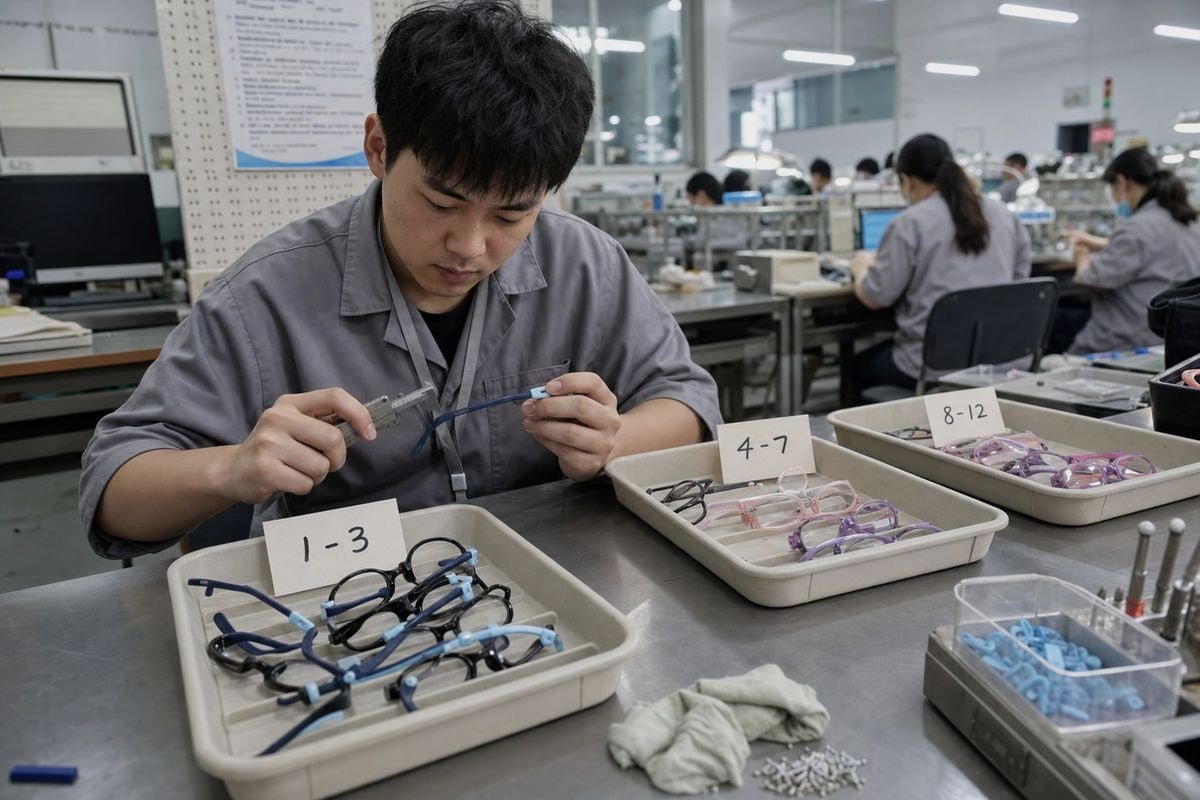
Kids frames are not small adult frames. Fit tolerances are tighter, replacement cycles are faster because children grow, and demand fragments by age tier. So assortment planning for children needs two layers: retail analytics and product-fit analytics. Adult-style inventory logic alone will misallocate your buy.
Size tiers come before styles
We advise buyers to structure the order around age bands first, styles second:
| Age band | Typical lens width | Key fit priorities | Allocation guidance |
|---|---|---|---|
| Infant / toddler (1–3) | 38–42 mm | Flexible material, soft ear hooks, low bridge | Small share, Tier A stores only |
| Early school-age (4–7) | 42–46 mm | Durability, adjustable temples, slip resistance | Largest share for most chains |
| Pre-teen (8–12) | 46–50 mm | Style-conscious shapes, "mini-me" adult looks | Second largest, urban-weighted |
The early school-age tier usually carries the strongest sell-through potential. Prioritize depth there first, then expand once real data arrives.
Local signals sharpen the split
Back-to-school is the peak for most markets, so weight stock toward August–September demand where that applies. Cross-reference prescription density too: some patient bases need more high-index 5 compatible frames or specialized bridge designs, and clinical data can flag that before you buy. Trend-leading urban stores can take more fashion-forward pre-teen styles, like translucent pink acetate looks that echo adult trends, while traditional markets do better with durable, sporty designs — our black TR90 6 frames with two-tone TPEE temples and silicone ear hooks are a typical example of what Tier B and C stores sell steadily.
Finally, apply the 80/20 rule across styles: deep quantities on core evergreen designs, shallow test quantities on fashion experiments. Complexity multiplies across hundreds of stores, so SKU rationalization at the start is cheaper than markdowns at the end.
How can I use OKAY EYEWEAR's existing style range to minimize my initial order risk?
The lesson that shaped how we work came from a startup brand that spent its whole budget on custom molds, then discovered its market preferred a shape it had not tooled. Existing styles would have saved it.
Use OKAY EYEWEAR's roughly 800 existing styles to launch without mold investment. Ready-stock styles can be tested from single pieces, existing molds accept new colors at 200–300 pieces per style, so you validate demand before committing to full custom production.
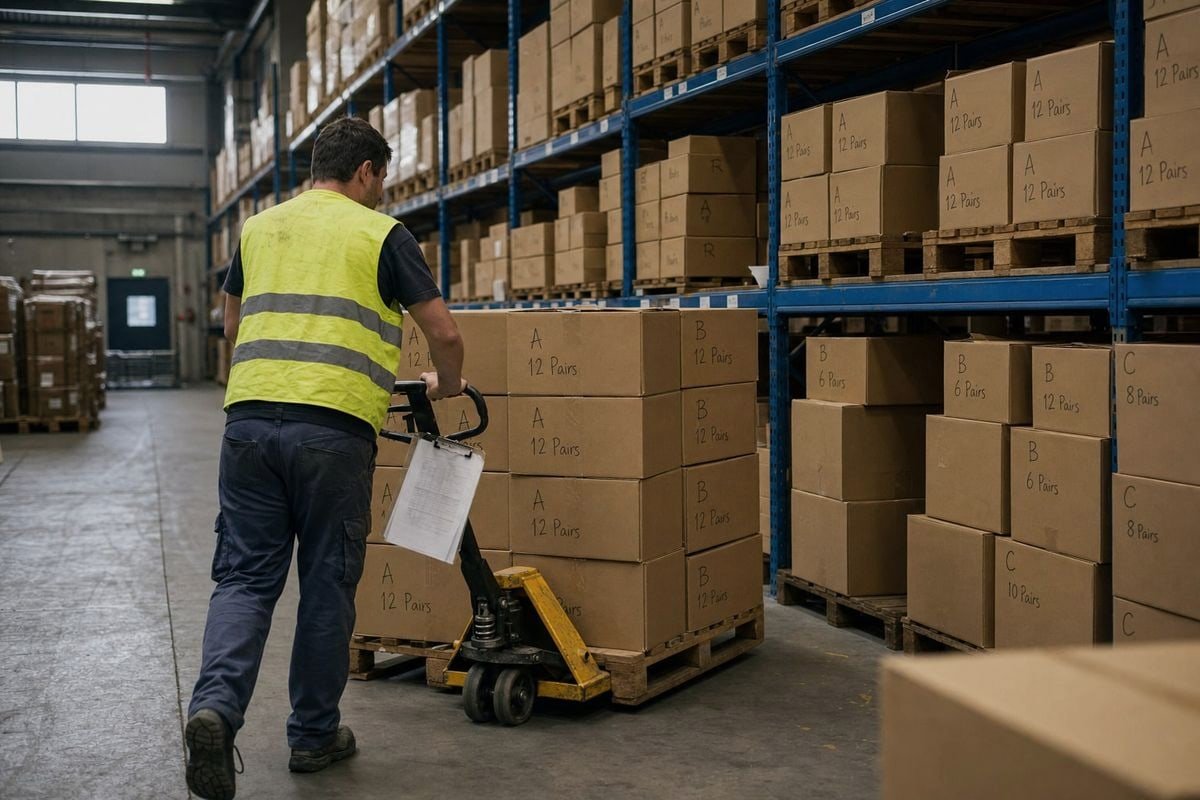
Quantité minimale de commande 7 is where most opening-order plans collide with reality. Full custom kids frames typically carry an MOQ of 300–500 pieces per style. Multiply that across ten styles and four colorways, and a "small test" becomes a warehouse problem. Our existing range exists precisely to break that trap.
Three entry paths, three risk levels
| Sourcing path | Typical MOQ | Risk level | Idéal pour |
|---|---|---|---|
| Ready stock, existing styles | From 1 piece per style | Lowest | Testing shapes and price points in-store |
| Existing mold, custom color/logo | 200–300 pieces per style | Modéré | Branding a proven shape for your chain |
| Full custom OEM development | 300–500 pieces per style | Highest | Scaling a validated winner |
A sensible sequence for a multi-store chain: pull ready-stock samples across your candidate age bands, run a trial order of 100–200 pieces across 3–5 styles in your Tier A stores, then move winners into custom colors and packaging under your brand. Our TR90 frames with TPEE temples cover the sporty-durable end, while acetate-look styles cover the fashion end, so most chains find their opening assortment inside the existing range.
Two more points buyers often miss. First, ask for MOQ by material, because TR90, TPEE, and injected materials can carry different minimums, and that changes your final opening quantity materially. Second, verify compliance documentation during the trial phase, not after. We supply test reports with samples so your first order also validates safety, fit, and durability — the things that matter most for buyers serving parents.
What reorder strategy should I plan before placing my first bulk order across multiple stores?
One trade-off we discuss with nearly every chain buyer: a smaller first order lowers risk, but only if replenishment is fast enough to catch winners before walls go empty.
Plan the reorder before the first order. Reserve 30–40% of your seasonal budget for replenishment, confirm reorder MOQ and lead time in writing, set sell-through triggers per SKU, and size the opening buy to cover days of supply until the first reorder lands.
The first buy is only the beginning. The real objective is a fast, smart reorder cycle, because kids frame demand shifts quickly by season, size tier, and style preference. In our experience exporting to buyers in 20+ countries, the chains that win are not the ones with the biggest opening order — they are the ones that reorder winners within weeks.
A five-step reorder framework
- Split the budget. Allocate 60–70% to the opening order for strong board presence, and hold 30–40% for data-driven replenishment of proven SKUs.
- Confirm reorder terms upfront. Once a mold or color program exists, reorder MOQ should drop. Get that number, plus packaging minimums, in writing before the first purchase order.
- Map lead time variability. Our standard production runs on predictable schedules, but ocean freight, customs, and peak-season factory load add variance. Your opening buy must cover expected days of supply through the full replenishment gap, plus a buffer.
- Set sell-through triggers. A common rule: when a SKU hits a defined sell-through rate at the network level — say a strong majority sold within the first weeks — trigger the reorder immediately rather than waiting for a monthly review. Sell-through rate forecasting improves fast once real store data flows in.
- Watch packaging MOQ. Boxes, cases, cloths, and logo application are often separate minimum items. A lower unit count can still be expensive if packaging or tooling minimums are high, so plan packaging quantities alongside frame quantities.
One objection I hear often: very small first orders cause stockouts and weak wall presentation. That is a fair risk. The answer is not a bigger order everywhere — it is a buy that is narrow in SKU count but deep in the best-performing size tiers, backed by central safety stock and a confirmed reorder path.
Conclusion
Cluster your stores, size tiers before styles, use existing designs to test, and lock reorder terms first. Do that, and your initial order quantity for kids optical frames becomes a plan, not a gamble — and we are here to help you run it.
Notes de bas de page
1. American Academy of Ophthalmology guidance on children’s eye exam frequency and vision needs. ↩︎
2. American Optometric Association context for eye exam capture rate benchmarks. ↩︎
3. Defines the core metric used to calculate per-store starting quantity. ↩︎
4. Explains the inventory concept referenced for central buffer stock. ↩︎
5. Explains the lens technology referenced for prescription density planning. ↩︎
6. Background on the polymer material family used in durable kids’ frames. ↩︎
7. Clarifies the sourcing concept central to MOQ-based order planning decisions. ↩︎
Plus d'articles que vous pourriez aimer
août 5, 2026
Bio-Based vs Regular Cellulose Acetate: What's the Difference for Kids' Frames?

août 5, 2026
How Recyclable Are Kids' Optical Frame Materials, and What Eco-Friendly Alternatives Exist?
août 5, 2026
Do Kids Optical Frames Whiten or Age in Storage, and How to Control Warehouse Conditions?
Vous recherchez un partenaire fiable en lunetterie pour enfants ?
Explorez plus de 800 styles prêts et un support OEM/ODM complet adapté à votre marque.
Contactez-nous English
  Español de México
  Deutsch
  Français
  日本語
日本語  العربية
  Português do Brasil