How to Design a Warranty & Replacement Policy for Kids’ Sunglasses Retailers?
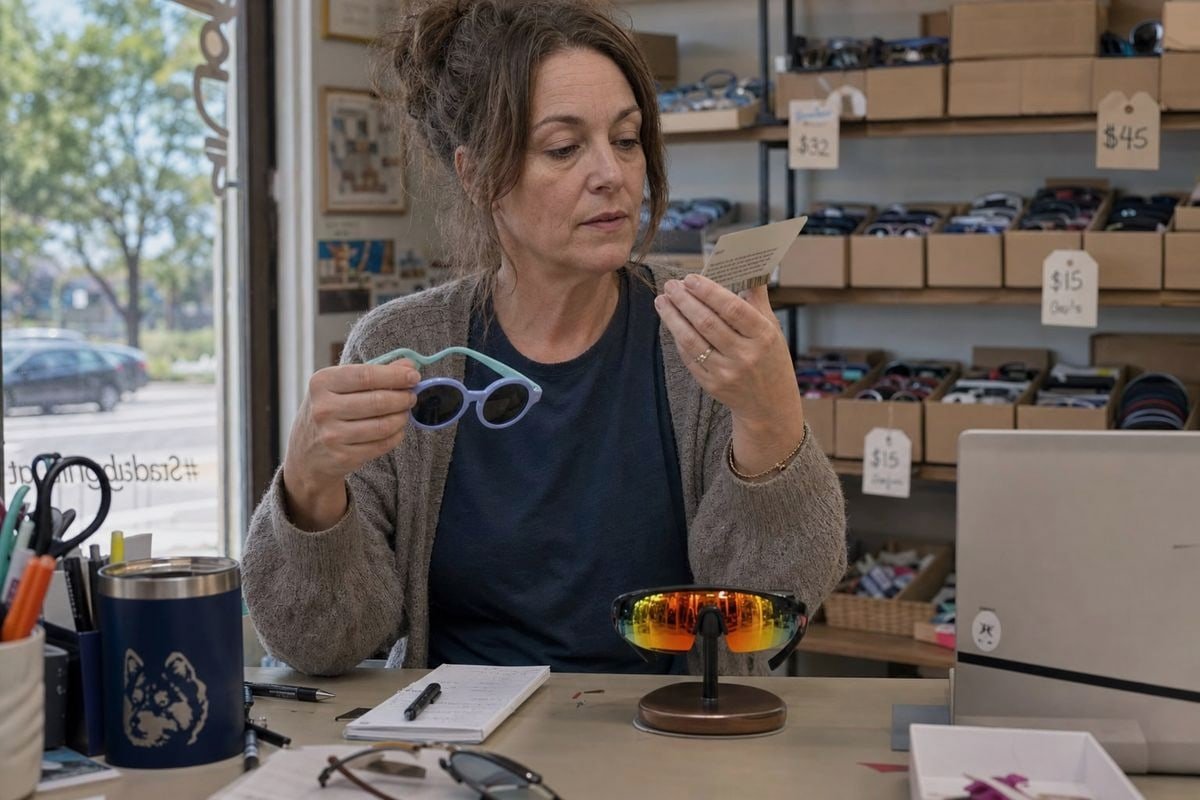
A warranty and replacement policy for kids’ sunglasses retailers can make or break repeat orders. On our production line in Taizhou, we see why: kids break things, and vague policies break trust.
A strong warranty and replacement policy for kids’ sunglasses retailers combines a 12-month manufacturer-defect warranty with an optional one-time accidental damage replacement, clear exclusions for scratches and loss, proof of purchase requirements, and a simple photo-based claims process parents can finish in minutes.
Below, I will walk through each design decision step by step. I will cover coverage scope, fair claim handling, return reduction, and how to build the program with your factory.
What Should I Include in a Kids' Sunglasses Warranty to Build Retailer Trust?
A few years back, one of our European brand clients asked me a blunt question: why do parents trust some kids' sunglasses warranties and ignore others? Our answer shaped how we advise buyers today.
Include a 12-to-24-month warranty covering manufacturer defects in frames, hinges, and lens coatings; a separate one-time accidental damage option; UV400 protection standards as a quality promise; clear exclusions; and a photo-based claim channel. Simplicity and specificity together build retailer trust.

Trust starts with clarity. Parents do not read legal fine print. They scan a policy for three answers: what is covered, for how long, and how do I claim. Your policy should answer all three in under a minute of reading.
Core coverage: manufacturer defects
The base warranty should cover genuine manufacturer defects 1. That means hinge failure, frame delamination, spontaneous lens coating peeling, and lenses that pop out under normal use. In our 15 years making children's eyewear, these are the defect categories that actually occur — and with proper QC, they occur rarely. That is exactly why covering them is cheap and powerful. A 12-to-24-month window is standard across the market. Wiley X, for example, covers youth eyewear against defects for up to 2 years.
Optional coverage: accidents and loss
Kids' sunglasses face a much higher accidental-damage rate than adult eyewear. Sat-on frames, playground drops, and backpack crushes are not defects, but parents still want help. That is why the best programs separate the standard defect warranty from an accidental damage coverage plan. Jonas Paul Eyewear offers a paid care plan with a one-time replacement within one year. Some retailers go further and sell a loss protection plan or premium add-on at checkout, which also lifts average order value.
Here is a simple structure I recommend to our B2B buyers:
| Coverage tier | Ce qu'elle couvre | Typical length | Cost to customer |
|---|---|---|---|
| Standard warranty | Manufacturer defects only | 12–24 months | Free, included |
| Accidental plan | One-time replacement for breakage | 12 months | Small paid add-on |
| Loss protection | 50% replacement credit if lost | 12 months | Premium add-on |
Quality promises that back the warranty
A warranty is only as good as the product behind it. When we develop styles for kids' brands, we build in flexible frame durability using TPEE and TR90 2, plus impact-resistant lenses and les normes de protection UV400 3. State these in your policy. Also reference CPSIA safety compliance 4 where relevant for the US market. These promises tell retailers your warranty is confidence, not marketing.
How Do I Handle Replacement Claims for Broken or Lost Children's Sunglasses Fairly?
One buyer interaction sticks with me. An Australian distributor once forwarded us a photo of sunglasses that had clearly been chewed by a dog — with a defect claim attached. Fair claim handling needs rules for exactly these moments.
Handle claims fairly by requiring proof of purchase, accepting photo submissions instead of returns, offering one-time replacement for accidental breakage, excluding lost items from free coverage, and explaining every denial with a next-step option such as a discounted replacement or a small processing fee.
Fairness has two sides. Parents deserve a fast, low-friction process. Retailers deserve protection from abuse. Good policy design serves both at once.
A simple four-step claims process
- Submit. The parent emails photos or uses a web form with the order number. Proof of purchase requirements should be stated up front — a receipt or order confirmation is enough.
- Triage. Your team categorizes the damage: manufacturer defect, accidental breakage, or wear and tear. Some larger retailers now use an AI-driven photo diagnostic tool to auto-approve simple claims.
- Resolve. Defects get a free replacement. Accidental breaks get the one-time replacement, sometimes with a small flat replacement processing fee to cover shipping and handling.
- Close. Send the replacement with tracking and a clear note on what coverage remains.
Broken vs. lost: draw the line clearly
Broken sunglasses can be verified by photo. Lost sunglasses cannot. So most policies exclude loss from free coverage. But you do not need to say a flat no. A "lost-and-found" tier — a one-time 50% replacement credit for registered products — keeps the family in your ecosystem without absorbing full cost.
| Claim type | Verification | Fair remedy |
|---|---|---|
| Manufacturer defect | Photo of hinge/frame/coating failure | Free replacement, no fee |
| Accidental breakage | Photo of damage | One-time replacement, optional small fee |
| Deep scratches / wear | Photo review | Denied, offer discount on new pair |
| Lost or stolen | Registration record only | 50% credit if registered, else discount offer |
Why one-time replacement works
Unlimited replacements sound generous, but they are financially unpredictable. A one-time cap — used by Optiplex and Perspective Optometry, among others — delivers real value on the first accident, which is when parents need it most, while keeping your replacement volume forecastable. Shady Rays covers damage "for any reason" within 2 years but still reserves the right to confirm the damage type. Even the most generous programs verify.
Can a Strong Warranty Policy Help Me Reduce Returns from My Retail Partners?
There is a trade-off we weigh with every OEM client: a policy generous enough to win shelf space, but tight enough to keep the returns pipeline manageable. The good news is that these goals align more often than buyers expect.
Yes. A clear warranty policy reduces retail returns by converting store refunds into direct replacement claims, filtering out non-defect returns through defined exclusions, catching quality issues early via a 30-day defect window, and giving retail staff a script instead of guesswork.
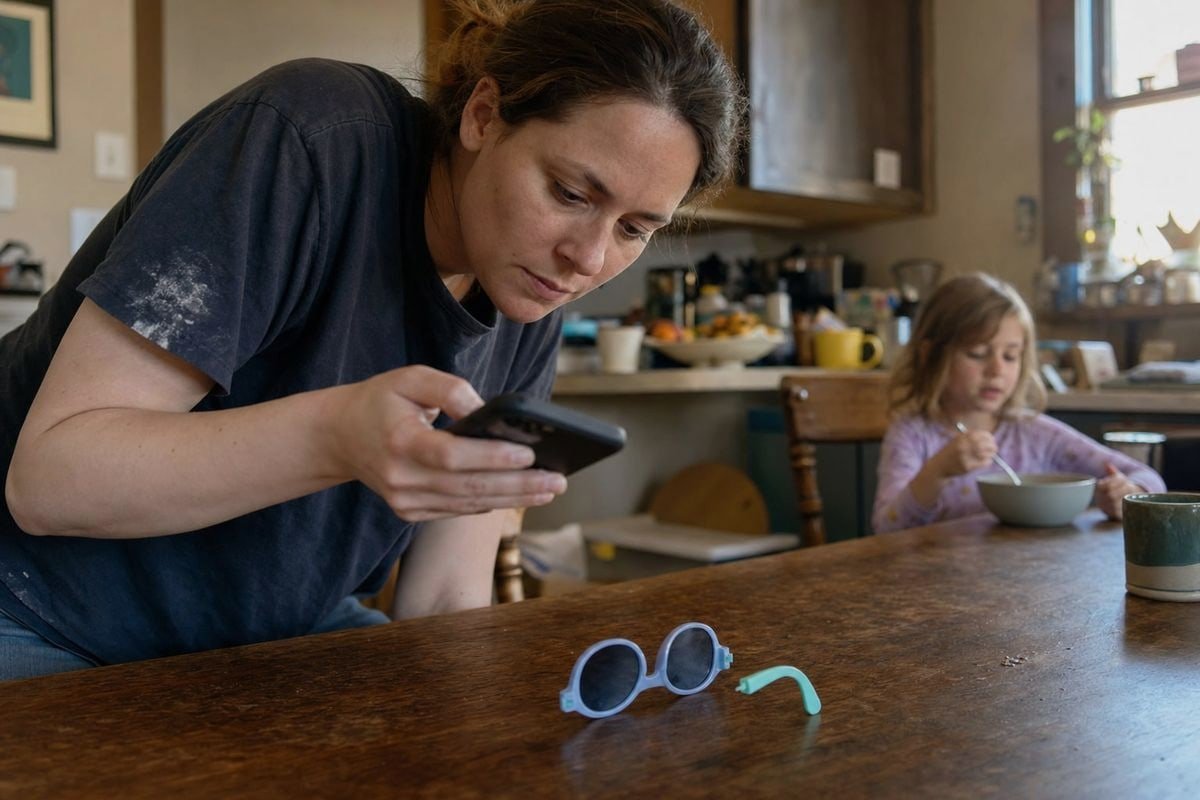
Returns are expensive for everyone. The retailer loses margin. You lose product. The parent loses time. A well-designed policy redirects most of that friction before it becomes a return.
How a warranty intercepts returns
When a parent walks into a store with broken kids' sunglasses and no policy exists, the retailer's only tool is a refund. That refund becomes your chargeback or credit note. But when a clear warranty exists, the retail staff can point the parent to your claims channel instead. The product issue is resolved directly, and the sale stays booked. In our experience exporting to buyers in 20+ countries, brands with printed policy cards inside their packaging see noticeably calmer relationships with their retail partners than brands who leave stores to improvise.
Exclusions do quiet work
Exclusions are not stinginess. They are return filters. When your policy states that normal wear-and-tear scratches, unauthorized repairs, and cosmetic issues are excluded — and explains that a scratch-resistant coating 5 resists scratches but is not scratch-proof — retailers stop accepting those items back. Sunglass Hut takes exactly this line, excluding lens scratches as normal wear unless the defect existed at delivery.
Turn the policy into loyalty
A warranty can also feed customer loyalty programs. A "growth-stage exchange" that trades outgrown frames for a larger size at 40–50% off keeps families buying from the same brand as the child grows. A circular loyalty credit for returning broken frames for material upcycling does the same while supporting sustainability messaging 6 — something our environmentally friendly TPEE and TR90 materials pair with naturally. Product registration within 30 days validates extended coverage and gives your client a marketing list at the same time.
A hassle-free return window for unworn product, sitting alongside the warranty, completes the picture: returns handle buyer's remorse, and the warranty handles product performance. Keeping the two separate keeps both cheap.
How Do I Work With My Manufacturer to Support a Reliable Warranty Program?
The hardest lesson we learned early on was this: a brand's warranty is really a bet on its factory's consistency. When we tightened hinge-torque checks and lens-fit inspection in our Réalités du transit par mode 7, our clients' defect claims dropped — and their warranties suddenly cost almost nothing to honor.
Work with your manufacturer by agreeing on QC standards and defect definitions before production, negotiating a spare-parts and replacement-stock allowance per order, requesting UV400 and impact-resistance documentation, and sharing claim data so recurring issues get fixed at the factory, not at the returns desk.
Your warranty economics are set long before the first claim arrives. They are set at the factory. Here is how to structure that partnership.
Agree on defect definitions up front
"Defect" must mean the same thing to you, your retailers, and your factory. Before an order ships, agree in writing on what counts: hinge failure within normal use, coating peel, frame cracking without impact marks. At our Taizhou facility, we walk OEM clients through these definitions during sampling, so the eventual policy language matches what the product can actually deliver. Flexible frame durability in TPEE and TR90 changes the math here — flexible materials survive bending that snaps rigid acetate, so brands using them can afford slightly bolder accidental coverage.
Build replacement stock into your orders
Replacements only feel fast to parents if stock exists. Negotiate a small replacement allowance — a few percent of order volume in the top-selling colors — held either at your warehouse or produced as overage. Because we keep around 800 existing styles in our catalog, our clients can also re-order matching replacement units quickly without new mold investment, which keeps a one-time replacement promise realistic even for smaller brands.
Share claim data both ways
Every claim photo is free QC data. Send your manufacturer a monthly summary of claim types. A pattern of loose hinges or coating issues points to a process fix, and a good factory partner will want to make it.
| What to agree with your factory | Why it protects your warranty |
|---|---|
| Written defect definitions and tolerances | Prevents disputes over what is covered |
| UV400 and impact-resistant lens documentation | Backs your safety and quality claims |
| CPSIA safety compliance paperwork for the US | Keeps the program legally solid |
| Replacement stock allowance per order | Enables fast one-time replacements |
| Monthly claim data feedback loop | Fixes root causes, cuts future claims |
| Retail-ready packaging with policy card | Puts the policy in the parent's hands |
Packaging is part of the warranty
Full OEM/ODM support 8 should include the warranty touchpoints themselves: a printed policy card, a QR code to the claims form, and a registration prompt inside the case. We produce custom packaging and accessories for exactly this reason — the policy that gets read is the one that ships inside the box.
Conclusion
A warranty and replacement policy for kids' sunglasses retailers works best when it is short, explicit, and parent-friendly: a clear defect warranty, a one-time accidental plan, and a factory partner behind it.
Notes de bas de page
1. Authoritative Wikipedia entry for ISO 9001 quality management standards. ↩︎
2. Background on thermoplastic elastomer materials used for flexible children’s eyewear frames. ↩︎
3. EPA explains UV exposure risks and protective standards relevant to sunglasses lens claims. ↩︎
4. CPSIA is the actual US federal statute governing children’s product safety requirements. ↩︎
5. Corrected Wikipedia URL for anti-scratch and protective lens coatings. ↩︎
6. Official United Nations portal for global sustainability and environmental goals. ↩︎
7. 5S is the lean manufacturing system referenced for improving factory quality control. ↩︎
8. Alibaba is a leading B2B platform for sourcing OEM/ODM manufacturing partnerships. ↩︎
Plus d'articles que vous pourriez aimer

1 août 2026
L'usine doit-elle gérer l'emballage et l'étiquetage des lunettes pour enfants, ou utiliser un fournisseur désigné ?

1 août 2026
Entrepôt propre vs. exécution directe par le fournisseur : lequel réduit les coûts de retour pour les marques de lunettes pour enfants ?

1 août 2026
Entrepôt direct au port ou staging outre-mer : lequel permet d'économiser le plus sur l'expédition des lunettes pour enfants ?
Vous recherchez un partenaire fiable en lunetterie pour enfants ?
Explorez plus de 800 styles prêts et un support OEM/ODM complet adapté à votre marque.
Contactez-nous English
  Español de México
  Deutsch
  Français
  日本語
日本語  العربية
  Português do Brasil