How to Design Direct-to-Consumer Branded Packaging for Kids Optical Frames?
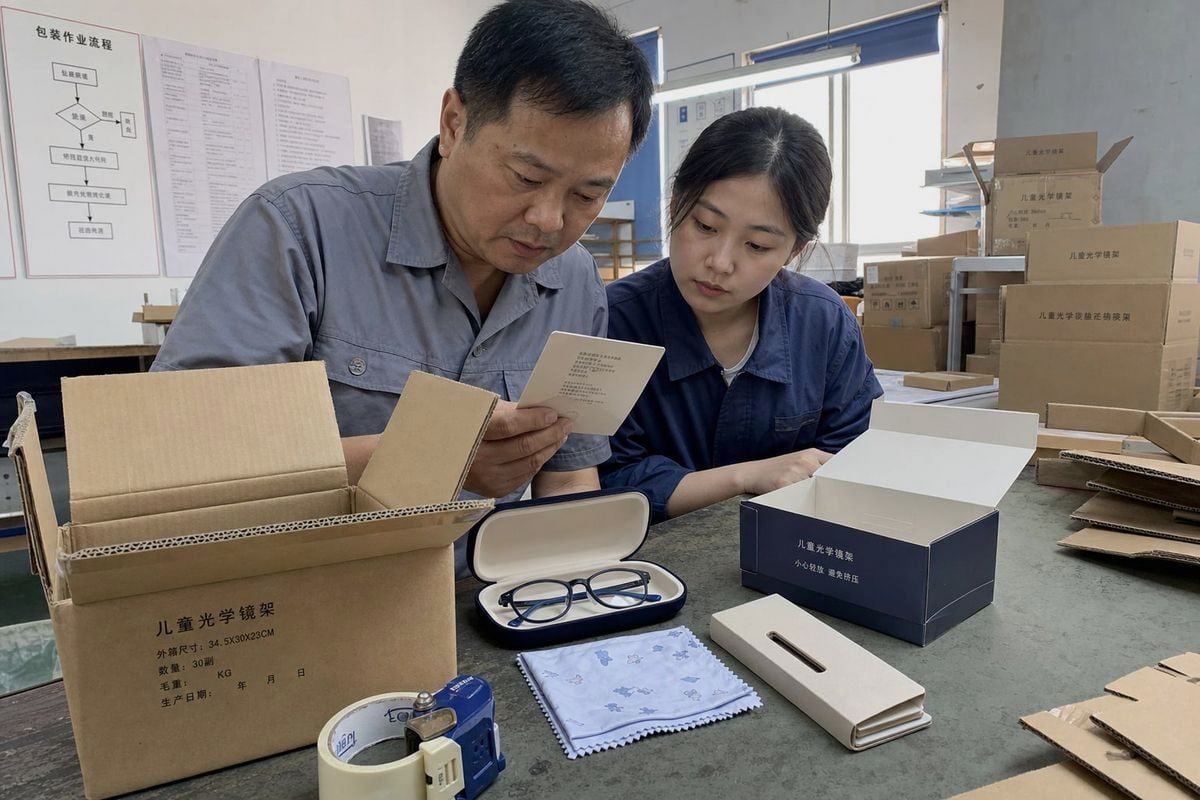
Direct-to-consumer branded packaging for kids optical frames often gets designed last, and it shows. In our Taizhou factory, I have seen great frames arrive in boxes that undersell them.
Direct-to-consumer branded packaging for kids optical frames should combine a crush-resistant outer shipper, a branded hard case or pouch, a microfiber cloth, and parent-facing inserts covering size, care, and returns — all styled with playful, age-appropriate graphics that delight kids while reassuring parents about safety and quality.
That is the short answer. Below, I break down materials, design elements, cost trade-offs, and the MOQ realities you will face when working with a factory like ours.
How do I choose packaging materials that are safe and durable for kids optical frames?
A few years back, a buyer showed me a returned parcel: the frame survived, but the flimsy box arrived crushed. The parent still asked for a refund. Packaging is perceived quality.
Choose E-flute corrugated cardboard or rigid folding carton board for the outer box, a molded hard case or padded pouch for the frame, and non-toxic, low-migration inks throughout. Materials must pass drop and crush protection needs while meeting child-relevant material safety expectations.
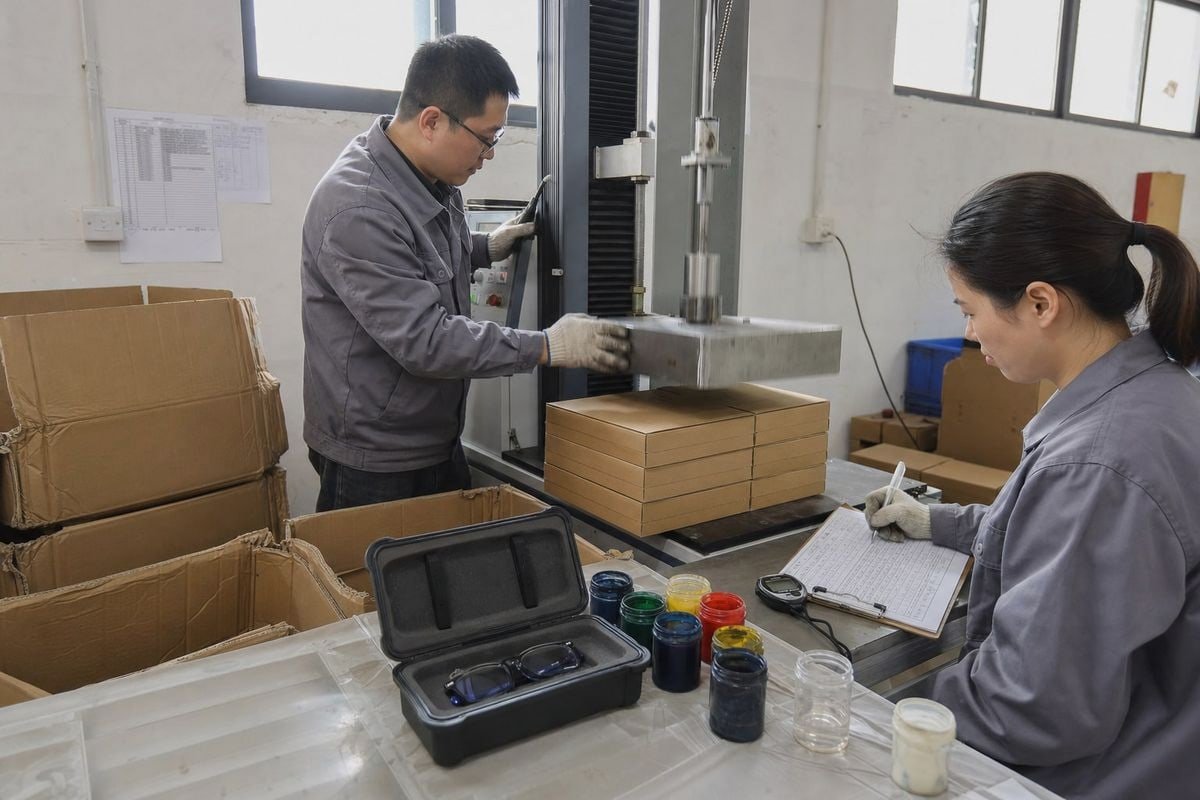
When we ship flexible frames — like our TR90 fronts with soft TPEE temples — the frame itself can bend and recover. The lenses and hinges cannot. So durable packaging is really about protecting the rigid parts from pressure, scratching, and crushing during long-distance transit. Our QC team packs sample cartons and stress-tests them before we approve any packaging spec for export, because a DTC brand cannot afford transit damage when every return costs shipping both ways.
The material stack, layer by layer
Think of packaging as a system, not a single box. Each layer has one job.
| Layer | Recommended Material | Job It Does |
|---|---|---|
| Outer shipper | E-flute or B-flute corrugated | Absorbs crush and drop forces in transit |
| Retail/presentation box | Folding carton board (350gsm+) | Brand impression, unboxing structure |
| Case | Molded EVA hard case or padded pouch | Point-load protection for lenses and hinges |
| Cloth | Microfiber, custom printed | Lens care plus a daily brand touchpoint |
| Insert | Recycled paper card | Holds the frame still, carries information |
Safety comes before style
Kids chew, lick, and play with everything, including boxes. So material safety is not optional. We recommend soy-based or water-based inks, no small detachable parts on the packaging itself, and no sharp die-cut edges. If your market has toy-adjacent safety standards 1 expectations — Australia and the EU buyers we serve often do — align your packaging materials with them even when not strictly required. It signals a child-friendly design philosophy that parents notice.
Sustainable packaging matters here too. Recycled corrugated 2 and recyclable pouches let you claim eco-responsibility honestly, which resonates with the parents buying eyewear for their children.
What packaging design elements help my brand stand out on retail shelves and online unboxing?
One of our European clients told me their best marketing channel was parents posting unboxing videos. That changed how I look at every box that leaves our workshop.
Stand out by designing a two-audience system: clean, trustworthy structure and clear labeling for parents, plus bold colors, playful graphics, and a small surprise element for kids. Add a reveal sequence, a reusable case, and a QR code linking to brand storytelling.
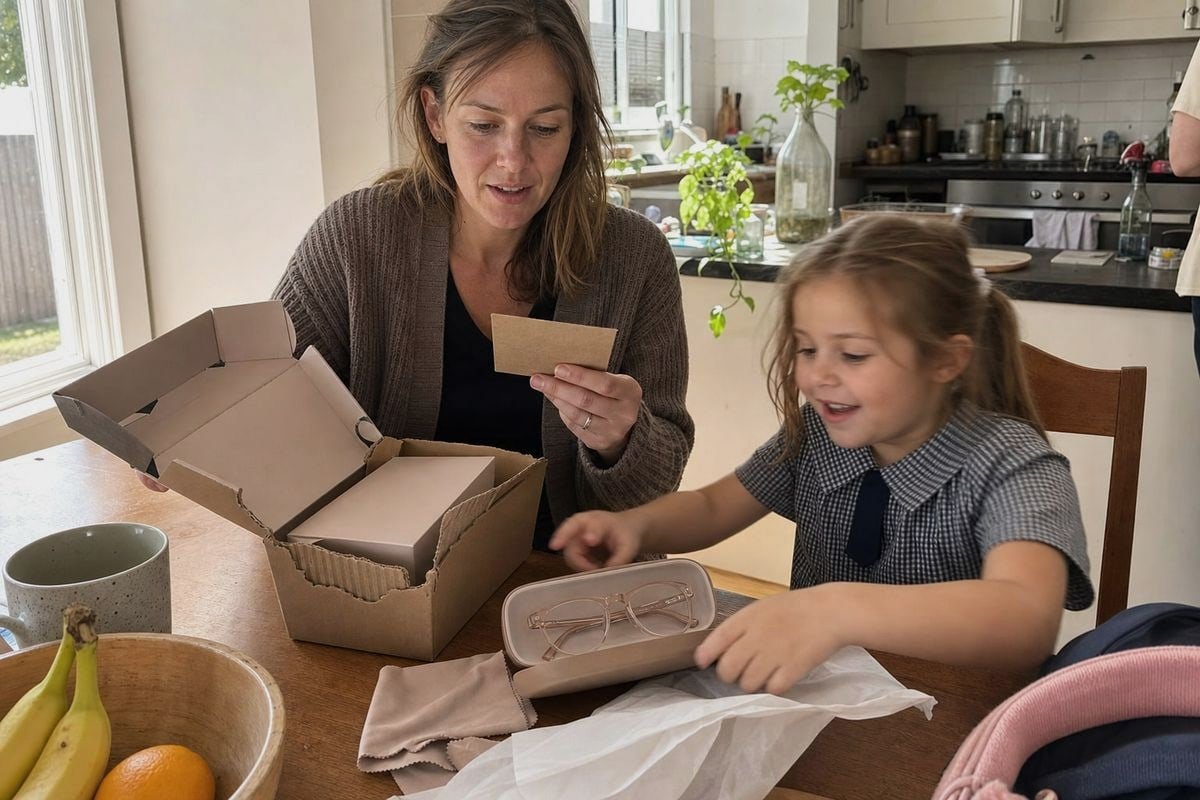
The core tension in this category is playful versus premium. Some buyers worry that cartoonish packaging will make parents doubt the optical quality. Others worry minimalist packaging will bore the child. In my experience supplying children's brands across 20+ countries, the winners bridge both: a clean structural box with a confident logo for the parent, and playful accents — patterns, characters, stickers — for the kid. Look at how leading kids eyewear brands have refreshed their packaging to feel more premium without killing the joy. That is the target.
Design for the reveal, not just the shelf
The unboxing experience should have a sequence. Outer box opens, a branded insert card greets the parent, then the case reveals the frames. For a frame like our translucent blush-pink acetate style, we often suggest a tone-matched pouch so the color story carries through. For sportier black-and-navy flexible frames, bolder graphic energy fits better. Age-appropriate design means a frame for a five-year-old and a frame for a ten-year-old should not share identical visual language.
Elements that earn attention
- A satisfying opening mechanism — magnetic flap or slide box.
- Custom inserts that hold the frame like a gift, not cargo.
- A surprise for the child: sticker sheet, coloring page, or eye-health fun facts.
- UV protection labeling and lens specs stated plainly for parents.
- A QR code 3 linking to fit videos, adjustment tips, or an animated brand story.
- A case designed for reusability — kids keep it, and your logo stays in the backpack.
Sensory touches help too. A soft-touch finish on the box or a textured emboss makes the package feel more premium than its cost suggests.
How can I balance custom branding with cost-effective packaging for a new DTC line?
Every month, a founder asks me for fully custom boxes on a first order of a few hundred units. Almost every time, I talk them into a smarter staged approach instead.
Start with our ready-made cases and pouches plus your logo via pad print, stickers, or a printed microfiber cloth. Reserve fully custom-printed boxes for reorders after you validate demand. This cuts upfront cost and MOQ risk while still delivering a branded unboxing.
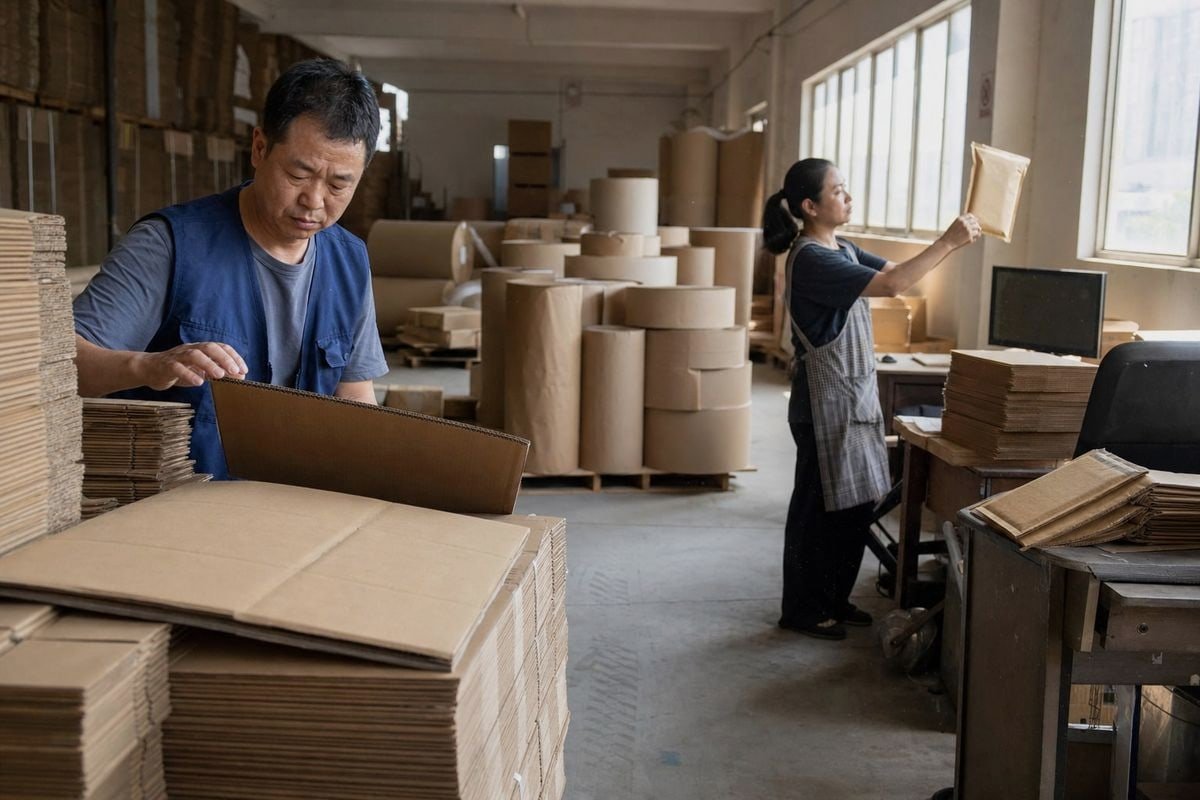
The objection I hear is fair: will neutral packaging make my brand look generic? In practice, no — if you spend your budget where customers actually look. Your logo on the cloth, the case, and a well-designed insert card carries most of the brand impression. A plain kraft outer box with a branded sticker seal can even read as intentionally sustainable packaging rather than cheap. Since many private-label suppliers offer similar frame options, packaging is genuinely the fastest way to differentiate — but differentiation comes from coherence, not from spending everything on a rigid box in round one.
A staged branding roadmap
| Étape | Packaging Approach | Typical Investment | Idéal pour |
|---|---|---|---|
| Launch / test | Stock case + logo sticker or pad print, branded cloth | Bas | Validating product-market fit |
| Growth | Custom-printed pouch, insert card, branded slide box | Medium | Repeat orders, building identity |
| Échelle | Fully custom rigid or magnetic box, custom inserts, QR content | Higher | Established DTC volume, gifting |
Where to spend first
If I had to rank the spend, I would put the microfiber cloth and insert card first. They cost little, print beautifully, and the cloth stays with the customer for the life of the glasses. The hard case comes second — kids carry it to school daily. The outer retail box comes last, because in pure DTC it is opened once and often discarded. With our ~800 existing frame styles, many of our clients launch with zero mold cost on frames and put that saved budget into packaging that photographs well. That is a better use of a startup's capital.
What should I know about MOQs and lead times when developing custom packaging with my manufacturer?
Timing surprises hurt more than cost surprises. I once watched a client's holiday launch slip three weeks because packaging artwork was approved after frame production had already started.
Expect custom-printed packaging MOQs of roughly 500–1,000 sets, sampling of 1–2 weeks, and total lead times of 30–45 days alongside frame production. Confirm artwork, destination country, barcode requirements, and packing method early, because packaging approval gates the entire shipping schedule.
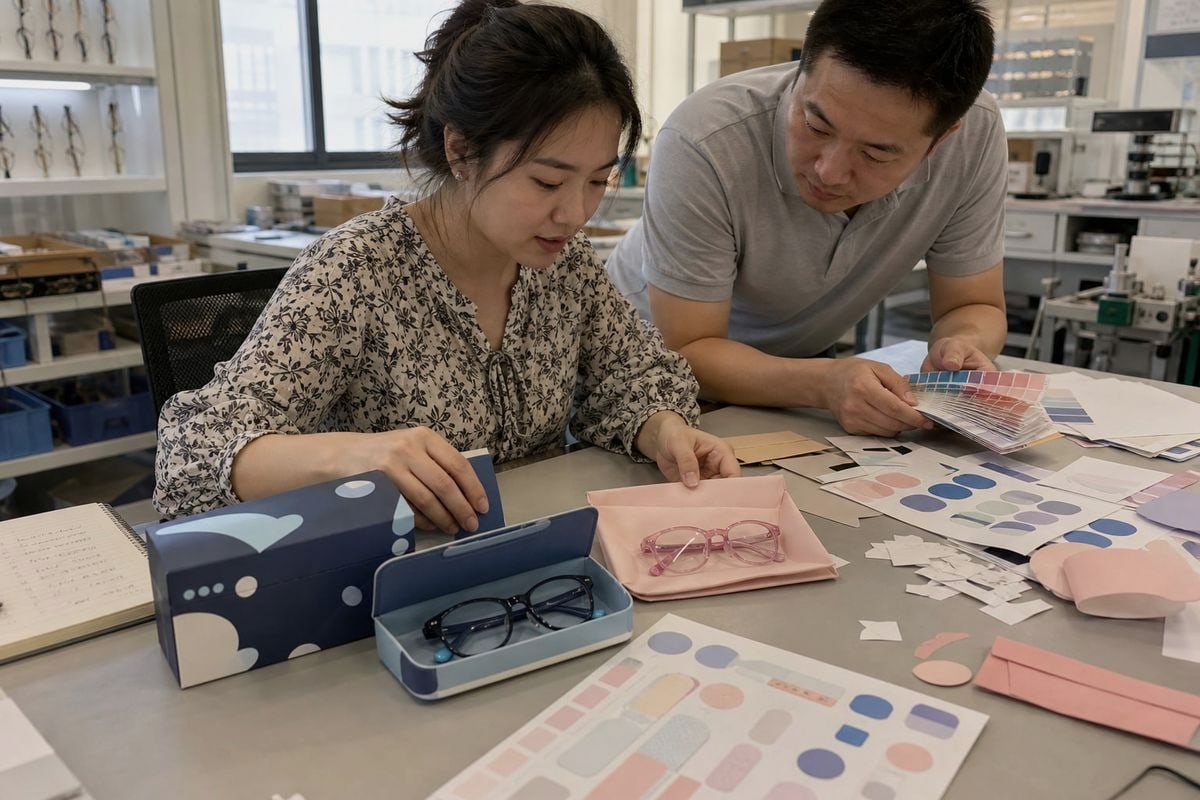
At our factory, packaging development runs parallel to frame production, but only if decisions come early. When a buyer contacts us, we ask for target market, order quantity, material direction, logo requirements, destination country, and packaging preference up front. These are not bureaucratic questions. Destination country determines labeling rules and carton strength. Quantity determines whether custom printing is feasible. Logo method — pad print, laser, emboss, or sticker — affects both sample timing and unit cost.
A realistic development timeline
- Brief and quotation: you send artwork direction and quantities; we confirm feasibility.
- Sampling: physical packaging samples in about one to two weeks.
- Approval: you sign off on color, print quality, and fit — never skip a physical sample.
- Bulk production: packaging prints while frames are in production.
- Final QC and packing: we verify barcode and SKU accuracy, packing consistency, and carton strength.
- Shipping: export-ready cartons, packed to a repeatable standard for every reorder.
Bulk packing logic
A common export spec in kids eyewear looks like one piece per polybag or case, twelve pieces per inner box, and several hundred pieces per master carton. Lock this standard on your first order and keep it identical on reorders. Consistent packing makes your 3PL's receiving faster and reduces fulfillment errors. Also plan for scalability: your packaging system should absorb seasonal colorways and new SKUs without redesign. A trial order is the standard way to validate print quality, unboxing feel, and shipping performance before you commit to volume.
Conclusion
Great kids eyewear packaging protects frames in transit, earns parent trust, and gives children a moment of delight. Design it as a staged, scalable system — and start smart, not expensive.
Notes de bas de page
1. Replaced HTTP 404 with an authoritative government source (CPSC) providing general information on toy safety standards and regulations. ↩︎
2. Highlights the environmental benefits and properties of recycled corrugated packaging materials. ↩︎
3. Replaced HTTP 404 with an authoritative Wikipedia page providing a comprehensive explanation of QR codes. ↩︎
Plus d'articles que vous pourriez aimer
août 5, 2026
Bio-Based vs Regular Cellulose Acetate: What's the Difference for Kids' Frames?

août 5, 2026
How Recyclable Are Kids' Optical Frame Materials, and What Eco-Friendly Alternatives Exist?
août 5, 2026
Do Kids Optical Frames Whiten or Age in Storage, and How to Control Warehouse Conditions?
Vous recherchez un partenaire fiable en lunetterie pour enfants ?
Explorez plus de 800 styles prêts et un support OEM/ODM complet adapté à votre marque.
Contactez-nous English
  Español de México
  Deutsch
  Français
  日本語
日本語  العربية
  Português do Brasil