How Deep Should Lens Grooves Be for Kids’ Myopia Control Lenses?
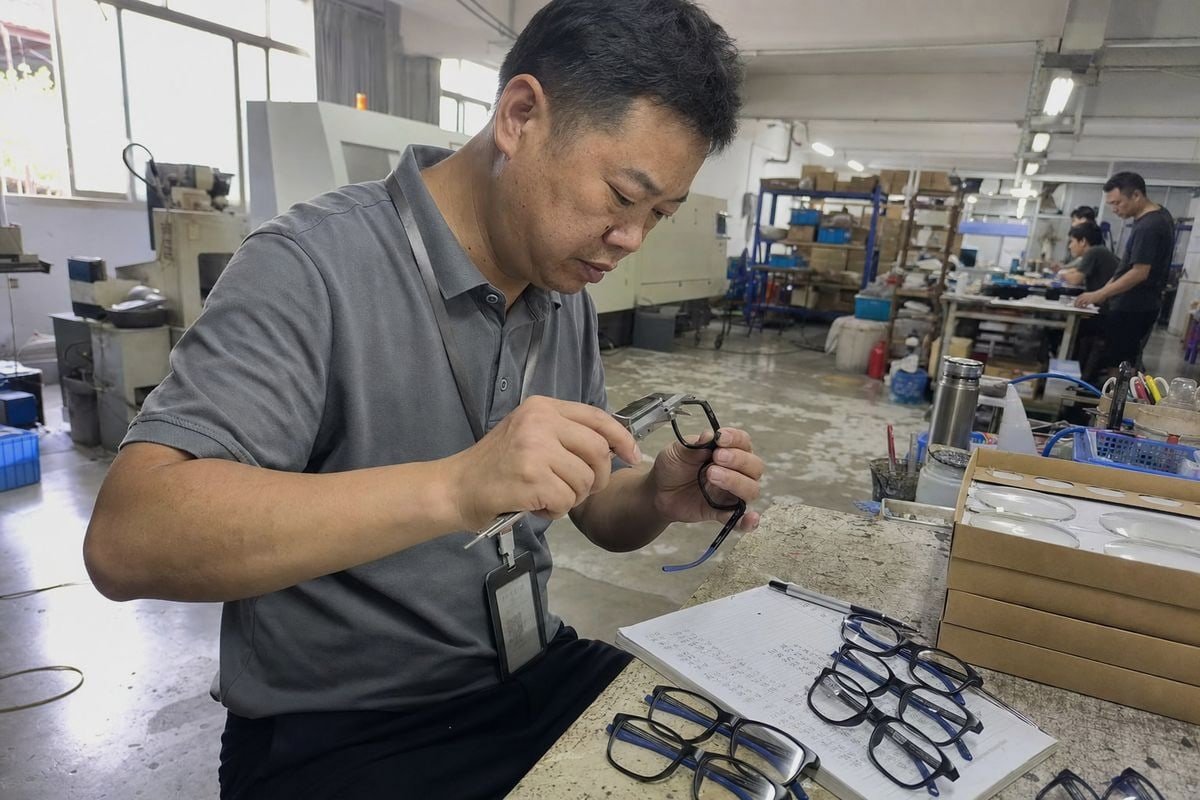
Lens groove depth for kids’ myopia control lenses is a question I hear weekly on our Taizhou production line. Get it wrong, and expensive treatment lenses loosen, shift, and underperform. Get it right, and the whole system works.
For kids’ myopia control lenses, the retention groove is typically cut 0.3–0.6 mm deep, adjusted for frame material and lens thickness. There is no single universal number; the correct depth secures the lens firmly, keeps the optical zone centered, and avoids edge stress or chipping.
Two things get confused here. One is the mechanical groove that holds the lens in the frame. The other is the optical lenslet pattern on the lens surface. This article covers both, and shows why the mechanical groove matters more than most buyers realize.
How do I determine the right groove depth for different frame materials like TR90 or TPEE?
Our engineers weigh a constant trade-off in flexible frames: a deeper groove grips better, but it also thins the lens edge. With TR90 and TPEE 1, that balance shifts again.
Match groove depth to frame flexibility. Rigid acetate frames work with a standard 0.3–0.5 mm groove. Flexible TR90 and TPEE frames need a slightly deeper, wider groove — often 0.4–0.6 mm — because the frame flexes and a shallow groove lets the lens pop out under bending.
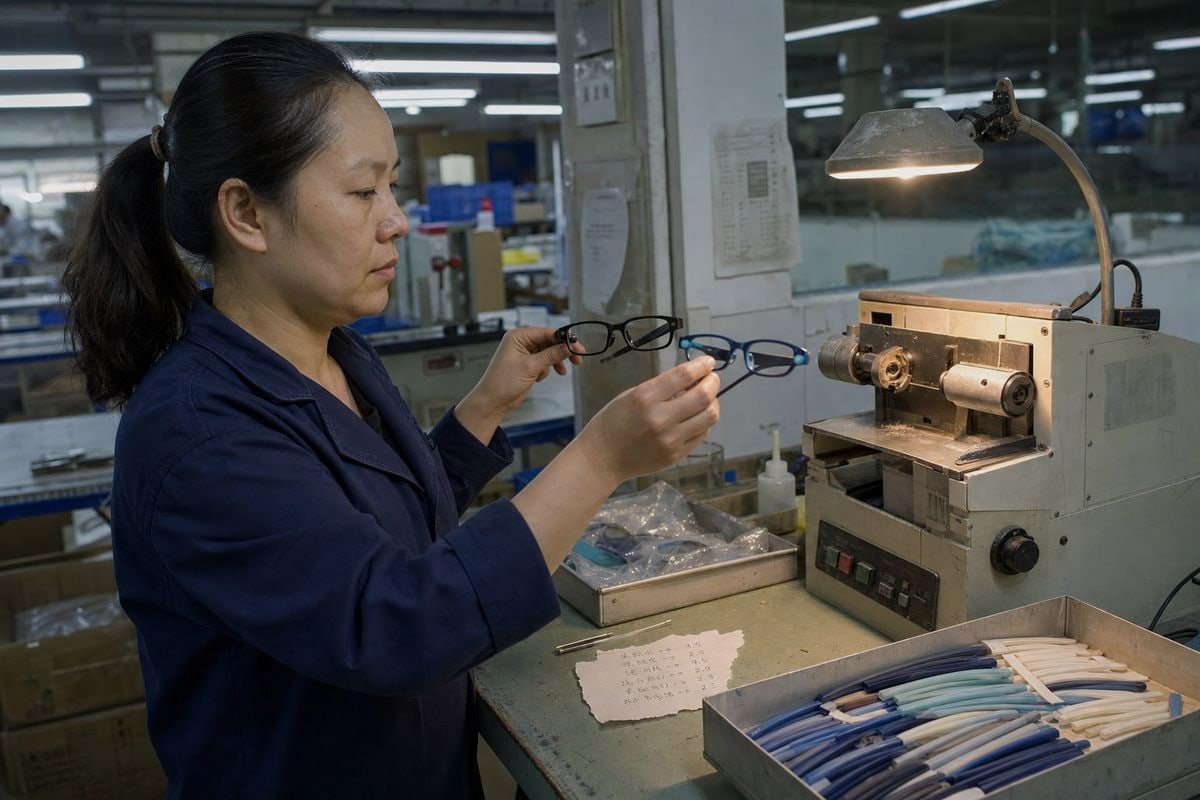
The frame material sets the rules. A stiff frame holds a lens partly by rigidity. A flexible frame cannot do that. TR90 and TPEE bend, twist, and spring back — that is exactly why we use them for children's eyewear. But that flexibility means the groove and the lens bevel must do more of the holding work.
In our 5S-managed workshop, we cut and inspect eyewire grooves before any lens is edged. When we developed our TR90 frames with TPEE temples, we learned early that a groove depth copied from an adult acetate frame simply did not hold. Kids pull glasses off with one hand. They sit on them. The frame flexes far past what an adult frame ever sees.
Groove depth guidelines by frame material
| Frame material | Typical groove depth | Why it differs |
|---|---|---|
| Acetate (rigid) | 0.3–0.5 mm | Frame rigidity shares the retention load |
| TR90 | 0.4–0.6 mm | Flexes under stress; lens needs deeper seating |
| TPEE | 0.4–0.6 mm, wider profile | Softest and most flexible; needs maximum bevel engagement |
| Semi-rimless (nylor) | Groove cut into the lens edge, ~0.4–0.6 mm | Nylor groove depth is cut into the lens itself to seat the nylon cord |
Why myopia control lenses raise the stakes
A standard single-vision lens that shifts a little in the frame still corrects the refractive error acceptably. A myopia control lens does not have that tolerance. Designs like Hoya MiYOSMART and Essilor Stellest 2 rely on a small central optical zone — some designs specify around 9 mm — surrounded by lenslet technology that creates peripheral defocus 3. If the lens rotates or decenters because the groove is too shallow, that treatment zone no longer sits where the eye care professionals fitted it. The child still sees, but the peripheral defocus pattern lands in the wrong place.
So for flexible kids' frames, we specify the groove depth, the groove angle, and the bevel profile together. Depth alone is only one-third of the answer.
What problems can I avoid by choosing the correct lens groove specifications for myopia control lenses?
A distributor in Australia once returned samples to us with lenses that rotated freely in the eyewire. That single QC failure taught their team why groove specs are not a detail.
Correct groove specifications prevent lens rotation, decentration, pop-out, edge chipping, and stress cracks. For myopia control lenses, this protects the treatment optics: a stable lens keeps the central optical zone and peripheral defocus pattern aligned with the child's pupil, preserving clinical effectiveness.
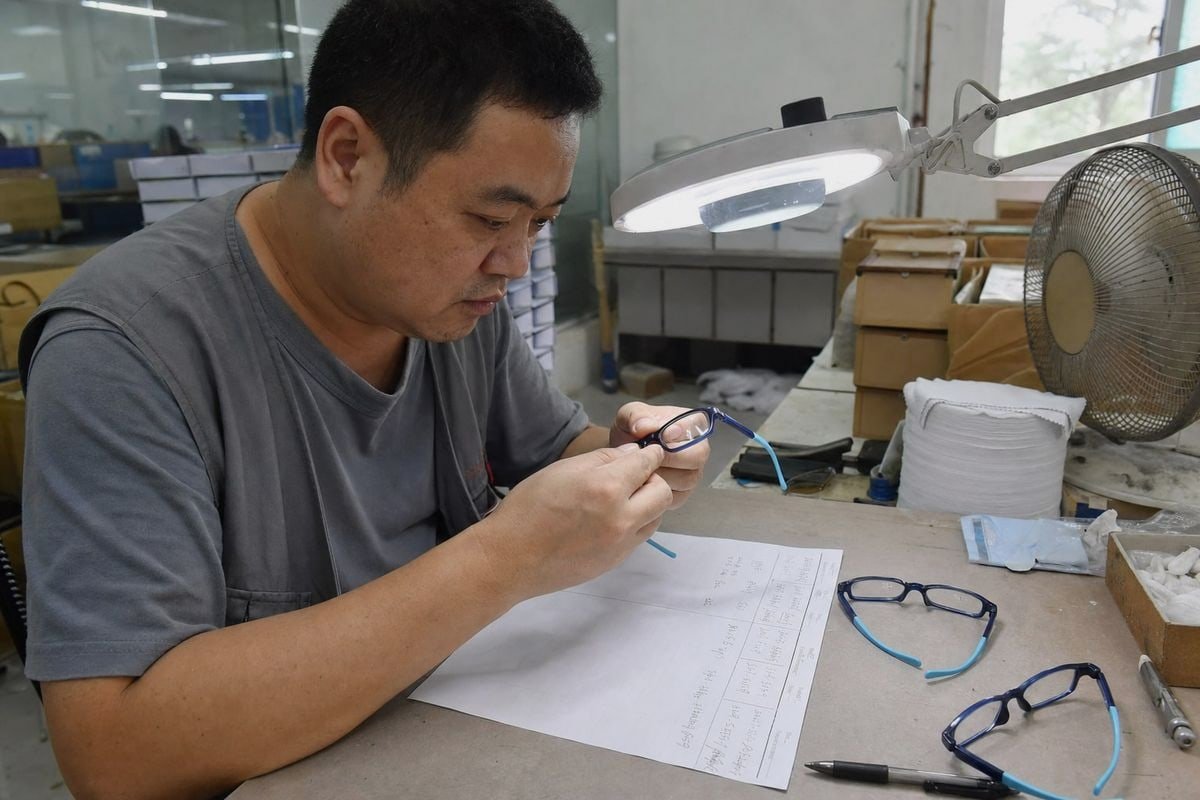
The clinical evidence makes the case for stability better than any factory argument can. These lenses earn their price through measured results. DIMS lenses slowed myopia progression by about 0.52 D and limited axial length growth 5 to 0.31 mm over three years in the treatment group. HAL lenses slowed progression by 0.80 D — roughly 55% — and cut axial elongation by 0.35 mm over two years versus single-vision lenses. Across next-generation spectacle lens designs, reviews report roughly 30–60% slowing of myopia progression.
Every one of those results assumes the lens sits where the fitter placed it, for 12 or more hours of daily wear. Research on HAL showed greater efficacy in children wearing lenses at least 12 hours per day. A loose lens undermines that entire dose.
Problems a correct groove specification prevents
| Problem | Cause | Consequence for myopia control |
|---|---|---|
| Lens rotation | Groove too shallow or too wide | Lenslet pattern and optical zone shift off-center |
| Decentration | Poor groove-bevel match | Peripheral defocus lands in the wrong retinal area |
| Lens pop-out | Insufficient depth in a flexible frame | Safety risk, lost wear time, replacement cost |
| Edge chipping | Groove too deep for the lens edge thickness | Weakened lens; failure under a child's impact |
| Stress cracks | Sharp groove profile, over-tight fit | Premature lens failure, warranty claims |
One objection worth addressing
Some buyers push back: "The research talks about lenslet asphericity and treatment zone size, not groove depth — so does the groove really matter?" That is a fair reading of the literature. Studies do show efficacy depends on the optical design itself, and no trial isolates frame retention as a variable. But here is the resolution: the optical design only delivers its validated effect when the lens position is stable. The groove is not what slows eye growth. The groove is what lets the proven spectacle lens design do its job every day. Eye care professionals fit these lenses to fractions of a millimeter; the frame must hold that fit.
How do I communicate groove depth requirements to my manufacturer for consistent OEM production?
Fifteen years of OEM/ODM work has taught us one lesson above all: vague specifications produce inconsistent batches. Clear documents produce repeatable frames, order after order.
Send your manufacturer a written specification covering groove depth with tolerance (for example, 0.5 mm ±0.05 mm), groove width, groove angle, eyewire circumference, and intended lens material and thickness. Confirm it on a signed sample, then reference that golden sample in every purchase order.
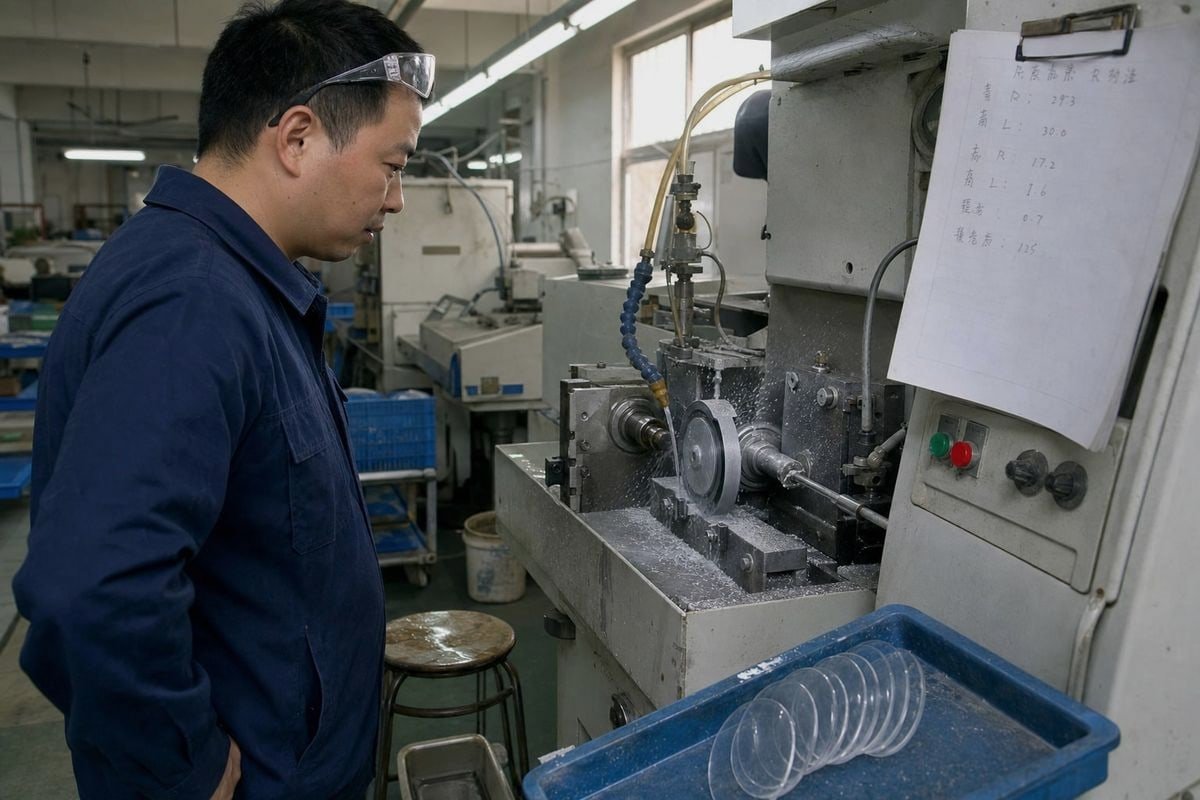
When buyers from our 20+ export markets start a project with us, the smoothest launches follow the same pattern. The spec is agreed in writing before tooling. A pre-production sample is measured, approved, and locked. Then mass production is checked against that sample, not against memory or email threads. This matters even more with myopia control programs, because your optical lab partner and your frame factory must work to the same numbers.
A practical five-step communication process
- Define the lens first. Tell your factory which lens brands the frames must accept — Hoya MiYOSMART, Essilor Stellest, or others — plus the lens material and expected edge thickness range for typical children's refractive error prescriptions.
- Specify the groove numerically. State depth, width, angle, and tolerance. Avoid words like "standard" or "normal." In lens manufacturing and frame production alike, those words mean different things in different factories.
- Request a golden sample. Have the factory cut frames to spec, mount real or equivalent lenses, and send samples. Test flex, retention, and lens rotation yourself or through your lab.
- Lock the sample. Both sides sign or photograph the approved sample. Every future order references it.
- Agree on QC checkpoints. Ask for groove measurement at incoming inspection and at final QC, with an agreed AQL sampling level.
What a complete spec sheet includes
| Spec item | Example format | Why it prevents disputes |
|---|---|---|
| Groove depth | 0.50 mm ±0.05 mm | Removes guesswork batch to batch |
| Groove width | 0.60 mm ±0.05 mm | Controls how the lens bevel seats |
| Groove angle | e.g., 110°–120° V profile | Affects retention and edge stress |
| Frame material | TR90 front, TPEE temples | Depth rules differ by flexibility |
| Target lens | Brand, material, index | Edge thickness drives safe depth |
| Reference sample | Golden sample ID + date | Single source of truth for QC |
At our factory, we keep approved samples on file for repeat orders, so a brand reordering after a year gets the same groove geometry as their first shipment. That consistency is what makes an OEM partner reliable rather than merely cheap.
Can groove depth affect the durability and safety of children's myopia control eyewear?
During drop-testing of a new kids' optical frame last year, our QC team traced a cracked demo lens back to one root cause: a groove cut too deep for that edge thickness.
Yes. A groove that is too deep thins the lens edge and invites chipping or cracking on impact. A groove that is too shallow lets the lens dislodge — a direct safety hazard for a child. Correct depth balances secure retention with preserved lens edge strength.
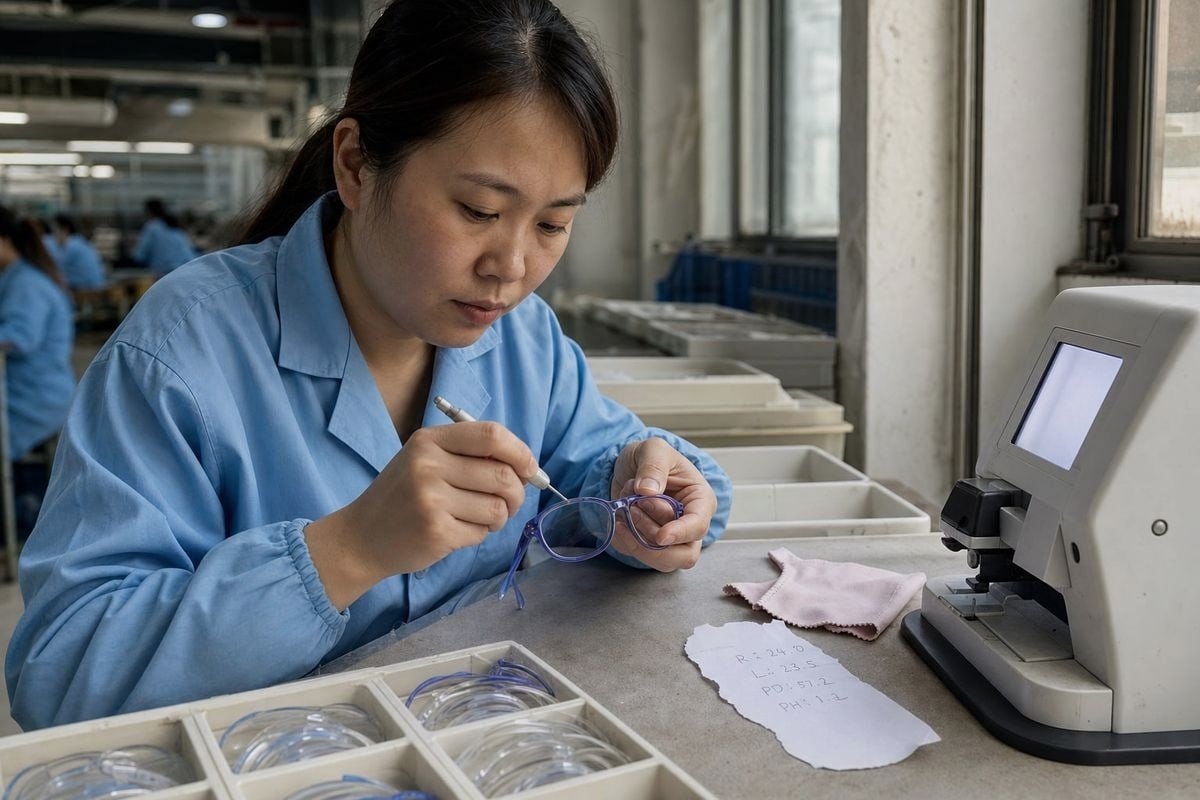
Children are the harshest product testers on earth. They drop glasses on playgrounds, wear them during sports, and bend the temples in directions no adult would. That reality shapes everything we build in TPEE and TR90, and it shapes how we think about grooves.
The durability side
The groove removes material from the lens edge or defines how the eyewire wraps the bevel. Cut too deep, and the remaining edge becomes a weak ring around the entire lens. Under a playground impact, cracks start exactly there. This risk changes with lens material. Polycarbonate tolerates deeper grooves because it is impact-resistant and slightly flexible. High-index materials are more brittle, so the same depth that is safe in polycarbonate can be risky in a thin high-index lens. Since many parents choose high-index for stronger prescriptions, your groove spec should anticipate both.
Myopia control lenses add one more layer. Their front-surface microstructures — the lenslet technology that creates peripheral defocus — should never be touched by edging or mounting stress. A well-designed groove keeps all mechanical load on the lens periphery, away from the treatment optics and the central optical zone.
The safety side
A shallow groove is the more dangerous error. A lens that pops free during sport can strike the eye or shatter. It also interrupts treatment: every day a child spends waiting for a re-fit is lost wear time, and the research is clear that consistent long-hour wear drives outcomes on both refractive progression and axial length. Flexible TR90 and TPEE frames absorb impact well, which protects the lens and the child — but only when the groove keeps the lens seated through all that flexing. Semi-rimless designs deserve extra caution here; a worn nylon cord or shallow nylor groove needs prompt professional re-grooving or cord replacement, which is one reason we generally steer children's myopia control programs toward full-rim frames.
Conclusion
Groove depth is not one magic number. It is a specification matched to frame material, lens type, and a child's real life — and it protects the proven optics that slow myopia progression.
Specify it in writing, lock it with a golden sample, and verify it at QC. If you are building a children's eyewear line around myopia control lenses, our team at OKAY EYEWEAR — with around 800 existing TR90 and TPEE styles and full OEM/ODM support — is glad to help you get the groove, the frame, and the fit right from the first order. Reach Alan Kong at sales@okayeyewear.com.
Notes de bas de page
1. Replaced 404 article with updated comparison of TR90 and TPEE for kids’ eyewear. ↩︎
2. Official FDA authorization for Essilor Stellest lenses for myopia control. ↩︎
3. Replaced 404 Hoya page with an authoritative academic review on peripheral defocus. ↩︎
4. Explains characteristics and use of acetate as a frame material. ↩︎
5. Provides detailed information on normal and myopic axial length growth. ↩︎
Plus d'articles que vous pourriez aimer
août 5, 2026
Bio-Based vs Regular Cellulose Acetate: What's the Difference for Kids' Frames?
août 5, 2026
How Recyclable Are Kids' Optical Frame Materials, and What Eco-Friendly Alternatives Exist?
août 5, 2026
Do Kids Optical Frames Whiten or Age in Storage, and How to Control Warehouse Conditions?
Vous recherchez un partenaire fiable en lunetterie pour enfants ?
Explorez plus de 800 styles prêts et un support OEM/ODM complet adapté à votre marque.
Contactez-nous English
  Español de México
  Deutsch
  Français
  日本語
日本語  العربية
  Português do Brasil