How Do Costs Differ: Bulk Warehousing vs Direct Shipping for Kids Optical Frames from China?
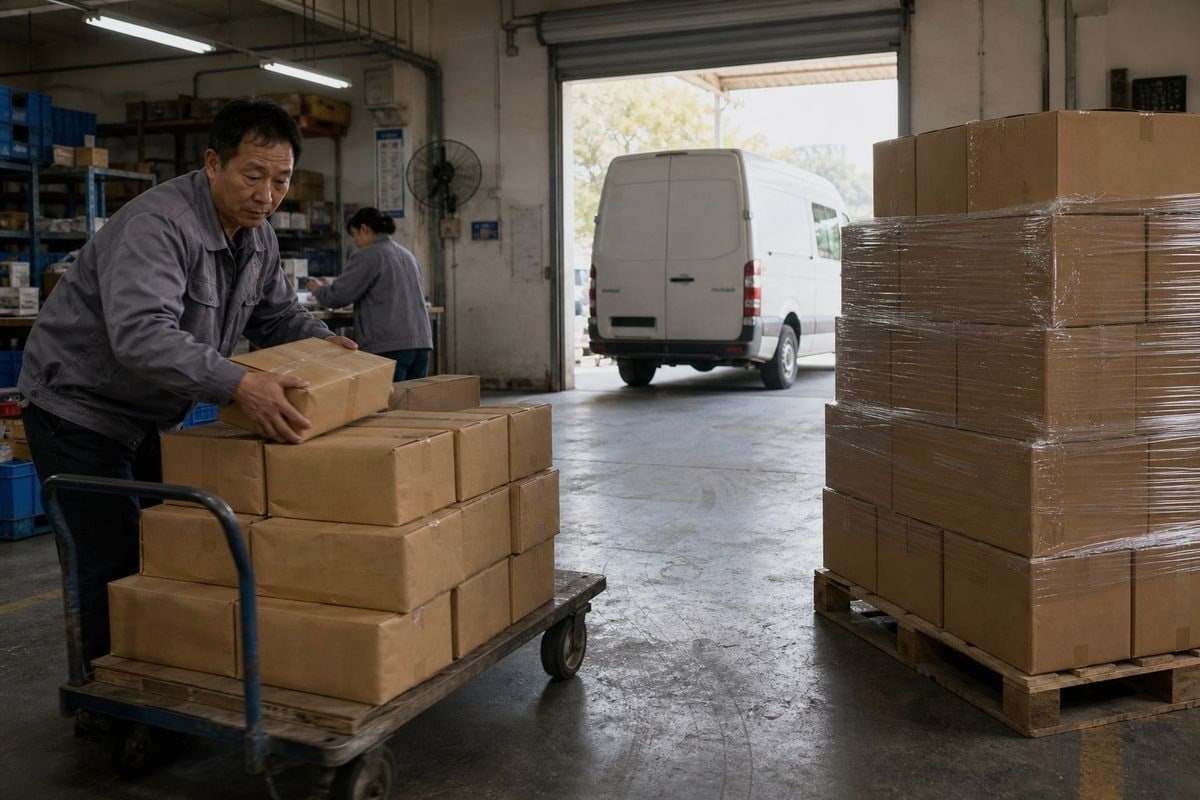
Buyers ask me about bulk warehousing vs [direct shipping](https://okayeyewear.com/direct-to-port-warehouse-overseas-staging-saves-more-kids-sunglasses-shipping/) for kids optical frames constantly. Many pick wrong, watch margins vanish, then blame the factory price. The real answer sits in the logistics math.
Direct shipping costs $3–$8 per order with low upfront capital, while bulk warehousing drops inbound freight to $0.30–$2.50 per unit plus $2–$4 pick-and-pack fees. Below roughly 400–500 monthly orders, direct shipping usually wins; above that, bulk warehousing saves more per frame.
That is the short answer. But the crossover point depends on your volume, cash position, and hidden fees. Let me walk through each factor so you can run your own numbers.
How Do I Calculate the True Cost Difference Between Bulk Warehousing and Direct Shipping for My Kids Optical Frames?
At our factory in Taizhou, a TR90 kids frame might leave the line at a low single-digit FOB price. Then buyers are shocked when the landed number doubles. Here is why.
Calculate total landed cost per unit for both models: factory price plus per-parcel freight for direct shipping, versus factory price plus consolidated ocean freight, duties, receiving, storage, and pick-and-pack for warehousing. Divide all fixed monthly costs by expected order volume, then compare.

The mistake I see most often is comparing only the freight quotes. A proper analyse simplifiée du coût rendu stacks every fee against every unit sold. Kids optical frames make this comparison unusually sharp because the product itself is cheap. Wholesale TR90 frames without lenses typically run $1.80 to $4.50 per unit. When the product costs $3, a $6 parcel fee is not a rounding error. It is twice the product cost.
The Two Cost Stacks, Side by Side
Start with a simple table. Fill in your own quotes, but these ranges reflect what our clients across 20+ countries report back to us.
| Cost Component | Direct Shipping | Bulk Warehousing |
|---|---|---|
| Factory price (TR90 kids frame) | $1.80–$4.50 | $1.80–$4.50 |
| International freight | $3–$8 per order (or $8–$20/kg courier) | $0.30–$2.50 per unit by sea |
| Receiving fee | Aucun | $0.15–$0.30 per unit |
| Storage | Aucun | $0.25–$1.50 per unit per month |
| Pick-and-pack | Included in parcel rate | $2–$4 per order |
| Duties | Often avoided under de minimis | Paid once on the consolidated shipment |
One practical example from the research: a $15 EXW frame commonly lands at $18–$20 per unit after cross-border handling. That is a 20–33% markup over factory price purely from logistics. On our lower-priced kids frames, the percentage impact can be even larger.
Do Not Forget Chargeable Weight
Eyewear is light, but freight forwarding quotes use poids chargeable 1, which punishes bulky packaging. A rigid gift box and cleaning cloth add volume fast. When we help clients design retail-ready packaging, we always model the CBM impact before finalizing the box. Compact packaging is one of the quietest savings levers in this entire comparison.
What Hidden Fees Should I Watch for When Storing Kids Eyewear in a Bulk Warehouse Versus Shipping Directly?
A distributor client once called me frustrated: her 3PL invoice was 40% higher than the quote. Nothing was wrong. She had simply never seen the fine print on receiving and long-term storage.
Warehousing hides receiving fees ($0.15–$0.30/unit), long-term storage surcharges, and per-SKU handling costs. Direct shipping hides customs duties and taxes above de minimis thresholds, medical-device processing surcharges up to 15% of frame value, and costly international returns. Both models have fees the headline quote omits.
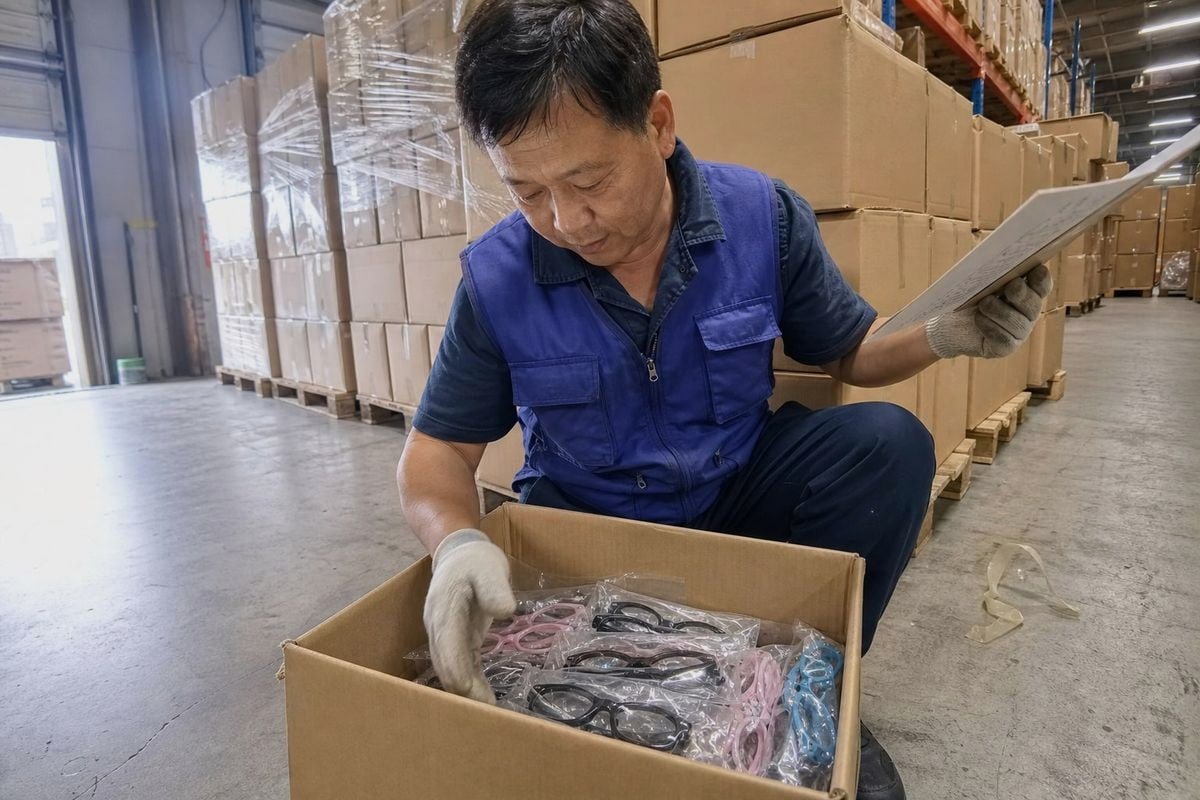
Neither model is dishonest, but both quote the attractive number first. Here is what actually shows up on invoices.
Warehouse-Side Surprises
3PL fulfillment services usually quote pick-and-pack prominently and bury the rest. Watch for these:
- Receiving and inspection fees when your container arrives, typically $0.15–$0.30 per unit.
- Long-term storage surcharges on slow-moving SKUs, which matters for kids eyewear because color and size variety multiplies SKU count fast.
- Kitting fees if frames ship with cases, cloths, or inserts.
- Climate-control premiums. These are worth paying, honestly. Acetate frames can develop bloom, and any frame can warp under extreme temperature swings. Unmanaged storage risks the product itself.
- Customs bonds and formal entry costs. Bulk importing means acting as the Initial Importer, and for the US market that involves FDA medical device registration obligations 2, since optical frames are regulated as Class I devices. The upside: consolidating into one warehouse lets you pay a single annual FDA facility registration instead of absorbing repeated processing surcharges — which can reach 15% of a frame's value — on high-frequency direct parcels.
Direct-Shipping-Side Surprises
Direct shipping looks clean because small parcels often slip under de minimis thresholds 3, avoiding formal entry fees. But import tariffs and rules change, and relying on de minimis is a policy bet, not a strategy. The bigger hidden cost is returns. Kids frames have above-average return rates because fit is hard to judge remotely. International return logistics are usually cost-prohibitive, so most direct shippers simply write off returned frames. A local warehouse cuts the return-to-shelf cost dramatically, which is a real, recurring saving that never appears in freight quotes.
How Does Order Volume Affect Whether Bulk Warehousing or Direct Shipping Saves Me More on Kids Optical Frames?
When new brands sample our catalog of roughly 800 existing styles, I always ask one question before we discuss logistics: how many orders do you realistically expect per month? Everything hinges on that.
Below about 100 orders per month, direct shipping is more profitable because it converts fixed overhead into variable per-order fees. Bulk warehousing becomes competitive around 400–500 monthly orders, when consolidated freight, storage, and pick-and-pack costs spread across enough units to beat parcel rates.

Volume is the single biggest variable in this equation, so let me make it concrete with a worked comparison. Assume a $3.50 FOB kids frame under 1 kg with retail packaging.
| Monthly Orders | Direct Shipping Cost/Order | Warehousing Cost/Order | Winner |
|---|---|---|---|
| 50 | ~$5.50 freight | $2 freight + $3 pick-pack + $4 storage share = ~$9 | Direct shipping |
| 150 | ~$5.50 | $2 + $3 + $1.30 = ~$6.30 | Direct shipping |
| 450 | ~$5.50 | $1.50 + $2.50 + $0.45 = ~$4.45 | Warehousing |
| 1,000 | ~$5.50 | $1 + $2.50 + $0.20 = ~$3.70 | Warehousing |
The pattern is clear. Direct shipping costs stay flat per order no matter your volume. Warehousing costs fall as fixed overhead — storage minimums, receiving, inbound freight — gets divided across more shipments. Research on small ecommerce products priced $20–$40 puts the crossover at roughly 400–500 orders per month, and our clients' experience with kids frames tracks closely with that.
The Hybrid-Push Model
Volume is rarely uniform across SKUs, though. A brand might sell 600 units per month of a core black TR90 frame and 30 units of a new pastel colorway. This is where a hybrid approach shines: bulk-warehouse your evergreen core sizes and direct-ship new colors while you test demand. One analysis found this Hybrid-Push model optimizes total landed cost by around 25% versus committing to a single method. Because our catalog lets brands test styles without mold investment, this hybrid path is the one I recommend most often to buyers in Europe, Japan, and Australia.
Which Option Helps Me Better Manage Cash Flow and Inventory Risk When Importing Kids Optical Frames from China?
The hardest conversation I have with new buyers is not about price. It is about how much cash a container quietly locks up before a single frame sells.
Direct shipping protects cash flow: you pay per sale with no pre-purchased stock. Bulk warehousing ties up $12,000–$20,000 in working capital for roughly 60 days of inventory, plus upfront duties. Choose direct shipping when demand is unproven; choose warehousing when demand is stable and predictable.

Cost per unit is only half the decision. The other half is timing — when the money leaves your account and how long it stays trapped in cartons.
The Cash Flow Timeline
With direct shipping, your money cycle is short. You collect payment from the customer, then pay for the frame and parcel. Inventory carrying costs are near zero. With bulk warehousing, the sequence reverses. You fund the minimum order quantity, pay customs duties and taxes on arrival, cover receiving, and then pay monthly storage — all before revenue arrives. For a standard small-parcel product, maintaining about 60 days of stock typically requires $12,000–$20,000 in working capital. For a startup, that capital might otherwise fund marketing.
The Risk Trade-Off
Inventory risk works the same direction. Kids eyewear is style-sensitive and size-sensitive. If a colorway misses, warehoused stock becomes a slow-moving liability accruing storage fees. Direct shipping lets you fail cheaply. But warehousing buys things direct shipping cannot:
- Speed. Local stock enables 2–5 day last-mile delivery, versus 10–30 days from the factory. That window is decisive during the back-to-school rush, when parents will not wait three weeks for their child's frames.
- Predictable supply chain lead times, insulated from peak-season freight volatility.
- Consolidated quality control. Bulk shipments let us inspect, add branded protective packaging, and ship retail-ready — packaging that is often too bulky for cost-effective single-parcel shipping.
A bonded warehouse model can split the difference, holding stock tax-deferred until each sale clears customs. It preserves cheap bulk inbound freight while deferring some duty cash outlay. My honest guidance after 15 years in this industry: match the model to your business stage, not to a spreadsheet alone. Startups testing our styles should stay lean with direct shipping. Brands with repeat sales data should commit to warehousing and capture the margin.
Conclusion
The cheapest factory price means little if logistics eats the margin. Test with direct shipping, scale with bulk warehousing, and run your own landed cost analysis before every commitment.
Notes de bas de page
1. Standard industry definition of how shipping costs are calculated based on volume. ↩︎
2. Official FDA resource for medical device establishment registration and product listing compliance. ↩︎
3. Official U.S. Customs and Border Protection guidance on duty-free shipment thresholds. ↩︎
Plus d'articles que vous pourriez aimer

août 5, 2026
Bio-Based vs Regular Cellulose Acetate: What's the Difference for Kids' Frames?

août 5, 2026
How Recyclable Are Kids' Optical Frame Materials, and What Eco-Friendly Alternatives Exist?
août 5, 2026
Do Kids Optical Frames Whiten or Age in Storage, and How to Control Warehouse Conditions?
Vous recherchez un partenaire fiable en lunetterie pour enfants ?
Explorez plus de 800 styles prêts et un support OEM/ODM complet adapté à votre marque.
Contactez-nous English
  Español de México
  Deutsch
  Français
  日本語
日本語  العربية
  Português do Brasil