How to Choose Kids’ Eyeglass Frame Materials by Activity Level?
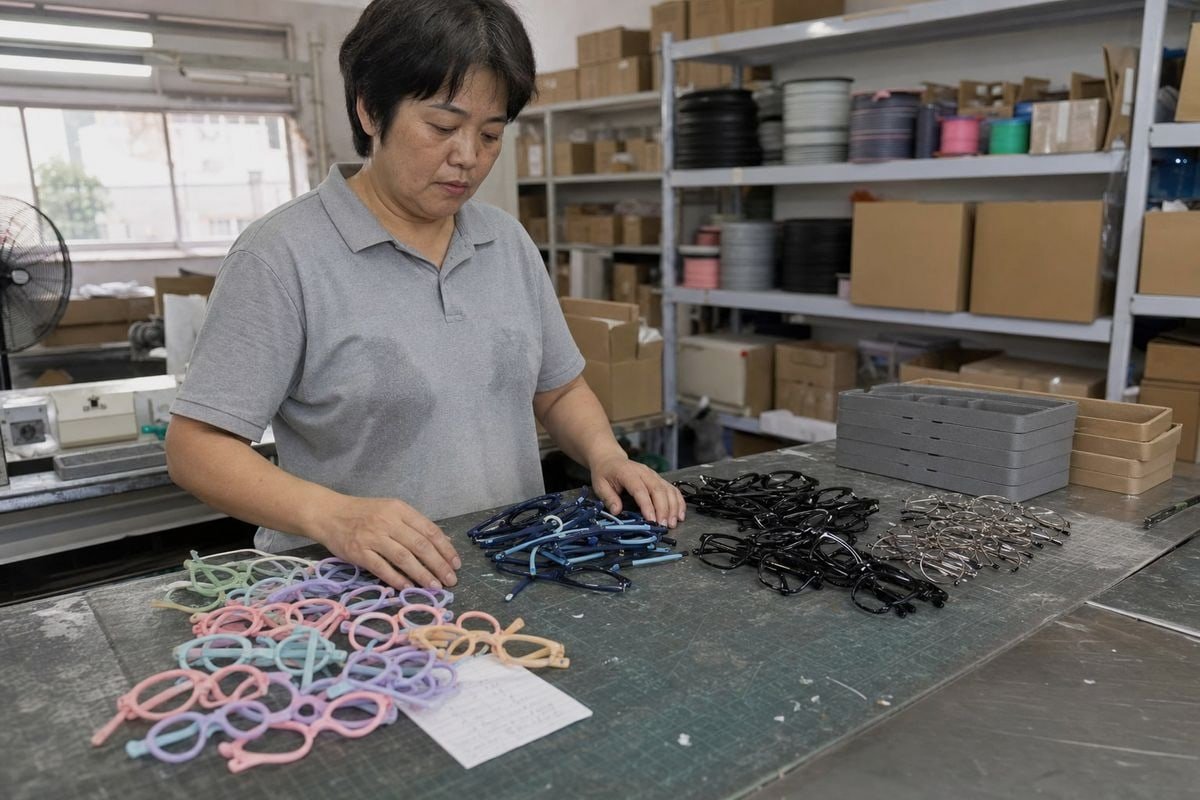
Choosing kids’ eyeglass frame materials by activity level is a question our Taizhou factory answers daily. Buyers pick frames by age or price, then face returns when active kids snap them.
Match kids’ eyeglass frame materials to how children actually move. Toddlers need soft silicone or TPEE frames, active school kids need flexible TR90 memory plastic, and careful older children can wear acetate or lightweight titanium frames. Activity level predicts breakage better than age alone.
This sounds simple, but the details matter. In this guide, I will walk through material choices for daily wear, sports, younger children, and bulk ordering. Let’s start with the basics.
How do I match frame materials to my kids' activity levels for daily wear versus sports?
A procurement manager from Australia once asked me why her toddler frames kept breaking. She had ordered by age chart, not by lifestyle. That conversation changed how we advise every buyer.
Assess how the child moves, falls, and handles glasses. Calm daily wearers can use acetate, stainless steel, or standard TR90. High-energy kids and athletes need flexible TR90, nylon, or TPEE. Toddlers need the softest option, because they grab, bend, and drop frames constantly.
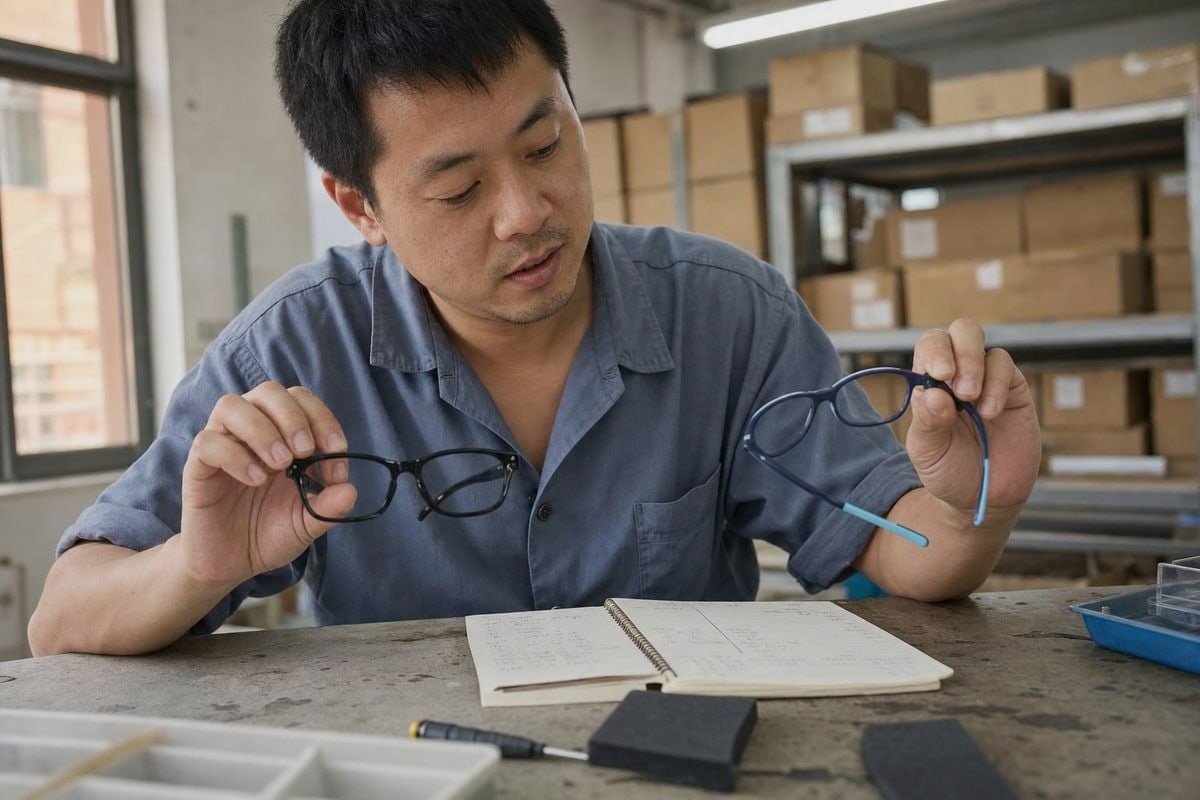
Age gives you a rough starting point. Activity level gives you the real answer. A quiet nine-year-old who reads all day has different needs than a nine-year-old who plays soccer three times a week. When we develop new styles at our workshop, we sort them by lifestyle first: everyday school wear, playground use, organized sports, and toddler wear.
Here is the framework we share with buyers before they place an order:
| Activity Level | Best Frame Materials | Pourquoi ça marche |
|---|---|---|
| Low activity, careful wearer | Acetate, stainless steel, lightweight titanium frames | Style and slim looks matter more than extreme flex |
| Moderate activity, daily school use | TR90, nylon, TR90 with TPEE temples | Handles drops, backpack squeezes, and recess |
| High activity, sports, rough play | TR90 memory plastic, nylon, wraparound sports styles | Bends under impact and returns to shape |
| Toddlers and preschoolers | Soft silicone, TPEE, flexible one-piece frames | Soft edges reduce injury risk during falls |
Daily Wear Needs Comfort First
For all-day school wear, weight and pressure points decide whether a child keeps glasses on. Light frames with soft silicone nose pads distribute weight evenly. If glasses hurt, kids take them off. That kills compliance, and compliance is the whole point of prescription eyewear.
Sports Wear Needs Impact Control
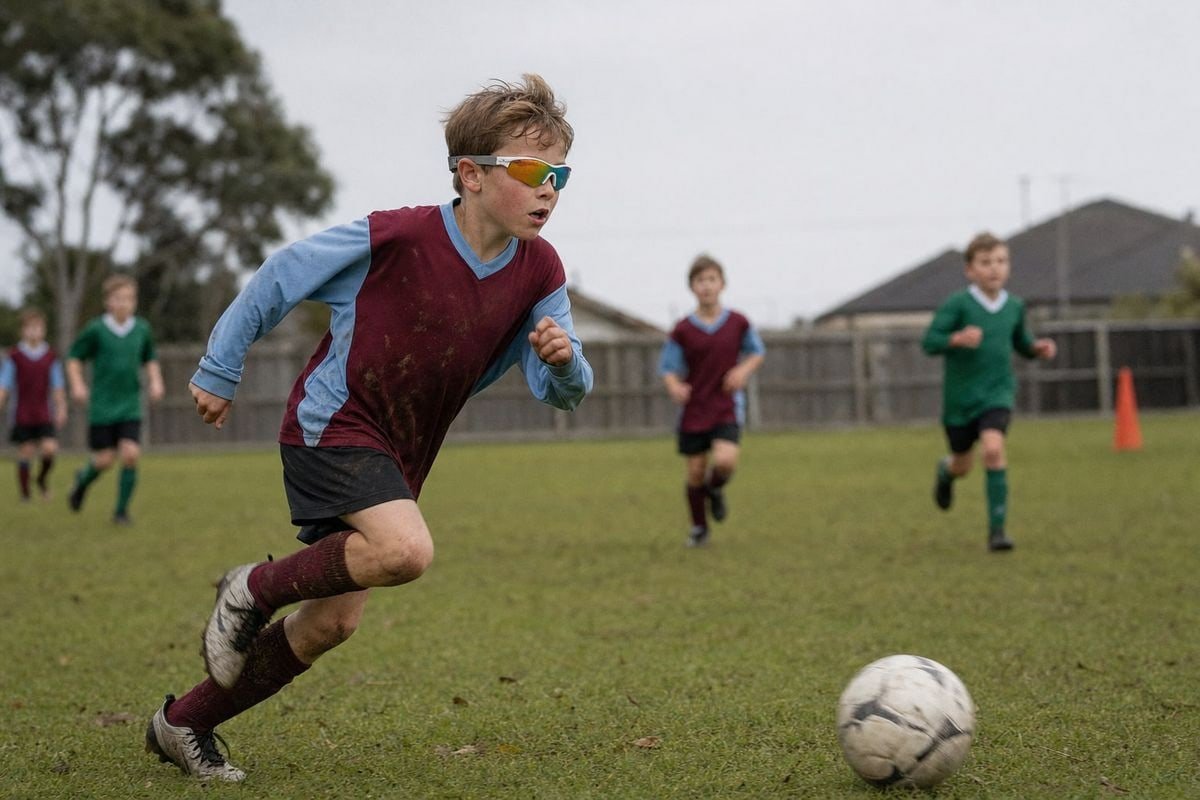
For sports, the frame must survive impact and stay on the face. Wraparound shapes, adjustable cable temples, and strap attachments keep frames secure during running and jumping. Impact-resistant lenses 1 matter just as much here, because a strong frame cannot protect a shattered lens.
One caution from our experience: some buyers assume acetate and metal are the "premium" choice for every child. They are excellent for older, careful wearers. They are not the safest pick for toddlers or rough-and-tumble kids, because rigid materials transfer impact instead of absorbing it.
Why is TR90 my best option for active children who play sports frequently?
In our quality lab, we run a simple demonstration for visiting buyers: we twist a TR90 temple a full half-turn, release it, and watch it snap back to shape. Most rigid plastics would crack.
TR90 is a thermoplastic memory material that bends without breaking, returns to its original shape, and weighs less than acetate or metal. For children who play sports frequently, it absorbs impact, resists snapping during falls, and stays comfortable through long active days.
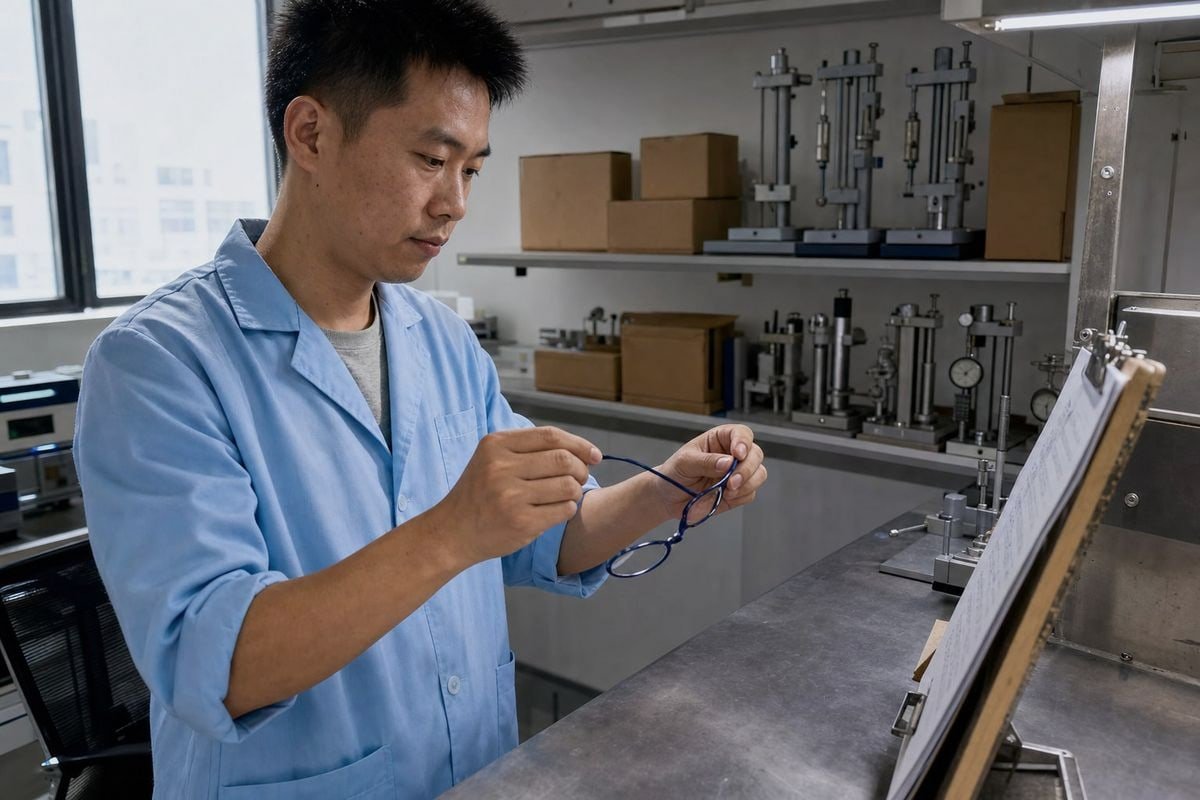
TR90 memory plastic has become the default recommendation for active kids across the industry, and our production data supports that consensus. After fifteen years of making children's eyewear, TR90 remains the core material in most of our roughly 800 existing styles.
What Makes TR90 Different
TR90 is a nylon-based polymer 2 with shape memory. When a child sits on the frame, steps on it, or takes a ball to the face, the material flexes and recovers. Standard plastic holds its shape until it fails. TR90 gives instead of breaking. That single property changes the economics for parents: fewer replacements, fewer emergency optician visits.
The material is also very light. Less weight means less pressure on a child's nose and ears during a full day of school plus after-school sports. Nylon frame durability comes with almost no comfort penalty, which is rare in eyewear materials.
Where TR90 Fits in a Sports Lineup
| Caractéristique | TR90 | Standard Plastic | Métal |
|---|---|---|---|
| Flex under impact | Se plie et reprend sa forme | Cracks or snaps | Bends and stays bent |
| Poids | Très léger | Modéré | Light to heavy by alloy |
| Skin safety | Hypoallergénique | Généralement sûr | Nickel 3 risk in some alloys |
| Sports suitability | Excellent | Mémoire de forme | Fair for low-contact use |
For organized contact sports, buyers should also consider dedicated sports goggles for children built to the ASTM F803 safety rating 4. Regular optical frames, even TR90 ones, are not certified protective equipment. We advise brands to position TR90 frames as everyday active wear and to offer certified sports goggles as a separate category for competitive athletes.
One honest trade-off: TR90 offers fewer high-gloss, dressy finishes than acetate. For style-driven teens with low breakage risk, hypoallergenic acetate frames remain a fair choice. For kids who move hard, TR90 wins.
Should I choose TPEE temples for younger kids who need extra flexibility and comfort?
The trade-off we weigh most often in product development is stiffness versus softness. A frame front needs structure to hold lenses. Temples touching a small child's head need to be gentle. TPEE solves that tension.
Yes, TPEE temples are ideal for younger children. TPEE is a soft, rubber-like elastomer that flexes in every direction, grips gently without pressure points, and shrugs off pulling and twisting. Paired with a TR90 front, it combines structure with toddler-safe comfort.
TPEE stands for thermoplastic polyester elastomer 5. It behaves closer to silicone than to hard plastic. When we developed our TR90-front, TPEE-temple combination frames, the goal was simple: keep the optical precision of a structured front while making the parts that touch the child almost impossible to feel.
Why the Hybrid Design Works for Small Faces
Young children grab their glasses. They pull them off with one hand, sideways, dozens of times a day. Rigid temples fatigue at the hinge and eventually crack. TPEE temples stretch with the motion instead of fighting it. In our design work, we also add textured grip patterns and soft tips on TPEE temples, because small ears need traction without hard edges.
Comfort drives compliance in this age group more than anywhere else. A three-year-old cannot explain that the temple pinches. They just remove the glasses. Soft TPEE, combined with soft silicone nose pads or a molded bridge, removes the reasons to take frames off.
A Quick Decision Path for Younger Kids
- Under about age three: choose full soft frames, silicone or TPEE, with a head strap and no small removable parts.
- Ages three to six: choose TR90 fronts with TPEE temples for structure plus safety.
- Ages six and up, still rough on glasses: full TR90 with flexible spring hinges works well.
- Sensory-sensitive children: favor matte, soft-touch finishes, since glossy or cold materials can cause tactile discomfort.
Environmental impact also comes up with buyers in Europe and Japan. TPEE and TR90 are recyclable thermoplastics, and we prioritize environmentally friendly material sources across our lines. For eco-focused brands, that story supports retail positioning without compromising safety.
What safety and durability factors should I check before ordering kids' frames in bulk?
A lesson I learned early in our export business: a great material choice can still fail at the hinge. One of our first large orders taught us that every component, not just the frame body, decides real-world durability.
Before bulk ordering, verify frame material certification, lens impact resistance, hinge construction, and finish safety. Check for polycarbonate or Trivex lenses, flexible spring hinges or hinge-free flex designs, secure temples, non-toxic coatings, and no small detachable parts for toddler styles.

Bulk buyers carry the risk of an entire container, not one pair. So the pre-order checklist has to be thorough. At our Réalités du transit par mode 6, we run incoming material checks, in-process inspections, and final QC before shipment, and we encourage buyers to audit the same points independently.
The Core Checklist
| Point de contrôle | Ce qu'il faut vérifier | Pourquoi c'est important |
|---|---|---|
| Matériau du cadre | Genuine TR90 or TPEE, not cheap substitutes | Fake "flexible" plastics crack in cold weather |
| Lentilles | Impact-resistant lenses in polycarbonate or Trivex; UV400 7 for sun styles | Strong frames cannot compensate for shattered lenses |
| Charnières | Flexible spring hinges or one-piece flex construction | Les charnières sont le point de défaillance le plus courant |
| Temples | Adjustable cable temples or strap options for active styles | Secure fit prevents drops and mid-play losses |
| Coatings and paint | Non-toxic, saliva-safe finishes for toddler frames | Young children mouth their glasses |
| Petites pièces | No detachable decorations on toddler styles | Detachable parts create choking hazards |
| Contact avec la peau | Hypoallergenic materials, nickel-free metal parts | Children's skin reacts faster than adults' |
Test Beyond the Spec Sheet
Ask your supplier for physical samples and abuse them. Twist the temples. Flex the bridge. Drop the frame. Leave one sample in a freezer overnight and flex it again, because some low-grade polymers turn brittle in cold climates. If a factory hesitates to let you stress-test samples, that hesitation is your answer.
Also confirm consistency across production runs. One good sample proves capability. Batch-to-batch consistency proves process control. Ask how the factory documents color matching, hinge torque, and lens fitting across runs. For sun styles, request UV400 test reports for the actual lens batch, not a generic certificate.
Finally, think about the full retail package: cases, cleaning cloths, straps, and branded packaging. Durable frames delivered in flimsy packaging still arrive damaged. Retail-ready presentation protects the product and your brand at the same time.
Conclusion
Broken kids’ frames cost brands returns and trust. The fix is simple: match materials to activity, not age. Soft TPEE for toddlers, TR90 memory plastic for active kids, acetate or titanium for careful teens — then verify lenses, hinges, and QC before ordering in bulk.
Notes de bas de page
1. Explains polycarbonate lens material referenced as an impact-resistant lens option. ↩︎
2. Wikipedia background on polymer materials underlying TR90 and TPEE frame technology. ↩︎
3. CDC resource on nickel exposure risks relevant to hypoallergenic frame material safety. ↩︎
4. Background on the standards body behind the ASTM F803 sports eyewear rating. ↩︎
5. Wikipedia background on TPEE material chemistry mentioned in the article. ↩︎
6. Government resource from the EPA explaining the 5S lean methodology for workplace organization. ↩︎
7. FDA consumer guidance on UV protection ratings for sunglasses and eyewear lenses. ↩︎
Plus d'articles que vous pourriez aimer
23 août 2026
Comment les lunettes pour enfants trop petites peuvent-elles être recyclées ou réutilisées ?
23 août 2026
Quelle est l'efficacité des matériaux biosourcés et recyclables dans les lunettes pour enfants ?
23 août 2026
Peut-on remplacer les verres après un changement de prescription pour les lunettes d'enfants ?
Vous recherchez un partenaire fiable en lunetterie pour enfants ?
Explorez plus de 800 styles prêts et un support OEM/ODM complet adapté à votre marque.
Contactez-nous English
  Español de México
  Deutsch
  Français
  日本語
日本語  العربية
  Português do Brasil