How to Avoid Style Clashes with Licensed Brands When Sourcing Kids Optical Frames?
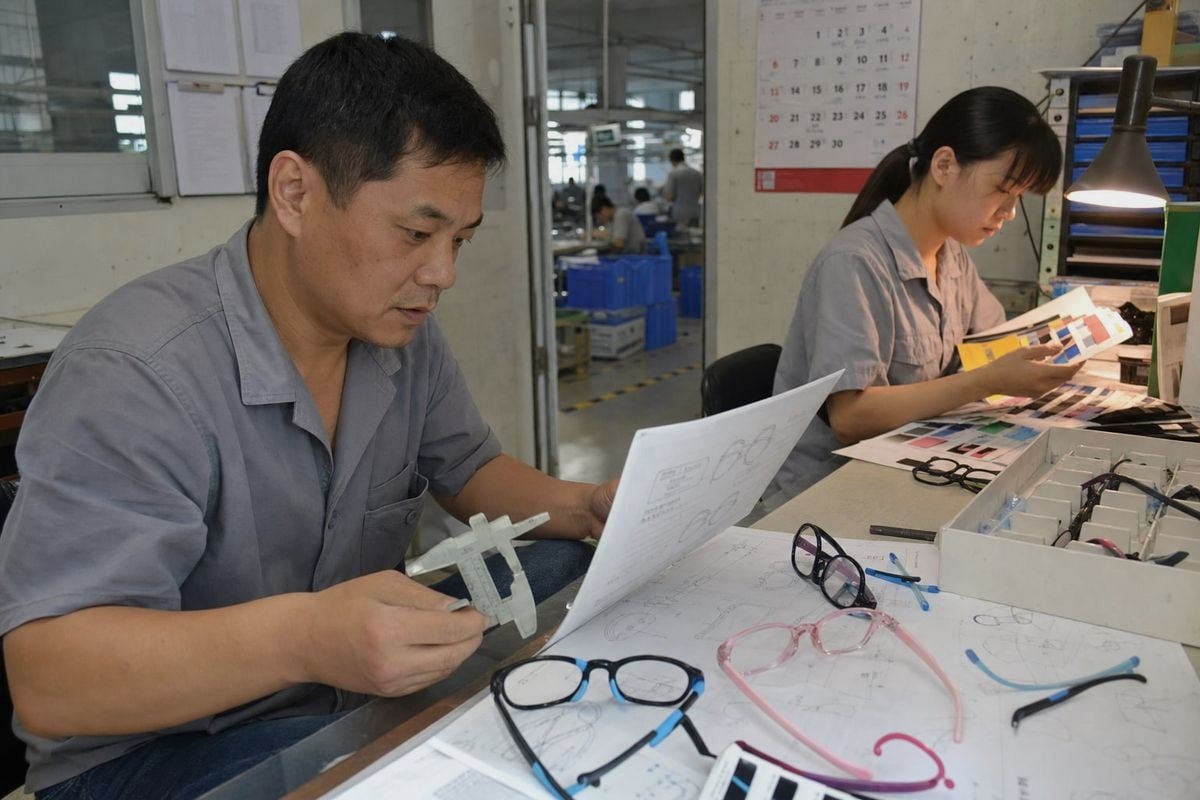
Sourcing kids optical frames looks simple until a licensed brand claims your new style copies theirs REACH regulations 1. I have watched buyers freeze entire shipments over one temple graphic. On our production line in Taizhou, we now screen every design before tooling, because one style clash can cost a brand its retail relationships and reputation overnight.
To avoid style clashes with licensed brands when sourcing kids optical frames, audit designs against known licensed collections before ordering, verify your manufacturer’s design library is original, use custom OEM/ODM development for distinct styling, and sign written originality confirmations plus NNN agreements with your supplier.
Each of those steps deserves a closer look. Below, I break down how to check designs, vet a factory’s library, build original frames, and protect your brand in writing.
How can I check if a frame design conflicts with existing licensed brand styles before I place an order?
A buyer from Australia once sent me a sample photo she loved. Within minutes, our design team flagged it: the color blocking mimicked a well-known character property. That five-minute check saved her a costly recall.
Check for conflicts by comparing the frame's silhouette, color palette, and decorative elements against major licensed kids' eyewear collections, searching trademark databases for registered design patents, reviewing brand licensing guidelines where public, and asking your supplier for written confirmation of the design's origin.
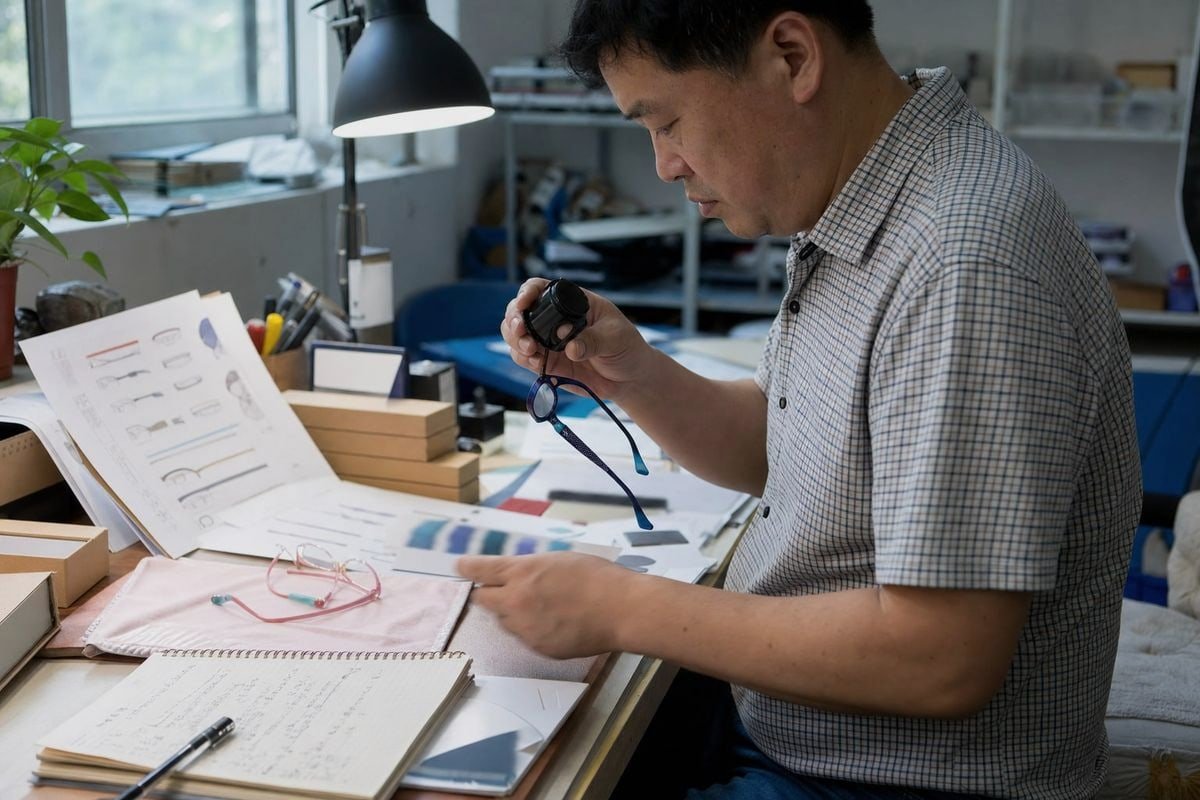
Style clash in pediatric eyewear design rarely means an exact copy. More often, it is a combination of cues that together feel like a licensed property. So your review has to look at the whole picture, not one element.
What to compare, element by element
In our experience exporting to 20+ countries, licensed conflicts usually come from four areas. Check each one separately before you approve a sample.
| Design Element | What to Look For | Risk Level |
|---|---|---|
| Silhouette | Frame shapes strongly tied to a character (ears, wings, angular bridges) | Élevé |
| Color palette | Exact primary logo colors of a licensed property used together | Élevé |
| Temple graphics | Patterns, icons, or motifs resembling character artwork | Very high |
| Decorative charms | Shapes molded into hinges or tips that echo licensed mascots | Medium |
A useful principle from merchandising practice: licensed properties own a "silhouette language." Aggressive, angular bridges signal action-themed brands; soft, organic curves signal educational properties. If your generic frame accidentally speaks that language while also borrowing the color mapping, a licensor may see imitation even without a logo.
Practical steps before ordering
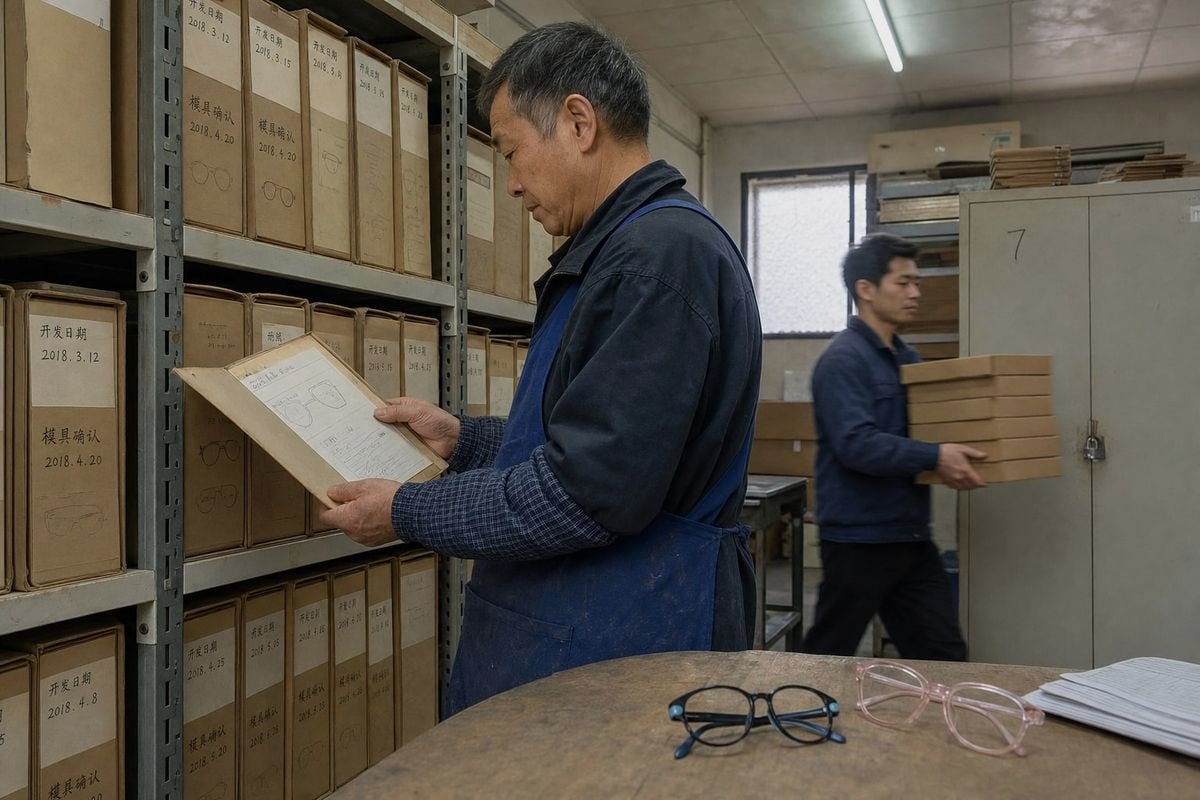
First, run image searches on your proposed design and compare results against current licensed collections at major retailers. Second, search design patent and trademark registries 2 in your target market. Third, ask the factory where the style came from and when it was first produced. At our workshop, we keep dated development records for our roughly 800 existing styles, so buyers can trace any design's history. That documentation is your first line of defense in ophthalmic frame sourcing.
What should I look for in a manufacturer's design library to avoid unintentional trademark or style infringement?
There is a trade-off I weigh with every new buyer: a big design library speeds up launches, but an unverified library can hide copied styles. Size alone tells you nothing about safety.
Look for documented design origins, dated development records, clear separation between original in-house styles and customer-exclusive molds, absence of character-themed graphics mimicking known properties, and the factory's willingness to state in writing which styles are free for open sale.
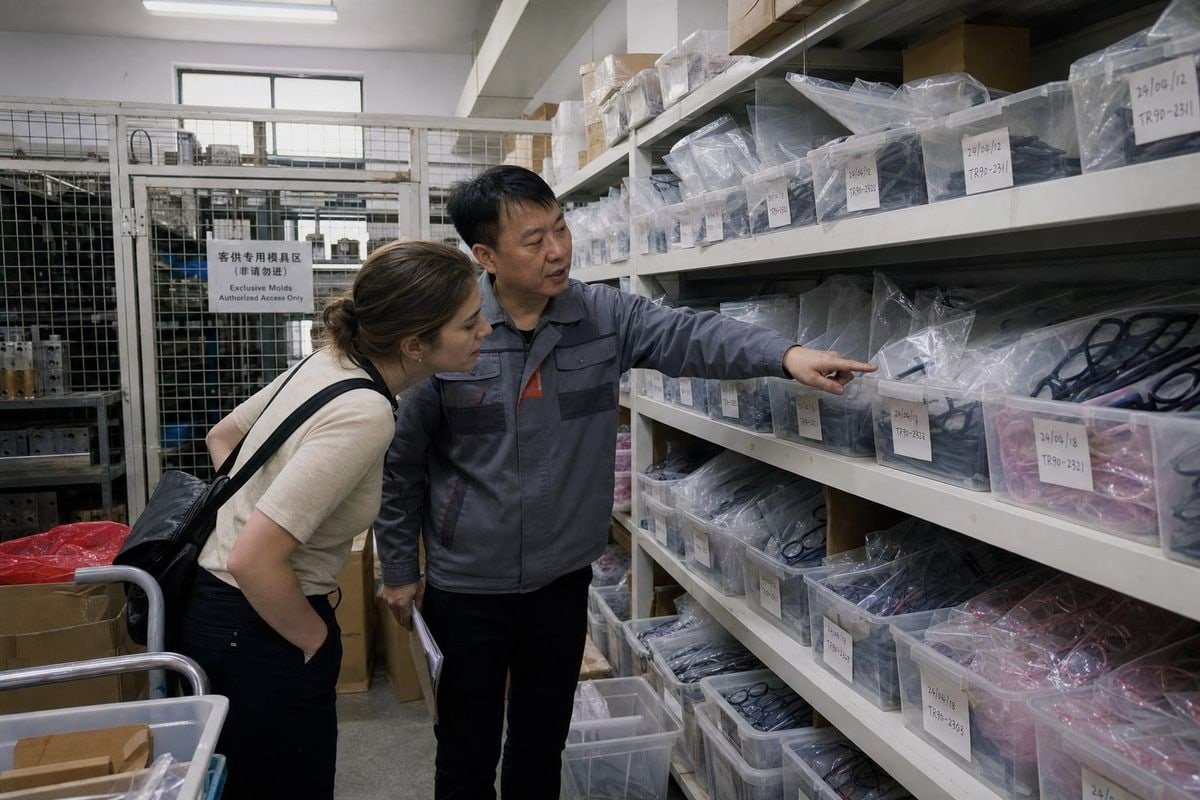
A factory's design library is the foundation of low-risk wholesale eyewear procurement. When brands and importers choose from our existing styles, they avoid heavy mold investment. But that shortcut only works if the library itself is clean. Here is how I suggest you audit one.
Questions that reveal library quality
Ask these before you shortlist any styles:
- Who designed each style, and when? A real factory can show sketches, mold dates, and first-production records.
- Are any styles exclusive to other customers? Exclusive molds must never appear in your quotation. Good factories wall these off completely.
- Do any styles carry third-party graphics? Character prints, mascot shapes, or logo-color schemes are red flags for intellectual property in eyewear 4.
- Can the factory prove it is the actual producer? Request unedited, date-stamped factory photos and videos. Middleman traders often show borrowed libraries they do not control, which multiplies your infringement risk.
Green flags versus red flags
| Green Flag | Drapeau rouge |
|---|---|
| Dated design records for each style | "We can copy any picture you send" |
| Clear open-sale vs. exclusive-mold list | Same styles seen in licensed retail collections |
| In-house design team you can talk to | Vague answers about design origin |
| Willing to sign originality statements | Refuses written commitments |
At our 5S-managed workshop, we separate customer-exclusive tooling from our open catalog physically and in our records. That discipline came from fifteen years of eyewear manufacturing, and honestly, from a few early lessons where unclear boundaries created awkward conversations. Strong eyewear supply chain management starts with a library you can actually trace.
Can custom OEM/ODM options help me create original frame designs instead of risking similar looks to licensed brands?
When we were developing a two-tone frame with flexible TPEE temples and silicone ear hooks for a European kids' brand, the buyer's first request surprised me: "Make it recognizable as ours, and nothing like anyone else's." That is exactly what OEM/ODM is for.
Yes. Custom OEM/ODM development lets you build original silhouettes, proprietary color palettes, unique temple textures, and branded packaging from scratch, giving you a documented design history and a distinct visual identity that cannot be confused with existing licensed kids' eyewear collections.
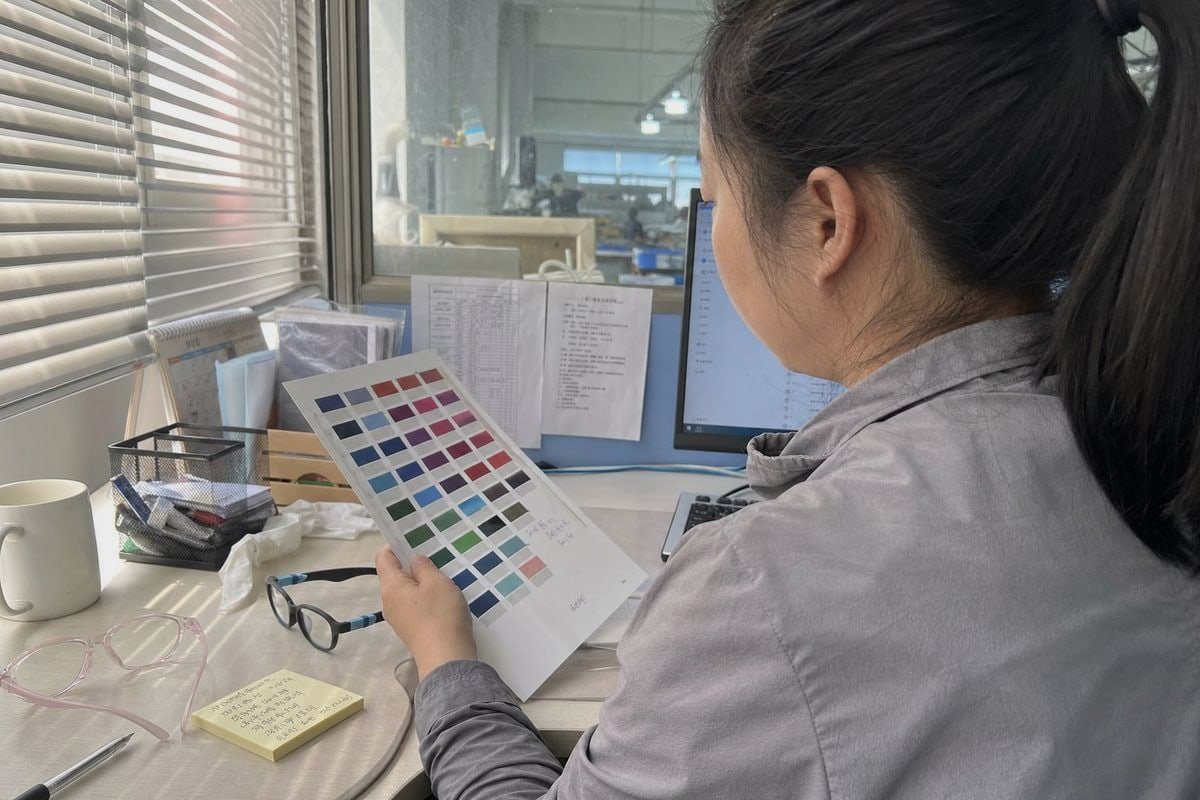
Custom development turns originality from a hope into a process. Instead of asking "does this look too similar?", you engineer distinctiveness in from the first sketch. Here is how I recommend structuring it.
Build the platform first, then the identity
Pediatric eyewear design should always start with fit, not decoration. Frame width must match the child's face — never wider than the widest part. Bridge fit matters more than any styling cue; child-specific bridge dimensions beat scaled-down adult molds every time. Lightweight builds matter too, since some pediatric lens systems work best with frames under roughly 15 grams. Once that medically sound platform exists, your brand identity becomes a decoration layer on top. This function-first approach also keeps you compliant with children's eyewear safety standards like ISO 12870 5, and with material regulations such as REACH for TPEE and TR90.
Where OEM/ODM creates real differentiation
| Customization Layer | Originality Benefit |
|---|---|
| Custom mold silhouette | A shape no licensed collection uses; documented as yours |
| Proprietary color mapping | Palettes built from your brand, not a character's logo colors |
| Temple texture and graphics | Dotted patterns, etched details, or two-tone rubber unique to you |
| Modular temple tips or charms | One base frame adapts across your own sub-lines, cutting inventory risk |
| Branded, retail-ready packaging | Visual identity alignment from frame to box |
A buyer objection I hear often: "Custom molds cost too much for a test launch." Fair point. That is why we suggest a hybrid path — start with existing styles in custom colors and logos to test the market, then invest in exclusive tooling once sales prove the concept. You also gain trans-seasonal value: timeless textures like matte tortoiseshell or frosted translucent finishes, such as our soft pink acetate-look frames, stay relevant long after any media trend peaks. Our full OEM/ODM support covers colors, logos, lenses, packaging, and accessories, so the whole product tells one original story.
How do I work with my supplier to confirm design originality and protect my brand from legal or reputation risks?
A lesson I learned early: verbal assurances evaporate when a dispute starts. One importer told me his previous supplier "promised" a style was original — with nothing on paper. When a claim arrived, he had no defense and no recourse.
Protect your brand by signing a China-enforceable NNN agreement, obtaining a written design originality statement, keeping dated development records for exclusive molds, defining mold ownership in your contract, and building royalty and compliance-testing costs into your landed cost before ordering.
Brand equity protection is not a single document. It is a stack of habits that you and your supplier maintain together across the relationship. Let me walk through the stack in order.
The protection sequence
- Sign an NNN agreement before sharing designs. A Non-use, Non-disclosure, Non-circumvention agreement, drafted to be enforceable in China, stops your exclusive designs from leaking into a factory's open catalog or reaching your competitors. A standard Western NDA is often not enough.
- Get an originality statement in writing. The supplier confirms which styles are their original open-catalog designs, which are exclusive to you, and that none copy third-party properties. We provide these routinely; a factory that hesitates is telling you something.
- Define mold ownership clearly. If you paid for tooling, the contract should say the mold is yours, cannot produce goods for others, and transfers or is destroyed on request.
- Document everything with dates. Keep sketches, emails, sample photos, and approval records. If a licensor ever challenges you, an independent, dated design trail is your strongest evidence.
- Budget honestly. If you are pursuing an actual license, integrate royalties and mandatory compliance testing 6 into your landed cost from day one. Discovering these fees after pricing your retail line destroys margins and tempts teams toward risky shortcuts.
There is a tension worth naming. Some buyers want maximum speed and see legal paperwork as friction. But in my fifteen years supplying children's and baby product brands, the buyers who insist on style guide compliance and documented originality are the ones still trading with us a decade later. Reputation in kids' products is fragile; parents and retailers do not forgive infringement scandals easily.
Conclusion
Style clashes with licensed brands are preventable. Screen designs early, audit your factory's library, invest in original OEM/ODM development, and put originality and protection in writing. Our team at OKAY EYEWEAR builds this diligence into every kids optical frames project — because your brand's safety matters as much as the child's.
Notes de bas de page
1. Authoritative European Commission guide to REACH, more stable than ECHA’s bot-protected pages. ↩︎
2. USPTO’s official design patent resource supports guidance on checking registered designs. ↩︎
3. Background explanation of trade dress law relevant to logo-free design infringement claims. ↩︎
4. WIPO’s authoritative overview of intellectual property concepts relevant to design infringement risks. ↩︎
5. Official ISO standards body reference for children’s eyewear safety compliance requirements. ↩︎
6. WTO technical barriers to trade page explains compliance testing requirements in international sourcing. ↩︎
7. Background on non-disclosure agreements clarifies how NNN agreements strengthen supplier protection. ↩︎
Plus d'articles que vous pourriez aimer
août 5, 2026
Bio-Based vs Regular Cellulose Acetate: What's the Difference for Kids' Frames?

août 5, 2026
How Recyclable Are Kids' Optical Frame Materials, and What Eco-Friendly Alternatives Exist?
août 5, 2026
Do Kids Optical Frames Whiten or Age in Storage, and How to Control Warehouse Conditions?
Vous recherchez un partenaire fiable en lunetterie pour enfants ?
Explorez plus de 800 styles prêts et un support OEM/ODM complet adapté à votre marque.
Contactez-nous English
  Español de México
  Deutsch
  Français
  日本語
日本語  العربية
  Português do Brasil