How to Assess FDA GMP Compliance for Kids’ Sunglasses Factories in China?
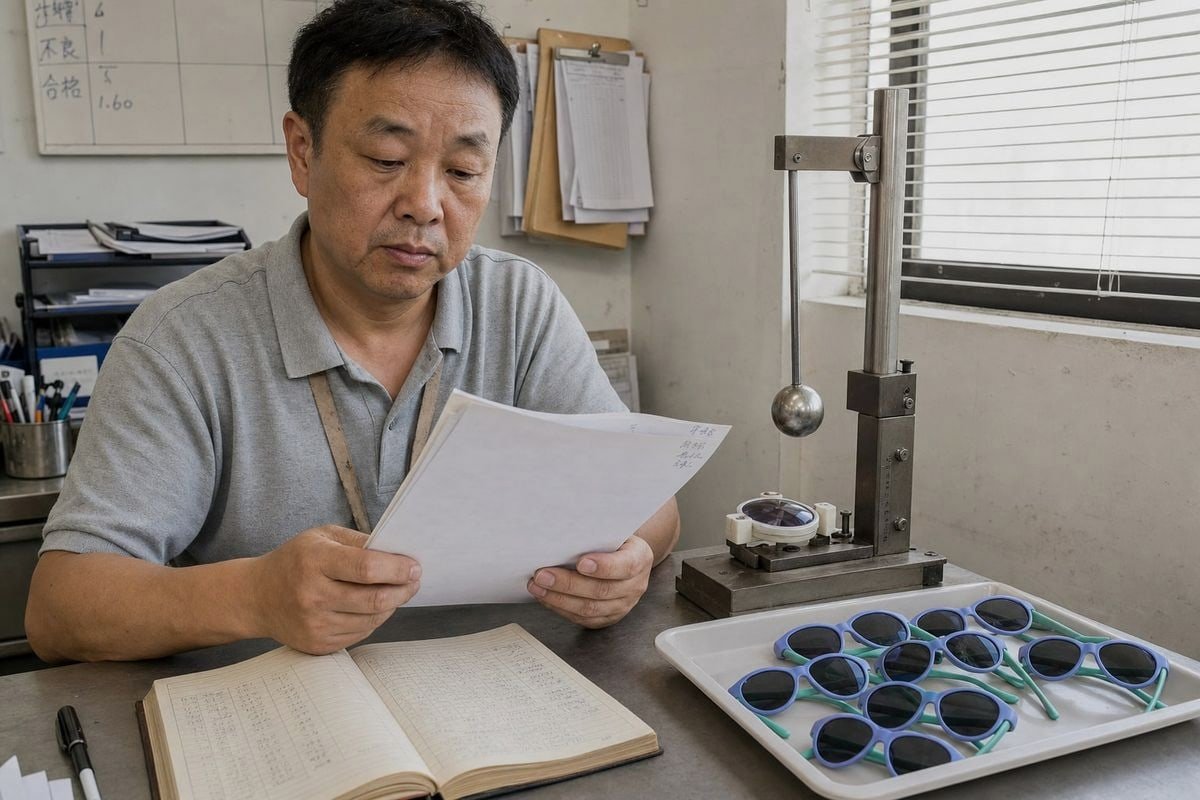
Assessing FDA GMP compliance for kids’ sunglasses factories in China is the question buyers ask us most, because one detained shipment at U.S. customs can erase a season’s profit.
To assess FDA GMP compliance for a kids’ sunglasses factory in China, verify FDA establishment registration and device listing, audit the quality system against 21 CFR Part 820, review drop ball test certificates tied to specific lots, and confirm traceability records from raw material to shipment release.
That sounds like a lot. It is. But you can break it into four clear steps. I will walk you through each one, exactly the way serious importers audit our own factory in Taizhou.
What Should I Look for in a Factory's FDA Documentation Before Placing an Order?
A buyer from Australia once asked me for our "FDA certificate" before her first order. I had to explain gently: the FDA does not issue certificates. The real documents look very different.
Before ordering, request the factory's FDA establishment registration number, device listing for sunglasses, the name of its U.S. Agent, drop ball test certificates under 21 CFR 801.410, and written quality system procedures. A vague "FDA certified" claim without these documents is a red flag.
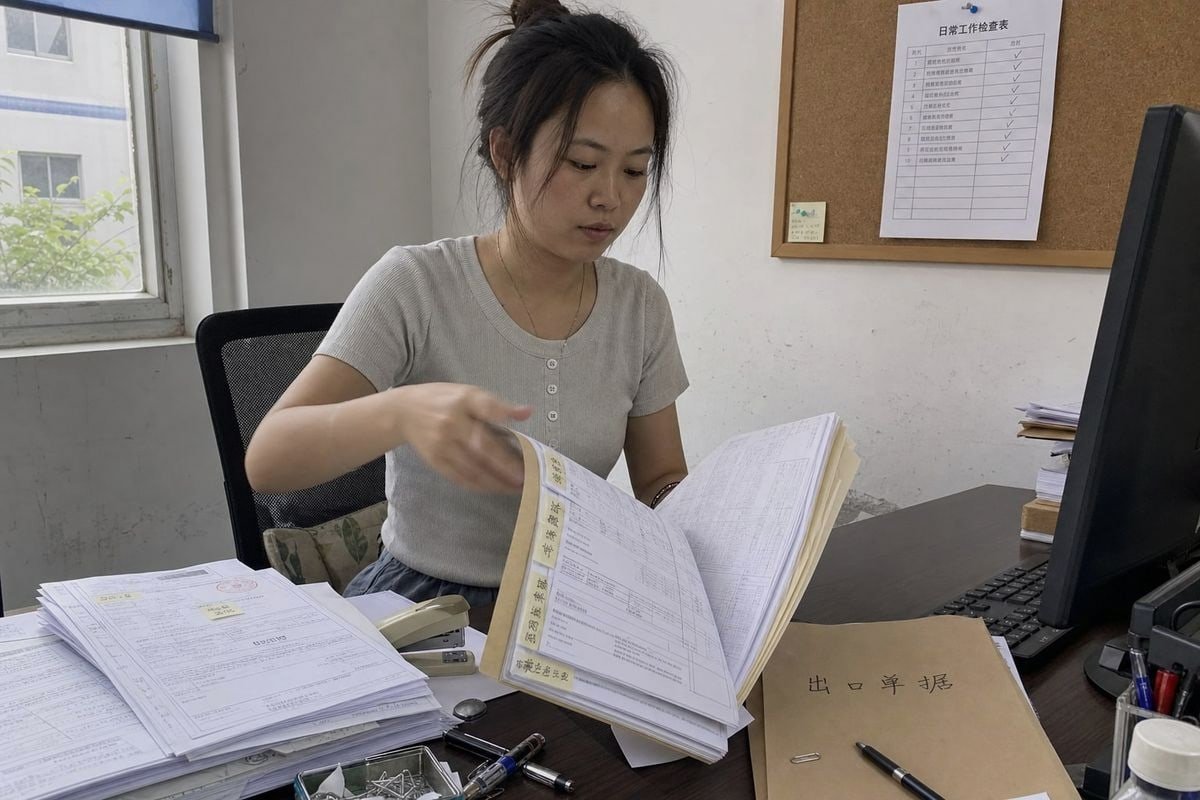
Here is the core point most importers miss. Sunglasses are 510(k)-exempt Class I medical devices 1 in the U.S. But "exempt from 510(k)" does not mean "exempt from FDA compliance." A foreign factory must still register its establishment, list its devices, name a U.S. Agent, and follow the Quality System Regulation. When we first prepared our own paperwork for U.S.-bound orders years ago, this distinction confused even our documentation team.
The Document Package You Should Demand
Ask for these papers before you sign anything. A factory that ships to the U.S. regularly should produce them within days, not weeks.
| Document | Ce qu'il prouve | Warning Sign |
|---|---|---|
| Establishment registration 2 number | The legal entity is registered with FDA | Number belongs to a trader, not the factory |
| Device listing confirmation | Sunglasses are correctly listed as Class I devices | No listing, or listing under a different product |
| U.S. Agent designation | FDA can contact the factory through a U.S. representative | Factory does not know what a U.S. Agent is |
| Drop ball test certificates | Lenses meet 21 CFR 801.410 3 impact resistance | Certificates not tied to lot numbers |
| Quality manual and SOPs | A working quality system exists | Only marketing brochures offered |
Check the Legal Entity Carefully
One detail matters more than buyers expect. The establishment registration must cover the factory that actually molds and assembles your sunglasses. In our experience exporting to the U.S., trading companies sometimes show a registration belonging to a partner facility that never touches the product. Match the registered name against the name on your purchase order and your shipping documents. If they do not match, ask why.
Also remember that children's sunglasses face a second, parallel track: CPSIA compliance. This is a Consumer Product Safety Commission matter, not an FDA one. It requires third-party testing 4 for lead and phthalates, a Children's Product Certificate, and tracking labels. Confirm the factory understands both tracks. Many understand only one.
How Do I Verify That a Chinese Manufacturer Actually Follows GMP Standards?
Paperwork is easy to stage. Systems are not. When visitors tour our 5S-managed workshop in Taizhou, I always tell them: watch the process, not the presentation.
Verify GMP compliance by auditing the factory against 21 CFR Part 820: check incoming material inspection, approved supplier lists, in-process controls, equipment calibration records, document control, CAPA procedures, and training files. Real GMP shows up in daily records, not in a showroom.
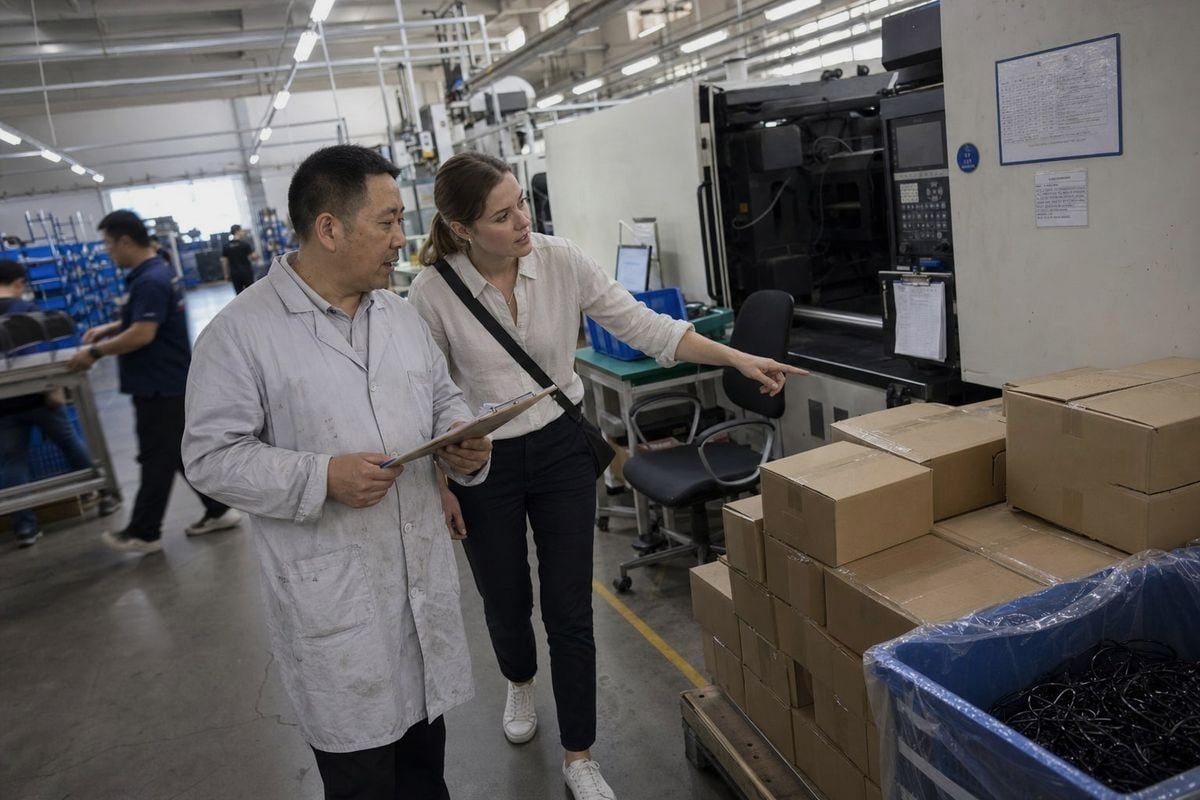
GMP for eyewear means the factory controls the entire chain: purchasing, molding, assembly, labeling, packaging, storage, and release. The Quality System Regulation does not judge a factory by one lucky test report. It judges whether the factory can repeat a compliant result on every lot. After fifteen years running eyewear production, I can tell you the difference is visible within an hour of walking the floor.
A Practical Factory Audit Checklist
Use this sequence during a supplier quality audit, whether onsite or hybrid remote-plus-onsite:
- Incoming inspection. Are lenses, TR90 frame material, hinges, nose pads, and inks inspected against written specs on arrival?
- Supplier control. Is there an approved supplier list with evaluation records, or does purchasing chase the cheapest quote each month?
- Segregation. Are approved and unapproved materials physically separated? Mixed pallets cause mixed lots.
- In-process checkpoints. Do operators record inspections during molding and assembly, or only at final packing?
- Calibration. Do the drop ball test rig, UV meters, and gauges carry current calibration labels with documented schedules?
- Document control. Are SOPs version-controlled? Ask who authorized the current revision.
- CAPA procedures. Pull a recent nonconformance. Follow it from discovery to root cause to corrective action to verification.
- Training records. Ask a line inspector to show her training file. It should exist and be current.
- Release authority. Ask one simple question: who signs off before a lot ships? If nobody can answer, there is no release control.
Ask About ISO 13485 — But Read It Correctly
Some factories hold ISO 13485 certification 5, which aligns closely with FDA quality system thinking. It is a strong positive signal. But it is not a substitute for the checks above. A certificate on the wall proves an audit happened once. Your order depends on what happens every day. In our own workshop, we treat 5S discipline and daily records as the foundation; certificates only describe what the records must already prove.
Also probe newer risk areas. If a factory offers recycled or bio-based resins, ask how it validates that these materials do not introduce contaminants or structural weakness. Ask how it handles BPA and emerging PFAS concerns 6 for children's plastic products. A serious factory has answers. An unserious one changes the subject.
Which Quality Control Steps Prove a Factory Is Serious About Compliance?
We once rejected an entire batch of lens blanks from a long-time supplier because the drop ball test failure rate crept above our internal limit. It cost us two weeks. It also taught our team what "serious" means.
A serious factory performs drop ball testing under 21 CFR 801.410 with statistically valid sampling, ties every test certificate to a specific lot number, calibrates test equipment on schedule, documents nonconforming product handling, and maintains full traceability from raw material to shipped carton.

Impact resistance is the single most important product test for children's sunglasses. FDA requires impact-resistant lenses, and a certificate showing compliance with 21 CFR 801.410 should accompany each lot entering the U.S. The rules differ by lens type, and a competent factory can explain the difference without checking notes.
How Testing Requirements Differ by Lens Type
| Lens Type | Exigence | Practical Note for Kids' Eyewear |
|---|---|---|
| Glass lenses | Case hardening plus impact resistance | Rare in children's products due to weight and shatter risk |
| Plastic nonprescription lenses | Statistical batch testing via drop ball test | The standard path for kids' sunglasses like ours |
| Prescription lenses | Testing after fabrication is complete | Relevant for kids' optical frames with Rx lenses |
For plastic lenses in kids' sunglasses, the key questions are: Who performs the test — an in-house lab or a third-party lab? Is the sampling plan statistically significant, or did someone test "a few pieces"? Are results linked to the exact lot you will receive? A generic "passed" statement from a lens supplier is not a substitute for the factory's own lot-level records.
Beyond the Lens: The Full QC Chain
Impact testing alone does not make a compliant lot. Look for these supporting steps:
- Traceability records linking lot numbers, production dates, test results, and distribution.
- Labeling and packaging controls, since quality system rules cover these functions too. Uncontrolled label changes are a common failure point.
- Complaint and return handling with documented investigation, not just a refund.
- Final inspection and release authority clearly assigned to a named role.
Some forward-looking factories now add AI-powered machine vision to catch microscopic lens surface defects that manual inspection misses, and a few buyers are experimenting with batch-level digital traceability to defeat fraudulent paper reports. These tools help. But they only work on top of a disciplined system, never instead of one. When we develop flexible TPEE and TR90 frames for active kids, the material's safety advantage means nothing if the lens lot cannot survive an FDA records check.
How Can I Confirm a Supplier's Compliance Claims Are Legitimate Before I Commit?
The hardest lesson I have learned in this industry is simple: the claim matters less than the records behind the claim. Every factory says it is compliant. Few can prove it under pressure.
Confirm legitimacy by cross-checking the FDA registration database yourself, screening the factory against FDA Import Alert 86-07, commissioning a third-party or hybrid audit, requesting lot-traceable test records rather than sample reports, and verifying CPSIA test reports come from a CPSC-accepted laboratory.
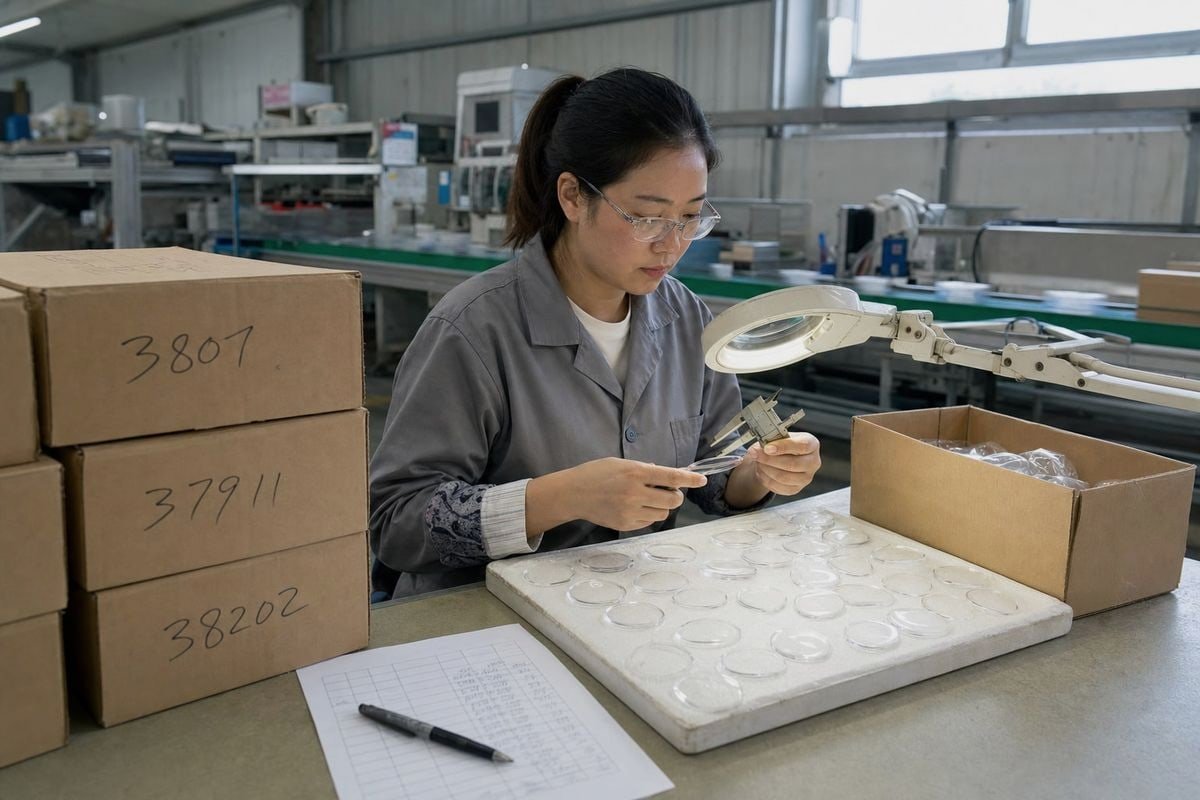
Some buyers argue that sunglasses are "simple" products and heavy verification is overkill. I understand the temptation, especially for a first trial order. But FDA treats sunglasses as regulated devices 7, and children's products draw extra scrutiny at customs and in recalls. The cost of verification is small. The cost of a detained container or a children's product recall is not. Treat verification as insurance you buy once per supplier, not per order.
Independent Checks You Can Run From Your Desk
| Verification Step | How to Do It | What It Catches |
|---|---|---|
| FDA registration lookup | Search the FDA establishment registration database for the factory's legal name | Fake or borrowed registration numbers |
| Import Alert 86-07 screening | Check FDA's Red List for firms that shipped substandard lenses | Factories with a history of detained eyewear |
| CPSIA report verification | Confirm the testing lab appears on the CPSC-accepted laboratory list | Reports from unaccredited labs |
| Reference checks | Ask for buyers in your region who ship to the U.S. | Suppliers with no real U.S. track record |
Then Verify On the Ground
Desk checks filter out the worst cases. The rest requires eyes on the factory. Commission a third-party audit, or use a hybrid model: remote document review first, then a focused onsite visit. During the visit, run one traceability exercise. Pick a random shipped lot from six months ago. Ask the factory to produce, within an hour, its incoming material records, in-process inspections, drop ball test certificate, final release signature, and shipping documents. A factory with real GMP discipline finds this exercise easy. A factory with staged paperwork cannot fake it live.
Finally, watch how the supplier communicates. When buyers audit us, we welcome the traceability drill, because our records exist for our own protection as much as theirs. A supplier who resists reasonable verification before your first order will resist accountability after it.
Conclusion
FDA GMP compliance is proven by records, not claims. Check registration, audit the quality system, demand lot-level drop ball certificates, and verify independently — then commit with confidence.
Notes de bas de page
1. Official FDA classification for sunglasses as low-risk medical devices. ↩︎
2. FDA requirement for all medical device facilities to register their establishment. ↩︎
3. Specific FDA regulation governing impact resistance requirements for eyeglass lenses. ↩︎
4. CPSC requirement for children’s products to undergo safety testing by accredited labs. ↩︎
5. International standard for quality management systems specific to medical devices. ↩︎
6. Information on chemical safety conc
Plus d'articles que vous pourriez aimer
1 août 2026
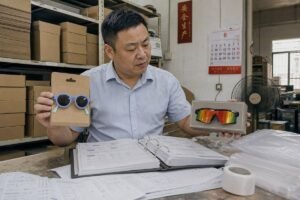
L'usine doit-elle gérer l'emballage et l'étiquetage des lunettes pour enfants, ou utiliser un fournisseur désigné ?
1 août 2026
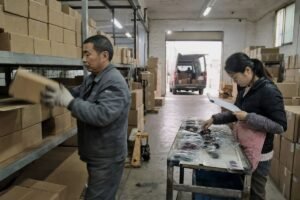
Entrepôt propre vs. exécution directe par le fournisseur : lequel réduit les coûts de retour pour les marques de lunettes pour enfants ?
1 août 2026
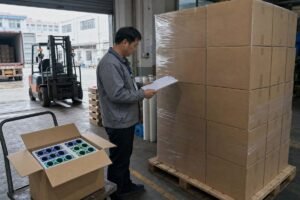
Entrepôt direct au port ou staging outre-mer : lequel permet d'économiser le plus sur l'expédition des lunettes pour enfants ?
Vous recherchez un partenaire fiable en lunetterie pour enfants ?
Explorez plus de 800 styles prêts et un support OEM/ODM complet adapté à votre marque.
Contactez-nous English
  Español de México
  Deutsch
  Français
  日本語
日本語  العربية
  Português do Brasil