How to Adjust TR90 Kids’ Optical Frames and How Long to Get Used to Glasses?
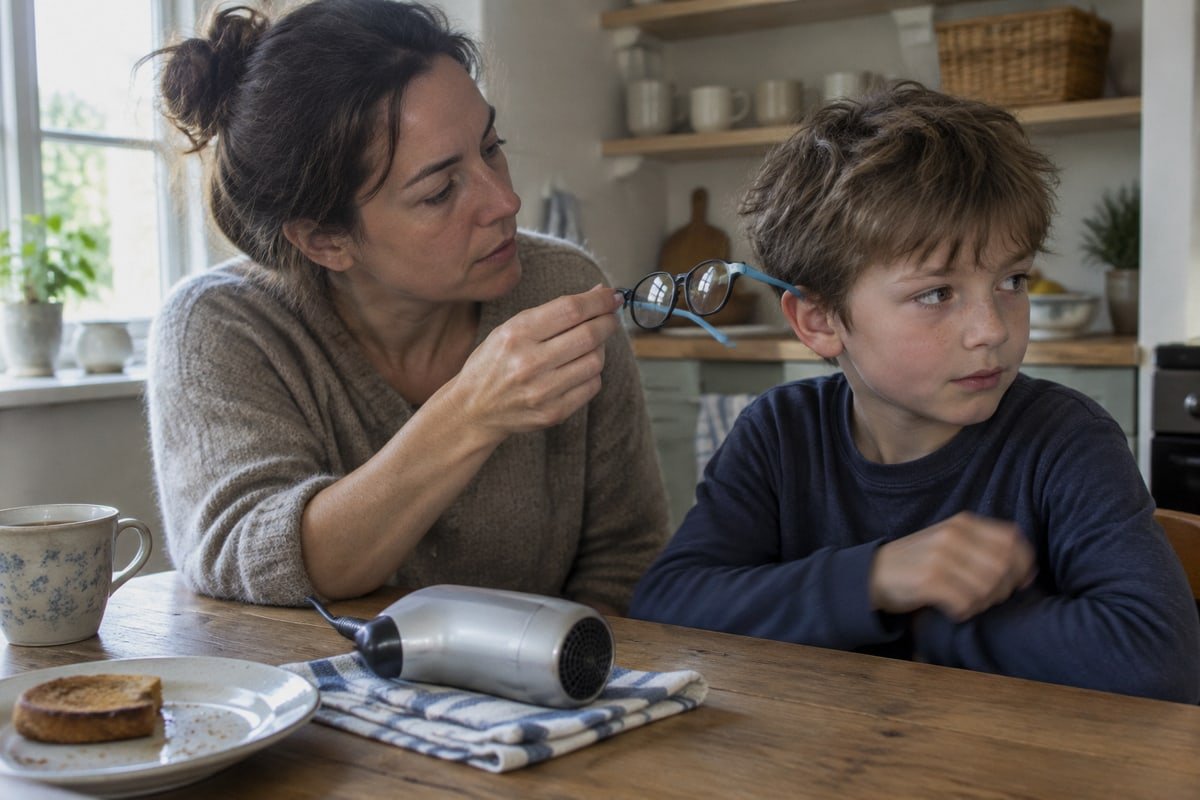
Buyers write to our Taizhou factory every week about [TR90 kids’ optical frames](https://okayeyewear.com/how-often-should-kids-tr90-tpee-optical-frames-be-adjusted-in-store-or-at-home/): the child pushes them up, complains, refuses to wear them. Small fixes and patience solve most cases.
Adjust TR90 kids’ optical frames with small changes: warm the temple tips with a hair dryer, curve them behind the ears, and tighten screws. Never force the frame body. Most children get used to glasses in two days to two weeks, though full visual adaptation can take several months.
The two questions are linked. A poor fit makes adaptation slower. A good fit still needs time. Below, I will separate the two so you can tell which one you are dealing with.
Comment ajuster des montures optiques pour enfants en TR90 à la maison sans les casser ?
On our QC line, we flex every TR90 temple outward before packing. That test taught me something useful for parents: TR90 bends, but it always wants to spring back.
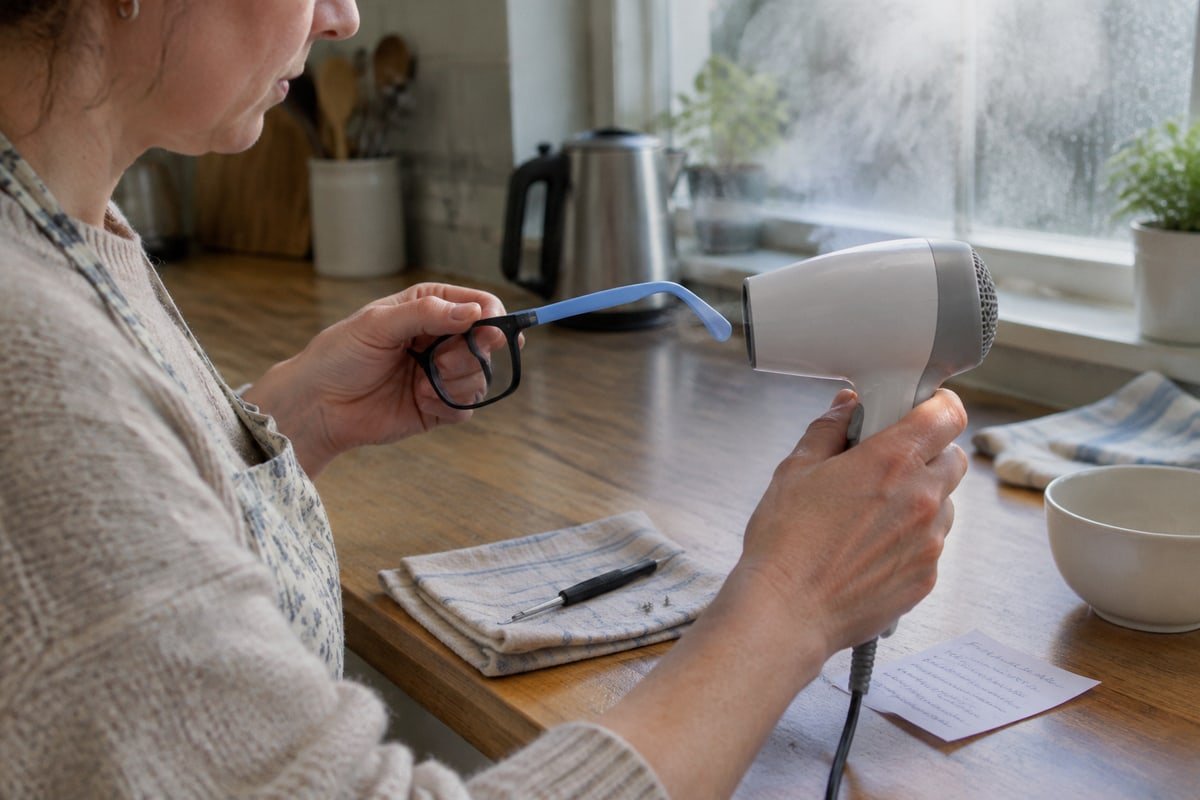
Réchauffez délicatement les embouts de branches avec un sèche-cheveux ou de l'eau chaude jusqu'à ce qu'ils soient légèrement assouplis, puis recourbez-les derrière les oreilles. Resserrez les vis de charnière desserrées à l'aide d'un petit tournevis. Ne pliez pas la face avant ou un pont fixe ; la résine à mémoire de forme TR90 reprend sa forme initiale et peut s'altérer sous l'effet de la chaleur répétée.
Le TR90 est un matériau thermoplastique 1 with strong elastic memory. It softens a little with gentle heat. That is the only window in which it will accept a new shape. Cold bending does not work. The temple simply returns to its molded position, or, in rare cases, it cracks near the hinge. So the rule at home is simple: heat gently, move slowly, change little.
What you can safely change at home
| Frame part | Home adjustable? | Comment faire |
|---|---|---|
| Flexible temple tips | Oui | Gentle heat, then curve down and inward behind the ear |
| Vis des charnières | Oui | Tighten a small amount with a precision screwdriver |
| Temple splay (width at the sides) | Limité | Gentle heat near the hinge, very small change only |
| Front rim and lens area | Non | Heat here can loosen the lenses |
| Fixed molded bridge | Non | Must fit correctly at the time of purchase |
| Nose pads (metal-arm styles only) | Yes, gently | Small squeeze or spread on the pad arms |
Step-by-step temple tip adjustment
- Wash and dry the frame so no grit scratches the surface.
- Warm one temple tip with a hair dryer on low, or dip it in warm, not boiling, water. Keep the heat moving.
- Test the tip with your fingertip. When it feels slightly soft, it is ready.
- Curve the tip gently downward and inward, following the shape of the ear.
- Hold the new shape for a few seconds while it cools.
- Put the frame on your child. Check that both sides sit level and the lenses are centered on the eyes.
Why I ask parents not to overdo it
Every heat cycle costs a little. Repeated heating can lead to material fatigue and, over time, brittleness. For active toddlers, I recommend silicone ear locks or a soft strap as the first fix. They hold the frame in place without touching the material at all. And on our fixed-bridge styles, nose pad adjustment is simply not available. That is why we keep roughly 800 existing styles in different bridge widths and lens sizes. The right bridge should be chosen, not forced.
Combien de temps faut-il habituellement à mon enfant pour s'habituer à de nouvelles lunettes ?
A distributor in Europe once asked me why parents returned frames after three days, calling them faulty. The frames were fine. The children simply had not finished adapting.
La plupart des enfants s'habituent à leurs nouvelles lunettes en deux jours à deux semaines. Les enfants hypermétropes ou astigmates peuvent avoir besoin de plusieurs semaines. Les conseils des hôpitaux pédiatriques accordent jusqu'à 18 semaines, et certains avis du NHS indiquent jusqu'à quatre mois de port à plein temps avant que la vision ne se stabilise complètement.

I hear two different answers from optical partners, and they seem to contradict each other. One group says a few days to two weeks. Another group, following pediatric hospital guidance, says up to 18 weeks of full-time wear. Buyers ask me which one is correct. Both are. They measure different things. The first is frame comfort. The second is visual adaptation. Separating them removes most of the confusion.
Frame comfort versus visual adaptation
| Étape | Délai typique | Ce qu'il implique |
|---|---|---|
| Frame comfort | Hours to a few days | Getting used to weight, temple pressure, and frame edges in peripheral vision |
| Simple prescription adaptation | Two days to two weeks | Brain adjusts to sharper focus and slight magnification changes |
| Hyperopia or astigmatism adaptation | Several weeks | Depth perception 2 and spatial mapping need more time to reset |
| Full-time wear settling (pediatric guidance) | Up to 18 weeks or four months | Eyes and brain fully accept the correction; vision improvement becomes stable |
| Blue-light or digital-first lenses, sensitive children | Extra 3 to 5 days | Slight color temperature shift needs sensory acclimation |
What normal adaptation feels like
In the first days, a child may say the floor looks tilted or curved. That is depth perception being recalibrated. Mild headaches and eye strain symptoms 3 are common early on. Blurry vision at certain distances can also appear as the eyes stop over-focusing. These signs should fade steadily, not get worse. A child with a high-cylinder prescription 4 for astigmatism may feel this more strongly and for longer. That is expected, not a fault.
How to shorten the adaptation period
Consistency matters more than anything else. The child should put the glasses on from the moment they wake up. Switching back and forth with an old pair resets progress each time. For children with astigmatism, simple proprioception games help. Tossing a beanbag or catching a soft ball trains the brain to map the new visual field faster. And if the frame itself feels fine while the vision still feels odd, that is a strong hint the issue is adaptation, not fit.
Why do TR90 frames feel different when I adjust them compared to regular plastic frames?
Choosing between TR90 and standard acetate for a kids' frame is a trade-off we weigh on every new mold. Acetate holds a bend. TR90 fights it and springs back.
TR90 is a thermoplastic memory resin. It flexes under pressure and returns to its molded shape, so it resists holding a new bend. Regular acetate or metal frames keep adjustments more easily. This memory makes TR90 durable and safe for kids but limits major reshaping.

| Le rétrécissement des montures en acétate est le problème caché des matériaux traditionnels. L'acétate perd lentement ses plastifiants, se contractant avec le temps. Ironiquement, un léger rétrécissement peut resserrer un verre — mais il rend également la monture cassante, et les fils de lunette cassants se fissurent au niveau de la gorge. Il faut également tenir compte de la contraction thermique différentielle : lorsqu'un enfant passe de la chaleur extérieure à la climatisation, la monture et le verre se contractent à des vitesses différentes. Les polymères flexibles absorbent cette inadéquation ; les matériaux rigides transfèrent le stress au siège du verre. | TR90 | Acetate (regular plastic) | Métal |
|---|---|---|---|
| Poids | Très léger | Moyen | Light to medium |
| Fléchit sous l'impact | Se plie et reprend sa forme | Can crack | Bends and may stay bent |
| Holds a new adjustment | Only small changes, with heat | Holds well after heating | Holds well, cold or warm |
| Heat needed to adjust | Gentle, brief | Moderate, longer | Généralement aucune |
| Bridge options | Mostly fixed, molded | Fixed, molded | Plaquettes de nez ajustables |
| Frame durability for active kids | Très élevé | Modérée | Modérée |
| Contact avec la peau | Generally hypoallergenic | Généralement bien | Depends on plating |
How memory resin behaves in your hands
When you heat acetate, it becomes soft and stays where you leave it. When you heat TR90, it becomes only slightly pliable, and it still pulls back toward its original shape while cooling. This is the memory in memory resin. On our production line, the shape is set during injection molding. The mold defines the temple angle, the bridge width, and the curve of the front. Everything after that is a small correction, not a redesign.
What this means for children's eyewear fitting
For a parent, this means two things. First, the frame survives being sat on, dropped, or pulled off sideways. Second, you cannot fix a wrong bridge width by bending. The fit has to be right at purchase. That is why we design our children's range around many size options rather than one adjustable shape. Our round matte-black front with sky-blue temples, for example, is molded in a specific bridge width. Our translucent pink gradient style uses a slightly different lens size. A buyer picks the sizes that suit their market. We also combine a TR90 front with TPEE temples on some styles. TPEE is even softer and wraps more gently around the head, so it reduces the need to adjust at all. Both materials are hypoallergenic frames 5 choices, which matters for children who wear glasses all day on sensitive skin.
What signs tell me my child's glasses still need adjusting after the first few days?
Years of returns taught us a simple lesson: a child never says the temple splay is wrong. They push the glasses up, tilt their head, or take them off.
Watch for glasses sliding down, red marks on the nose or behind the ears, frames sitting crooked, constant pushing up, or lenses touching eyelashes. Frame discomfort should fade within days. If these signs persist past the first week, the fit needs professional adjustment, not more time.
The hardest part for a parent is telling the difference between fit, prescription, and simple habit. A good children's eyewear fitting check looks at behavior, not just complaints. The table below is the same logic we use when a buyer reports a comfort issue on a sample.
Fit problem, prescription problem, or both?
| Sign you notice | Cause la plus probable | Que faire |
|---|---|---|
| Glasses slide down the nose | Fit: temples too loose or bridge too wide | Curve the temple tips more; add ear locks; consider a narrower bridge |
| Red marks on the nose | Fit: bridge too narrow or frame too heavy | Stop and see the optician; fixed bridges cannot be widened |
| Red marks or soreness behind the ears | Fit: temple tips curved too tightly | Gently relax the curve with light heat |
| La monture est de travers | Fit: one temple bent or hinge loose | Tighten screws; check both temples are level |
| Child pushes glasses up repeatedly | Fit, usually slipping | Adjust temple tips first, then reassess |
| Constant blinking or irritation | Fit: vertex distance too short, lenses touching eyelashes | Ask the optician to adjust; often mistaken for a wrong prescription |
| Blur or headache that fades each day | Adaptation, not fit | Keep wearing full time; recheck in two weeks |
| Blur or headache that does not improve after two weeks | Prescription or lens centering | Return to the optician for a recheck |
The vertex distance trap
One issue is easy to miss. If a frame sits too close to the face, the lenses can brush the eyelashes. The child blinks constantly and rubs their eyes. Many parents assume the prescription is wrong. In fact, the frame just needs to sit a little further out, or a slightly different front curve is needed. This is worth checking before any lens recheck.
When to go straight to the optician
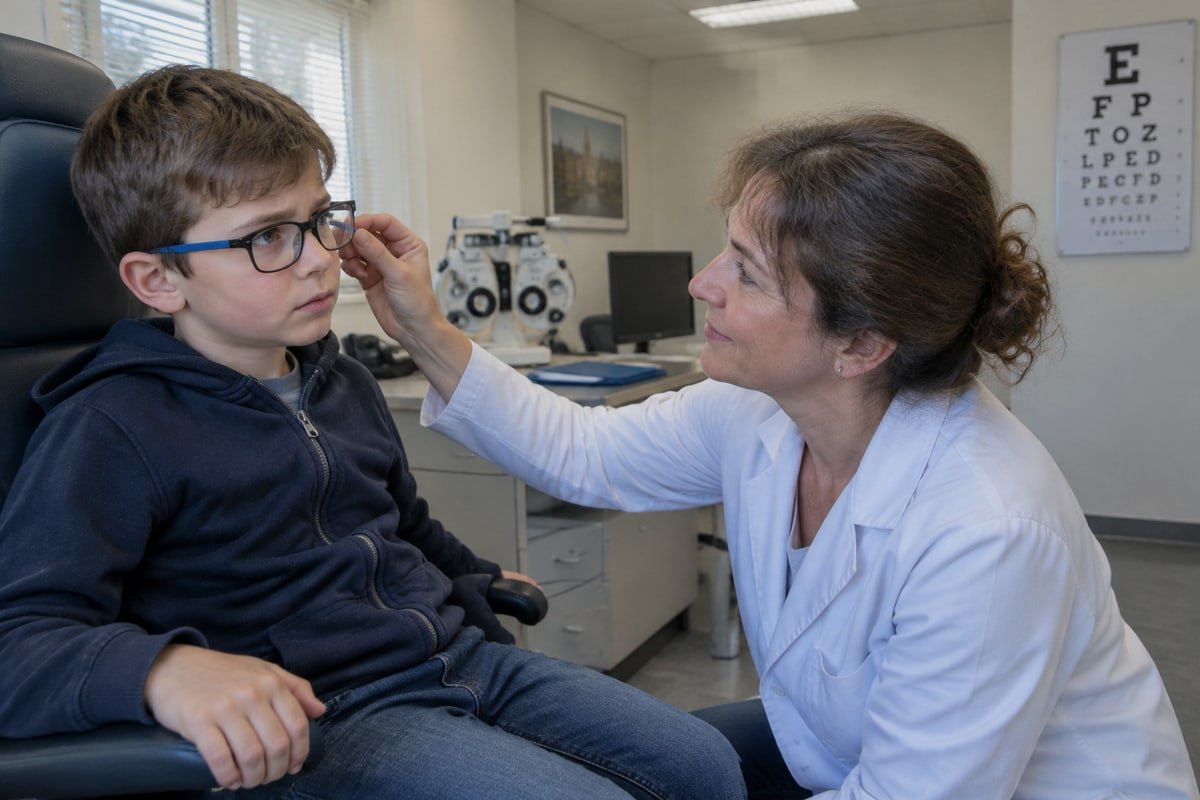
Do not wait if you see persistent skin marks, a frame that stays crooked after screw tightening, lenses that look off-center, or blur that does not change over two weeks of full-time wear. A professional has proper heating tools and can adjust the temple angle more precisely than a hair dryer allows.
Keeping wear consistent while you sort it out
Even during a fit problem, try to keep the glasses on. Praise the child for wearing them. Tie them to fun routines. A comfortable frame from a wide range of sizes helps here, but consistency is what turns a new pair into a habit.
Conclusion
Small, careful adjustments plus consistent wear solve most complaints. If pressure marks, slipping, or blur outlast the expected timeline, get a professional refit rather than forcing the frame.
Vous souhaitez vous procurer les produits mentionnés dans cet article ? Voir les détails et demander un devis ici :
Notes de bas de page
1. Technical overview of thermoplastic properties relevant to TR90 memory resin. ↩︎
2. Medical explanation of how the brain processes spatial vision and depth. ↩︎
3. Authoritative medical source for comprehensive eye strain symptoms and causes. ↩︎
4. Explains optical prescription components, including cylinder values for astigmatism. ↩︎
5. Definition of hypoallergenic standards for materials used in skin-contact products. ↩︎
Plus d'articles susceptibles de vous plaire

10 novembre 2026
Comment savoir si les montures optiques en TR90 pour enfants ne conviennent plus au visage d'un enfant en croissance ?

9 novembre 2026
Comment savoir quand les montures optiques en TR90 pour enfants doivent être remplacées ?

8 novembre 2026
Pourquoi les montures optiques TR90 pour enfants jaunissent-elles et deviennent-elles cassantes, et qu'est-ce qui accélère cela ?
Vous recherchez un partenaire fiable en lunetterie pour enfants ?
Découvrez plus de 800 modèles déjà développés et une assistance OEM/ODM complète adaptée à votre marque.
Contactez-nous English
 Español de México
 Deutsch
 Français
 日本語
 العربية
 Português do Brasil