Adjustable vs Integrated Nose Pads: Which Do Pros Prefer for Kids’ Frames?
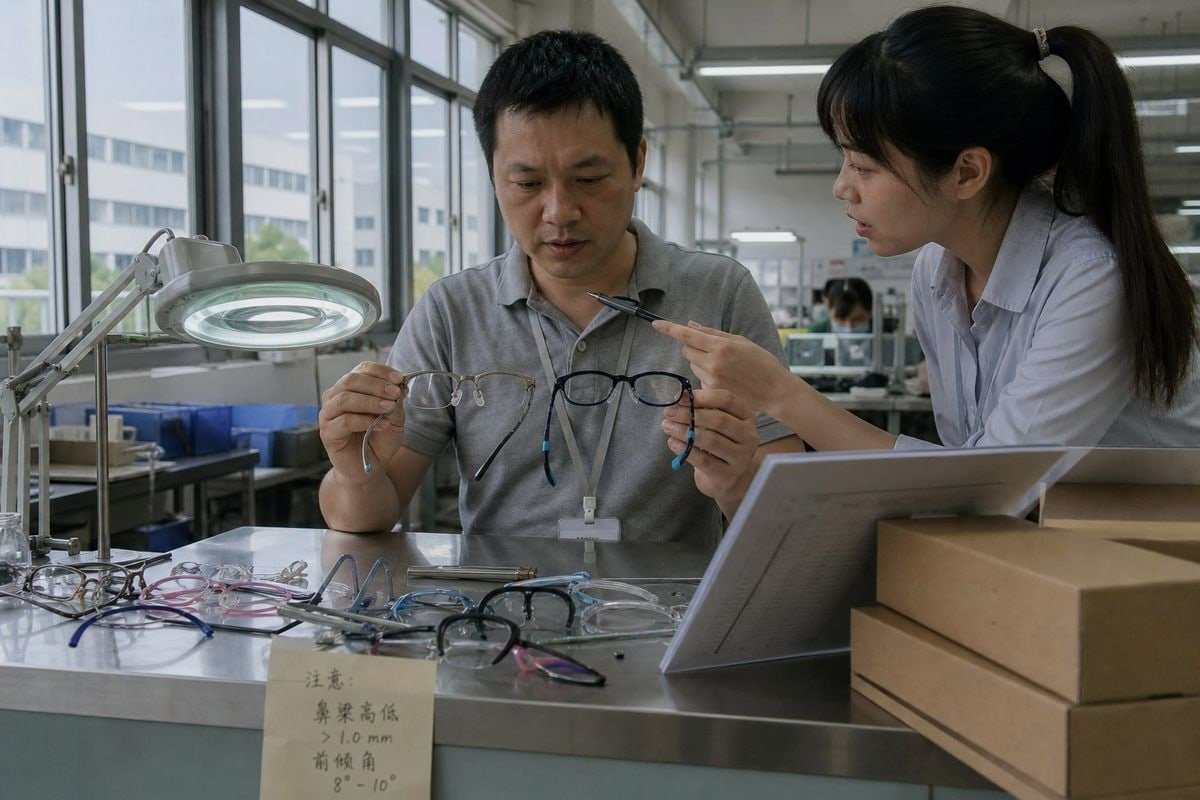
The adjustable vs integrated nose pads debate comes up in almost every buyer call at our Taizhou factory. Choose wrong, and [kids glasses slipping](https://okayeyewear.com/?p=5787) becomes your top complaint. Choose right, and returns drop sharply.
Professionals do not prefer one nose pad style universally for kids’ frames. Opticians favor adjustable nose pads for low or developing nose bridges and precise fit, while buyers favor integrated saddle bridges for durability and low maintenance. The right choice depends on the child’s bridge, activity level, and frame material.
That answer sounds simple, but the details matter for your product line. Let me walk you through how we help brands make this decision every week.
How do I decide between adjustable and integrated nose pads for my kids' eyewear line?
Last spring, a European baby-brand buyer asked our team to swap fixed bridges for adjustable pads across her whole range. We talked her out of it — and her return rate thanked us.
Decide based on three factors: your target age group, your frame material, and your market's typical nose bridge shape. Adjustable nose pads suit metal frames and low-bridge markets; integrated bridges suit TR90 and acetate frames for active toddlers and younger children who need durability.

The core difference is simple. Adjustable nose pads 1 sit on small metal arms. An optician can bend those arms to change the frame's height, tilt, and distance from the face. Integrated nose pads — often called a saddle bridge — are molded directly into the frame. What you mold is what the child wears. There is no fine-tuning after production.
Here is the quick comparison we share with new buyers:
| Facteur | Adjustable Nose Pads | Integrated / Saddle Bridge |
|---|---|---|
| Fit control | Excellent, tunable after purchase | Fixed at manufacturing |
| Durability | Moving parts can loosen | Very rugged, nothing to break off |
| Maintenance | Needs periodic tightening | Almost none |
| Typical materials | Metal, titanium frames | TR90, acetate, injection-molded plastic |
| Weight distribution | Two contact points | Broad, even surface area |
| Best age fit | School-age and up | Toddlers and rough-and-tumble kids |
Match the pad to the frame material, not the trend
In our experience developing roughly 800 existing styles, the frame material usually decides the question for you. TR90 and TPEE frames 2 — our specialty — are almost always built with integrated bridges. The flexible material molds into a smooth saddle bridge that spreads weight evenly. Metal kids' frames, which we produce less often, nearly always carry adjustable silicone nose pads 3 because the rigid material cannot conform to a small nose on its own.
Think about your buyer's aftercare reality
One more question we ask brands: who adjusts the glasses after sale? If your product sells through optical shops with trained staff, adjustable pads are safe. If you sell online or through toy and accessory retail, an integrated bridge with the correct geometry is far more forgiving. Nobody at home owns pad-adjustment pliers.
Which nose pad style offers better comfort and safety for young, active children?
During drop testing on our 5S-managed workshop floor, one pattern repeats: frames with fewer moving parts survive rough handling better. But comfort testing tells a more nuanced story.
For young, active children, integrated saddle bridges generally offer better safety and durability because there are no small parts to loosen or snag. However, adjustable silicone nose pads offer better comfort for kids with flat or low nose bridges, since fixed bridges cannot adapt to slippage.

Comfort and safety pull in slightly different directions here, so let's break them apart.
Comfort: pressure distribution vs pressure points
An integrated saddle bridge rests across a wide area of the nose. That spreads the frame's weight and avoids the distinct pressure points glasses with hard pads can create. A pediatric eye-care principle we design around is this: most kids' noses have not developed enough to form a stable bridge yet. So a broad, soft contact surface usually feels better to a small child — provided the bridge height actually matches the face.
Adjustable pads concentrate weight on two small contact patches. When adjusted correctly, they hold the frame precisely where the lenses work best. When adjusted poorly, they dig in, leave red marks, and make kids refuse to wear their glasses. Children with sensory sensitivities often tolerate a smooth, integrated design better for exactly this reason. The consistent, seamless feel avoids the two distinct touch points that some kids find irritating.
Safety: what happens during play
Now consider a six-year-old on a playground. Adjustable pads sit on thin metal arms. A ball to the face can bend those arms into the skin. Pads can also detach and become small loose parts — something every children's product buyer worries about. This is why our TR90 and TPEE frames use molded-in bridges with anti-slip nose grips formed from the flexible material itself. Nothing detaches. Nothing bends into the face. The frame flexes and returns to shape.
Material matters as much as design
Whichever style you choose, silicone nose pads or silicone-texture contact zones are the standard recommendation for children. Silicone is soft, hypoallergenic, and naturally grippy on skin. On our frames with TPEE temples, we pair a soft saddle bridge with cable-style ear hooks, so eyewear comfort and retention come from the whole frame system, not the nose alone.
What do professional buyers and opticians typically prefer when sourcing kids' frames?
A distributor from Japan once told me his opticians and his retail buyers wanted opposite things from the same frame order. That tension defines this whole question.
Opticians typically prefer adjustable nose pads because they enable precise eyeglass fitting for kids and correct optical center alignment. Professional buyers and distributors often prefer integrated bridges for children's frames durability, fewer warranty claims, and simpler inventory. Most pros now stock both, matched to age and market.
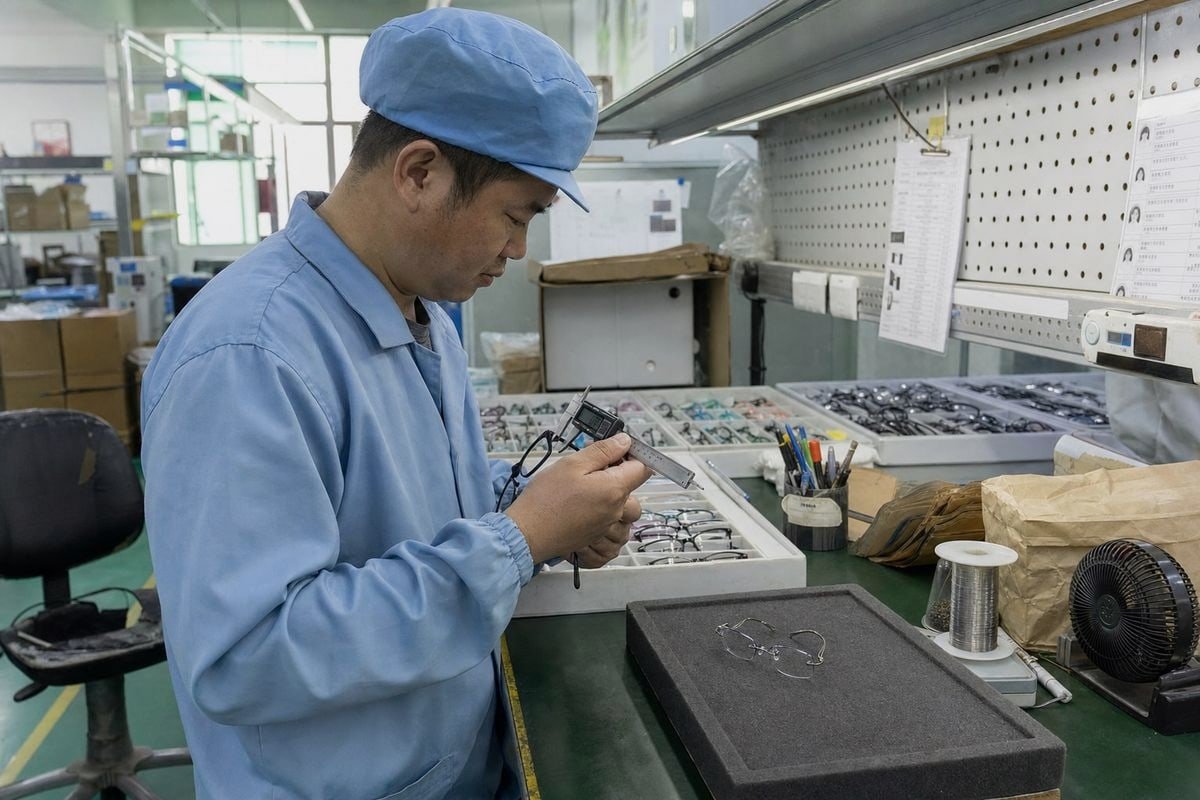
The professional world is genuinely split, and understanding why helps you position your line correctly.
Why fit-focused professionals lean adjustable
Pediatric optometrist recommendations consistently stress one thing: the child must look through the optical center of the lens, not over it or under it. For children with higher prescriptions or astigmatism, a frame that sits a few millimeters too low degrades vision and causes eye strain. Adjustable pads let the optician move the frame in height, angle, and distance from the face. That customizable fit is why prescription-focused retailers default to adjustable pads for school-age children — especially in markets with predominantly low or flat nose bridge shapes, where fixed bridges tend to slide.
Why durability-focused buyers lean integrated
Distributors and brand buyers see the other side: returns, repairs, and reviews. Integrated bridges have no screws to loosen, no silicone pads to yellow or fall off, and no crevices where dirt and skin oils accumulate. Frames with smooth, integrated designs are also easier to clean — a real selling point for parents. And for older kids and teens, the cleaner, streamlined look of a fixed bridge encourages consistent wear, which is half the battle with young patients.
How the preferences actually break down
| Professional | Typical Preference | Main Reason |
|---|---|---|
| Pediatric opticians | Adjustable pads | Optical center alignment 5, nose bridge fit |
| Optical retail chains | Mixed by age | Fit for prescriptions, durability for toddlers |
| Kids' brand buyers | Integrated bridges | Fewer complaints, easier care, clean aesthetics |
| Sports eyewear buyers | Integrated + retention strap | Impact safety, no detachable parts |
| Low-bridge-fit markets | Adjustable or raised saddle | Prevents kids glasses slipping down the face |
From our export experience across 20+ countries, the smartest buyers do not pick a side. They order integrated-bridge TR90 styles for ages 2–7 and add adjustable-pad or low-bridge-fit options for older children and specific regional markets.
Can I customize nose pad options through OEM/ODM manufacturing for my brand?
When we tooled a raised saddle bridge variant for an Australian client's low-bridge market, the sample-to-approval cycle took just two rounds. Customization here is more accessible than most buyers assume.
Yes. Through OEM/ODM manufacturing you can customize bridge height, saddle width, nose pad material, anti-slip texture, and pad style per SKU. Factories with existing molds — like our 800-style library — let you adjust nose fit options without heavy new-mold investment.
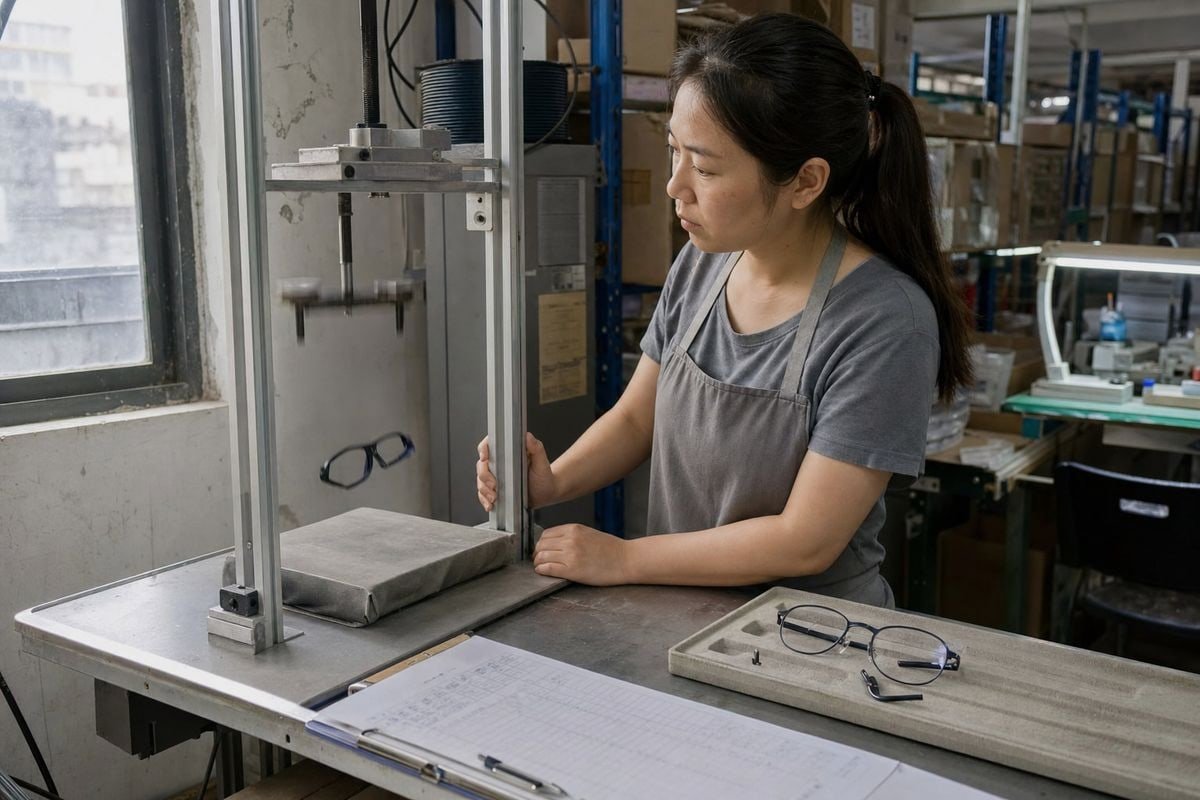
Nose fit is one of the highest-value customizations a kids' brand can make, because it directly attacks the number one complaint category: slipping and discomfort.
What you can customize, and at what cost level
Not all changes carry the same tooling burden. Here is how we typically frame it for buyers:
| Personnalisation | Typical Approach | Investment Level |
|---|---|---|
| Bridge height / saddle shape | Select from existing mold library | Low — style selection only |
| Anti-slip texture on bridge | Mold surface finishing | Low to moderate |
| Silicone nose pad material grade | Component swap on metal styles | Bas |
| Low-bridge-fit variant of a style | Mold modification or new insert | Modéré |
| Fully new bridge geometry | New mold development | Higher — for proven volume |
This tiered approach is why we built a library of roughly 800 existing styles. A new brand can launch with proven bridge geometries, test which fit profiles sell in its market, and only invest in custom tooling once the data justifies it. That lowers risk dramatically compared with cutting molds on day one.
A practical development path we recommend
- Define your target ages and regions, including whether you need low-bridge-fit geometry.
- Sample three to five existing styles with different saddle bridge heights and widths.
- Wear-test on real children in your market, watching for slippage and red marks.
- Lock your fit spec, then customize colors, logos, lenses, and retail-ready packaging around it.
- Scale, and consider a custom bridge mold only for hero styles.
Our engineers handle the flexible-material side — TR90 fronts, TPEE temples, molded anti-slip contact zones — while your team focuses on brand, colorways, and market positioning. That division of work is what OEM/ODM partnership should look like: you own the brand, we own the fit engineering and quality control behind it.
Conclusion
Pros match the nose pad style to the child, not the trend. Get the nose bridge fit right first, then optimize durability — and choose a factory partner who engineers both.
Notes de bas de page
1. Explains how adjustable nose pads work and their purpose for a tailored fit. ↩︎
2. Provides definitions and key characteristics of TR90 and TPEE as eyewear frame materials. ↩︎
3. Highlights the benefits and properties of silicone as a recommended material for nose pads. ↩︎
4. Defines integrated saddle bridges and their design for even weight distribution and comfort. ↩︎
5. Explains the definition and critical importance of optical center alignment for clear vision. ↩︎
Plus d'articles que vous pourriez aimer

août 5, 2026
Bio-Based vs Regular Cellulose Acetate: What's the Difference for Kids' Frames?

août 5, 2026
How Recyclable Are Kids' Optical Frame Materials, and What Eco-Friendly Alternatives Exist?
août 5, 2026
Do Kids Optical Frames Whiten or Age in Storage, and How to Control Warehouse Conditions?
Vous recherchez un partenaire fiable en lunetterie pour enfants ?
Explorez plus de 800 styles prêts et un support OEM/ODM complet adapté à votre marque.
Contactez-nous English
  Español de México
  Deutsch
  Français
  日本語
日本語  العربية
  Português do Brasil