Quel taux de blocage de la lumière bleue est le meilleur pour le port à long terme des lunettes pour enfants ?
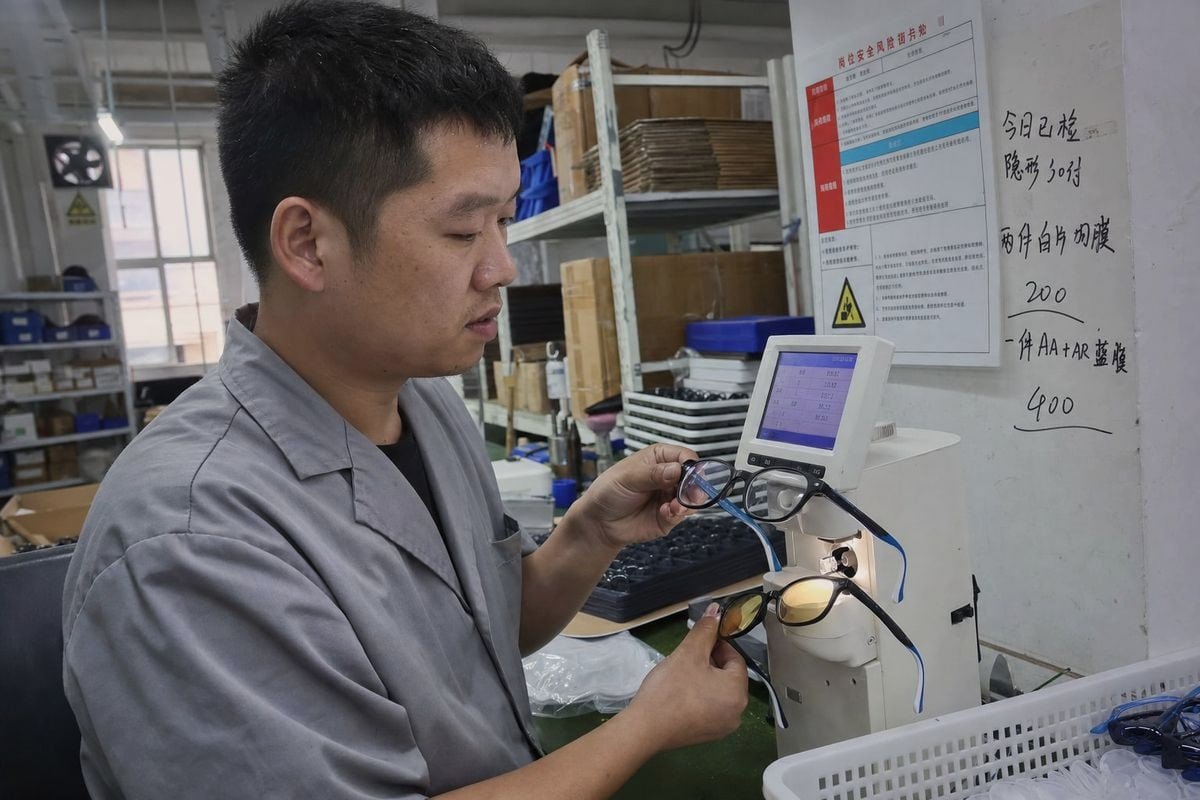
Les acheteurs me demandent chaque semaine quel est le meilleur taux de blocage de la lumière bleue pour les lunettes pour enfants. Beaucoup pensent qu'un chiffre plus élevé est plus sûr. Sur notre chaîne de production à Taizhou, nous avons vu cette hypothèse se retourner contre nous. Les verres trop teintés déforment les couleurs, les enfants refusent de les porter et les marques reçoivent des retours. La solution consiste à adapter le taux de blocage à la façon dont les enfants utilisent réellement les lunettes.
Le meilleur taux de blocage de la lumière bleue pour les lunettes pour enfants portées à long terme est de 30 à 50 % pour la journée et l'école, délivré par des verres clairs ou presque clairs. Des verres ambrés plus puissants, à 90 à 99 %, devraient être réservés aux 2 à 3 heures précédant le coucher, et non à un port toute la journée.
Cette réponse courte cache beaucoup de nuances. Les pourcentages de blocage sont mesurés différemment selon les marques. Les yeux des enfants réagissent également à la lumière bleue différemment des yeux des adultes. Laissez-moi vous expliquer ce que je dis à nos acheteurs B2B, étape par étape.
Quel pourcentage de blocage de la lumière bleue devrais-je rechercher lors de l'achat de lunettes pour enfants ?
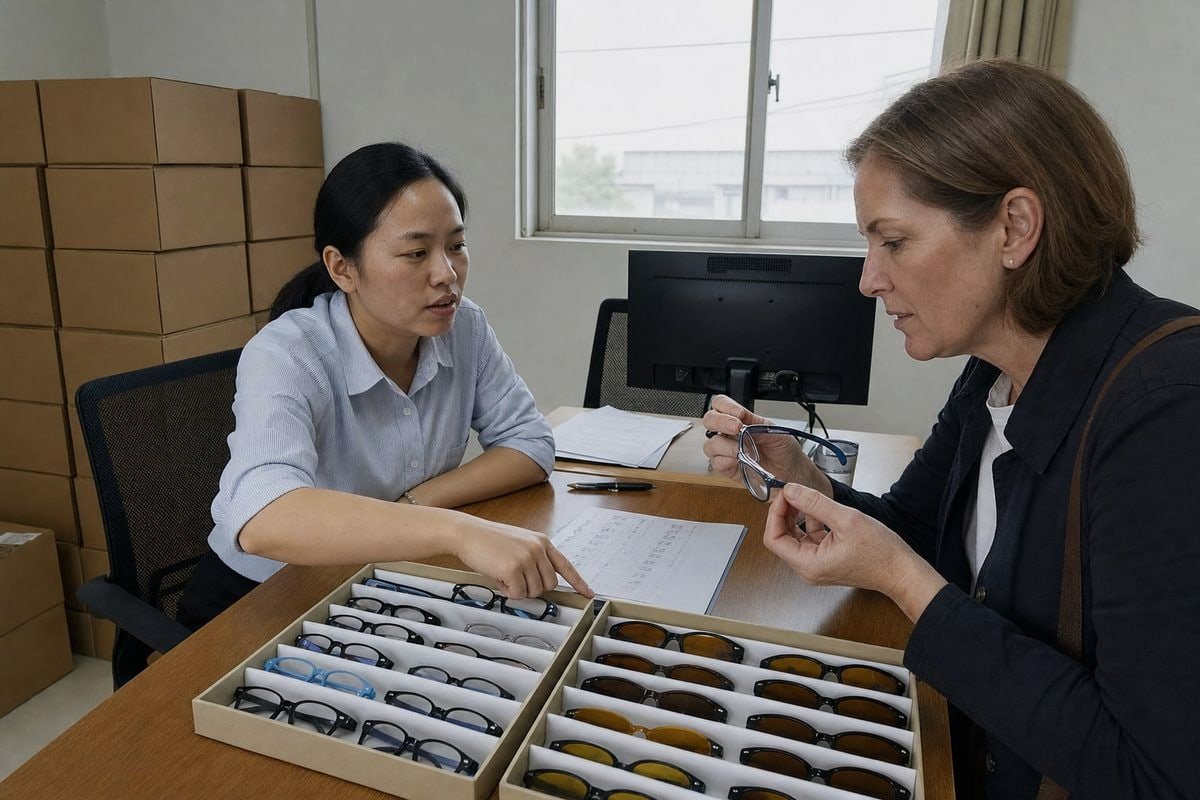
Une responsable des achats d'Australie nous a un jour demandé un devis pour des verres à 99 % de blocage pour une gamme destinée aux écoliers. Nous l'en avons dissuadée. Voici pourquoi notre usine recommande une approche à deux niveaux à la place.
Source deux niveaux : verres transparents avec 30–50% de blocage de la lumière bleue pour un usage de jour et scolaire, et verres ambrés avec 90–99% de blocage pour les produits réservés à la soirée. Un seul verre polyvalent impose un compromis qui nuit soit à la précision des couleurs, soit à la protection.
La raison pour laquelle le " meilleur " change selon le moment de la journée est due à deux problèmes différents. Pendant la journée, l'objectif est le confort — réduire la fatigue oculaire numérique 1 des écrans sans changer l'apparence du monde. Le soir, l'objectif est le sommeil — prévenir la suppression de la mélatonine 2 des écrans avant le coucher. Un seul verre ne peut pas bien remplir ces deux fonctions.
Le cadre d'approvisionnement à deux niveaux
Voici le cadre que nous partageons avec les marques qui développent une gamme pour enfants bloquant la lumière bleue :
| Cas d'utilisation | Taux de blocage recommandé | Teinte du verre | Pourquoi ça marche |
|---|---|---|---|
| École, devoirs, écrans diurnes | 30–50% | Clair ou presque clair | Préserve la perception des couleurs, conformité facile |
| Jeux du soir, télévision avant le coucher | 90–99% | Ambre/orange | Protège le rythme circadien 3 et l'endormissement |
| Port extérieur diurne | Protection UV400 avant tout | Options grises, polarisées | La protection solaire est plus importante que le filtrage des écrans à l'extérieur |
Certaines marques insistent sur " au moins 50 % " même pour les verres diurnes. D'après notre expérience d'exportation dans plus de 20 pays, c'est là que la distorsion des couleurs commence à devenir perceptible pour les enfants et les parents. La plage de 30 à 50 % est le point idéal pratique : suffisamment de filtrage sur le spectre de la lumière HEV pour atténuer l'exposition aux écrans, suffisamment bas pour que le verre reste visuellement neutre pour un enfant assis en classe pendant six heures.
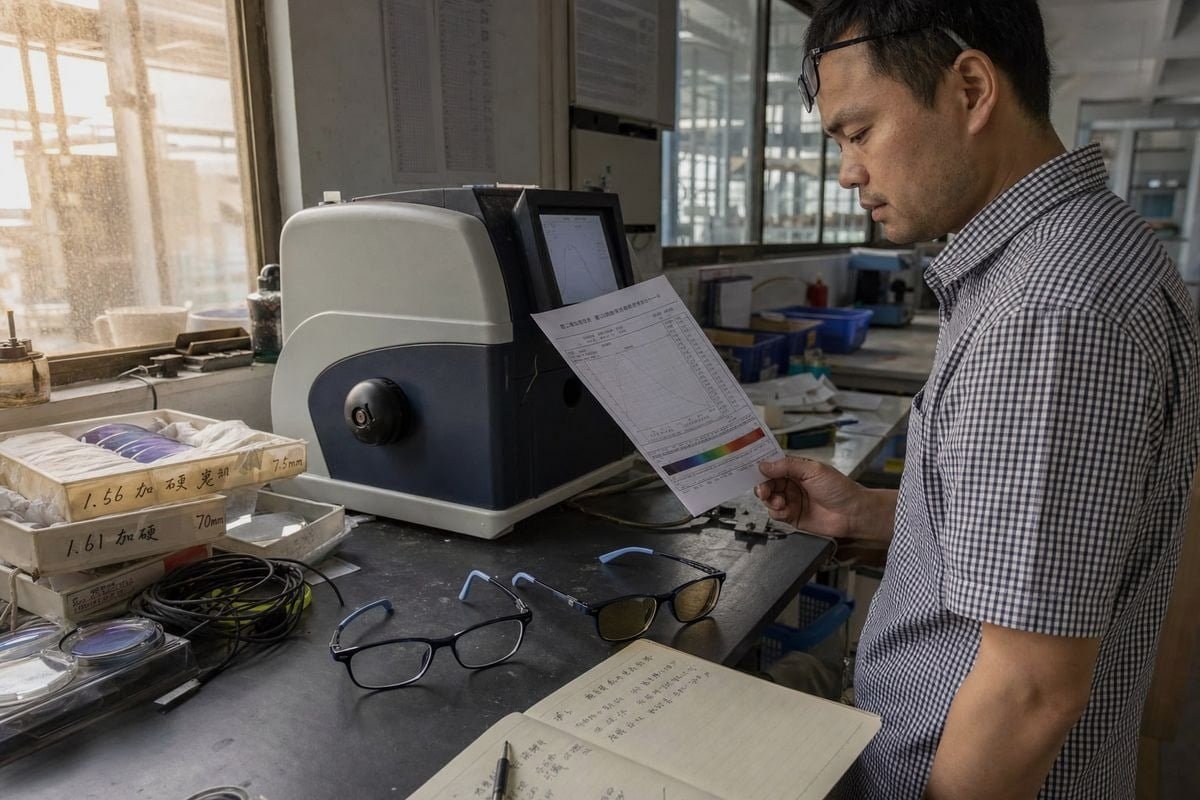
Une note d'approvisionnement supplémentaire. Demandez à votre fournisseur si le pourcentage indiqué est mesuré à une seule longueur d'onde ou moyenné sur une plage comme 400-455 nm. Un verre peut bloquer 99 % à 400 nm mais seulement 33 % à 450 nm. Ce sont des chiffres honnêtes — mais ce n'est pas un seul chiffre. Demandez toujours la fiche de données spectrales, pas seulement l'affirmation principale.
Comment savoir si un verre anti-lumière bleue est sans danger pour mon enfant toute la journée ?
Lors d'un audit de contrôle qualité dans notre atelier 5S l'année dernière, nous avons rejeté un lot de verres qui avait passé la spécification de blocage mais échoué à notre contrôle de clarté. Cela nous a appris que la sécurité est plus qu'un pourcentage.
Une lentille de lumière bleue est sûre pour une utilisation toute la journée lorsqu'elle transmet au moins 90% de lumière visible, conserve les couleurs neutres, offre une protection UV400, comprend un revêtement antireflet et utilise un matériau résistant aux chocs comme le polycarbonate. Les teintes ambrées prononcées ne conviennent pas à une utilisation continue pendant la journée.
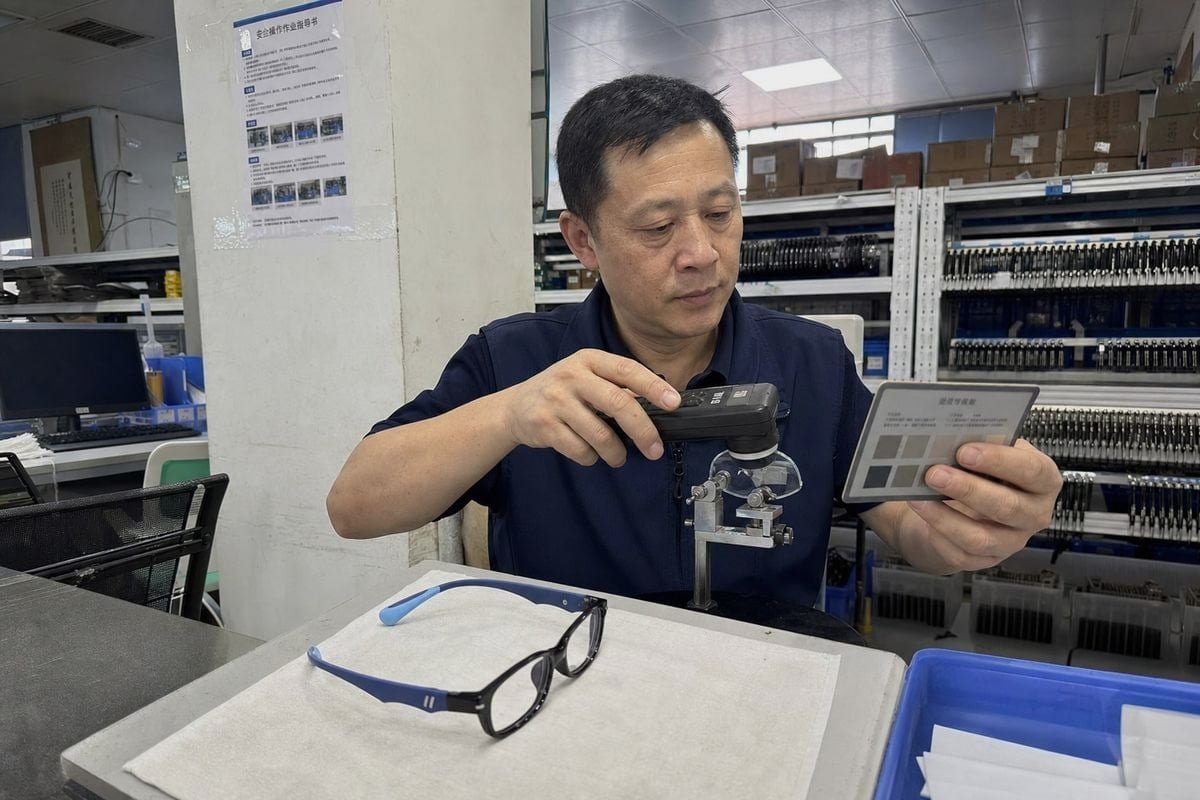
La sécurité pour un enfant portant des lunettes huit heures par jour est une liste de contrôle, pas une seule spécification. Je la divise en quatre vérifications que tout acheteur peut effectuer avant de passer une commande.
La vérification de sécurité en quatre points pour toute la journée
Premièrement, vérifiez la transmission de la lumière visible. Un verre quasi clair bien conçu peut transmettre plus de 91 % de la lumière visible tout en filtrant fortement les longueurs d'onde bleues les plus courtes et les plus énergétiques. Si le verre " clair " d'un fournisseur semble visiblement jaune, sa transmission est probablement trop faible pour un usage en classe.
Deuxièmement, vérifiez la neutralité des couleurs. Les enfants font de l'art, lisent des tableaux codés par couleur et apprennent des indices visuels à l'école. Un verre qui décale les blancs vers le jaune interfère avec tout cela. C'est le cœur du débat entre verres ambrés et verres clairs : l'ambre appartient au soir, le clair appartient à la lumière du jour.
Troisièmement, vérifiez la pile de revêtements. Le filtrage de la lumière bleue seul ne résout pas le syndrome de la vision informatique. La plupart de la fatigue oculaire numérique provient de l'éblouissement, de la réduction du clignement des yeux et des mauvaises habitudes de temps d'écran — pas de la lumière bleue elle-même. Un anti-reflet sur la surface arrière réduit la composante d'éblouissement, c'est pourquoi nous associons le traitement antireflet à chaque verre bloquant la lumière bleue que nous produisons.
Quatrièmement, vérifiez la résistance aux chocs. Les enfants font tomber, s'assoient et jettent leurs lunettes. Sur notre chaîne, nous combinons des montures TR90 flexibles et des branches TPEE avec des matériaux de verres résistants précisément parce qu'un verre " sûr " dans une monture fragile n'est pas sûr du tout. La rétention du verre sous torsion est quelque chose que nous testons sur chaque style de monture pour enfants avant qu'il ne rejoigne notre catalogue.
Une mise en garde honnête que je donne à chaque acheteur : les lunettes anti-lumière bleue n'empêcheront pas la myopie. La myopie infantile 4 est principalement causée par la fatigue due au travail de près et à un manque de lumière du jour à l'extérieur. Positionnez le filtrage de la lumière bleue comme une caractéristique de confort et de sommeil, jamais comme un remède contre la myopie.
Trop de blocage de la lumière bleue peut-il affecter la précision des couleurs ou le développement de la vision de mon enfant ?
Le compromis que nous pesons le plus soigneusement lors du développement d'un nouveau verre pour enfants est la protection par rapport à l'exposition à la lumière naturelle. Plus de filtrage n'est pas gratuit. Cela coûte quelque chose à l'enfant, et les acheteurs méritent de savoir quoi.
Oui. Le blocage au-dessus d'environ 65% pendant la journée déforme la perception des couleurs, et une sur-filtration chronique peut interférer avec l'emmétropisation — le processus naturel par lequel l'œil d'un enfant régule sa propre croissance. Cela peut également émousser la lumière bleue diurne qui soutient la vigilance, l'humeur et le rythme circadien.
Les yeux des enfants ne sont pas de petits yeux d'adultes. Le cristallin d'un enfant est très transparent et manque du jaunissement naturel que les adultes développent avec l'âge. Cela signifie que davantage de lumière bleue atteint la rétine d'un enfant — ce qui semble être un argument pour un blocage maximal. Mais cela va dans les deux sens. Cette même transparence signifie que les enfants sont également plus sensibles aux signaux bénéfiques que transporte la lumière bleue.
Pourquoi une partie de la lumière bleue est une bonne lumière bleue
Toutes les longueurs d'onde bleues ne se comportent pas de la même manière. La bande la plus perturbatrice à haute énergie des écrans LED atteint son maximum autour de 415–455 nm. Les longueurs d'onde bleues-turquoise plus longues, plus proches de 460–500 nm, aident à réguler la vigilance, l'humeur et le cycle veille-sommeil pendant la journée. Une lentille qui aplatit tout le spectre bleu supprime le bon avec le mauvais.
| Bande de longueur d'onde | Caractère | Meilleure approche diurne |
|---|---|---|
| 400–415 nm | Énergie la plus élevée, proche des UV | Bloquer agressivement |
| 415–455 nm | Pic HEV perturbateur des écrans LED | Filtrer modérément (30–50 %) |
| 460–500 nm | Bleu-turquoise bénéfique | Laisser passer |
C'est pourquoi le filtrage par encoche devient la norme émergente dans les meilleures lentilles. Au lieu d'un pourcentage brut, la lentille cible le pic toxique des LED tout en laissant passer la lumière bénéfique. Cela explique également pourquoi les chercheurs parlent de maintenir un rapport spectral sain entre le bleu et le rouge plutôt que de simplement maximiser la lumière totale bloquée.
Il y a aussi une préoccupation développementale. Emmétropisation 5 — le processus de croissance auto-calibré de l'œil pendant l'enfance — dépend d'un apport visuel riche et complet. Teinter fortement le monde d'un enfant pendant huit heures par jour, chaque jour, est une expérience incontrôlée que nous conseillons à nos partenaires de marque de ne pas mener. Réservez la lentille ambre forte pour les deux ou trois heures avant le coucher, où la suppression de la mélatonine est le véritable ennemi et où la fidélité des couleurs importe peu.
Quels matériaux et revêtements de lentilles dois-je demander à mon fabricant pour une protection fiable contre la lumière bleue ?
Un acheteur d'une marque japonaise pour bébés nous a envoyé une lentille d'un concurrent qui a perdu son revêtement après trois mois de nettoyage. Cet échantillon est maintenant sur mon bureau comme un rappel : les spécifications sur papier ne signifient rien sans les bons matériaux en dessous.
Demander un matériau de lentille en polycarbonate ou une absorption de la lumière bleue intégrée au substrat, une protection UV400 en standard, un revêtement antireflet multicouche, une couche durcie anti-rayures et des données de test spectrales à des longueurs d'onde spécifiques. Éviter les revêtements bleus bon marché en surface uniquement qui s'usent en quelques mois.
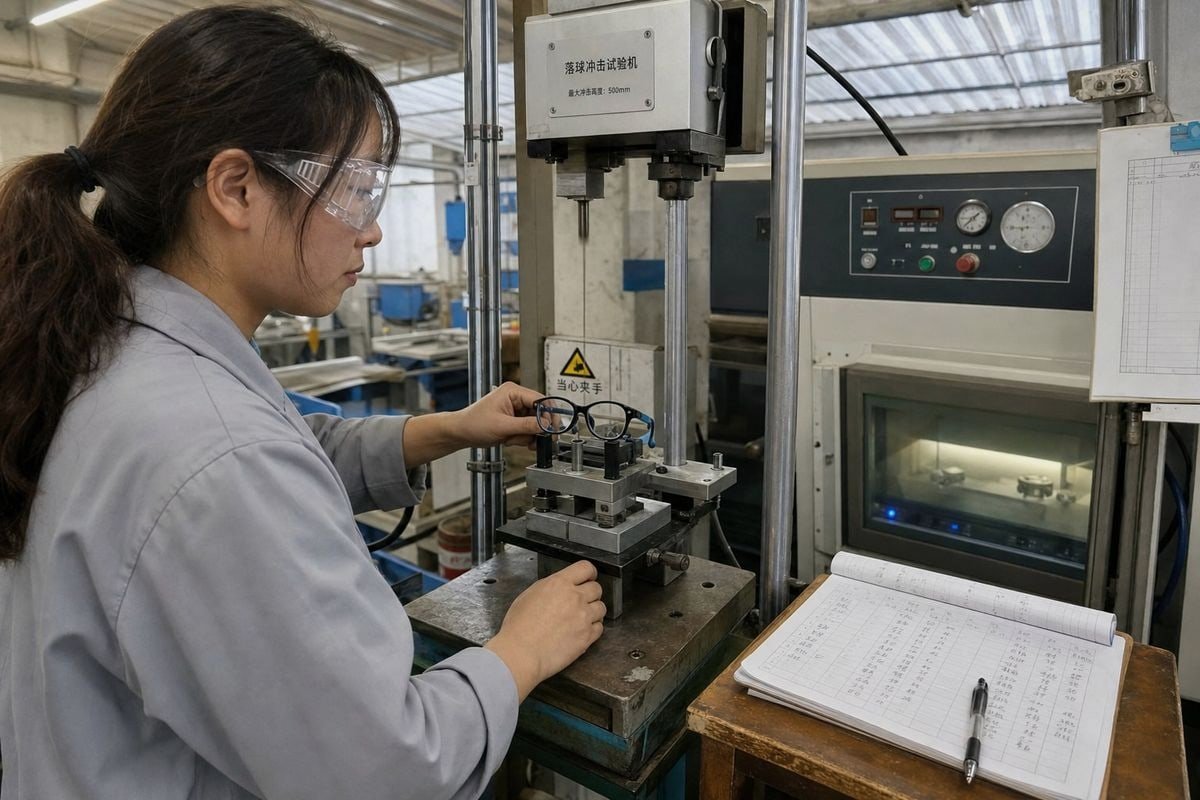
La question la plus importante à poser est de savoir si le filtre de lumière bleue est appliqué en surface ou intégré dans le substrat. Les revêtements de surface sont moins chers et donnent à la lentille un reflet bleuté, mais ils se dégradent avec le nettoyage, la sueur et les abus généraux que les enfants infligent. L'absorption par le substrat intègre les molécules de filtrage dans le matériau de la lentille lui-même. Cela coûte plus cher, mais la protection dure toute la vie de la lentille. Pour une utilisation à long terme, nous orientons toujours les acheteurs vers l'absorption par le substrat.
La fiche technique que nous recommandons
Voici la liste de demandes que nous suggérons aux marques d'inclure dans leur RFQ :
| Composant | Ce qu'il faut spécifier | Pourquoi c'est important pour les enfants |
|---|---|---|
| Matériau des verres | Polycarbonate 6 ou équivalent résistant aux chocs | Résistance aux chocs pour les enfants actifs |
| Méthode de lumière bleue | Absorption intégrée au substrat | Résiste au nettoyage quotidien et à la manipulation brutale |
| Protection UV | protection UV400 7 standard sur chaque lentille | Les UV sont un danger prouvé ; la lumière bleue est secondaire |
| Revêtement AR | Revêtement antireflet multicouche, des deux côtés | Réduit l'éblouissement à l'origine de la plupart de la fatigue oculaire numérique |
| Revêtement dur | Couche supérieure anti-rayures | Les enfants nettoient les lentilles sur leurs chemises et leurs manches |
| Preuve de test | Courbe de transmission spectrale, 400–500 nm | Vérifie les affirmations à 415, 430 et 450 nm |
N'oubliez pas la monture
Un taux de blocage élevé est compromis si la monture est mal ajustée. La lumière périphérique provenant de l'éclairage du plafond de la classe contourne complètement la lentille lorsque la monture est trop éloignée du visage ou glisse sur le nez. C'est là que notre expertise en matériaux flexibles prend tout son sens. Les faces en TR90 avec des branches en TPEE s'adaptent au visage de l'enfant, maintiennent la distance au sommet stable et résistent à être pliées en arrière — de sorte que la lentille reste là où elle peut faire son travail. Si vous lancez une nouvelle ligne, tester à partir d'un catalogue existant de styles de montures pour enfants éprouvés présente un risque beaucoup plus faible que de fabriquer de nouveaux moules autour d'un ajustement non vérifié.
Conclusion
Le meilleur taux de blocage de la lumière bleue pour les lunettes pour enfants n'est pas le plus grand nombre. C'est le filtre efficace le plus bas pour chaque cas d'utilisation.
Le blocage 99% pour un port toute la journée crée les problèmes mêmes qu'il promet de résoudre : couleurs déformées, faible conformité et lunettes laissées dans le sac à dos. La formule gagnante est plus simple. Spécifiez des verres clairs 30–50% pour la journée, des verres ambrés 90–99% pour le soir, et soutenez les deux avec un matériau en polycarbonate, protection UV400, un revêtement AR et de véritables données de test spectrales. Après 15 ans de fabrication de lunettes pour enfants pour des marques dans plus de 20 pays, mon conseil le plus important est le suivant : le meilleur taux de blocage de la lumière bleue pour les enfants est celui qu'ils porteront réellement — et cela change selon le moment de la journée. Si vous développez une gamme de lunettes anti-lumière bleue pour enfants et que vous souhaitez des échantillons avec des données spectrales vérifiées, notre équipe est heureuse de vous aider à bien faire les choses dès le premier coup.
Notes de bas de page
Contexte faisant autorité sur la fatigue oculaire liée aux écrans mentionnée dans l'article. ↩︎
Explique la science hormonale derrière l'exposition à la lumière bleue le soir et l'apparition du sommeil. ↩︎
Fiche d'information faisant autorité du NIH expliquant les rythmes circadiens et les horloges biologiques. ↩︎
Source de l'OMS sur la déficience visuelle pertinente pour la myopie et les affirmations sur le développement oculaire. ↩︎
Contexte sur le processus de croissance de l'œil au cœur de la discussion sur le développement de la vision. ↩︎
Contexte sur le matériau des verres résistant aux chocs recommandé pour les lunettes d'enfants. ↩︎
Orientations de la FDA sur les normes de protection UV pertinentes pour les exigences d'approvisionnement en verres. ↩︎
Plus d'articles que vous pourriez aimer
23 août 2026
Comment les lunettes pour enfants trop petites peuvent-elles être recyclées ou réutilisées ?

23 août 2026
Quelle est l'efficacité des matériaux biosourcés et recyclables dans les lunettes pour enfants ?
23 août 2026
Peut-on remplacer les verres après un changement de prescription pour les lunettes d'enfants ?
Vous recherchez un partenaire fiable en lunetterie pour enfants ?
Explorez plus de 800 styles prêts et un support OEM/ODM complet adapté à votre marque.
Contactez-nous English
  Español de México
  Deutsch
  Français
  日本語
日本語  العربية
  Português do Brasil