What to Do If a Lens Falls Out of Kids’ Sunglasses?
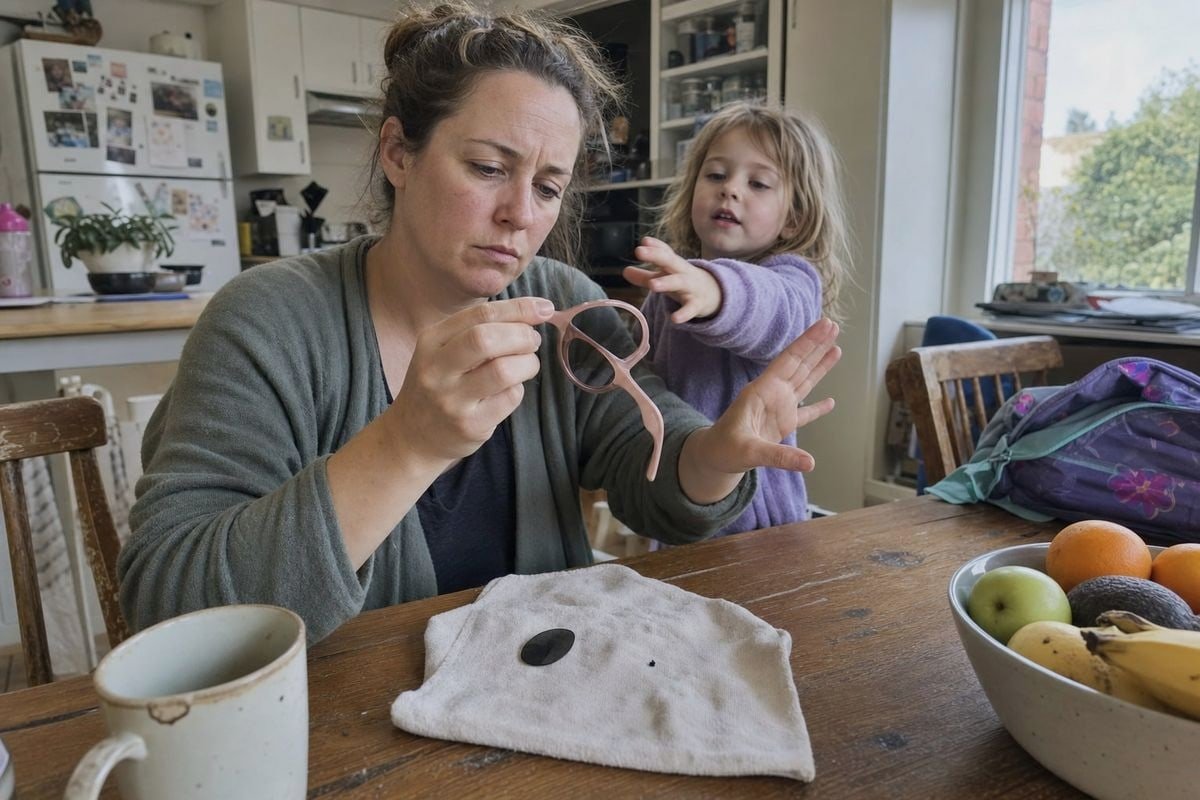
When a lens falls out of kids’ sunglasses, most parents panic OEM/ODM support 1. On our production line, we see exactly why this happens — and why the wrong fix makes it worse.
If a lens falls out of kids’ sunglasses, keep the glasses away from your child, inspect the frame and lens for cracks, clean both parts, and gently press the lens back into an undamaged frame. If the frame is cracked or the lens will not stay, replace or repair professionally.
That is the short answer. But the right fix depends on the frame type, the damage, and your child’s age. Let me walk you through each step below.
What causes lenses to fall out of kids' sunglasses in the first place?
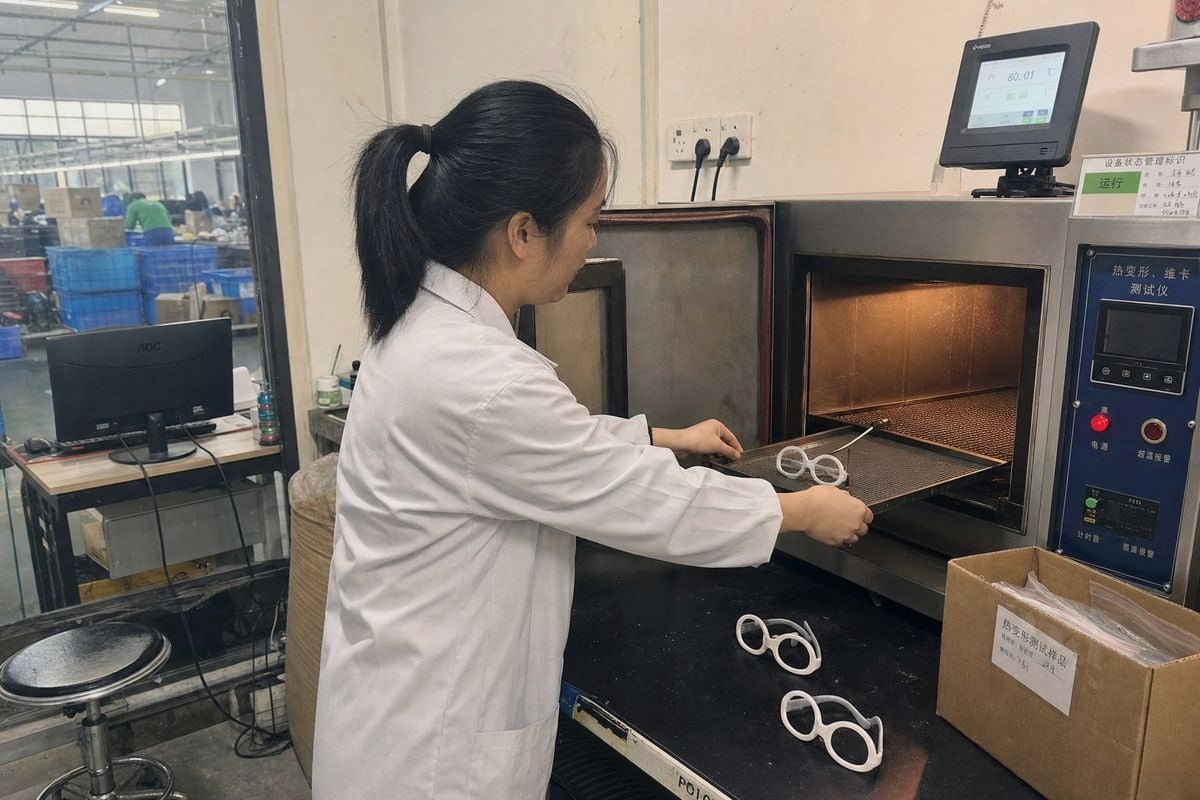
During a quality audit in our Taizhou workshop last year, we pulled apart hundreds of returned frames from a buyer's warranty claims. Almost every lens pop-out traced back to one of a few predictable causes.
Lenses fall out of kids' sunglasses because of loose hinge screws, warped or worn lens grooves, frames that lost tension from heat or rough handling, poor factory lens-fitting tolerances, and impacts during play. Cheap rigid plastics crack; flexible materials like TR90 hold lenses more reliably.
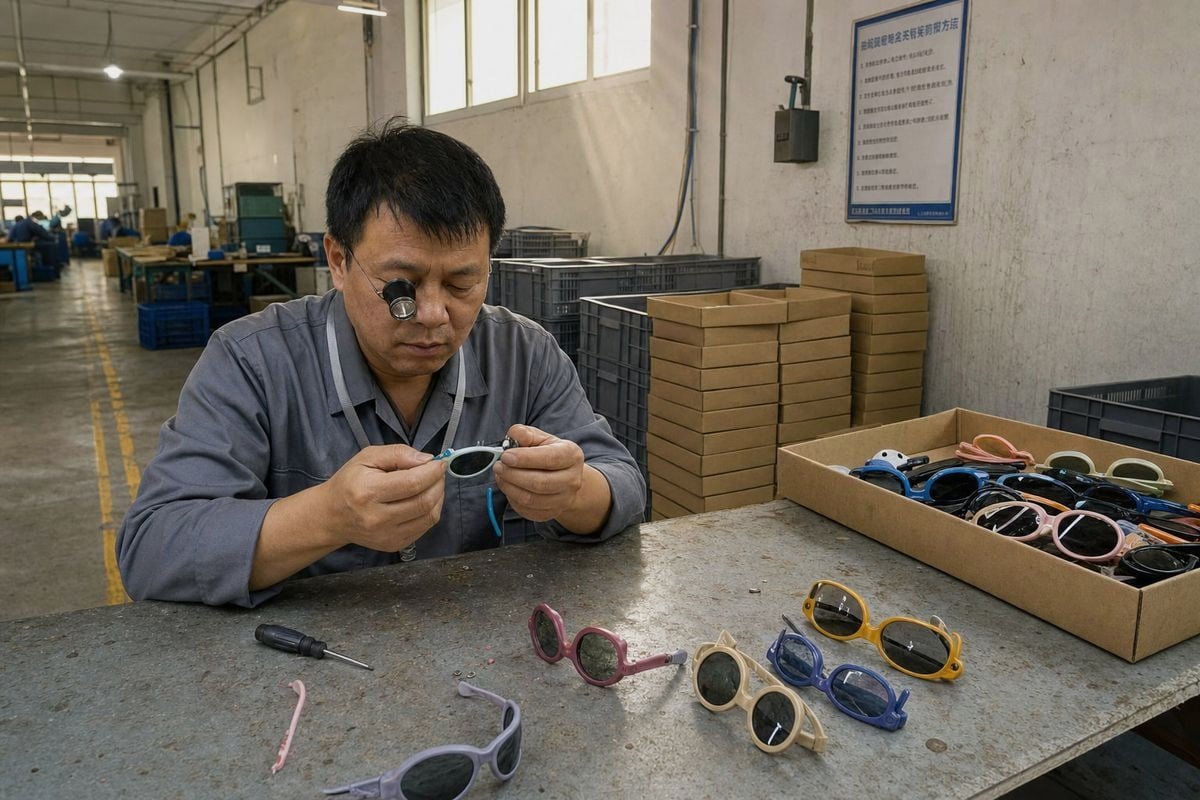
Kids are hard on eyewear. That is not a flaw in your child — it is a design requirement the frame must meet. In our fifteen years of making children's eyewear, we have learned that a lens pop-out is almost never random. It is a signal that something in the frame, the material, or the assembly has failed.
The most common failure points
Here is how the causes break down in practice:
| Cause | How it happens | Frame types most affected |
|---|---|---|
| Loose hinge screw | Daily opening and closing vibrates the screw out | Metal frames, semi-rimless styles |
| Warped lens groove | Heat exposure (hot cars, beach bags) softens cheap plastic | Rigid injection-molded plastic |
| Lost frame tension | Kids pulling glasses off with one hand, sitting on them | All types, worst on brittle acetate |
| Poor factory tolerance | Lens cut slightly too small for the groove | Low-cost, unbranded imports |
| Direct impact | Balls, falls, playground collisions | All types, especially large shield lenses |
Why material choice matters so much
A rigid frame absorbs impact by cracking. A flexible frame absorbs impact by bending and returning to shape. That is why we build most of our children's styles in TR90 and TPEE 2. When a child twists a TPEE temple, it flexes instead of snapping, and the lens groove keeps its original geometry. When a child twists a brittle frame, the groove deforms by a fraction of a millimeter — and that is enough. The lens stops seating fully, and it pops out weeks later during normal play.
Heat is the other silent culprit. A car dashboard in summer can soften a cheap frame enough to loosen its grip on the lens permanently. Parents rarely connect the hot car in July to the lens falling out in August, but on our end, the deformation pattern is unmistakable.
How can I safely fix a loose lens before sending my child back outside?
A buyer in Australia once asked me to write repair instructions for her brand's care card. Drafting it forced our engineers to reduce the fix to steps any parent can follow safely at home.
Clean the lens and frame groove, check both for cracks, then re-seat the lens: press evenly into a plastic frame, or tighten the hinge screw on a metal frame. Shake and tap to test the fit. If the lens shifts or pops out again, stop and replace.
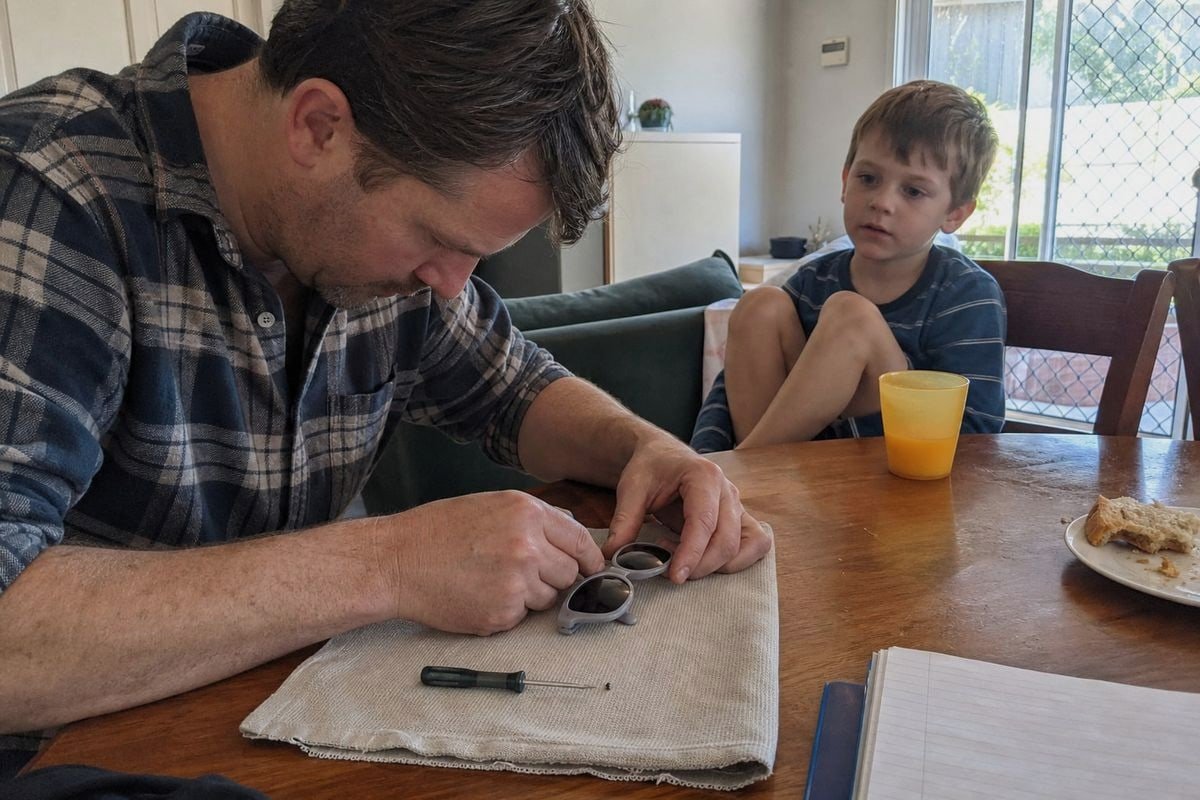
Before you touch the lens, take the sunglasses away from your child. A loose lens or a tiny dropped screw is a real peligro de asfixia 3 for younger kids. Do the repair on a table, over a light-colored cloth, so small parts stay visible.
Step-by-step by frame type
The fix differs by frame construction, and generic internet advice often skips this. Here is what actually works:
| Frame type | Correct fix | What to avoid |
|---|---|---|
| Plastic full-rim | Warm the frame gently, align the lens with the groove, press evenly around the rim | Boiling water; forcing one corner first |
| Metal full-rim | Loosen the tiny screw slightly, seat the lens, tighten just until snug | Over-tightening, which strips the screw |
| Semi-rimless | Check the nylon retaining wire and hinge screws with a repair kit | DIY without the right micro tools |
| Rimless | Send it back — these need specific parts and tools | Any improvised home repair |
For flexible plastic frames, a few seconds under warm — never boiling — water or a brief pass with a hairdryer softens the rim enough to accept the lens. Make sure the curved side of the lens faces outward. Insert one edge into the groove first, then press the rest in evenly with your thumbs.
Test before you trust it
Once the lens is in, shake the glasses lightly and tap the lens edge with a fingernail. Any rattle, shift, or gap means the fit is not safe. And one firm rule from our side: never use superglue. It can crack or cloud policarbonato 4 and TR90 frames, and it permanently ruins the lens surface. Clear tape or a twist-tie can serve as a temporary hold on the way home — nothing more.
What should I look for in a manufacturer to prevent this issue from recurring?
One lesson our factory learned early: a lens that pops out is rarely the child's fault. It is a tolerance decision made months earlier, on a production line the parent never sees.
Choose a manufacturer with proven flexible-material expertise in TR90 and TPEE, tight lens-fitting tolerances, documented quality control, child-safety testing, and real OEM/ODM experience with kids' eyewear. A factory with a large existing style library also signals mature, field-tested tooling and construction.
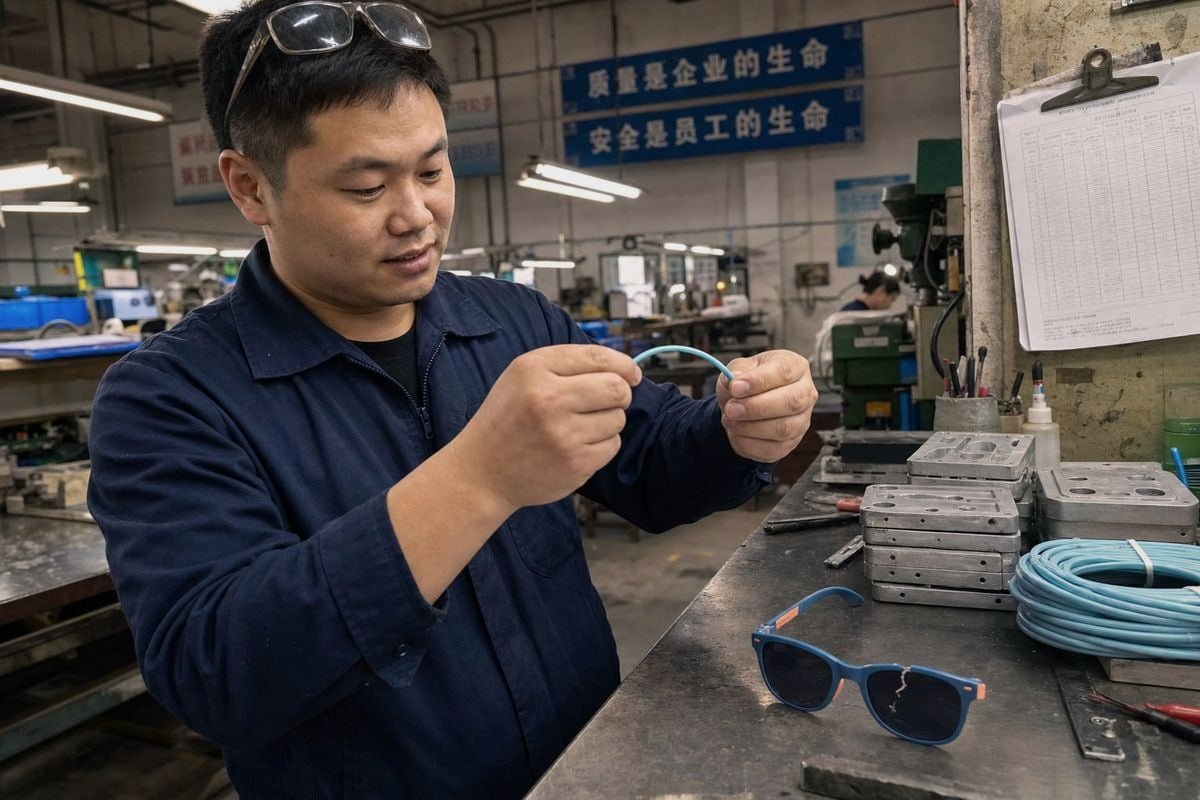
If you are a brand owner or procurement manager, recurring lens pop-outs are not just a customer service headache. They are returns, negative reviews, and — in the worst case — a safety incident involving a child. Preventing them starts at the factory, not at the repair table.
The supplier questions that actually predict lens retention
From our side of the negotiation table, these are the signals that separate a serious children's eyewear partner from a generic sunglasses trader:
| What to ask | Por qué importa |
|---|---|
| What materials do you use for kids' frames? | TR90 and TPEE flex under stress; brittle plastics crack and lose lens grip |
| How do you control lens-to-groove tolerance? | Tight, consistent tolerance is the single biggest factor in lens retention |
| Do you own the factory or trade? | A factory controls tooling, assembly, and QC directly |
| Can you show existing kids' styles? | A large proven library means the construction has survived real use |
| What QC steps happen before shipping? | Pull tests and fit checks catch loose lenses before they reach a child |
Why flexibility is the core specification
In our taller gestionado con 5S 5, we treat lens retention as a function of two things: material memory and groove precision. TR90 frames with Templo TPEE 6 bend when a child yanks them off one-handed, then return to their exact original shape — so the groove never deforms. That is fundamentally different from a cheap rigid frame that deforms a little more with every twist. We also encourage buyers to start from our existing styles rather than new molds, because those constructions have already been stress-tested across many markets. For a new kids' brand, that means lower risk, lower cost, and far fewer lens complaints in year one.
When should I contact my supplier instead of trying a DIY repair?
A European distributor once emailed me photos of a cracked hinge, asking whether his customer could fix it at home. My honest answer was no — and knowing when to say no is half the value of a good supplier relationship.
Contact your supplier instead of attempting DIY repair when the frame is cracked, the lens edge is chipped, a screw is missing, the lens groove is warped, the lens repeatedly pops out after re-seating, or the sunglasses belong to a very young child.
There is a clear line between a quick home fix and a structural failure, and crossing it puts a child at risk. A repair that "seems to work" but fails again at the beach or on a bike is not a repair. It is a delayed hazard.
The stop signs — do not DIY past these
- A cracked frame. Cracks spread. A re-seated lens in a cracked rim will fail again, possibly with sharp edges near a child's eye.
- A chipped or scratched lens edge. The chip weakens the lens and prevents a secure seat in the groove.
- A missing screw you cannot replace. Improvised paperclip fixes are for the walk home, not for daily wear.
- A warped groove. If the lens pops out again after a correct re-seat, the geometry is gone. No home tool restores it.
- Very young children. For toddlers and babies, any loose part is a choking risk. Replace, do not repair.
What a good supplier should do for you
For B2B buyers, this is where your manufacturer's responsiveness matters. When our partners report a lens issue, we ask for photos, identify whether it is a tolerance issue or field damage, and respond with spare parts, replacement units, or a production adjustment on the next run. For parents, the equivalent is the brand's warranty: most reputable kids' eyewear brands will replace a failed frame, because they know a child's safety is not worth a taped-together fix. If your current supplier treats every pop-out as "customer misuse," that tells you something about the next order too.
Conclusión
A fallen-out lens is fixable when the frame is sound — clean, re-seat, test. When it is not, replace. Better frames prevent the problem entirely.
A popped lens ruins a beach day. A repeated one ruins trust in your brand. On our line in Taizhou, we solve it at the source: flexible TR90 and TPEE construction, tight lens tolerances, and QC that pull-tests every batch. With around 800 field-tested styles and full OEM/ODM support 7, we help kids' brands ship sun
Más artículos que te podrían gustar
1 de agosto de 2026
¿Debería la fábrica encargarse del embalaje y etiquetado de las gafas de sol para niños, o utilizar un proveedor designado?
1 de agosto de 2026
Almacén propio vs. Cumplimiento directo del proveedor: ¿Qué reduce los costos de devolución para las marcas de gafas de sol para niños?
1 de agosto de 2026
Directo al almacén del puerto o staging en el extranjero: ¿Cuál ahorra más en el envío de gafas de sol para niños?
¿Buscas un socio confiable en gafas para niños?
Explore más de 800 estilos listos y soporte OEM/ODM completo adaptado a su marca.
Ponte en contacto English
  Español de México
  Deutsch
  Français
  日本語
日本語  العربية
  Português do Brasil