What to Do If Kids Optical Frames Cause Redness or Allergic Reactions?
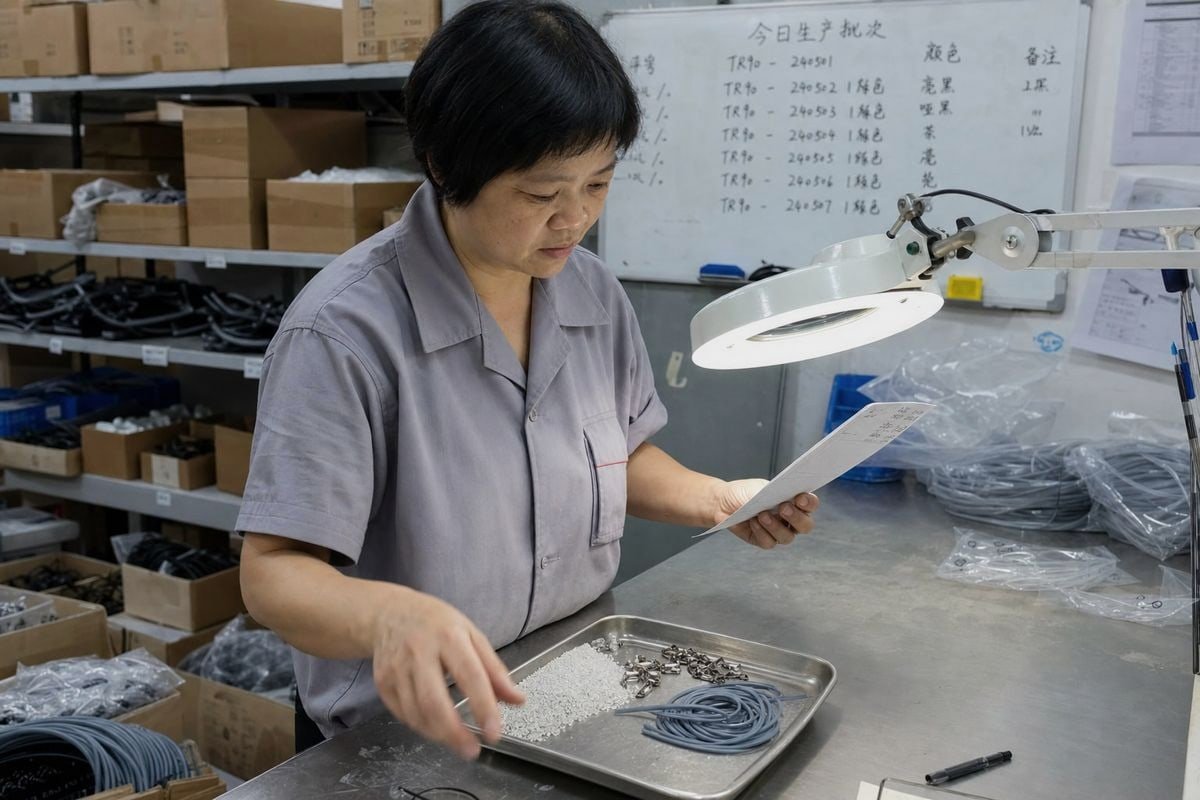
Kids optical frames that cause redness can quietly damage a brand. I have seen buyers lose retail accounts over one recurring rash complaint, so our factory treats this issue as a product-design problem, not a customer-service one.
If kids optical frames cause redness or allergic reactions, remove the frames, wash the skin and glasses with mild soap, then check whether the rash matches the frame contact points. Switch to hypoallergenic frame materials like TR90, nickel-free metal, or bio-acetate, and see a dermatologist if symptoms return.
That is the short answer. But the real question for a brand owner is deeper: what caused the reaction, and how do you stop it from happening across a whole production run? Let me walk you through it step by step.
What Causes My Kids' Optical Frames to Trigger Skin Redness or Allergies in the First Place?
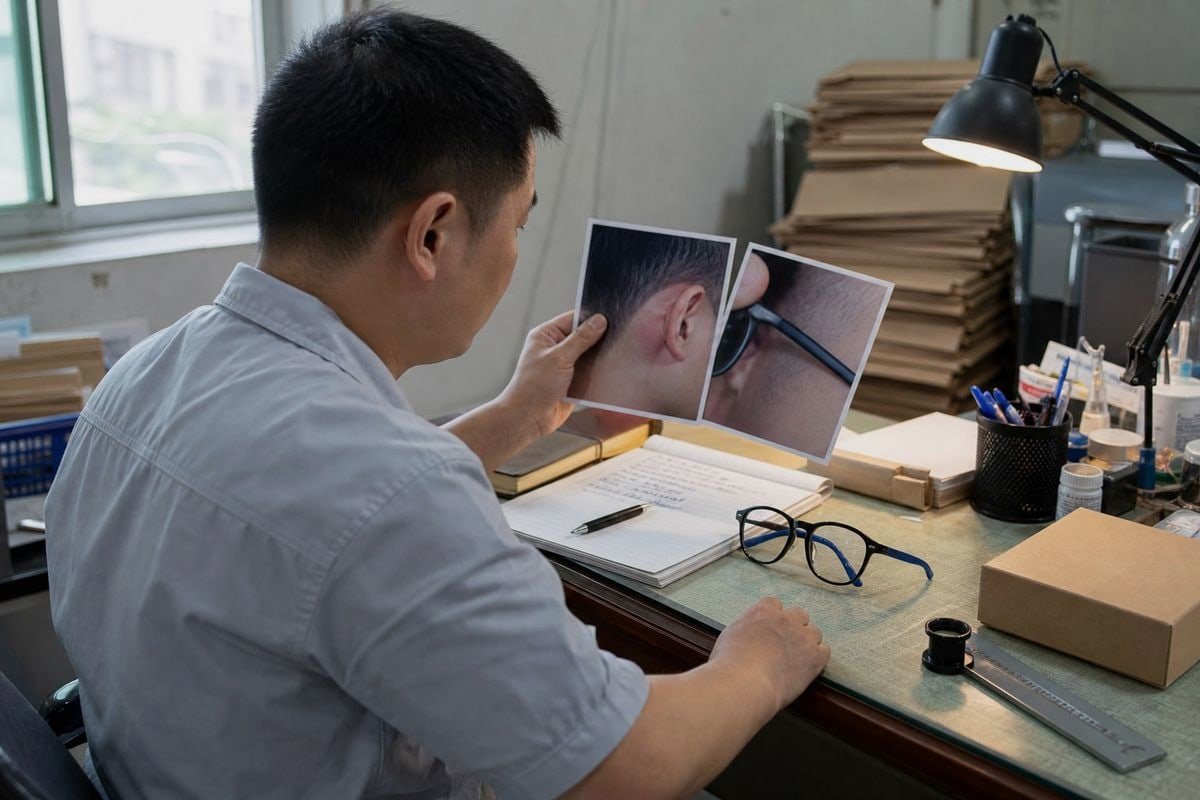
A buyer from Australia once sent us photos of a red mark behind a child's ear and asked, "Is your material toxic?" It was not. The temple tip was bent too tight. That case taught me how often causes get misread.
Kids optical frames trigger redness through three main routes: allergic contact dermatitis from nickel, plasticizers, dyes, or coatings; simple skin irritation from friction, sweat, and trapped skincare products; and pressure marks from a poor fit. Children are more vulnerable because they sweat more and often have sensitive skin.
The important thing to understand is that not every "glasses rash" is a true allergy. In our fifteen years producing gafas para niños 1, most complaints we investigate turn out to be preventable fit or material issues, not immune reactions. But real allergies do exist, and they follow known patterns.
The Three Categories of Reaction
Allergic contact dermatitis is an immune response. The skin reacts to a specific chemical, and the reaction returns every time that chemical touches the skin. The medical literature on spectacle-frame dermatitis names nickel, plasticizers, UV stabilizers such as Tinuvin P, rubber additives, dyes, solvents, and coatings as the leading culprits.
Irritant dermatitis is different. It comes from mechanical or chemical stress: sweat trapped under the nose bridge, sunscreen and moisturizer 2 building up under the frame, or the child rubbing the skin raw. Kids are the perfect storm here. They wear frames for long school days, sweat heavily during play, and often have eczema-prone skin with a weaker barrier.
Pressure and friction marks are the third group. Tight temples, slipping frames, or scratched surfaces chafe the skin at the nose, temples, and behind the ears.
| Reaction Type | Typical Cause | Key Sign |
|---|---|---|
| Allergic contact dermatitis | Nickel, plasticizers, coatings, dyes | Itchy, eczema-like rash exactly where the frame touches; returns with re-exposure |
| Irritant dermatitis / skin irritation | Sweat, trapped sunscreen, dirty frames | Redness that improves with cleaning and breaks from wear |
| Pressure or friction marks | Poor fit, tight temples, scratched frames | Sore red lines or bumps at contact points; no itching pattern |
One more nuance matters. Some frame dyes and coatings only react under sunlight, a condition called photo-dermatitis. If redness appears mainly after outdoor play, that is a clue worth noting.
How Can I Identify Whether the Reaction Is From the Material, Coating, or Fit of the Frame?
When we investigate a complaint at our Taizhou workshop, the first thing our QC team asks for is not a lab report. It is a photo of the child's skin next to a photo of the frame. Location tells us most of the story.
Map the rash to the frame. Redness only at pressure points with no itching usually means fit. An itchy, spreading, eczema-like rash at all contact areas suggests material or coating allergy. A dermatologist's patch test is the only definitive way to separate contact dermatitis from simple irritation.

Diagnosis works best as a process of elimination. Here is the sequence I recommend to parents and to our B2B partners when they field a complaint.
A Step-by-Step Elimination Process
- Pause wear for two to three days. If symptoms improve when the glasses come off and return when they go back on, the frames are involved.
- Clean everything. Wash the child's face and the frames with mild soap and water. If the redness disappears, trapped sweat, oils, or sunscreen was the amplifier, not the frame itself.
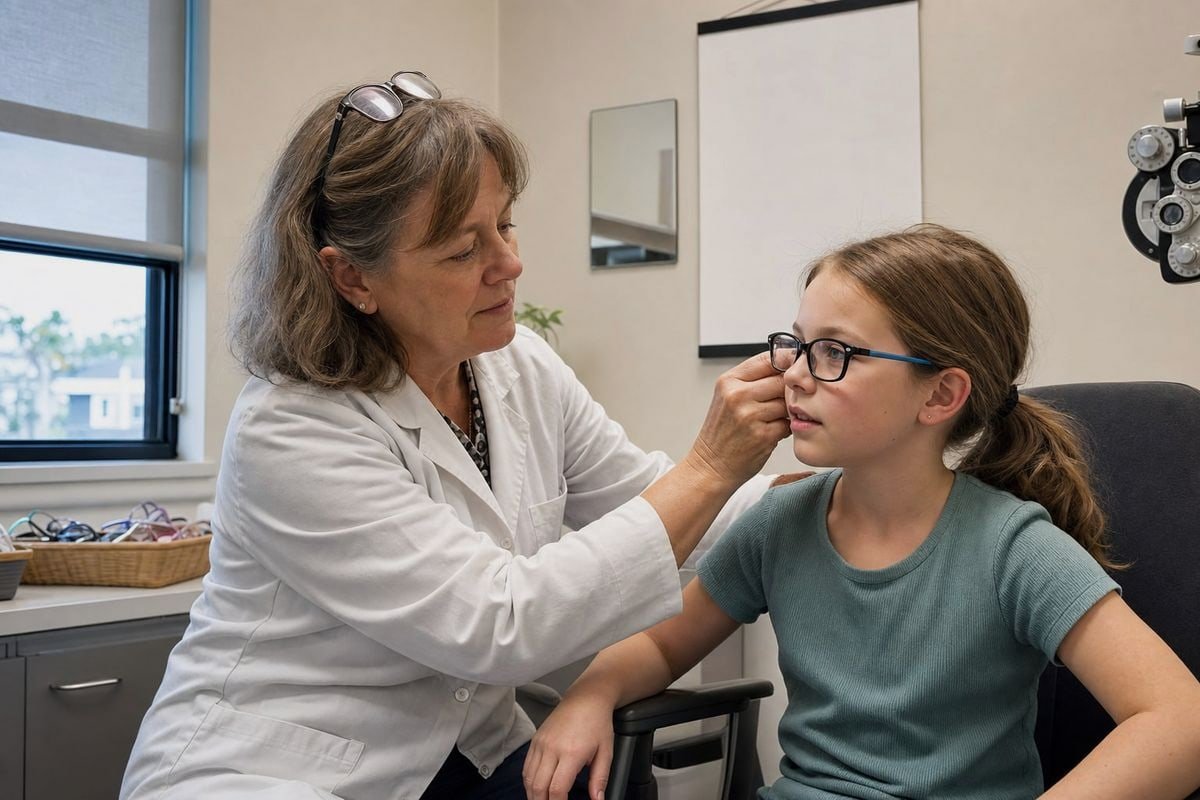
- Get a professional frame adjustment. A pediatric optician 3 can relieve pressure at the nose bridge and behind the ears. If redness resolves after adjustment, it was mechanical friction.
- Inspect the frame surface. Look for scratches, flaking paint, or "white bloom" on plastic frames. That cloudy haze indicates plasticizer migration to the surface, a known trigger for chemical sensitivities.
- Check the timing. Redness only after sunny outdoor days points to UV-activated dyes or coatings. Redness by day's end regardless of weather points to fit or sweat.
- Request patch testing. If the rash keeps returning with every pair, a dermatologist can patch-test for nickel allergy, plasticizers, and stabilizers. This step matters because the culprit is often hidden in coatings or additives, not the obvious metal part.
One buyer objection I hear often: "We switched from metal to plastic, so allergies are impossible now." That assumption fails in practice. Plastic frames can carry plasticizers, UV stabilizers, antioxidants, waxes, and pigments that trigger dermatitis just as reliably as nickel. Avoid scratching during this whole process, too, because rubbing inflames the skin barrier and muddies your diagnosis.
What Frame Materials Should I Choose to Reduce the Risk of Allergic Reactions in My Products?
Material selection is where I spend the most time with new brand clients. On our production line, we standardized on TR90 and TPEE years ago, and the reason was exactly this topic: skin contact safety on active children who sweat through every wear session.
Choose nickel-free, low-additive materials: TR90 memory plastic, TPEE flexible polymer, pure titanium, surgical stainless steel, cellulose acetate, or bio-acetate with plant-based plasticizers. Avoid unverified metal alloys, painted coatings, and cheap plastics prone to plasticizer bloom, especially at the nose pads and temple tips.
There is no single perfect material. Each option trades cost, weight, flexibility, and allergy profile differently. Here is how I frame the comparison for buyers choosing hypoallergenic frame materials for a children's line.
| Material | Allergy Risk | Flexibility for Kids | Relative Cost | Mejor uso |
|---|---|---|---|---|
| TR90 memory plastic | Very low when additive-controlled | Excellent, bends without snapping | Moderado | Everyday kids optical frames |
| TPEE | Very low, soft skin feel | Outstanding, near-unbreakable | Moderado | Temples and toddler frames |
| Pure titanium eyeglass frames | Extremely low, nickel-free | Low flex, very light | Alta | Premium lines, confirmed nickel allergy |
| Cellulose acetate frames | Low, but check plasticizer quality | Moderado | Moderate–High | Fashion-forward kids styles |
| Bio-acetate | Low, plant-based plasticizers replace phthalates | Moderado | Alta | Eco-positioned pediatric brands |
| Unverified metal alloys | High, frequent nickel content | Poor for active kids | Baja | Not recommended for children |
Watch the Small Parts, Not Just the Frame Front
The frame front gets all the attention, but reactions often start at the smaller components. Standard silicone nose pads 4 suit most children, but some kids react to additives in low-grade silicone or rubber; medical-grade vinyl or titanium pad alternatives solve those edge cases. Hinges, screws, and decorative rivets are classic hiding spots for nickel, even on "plastic" frames. On our TR90 frames with TPEE temples, we specify nickel-free hardware precisely because a hidden screw can undo an otherwise hypoallergenic design.
One practical retrofit worth knowing: medical-grade polyolefin heat-shrink tubing over temple arms creates a permanent hypoallergenic barrier for children with sensitive ears. Pad covers and sleeves also help, but treat these as stopgaps for existing stock, not a substitute for choosing the right base material. For a new product line, start with the material and let the accessories stay optional.
How Can I Work With My Manufacturer to Test and Prevent Allergy Issues Before Mass Production?
The most expensive lesson in this business is discovering a skin-reaction problem after 10,000 units land in a warehouse. That is why our team pushes every OEM client through material verification before we cut a single production order, even when they are eager to ship.
Request full material declarations covering base polymers, plasticizers, dyes, coatings, and hardware. Demand nickel-release testing on all metal parts, review certificates for restricted substances, run wear trials on pre-production samples, and lock the approved material specification into your contract so mass production cannot silently substitute cheaper inputs.
Prevention at the factory level is a checklist discipline, not a leap of faith. Here is the workflow we run with brand clients from Europe, Japan, and Australia, and what you should expect from any serious partner.
The Pre-Production Prevention Checklist
| Etapa | Ley de seguridad de productos de consumo | Por qué importa |
|---|---|---|
| Material declaration | Named base polymer, plasticizer type, colorant list, coating chemistry | Hidden additives, not base materials, cause most reactions |
| Hardware verification | Nickel-free confirmation for hinges, screws, decorative parts | Nickel remains the top documented eyewear allergen |
| Compliance documents | Restricted-substance test reports for your target market | EU, Japanese, and Australian buyers face different chemical rules |
| Sample wear trial | Two-to-four-week real-world wear on pre-production samples | Sweat, sunlight, and friction only show up in actual use |
| Aging test | Heat and humidity exposure to check for plasticizer bloom | White bloom appears over time, not out of the box |
| Specification lock | Signed material spec attached to the purchase order | Prevents silent substitution of cheaper inputs mid-production |
A few of these deserve emphasis. Wear trials should include outdoor time, because photo-dermatitis from UV-reactive dyes never shows up in a showroom. Aging tests matter because plasticizer migration is a slow process; a frame that looks clean at inspection can bloom three months into retail life.
There is also a strategic shortcut worth raising. Working from a manufacturer's existing style library, like the roughly 800 designs we maintain, means the materials have already survived years of field use across many markets. You inherit that track record instead of gambling on an unproven new formulation. Then OEM customization, custom colors, logos, and packaging, layers on top of a material base you can trust. That is how you turn allergy prevention from a crisis response into a selling point on your packaging.
Conclusión
Redness from kids optical frames is almost always solvable: identify whether the cause is allergy, irritation, or fit, choose verified hypoallergenic materials, and test with your manufacturer before mass production.
Notas al pie
1. Official US government safety standards and compliance guidelines for manufacturing children’s products. ↩︎
2. Authoritative dermatological resource explaining how skincare products can interact with skin and external materials. ↩︎
3. General overview of the role of opticians in fitting and adjusting corrective eyewear for patients. ↩︎
4. Regulatory agency providing safety information on materials used in medical devices and wearable health products. ↩︎
Más artículos que te podrían gustar

5 de agosto de 2026
Bio-Based vs Regular Cellulose Acetate: What's the Difference for Kids' Frames?

5 de agosto de 2026
How Recyclable Are Kids' Optical Frame Materials, and What Eco-Friendly Alternatives Exist?
5 de agosto de 2026
Do Kids Optical Frames Whiten or Age in Storage, and How to Control Warehouse Conditions?
¿Buscas un socio confiable en gafas para niños?
Explore más de 800 estilos listos y soporte OEM/ODM completo adaptado a su marca.
Ponte en contacto English
  Español de México
  Deutsch
  Français
  日本語
日本語  العربية
  Português do Brasil