What GPSR Distance Selling Info Must I Display for Kids Optical Frames Online?

Buyers keep asking our Taizhou factory the same question: what GPSR distance selling info must appear on a kids optical frames listing GPSR Article 19 1? Get it wrong, and EU marketplaces delist you overnight.
Under GPSR Article 19, your kids optical frames listing must display the manufacturer’s name, postal address, and electronic contact; the EU responsible person’s details if the maker is outside the EU; a product identifier with an image; and all relevant warnings and safety information before purchase.
That is the short answer. But each element has details that trip sellers up EU Declaration of Conformity 2. Let me walk you through every block, one section at a time, so you can build a compliant product page with confidence.
What Manufacturer and Importer Details Am I Required to Show for GPSR Compliance?
Last year, a European importer sent us an urgent email: their marketplace had frozen a listing of our TR90 kids optical frames because the traceability fields were incomplete. We fixed it together in two days.
You must show the manufacturer's registered name or trademark, full postal address, and a direct electronic contact such as an email address. If the manufacturer is based outside the EU, you must also display the name and contact details of the EU responsible person handling compliance.
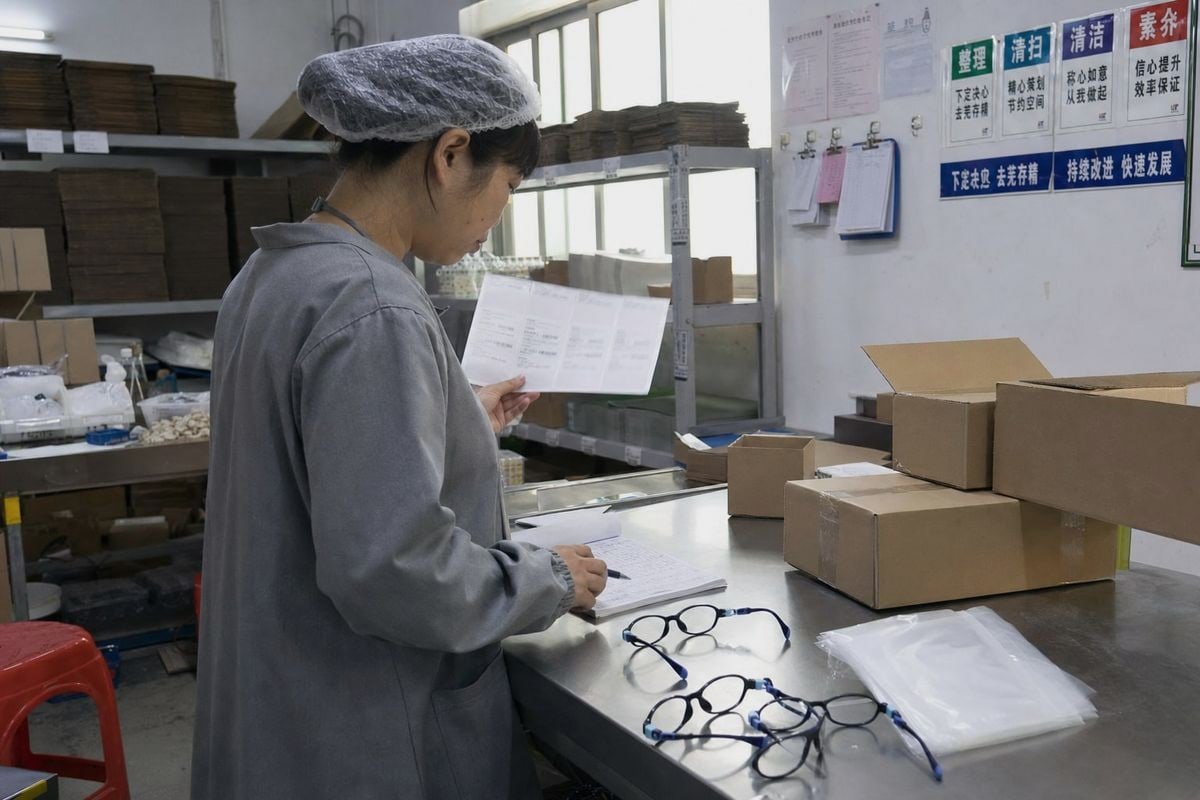
This block is the foundation of GPSR distance selling compliance. The regulation, formally Regulation (EU) 2023/988 3, treats the online product page display as part of product safety itself. The consumer must be able to identify who made the product and who answers for it inside the EU before they click "buy". Hiding these details in a footer link or a downloadable PDF does not count. The information should sit on the listing itself, clearly visible.
The Four Traceability Fields You Cannot Skip
Here is how the requirement maps onto a real e-commerce listing. Our own OEM clients use a version of this table when they set up listings for frames from our production line.
| Campo | What to Display | Common Mistake |
|---|---|---|
| Manufacturer name | Registered legal name or trademark | Showing only a brand nickname |
| Manufacturer postal address | Full street address, not a P.O. box alone | Listing only a country |
| Electronic contact | Working email or direct digital channel | Using a dead-end contact form |
| EU responsible person | Name, address, and contact of the EU-based operator | Omitting it for non-EU makers |
Why the EU Responsible Person Matters Most for Imported Frames
Most children's frames sold in Europe are made outside the EU, including ours. That means the EU responsible person field is not optional for you — it is mandatory. This can be an EU importer, an authorised representative, or a fulfilment service provider that accepts the role formally. In our experience exporting to 20+ countries, buyers who appoint their responsible person early avoid launch delays. We supply the manufacturer contact details on our side so your listing shows both parties correctly.
One more point. Marketplaces now check these fields before activating listings. Your platform may provide interface fields, but the legal duty to fill them accurately stays with you, the trader.
Which Safety Warnings and Age Recommendations Must I Include for Kids Optical Frames?
A trade-off we weigh constantly in our workshop: how much warning text is helpful versus overwhelming. Children's eyewear is worn on a child's face all day, so risk communication carries real weight.
Your listing must show any warnings and safe-use information relevant to the product before checkout, in the language of the target EU market. For kids optical frames, that typically covers age or fit guidance, breakage and small-parts cautions, supervision notes, and care instructions.
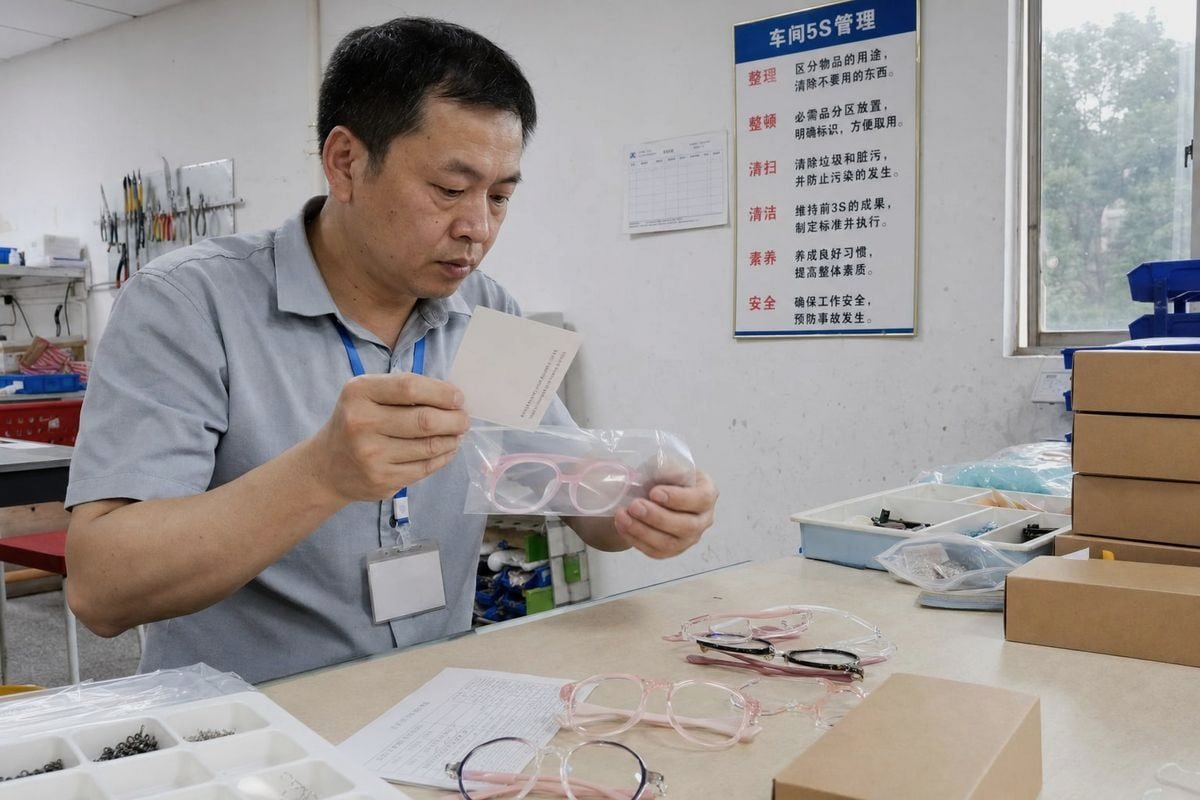
GPSR does not publish a fixed list of child-eyewear warnings. It requires that whatever warnings apply to your product appear on the listing, not just on packaging inserts. So the practical job is to translate your risk assessment into consumer-facing text. From fifteen years of building kids' frames, here is what genuinely belongs on the page.
Practical Warning Content for Children's Frames
- Age and size guidance. State the intended age range and frame dimensions. A frame sized for a four-year-old should not be marketed vaguely as "for kids".
- Breakage and impact notes. Optical frames are not protective eyewear. Say clearly that the product is not sports safety equipment unless it is certified as such.
- Small parts awareness. Screws, nose pads, and temple tips can detach. Flag supervision for very young children.
- Use limitations. Demo lenses are not corrective. Clarify that lenses must be fitted by an optical professional for children's prescription glasses.
- Care instructions. Cleaning, storage, and heat exposure guidance protects both the child and your return rate.
Language and Placement Rules
The warnings must be readable in the official language of the member state you sell into. English-only warnings on a German listing will not pass. Place them near the buy button or in a clearly labelled safety section, not behind a tab most shoppers never open.
There is a debate among sellers about whether instructions for use are strictly required on the page or only warnings. My advice: treat both as required. The sources supporting a narrow reading are the minority, and enforcement trends toward broader online transparency. Displaying full product safety information costs you nothing and removes the risk.
How Do I Present Material and Conformity Information to Meet GPSR Standards?
When we developed our translucent pink acetate-style frames and our TR90 models with flexible TPEE temples, buyers immediately asked how to describe those materials on EU listings without overpromising.
Present a precise product identifier, a clear product image, factual material descriptions, and any applicable conformity statements on the listing. Describe frame materials and lens types accurately, note the absence of harmful substances where verified, and only reference CE marking where a specific regulation actually requires it.

GPSR requires the listing to identify the exact product. That means model name, type or batch number, and an image that matches the physical item. If you sell our two-tone navy-and-black frame and the pink translucent frame under one listing, each variant needs its own identifier. Variant confusion is a genuine traceability failure, not a cosmetic issue.
Material Claims: What to Say and How to Back It
Parents shopping for kids' frames care about what touches their child's skin and eyes. Your listing should state materials factually and tie each claim to documentation you actually hold.
| Listing Claim | What Backs It Up | Notas |
|---|---|---|
| TR90 frame, TPEE temples | Material specs and supplier declarations | Flexible materials suit active kids |
| Free of BPA, lead, cadmium, phthalates | Chemical test reports on file | Only claim what testing confirms |
| Impact resistant lenses (polycarbonate/Trivex) | Lens supplier certification | Relevant for fitted lenses, not demo lenses |
| Meets frame durability standards | Internal QC records and test protocols | Keep results in the archivo técnico 4 |
CE Marking: Know Which Regime Applies
Here is where sellers get confused. Kids' sunglasses are classified as PPE and must carry CE marking 5 with a technical file and EU Declaration of Conformity. Plain optical frames without corrective function sit under GPSR as general consumer products. Frames marketed for myopia management eyewear or sold with corrective lenses may trigger medical device rules. GPSR is the baseline layer, not the only layer. Check your specific sales scenario before printing any mark. Applying CE marking requirements where no directive demands it is itself a compliance error.
Behind the listing, keep your technical documentation and risk assessment for roughly ten years. The product page is the visible tip; the file is the iceberg underneath.
Can My Manufacturer Help Me Prepare GPSR-Ready Product Listings and Documentation?
A procurement manager from a European kids' brand once told me she chose our factory partly because we handed over compliance data before she asked. That conversation changed how we onboard every client.
Yes. A capable manufacturer can supply the traceability data, material and chemical test reports, product identifiers, batch coding, warning text drafts, and technical file contents your GPSR listing depends on. You remain legally responsible, but the factory provides the raw compliance material.

You cannot write an accurate listing from thin air. Every field GPSR requires traces back to information only the factory holds. That is why we treat documentation as part of the product, not an afterthought. When a brand orders from our catalog of roughly 800 existing styles, or develops a custom OEM model, we prepare a compliance pack alongside the goods.
What a GPSR Documentation Pack Should Include
| Documento | Purpose on Your Listing | Who Provides It |
|---|---|---|
| Manufacturer identity sheet | Fills the name, address, and contact fields | Factory |
| Model and batch identifiers | Product identification and traceability | Factory |
| Material and chemical test reports | Supports substance-free and material claims | Factory + third-party lab |
| Draft warnings and use instructions | Basis for on-page safety text | Factory drafts, brand localises |
| Technical file contents | Retained documentation for authorities | Factory + EU responsible person |
| Retail-ready packaging artwork | Aligns physical labels with the listing | Factory OEM/ODM team |
Where the Brand Still Owns the Work
Be clear-eyed about the split. We can give you every data point, but we cannot appoint your EU responsible person, translate warnings into every member-state language, or manage your marketplace interface. Consumer contracts regulations on returns, and optical-specific matters like pupillary distance measurement guidance and prescription submission flows, sit on your side too. Those elements shape the buying experience for children's prescription glasses, and they belong to the retailer.
What a serious factory partner does is remove the guesswork. Consistent batch coding, stable material specs across reorders, and packaging that matches the listing keep your compliance system aligned from workshop to checkout. That alignment is exactly what GPSR enforcement checks.
Conclusión
GPSR makes your listing part of product safety. Show manufacturer contact details, EU responsible person, product identifiers, and warnings before purchase — and partner with a factory that hands you the documentation ready-made.
Notas al pie
1. Explains the specific obligations for economic operators regarding distance sales under GPSR. ↩︎
2. Replaced with the official European Union page on the EU Declaration of Conformity. ↩︎
3. Provides direct access to the official text of the General Product Safety Regulation. ↩︎
4. Describes the purpose, contents, and importance of the technical file for product compliance. ↩︎
5. Explains what CE marking signifies, when it’s required, and its legal implications in the EU. ↩︎
Más artículos que te podrían gustar

5 de agosto de 2026
Bio-Based vs Regular Cellulose Acetate: What's the Difference for Kids' Frames?

5 de agosto de 2026
How Recyclable Are Kids' Optical Frame Materials, and What Eco-Friendly Alternatives Exist?
5 de agosto de 2026
Do Kids Optical Frames Whiten or Age in Storage, and How to Control Warehouse Conditions?
¿Buscas un socio confiable en gafas para niños?
Explore más de 800 estilos listos y soporte OEM/ODM completo adaptado a su marca.
Ponte en contacto English
  Español de México
  Deutsch
  Français
  日本語
日本語  العربية
  Português do Brasil