What Should Distributors Stock for Kids’ Beach & Swimming Sunglasses?
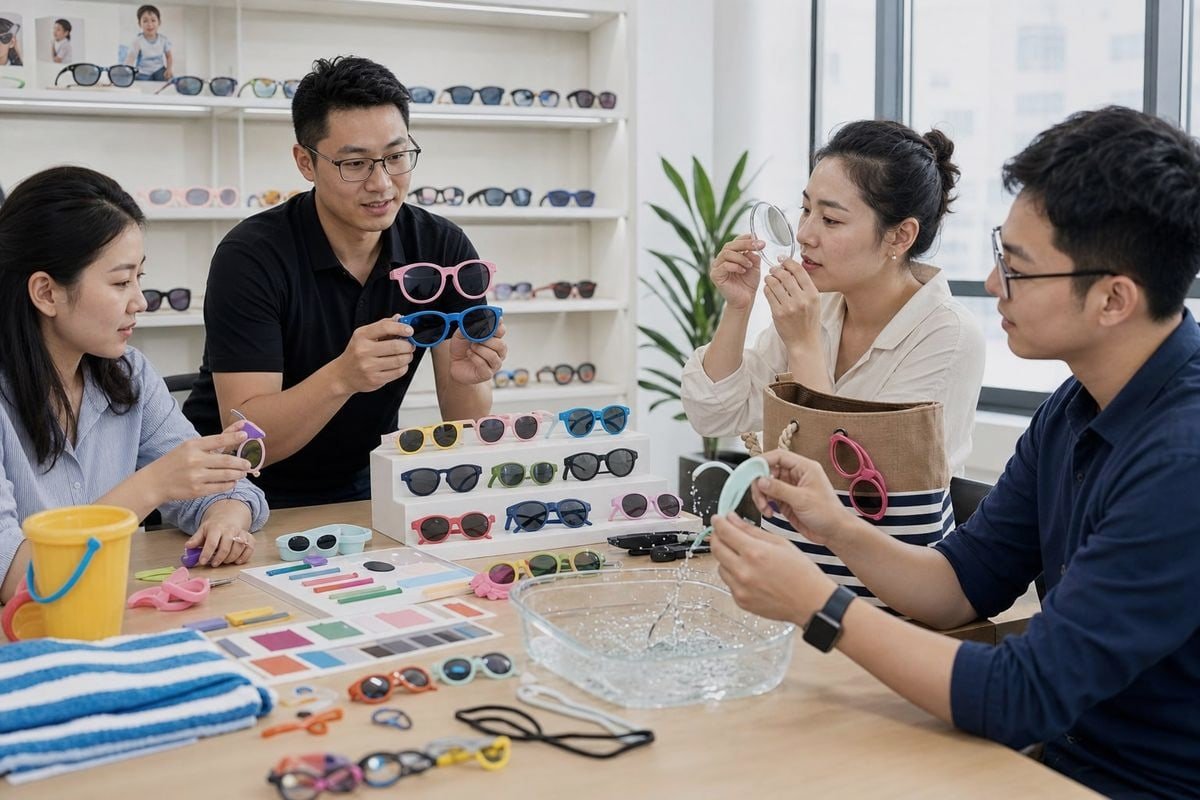
Every spring, buyers ask me the same thing about kids’ beach and swimming sunglasses: which styles actually sell? After fifteen years on our production line, I have a clear answer.
Distributors should stock kids’ beach and swimming sunglasses with UV400 protection, polarized lenses for water glare, flexible TPEE or TR90 frames, wraparound coverage, strap-secured styles for toddlers, and impact-resistant polycarbonate lenses — plus accessory bundles like cases, straps, and cleaning cloths.
That answer sounds simple. But building a profitable beach assortment takes more detail. Let me walk you through materials, style counts, lens specs, and branding options, one section at a time.
What Materials Keep Kids' Beach Sunglasses Safe Around Water and Sand?
A buyer from Australia once mailed us a broken competitor sample — snapped at the bridge after one beach trip. That frame taught our team more than any spec sheet ever could.
The safest materials for kids' beach sunglasses are flexible TPEE frames, durable TR90 frames, BPA-free silicone components, and impact-resistant polycarbonate lenses. These materials bend without snapping, resist salt water and sand abrasion, and contain no sharp break points that could injure a child.
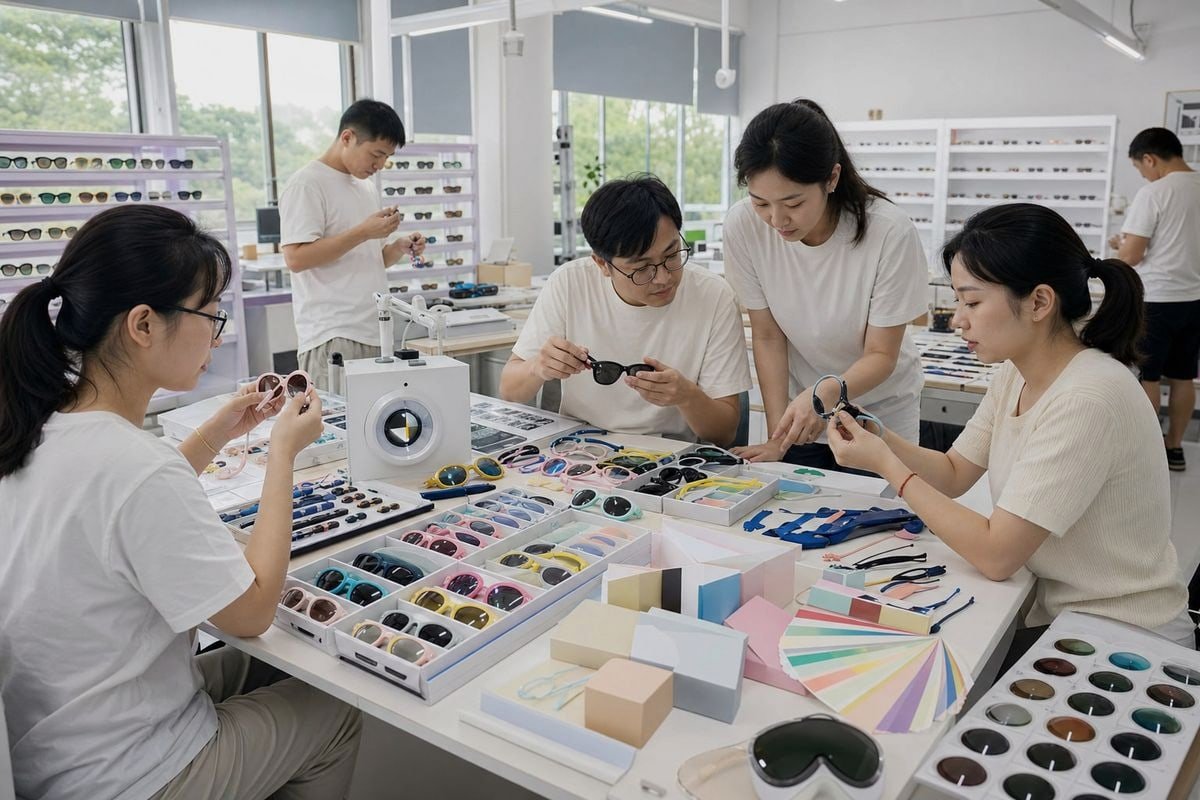
The beach is the toughest environment for children's eyewear. Salt water corrodes cheap metal hinges. Sand scratches soft acrylic lenses. Kids sit on frames, bend them, and drop them on rocks. So material choice is not a detail. It is the foundation of your whole assortment.
At our factory in Taizhou, we build most beach styles from TPEE 1 and TR90. Here is why. TPEE is a flexible, rubbery polymer. You can twist a TPEE temple almost in a full circle, and it returns to shape. TR90 is lighter and stiffer, but still far more flexible than standard plastic. Our most popular construction combines a TR90 front with TPEE temples. The front holds the lenses securely. The temples flex when a toddler yanks them off sideways.
Why Lens Material Matters as Much as the Frame
Frames get the attention, but lenses take the impact. Impact-resistant policarbonato 2 is the standard we recommend for every beach SKU. It does not shatter into shards the way glass or cheap acrylic can. Add a scratch-resistant coating on top, because sand is basically loose sandpaper.
Material Comparison for Beach Conditions
| Material | Flexibilidad | Salt Water Resistance | Mejor uso |
|---|---|---|---|
| TPEE | Excellent — bends fully | Excelente | Temples, toddler frames |
| TR90 | Muy buena | Excelente | Frame fronts, all-day wear |
| BPA-free silicone 3 | Excelente | Excelente | Nose pads, strap parts |
| Plástico PC estándar | Poor — can snap | Buena | Avoid for young kids |
| Polycarbonate lens | Impact-resistant | Excelente | All beach lenses |
One more point: environmentally friendly materials matter to your retail buyers. TPEE and TR90 fit that story well, and BPA-free silicone touchpoints reassure parents of babies and toddlers who chew on everything.
How Many Styles Should I Stock to Cover Different Ages and Markets?
When a new importer tests the market with us, I usually talk them out of ordering twenty styles. In my experience shipping to buyers in 20+ countries, a focused tiered range sells faster and reorders cleaner.
Distributors should stock 8–12 core styles across three age tiers: 2–3 strap-secured flexible styles for toddlers, 4–5 classic and wraparound frames for young kids, and 2–4 sportier or fashion-led styles for older kids, plus one accessory bundle line.
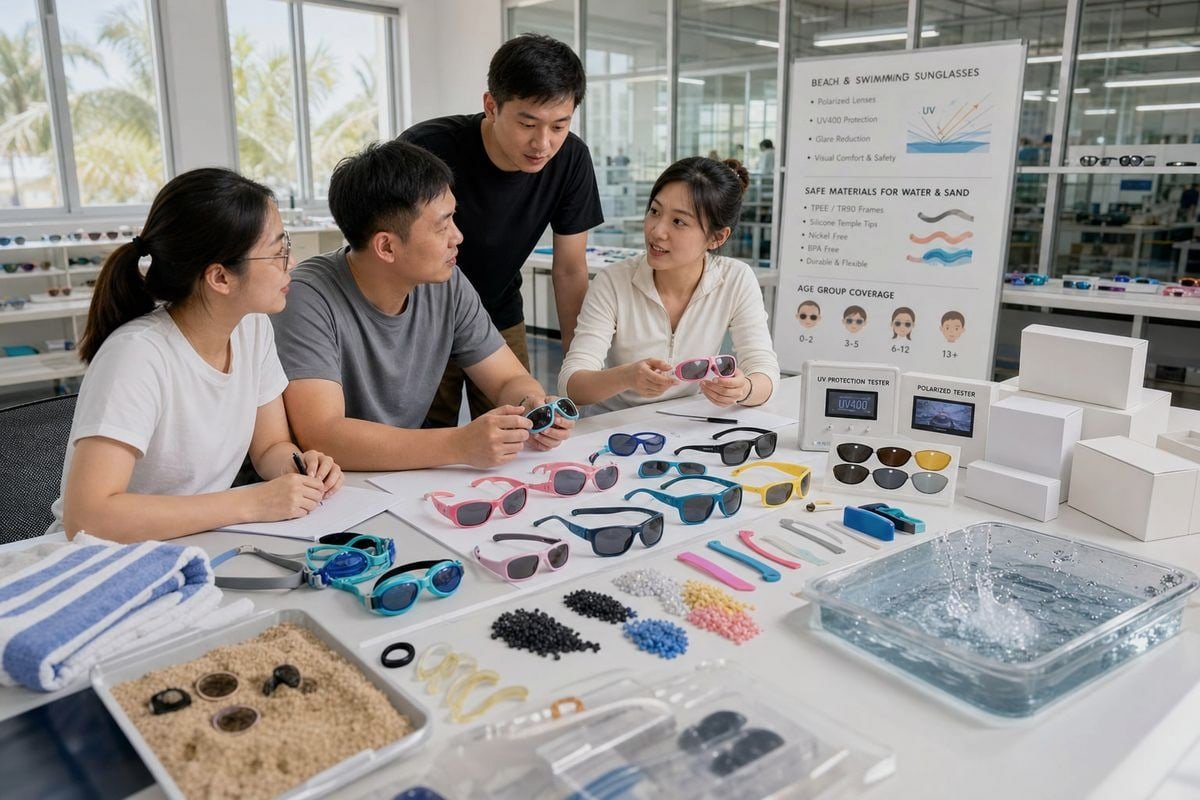
The logic behind that number is simple. Retailers want a wall that looks varied but is easy to reorder. Parents want an obvious choice for their child's age. And you want inventory that turns, not a warehouse of slow movers.
We hold around 800 existing styles in our catalog, so buyers can build this tiered range without paying for new molds. That matters if you are testing a market like Japan or Northern Europe, where you cannot predict color preferences perfectly on the first order.
Age-Tiered Assortment Logic
Toddlers lose regular frames within an hour at the beach. So the infant and toddler tier should be strap-first: soft, goggle-like silhouettes with adjustable neoprene straps 4 and BPA-free silicone touchpoints. Young kids, roughly four to eight, want to look like their parents. That is where "mini-me" styling shines — think the round two-tone frames we produce in periwinkle-blue with mint-teal temples. Older kids reject anything babyish. They want the sport-shield look: wraparound single-lens designs with mirrored gradient lenses in fiery orange-gold or iridescent multicolor.
Suggested Stock Breakdown
| Age Tier | Styles | Key Features | Share of Order |
|---|---|---|---|
| Infants & toddlers (0–3) | 2–3 | Straps, full flex, goggle-like fit | 20–25% |
| Young kids (4–8) | 4–5 | Classic two-tone, semi-wrap, light frames | 40–50% |
| Older kids (8–12) | 2–4 | Sport shields, mirrored Las afirmaciones de durabilidad cumplen una doble función. Prometen seguridad y prometen que el padre no necesitará volver a comprar en dos semanas. Redacciones como "se dobla, no se rompe" o "hecho para la vida en el patio de recreo" traducen la resistencia a impactos en lenguaje cotidiano. Si sus lentes son 5 | 25–30% |
| Accessories | 1 bundle line | Cases, straps, cloths | Attach-on |
Watch wholesale eyewear trends when you allocate colors. Gen Alpha responds to bold mirror finishes and clean sporty shapes, while parents in many European markets still favor softer pastel classics for younger children. Stocking both keeps your range balanced.
Why Do Polarized and UV400 Lenses Matter for Swimming and Beach Use?
There is a trade-off we weigh on every water-focused order: polarized lenses cost more per unit, but they solve the exact problem parents notice at the beach. Reflected glare is what makes kids squint, complain, and pull their sunglasses off.
UV400 lenses block 99–100% of UVA and UVB rays, which is essential because water and sand reflect and intensify UV exposure. Polarized lenses add glare reduction from reflective surfaces, keeping kids comfortable near pools, lakes, and surf so they actually keep sunglasses on.
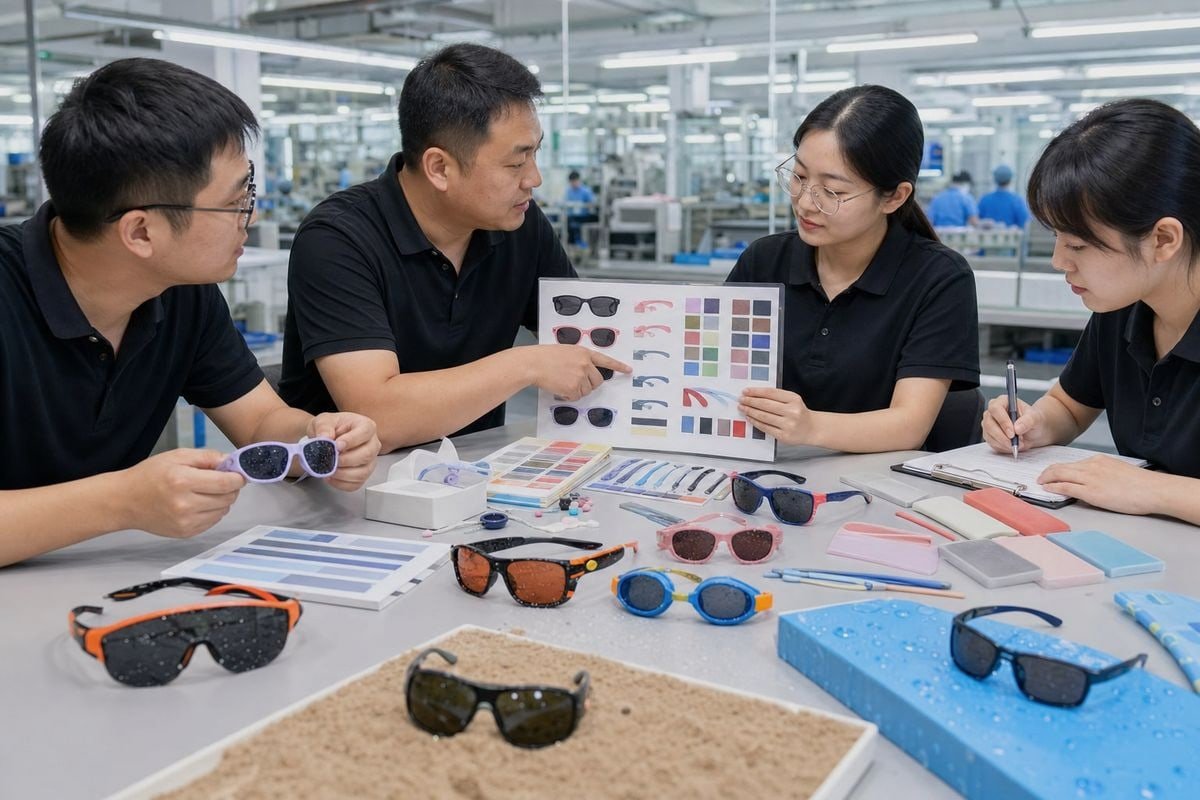
Let me separate the two features, because buyers often mix them up. Protección UV400 6 is about eye health. It means the lens blocks light wavelengths up to 400 nanometers, covering the full UVA and UVB range. Children's eyes let more UV reach the retina than adult eyes do. Near water, they get hit twice — direct sunlight plus the reflection off the surface. So UV400 protection should be non-negotiable across every SKU you stock. No exceptions, not even fashion styles.
Polarization is about comfort and compliance. A polarized filter cuts horizontal reflected light — the harsh glare bouncing off a pool or the sea. It does not add UV protection by itself. But a comfortable child keeps the sunglasses on, and a squinting child throws them in the sand. That is why we position polarized lenses as the premium water line, not a replacement for the core UV400 line.
Understanding Lens Categories
Many buyers in Europe also ask about darkness ratings. Category 3 lenses 7 are the sweet spot for beach use — dark enough for bright reflective light, but not so dark that they are unsafe in shade. We fit most of our beach styles with Category 3 lenses as standard.
Lens Feature Hierarchy for Water Environments
| Característica | Purpose | Required? |
|---|---|---|
| Protección UV400 | Blocks 99–100% UVA/UVB | Yes, every SKU |
| Category 3 tint | Correct darkness for bright beach light | Yes, for beach lines |
| Lentes polarizadas | Cuts water and sand glare | Strongly recommended premium tier |
| Anti-glare coating | Reduces backside reflections | Nice-to-have upgrade |
| Recubrimiento de espejo | Style plus extra brightness reduction | Trend-driven option |
One caution I share with every new buyer: avoid products with vague "UV blocking" claims and no percentage or UV400 marking. Retailers and parents increasingly check labels, and unclear claims cause returns and complaints. We laser-test and verify lens ratings during QC in our 5S-managed workshop precisely because clear, honest labeling protects your brand downstream.
Can I Get Custom Colors and Branding for My Beach Sunglasses Collection?
Last season, our ODM team turned a distributor's brand palette into a full beach line — custom frame colors, logo-printed temples, and retail-ready packaging — all from our existing molds. That project is a good picture of what is possible.
Yes. OEM/ODM manufacturers offer custom frame and temple colors, mirrored or polarized lens tints, logo printing or embossing, branded packaging, and matching accessories like straps and cases. Choosing from existing molds keeps minimums low and avoids expensive new tooling investment.
Customization is where distributors turn a commodity product into a brand asset. And the good news is that you do not need a huge budget to start. The most cost-effective route is what we call open-mold customization: you pick shapes from an existing catalog, then change everything the customer actually sees.
What Can Be Customized Without New Molds
Color is the biggest lever. TPEE and TR90 accept a wide color range, so you can run pastel two-tone classics for one market and bold sport shields with orange-to-gold mirrored lenses for another — same molds, different identities. Lens options come next: standard smoke, mirror gradients, polarized lenses, and Category 3 tints can all be matched to your positioning. Some buyers also add anti-glare coating on premium tiers to justify a higher retail price.
Branding goes beyond a printed logo. We handle pad printing and embossing on temples, custom hang tags, printed pouches, and retail-ready boxes. For beach lines specifically, matching adjustable neoprene straps in brand colors are a strong attach-on — they solve the loss problem and extend your branding onto a second product. A few buyers have also asked us about floating frames and buoyant strap designs for pool-focused ranges, which shows where water-specific merchandising is heading.
A Simple Customization Roadmap
- Select 8–12 shapes from the existing style library.
- Confirm frame and temple colors against your brand palette.
- Choose lens specs per tier: UV400 standard, polarized premium.
- Approve logo placement and packaging artwork.
- Review pre-production samples before the full run.
- Lock QC standards and labeling before shipment.
From first selection to shipped goods, this route is dramatically faster than tooling new molds. It lets you test a beach collection in one season, learn what sells, and only then invest in exclusive shapes. That is exactly how we advise smaller brands to grow with us — low risk first, exclusivity later.
Conclusión
Stock UV400 across everything, add a polarized water line, secure toddlers with straps and flexible frames, and brand it all professionally. Get that formula right, and your beach season sells itself.
Notas al pie
1. Wikipedia describes thermoplastic elastomers, the polymer family TPEE belongs to. ↩︎
2. Wikipedia explains polycarbonate’s impact resistance, relevant to the lens material discussion. ↩︎
3. FDA page on BPA clarifies why BPA-free materials matter for children’s products. ↩︎
4. Wikipedia explains neoprene’s properties, relevant to strap material choice for beach eyewear. ↩︎
5. Leading medical association explaining the benefits of polarized lenses for reducing glare. ↩︎
6. WHO explains UV radiation health risks, supporting the article’s UV400 protection claims for children. ↩︎
7. Authoritative reference for international sunglass standards and lens filter categories 0-4. ↩︎
Más artículos que te podrían gustar
1 de agosto de 2026
¿Debería la fábrica encargarse del embalaje y etiquetado de las gafas de sol para niños, o utilizar un proveedor designado?

1 de agosto de 2026
Almacén propio vs. Cumplimiento directo del proveedor: ¿Qué reduce los costos de devolución para las marcas de gafas de sol para niños?

1 de agosto de 2026
Directo al almacén del puerto o staging en el extranjero: ¿Cuál ahorra más en el envío de gafas de sol para niños?
¿Buscas un socio confiable en gafas para niños?
Explore más de 800 estilos listos y soporte OEM/ODM completo adaptado a su marca.
Ponte en contacto English
  Español de México
  Deutsch
  Français
  日本語
日本語  العربية
  Português do Brasil