What’s the Difference Between Regular and Sports-Protective Kids Optical Frames?
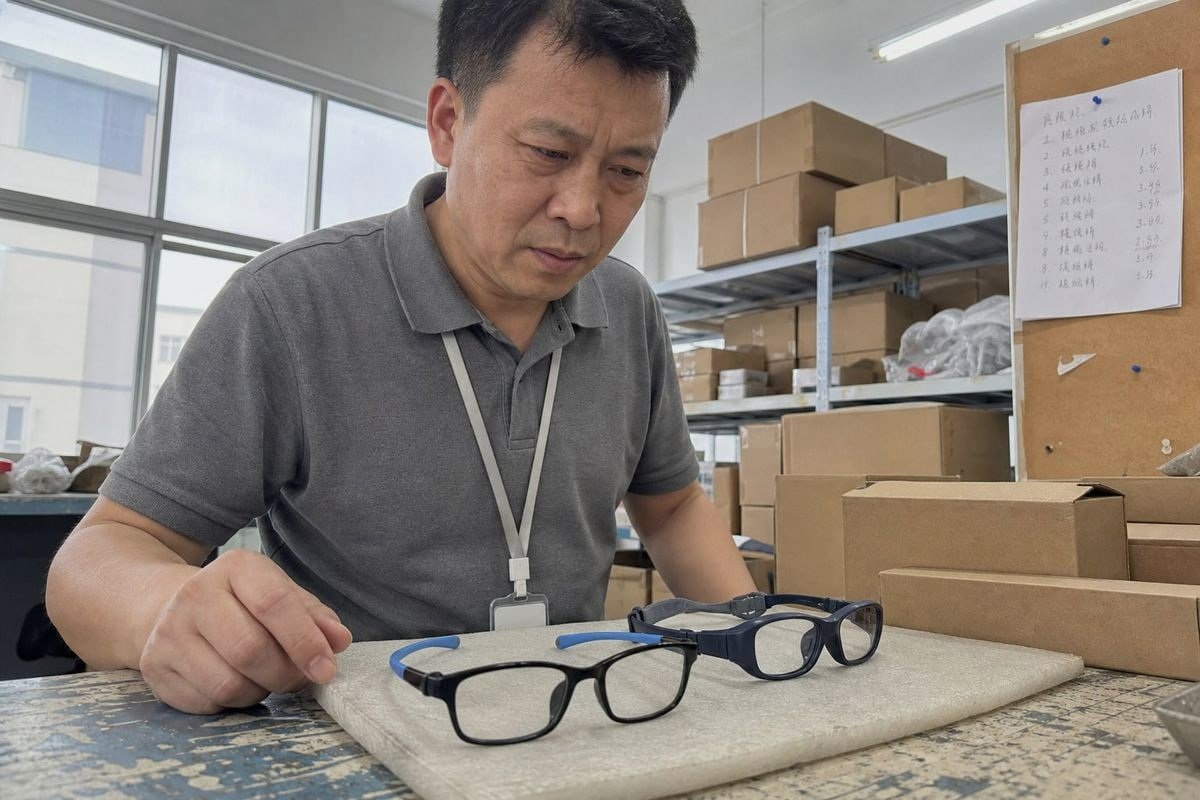
Buyers ask me about regular and sports-protective kids optical frames almost weekly. Mixing them up can mean returns, safety complaints, and a damaged brand — problems our factory helps partners avoid.
Regular kids optical frames are built for everyday vision correction, while sports-protective frames add impact resistance, wraparound coverage, and secure retention. Sports frames use shatterproof materials, polycarbonate lenses, and reinforced construction — often meeting the ASTM F803 standard — to prevent eye injuries during active play.
The difference goes far deeper than looks. Let me walk you through what actually separates these two product categories, from a sourcing and production point of view.
How can I tell if my supplier's "sports" frames are truly built for active kids or just marketed that way?
A procurement manager from Australia once sent me a competitor's "sports frame" sample. It was an ordinary acetate frame with a rubber strap glued on. That is marketing, not engineering.
Genuine sports-protective frames show four verifiable traits: certified impact testing such as the ASTM F803 standard, a wraparound frame design with lens-locking grooves, shock-absorbing padding at the bridge and temples, and a secure retention system. If a supplier cannot document these, the frame is regular eyewear with sporty styling.
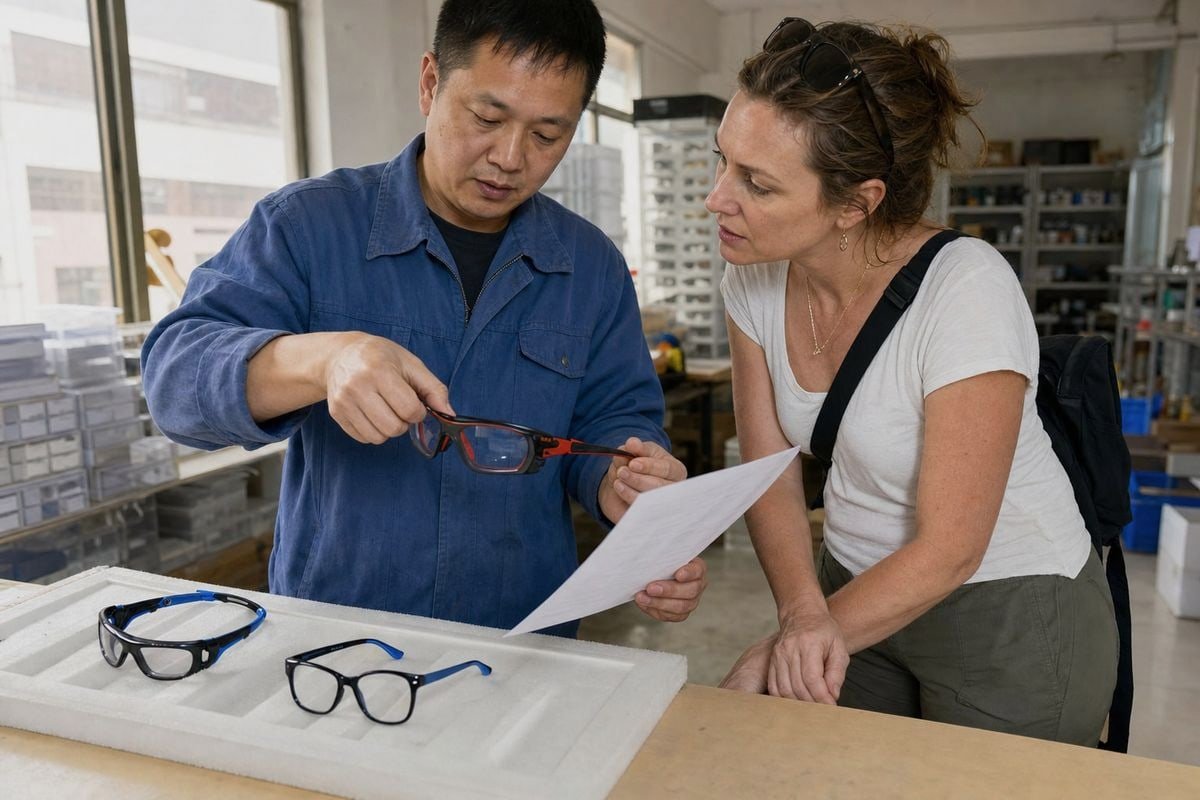
The fastest way to expose a "marketing-only" sports frame is to ask for evidence, not adjectives. In our 15 years making children's eyewear in Taizhou, we have learned that real protective construction leaves a paper trail and physical fingerprints you can check yourself.
Ask for the test documentation first
A true sports-protective frame is a different product category, not a tougher-looking version of regular glasses. The clearest proof is impact certification. The ASTM F803 standard 1 tests eyewear against high-velocity impact — something ordinary optical frames are never designed to pass. Ask your supplier directly: has this model been tested, and can you share the report? A vague answer tells you everything.
Inspect the physical construction
Next, examine the sample with your hands. Here is the checklist we suggest to our own B2B partners:
| What to Check | Regular Frame (Styled as Sport) | True Sports-Protective Frame |
|---|---|---|
| Lens groove | Shallow bevel; lens can pop inward | Deep-grooved eye wire that locks the lens against frontal blows |
| Side coverage | Open gaps at the temples | Wraparound geometry blocking side impacts |
| Bridge contact | Hard plastic on the nose | Silicone bridge padding that disperses energy |
| Retention | Standard ear hooks only | Adjustable head strap or grip-tech temple ends |
| Flex behavior | Snaps or creases under twisting | Flexible temple hinges that bend and recover |
One more tell: press the lens from the front with your thumb. In a real sports frame, the deep groove holds it firmly. In a fake, you will feel it flex toward where a child's eye would be. That single test has saved several of our buyers from bad sourcing decisions.
Which materials actually make optical frames safer for kids who play sports every day?
There is a trade-off we weigh on every new mold: stiffness gives structure, but flexibility absorbs shocks. For active kids, our engineers almost always bias toward flexible, shatterproof materials.
The safest combination pairs a TR90 or high-impact nylon frame with polycarbonate lenses. TR90 flexes instead of snapping, polycarbonate resists shattering on impact, and soft TPEE or silicone contact points cushion the nose and temples. Cellulose acetate and thin metal frames cannot match this impact resistance.
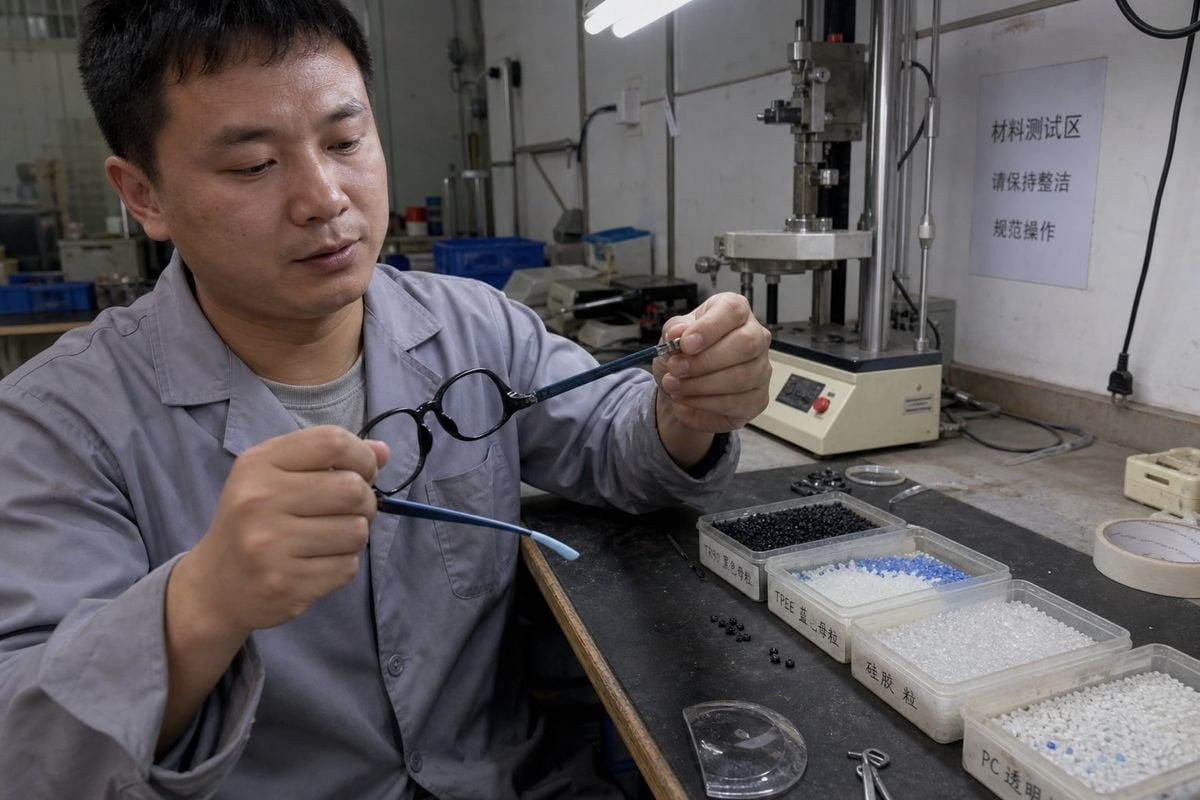
Material choice is where child safety is genuinely won or lost. When we developed our TR90 kids optical frames with TPEE temples, the goal was simple: a frame that survives being sat on, stepped on, and hit by a ball — and never turns into sharp fragments near a child's eye.
Frame materials compared
Regular children's frames typically use cellulose acetate or thin metal alloys. Both work fine for a classroom. Neither behaves well under sports impact. Acetate can crack into sharp edges. Metal can bend permanently and dig into skin. High-impact nylon 2 and TR90, by contrast, deform and bounce back.
| Material | Impact Behavior | Peso | Mejor uso para niños |
|---|---|---|---|
| Cellulose acetate | Can crack or shatter into sharp pieces | Medio | Everyday classroom wear |
| Thin metal alloy | Bends permanently; hinge points fail | Light–medium | Casual, low-activity wear |
| TR90 / high-impact nylon | Flexes and recovers; will not shatter | Muy ligero | Daily wear plus active play |
| TPEE (temples, contact zones) | Soft, rubbery, energy-absorbing | Muy ligero | Grip and comfort on active kids |
Lenses matter just as much
Lentes de policarbonato 3 are the standard for sports eyewear because they are lightweight and extremely impact resistant; Trivex offers similar protection. But here is the nuance many buyers miss: impact-resistant lenses inside a fragile frame are only half a solution. If the frame fails, the lens can still be driven toward the eye. Eye injury prevention depends on the frame and lens working as one system — which is exactly why we specify materials together, never separately, on our production line.
Do sports-protective frames cost more to produce, and how does that affect my wholesale pricing?
Early in my export career, I quoted a sports goggle at regular-frame pricing to win an order. The margin math taught me a lesson I now share openly with buyers.
Yes, sports-protective frames cost roughly 20–40% more to produce than regular kids frames due to thicker material volume, deeper lens grooves, added silicone padding, retention hardware, and impact testing. However, they command higher retail prices and lower return rates, so wholesale margins usually improve.
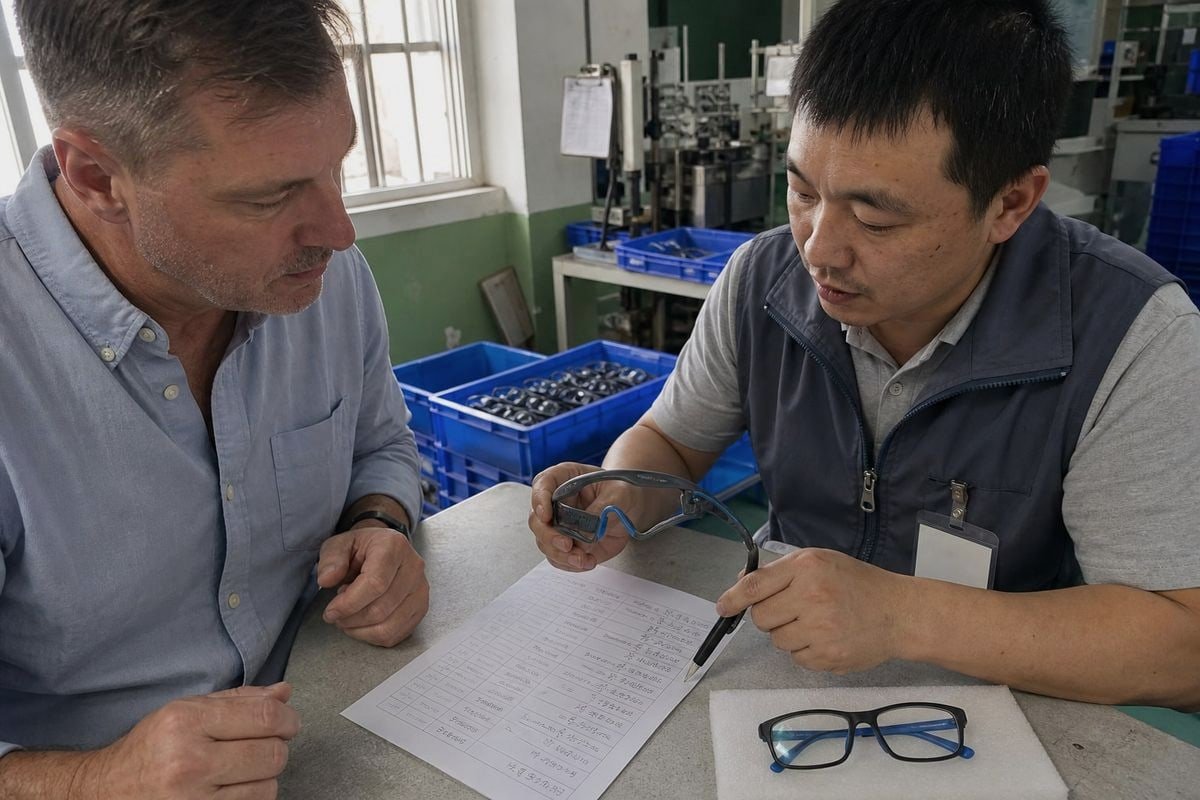
Let me break down where the extra cost actually comes from, because understanding it helps you price your line with confidence rather than guesswork.
Where the added cost sits
First, material volume. A wraparound frame design simply uses more TR90 or nylon than a slim everyday frame. Second, components. Silicone bridge padding, grip-tech temple tips, and an adjustable head strap are separate parts that must be molded, sourced, and assembled. Third, tooling. Deep-grooved eye wires and multi-axis adjustable components require more complex molds and tighter tolerances. Fourth, quality control. In our 5S-managed workshop, protective styles go through additional inspection steps, because a retention failure on a sports frame is a safety issue, not a cosmetic one.
Why the math still works in your favor
Here is the commercial reality we see across our partners in 20+ countries:
| Factor | Regular Kids Frame | Sports-Protective Frame |
|---|---|---|
| Production cost | Línea de base | Higher due to materials, parts, testing |
| Retail price ceiling | Moderado | Noticeably higher; parents pay for safety |
| Return and breakage claims | More frequent with active kids | Lower; frames survive rough use |
| Brand positioning | Commodity risk | Safety-led differentiation |
One practical objection I hear: "My customers just want cheap glasses for occasional sports use." That is a real segment, but the safety trade-off should be explicit in your marketing, not hidden. Brands that lead with certified protection consistently defend better margins than brands competing on price alone. And because buyers can start from our roughly 800 existing styles, you can test a sports-protective range without heavy mold investment — which removes most of the financial risk from the decision.
What should I look for when sourcing sports-safe optical frames for my children's eyewear line?
A Japanese kids' brand recently asked us for one document, one sample test, and one factory video before ordering. That disciplined approach is exactly what I recommend to every buyer.
Prioritize suppliers who offer documented impact testing, shatterproof TR90 or nylon construction with polycarbonate lenses, wraparound coverage with secure retention, child-safe flexible materials, and full OEM/ODM support. Verify factory capability directly — real manufacturers can show production, QC processes, and existing certified styles.
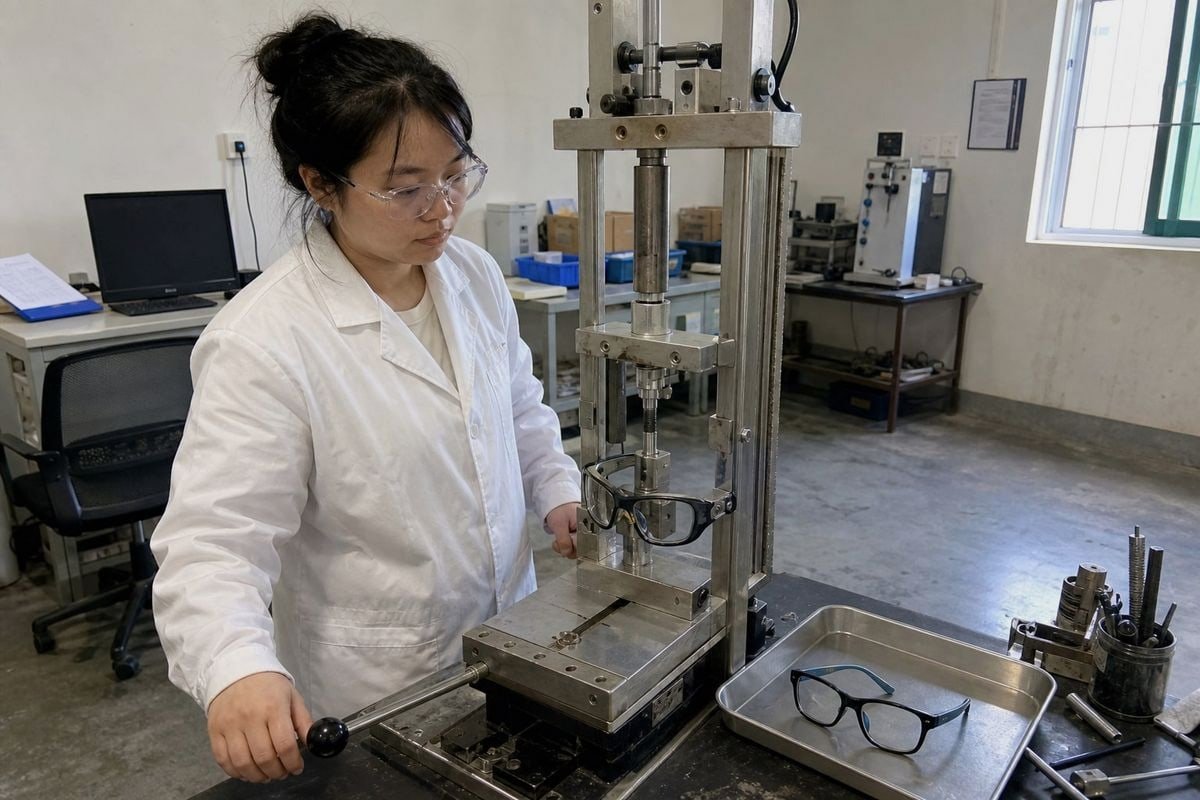
Sourcing sports-safe frames is really a two-part evaluation: judge the product, then judge the partner. I will give you a practical sequence for both, drawn from how our own B2B customers audit us.
Evaluate the product in this order
- Safety documentation. Ask which models meet the ASTM F803 standard or equivalent impact testing, and request the reports.
- Materials. Confirm TR90 or high-impact nylon frames, polycarbonate lenses, and soft TPEE or silicone at every skin-contact point. Environmentally friendly material certificates matter for EU, Japanese, and Australian markets.
- Fit and retention. Check for an adjustable head strap option, non-slip temple ends, and flexible temple hinges that survive repeated twisting. For growing children, multi-axis adjustable components keep the protective seal intact as the nasal bridge develops.
- Field of view. Good frame geometry minimizes frame interference at the edges, which supports a child's spatial awareness during fast play.
- Prescription readiness. If your line includes prescription sports goggles, verify the lens groove accepts Rx polycarbonate lenses without weakening retention.
Evaluate the partner
Confirm you are dealing with a factory, not a trader. Ask for workshop videos, QC checkpoints, and the size of the existing style library. A supplier with a deep catalog — we maintain around 800 styles — lets you launch and iterate quickly. Then test their OEM/ODM depth: custom colors, logos, lens options, and retail-ready packaging. Finally, watch responsiveness. In our experience exporting to demanding markets, communication quality during sampling predicts communication quality during a crisis. Choose the partner who answers hard questions before you place the order.
Conclusión
Regular frames correct vision; sports-protective frames prevent injury. Source certified, shatterproof, well-fitting designs from a proven factory partner, and your children's line earns both trust and margin.
Notas al pie
1. Official site for the ASTM F803 standard used to certify sports-protective eyewear. ↩︎
2. Technical overview of nylon materials used for high-impact resistance in eyewear frames. ↩︎
3. Authoritative medical guidance on the safety benefits of polycarbonate lenses for sports. ↩︎
Más artículos que te podrían gustar
5 de agosto de 2026
Bio-Based vs Regular Cellulose Acetate: What's the Difference for Kids' Frames?
5 de agosto de 2026
How Recyclable Are Kids' Optical Frame Materials, and What Eco-Friendly Alternatives Exist?
5 de agosto de 2026
Do Kids Optical Frames Whiten or Age in Storage, and How to Control Warehouse Conditions?
¿Buscas un socio confiable en gafas para niños?
Explore más de 800 estilos listos y soporte OEM/ODM completo adaptado a su marca.
Ponte en contacto English
  Español de México
  Deutsch
  Français
  日本語
日本語  العربية
  Português do Brasil