What Age Should Kids Start Wearing Sunglasses?
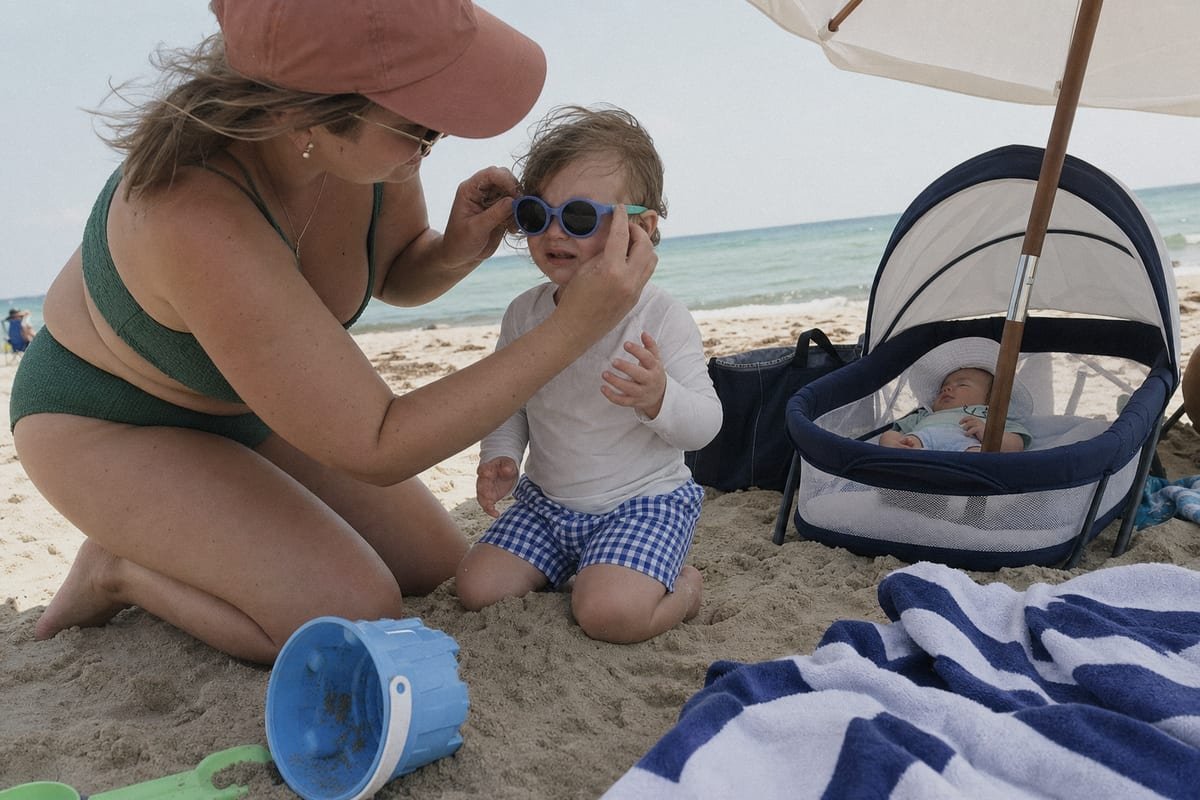
Parents ask us this constantly: what age should kids start wearing sunglasses? On our production line in Taizhou, we build kids’ eyewear daily, and the confusion worries me. Many families wait far too long — while UV damage quietly accumulates in young eyes. The good news is the answer is clearer than most people think.
Kids should start wearing sunglasses at around 6 months old, according to pediatric and ophthalmology guidance. Before 6 months, babies should stay out of direct sun and rely on shade, hats, and stroller canopies. From 6 months onward, choose sunglasses with 100% UV protection whenever children are in bright sunlight.
That is the short answer. But eye protection changes as a child grows. Below, I break down the guidance stage by stage, then explain how to choose safe sunglasses — whether you are a parent or a brand sourcing them.
What age is the right time to introduce sunglasses to my child?
A buyer from Australia once asked me to make sunglasses sized for a 4-month-old. We said no — and after 15 years making children's eyewear, I explained why the age matters more than the fit.
The right age to introduce sunglasses is about 6 months. Infants under 6 months should avoid direct sunlight entirely, using shade and brimmed hats instead. From 6 months on, the American Academy of Ophthalmology supports UV-protective, impact-resistant sunglasses whenever a child is outdoors in bright sun.
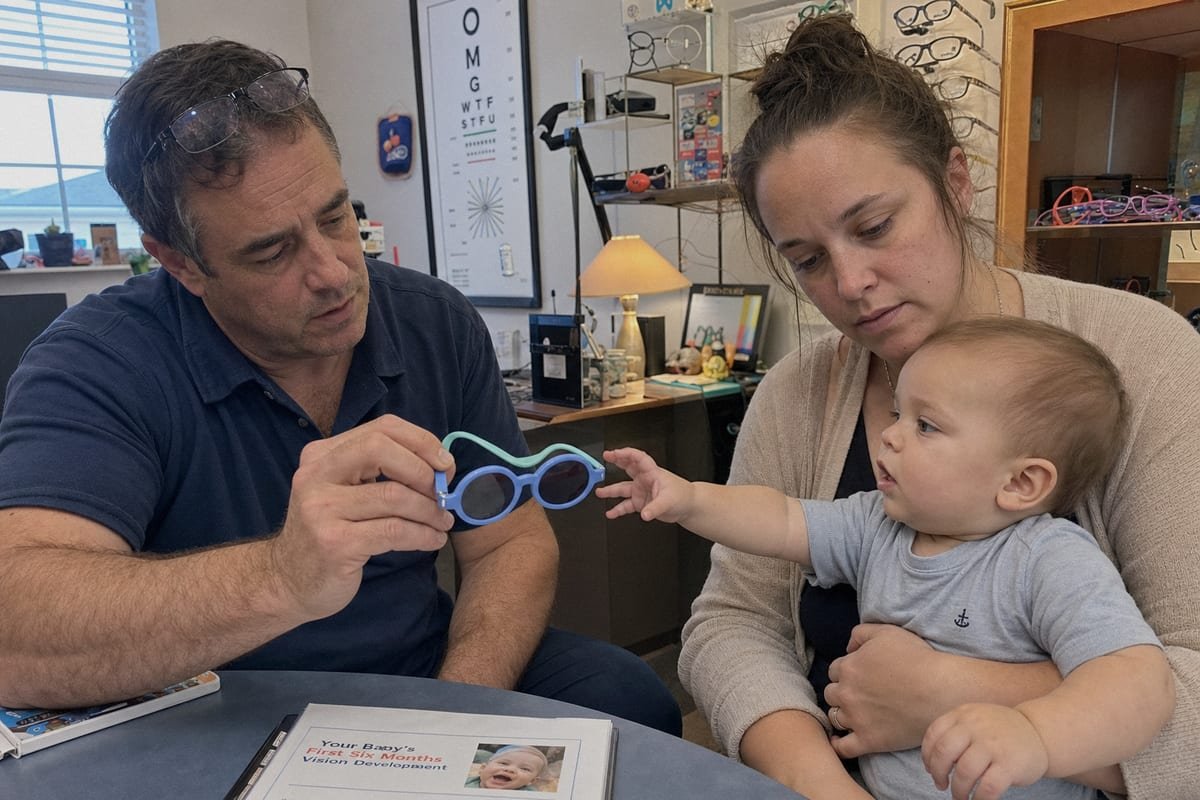
The 6-month guideline is the strongest consensus in pediatric eye care. But protection looks different at each stage of a child’s development. Here is how I explain it to the brands we work with, because their customers ask the same question.
Sun protection by age stage
| Age | Recommended protection | Sunglasses? |
|---|---|---|
| 0–6 meses | Shade, stroller canopy, brimmed hat; no direct sun | Not the primary tool |
| 6–12 months | Shade plus soft, flexible sunglasses with an adjustable head strap | Yes, introduce gradually |
| 1–3 years | Sunglasses in bright sun, hats, sunscreen on skin | Yes, build the habit |
| 3+ years | Sunglasses for most outdoor time, especially beach, snow, water | Yes, consistently |
You may see some ophthalmology sources say sunglasses become advisable "by age 3." That is not a contradiction. It reflects a later, more conservative framing for routine summer use. The mainstream position — and the one the AAO supports — is that there is no reason a child under one year cannot wear sunglasses, as long as the frames meet ANSI Z80.3 safety standards and combine UV plus impact protection.
Why earlier is better
UV damage is cumulative. Some research estimates that half or even up to 80% of a person's lifetime UV exposure 1 happens before age 18. Kids play outside more, and their shorter stature puts their eyes closer to reflective surfaces like sand and pavement. Starting the habit at 6 months means the habit exists at 6 years. In our experience, the toddlers who resist sunglasses least are the ones who started wearing them as babies.
How do I choose safe sunglasses for toddlers and young kids?
Flexibility is the trade-off we weigh most in development. A rigid frame survives a drop test easily — but it can hurt a toddler's face in a fall. That tension shapes almost every design decision we make with TPEE and TR90 materials.
Choose toddler sunglasses with 100% UVA and UVB blocking (UV400), impact-resistant polycarbonate lenses, flexible non-toxic frames, and no sharp edges or small detachable parts. Look for ANSI Z80.3 compliance, a snug close-fitting or wraparound shape, and an adjustable head strap for babies.
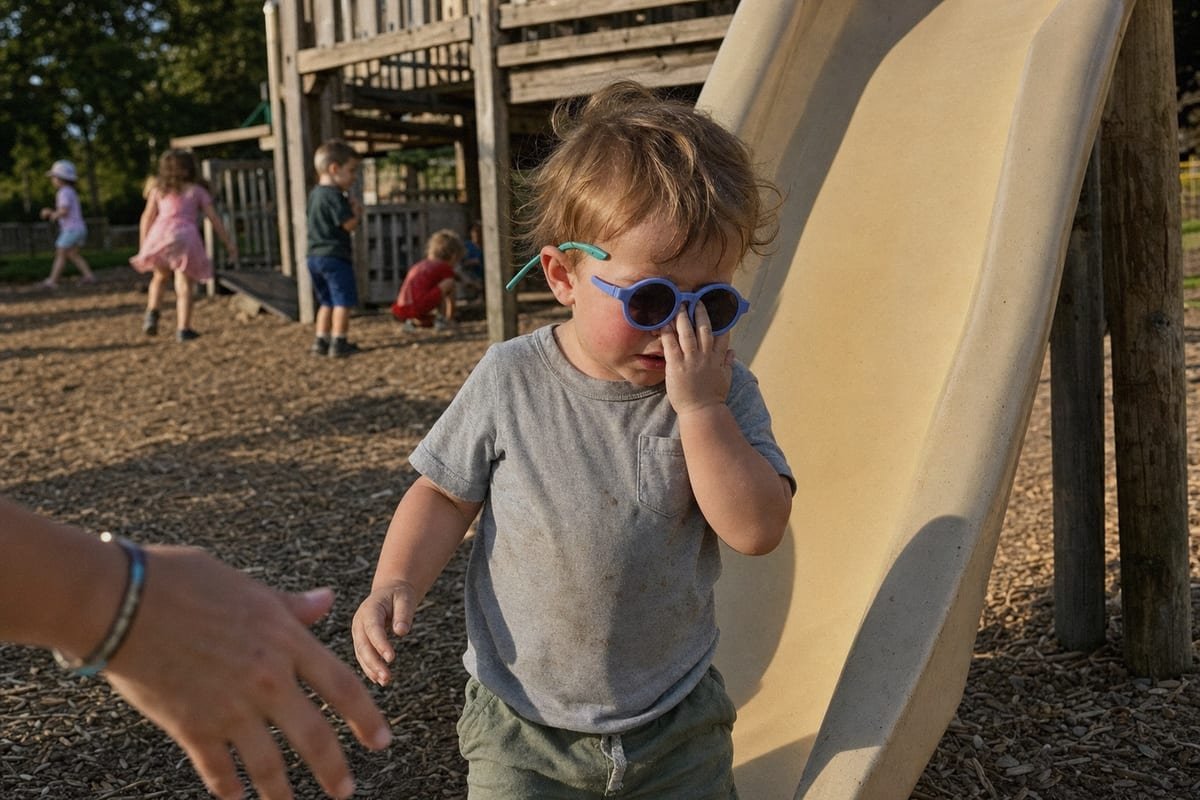
Safety in kids' eyewear comes down to three things: the lens, the frame, and the fit. Let me take them one at a time, because a failure in any one of them undermines the other two.
The lens: protection first
The lens must block 99–100% of rayos UVA y UVB 2. UV400 is the practical benchmark — it means the lens filters light up to 400 nanometers. Darkness is irrelevant. A dark lens with no UV filter is actually dangerous, because it dilates the pupil and lets more UV reach the retina. Lentes de policarbonato 3 are the standard choice for children because they resist shattering on impact. Polarized lenses for children add glare reduction, which helps near water and snow, but polarization is comfort — UV filtering is safety.
The frame: soft, flexible, durable
Kids drop, sit on, bend, and chew their sunglasses. We designed our TR90 frames with TPEE temples specifically because they flex and return to shape instead of snapping into sharp fragments. Check for:
- Flexible, environmentally friendly materials with no BPA or harmful plasticizers
- Smooth hinges with no pinch points
- No small parts that can detach and become choking hazards
- Rounded edges everywhere the frame touches skin
The fit: coverage matters
| Fit feature | Por qué importa |
|---|---|
| Close-fitting or wraparound shape | Blocks UV entering from the sides |
| Adjustable head straps | Keeps glasses on babies and active toddlers |
| Correct bridge sizing | Prevents slipping down small noses |
| Lightweight construction | Reduces pressure marks and encourages wear |
One more warning from our QC floor: cheap novelty sunglasses without verified UV filtering can be worse than no sunglasses at all. If a supplier cannot document the UV rating, walk away.
Why does UV protection matter so much for children's developing eyes?
Early in my career, I assumed kids' eyes were simply small adult eyes. Reviewing pediatric eye care research for our lens specifications taught me how wrong that was — children's eyes are structurally more vulnerable to ocular sun damage.
Children's eyes need UV protection because their crystalline lenses are far more transparent than adults', letting up to 70% more UV radiation reach the retina. With most lifetime UV exposure occurring before age 18, early protection reduces later risks of cataracts, macular degeneration, and ocular growths.
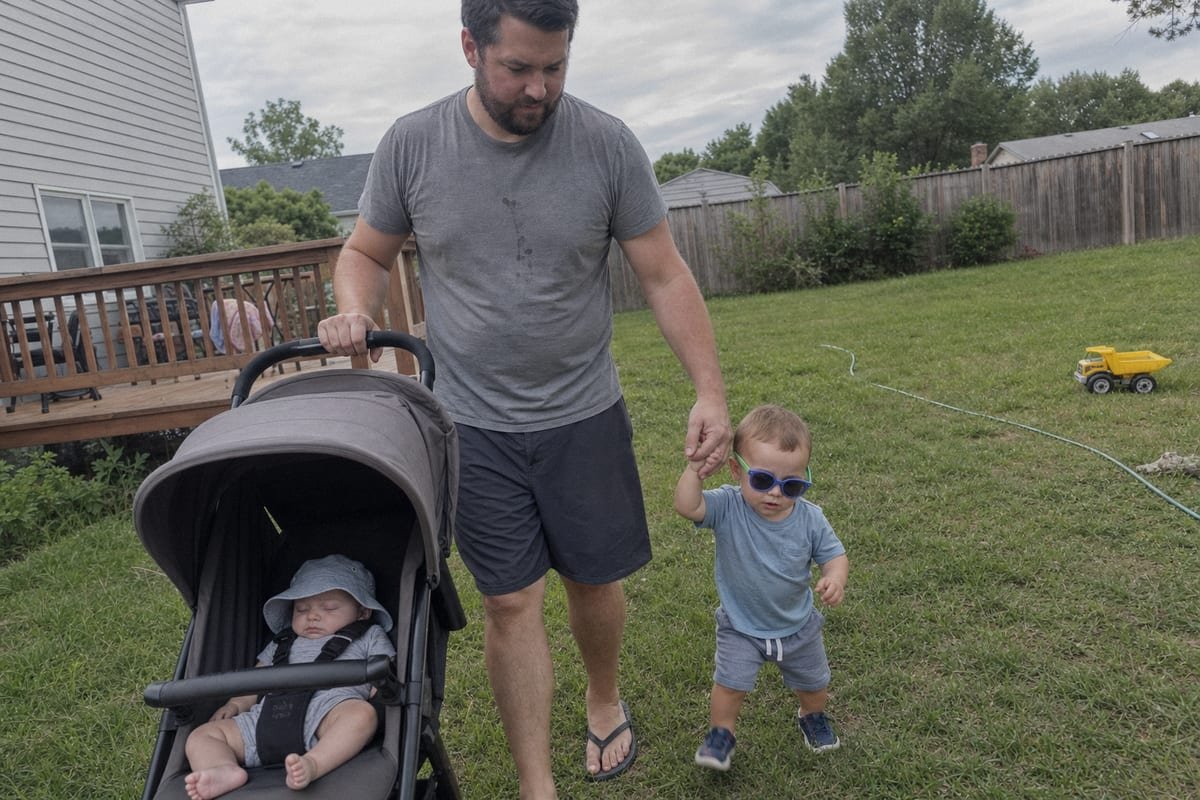
Infant eye health depends on a simple biological fact: young lenses do not filter well. In the first year of life, the lens transmits nearly 100% of UV light 4 straight to the retina. An adult lens naturally yellows with age and filters more UV on its own. A child's lens offers almost no such shield. That makes retinal damage prevention a genuine childhood issue, not just an adult one.
Kids also get more UV, not just filter less
The exposure side of the equation is stacked against children too. Kids spend more hours outdoors than most adults. Their shorter height places their eyes closer to high-albedo surfaces 5 — sand, water, snow, and pavement — which bounce UV upward into the face. And UVA and UVB rays penetrate cloud cover, so overcast days and winter months still deliver a meaningful dose. Snow reflection, in fact, can nearly double exposure.
The long-term stakes
| UV-related risk | What consistent childhood protection does |
|---|---|
| Cataracts | Reduces cumulative lens damage that clouds vision later |
| Macular degeneration | Lowers lifetime retinal UV load |
| Pterygium and other ocular growths | Cuts the surface irradiation that drives them |
| Photokeratitis (sunburned eyes) | Prevents acute damage on beach, water, and snow days |
There is one more subtle mechanism worth knowing. Non-wraparound frames can create a peripheral light-focusing effect: UV entering from the side gets concentrated by the cornea 6 onto the opposite side of the eye. That is exactly why we favor close-fitting geometry in our kids' designs. And because eye development in children includes the visual cortex maturing through early childhood, optical clarity matters too — high-quality lens materials with minimal distortion support clear, comfortable vision during that critical window.
What features should I look for when sourcing kids' sunglasses as a brand?
A procurement manager from Japan once told me her previous supplier shipped frames that snapped at the hinge within weeks. Our team at OKAY EYEWEAR hears versions of that story often — and it always traces back to the same sourcing shortcuts.
Brands sourcing kids' sunglasses should verify 100% UV protection with test documentation, ANSI Z80.3 or equivalent compliance, flexible non-toxic frame materials like TPEE and TR90, impact-resistant polycarbonate lenses, consistent QC processes, and full OEM/ODM support for colors, logos, and retail-ready packaging.

Sourcing children's eyewear is different from sourcing adult fashion sunglasses. The end user cannot judge safety, so your brand carries all the responsibility. Here is the framework I share with buyers from the 20+ countries we serve.
Start with verifiable safety, not price
Ask every supplier for UV400 7 test documentation and material safety data. Then ask how they verify it batch by batch. A factory with a disciplined workshop — ours runs on 5S management with around 120 workers — can show you the process, not just a certificate. If a quote seems too cheap for polycarbonate lenses and food-grade-adjacent frame materials, something was cut.
Evaluate materials like an engineer
Flexible-material expertise is where suppliers separate. TR90 frames with TPEE temples bend, twist, and recover, which matters when a toddler falls face-first onto a playground. Rigid acetate or cheap PC frames do not forgive that impact. Also weigh lens optics: children's visual systems are still developing, so lens materials with low chromatic aberration give cleaner vision than bargain-bin alternatives.
Reduce launch risk with existing styles
New kids' brands often cannot justify heavy mold investment. This is why we maintain roughly 800 existing styles — a brand can pick proven shapes, customize colors, logos, lenses, and packaging through OEM/ODM, and test the market with lower risk. Consider range breadth too: a pastel round frame for toddlers and a wraparound mirrored sport shield for active school-age kids target very different customers, and covering both stages strengthens a children's line.
A quick sourcing checklist
- UV400 / 100% UVA and UVB documentation
- ANSI Z80.3 (or regional equivalent) compliance
- Flexible, eco-friendly frame materials with safety data
- Impact-resistant polycarbonate lenses; polarized options where useful
- Accessories like adjustable head straps for baby sizes
- Consistent QC, on-time delivery, and clear communication
- Retail-ready branded packaging capability
Conclusión
Kids can start wearing sunglasses at 6 months; before that, shade rules. UV damage compounds early, so choose UV400, flexible, safety-certified eyewear — and start the habit young.
Notas al pie
1. FDA consumer guidance on sunglasses supports the cumulative UV exposure claim before adulthood. ↩︎
2. CDC sun safety guidance corroborates the point that UVA and UVB penetrate cloud cover year-round. ↩︎
3. Background on polycarbonate material explains why it resists shattering in children’s eyewear. ↩︎
4. WHO explains UV radiation risks, supporting the claim about infant UV transmission to the retina. ↩︎
5. EPA’s UV Index resource explains how reflective surfaces increase UV exposure risk outdoors. ↩︎
6. Background on corneal anatomy supports the explanation of peripheral UV light-focusing effects. ↩︎
7. Wikipedia’s ultraviolet overview clarifies the 400-nanometer filtering benchmark referenced in the article. ↩︎
Más artículos que te podrían gustar
1 de agosto de 2026
¿Debería la fábrica encargarse del embalaje y etiquetado de las gafas de sol para niños, o utilizar un proveedor designado?

1 de agosto de 2026
Almacén propio vs. Cumplimiento directo del proveedor: ¿Qué reduce los costos de devolución para las marcas de gafas de sol para niños?

1 de agosto de 2026
Directo al almacén del puerto o staging en el extranjero: ¿Cuál ahorra más en el envío de gafas de sol para niños?
¿Buscas un socio confiable en gafas para niños?
Explore más de 800 estilos listos y soporte OEM/ODM completo adaptado a su marca.
Ponte en contacto English
  Español de México
  Deutsch
  Français
  日本語
日本語  العربية
  Português do Brasil