Do Kids’ Sunglasses Packaging Materials Need to Meet Environmental Standards?
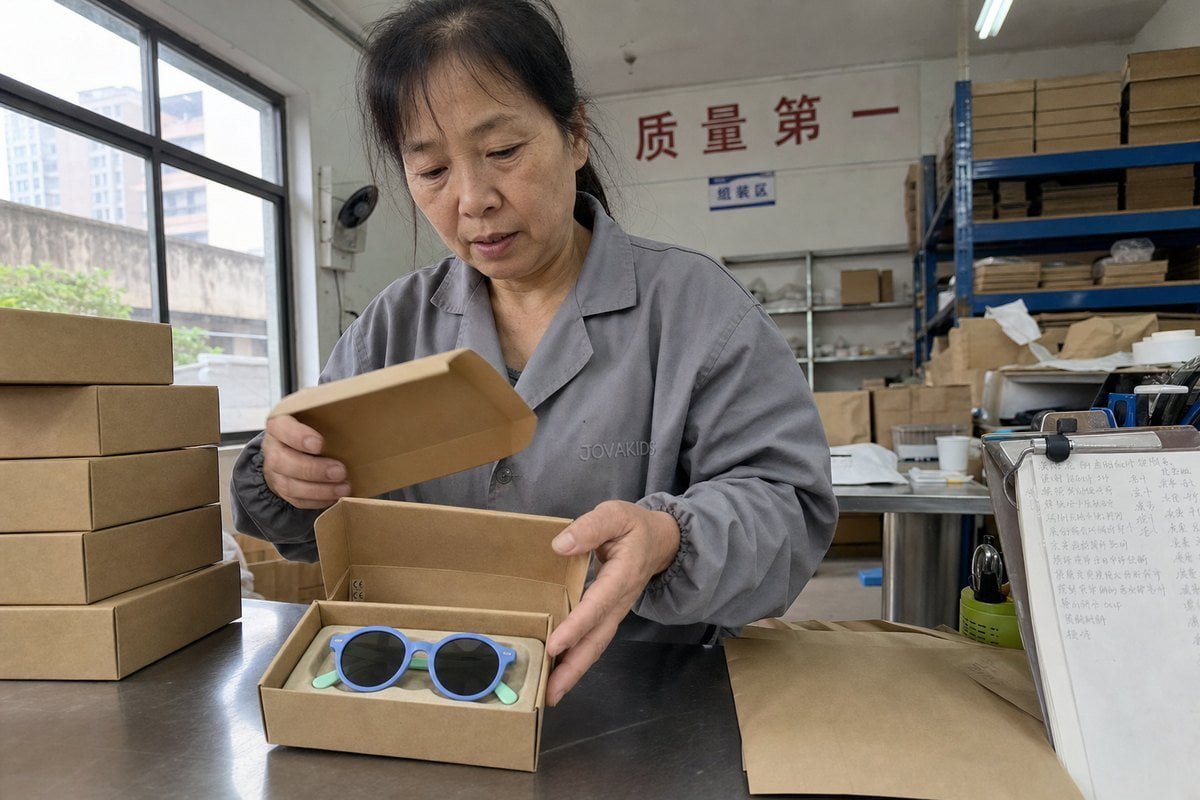
Kids’ sunglasses packaging materials cause real headaches on our production line EU PPWR 1. Buyers keep asking for greener boxes, regulators keep tightening rules, and getting either wrong can block a shipment or damage a brand.
Kids’ sunglasses packaging materials do not fall under one universal environmental law, but in practice they must meet regional rules like the EU PPWR, CPSIA, and REACH, plus truthful-labeling requirements. Retailers and parents also increasingly expect recyclable, minimal, and honestly labeled packaging.
So the short answer is yes, in a practical sense REACH regulation 2. Let me walk you through what that means for your orders, your costs, and your shelf presentation.
How do I verify a supplier's eco-friendly packaging claims before placing a bulk order?
Last year, a buyer from Europe asked us to prove our paperboard boxes were actually recyclable before signing a 20,000-unit order. That request taught our team a lot about documentation.
Verify eco-friendly packaging claims by requesting material specification sheets, third-party test reports, and certification documents such as FSC chain-of-custody numbers. Then cross-check certificate validity online, ask for physical samples, and confirm the supplier can trace materials back to named upstream sources.
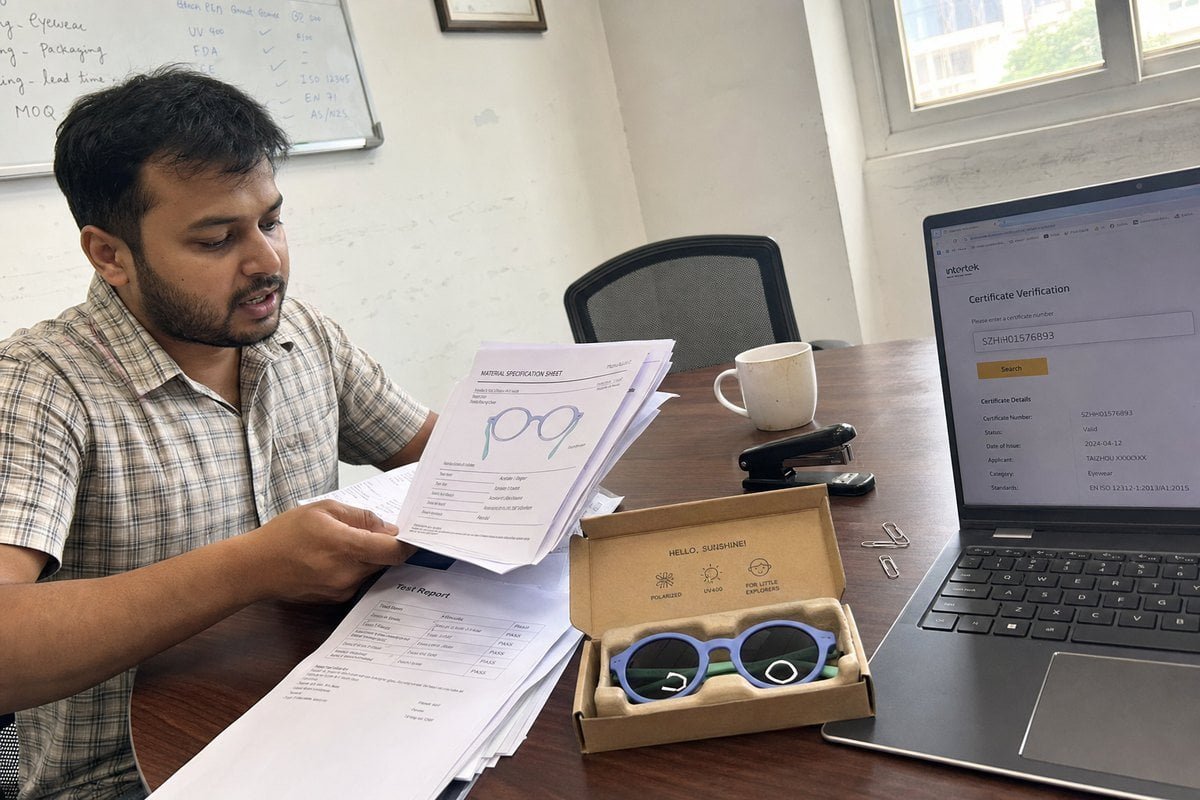
Vague promises are cheap. Real proof takes paperwork, and a serious factory will not hesitate to share it. In our experience exporting children’s eyewear to 20+ countries, the buyers who ask the sharpest questions before ordering have the fewest problems after delivery.
Start with documents, not promises
Ask your supplier for these items before you commit:
- A material specification sheet naming the exact paperboard, pulp, or film used.
- Test reports covering restricted substances, which matters for CPSIA 3 compliance in the US and the REACH regulation in Europe.
- Certificate numbers you can verify yourself, such as an FSC license code FSC certification 4 checked on the official FSC database.
- Photos or samples of the actual packaging, not renderings.
- A written statement on recycled content percentage, if any is claimed.
Check the claim against reality
A claim like "biodegradable" means little without context. Biodegradable packaging materials should come with information on the conditions required, such as home composting versus industrial composting. If a supplier cannot explain the difference, treat that as a warning sign.
| Verification Step | Ley de seguridad de productos de consumo | Señal de alerta |
|---|---|---|
| Material identity | Spec sheet with material grade | Only marketing terms like "green board" |
| Seguridad química | REACH / CPSIA test reports | Reports older than 2 years or missing lab name |
| Certification | FSC or similar certificate number | Logo used with no traceable number |
| Recycled content | Percentage stated in writing | "Made with recycled materials" with no figure |
| Traceability | Named upstream paper or pulp source | Supplier refuses to disclose origin |
Finally, order a pre-production sample. Feel the board weight, check the inks, and confirm the print matches the report. We encourage this at our factory because samples settle arguments faster than emails ever do.
Which environmental certifications should I look for in kids' sunglasses packaging?
One trade-off we weigh constantly is which certifications genuinely matter versus which ones just decorate a brochure. Our sales team gets this question weekly from brand buyers.
Look for FSC certification for paperboard, compostability certifications like EN 13432 or ASTM D6400 for pulp trays, GRS for recycled content, and safety compliance under CPSIA, REACH, and Proposition 65. These cover fiber sourcing, end-of-life claims, recycled inputs, and chemical safety.
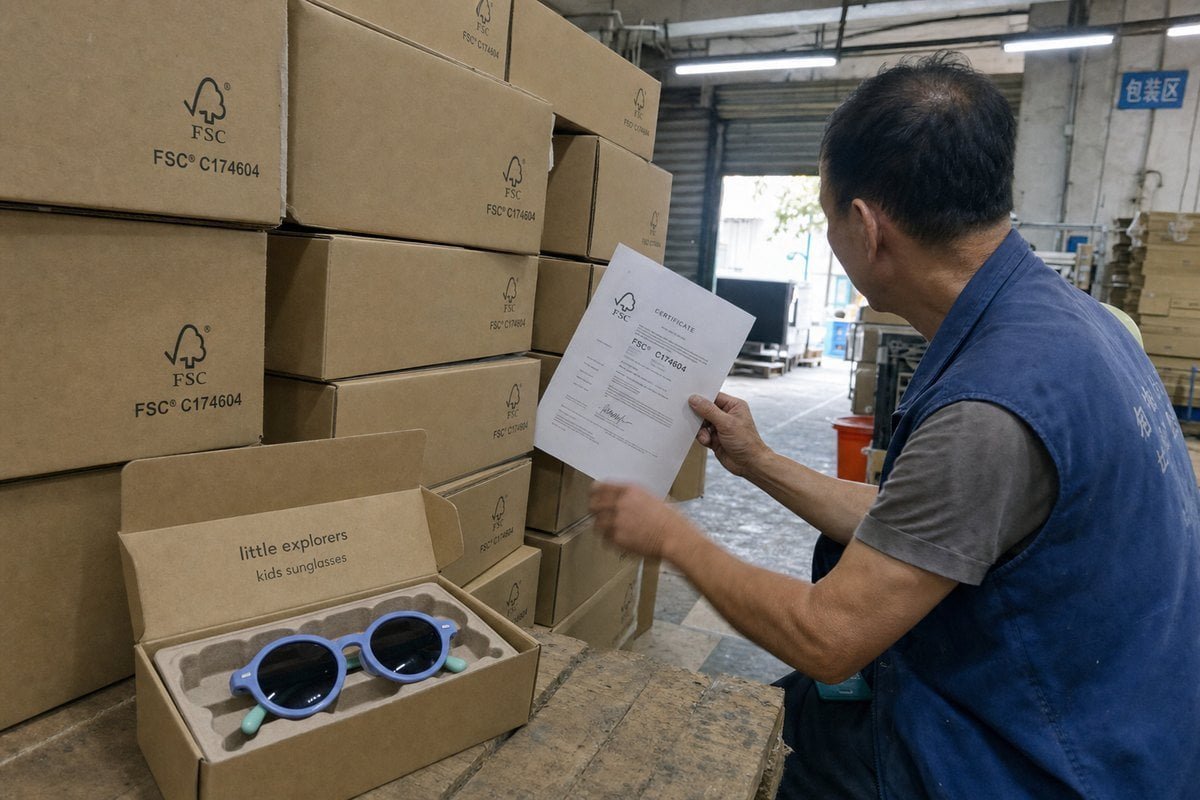
No single certificate covers everything. Green packaging certifications each answer one specific question, so smart buyers stack two or three rather than chasing one magic label.
The certifications that actually matter
| Certification / Rule | Lo que demuestra | Mejor para |
|---|---|---|
| FSC | Fiber comes from responsibly managed forests | FSC certified paperboard boxes and hang tags |
| GRS (Global Recycled Standard 5) | Verified recycled content with chain of custody | Recycled PET pouches and cases |
| EN 13432 / ASTM D6400 | Industrial compostability | Molded pulp inserts and trays |
| OK Compost HOME | Home compostability | Coated papers and bio-films |
| CPSIA | Limits on lead and phthalates in children's products | Any packaging a child may handle |
| REACH | Restricted substances compliance in the EU | Inks, coatings, adhesives |
| California Prop 65 6 | Chemical disclosure for the US market | Packaging sold into California |
Safety certifications come first for children's products
Here is a point many buyers miss. For kids' sunglasses, chemical safety rules are mandatory, while sustainability certifications are mostly voluntary. A pulp box can be perfectly compostable and still fail CPSIA if the printing ink contains lead. That is why we insist on non-toxic dyes and inks across our packaging options, and why we treat REACH documentation as standard for European shipments, not as a premium add-on.
Watch the regulatory horizon
The EU Packaging and Packaging Waste Regulation is introducing mandatory recycled-content targets from 2026 onward. If you sell into Europe, choosing packaging with verified post-consumer recycled content now saves you a painful redesign later. Building a sustainable supply chain is easier when you plan two years ahead instead of reacting to a customs notice.
Will sustainable packaging materials affect my product's cost or shelf presentation?
A distributor in Australia once told me he feared eco packaging would look "like a brown lunch bag" next to glossy competitors. We sent him printed samples, and he changed his mind within a week.
Sustainable packaging typically adds a modest cost of a few cents to tens of cents per unit, depending on material and print. Shelf presentation does not suffer; FSC paperboard, molded pulp, and soy-based inks now support premium finishes, vivid colors, and strong retail impact.

The cost question deserves an honest answer, so let me break it down the way we present it to our own B2B customers.
Where the cost actually changes
| Packaging Element | Conventional Option | Sustainable Option | Typical Cost Impact |
|---|---|---|---|
| Caja exterior | Coated board with plastic window | FSC certified paperboard, die-cut window | Slight increase |
| Insert | Foam or PVC tray | Molded pulp or paper tray | Similar or slightly higher |
| Bolsa | Virgin polyester microfiber | Recycled PET microfiber | Small increase |
| Case | Mixed-material hard case | Recyclable eyewear cases in single material | Comparable |
| Ink | Standard solvent inks | Soy or water-based non-toxic inks | Minimal |
| Shipping fill | Plastic air pillows | Paper void fill, plastic-free shipping | Minimal |
Two factors soften the increase. First, sustainable design usually means right-sizing. A smaller box uses less material and cuts freight cost per carton, which often offsets the material premium. Second, volume matters. At production quantities, the gap between conventional and eco options narrows considerably.
Shelf presentation can actually improve
Unbleached kraft and pulp textures now signal quality to parents, not compromise. Natural fibers also avoid the chemical smell some recycled plastics carry, which matters for sensory-sensitive children. Pair a clean pastel frame, like our periwinkle-and-mint round style, with an uncoated kraft box, and the product photographs beautifully. For our sport shield styles with mirrored gradient lenses, a matte recycled board makes the lens colors pop even harder. Protection is not sacrificed either. Molded pulp holds fragile lenses firmly during global shipping, and we drop-test cartons before approving any new packaging structure.
Can I request custom eco-friendly packaging that still meets my brand's retail standards?
When we developed a custom packaging program for a Japanese kids' brand, their checklist ran three pages: colors, barcode zones, hang-hole strength, unboxing feel. We met every line using recyclable materials.
Yes. Reputable OEM/ODM factories can produce fully custom eco-friendly packaging, including branded FSC boxes, molded pulp inserts, recycled PET pouches, and soy-ink printing, while meeting retail requirements for barcodes, hang tags, display strength, and consistent brand colors across production runs.
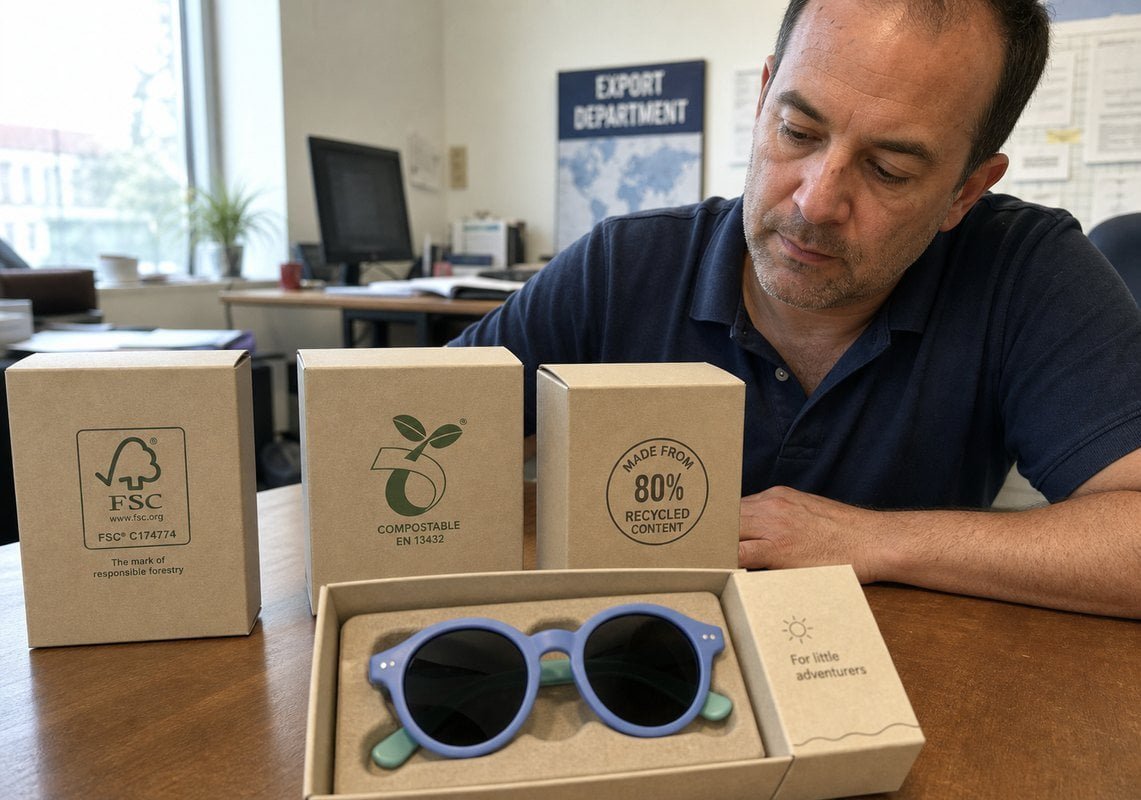
Custom does not mean complicated. It means making deliberate choices in the right order. Here is the process we follow at our factory for OEM packaging projects.
A practical custom packaging workflow
- Define retail requirements first. Hang or shelf display, barcode placement, language panels, and any retailer-specific rules.
- Choose the material system. FSC certified paperboard for the box, pulp or paper insert, and a recycled PET pouch if you want a reusable element.
- Design for one material stream. Mono-material packaging is easier to recycle than glued mixed materials, which supports genuine circular economy 7 claims.
- Select inks and finishes. Non-toxic dyes and inks, no plastic lamination if you want compostability, and consider a QR code linking to your sustainability story or a digital product passport.
- Sample, test, and approve. Drop tests, humidity checks, and print color matching before mass production.
Think beyond the first use
Second-life design is a growing trend we like. A box that folds into a small storage case, or an insert printed as a coloring activity, turns packaging from waste into part of the product experience. Kids keep it, parents appreciate it, and your brand stays on the shelf at home.
Keep your claims as clean as your design
Whatever you print, make sure you can back it up. Say "FSC certified box" with the license code rather than a vague "eco-friendly" stamp. Modern consumers, and modern regulators, prefer specific, verifiable statements. We help buyers word these claims correctly because a beautiful box with a legally risky claim is not retail-ready at all.
Conclusión
Ignoring packaging standards risks blocked shipments and lost trust. Verify claims, stack the right certifications, budget honestly, and customize wisely. Sustainable kids' sunglasses packaging protects your product, your brand, and your buyers.
Notas al pie
1. Official EU source explaining Packaging and Packaging Waste Regulation requirements referenced in article. ↩︎
2. Authoritative European Commission overview of the REACH chemical regulation. ↩︎
3. Official US regulatory source for CPSIA compliance mentioned throughout article. ↩︎
4. Official FSC site where chain-of-custody certificates can be verified as described. ↩︎
5. Authoritative source detailing GRS certification for recycled content mentioned in article. ↩︎
6. Official California OEHHA page explaining Prop 65 chemical disclosure requirements cited in article. ↩︎
7. Background concept link explaining circular economy principles referenced regarding mono-material design. ↩︎
Más artículos que te podrían gustar

1 de agosto de 2026
¿Debería la fábrica encargarse del embalaje y etiquetado de las gafas de sol para niños, o utilizar un proveedor designado?
1 de agosto de 2026
Almacén propio vs. Cumplimiento directo del proveedor: ¿Qué reduce los costos de devolución para las marcas de gafas de sol para niños?
1 de agosto de 2026
Directo al almacén del puerto o staging en el extranjero: ¿Cuál ahorra más en el envío de gafas de sol para niños?
¿Buscas un socio confiable en gafas para niños?
Explore más de 800 estilos listos y soporte OEM/ODM completo adaptado a su marca.
Ponte en contacto English
  Español de México
  Deutsch
  Français
  日本語
日本語  العربية
  Português do Brasil