Do Kids’ Optical Frames Qualify for Vision Care Plan Reimbursement?

Buyers ask our factory this constantly: do kids’ optical frames qualify for vision care plan reimbursement Essential Health Benefit 1? Get it wrong, and parents abandon carts, retailers complain, and reorders stall.
Yes, kids’ optical frames usually qualify for vision care plan reimbursement when the frames hold prescription lenses, the child is within the plan’s age limit, and the purchase follows the plan’s frame allowance, network rules, and 12- or 24-month frequency limits.
That short answer hides a lot of fine print. Below, I break down the documentation, materials, retail strategies, and OEM/ODM questions that decide whether a claim gets paid.
What documentation do I need from my manufacturer to support insurance claims for kids' optical frames?
Last year, a European optical distributor emailed us in a panic. A vision plan had rejected a batch of claims because the frames lacked clear material and origin documentation 2. We fixed it within a week.
To support insurance claims, you need itemized invoices showing frame model, material, and unit price, plus safety and material compliance certificates, country-of-origin records, and clear product identification on the frame itself. Plans verify claims against an itemized medical receipt, so documentation must match at every level.

In our fifteen years supplying children's and baby product brands across twenty-plus countries, we have learned that vision insurance coverage lives or dies on paperwork. The insurer never sees your factory. They only see the paper trail. So that trail must be complete, consistent, and easy for an optician or parent to pass along.
The core document set
Here is what we prepare for buyers who sell into markets with strong pediatric eye care benefits:
| Documento | Why insurers care | Who uses it |
|---|---|---|
| Itemized commercial invoice | Separates frame cost from lens cost for allowance calculations | Retailer, claims processor |
| Material declaration (TR90, TPEE) | Confirms the product is prescription-ready optical hardware, not a toy | Optical retailer, plan auditor |
| Safety test reports | Supports "qualified medical expenses 3" status for FSA HSA eligibility | Brand compliance team |
| Model and size markings on temple | Lets opticians match the frame to the itemized medical receipt | Dispensing optician |
| Country-of-origin certificate | Required for import compliance and some audit trails | Importer, customs broker |
Why itemization matters most
Many plans pay a fixed annual frame allowance and a separate lens benefit. If the invoice bundles frame and corrective lenses into one line, the claim can stall or get underpaid. We coach our OEM clients to keep frame SKUs, prices, and descriptions distinct in every document, from our packing list to their retail receipt. A parent filing out-of-network claims needs the same clarity: date of purchase, frame description, prescription reference, and the amount paid for the frame alone.
One more lesson we learned the hard way: markings must survive daily use. We laser-etch or pad-print model numbers so they stay legible after months on an active child's face.
Which frame materials and features are typically eligible under vision care plans?
There is a trade-off we weigh on every new development project: how flexible and playful can a kids' frame be before an insurer stops seeing it as medical hardware?
Vision care plans cover any frame material that holds prescription lenses, including TR90, acetate, TPEE-tempered designs, and metal. Eligibility depends on function, not material. Impact-resistant polycarbonate lenses are often fully covered for children, while non-prescription sunglasses, smart frames, and standalone sports goggles are typically excluded.
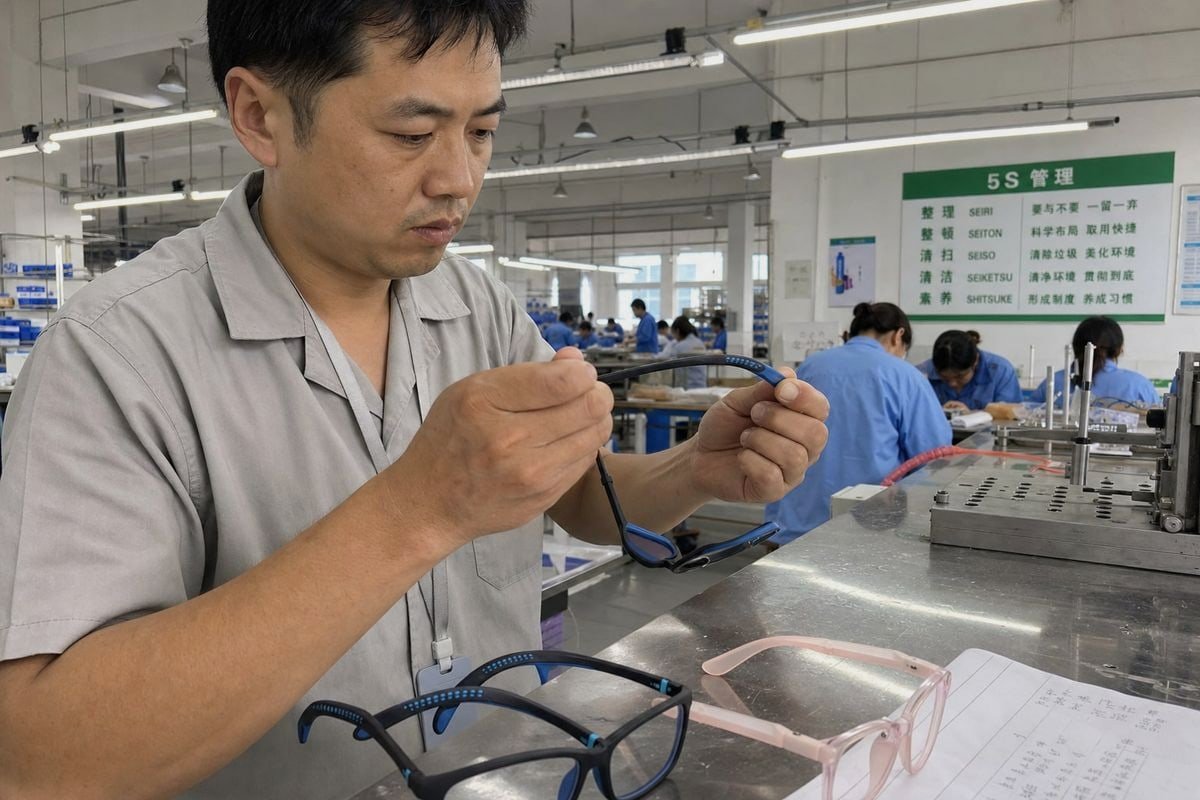
When we develop a new TR90 kids optical frame with TPEE temples on our production line, we design it as a medical device first and a fashion item second. That mindset matters, because plans draw a sharp line between prescription eyewear benefits and general merchandise. A glossy black frame with flexible rubber temples and silicone ear hooks, like one of our best-selling active styles, qualifies exactly the same as a translucent pink acetate frame, as long as both carry corrective lenses.
Material eligibility at a glance
| Material or feature | Typical plan treatment | Notas |
|---|---|---|
| monturas TR90 | Eligible | Lightweight, flexible, ideal for pediatric fitting |
| TPEE temples and hinges | Eligible | Function as part of a standard prescription frame |
| Acetate frames | Eligible | Common in fashion-forward kids' styles |
| Lentes de policarbonato | Often fully covered for kids | Impact resistance is a safety standard for children |
| Non-prescription sunglasses | Usually excluded | No corrective function |
| ASTM F803 sports goggles | Often excluded from materials benefit | May need a separate medical necessity claim |
| Smart or wearable-tech frames | Frequently denied | Classified as wearable tech, not optical materials 4 |
Features that strengthen eligibility
Safety features do not just satisfy parents. They align the frame with pediatric eye care standards 5 insurers recognize. Flexible temples that will not snap, hingeless or spring designs, silicone grips, and rounded edges all signal purpose-built children's medical eyewear. Plans generally also cover frames used with myopia management lenses, and in some cases those can be billed as medically necessary, which can bypass a standard allowance cap.
The exclusions matter just as much. Emerging pediatric smart frames for posture or screen-time tracking get denied often, because insurers categorize them outside optical materials. We advise our brand clients to keep tech features separate from their insurance-eligible optical lines.
How can I help my retail customers maximize their reimbursement when buying kids' optical frames?
A wholesale buyer from Australia once told me her opticians lost sales whenever a frame priced just above the local annual frame allowance. We re-tiered her assortment around common allowance levels, and sell-through improved noticeably.
Help customers maximize reimbursement by stocking frames at common allowance price points, encouraging in-network purchases, timing replacements to 12- or 24-month benefit cycles, providing itemized receipts, and reminding parents that FSA HSA eligibility covers any balance above the plan's frame allowance.
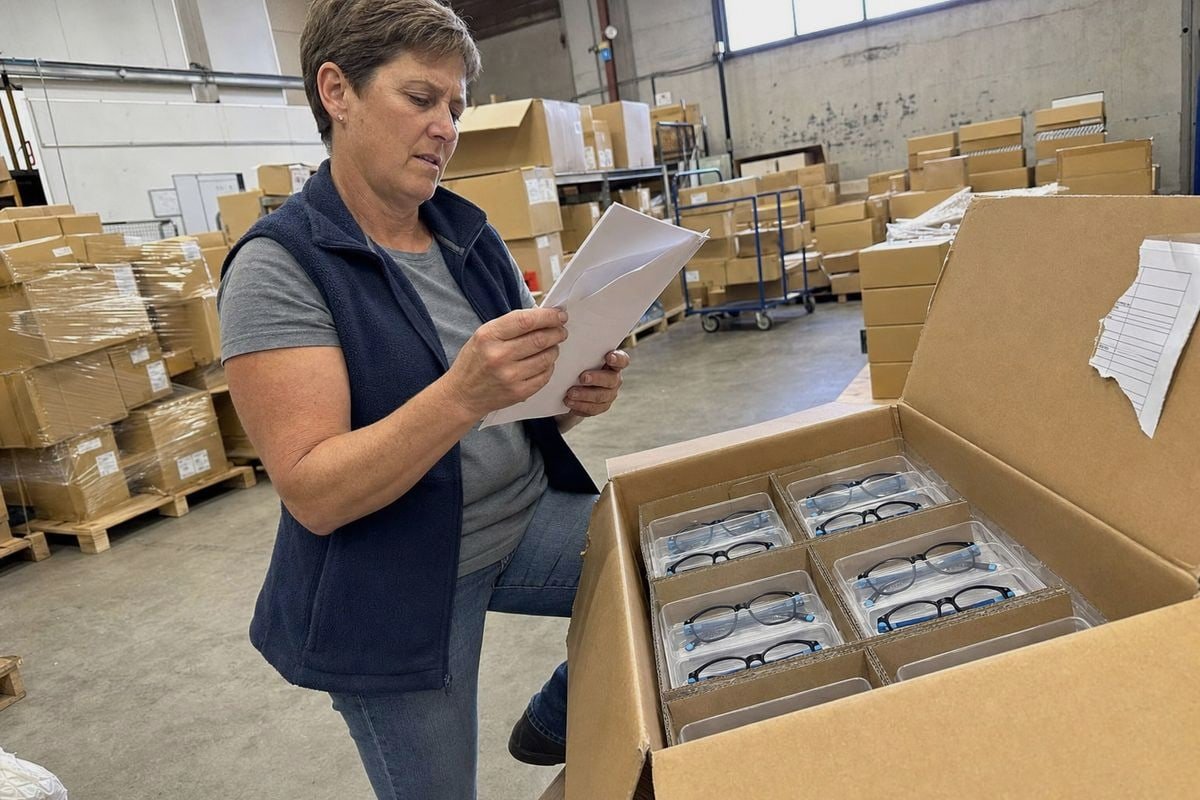
Our export experience across pediatric markets has taught us that reimbursement strategy starts at assortment planning, long before a parent walks into a store. Under the ACA, pediatric vision is an Essential Health Benefit 6, so children under 19 in compliant plans typically get an annual eye exam plus one pair of glasses, frames included. But the mechanics vary, and retailers who understand the three main benefit models can guide parents to the lowest out-of-pocket cost.
The three common benefit models
- Fixed allowance. The plan pays a set amount, commonly $100 to $150, sometimes up to $200. The family pays the balance, though some plans discount the overage by around 20%.
- Designated collection. Some plans fully cover frames from a value collection or tower selection, meaning zero out-of-pocket for parents. Retailers who stock collection-eligible frames win these sales automatically.
- Percentage reimbursement. A few plans reimburse a share of covered charges, such as 50% after an initial member payment, or 80% of reasonable and customary charges up to a cap.
Practical numbers to share with retailers
| Scenario | Frame price | Plan pays | Family pays |
|---|---|---|---|
| In-network, $150 allowance | $140 | $140 | $0 |
| In-network, $150 allowance | $190 | $150 + 20% off $40 | $32 |
| Out-of-network, $55 cap | $140 | $55 | $85 |
| Designated collection frame | $120 | $120 | $0 |
The out-of-network row is the trap. Out-of-network claims often reimburse only a small capped amount, and families must pay upfront and file paperwork themselves. Retailers should verify network status before the sale, not after. They should also flag vision plan copayments upfront and remind parents that any uncovered balance on prescription frames usually counts as qualified medical expenses 7 for FSA or HSA funds. Finally, watch the frequency limit: many plans allow one pair every 12 months for children, others every 24 months, and some contact-lens benefits replace the frame benefit for that same cycle.
Do custom OEM/ODM frames still qualify for vision care plan coverage?
Early in our OEM program, a startup brand worried that private-label frames would be treated differently from big-name frames at claim time. That fear turned out to be a myth worth debunking properly.
Yes, custom OEM/ODM frames qualify for vision care plan coverage exactly like branded frames. Insurers reimburse based on the prescription, the itemized frame price, and network status, never the brand name. Custom colors, logos, and packaging have no effect on eligibility as long as the frame holds corrective lenses.

Across roughly 800 existing styles in our catalog, plus every custom project our 120-person factory has produced, we have never seen a claim denied because the frame carried a private label instead of a global brand. Vision insurance coverage is brand-agnostic by design. The claims processor checks three things: is there a valid prescription, does the itemized medical receipt show a frame purchase, and was the seller in-network. A custom-logo TR90 frame from our Taizhou workshop clears those checks the same way a designer frame does.
What actually matters for OEM/ODM eligibility
There are, however, real responsibilities on the OEM side. Since the "brand of record" is your brand, your product must independently satisfy safety and quality expectations. We handle this in three layers:
- Compliant materials. Our TR90 and TPEE formulations are environmentally friendly and tested for the safety standards of each destination market, which keeps the product firmly inside prescription eyewear benefits.
- Consistent identification. Custom frames get permanent model numbers and size markings, so opticians can document the exact product on the claim.
- Retail-ready presentation. Branded packaging with clear product information helps opticians and parents complete claims without guesswork.
One nuance worth planning around: designated frame collections. If a plan fully covers only frames from its own catalog, a new private-label frame will not be in that catalog initially. It will still qualify under the standard annual frame allowance, just not under the zero-cost collection tier. For most brands, pricing custom frames near common allowance levels solves this neatly. Growth-spurt replacement clauses in newer high-tier plans also apply to OEM frames, which rewards designs with adjustable, flexible fits that grow with the child.
Conclusión
Kids' optical frames usually qualify for vision care plan reimbursement. Documentation, eligible materials, smart pricing, and OEM-ready compliance decide how smoothly parents get paid, and how reliably your frames sell.
Notas al pie
1. Clarifies ACA classification determining mandatory pediatric vision coverage requirements for insurers. ↩︎
2. Explains the importance of origin documentation in international trade and compliance audits. ↩︎
3. Official IRS guidance on medical expenses eligible for tax-advantaged accounts like FSA and HSA. ↩︎
4. Technical overview of materials used in corrective lenses and optical hardware. ↩︎
5. Provides clinical guidelines and standards for children’s vision health from the AOA. ↩︎
6. Defines the ACA requirement for pediatric vision coverage as a core health service. ↩︎
7. IRS Publication 502 defines qualified medical expenses eligible for FSA or HSA reimbursement. ↩︎
Más artículos que te podrían gustar

5 de agosto de 2026
Bio-Based vs Regular Cellulose Acetate: What's the Difference for Kids' Frames?

5 de agosto de 2026
How Recyclable Are Kids' Optical Frame Materials, and What Eco-Friendly Alternatives Exist?
5 de agosto de 2026
Do Kids Optical Frames Whiten or Age in Storage, and How to Control Warehouse Conditions?
¿Buscas un socio confiable en gafas para niños?
Explore más de 800 estilos listos y soporte OEM/ODM completo adaptado a su marca.
Ponte en contacto English
  Español de México
  Deutsch
  Français
  日本語
日本語  العربية
  Português do Brasil