How to Verify Polarization and Impact Resistance Claims for Kids’ Sunglasses Suppliers?
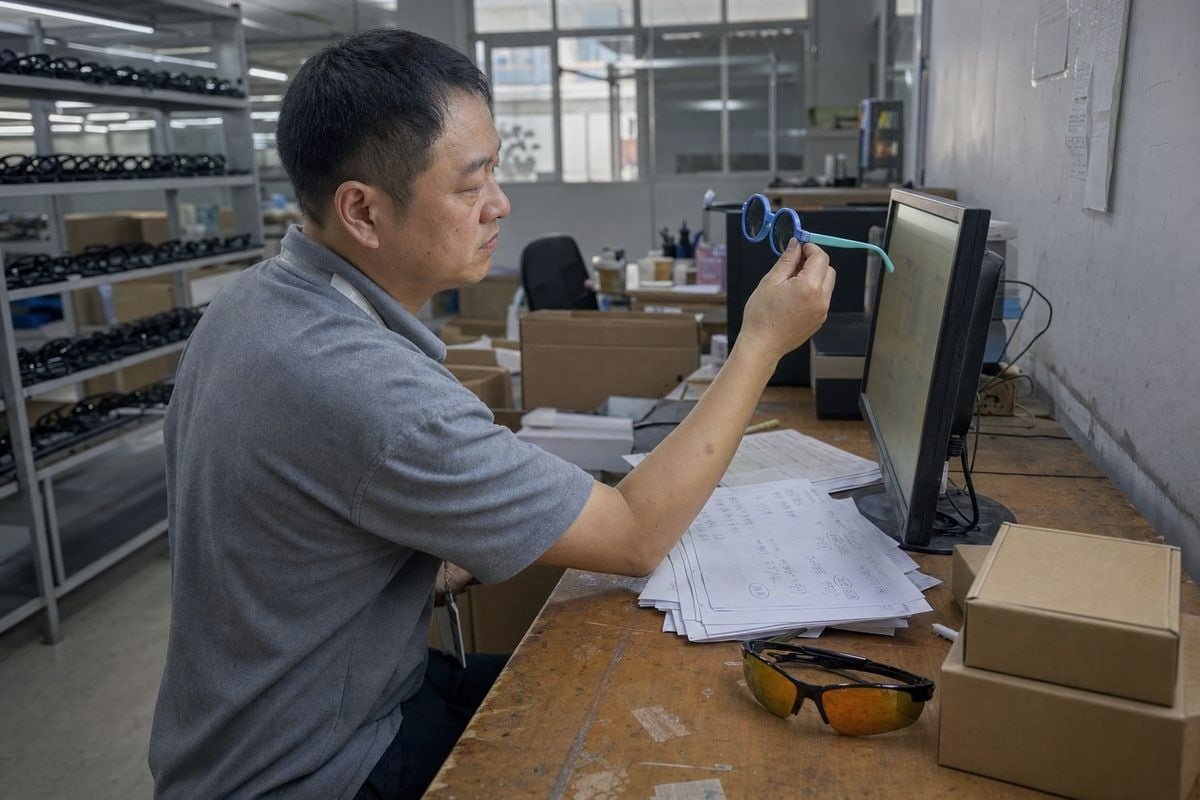
Verifying polarization and impact resistance claims is where many buyers get burned. On our production line in Taizhou, we have seen samples from other factories labeled “polarized” that were just dark tint. If your brand ships those to children, you risk returns, recalls, and lost trust. The good news: both claims can be verified before you order.
To verify polarization and impact resistance claims for kids’ sunglasses suppliers, test polarization yourself using an LCD screen, cross-lens, or polarized test card check, then demand third-party lab reports referencing standards like FDA drop ball test, ANSI Z80.3, or ISO 12312-1 for impact resistance, matched to your exact production batch.
Each claim needs a different verification path. Polarization can be checked in minutes with your own hands. Impact resistance needs paperwork, standards, and traceability. Let me walk you through both, step by step, the way I coach our own B2B buyers before they place a bulk order.
How can I test if a supplier's polarized lenses are genuinely polarized, not just tinted?
A buyer from Australia once shipped us a competitor's "polarized" kids' sample for comparison. Our QC team checked it against a screen in under a minute. It failed. It was tinted acrylic, nothing more.
Hold the lens in front of a lit LCD screen and rotate it 90 degrees; a genuine polarized lens turns the screen black or visibly dark. You can also cross two polarized lenses at 90 degrees, or use a polarized test card that reveals a hidden image.
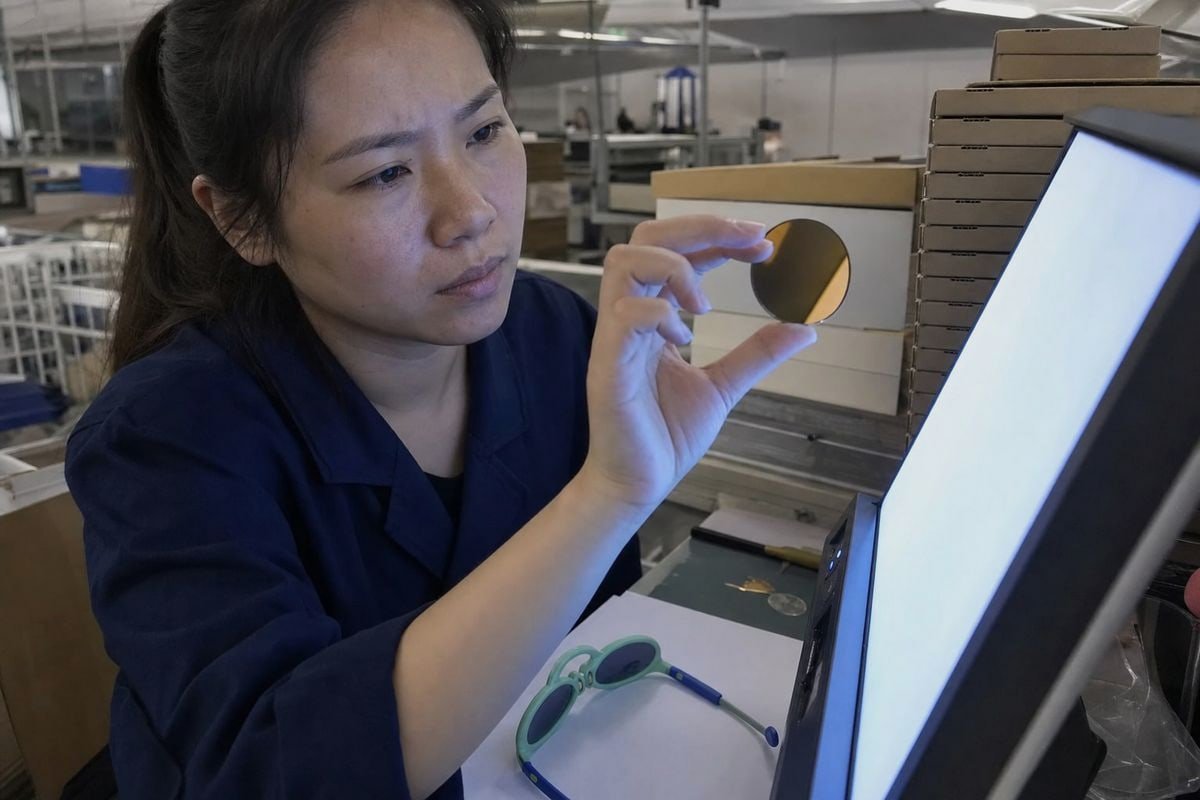
The core problem is simple. Dark tint, Protección UV400 1, and polarization are three separate things. A lens can look dark and still let glare and harmful light through. So never accept "the lens is dark, so it works" from any supplier. Here are the three field tests I recommend to every buyer who visits our showroom.
The three quick polarization tests
| Test | How to do it | What a real polarized lens shows |
|---|---|---|
| LCD screen test | Hold the lens in front of a phone or monitor, then rotate it slowly | The screen darkens or blacks out at certain angles |
| Cross-lens test | Hold one polarized pair in front of another, rotate one by 90 degrees | Light transmission drops sharply; the view goes very dark |
| Polarized test card | Look at the card through the lens | A hidden image appears that is invisible to the naked eye |
The reflective-surface test also works. Look at glare on water, asphalt, or a car windshield through the lens, then tilt your head. Real polarization cuts the glare noticeably.
What these tests cannot prove
Be honest about the limits. These are screening tests, not laboratory certification. Passing the screen test does not prove UV400 protection certification, and it says nothing about impact resistance. It also does not confirm lens quality. On our own polarized kids' lenses, we use sandwich construction, where the polarizing film is encapsulated between lens layers. That matters for children, because a surface-laminated film can scratch or peel off under rough handling. Ask your supplier which construction they use, and ask them to explain their own polarization test method. If they hesitate, that tells you something.
What impact resistance standards should I ask my kids' sunglasses supplier to meet?
There is a trade-off we weigh on every new kids' style: a stiffer lens can feel more "premium," but for children we always prioritize shatterproof lens technology and flexible frames over rigid materials. Impact resistance is a safety claim, not a marketing line.
Ask your supplier to meet the FDA drop ball test under 21 CFR 801.410, plus ANSI Z80.3 for the US market or ISO 12312-1 compliance for Europe. For sports-focused kids' eyewear, ASTM F803 covers high-impact use. Confirm lenses are polycarbonate or another impact-rated material.
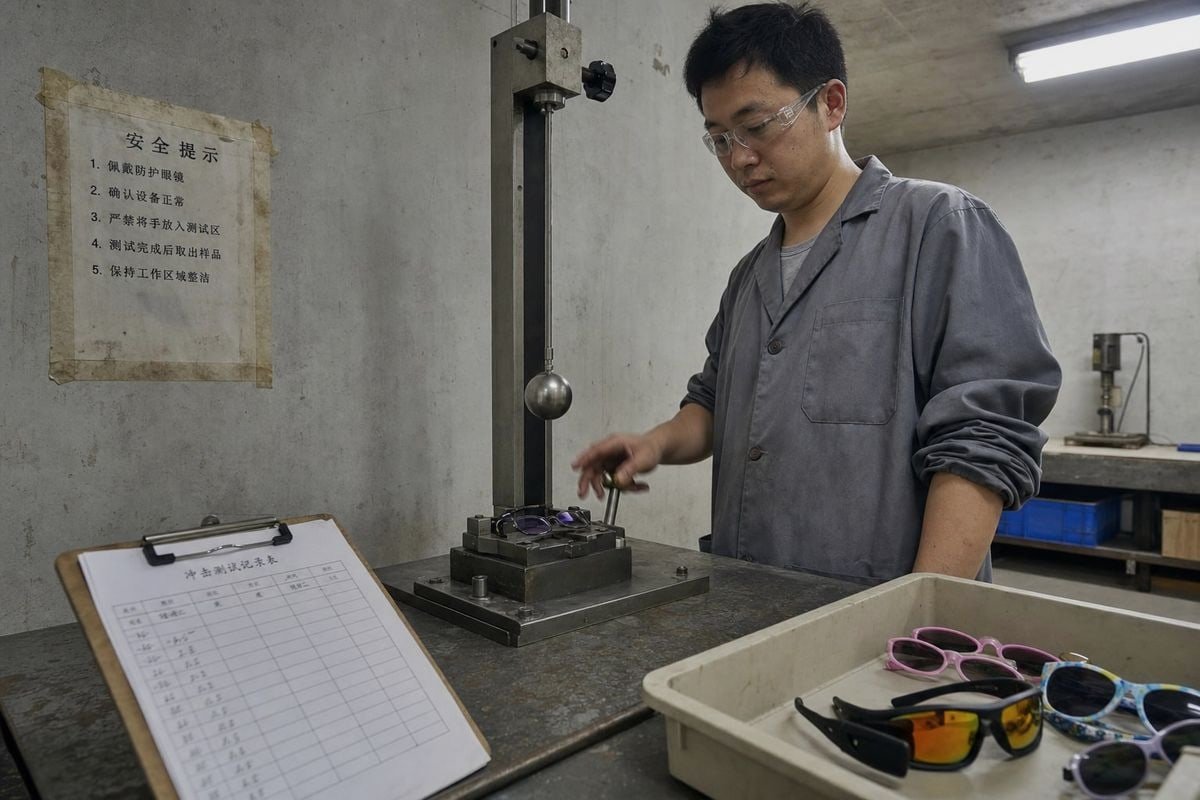
Standards matter because they define a repeatable test method. Without a named standard, "impact-resistant" means whatever the seller wants it to mean. Here is how the main standards compare, and what each one actually tests.
Key standards at a glance
| Norma | Region / use | What it tests |
|---|---|---|
| FDA 21 CFR 801.410 2 (drop ball test) | US, baseline for all sunglasses | A 5/8-inch steel ball dropped from 50 inches onto the lens without fracture |
| Claridad óptica e impacto para gafas sin graduación 3 | US, non-prescription sunglasses | Impact, UV transmittance, optical quality |
| UE / Internacional 4 | Europe and many global markets | Robustness, UV filtering, light transmission categories |
| Protección contra impactos de alta velocidad para gafas deportivas 5 | Sports eyewear | High-velocity impact for active use |
Material matters as much as the standard
Lens material drives real-world performance. Seguro durante caídas y juegos bruscos 6 lens durability is why we default to PC lenses for children's styles; standard acrylic or CR-39 plastic can crack into sharp fragments. The frame matters too. Kids drop, bend, sit on, and throw their sunglasses. That is exactly why we build with TPEE flexible frames and TR90 — a frame that flexes absorbs impact instead of snapping near a child's eye. When you brief a supplier, specify both the standard and the lens material in writing. Then ask for lens retention data as well, because a lens that pops out of a flexible kids' frame during impact is a common and dangerous failure point that the basic drop ball test alone does not capture.
Which certifications or test reports should I request before trusting a supplier's safety claims?
A Japanese kids' brand once asked me a question I loved: "Not whether you have a report, but which batch it covers." That is exactly the right instinct, and it is what fifteen years of exporting has taught us to expect from serious buyers.
Request original, full-length third-party lab reports from accredited labs such as SGS, Intertek, or TUV, covering the exact standard claimed, with report number, date, lab name, and sample photos matching your production item. Reject summary certificates and manufacturer self-declarations for kids' safety claims.
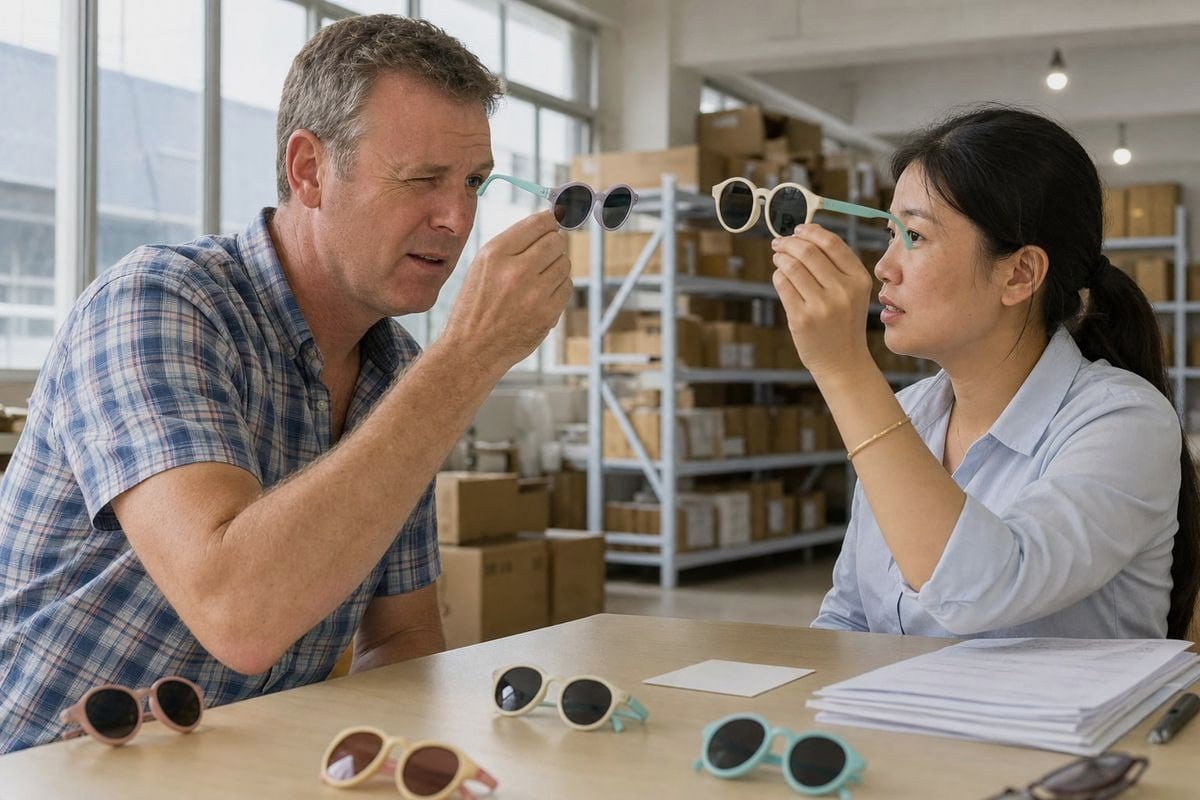
Paperwork is where weak suppliers get exposed. Anyone can write "UV400" and "impact-resistant" on a listing. Only a factory that actually tests can hand you traceable documentation. Here is the document set I tell our own customers to demand — including from us.
Your document checklist
| Documento | Por qué importa | Señal de alerta si falta |
|---|---|---|
| Full third-party lab report | Proves an accredited lab ran the actual test method | Only a one-page "certificate" with no data |
| Named standard and clauses | Confirms which test was performed | Vague wording like "meets international standards" |
| Report date and number | Lets you verify with the lab directly | Undated or unverifiable reports |
| Sample photos or identifiers | Ties the report to your actual product | Report covers a different model or color |
| UV400 protection certification data | UV blocking is separate from polarization | Only polarization claims, no UV transmittance data |
Go one layer deeper
For premium kids' programs, two extra requests separate good factories from great ones. First, ask for impact testing after thermal cycling. Materials that pass at room temperature can turn brittle after exposure to heat and cold, like a car dashboard in summer. Second, ask about birefringence 7 checks with a polariscope. Excessive rainbow stress patterns in an injection-molded lens signal poor molding that can lead to spontaneous cracking later. We run internal stress checks on polarized lenses precisely because sandwich-construction lenses are sensitive to molding quality. A supplier who understands these questions is a supplier who actually makes the product, not one who trades it.
How do I know if a factory's quality control process can consistently back up these claims order after order?
Early in our export history, we learned a hard lesson from a competitor's mistake: their customer received a perfect golden sample, then mass goods with a different, cheaper lens. The tested sample and the shipped product were not the same build. That story shaped how we structured QC across our 120-worker, 5S-managed workshop.
Confirm consistency by requiring batch traceability, incoming material inspection, in-line and final QC checkpoints, and pre-shipment inspection rights. Verify through a factory quality audit that the tested sample matches mass production, and re-test periodically rather than relying on one old lab report.
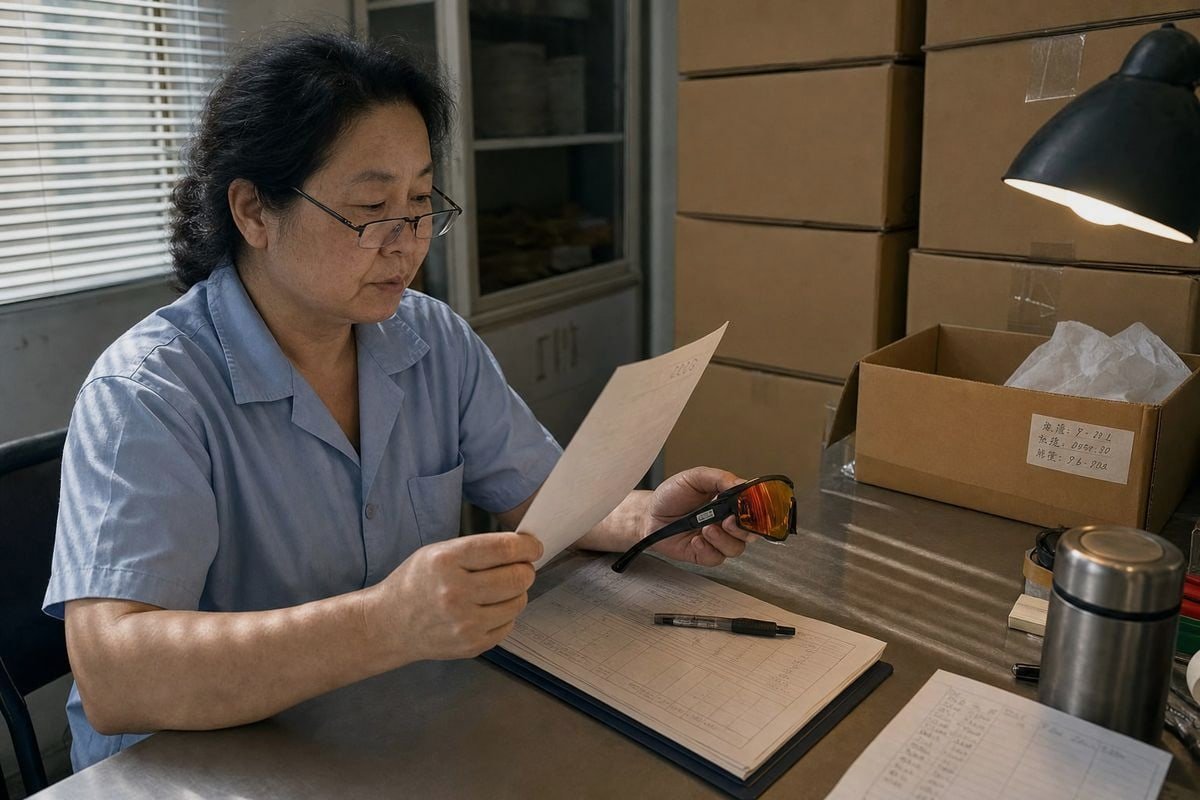
One passing lab report proves a moment in time. Consistent safety requires a system. When you evaluate a kids' eyewear supplier, look at the process, not just the paperwork. Here is the workflow I recommend, based on how we run our own line.
A five-step consistency check
- Audit the factory, not the trader. A factory quality audit — on-site or via a third party — confirms real production capability, material storage, and workshop discipline. Ask whether you are dealing with an actual factory or a middleman who cannot control the build.
- Trace materials to the batch. Ask how incoming polycarbonate lenses, polarizing films, TR90, and TPEE raw materials are inspected and logged. Batch records let you connect any shipped carton back to tested material.
- Check in-line QC points. Lens bonding, hinge screw torque, lens retention in flexible frames, and temple flex cycles should each have a defined checkpoint. Kids' frames flex constantly, so hinge strength and retention deserve their own tests.
- Compare production goods to the sealed sample. Keep a signed golden sample. Require the supplier to confirm in writing that mass goods use identical lens material, film construction, and frame compound.
- Retain re-testing rights. Reserve the right to pull random units from any shipment for third-party lab reports. Suppliers who welcome this are the ones with nothing to hide.
Also ask direct questions before ordering: Which exact batch was tested? Are my samples identical to mass production? What controls cover lens bonding and hinge strength? Do you document UV protection separately from polarization? A supplier with real answers gives specifics. A supplier bluffing gives adjectives.
Conclusión
Unverified claims put children and your brand at risk. Test polarization yourself, demand traceable lab reports for impact resistance, and audit QC consistency. Verify first, then order confidently.
Notas al pie
1. WHO fact sheet on UV radiation explaining why UV protection matters for children’s eyes. ↩︎
2. Direct link to the official federal regulation for impact-resistant lenses. ↩︎
3. Background on sunglasses standards and lens safety terminology relevant to ANSI Z80.3. ↩︎
4. Official ISO standard page defining sunglasses requirements referenced in the article. ↩︎
5. Updated to the latest 2025 version of the sports eye protection standard. ↩︎
6. Wikipedia background on polycarbonate material properties relevant to lens durability claims. ↩︎
7. Wikipedia explanation of birefringence, the optical stress phenomenon checked with a polariscope. ↩︎
Más artículos que te podrían gustar
1 de agosto de 2026
¿Debería la fábrica encargarse del embalaje y etiquetado de las gafas de sol para niños, o utilizar un proveedor designado?
1 de agosto de 2026
Almacén propio vs. Cumplimiento directo del proveedor: ¿Qué reduce los costos de devolución para las marcas de gafas de sol para niños?

1 de agosto de 2026
Directo al almacén del puerto o staging en el extranjero: ¿Cuál ahorra más en el envío de gafas de sol para niños?
¿Buscas un socio confiable en gafas para niños?
Explore más de 800 estilos listos y soporte OEM/ODM completo adaptado a su marca.
Ponte en contacto English
  Español de México
  Deutsch
  Français
  日本語
日本語  العربية
  Português do Brasil