How to Share Sales Forecasts With Suppliers to Reserve Kids’ Sunglasses Production Capacity?
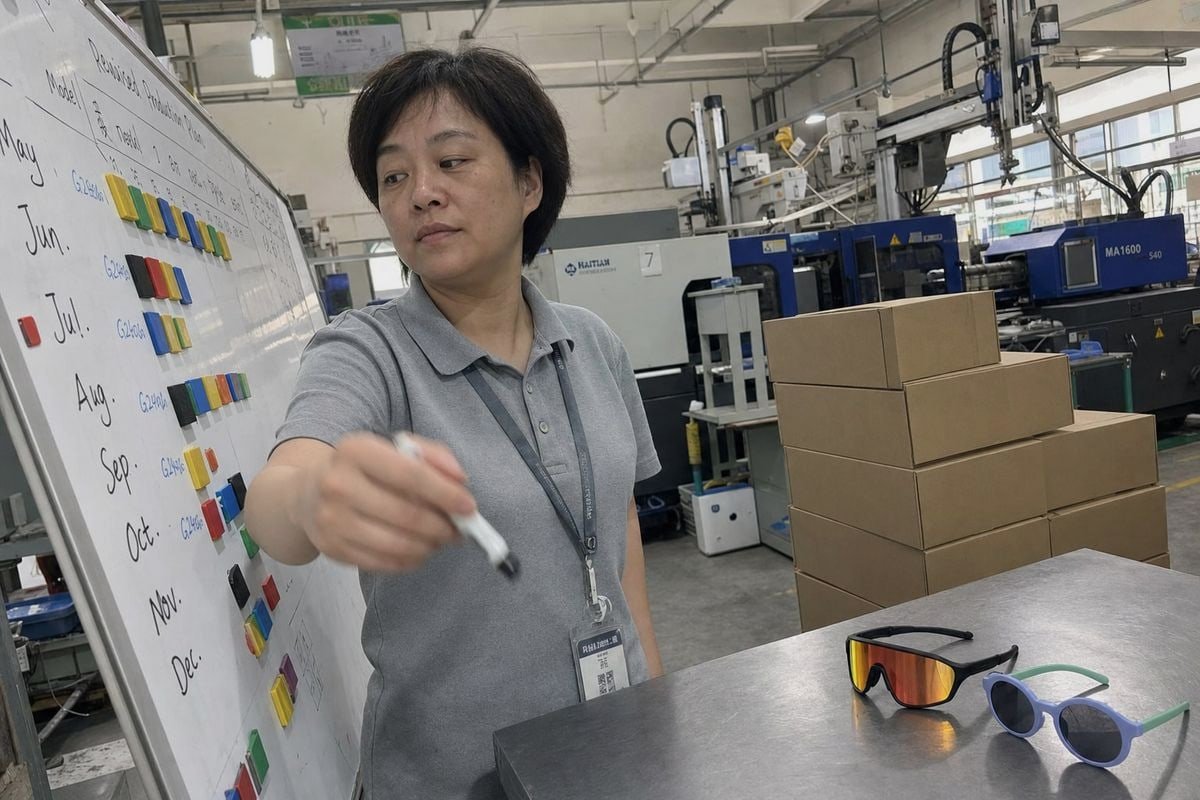
Every spring, our production schedule fills up fast UV400 and polarized lenses 1. Buyers who share sales forecasts with suppliers early get reserved capacity for kids’ sunglasses. Buyers who wait often get pushed into July.
Share sales forecasts with suppliers 4–6 months before your selling season, broken down by SKU, color, quantity, and delivery window. Update the forecast monthly, mark firm versus flexible volume, and ask the supplier to confirm reserved kids’ sunglasses production capacity in writing.
That is the short answer. Below, I will walk through the timing, the data to include, how to adjust later, and why this matters most during peak seasons.
Last February, a buyer from Australia sent us a forecast for October delivery blanket purchase order 2. We locked her line time the same week. A similar order in May had to wait behind three other brands.
Share your sales forecast with OKAY EYEWEAR 4–6 months before your required delivery date. For summer peak deliveries, send forecasts by November–January. This gives us time to reserve line capacity, order TPEE and TR90 materials, and schedule lens coating and assembly without rush fees.

Timing is the single biggest factor in whether we can hold capacity for you. Kids' sunglasses are seasonal. Most of our customers in Europe, Australia, and Japan want goods on shelves before their local summer. That means demand at our factory stacks up in the same few months. A forecast that arrives early gets first choice of production slots. A forecast that arrives late competes with everyone else.
The three planning horizons we work with
We think about your forecast in three windows. Each window lets us do something different for you.
| Planning horizon | When to share | What we can reserve for you |
|---|---|---|
| Long-term (6–12 months) | Before your season planning | Overall factory capacity, mold and tooling schedules, component supply |
| Mid-term (2–4 months) | Once your buying plan firms up | Specific production line slots, lens and frame material purchasing |
| Near-term (4–8 weeks) | Inside the season | Final quantities, packaging runs, shipping bookings |
The long-term view does not need to be precise. Even a rough number like "around 60,000 units across 10 styles for April–June delivery" helps us block time. The mid-term forecast is where we commit real line hours. The near-term update is where we lock final counts.
Why early matters more for children's eyewear
Kids' sunglasses have extra steps that adult fashion frames do not. UV400 3 and polarized lenses need sourcing lead time. Safety and comfort checks on flexible Templo TPEE 4 add QC stages. If you customize colors or packaging, that adds sampling rounds too. Every one of those steps sits in front of production. An early forecast absorbs those steps without stress. A late forecast forces trade-offs, and nobody enjoys those calls.
One more practical point. Because we hold around 800 existing styles, buyers who forecast early can often skip mold investment entirely. You pick from proven frames, we reserve capacity, and you test the market with lower risk.
What details do I need to include in a forecast for accurate capacity planning?
A one-line email saying "we expect 50,000 pairs" tells our planning team almost nothing. We once received exactly that, and it took four follow-up calls to make it usable.
Include SKU-level quantities by month, frame style and color, lens type (UV400 or polarized), size or age segment, delivery windows per destination, promotion or launch dates, historical sell-through if available, and any custom logo, packaging, or compliance requirements. Mark which volumes are firm versus flexible.
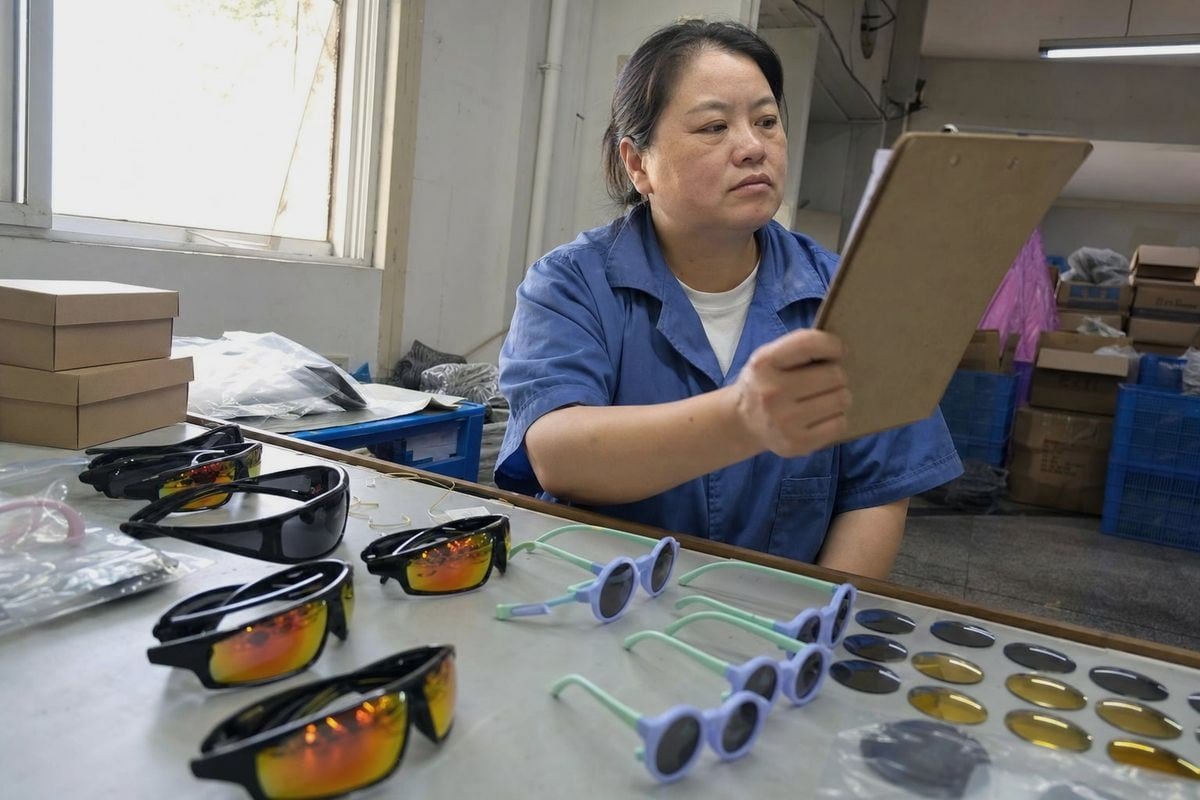
Detail is what turns a forecast into a plan. When your forecast is broken down properly, we can map it directly onto machines, materials, and people. When it is a single top-line number, we have to guess, and guesses create risk for both sides.
The core data checklist
Here is what our planning team actually uses, and why each item matters.
| Forecast element | Why the factory needs it |
|---|---|
| SKU-level quantity by month | Assigns specific line time and injection schedules per frame |
| Frame style, color, size segment | Determines TR90/TPEE material mix and color masterbatch orders |
| Lens type (UV400, polarized, mirrored) | Lens sourcing has its own lead time and MOQ per coating |
| Delivery window and destination | Sequences production and books freight realistically |
| Promotion and launch calendar | Explains demand spikes so we buffer capacity around them |
| Historical sell-through | Lets us sanity-check volumes against last season |
| Custom logo, packaging, accessories | Adds printing, sampling, and assembly steps to the timeline |
| Firm vs. flexible volume split | Tells us what to guarantee and what to hold as upside |
Level of detail: a practical example
Say your line includes a sporty wraparound shield style with a mirrored orange-to-yellow lens, and a pastel round frame with periwinkle fronts and mint temples. Those two products use different molds, different lens processes, and different assembly flows. A category-level number like "30,000 sunglasses" cannot be scheduled. But "18,000 wraparound shields in black and white, 12,000 round pastel frames, May delivery to Australia" can be slotted into a real calendar within days.
Do not worry about perfection. A structured forecast that is 80% accurate beats a vague one that is theoretically flexible. We reconcile the gaps together on regular calls.
Can I adjust my forecast later if my actual orders change?
Forecasting kids' products is honest guesswork. One of our long-term European partners revises volumes almost every month, and our relationship works precisely because we expect that.
Yes. Forecasts are planning tools, not purchase orders. Send updates monthly, or weekly during peak season. Volume changes within roughly ±20% on flexible quantities are normally absorbed. Firm committed volumes stay locked, while flexible upside is adjusted through agreed revision windows before material cut-off dates.
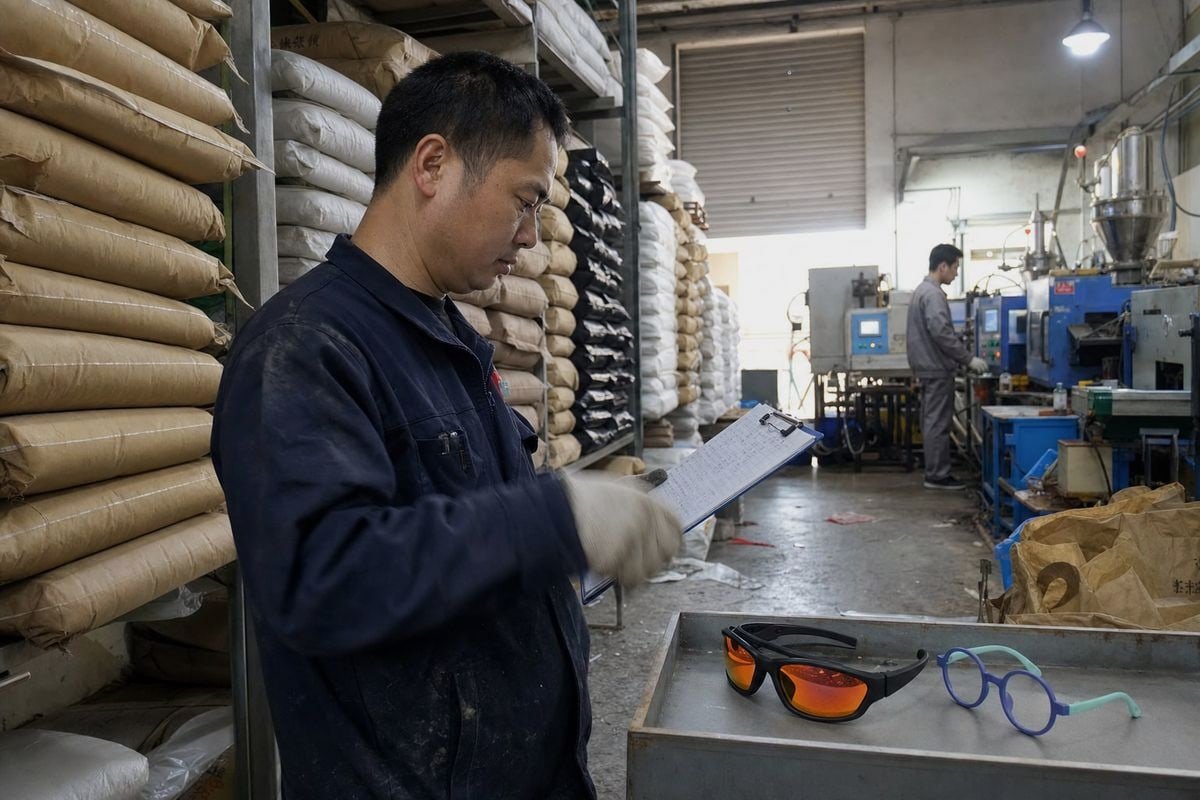
A forecast is a rolling conversation, not a contract carved in stone. The best setup we use with buyers is a tiered structure. It protects both sides and keeps flexibility where you need it.
The firm-and-flexible model
We recommend splitting every forecast into two tiers:
- Firm volume. This is the quantity you are confident about, often backed by a blanket purchase order 5 or deposit. We guarantee capacity, buy materials, and lock the schedule for this tier.
- Flexible volume. This is your probable upside, perhaps 15–30% above firm. We hold provisional capacity and pre-position some materials, but you can raise or lower it as sell-through data comes in.
This structure means you never over-commit cash, and we never over-promise capacity. Everyone knows exactly what is guaranteed and what is provisional.
Revision windows and cut-off points
Changes get harder as production approaches. Here is a realistic view of what can move and when.
| Time before delivery | What you can still change | What is locked |
|---|---|---|
| 4+ months | Quantities, styles, colors, packaging | Nothing yet |
| 2–4 months | Quantities within flexible tier, delivery split | Custom molds, lens coating orders |
| 4–8 semanas | Minor quantity trims, shipping details | Materials purchased, line schedule |
| Under 4 weeks | Shipping and documentation only | Production is running |
The rule of thumb is simple: raise your hand early. A 30% increase flagged three months out is usually easy. The same increase flagged three weeks out may be impossible, no matter how much goodwill exists. Weather-driven demand swings are real in this category, so we also encourage buyers to discuss buffer capacity for hot-summer scenarios up front rather than mid-crisis.
How does sharing forecasts help me avoid delays during peak seasons?
Every June, we watch the same story repeat. Brands with shared forecasts ship on time. Brands without them chase container space and apologize to retailers.
Shared forecasts let the supplier pre-block production lines, pre-buy lenses and TPEE/TR90 materials, schedule labor, and complete compliance and QC steps before the rush. This removes the queue time, material shortages, and rushed quality risks that cause most peak-season delivery delays.
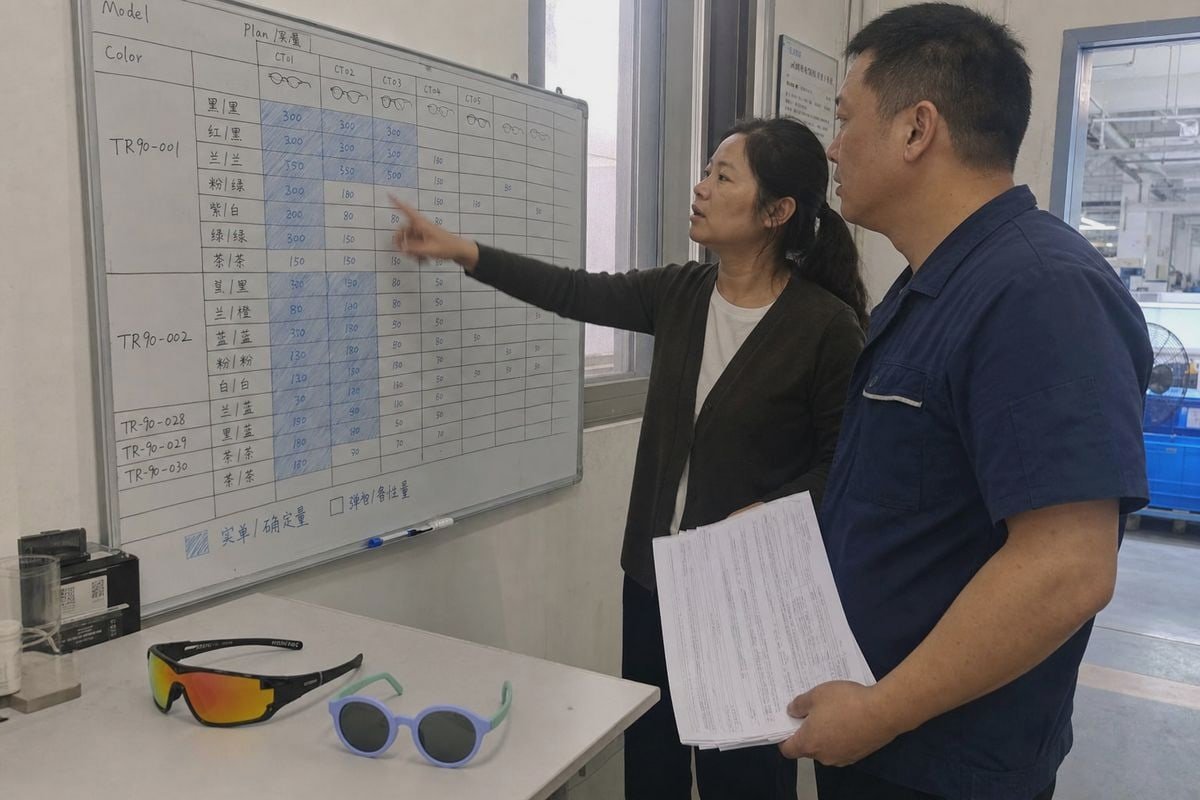
Peak-season delays rarely come from slow machines. They come from queues. In April and May, every children's brand wants production at the same time. Capacity is finite. Lens suppliers, packaging printers, and freight forwarders 6 all hit their peaks simultaneously. A forecast shared months earlier lets you skip most of those queues, because your slot was reserved before the crowd arrived.
Where delays actually come from
Think of a peak-season order as a chain of dependencies. Any weak link delays the whole shipment:
- Line queue. No reserved slot means waiting behind forecasted orders.
- Material shortage. Polarized and mirrored lenses have their own lead times; late orders wait for the next lens batch.
- Compliance timing. Children's eyewear needs UV protection verification and safety checks against standards like EN ISO 12312-1 or ANSI Z80.3 for many markets; testing cycles cannot be compressed.
- Packaging and printing. Custom retail-ready boxes and logo printing need their own scheduling.
- Freight crunch. Pre-summer sailings fill early; late production misses booked vessels.
A shared forecast fixes each link in advance. We block the line, order lenses early, schedule testing during quiet weeks, and align packaging runs with assembly. In our taller gestionado con 5S 7, planned orders also get steadier QC attention than rushed ones, which matters when the end user is a child.
The compounding benefit over seasons
There is a longer-term payoff too. After two or three seasons of shared forecasting, we learn your demand rhythm. We start holding materials for your best-selling styles proactively. Your forecast accuracy improves because we feed production data back to you. That feedback loop is what turns a supplier into a genuine manufacturing partner, and it is why our most reliable delivery records belong to the buyers who forecast most openly.
Conclusión
Late, vague forecasts cost brands their summer sales. Share SKU-level sales forecasts with suppliers 4–6 months early, update monthly, split firm from flexible volume, and your kids' sunglasses production capacity stays reserved.
Notas al pie
1. WHO explains UV radiation risks, supporting why UV400 lens sourcing lead time matters for kids’ eyewear. ↩︎
2. Background on purchase orders clarifies the firm-volume commitment mechanism described. ↩︎
3. WHO fact sheet on UV radiation supports the UV protection lens standard referenced. ↩︎
4. Explains the thermoplastic elastomer material used for flexible children’s frame temples. ↩︎
5. Provides background on purchase order types referenced when explaining firm forecast commitments. ↩︎
6. Defines the logistics role that experiences peak-season capacity crunches as described. ↩︎
7. ASQ resource explains the 5S lean manufacturing methodology referenced for workshop QC. ↩︎
Más artículos que te podrían gustar

1 de agosto de 2026
¿Debería la fábrica encargarse del embalaje y etiquetado de las gafas de sol para niños, o utilizar un proveedor designado?
1 de agosto de 2026
Almacén propio vs. Cumplimiento directo del proveedor: ¿Qué reduce los costos de devolución para las marcas de gafas de sol para niños?

1 de agosto de 2026
Directo al almacén del puerto o staging en el extranjero: ¿Cuál ahorra más en el envío de gafas de sol para niños?
¿Buscas un socio confiable en gafas para niños?
Explore más de 800 estilos listos y soporte OEM/ODM completo adaptado a su marca.
Ponte en contacto English
  Español de México
  Deutsch
  Français
  日本語
日本語  العربية
  Português do Brasil