How to Set Up EDI Order and Shipping Integration for Kids’ Optical Frame Suppliers?

Setting up EDI order and shipping integration 1 confused me too when our first big-box buyer demanded it. Manual order entry was causing wrong colors, missed ship dates, and chargebacks — until we connected our systems properly.
To set up EDI order and shipping integration with a kids’ optical frame supplier, agree on core EDI documents (850, 856, 810, 997), map frame-specific SKU data like size and color, connect the EDI platform to ERP and warehouse systems, then test and certify with each trading partner.
That sounds technical, but the logic is simple. In this guide, I will walk you through the standards, the setup steps, the pitfalls, and the payoff — based on what actually works between retailers and a children’s eyewear factory like ours.
What EDI Standards Should I Require From My Kids' Optical Frame Supplier?
A procurement manager from Australia once asked me which EDI document types actually matter for kids' frames 3PL warehouse 2. Her previous supplier claimed "full EDI support" but could only receive a PDF purchase order by email.
Require support for the core EDI document types: 850 purchase order, 855 order acknowledgment, 856 Advance Shipping Notice, 810 invoice, and 997 functional acknowledgment. If a 3PL warehouse is involved, add 940 shipping orders, 945 shipment confirmations, and 846 inventory updates.
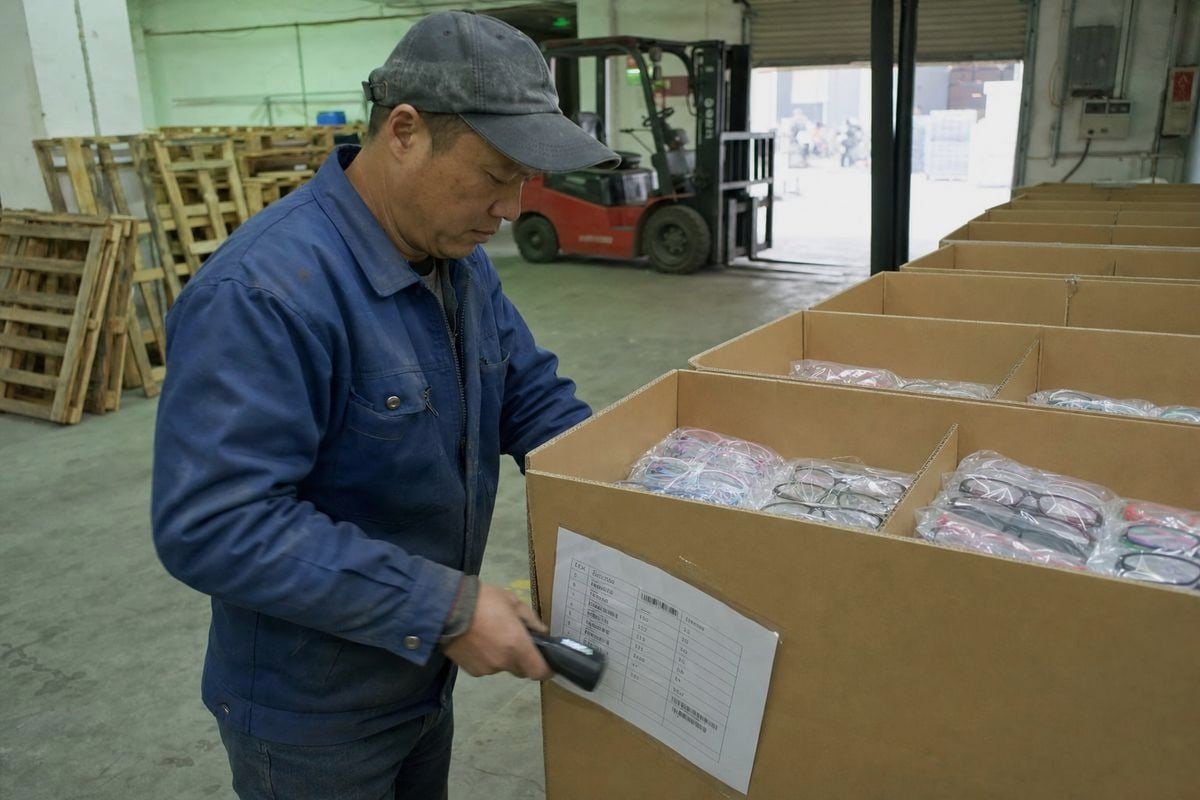
These documents are not random codes. Together, they cover the full order lifecycle. The retailer sends an 850 purchase order 3. The supplier confirms it with an 855. When the goods ship, an 856 Advance Shipping Notice 4 (ASN) travels ahead of the cartons. After shipment, the 810 invoice goes out. And every file gets a 997 acknowledgment so both sides know it arrived and was accepted.
The Core Document Flow
Here is how the documents map to real steps in wholesale eyewear distribution:
| EDI Document | Nombre | What It Does in Practice |
|---|---|---|
| 850 | Purchase Order | Retailer orders frames by SKU, color, size, quantity |
| 855 | Order Acknowledgment | Supplier confirms items, prices, and ship dates |
| 940 | Warehouse Shipping Order | Supplier instructs a 3PL to pick and pack |
| 945 / 856 | Shipment Confirmation / ASN | Warehouse confirms exactly what shipped, carton by carton |
| 810 | Invoice | Supplier bills based on the actual shipment |
| 997 | Functional Acknowledgment | Confirms each file was received and valid |
One more point worth raising. In the optical industry specifically, standards bodies like Normeyes (formerly EDI-Optique) and platforms like EYES-ROAD define optical industry standards for exchanges between manufacturers, labs, and opticians in some European markets. If you sell into those channels, ask whether your supplier or their EDI partner can support those formats too. Most retail relationships, however, still run on the standard X12 or EDIFACT documents 5 listed above.
My advice from fifteen years of factory work: start small. Begin with the 850, 856, 810, and 997. Add inventory visibility (846) and warehouse documents later. Suppliers who promise everything on day one usually deliver nothing on time.
How Do I Integrate Order and Shipping Data With a Factory Like OKAY EYEWEAR?
When we onboard a new brand at our Taizhou facility, the first working session is never about frames. It is about data: how their purchase orders, our sales orders, and the warehouse pick lists will talk to each other.
Connect your retail-side EDI platform to the supplier's order management flow: your 850 becomes their sales order, their production and packing data feeds the 856 ASN, and the 810 invoice matches the shipment. Map SKUs, pack sizes, and ship-to routing before any live orders flow.

The architecture behind this is more standard than most buyers expect. Your retailer network or B2B integration platform sits on one side. A translator or middleware layer validates and maps each document. Then the data syncs into the ERP or order management system, flows to the warehouse or 3PL, and shipping confirmations travel back the same way. Automated order processing only works when every hop in that chain is defined.
Why Kids' Frame Data Is Harder Than It Looks
Children's optical frames are variant-heavy. One style in our catalog — say, a TR90 front with flexible TPEE temples — might exist in four colorways, two size bands, and multiple pack configurations. A glossy black frame with royal blue silicone temple tips is a different SKU from the same shape in translucent pink acetate. If your item master and ours disagree on any attribute, the wrong frames ship.
These are the fields we insist on locking down during mapping:
| Data Element | Why It Matters for Kids' Frames |
|---|---|
| SKU / retailer item ID | The anchor for every document; mismatches break everything |
| Frame size and age band | Kids' sizing is narrow; a toddler frame on a school-age order is a return |
| Color / finish code | Translucent pink vs. solid pink are different SKUs, not variants of one |
| Material spec (TR90, TPEE) | Flexible, hypoallergenic materials are often a compliance requirement |
| UPC/GTIN 7 | Required for retail scanning and ASN carton content |
| Pack size and cartonization | ASN accuracy depends on knowing exactly what is in each carton |
| Ship-to and routing rules | Retailer routing guides dictate carriers, labels, and ship windows |
A Realistic Onboarding Sequence
In our experience exporting to buyers in more than twenty countries, integration goes smoothly when both sides follow a sequence: exchange item masters first, agree on the document set second, run test transactions third, and only then go live with a small pilot order. We usually run two or three test cycles with sample 850s and mock ASNs before a single real carton moves. Skipping the test phase to save two weeks almost always costs a month later.
What Challenges Might I Face When Setting Up EDI With an Overseas Eyewear Manufacturer?
The hardest lesson we learned came early. A European buyer's routing guide changed mid-season, our team missed the update, and a full shipment arrived with outdated carton labels. Nobody's system crashed. The chargeback still arrived.
Expect challenges around SKU mapping errors, ASN mismatches with actual shipments, time-zone delays in resolving exceptions, retailer routing guide changes, weak ERP-to-EDI connections that force re-keying, and inadequate testing before go-live. Most failures surface as chargebacks and delayed payments, not system errors.

That last point deserves emphasis. EDI problems rarely look like technology problems. They look like money problems: deductions on your invoice, rejected shipments at a distribution center, or payment terms that slip because an 810 did not match the 856. For a kids' eyewear brand with real margin pressure, these leaks add up fast.
The Overseas Factor
Working with a factory in China adds a few specific layers. First, time zones: an exception raised at 9 a.m. in Sydney lands in the middle of our night, so response protocols matter more than raw speed. Second, freight complexity: eyewear logistics often involves consolidated ocean containers or air freight, and the ASN timing rules differ for each. Third, capability gaps: many factories are excellent at production but have never connected to a trading partner integration program, so ask direct questions before committing.
Here is how I would triage the common risks:
| Challenge | Costo Típico | Practical Prevention |
|---|---|---|
| Poor SKU mapping | Wrong items shipped, returns | Joint item-master review before testing |
| ASN does not match shipment | Retailer chargebacks | Scan-based packing tied to ASN generation |
| Missed routing guide updates | Rejected or relabeled cartons | Assign one owner to monitor partner updates |
| Skipped certification testing | Failed go-live, rushed fixes | Insist on full test cycles with each partner |
| Manual re-keying between systems | Slow, error-prone orders | Integrate EDI directly with ERP and WMS |
One buyer objection I hear often: "Building EDI in-house gives us more control." That is true in theory. In practice, in-house EDI needs specialist staff and ongoing maintenance for every trading partner map. For most small and mid-sized kids' eyewear brands, managed EDI or a platform with prebuilt retailer connections gets you live faster and shifts the mapping, testing, and certification burden to people who do it daily. Control matters less than reliability when your first retail ship window is eight weeks away.
How Can EDI Integration Improve Accuracy and Delivery Times for My Kids' Eyewear Orders?
Before we automated order intake at our workshop, one colleague spent most of her mornings re-typing purchase orders into our system. Every re-typed line was a chance to swap a color code or misread a pack quantity.
EDI integration improves accuracy by eliminating manual data entry, validating orders before they enter production, and matching ship notices to actual cartons. It shortens delivery times by cutting order-processing lag, triggering warehouse fulfillment automatically, and flagging exceptions early instead of at the loading dock.

The accuracy gains come from removing human touchpoints. An 850 flows straight into a sales order. The pick list comes from that same record. The ASN is generated from what was actually scanned into cartons. There is one version of the truth from purchase order to invoice, which is the core promise of purchase order automation.
Beyond Accuracy: The Strategic Benefits
The speed gains are just as real, though they show up differently:
- Faster order cycle start. Orders received overnight are validated and in the production queue before anyone opens email.
- Earlier exception handling. A bad SKU or an out-of-stock item gets flagged at order intake, not at packing.
- Predictable ship windows. With automated 940/945 flows to a warehouse or 3PL, fulfillment starts the moment stock is allocated, which supports strict retailer ship windows.
- Faster payment. Clean 810 invoices that match the ASN move through retailer accounts payable without disputes.
There are second-order benefits worth planning for, too. EDI sales data can feed demand forecasting 8, which matters in children's eyewear where age-band sizing, seasonal back-to-school peaks, and trend-driven colors shift demand quickly. Connecting EDI to inventory management systems also makes replacement orders easier to handle — and kids' glasses get lost, sat on, and chewed more than any adult category, so smooth reorders and warranty replacements are a genuine service advantage. Because our flexible TPEE and TR90 frames go to brands that promise durability, we treat fast, accurate replenishment as part of the product promise, not an afterthought.
One caution on expectations. Vendors advertise dramatic error-reduction numbers, and directionally they are right, but treat specific percentages as vendor-reported claims. What I can say from our own floor is qualitative and consistent: fewer touches, fewer mistakes, faster cartons out the door. That is supply chain optimization you can actually feel in your delivery calendar. And if your program ever links to medical providers — for example, custom frame requirements for children with specific fitting needs — build proper data security into the integration from day one, since patient-related information carries privacy obligations that ordinary product data does not.
Conclusión
EDI order and shipping integration turns messy manual orders into a clean, automated flow. Start with core documents, map frame data carefully, test thoroughly, and choose a supplier who treats data quality as seriously as frame quality.
Notas al pie
1. Explains how EDI integrates order and shipping processes for efficiency. ↩︎
2. Defines a third-party logistics warehouse and its functions. ↩︎
3. Defines the EDI 850 document for electronic purchase order exchange. ↩︎
4. Explains the purpose and content of the EDI 856 document. ↩︎
5. Compares the two primary international EDI standards, X12 and EDIFACT. ↩︎
6. Explains the integration of Enterprise Resource Planning and Warehouse Management Systems. ↩︎
7. Explains the Global Trade Item Number (GTIN) and its relation to UPC. ↩︎
8. Defines the business process of predicting future customer demand. ↩︎
Más artículos que te podrían gustar

5 de agosto de 2026
Bio-Based vs Regular Cellulose Acetate: What's the Difference for Kids' Frames?

5 de agosto de 2026
How Recyclable Are Kids' Optical Frame Materials, and What Eco-Friendly Alternatives Exist?

5 de agosto de 2026
Do Kids Optical Frames Whiten or Age in Storage, and How to Control Warehouse Conditions?
¿Buscas un socio confiable en gafas para niños?
Explore más de 800 estilos listos y soporte OEM/ODM completo adaptado a su marca.
Ponte en contacto English
  Español de México
  Deutsch
  Français
  日本語
日本語  العربية
  Português do Brasil