How Do I Set Deposit Percentage and Balance Payment Terms for Kids Optical Frames?

Setting the right deposit percentage and balance payment terms for kids optical frames confused many buyers I meet at our Taizhou factory pre-shipment quality inspection 1. Get it wrong, and [cash flow suffers on both sides](https://okayeyewear.com/how-manage-cash-flow-gaps-sourcing-kids-sunglasses-china/).
The standard deposit percentage and balance payment terms for kids optical frames are a 30% deposit at order confirmation and 70% balance before shipment. Custom private-label orders may require 50% upfront, while established repeat buyers can negotiate toward net 30 payment terms.
Those numbers are the industry baseline. But the right structure for your brand depends on customization level, order size, and trust. Let me walk you through each piece.
What Deposit Percentage Is Standard When Ordering Kids Optical Frames from an OEM Factory?
Last month, a first-time buyer from Australia asked me why we needed any deposit at all for a stock-style order. It was a fair question, and the answer shaped this whole section.
A 30% deposit is standard when ordering kids optical frames from an OEM factory, with 70% due before shipment. Fully custom orders with new molds or private tooling often require 50%, and some factories ask for 100% prepayment on small first orders.
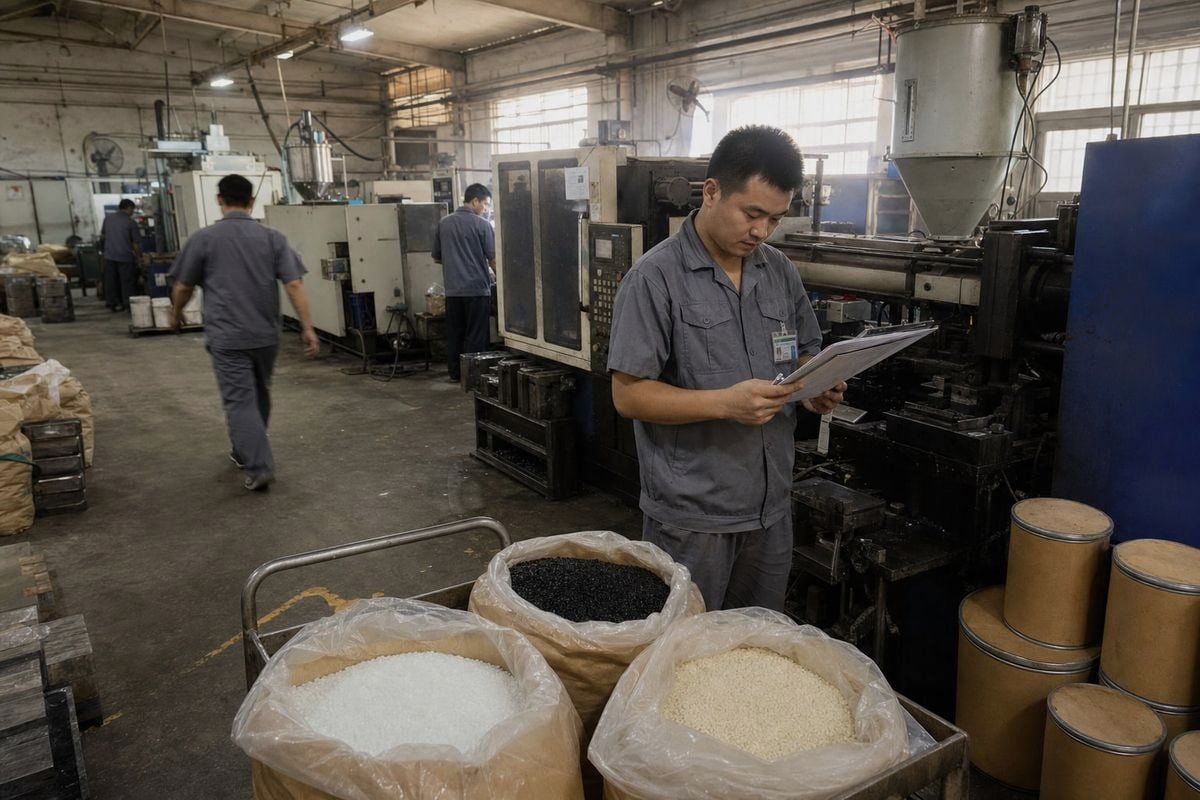
The deposit exists because production money gets tied up early. When we confirm a purchase order 2 for TR90 frames with TPEE temples, we buy raw material, schedule injection machines, and reserve workshop capacity before a single frame ships. The deposit covers part of that exposure and confirms the buyer is serious.
Common Deposit Structures Compared
| Deposit Model | Uso típico | Who Carries More Risk |
|---|---|---|
| 30% / 70% before shipment | Wholesale and OEM kids frames from existing styles | Shared between buyer and factory |
| 50% / 50% before shipment | Custom colors, private molds, new tooling | Factory carries sunk tooling costs |
| 100% prepayment | Very small first orders, ready-stock clearance | Buyer carries all risk |
| los plazos de pago Net 30 | Established accounts with clean payment history | Factory carries credit risk |
For most of our buyers — kids' brands, importers, and optical distributors — the 30/70 model works best. It keeps the buyer's cash commitment reasonable while covering our material costs.
The deposit percentage also connects to your minimum order quantity. A buyer choosing from our 800 existing styles avoids mold investment entirely, so a 30% deposit is fair. A buyer commissioning a brand-new frame shape asks us to sink money into tooling that only serves their brand. That is why custom projects push toward 50%.
One more point: the deposit should always be tied to a formal proforma invoice. That document states the exact percentage, the balance trigger, the lead time for manufacturing, and the shipping terms. Never wire a deposit based on a chat message alone.
How Do I Structure Balance Payment Terms Before Shipment to Protect My Cash Flow?
A trade-off we weigh constantly at our workshop is this: releasing goods faster helps the buyer's launch schedule, but shipping before the balance clears exposes us to real losses. The best terms balance both interests.
Structure balance payment terms so the 70% balance is due after a pre-shipment quality inspection but before goods leave the factory. Tie payment to inspection approval, shipping photos, or a third-party QC report, and confirm FOB shipping terms in writing on the proforma invoice.
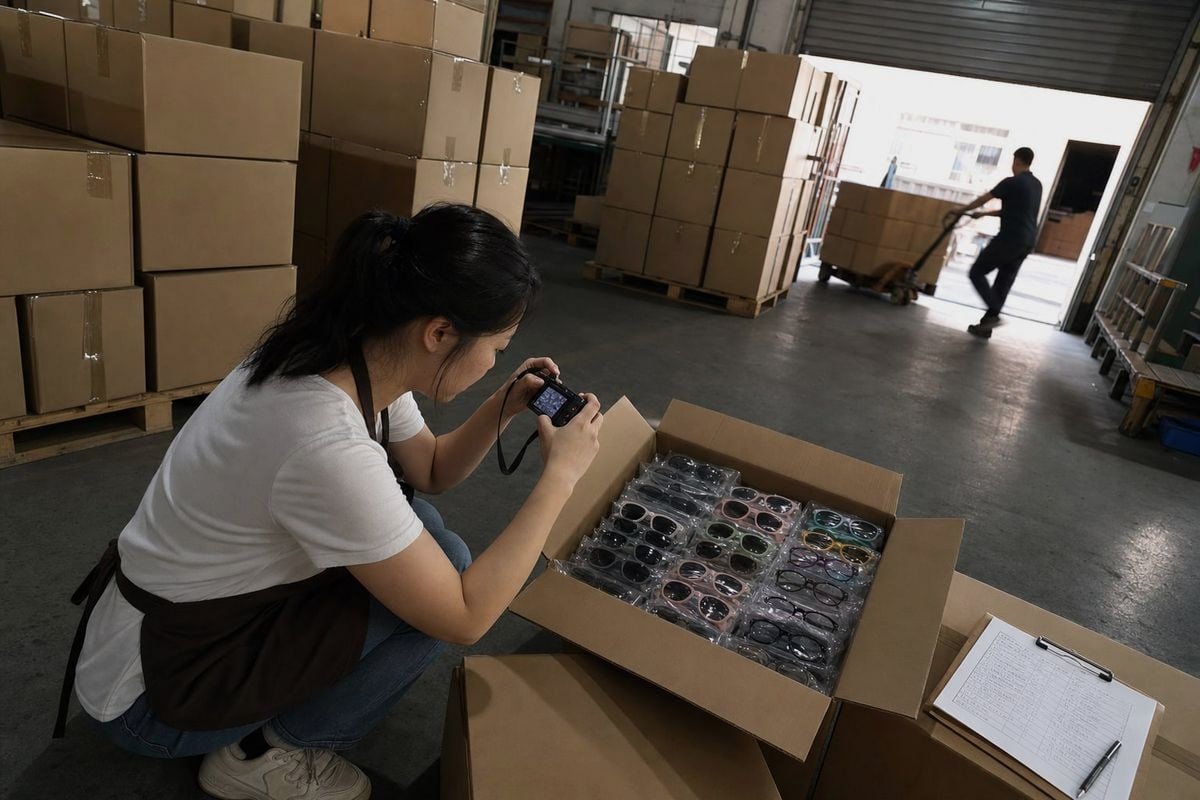
The key insight is that the balance payment should never be a blind payment. You should pay only after you have evidence the goods meet your standard. In our experience exporting to 20+ countries, the smoothest orders follow a clear sequence that both sides agree to in the purchase order processing stage.
A Balance Payment Sequence That Protects Both Sides
- Factory completes production within the agreed lead time for manufacturing.
- Factory notifies the buyer and provides inspection photos, videos, or a full QC report.
- Buyer (or a third-party inspector) approves the pre-shipment inspection.
- Buyer wires the 70% balance.
- Factory releases goods under the agreed FOB shipping terms and sends the bill of lading.
This sequence matters because it converts trust into checkpoints. You are not paying because the factory says the frames are ready. You are paying because you saw proof.
For larger programs, some buyers add extra protection. A carta de crédito 4 works well for orders above roughly $30,000, though bank fees make it impractical for smaller kids eyewear orders. Trade credit insurance is another option for factories extending open terms, and it is one reason some suppliers can offer net 30 payment terms to proven accounts without carrying naked risk.
Also negotiate what happens if you delay payment after inspection approval. Reasonable terms include a short grace window, then storage fees. Unreasonable terms include the factory reselling your branded goods — custom-logo kids frames cannot be resold anyway, which is exactly why factories insist on balance-before-release. Understand that logic, and negotiations get easier.
What Payment Milestones Should I Set for Custom Colors, Logos, and Packaging Approval?
During a private-label project 5 for a European kids brand last year, we ran three rounds of Pantone matching 6 on a translucent pink acetate-look frame before the buyer approved it. That approval process taught both sides why milestones must be written into the payment plan.
Set three payment milestones for custom kids frames: the deposit due after sample and Pantone approval, a mid-check tied to logo and packaging pre-production approval, and the balance due after final pre-shipment inspection. Never let mass production start before written approvals.
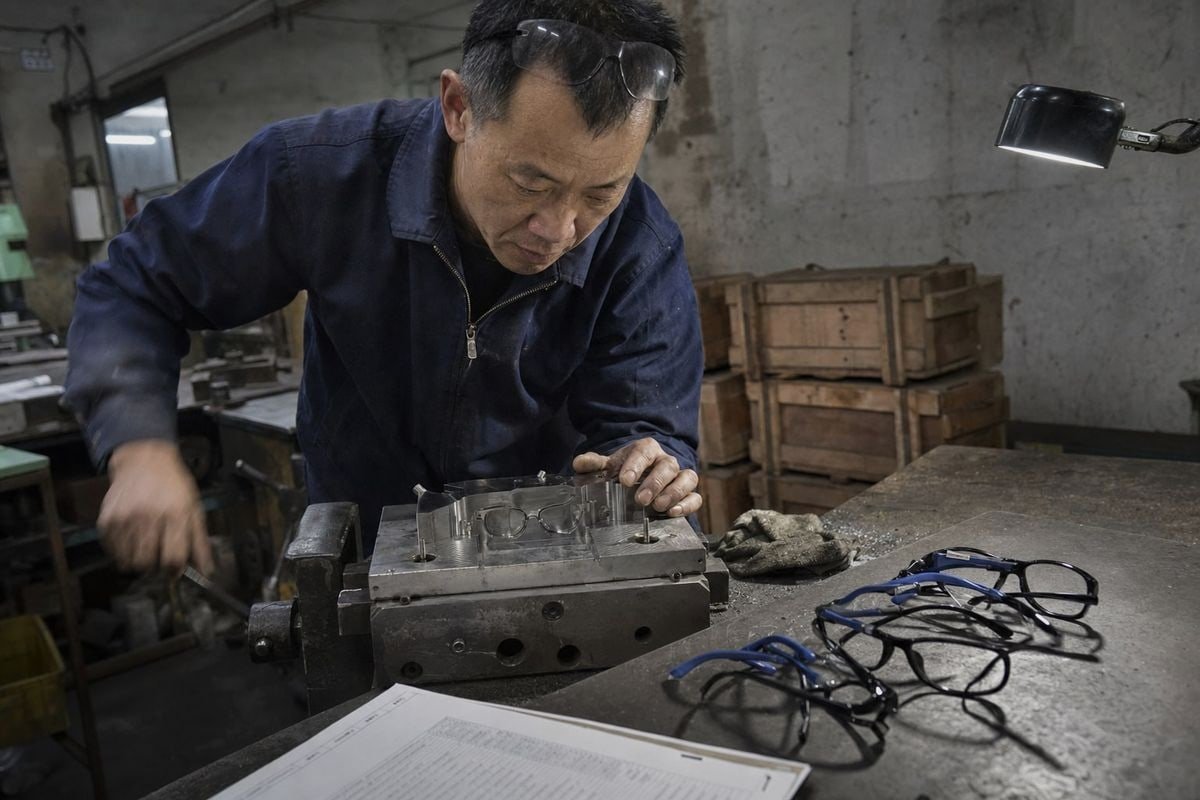
Custom work changes the risk profile completely. A stock black TR90 frame can be sold to another buyer if an order collapses. A frame in your custom blush-pink color, with your logo pad-printed on the temple and your branded retail-ready packaging, cannot. This is why custom deposits trend toward 50% and are usually non-refundable once production begins.
The solution is not to fight the higher deposit. The solution is to attach every payment to an approval gate, so your money only moves when the project moves.
Milestone Map for a Custom Kids Frame Order
| Hito | What Gets Approved | Payment Triggered |
|---|---|---|
| Sample confirmation | Frame fit, flexibility, custom color match | 30–50% deposit |
| Aprobación previa a la producción | Logo placement, printing quality, packaging artwork | Mid-check (if used) or deposit remains the only payment |
| Inspección previa al envío | Full QC report, packaging assembly, carton marks | 50–70% balance |
| Release of goods | Bill of lading issued under FOB shipping terms | None — already paid |
A few practical rules from our production line. First, sign off color under standard lighting with a physical sample, not a screen photo. Custom colors on flexible TPEE and TR90 materials can shift slightly between sample and bulk, so agree on an acceptable tolerance in writing. Second, approve packaging dielines before the deposit clears if packaging is part of the order — reprinting boxes destroys margins and timelines. Third, ask whether bulk order discounts apply if you consolidate colorways into one production run; combining SKUs often lowers unit cost more than negotiating the deposit down.
Milestones do slow the paperwork slightly. But they turn a scary 50% deposit into a series of small, controlled decisions.
How Do I Negotiate Fair Deposit and Balance Terms with a New Overseas Frame Supplier?
One lesson fifteen years in eyewear has taught me: buyers who negotiate payment terms with logic and documentation get better terms than buyers who simply push for lower numbers.
Negotiate fair terms by starting at the standard 30/70 structure, offering a verifiable company profile and trade references, requesting inspection-linked balance payments, and proposing a path to net 30 payment terms after several consecutive on-time payments. Trade transparency for flexibility.

A new supplier knows almost nothing about you. Every concession you want — a lower deposit, a later balance, open credit — asks them to absorb more risk on incomplete information. So the fastest way to better terms is to reduce their uncertainty, not to squeeze their margin.
What Actually Moves the Needle in Negotiation
| Negotiation Lever | Por qué funciona |
|---|---|
| Company registration and trade references | Proves you are an established business, not a one-time buyer |
| Ordering from existing styles first | Avoids mold risk, justifying standard rather than elevated deposits |
| Meeting or exceeding the minimum order quantity | Larger committed volume gives the factory room to flex on terms |
| Committing to a repeat-order roadmap | Factories trade terms for predictable capacity planning |
| Accepting inspection-linked payments | Shows you will pay promptly when quality is proven |
Now, the objections I hear most. Some buyers argue kids frames are a small-ticket item, so deposits should be minimal. I understand the retail logic — parents are price-sensitive, and consumer finance plans with 10% deposits do help conversion at the shop counter. But that is a retail financing model, not a wholesale payment terms model. At the factory level, even a lightweight kids frame carries design, tooling, color-run, and inventory risk. Those costs exist whether the frame retails for $30 or $130.
Other buyers push for immediate net 30. In our experience, that request lands badly on a first order. A smarter proposal: run two or three orders on 30/70, pay every balance on time, then formally request graduated terms — perhaps 20/80, then net 30 backed by the supplier's trade credit insurance. Factories say yes to trajectories, not leaps.
Finally, put everything on paper. The proforma invoice should state deposit percentage, balance trigger, currency, bank details, incoterms 7, and cancellation rules. Verbal agreements do not survive a dispute across two time zones.
Conclusión
Start at 30/70, move to 50% for custom tooling, tie every payment to an approval milestone, and earn net terms through consistent on-time payments. Clear terms protect everyone.
Notas al pie
1. Explains the critical step in supply chain management to ensure product quality before final payment. ↩︎
2. Defines the commercial document and first official offer issued by a buyer to a seller. ↩︎
3. Authoritative Wikipedia entry defining raw materials in the context of manufacturing and production. ↩︎
4. Authoritative Wikipedia entry explaining the financial instrument for international trade. ↩︎
5. Describes the business model where products are manufactured by one company for sale under another’s brand. ↩︎
6. Authoritative Wikipedia entry explaining the industry-standard color matching system. ↩︎
7. Explains the standardized international rules for the interpretation of trade terms. ↩︎
Más artículos que te podrían gustar

5 de agosto de 2026
Bio-Based vs Regular Cellulose Acetate: What's the Difference for Kids' Frames?

5 de agosto de 2026
How Recyclable Are Kids' Optical Frame Materials, and What Eco-Friendly Alternatives Exist?
5 de agosto de 2026
Do Kids Optical Frames Whiten or Age in Storage, and How to Control Warehouse Conditions?
¿Buscas un socio confiable en gafas para niños?
Explore más de 800 estilos listos y soporte OEM/ODM completo adaptado a su marca.
Ponte en contacto English
  Español de México
  Deutsch
  Français
  日本語
日本語  العربية
  Português do Brasil