How to Set a Budget Cap for Your First Kids Optical Frames Order?
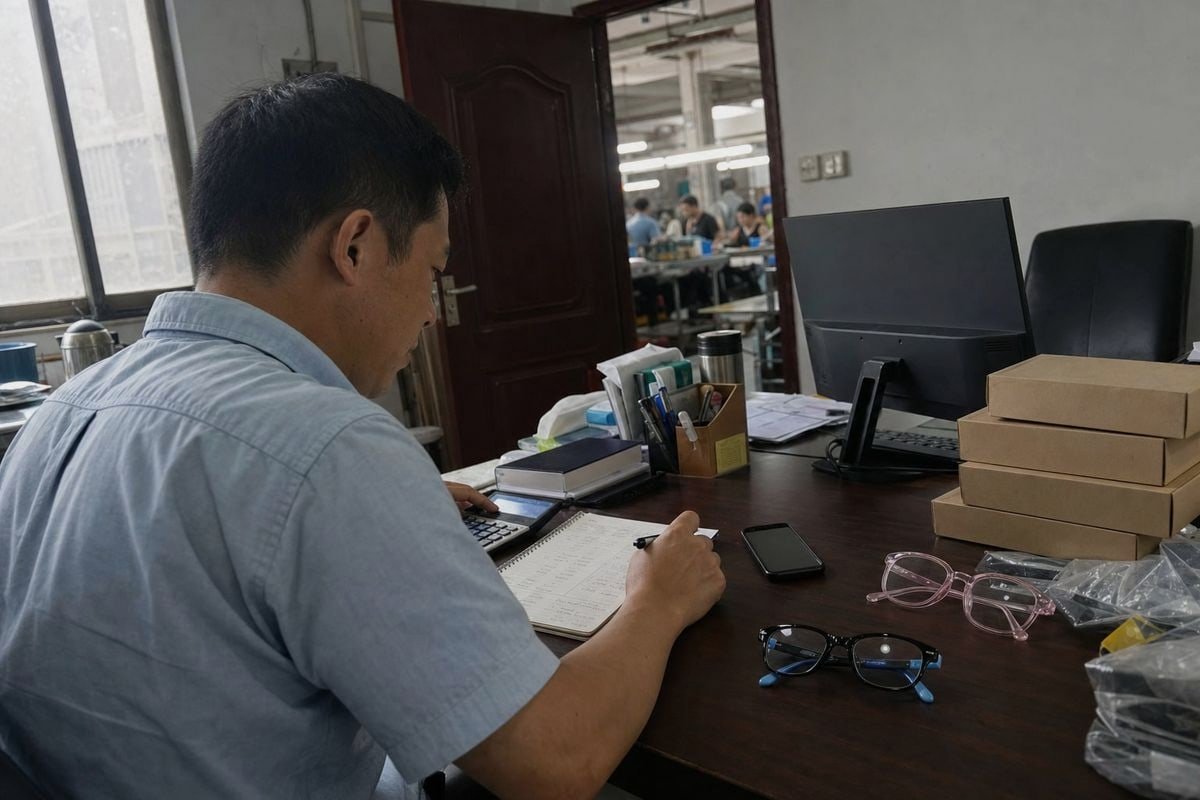
Setting a budget cap for your first kids optical frames order feels risky. On our production line in Taizhou, I have watched new brands overspend on molds and underspend on safety — then struggle to recover.
Set your budget cap by combining minimum order quantity, wholesale unit cost, sampling, shipping, and quality control into one total order ceiling — not a frame-only price. Most first-time buyers succeed with a cap of $3,000–$10,000 covering 300–1,000 units of ready-made styles.
That single number matters more than any per-frame price. Below, I will break the cap into its real parts, so you can plan with confidence instead of guesswork.
What Is a Realistic MOQ and Budget Range for My First Order?
Last spring, a first-time buyer from Australia asked me for 5,000 pieces across two styles. I talked her down to 600 pieces across four styles — and her sell-through improved because of it.
A realistic first order is 300–1,000 units across 2–4 existing styles, at a wholesale unit cost of roughly $2.50–$8.00 for TR90 flexible frames. That puts a sensible total budget range between $1,500 and $8,000 before shipping and branding extras.
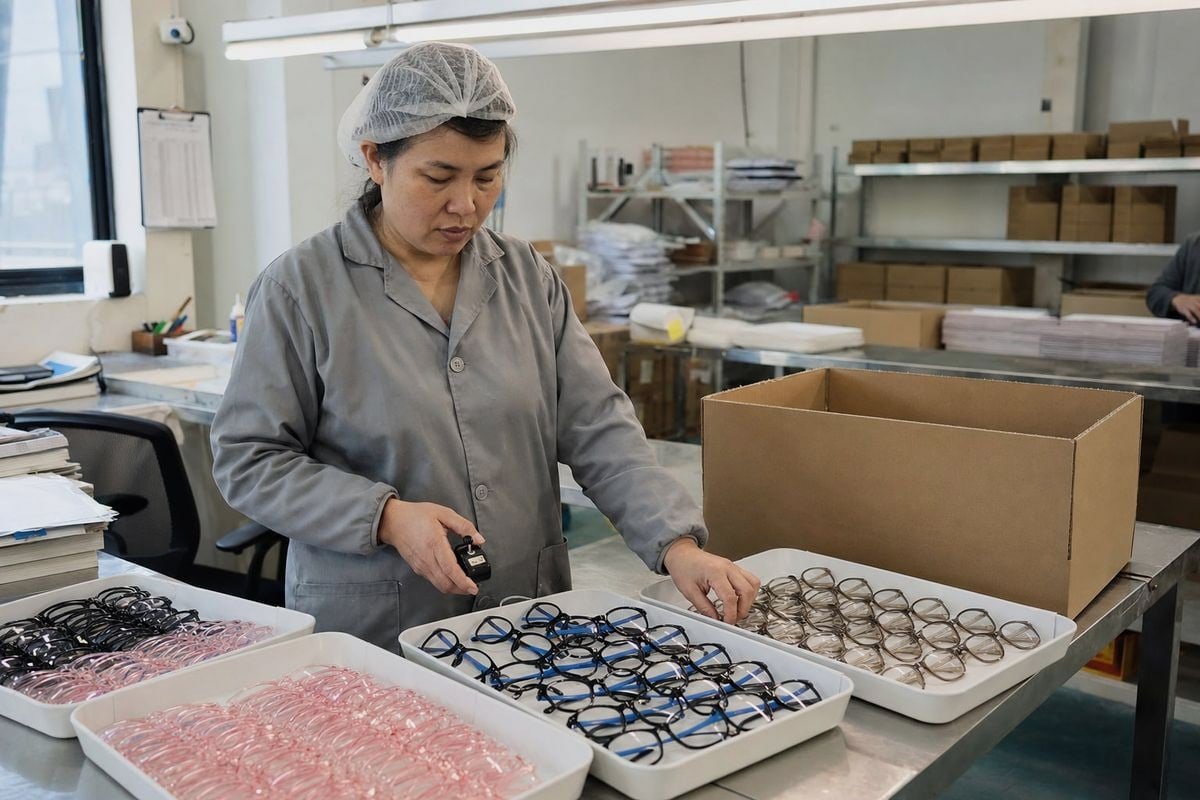
El minimum order quantity 1 you accept shapes everything else in your budget. Factories quote lower wholesale unit costs 2 at higher volumes, but a first order is a market test, not a warehouse fill. In our experience exporting to 20+ countries, buyers who start smaller learn faster and reorder sooner.
How MOQ Tiers Affect Your Unit Cost
Bulk purchasing discounts are real, but they follow a curve. The biggest price drop usually happens between sample quantity and the first commercial tier. After that, savings shrink per unit.
| Order Size | Typical Wholesale Unit Cost (TR90/TPEE) | Mejor para |
|---|---|---|
| 100–300 units | $4.00–$8.00 | Market testing, single-channel launch |
| 300–600 units | $3.00–$6.00 | First serious retail or e-commerce order |
| 600–1,000 units | $2.50–$5.00 | Multi-style assortment with color options |
| 1,000+ units | $2.00–$4.50 | Proven sellers, repeat orders |
Match Your Cap to Your Retail Markup Strategy
Work backward from your selling price. If your retail markup strategy targets a 3x–5x multiple, a $4.00 frame supports a $15–$25 retail price point. Price point categorization matters here: decide early whether you are a value brand, a mid-tier brand, or a premium safety-focused brand, then set the wholesale ceiling to match.
One more note on inventory assortment planning. Splitting 600 units across four styles and two colorways gives you data. Putting 600 units into one style gives you risk. We keep around 800 existing styles in our catalog precisely so new brands can spread a modest MOQ across several proven designs without paying for tooling.
How Can I Avoid Hidden Costs Like Molds, Samples, and Shipping?
A lesson I learned early in my fifteen years in eyewear: the quote a buyer receives is rarely the amount they actually pay. The gap comes from costs nobody itemized upfront.
Avoid hidden costs by choosing existing styles to skip mold fees of $2,000–$8,000, confirming sample charges in writing, requesting FOB or DDP quotes before ordering, and reserving 15–20% of your total cap for freight, duties, packaging, and small revisions.

Hidden costs are not usually deception. They are assumptions. The factory assumes you know that a custom mold 3 is tooling, not product. The buyer assumes the quote is all-inclusive. When we onboard a new brand, we walk through every line item before the deposit, because a surprised customer never becomes a repeat customer.
The Five Cost Traps to Confirm in Writing
| Hidden Cost | Rango Típico | How to Avoid or Reduce It |
|---|---|---|
| Custom mold / tooling | $2,000–$8,000 per style | Choose from existing styles for your first order |
| Sample fees | $20–$80 per sample | Ask if fees are refunded against the bulk order |
| Logo and packaging setup | $100–$500 | Use standard packaging with a printed logo insert |
| Freight and duties | 8–20% of goods value | Request DDP quotes; consolidate styles into one shipment |
| Revision or color-change fees | $50–$300 | Approve a pre-production sample before mass production |
Why Cost of Goods Sold Is the Number to Protect
Your true cost of goods sold 4 includes every one of those lines, divided across your units. A $3.50 frame can quietly become a $5.20 landed cost. If your retail price was built on $3.50, your margin just evaporated. So build your cap on landed cost from day one.
Shipping deserves its own decision. Air freight for a 500-unit order is fast but can add $1.00+ per unit. Sea freight cuts that sharply but adds four to six weeks. For a first order with no launch deadline, sea freight usually wins. For a seasonal back-to-school window, pay for air and protect the date.
Which Materials and Features Are Worth the Extra Investment for Safety?
Every material choice on our workshop floor is a trade-off I weigh daily: a few cents of extra material cost against a child's comfort, and against your brand's returns rate.
Prioritize TR90 flexible frames or TPEE construction, hinge-free or flexible temple designs for toddlers, silicone ear hooks and nose pads, and impact-resistant polycarbonate demo lenses. These safety upgrades add roughly $0.50–$1.50 per unit and directly reduce breakage and returns.
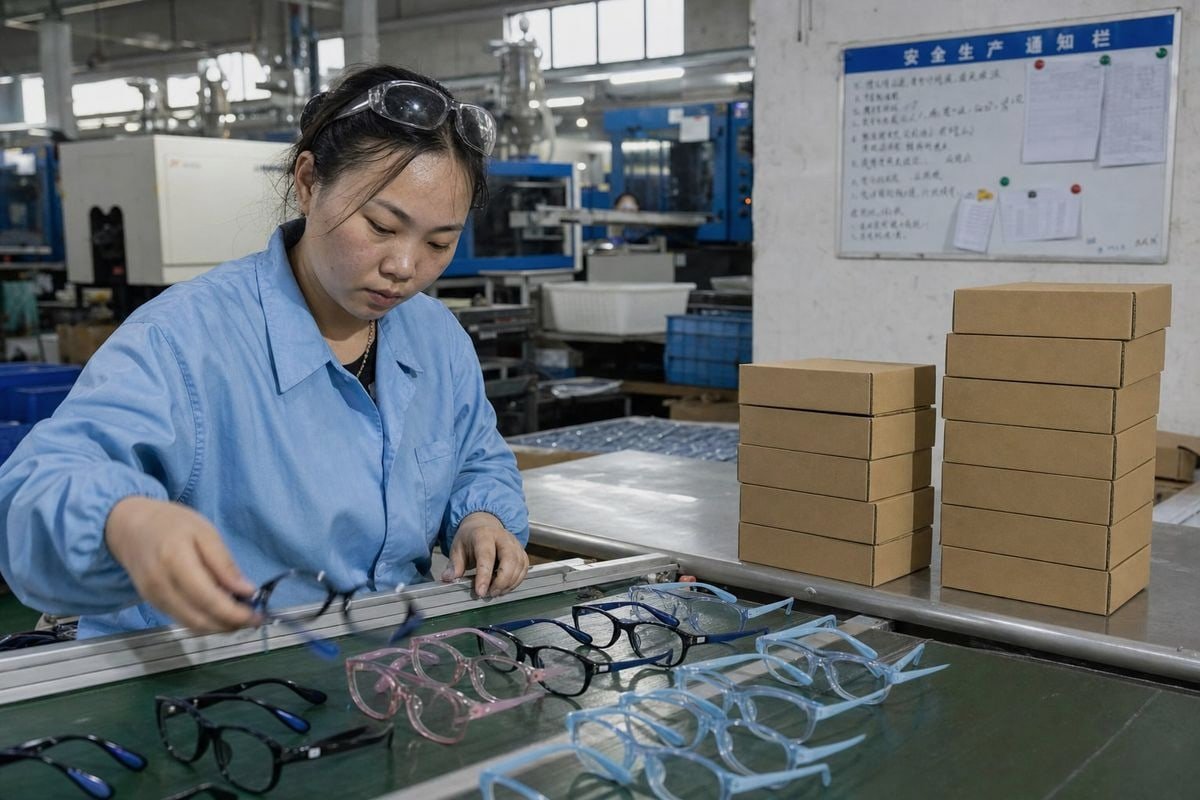
Safety is not a marketing word in gafas para niños 5. It is a materials decision. Kids sit on their glasses, chew the temple tips, and sleep in them. Your frame either survives that or it comes back as a complaint. Meeting real frame durability standards 6 — flex testing, bite-force resistance, and colorfastness — is what separates a kids' frame from a shrunken adult frame.
Where the Extra Cents Actually Go
Not every upgrade deserves budget. Here is how I rank them for a first order:
- Flexible frame material. TR90 flexible frames bend and recover. TPEE goes further — it is softer, lighter, and nearly unbreakable in a child's hands. For toddlers, hinge-free TPEE is worth every cent.
- Temple and hinge design. Standard metal spring hinge specifications matter for older kids' acetate-look styles, but for ages 2–8 we favor flexible rubber temples with silicone connectors, like our two-tone TR90 frames with TPEE temples and adjustable ear hooks. No metal near the eyes, no pinch points.
- Grip features. Textured temple tips and silicone ear hooks keep frames on during play. A frame that slips is a frame that gets abandoned in a backpack.
- Environmentally friendly materials. Buyers in Europe, Japan, and Australia increasingly require this, and it supports a premium price point.
Match Material to Age Group
| Grupo de edad | Recommended Material | Key Safety Feature | Extra Cost Per Unit |
|---|---|---|---|
| 1–4 years | Soft TPEE, hinge-free | One-piece flex, no metal parts | +$0.80–$1.50 |
| 4–8 years | TR90 front + TPEE temples | Silicone ear hooks, rounded tips | +$0.50–$1.00 |
| 8–12 years | TR90 or acetate-look TR90 | Reinforced hinges, style-driven finishes | +$0.30–$0.80 |
Skip decorative extras like crystal accents or heavy metal trims on a first order. They raise cost, add safety review questions, and rarely drive sell-through in children's optical.
How Do I Balance Cost Savings With Consistent Quality Control?
A distributor once told me he switched suppliers three times chasing a $0.40 saving per frame. His fourth call was to us — after a full container arrived with misaligned temples he could not sell.
Balance savings and quality by allocating 5–10% of your budget cap to inspection and QC, ordering from a factory with documented inline checks, approving a golden sample before production, and negotiating price through volume and style consolidation — never through skipped testing.
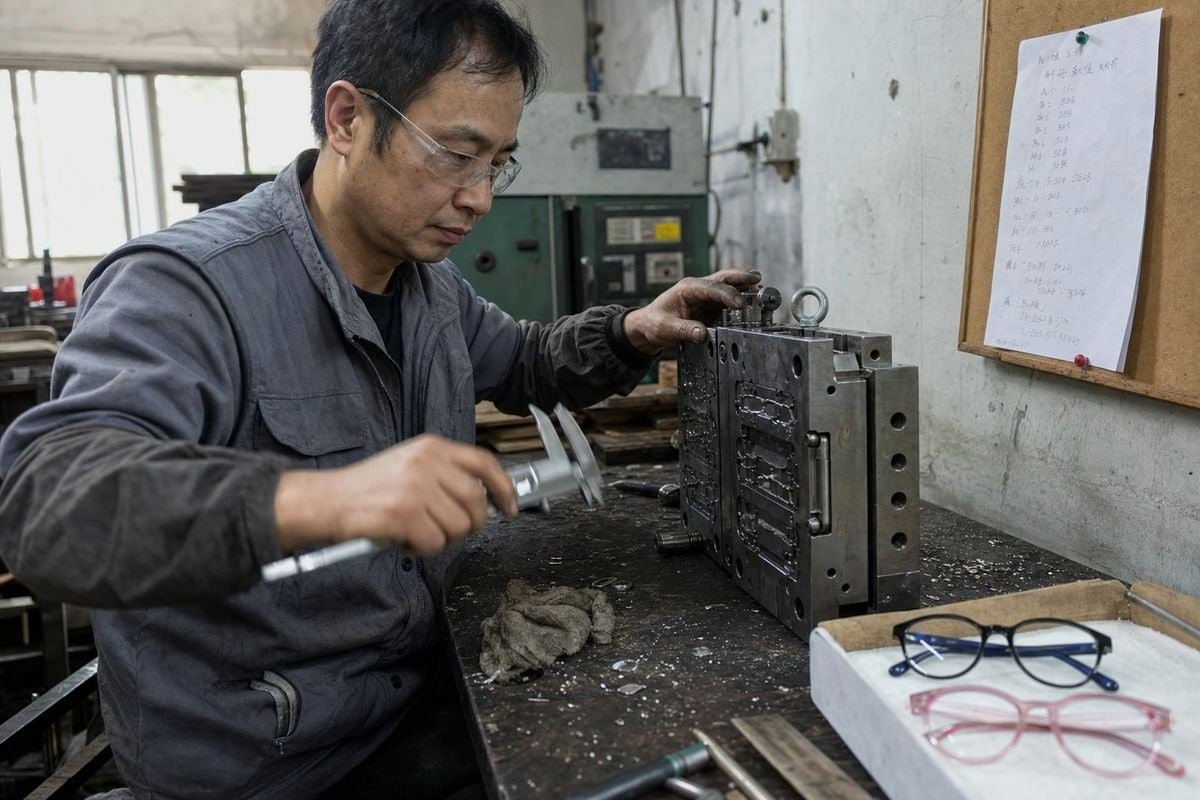
Quality control is not a fee. It is insurance on your entire order value. If 8% of a 1,000-unit shipment fails at retail, you did not save money on the unit price — you lost far more in returns, refunds, and reputation. In our 5S-managed workshop, with around 120 workers, we run inline checks 7 at molding, assembly, and final packing because catching a defect early costs cents; catching it in your warehouse costs the whole unit.
A Simple QC Process for First-Time Buyers
- Approve a golden sample. Get a physical pre-production sample. Confirm color, flexibility, hinge tension, and logo placement. This sample becomes your contract reference.
- Define acceptance criteria in writing. Specify tolerances: temple alignment, lens fit, surface finish, and packaging condition. Vague standards produce vague results.
- Request an inline inspection report. Ask for photos mid-production, not just at the end. Problems found at 30% completion are fixable.
- Do a final random inspection. Use an AQL-based random check before shipment, either by the factory's QC team or a third party. Budget for it inside your cap.
- Keep a small defect allowance. Even good production has a small reject rate. Agree upfront on how defective units are credited or replaced.
Where to Save Without Cutting Corners
There are honest ways to lower cost. Consolidate colors to reduce changeover time. Choose standard packaging with a branded insert instead of fully custom boxes. Ship by sea. Reorder proven styles to unlock bulk purchasing discounts on the second run. What you should never trade away is the material grade, the safety features, or the inspection step. A reliable long-term supplier will help you find the first kind of saving and will refuse the second kind — that refusal is actually a good sign.
Conclusión
Cap the total order, not the frame price. Use existing styles, budget for landed cost and QC, and invest in safe flexible materials — then reorder what sells.
Notas al pie
1. Authoritative definition of the MOQ concept used in manufacturing and supply chain management. ↩︎
2. Reliable Wikipedia entry explaining wholesale pricing and distribution models. ↩︎
3. Comprehensive Wikipedia guide on the injection moulding process used for eyewear. ↩︎
4. Standard Wikipedia definition for COGS, essential for budget planning. ↩︎
5. General reference for the eyewear industry, including specific categories like children’s frames. ↩︎
6. The international ISO standard for ophthalmic optics and spectacle frame requirements. ↩︎
7. Explains the role of process-based quality control and inspections in manufacturing. ↩︎
Más artículos que te podrían gustar
5 de agosto de 2026
Bio-Based vs Regular Cellulose Acetate: What's the Difference for Kids' Frames?

5 de agosto de 2026
How Recyclable Are Kids' Optical Frame Materials, and What Eco-Friendly Alternatives Exist?
5 de agosto de 2026
Do Kids Optical Frames Whiten or Age in Storage, and How to Control Warehouse Conditions?
¿Buscas un socio confiable en gafas para niños?
Explore más de 800 estilos listos y soporte OEM/ODM completo adaptado a su marca.
Ponte en contacto English
  Español de México
  Deutsch
  Français
  日本語
日本語  العربية
  Português do Brasil