How to Quickly Reorder Best-Selling Kids Sunglasses Colors After Trial Sales Data?
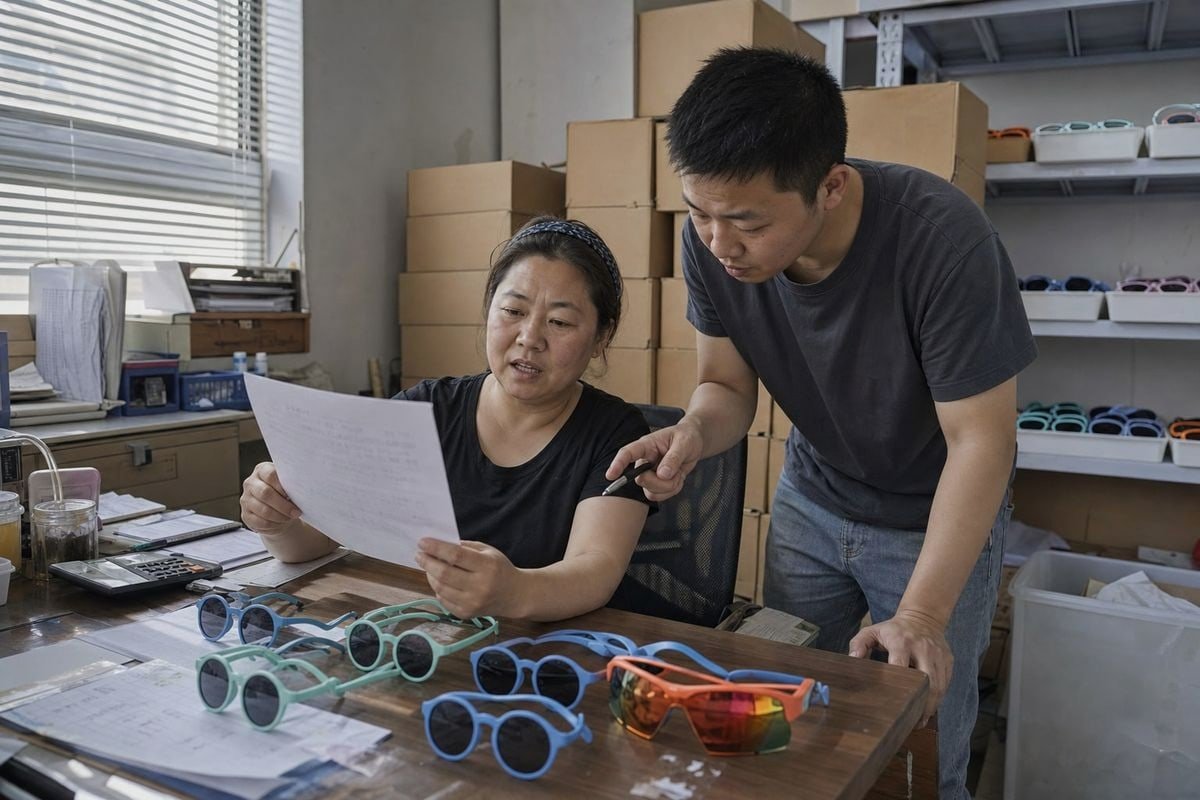
Last summer, a buyer called our factory in a panic: her mint-teal kids sunglasses had sold out in nine days, and she needed to reorder best-selling colors fast.
To quickly reorder best-selling kids sunglasses colors, rank each color by units sold and sell-through rate, correct for stockouts, calculate a reorder point from weekly velocity plus lead time, then place a color-only repeat order with your factory using existing molds.
That is the short answer. Now let me walk you through each step, because the details decide whether you capture the season or watch it pass by.
How can I identify which kids sunglasses colors are truly my best sellers before placing a reorder?
At our Taizhou workshop, we often see brands reorder an entire style when only one or two colorways drove the demand TR90 or TPEE material 1. The data almost always tells a sharper story.
Identify true best-selling colors by tracking variant-level data: units sold, sell-through rate, conversion rate, and stockout days per color. A color that sold out early may be your real winner, so correct rankings for lost selling days before reordering.
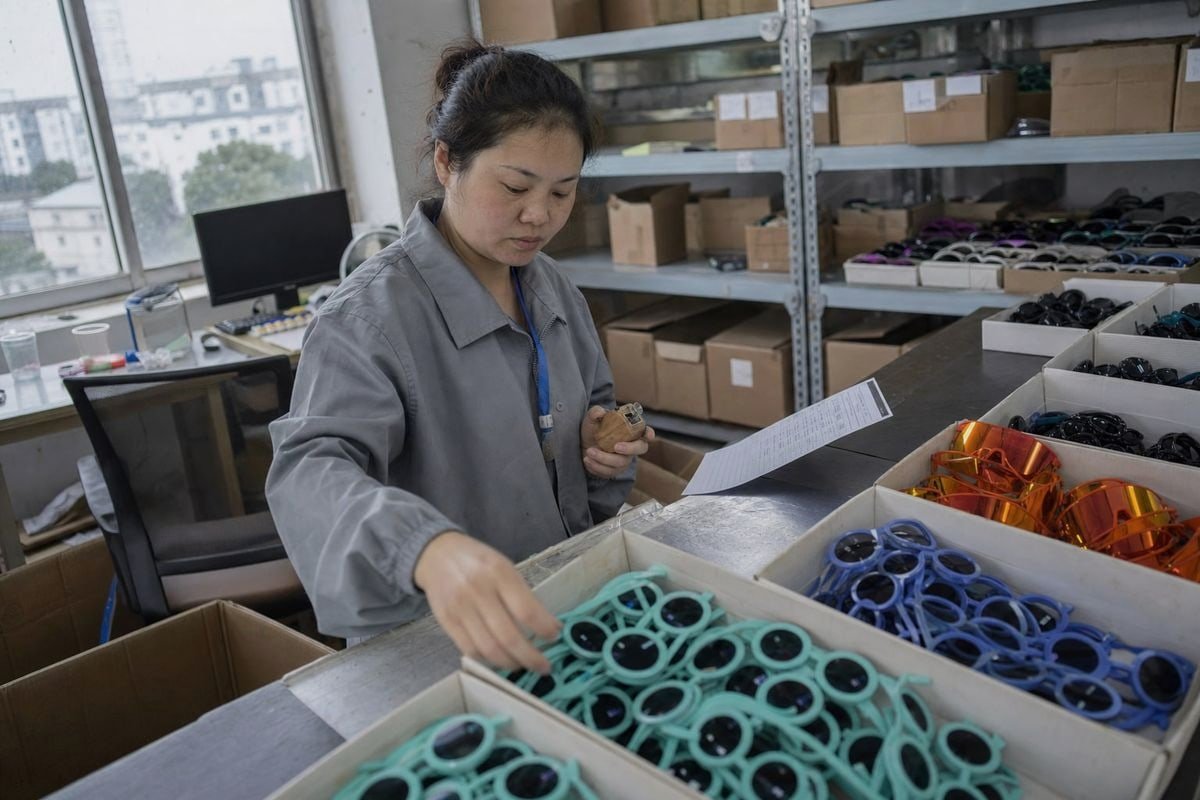
The most common mistake I see is treating "best-selling" as a style-level decision. In gafas para niños 2, color is the decision driver. A periwinkle-blue frame with mint temples and the same frame in plain black are two different products in a child's eyes. So your SKU performance tracking must go down to the color variant, not stop at the parent style.
Build a simple color scorecard
You do not need enterprise software. A spreadsheet works. For each colorway, record these numbers from your trial window:
| Métrica | Por qué importa | Warning sign |
|---|---|---|
| Units sold | Raw demand signal | Low units with low stock may hide demand |
| Tasa de venta | Speed against inventory committed | Above 80% suggests you under-ordered |
| Stockout days | Days the color was unavailable | Any stockout distorts the ranking |
| Gross margin per color | Profitability, not just popularity | Popular but thin-margin colors need repricing |
| Conversion from trial | Try-on to purchase rate | High tries, low buys means novelty appeal only |
Correct for hidden winners
Here is the critical interpretive step. Suppose your orange-mirror sport shield sold 40 units and your blue two-tone round sold 38. But the blue was out of stock for six of twenty trial days. Adjust for available selling days and the blue is actually your fastest mover. We have watched buyers reorder the wrong color simply because they never checked inventory history. Weight recent sales and repeat requests more heavily than raw totals, because kids' color preferences shift quickly with seasons and playground trends. If one or two colors capture over half your total sales, that concentration is your reorder signal.
What is the minimum reorder quantity I need to restock proven colors without overcommitting?
One trade-off comes up in nearly every reorder conversation I have with buyers: order enough to ride the momentum, but not so much that a fading trend becomes dead stock.
Most factories accept lower minimum order quantities on repeat colors because molds and color recipes already exist. A practical floor is often 300 to 500 pieces per proven color, sized by multiplying weekly sales velocity by lead time plus a safety buffer.
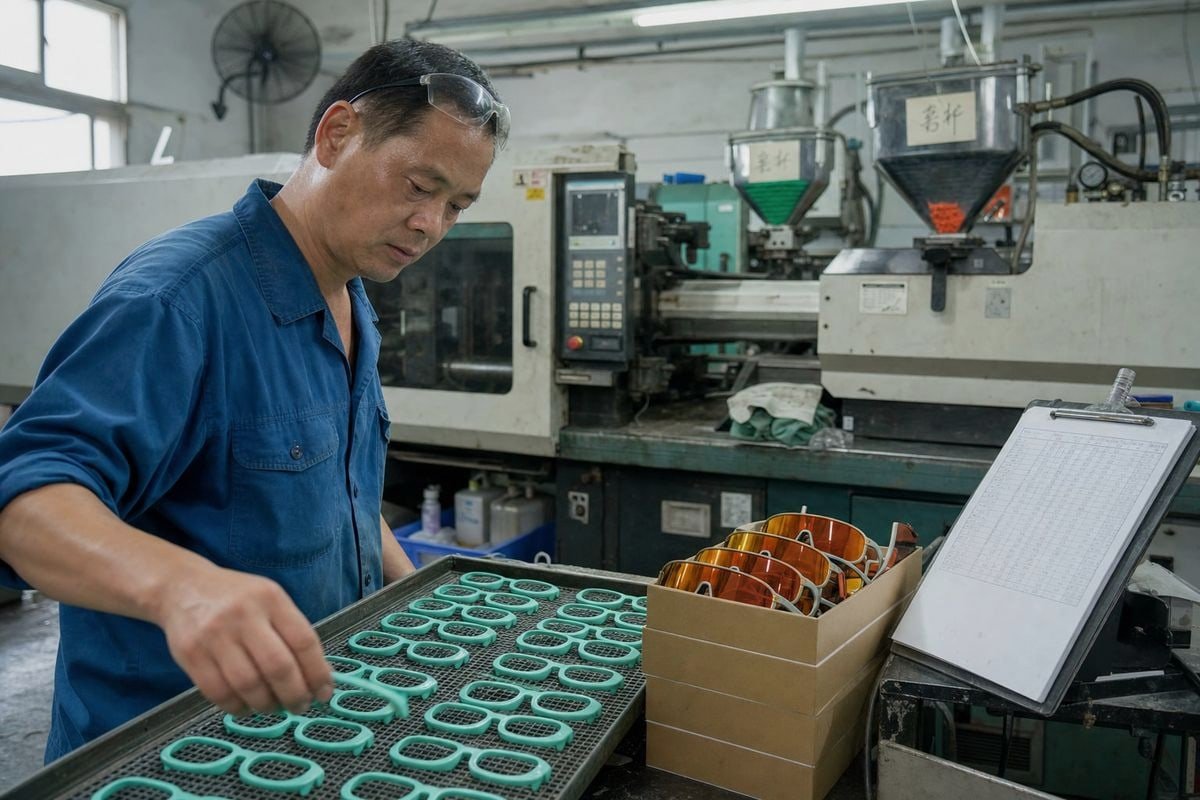
Repeat orders are structurally cheaper for a factory to run than first orders. When we produced your trial batch, we already matched your colors, set up the injection parameters for the TR90 or TPEE material 3, and passed your quality checks. That is why the minimum order quantity 4 for a reorder of an existing colorway is usually lower than for a new custom color. Use that to your advantage in your inventory replenishment strategy.
Turn velocity into a reorder quantity
Here is the plain-language math. Take your corrected weekly sales rate per color. Multiply by your total lead time in weeks. Add a safety buffer for demand swings, which are large in kids' accessories. That gives your reorder point and target quantity.
| Entrada | Example: mint-teal round frame | Example: orange-mirror sport shield |
|---|---|---|
| Corrected weekly velocity | 25 pairs | 18 pairs |
| Lead time (production + shipping) | 5 weeks | 5 weeks |
| Base demand during lead time | 125 pairs | 90 pairs |
| Safety buffer (about 30% for kids' items) | 38 pairs | 27 pairs |
| Reorder quantity | ~165 pairs, round up to MOQ | ~120 pairs, round up to MOQ |
Handle the fast-versus-careful objection
Some buyers tell me they want to wait for more data before committing. That caution is reasonable, because a small trial can flatter a color that was simply merchandised best. But waiting has its own cost: a stockout on your winning color during peak season is lost revenue you never recover. Our answer is to split the difference. Reorder the top one or two colors at the calculated quantity now, and place the borderline third color at the minimum order quantity only. Demand forecasting from a short trial is never perfect, so structure the order to be wrong cheaply.
How can I ensure fast production turnaround so I don't miss peak seasonal demand?
A lesson we learned years ago: the buyers who reorder fastest are not the ones who push hardest. They are the ones who prepared the reorder path before the trial even shipped.
Fast turnaround comes from reordering existing styles and colors with no tooling changes, confirming specifications within 48 hours, choosing a factory with in-house production, and timing orders ahead of seasonal peaks so goods land before demand spikes.
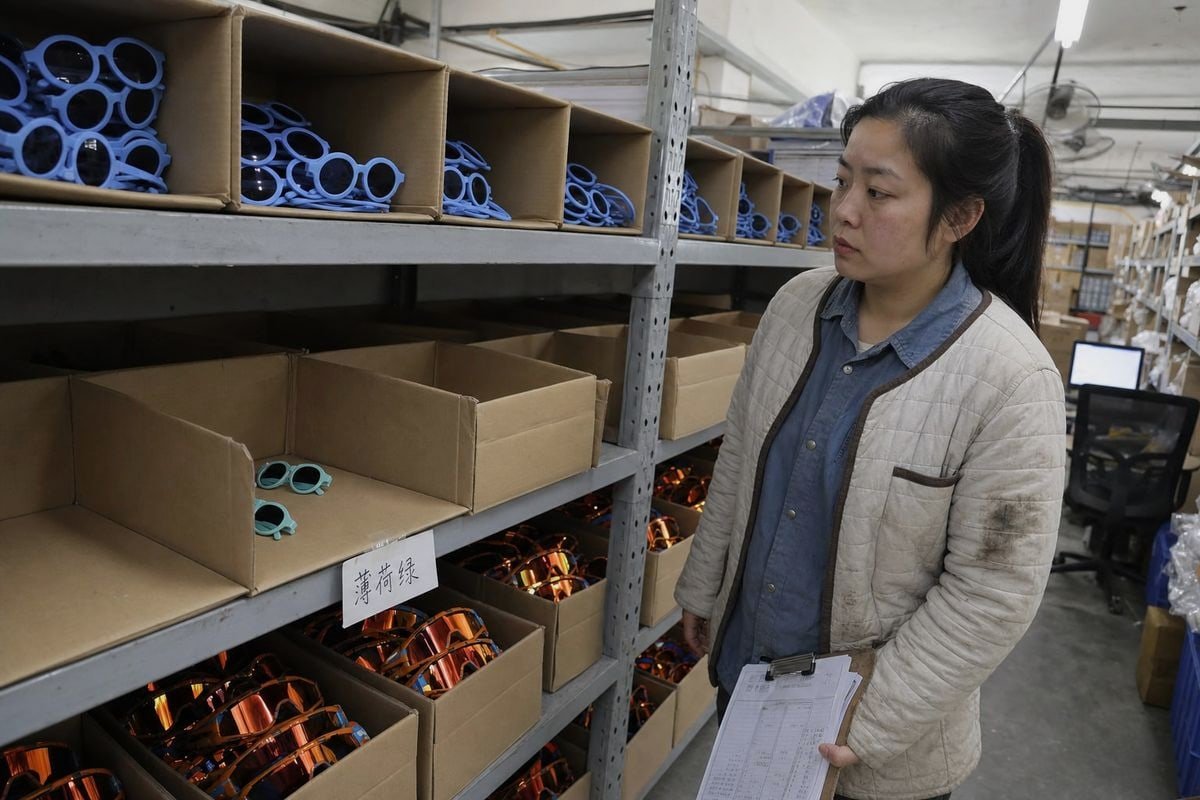
Lead time management starts with understanding what actually consumes time. Break your replenishment cycle into stages and you will see where the delays hide.
Deconstruct your lead time
| Etapa | Typical duration (repeat order) | How to compress it |
|---|---|---|
| Order confirmation | 1–7 days | Pre-approve specs and a standing quote before trial ends |
| Material and color prep | 2–5 days | Reorder existing colorways; recipes are on file |
| Injection and assembly | 10–15 days | Choose a factory with in-house molding, not a trader |
| Control de calidad y embalaje | 2–4 days | Reuse the approved QC checklist from the trial batch |
| Envío | 5–30 days | Air freight winners; sea freight the buffer stock |
The biggest single accelerator is choosing from existing styles. Because our factory maintains around 800 ready designs, a repeat color order skips tooling entirely. We are pulling an approved recipe and running it on molds that already exist. That is a very different timeline from a new development project.
Plan around the season, not the average
Seasonal inventory planning 5 matters as much as quantity. Kids sunglasses demand spikes before summer holidays, back-to-school, and travel periods. Count backward from your peak: if demand jumps in early June and your total lead time is five weeks, your reorder must be confirmed by late April. Some of our long-term partners even ask us to hold semi-finished frames after the trial, so a reorder only needs lens fitting, QC, and packing. If your data is strong, that kind of arrangement with your supplier is the closest thing to instant replenishment that wholesale eyewear distribution allows.
Can I adjust packaging or accessories when reordering without affecting delivery speed?
A brand owner in Australia once asked us mid-reorder whether she could switch to a branded pouch and add a hard case. The answer was yes, and it cost her zero extra days. Here is why.
Yes. Packaging and accessory changes run parallel to frame production, so they rarely delay a reorder. Keep the frame, lens, and color identical, finalize packaging artwork within the first week, and delivery speed stays unchanged.
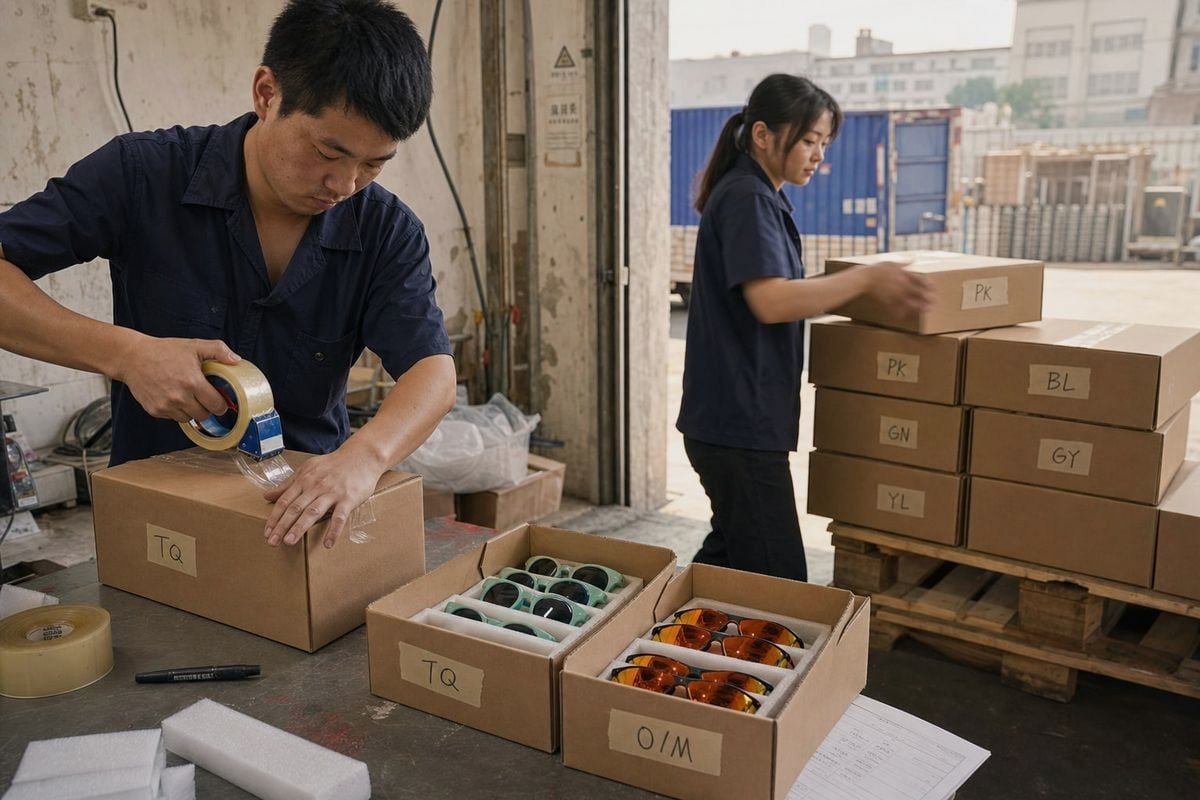
Frames and packaging move on separate tracks inside a factory. While inyección de plástico 6 and assembly run for your proven colorways, the packaging line can prepare pouches, boxes, cases, and hang tags at the same time. The only real risk to your timeline is artwork approval. If your logo files, box dieline, and print colors are confirmed in the first few days of the order, packaging is ready before the frames leave QC.
What you can change safely on a reorder
- Branded microfiber pouches or cleaning cloths with your logo
- Retail-ready boxes, sleeves, or blister packs
- Hard cases, straps, or clip-on accessories
- Hang tags, barcodes, and compliance labeling
- Inner and outer carton markings for your warehouse
What you should not change if speed matters
Changing lens specifications, frame material, or introducing a brand-new colorway resets sampling and approval. That is a new development cycle, not a reorder. Keep colorway optimization for the next trial round, and let this reorder ride on approved specs.
One more point that matters to buyers shipping to regulated markets: labeling updates are also the right moment to double-check compliance. For the US, that means confirming your packaging and product markings align with CPSC safety regulations 7 for children's products. We handle this labeling on the line, so a compliance tweak adds paperwork, not production days. Full OEM/ODM support means the packaging upgrade and the color restock arrive together, retail-ready, in one shipment.
Conclusión
A short trial run is only valuable if you act on it before the season moves on. The system is simple: rank colors at the variant level, correct for stockout distortion, size the reorder with velocity and lead time, and place a repeat order that skips tooling. Add a safety buffer for kids' demand swings, upgrade packaging in parallel, and set your next review date the day the order ships. When your trial data shows a winning color, we can usually turn that signal into finished, retail-ready stock faster than you expect — because the molds, recipes, and QC standards are already sitting on our floor, waiting for your call.
Notas al pie
1. Background on thermoplastic materials used in eyewear frame manufacturing mentioned in text. ↩︎
2. Authoritative overview of eyewear types and industry standards. ↩︎
3. Technical details on thermoplastic materials used in high-quality eyewear manufacturing. ↩︎
4. Explanation of minimum order quantity requirements in manufacturing and wholesale. ↩︎
5. Strategic overview of managing inventory levels to meet seasonal demand fluctuations. ↩︎
6. Background on the manufacturing process running parallel to packaging production. ↩︎
7. Official government safety standards for children’s products in the United States. ↩︎
Más artículos que te podrían gustar

1 de agosto de 2026
¿Debería la fábrica encargarse del embalaje y etiquetado de las gafas de sol para niños, o utilizar un proveedor designado?

1 de agosto de 2026
Almacén propio vs. Cumplimiento directo del proveedor: ¿Qué reduce los costos de devolución para las marcas de gafas de sol para niños?

1 de agosto de 2026
Directo al almacén del puerto o staging en el extranjero: ¿Cuál ahorra más en el envío de gafas de sol para niños?
¿Buscas un socio confiable en gafas para niños?
Explore más de 800 estilos listos y soporte OEM/ODM completo adaptado a su marca.
Ponte en contacto English
  Español de México
  Deutsch
  Français
  日本語
日本語  العربية
  Português do Brasil