How Do I Price Kids Sunglasses for Margin and Competitiveness?

Pricing kids sunglasses wrong quietly kills brands. I have watched buyers at our Taizhou factory underprice great montura TR90 1s, chase cheap listings, and lose money on every reorder. It does not have to happen.
Price kids sunglasses by calculating your full landed cost first, then applying a channel-appropriate markup — typically 2x for wholesale and 3–5x for DTC — while benchmarking against 5–10 direct competitors. Target a 50–70% gross profit margin and justify pricing through UV400 protection, durability, and safety features.
That is the short answer. The longer answer covers costs, margins, competitor bands, and channel strategy. Let me walk you through each piece, step by step.
What Factors Should I Consider When Setting Wholesale Prices for Kids Sunglasses?
A buyer from Australia once asked me why two nearly identical frames from our 800-style catalog carried different prices. The answer came down to material grade, lens spec, and packaging — the hidden layers of cost.
Wholesale prices for kids sunglasses should reflect total landed cost — factory price, freight, duties, compliance testing, packaging, and payment fees — plus a margin buffer for returns. Never price from the factory invoice alone, because hidden costs typically add 20–35% before a pair reaches your warehouse.

The single biggest pricing mistake I see is confusing factory price with true cost. When we quote a flexible TPEE frame at, say, a few dollars per unit, that number is only the starting point. Your real wholesale cost of goods includes everything it takes to get that pair sellable in your market.
Build Your Landed Cost Line by Line
Here is how the layers typically stack up for children's eyewear:
| Componente de Costo | What It Includes | Typical Impact |
|---|---|---|
| Factory unit price | Frame, lens, assembly, basic poly bag | Base cost |
| Freight | Sea or air shipping, inland transport | +5–15% |
| Duties and tariffs | Import taxes by destination country | +0–20% |
| Pruebas de cumplimiento | CPSIA 2, EN ISO, REACH, UV400 verification | +2–5% amortized |
| Empaque | Retail box, case, cleaning cloth, hang tags | +5–10% |
| Payment and banking fees | Wire fees, currency conversion | +1–3% |
| Returns and defects buffer | Kids handle products roughly | +5–10% |
Compliance deserves special attention. Kids sunglasses are children's products, so safety testing is not optional in most markets. Protección UV400 3 standards, BPA-free frame materials 4, and impact resistance requirements all cost money to verify. In our experience exporting to 20+ countries, buyers who budget for testing upfront avoid painful surprises at customs.
Separate COGS from Overhead
Your landed cost is not your only cost. Marketing, warehousing, staff, and platform fees sit in overhead. Keep the two separate. Your gross profit margin covers overhead — so if overhead is heavy, your markup needs to be heavier too.
One more factor: order quantity. Choosing from existing styles instead of opening new molds keeps your per-unit cost lower and your risk smaller. That is exactly why we maintain a large existing-style catalog for brands testing new markets.
How Can I Balance Manufacturing Costs with Healthy Retail Margins?
Every quarter, I sit down with our production team to review where material costs are heading. TR90 resin, TPEE grades, polarized lens film — small shifts in these inputs change what a healthy retail price looks like downstream.
Balance costs and margins by targeting keystone pricing (2x landed cost) as your floor, then stretching toward 3–5x for branded lines. Aim for 50–70% gross profit margin per pair, and build a 5–10% durability buffer to absorb the higher return rates typical of children's products.

Margin and markup get confused constantly, so let me define them plainly. Markup is how much you add on top of cost. Margin is what percentage of the selling price is profit. A 2x markup equals a 50% gross profit margin. They describe the same math from different directions.
Which Benchmark Fits Your Business?
Different channels support different targets. These are not competing rules — they are benchmarks for different situations:
| Pricing Benchmark | Multiple on Landed Cost | Gross Margin | Mejor para |
|---|---|---|---|
| Keystone floor | 2x | 50% | Wholesale to retailers, volume plays |
| Standard branded | 2.5–3x | 60–67% | Established e-commerce brands |
| Premium DTC | 3–5x | 67–80% | Boutique, optical, strong brand story |
Say your landed cost per pair is $4.50. Keystone puts your wholesale sell-in around $9. A retailer then applies their own retail markup percentage 5 — often another 2x — landing the shelf price near $18–$22. If you sell direct, you could price at $18–$25 yourself and keep the full spread.
Why Kids Products Need a Bigger Buffer
Children lose sunglasses. They sit on them, bend them, and drop them in sand. Our engineers design TPEE temples specifically because they flex instead of snapping, and that genuinely lowers breakage claims. Still, plan for a 5–10% durability margin in your price. Some brands go further and turn this buffer into a benefit: a one-time free replacement policy funded by a small insurance margin built into the retail price. Parents remember that kind of promise, and it builds loyalty that a discount never does.
Watch seasonal sales trends too. Kids sunglasses peak before summer and back-to-school. Healthy margins in peak season give you room to clear stock in the off-season without going underwater.
What Pricing Strategies Help Me Stay Competitive Without Sacrificing Quality?
The hardest conversation I have with new buyers goes like this: they show me a $2 marketplace listing and ask us to match it. I explain why that comparison is the wrong one — and why winning it would actually hurt their brand.
Stay competitive by benchmarking against 5–10 direct competitors with similar materials and channels, not the cheapest listings. Use a good-better-best tier structure, justify premiums with UV400 and durability features, and rely on selective promotions like bundles instead of permanent discounting.

Competitive market analysis only works when you compare like with like. A flexible TR90 frame with verified UV400 lenses and retail-ready packaging is not the same product as an untested plastic pair shipped in a poly bag. Benchmark against brands selling comparable quality through comparable channels, and note where their prices cluster. Your price should sit inside that cluster — or slightly above it if your safety story is stronger.
Build a Three-Tier Price Ladder
A single price point leaves money on the table. A tiered lineup captures more customers and makes your core product look smarter through price anchoring:
| Tier | Example Product | Lens Spec | Illustrative Retail |
|---|---|---|---|
| Good (entry) | Round matte two-tone frame, classic kids style | Standard UV400 | $15–$20 |
| Better (core) | Flexible TR90 frame with TPEE temples | UV400, impact-resistant | $22–$30 |
| Best (premium) | Sport wraparound shield with mirrored gradient lens | Polarized, mirrored coating | $32–$50 |
Notice how the tiers map to real product differences. A soft powder-blue round frame serves the everyday entry buyer. A wraparound sport shield with an iridescent orange-to-teal mirrored lens commands premium pricing because parents see it as performance gear for cycling, skiing, or beach days. Polarized lens technology alone supports a meaningful price step, since parents increasingly treat glare reduction as a safety feature for water and sports activities.
Compete on Value, Not Price
Parents buying kids sunglasses are buying trust. UV protection, flexible temples, BPA-free frame materials, comfortable fit — these justify your price far better than style ever will. Psychological pricing strategies help at the margin: $24.95 instead of $25, a mid-tier positioned as the obvious choice. But the foundation is value communication.
On promotions: never make discounting your default. Permanent markdowns train customers to wait and erode perceived quality. Instead, use bundles (sunglasses plus case plus strap), back-to-school campaigns, and loyalty pricing. A bundle adds value without cutting the unit price.
How Do I Price My Kids Sunglasses Line Across Different Markets and Retail Channels?
Shipping the same style to a Japanese baby-brand buyer and a European optical distributor taught me an early lesson: identical products need very different price architectures depending on who sells them and where.
Price by channel: DTC supports 3–5x markups since you keep the full retail margin, while wholesale sell-in must leave room for a retailer's 2x markup. Set MSRP centrally, enforce MAP to protect partners, and adjust for regional duties, compliance costs, and purchasing power.
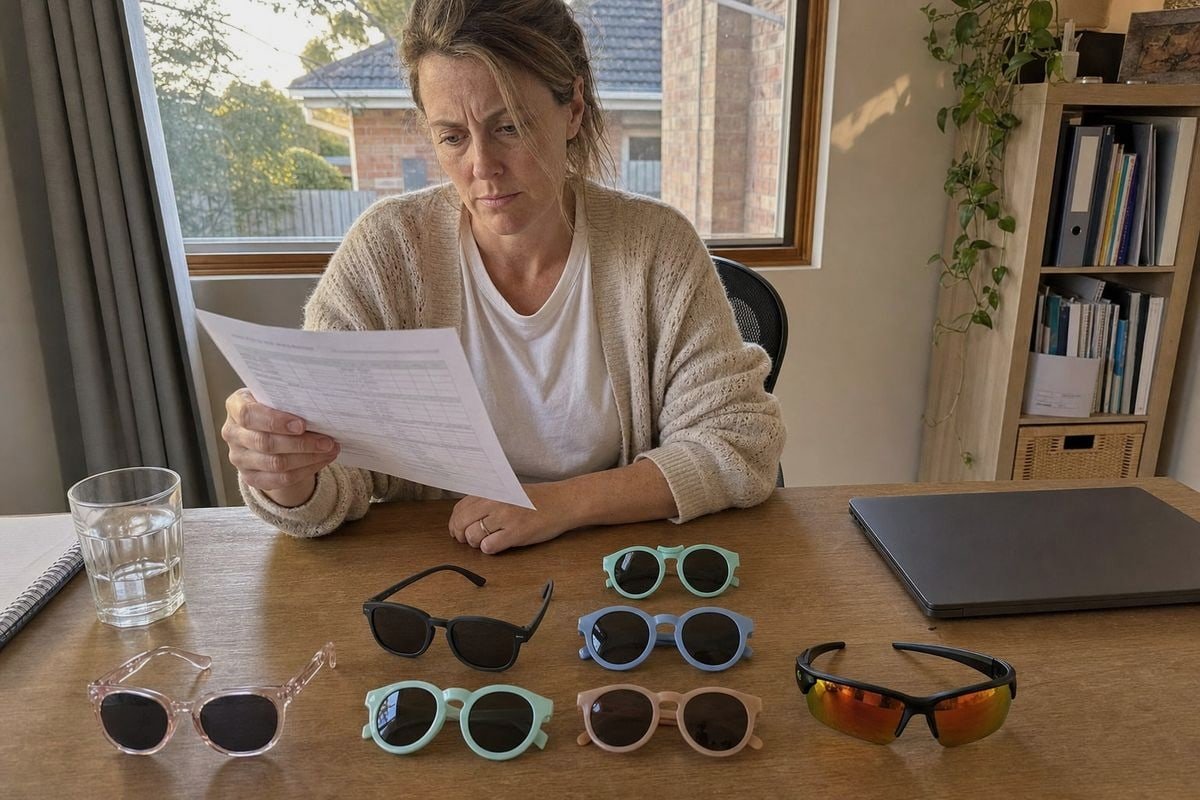
If you run both DTC and wholesale, your pricing must work backward from a single shelf price. Start with the retail price the market supports, then divide down. A $28 shelf price means your wholesale sell-in sits around $12–$14, which means your landed cost needs to stay near $5–$6 for the math to hold. This is why we help buyers spec materials and packaging against a target retail price, not the other way around.
Understand MSRP vs MAP Pricing
MSRP is your suggested retail price — the anchor you print on line sheets. MAP (minimum advertised price) is the floor retailers agree not to advertise below. Getting MSRP vs MAP pricing right matters enormously for kids eyewear, because one aggressive online discounter can wreck margins for every boutique carrying your line. Set MAP at or slightly below MSRP, put it in your reseller terms, and enforce it consistently.
Adjust for Regional Realities
Markets differ in duties, compliance regimes, and willingness to pay:
- North America — CPSIA compliance required; strong mid-tier demand; online channels dominate.
- Europe — CE marking 6 y REACH 7; parents pay premiums for verified safety and eco-friendly materials.
- Australia — strict sun-safety culture; polarized and high-UV products carry real pricing power.
- Japan — premium packaging expectations; presentation quality directly supports higher price points.
Channel overhead also differs. Online prices often run 15–20% below physical retail, while in-store pricing covers services like fitting and adjustments — genuinely valuable for children's frames, where fit affects both comfort and protection.
Finally, revisit prices at least twice a year. Freight rates, duties, and material costs move. A price set eighteen months ago is probably wrong today.
Conclusión
Weak pricing drains kids eyewear brands slowly, then suddenly. Calculate true landed cost, target 50–70% margins, benchmark real competitors, tier your line, and protect prices by channel. Do that, and every pair earns its keep.
Notas al pie
1. TR90 is a nylon-based copolymer; background helps explain its flexibility and durability. ↩︎
2. US regulation governing mandatory safety compliance for children’s products including eyewear. ↩︎
3. Background on UV radiation explains why UV400 lens protection matters for eyewear. ↩︎
4. FDA guidance on BPA safety relevant to material claims in children’s products. ↩︎
5. Explains the markup concept underlying retailer pricing calculations described in the article. ↩︎
6. Official EU conformity marking required for eyewear sold in European markets. ↩︎
7. Official European Commission overview of the REACH regulation and chemical safety standards. ↩︎
Más artículos que te podrían gustar

1 de agosto de 2026
¿Debería la fábrica encargarse del embalaje y etiquetado de las gafas de sol para niños, o utilizar un proveedor designado?

1 de agosto de 2026
Almacén propio vs. Cumplimiento directo del proveedor: ¿Qué reduce los costos de devolución para las marcas de gafas de sol para niños?

1 de agosto de 2026
Directo al almacén del puerto o staging en el extranjero: ¿Cuál ahorra más en el envío de gafas de sol para niños?
¿Buscas un socio confiable en gafas para niños?
Explore más de 800 estilos listos y soporte OEM/ODM completo adaptado a su marca.
Ponte en contacto English
  Español de México
  Deutsch
  Français
  日本語
日本語  العربية
  Português do Brasil