How to Prevent Kids’ Optical Frames From Being Undercut on E-Commerce Platforms?

Every month, buyers tell me the same story: their kids’ optical frames get undercut online within weeks of launch OEM/ODM customization 1. On our production line in Taizhou, I see exactly why it happens.
To prevent kids’ optical frames from being undercut on e-commerce platforms, combine tight online distribution control, a written Minimum Advertised Price policy, continuous marketplace monitoring, and genuine product differentiation through exclusive designs, safer materials, and branded packaging that generic low-cost sellers cannot copy or price-match.
Price cuts are a symptom. Channel leakage 2 and product sameness are the disease. In this article, I will walk through both the business fixes and the manufacturing fixes, because I sit on the factory side of this problem every day.
How can I differentiate my kids' optical frames when competitors sell similar styles at lower prices?
A buyer from Australia once sent me a screenshot of her bestselling frame listed 30% cheaper by an unknown seller. Our first question was not about price. It was about her channel.
Differentiate kids' optical frames by controlling who sells them, enforcing a Minimum Advertised Price policy, and building visible value — flexible child-safe materials, exclusive colorways, and fit-focused content — so parents compare safety and comfort instead of comparing identical products on price alone.

Undercutting has two roots. The first is channel leakage: gray market products, diverted stock, or unauthorized online sellers listing your exact SKU. The second is product sameness: if your frame looks like every other frame, price becomes the only decision factor. You must attack both roots at once.
Fix the channel first
Start with online distribution control. Document every approved reseller. Put resale restrictions into written reseller agreements, including where they may list, at what advertised price, and what happens if they violate the terms. Then add pricing enforcement: a Minimum Advertised Price policy 3 is only useful if you monitor it and act on violations. E-commerce marketplace monitoring — even a simple weekly audit at the start — helps you spot price drops and unauthorized listings before they train customers to wait for discounts.
Then fix the product
Here is where the factory matters. When frames are interchangeable, resellers race to the bottom. When frames are visibly different, they cannot. In our own catalog, buyers pick from roughly 800 existing styles, then we modify colors, temple materials, or finishes so their version is not identical to anyone else's listing.
| Differentiation lever | What it looks like | Why it blocks undercutting |
|---|---|---|
| Exclusive colorways | A translucent blush-pink acetate only your brand carries | Competitors cannot list the "same" product |
| Material story | Frentes de TR90 4 with flexible TPEE temples | Parents compare safety, not just price |
| Fit content | Bridge width, PD, and sizing guides on your listing | Shifts the decision from price to fit |
| Bundles | Frame plus case, strap, and cleaning cloth | Breaks direct price comparison |
The goal is simple: make a one-to-one price comparison impossible, and make the remaining comparison favor value.
What product features and OEM/ODM customization options help protect my brand from price-based competition?
In our 5S-managed workshop, the biggest trade-off we weigh for children's frames is flexibility versus structure. That trade-off is also a commercial weapon, because it is hard to imitate cheaply.
Features that protect against price competition include flexible TPEE temples on TR90 fronts, silicone ear hooks for secure fit, hypoallergenic child-safe materials, and UV400 or blue-light lens options — combined with OEM/ODM customization of colors, logos, lenses, and packaging that creates SKUs competitors cannot list.
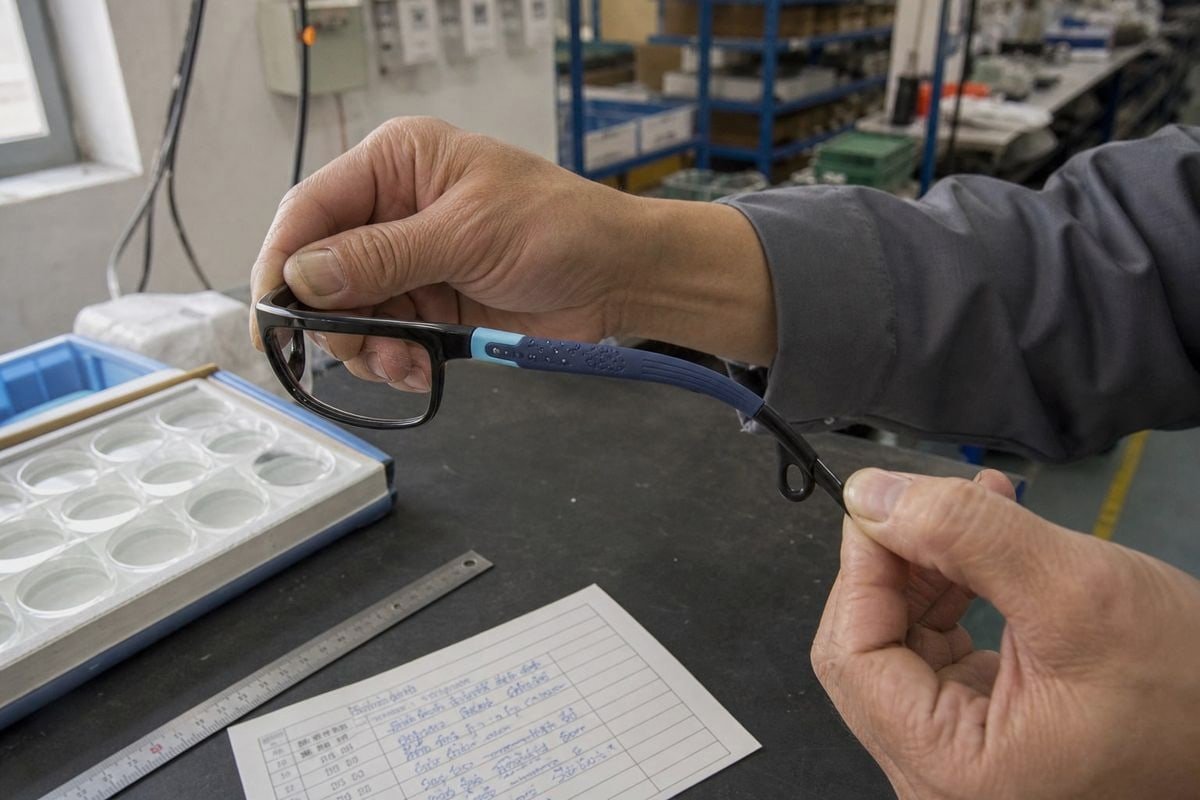
Cheap generic frames win on price because they cut corners parents cannot see in a photo. Your job is to make those corners visible. Take one of our sporty styles: a glossy black TR90 front with two-tone navy-and-black flexible rubber temples, light blue silicone hinge connectors, and cable-style ear hooks. A low-cost copy can imitate the shape. It usually cannot imitate the bend-and-return behavior of TPEE, the softness of the silicone tips on a child's skin, or the consistency of our quality control across a 10,000-piece order.
Customization options that create ownable SKUs
OEM/ODM work is where brand protection strategy meets product development. Every layer of customization moves your product further from the generic listings that fuel price wars.
| Customization layer | Options we build for buyers | Protection effect |
|---|---|---|
| Material del marco | TR90, TPEE, mixed TR90 front + TPEE temples | Sets a safety and durability baseline copies rarely match |
| Color and finish | Exclusive translucent tones, two-tone temples, embossed patterns | Makes your SKU visually unique on the platform |
| Lenses | UV400 5, polarized, blue-light, demo lenses for optical | Adds a functional claim you can substantiate |
| Branding | Logo on temple, engraved inner-arm text | Turns a commodity into a trademarked product |
| Fit details | Silicone ear hooks, adjustable cable temples, kid-specific bridges | Justifies premium pricing with real child comfort |
Materials as a moat
Environmentally friendly, flexible materials matter twice. First, they keep active kids safe and comfortable, which drives reviews and repeat purchases. Second, they give your listing a concrete, testable claim. A parent reading "flexible TPEE temples 6 that bend without snapping" is no longer shopping on price alone. That is exactly what intellectual property enforcement alone cannot deliver: a reason to pay more.
How do I use packaging, branding, and quality positioning to justify a higher price point online?
A lesson I learned early in export work: two identical frames can sell at very different prices depending on what arrives in the mailbox. Presentation changes perceived value before the child ever wears the glasses.
Justify a higher price by shipping retail-ready branded packaging, publishing safety and durability proof in your listings, offering warranties and easy returns, and educating parents on the risks of cheap frames — so consistent quality signals support the price your MAP policy defends.
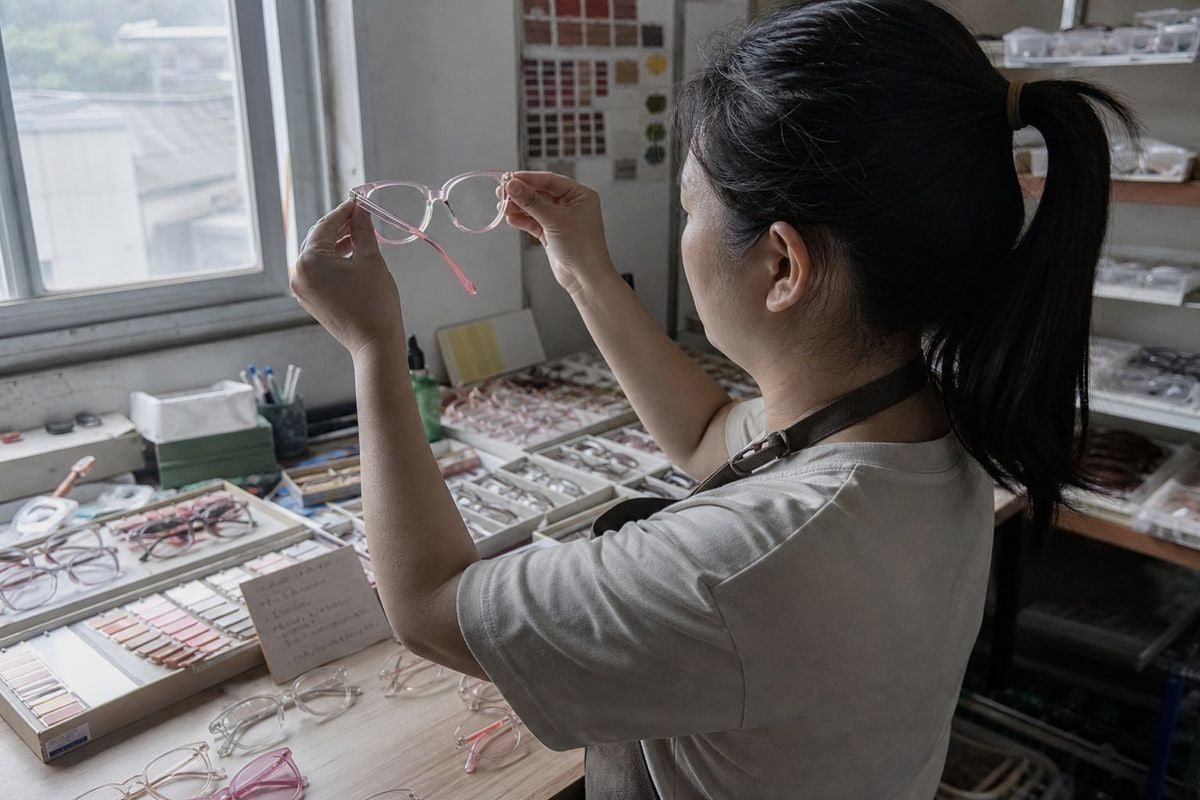
Some sellers argue that slightly undercutting a rival is a rational short-term move, especially with limited inventory. I understand the logic, but for kids' eyewear it backfires. Parents already worry about quality when buying children's glasses online. A brand that keeps dropping its price quietly confirms that worry. Consistent pricing, backed by strong presentation, does the opposite: it protects brand equity and signals that the product is worth defending.
The packaging and trust stack
Think of premium positioning as a stack of trust signals, each one hard for a discount seller to fake:
- Branded, retail-ready packaging — a custom box, case, cleaning cloth, and card, produced as part of the OEM/ODM order rather than added later.
- Quality proof on the listing — material specs, flexibility demonstrations, and photos of construction details like silicone hinge connectors and embossed temple patterns.
- Service promises — a clear warranty, easy returns, and responsive support, which parents value highly for kids' frames that get sat on and stepped on.
- Educational content — guides explaining fit, bridge width, PD, and lens safety, and why very cheap frames can compromise comfort and vision development.
- Professional endorsement — partnerships with opticians or pediatric eye-care voices that reinforce the medical value of properly fitted frames.
Each layer raises the reference price in the parent's mind. When an unauthorized seller lists a bare frame in a poly bag at a lower price, it no longer looks like the same product. That perception gap is your price erosion prevention working at the customer level, while your Minimum Advertised Price policy works at the seller level.
Can working with an experienced manufacturer help me build exclusive designs that competitors can't easily copy?
When a Japanese kids' brand asked us to modify one of our translucent pink acetate styles — softening the cat-eye line and adding matte silicone temple tips — the result was a frame no other seller could list. That is the point.
Yes. An experienced OEM/ODM partner helps you create exclusive designs through custom molds, proprietary colorways, material combinations, and branded details, while supporting NNN agreements, design documentation, and consistent quality control — making your kids' optical frames difficult for low-cost competitors to replicate or undercut.
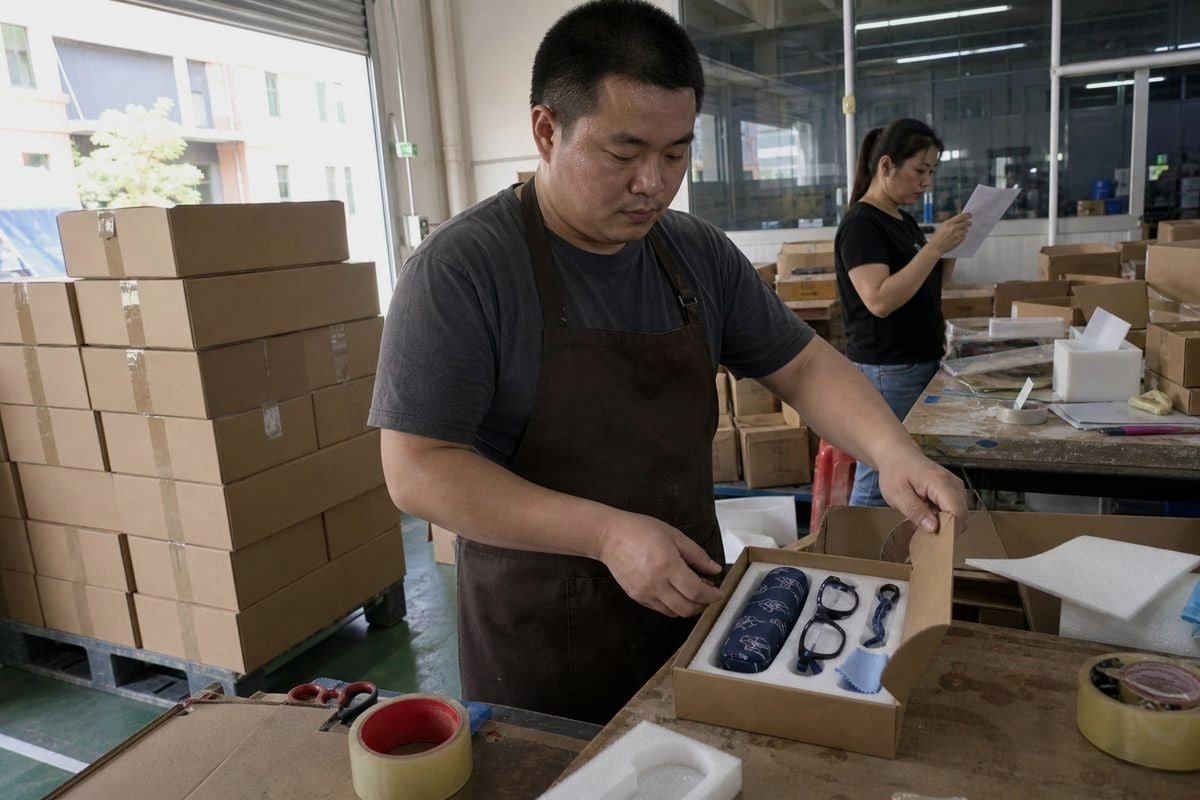
Exclusivity does not have to start with expensive tooling. In our experience with brands across 20+ countries, the smartest path is staged. New brands begin with existing styles in exclusive colors. Growing brands add custom details. Established brands invest in fully custom molds. Each stage raises the barrier for copiers while keeping your risk manageable.
A staged exclusivity roadmap
| Etapa | What you commit | What you get | Copy difficulty |
|---|---|---|---|
| Launch | Choose from ~800 existing styles, exclusive colorway + logo | Fast, low-risk market entry with a unique-looking SKU | Low–medium |
| Growth | Custom temple materials, engraved details, exclusive packaging | A recognizable brand look across the range | Medio |
| Established | Custom molds, proprietary shapes, design registrations | A product line competitors cannot legally or practically clone | Alta |
The legal and factory layers work together
A serious factory should support your intellectual property enforcement, not undermine it. Ask your partner to sign NNN agreements 7 covering non-disclosure, non-use, and non-circumvention. Register trademarks and, where valuable, design rights in your market and in the manufacturing country. Keep design files, sample records, and approval documents organized — this paper trail speeds up takedowns against unauthorized online sellers later.
One nuance worth raising: not every low-priced listing is malicious. Some sellers clear legitimate old stock. Before escalating, check whether the seller is on your authorized list and whether your reseller agreements allow that clearance. Enforcement should target systemic undercutters, not partners doing normal end-of-season work. A manufacturer who ships consistent, traceable batches makes that distinction much easier to prove.
Conclusión
Undercutting drains margin, dilutes trust, and hands your category to the cheapest seller. The fix is layered: control your channels, enforce your MAP policy, monitor marketplaces, and build genuinely different, safer, better-presented kids' optical frames. On our side of the partnership, we help brands do the product half — flexible TPEE and TR90 designs, exclusive colorways, and retail-ready packaging that low-cost copies simply cannot match.
Notas al pie
1. Clarifies the concepts of OEM and ODM in manufacturing. ↩︎
2. Defines channel leakage and its impact on supply chains. ↩︎
3. Replaced HTTP 404 with an authoritative article on Minimum Advertised Price policies from JD Supra, a legal content platform. ↩︎
4. Provides information on TR90 material used in eyewear frames. ↩︎
5. Describes the standard for UV protection in lenses. ↩︎
6. Explains the properties and benefits of TPEE material in eyewear. ↩︎
7. Explains the purpose and components of NNN agreements in manufacturing. ↩︎
Más artículos que te podrían gustar
5 de agosto de 2026
Bio-Based vs Regular Cellulose Acetate: What's the Difference for Kids' Frames?

5 de agosto de 2026
How Recyclable Are Kids' Optical Frame Materials, and What Eco-Friendly Alternatives Exist?
5 de agosto de 2026
Do Kids Optical Frames Whiten or Age in Storage, and How to Control Warehouse Conditions?
¿Buscas un socio confiable en gafas para niños?
Explore más de 800 estilos listos y soporte OEM/ODM completo adaptado a su marca.
Ponte en contacto English
  Español de México
  Deutsch
  Français
  日本語
日本語  العربية
  Português do Brasil