How to Pass OTIF Penalty Risk to Chinese Kids Sunglasses Suppliers?
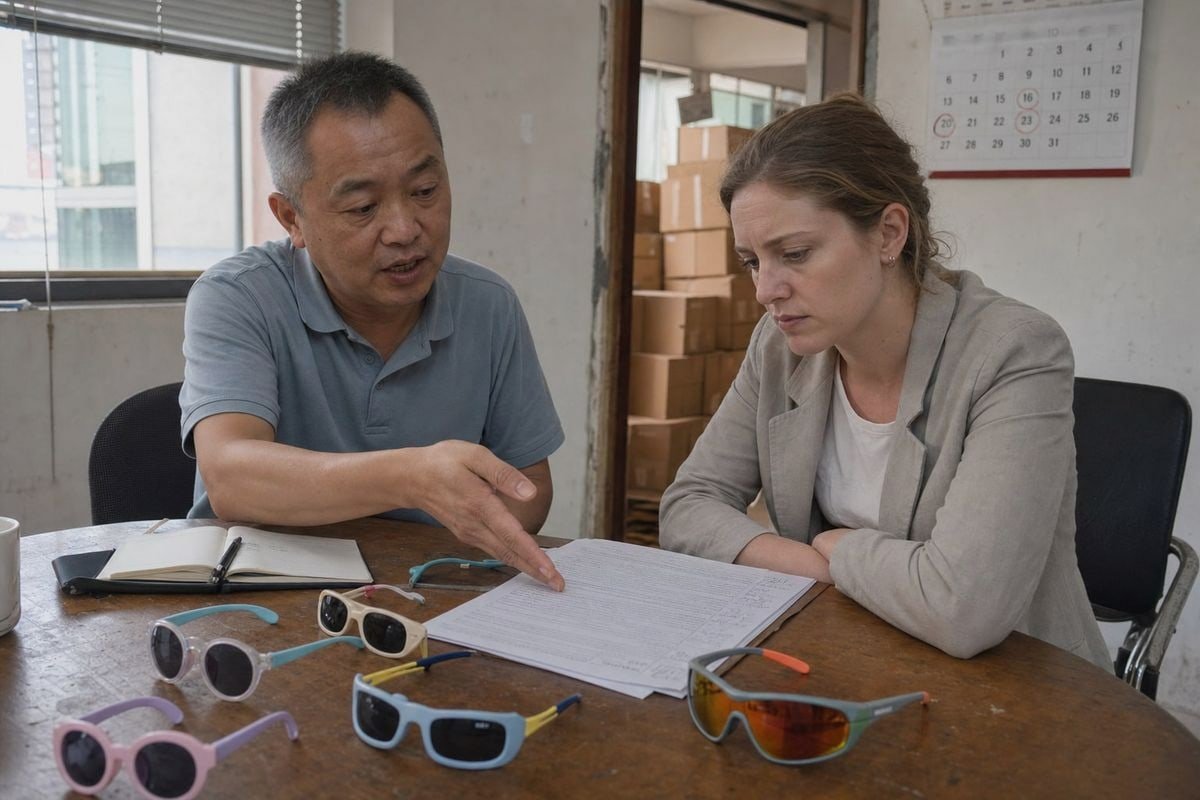
Passing OTIF penalty risk to Chinese kids sunglasses suppliers is a question buyers ask us weekly at our Taizhou factory Incoterms 1. One missed retail window can erase an entire season’s margin. Retailer chargebacks stack up fast, and vague contracts leave you holding the bill inspección de terceros 2. The fix is a deal structure that assigns risk to whoever actually controls it.
To pass OTIF penalty risk to Chinese kids sunglasses suppliers, write chargeback passthrough clauses into your purchase contract, define exact delivery windows and quantity tolerances, verify factory capacity before ordering, set invoice deduction rights, and exclude buyer-caused delays so penalties stay enforceable and fair.
That is the short answer. But each of those pieces has traps. Let me walk you through how to set this up properly, from the contract language to the factory floor.
How can I structure supplier contracts to make OTIF penalties enforceable with my Chinese sunglasses factory?
A European buyer once sent us a contract with one line: "Supplier must ship on time." When his retailer fined him for a two-day slip, that line protected nobody. We rewrote the terms together, and both sides have been safer since.
Make OTIF penalties enforceable by defining the exact delivery window, quantity tolerance, Incoterms, and document deadlines in the purchase order; add a chargeback passthrough clause, cap liability at a stated percentage of PO value, and grant yourself deduction rights against open invoices.

OTIF is a binary metric. A shipment either arrives in the right quantity, at the right place, within the required window — or it fails. Retailers like Walmart commonly charge around 3% of cost of goods for failures, and charges can hit at the PO-line level. That means one short carton of blue TR90 frames can trigger a fine even if the rest of the container is perfect. Your contract has to reflect that precision, or you cannot pass the cost downstream.
The clauses that actually shift risk
From our side of the table, these are the terms serious buyers put in writing:
| Contract element | What it must specify | Why it matters for OTIF |
|---|---|---|
| Delivery window | Exact ex-factory or on-board date range | "On time" is measurable, not arguable |
| Quantity tolerance | ±0% or a stated shortfall allowance per PO line | "In full" is defined per line, not per container |
| Chargeback passthrough | Supplier bears retailer fines caused by supplier failure | Transfers the actual penalty, not just blame |
| Liquidated damages 3 | Fixed % of PO value per day late, with a cap | Enforceable in China; open-ended fines usually are not |
| Deduction rights | Buyer may offset penalties against unpaid invoices | Gives you a practical collection mechanism |
| Excused delays | Force majeure 4, buyer-caused changes, carrier failures | Keeps the clause fair, so suppliers will sign it |
One honest caveat from our fifteen years exporting children's eyewear: Chinese factories will not sign open-ended indemnities for retailer fines they cannot see or predict. A capped, tiered liquidated damages clause gets signed and honored. An unlimited passthrough gets ignored or priced into your unit cost. Also, resolve disputes against objective evidence — timestamps, packing lists, and proof-of-delivery records — not memory. And remember the limit: if you control the freight booking, retailer routing, or warehouse appointment, penalties caused by those steps legally and practically stay with you.
What lead-time and production benchmarks should I set to fairly measure my supplier's OTIF performance?
Every January, our production planner blocks out con el Año Nuevo Lunar 5 weeks before accepting a single seasonal PO. Buyers who plan around that calendar with us almost never face a late back-to-school shipment. Buyers who ignore it usually do.
Set benchmarks of 30–45 days production for standard kids sunglasses styles, 60–75 days for custom OEM programs, plus 7–10 buffer days before penalties trigger; measure OTIF per PO line against the confirmed ship date, and exclude buyer-caused forecast or artwork changes.
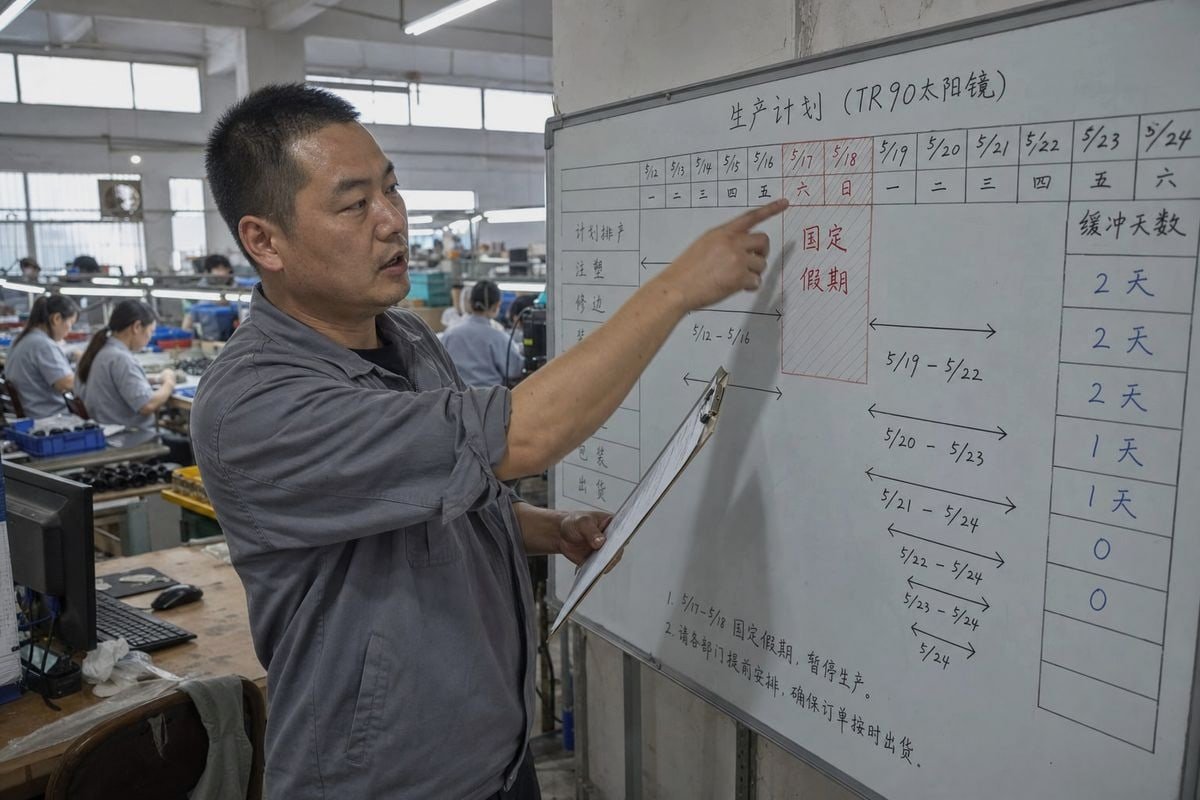
Fair benchmarks matter because an unfair penalty clause creates disputes, not delivery. If you demand a 20-day turnaround on a custom-color polarized program and then fine the factory for missing it, you have not transferred risk. You have manufactured a fight. Kids sunglasses are seasonal and promo-driven. A missed window can destroy shelf timing for summer or back-to-school placement, so the calendar has to be built backward from the retail date.
Realistic lead-time benchmarks for children's eyewear
Here is what we consider fair for TPEE and TR90 kids eyewear, based on our own workshop planning:
| Tipo de pedido | Realistic production time | Fair OTIF buffer | Penalty trigger point |
|---|---|---|---|
| Existing styles, stock colors | 25–35 days | 5–7 days | After buffer expires |
| Existing styles, custom colors and logo | 35–50 días | 7–10 days | After buffer expires |
| Full custom OEM with new packaging | 60–75 days | 10–14 days | After buffer expires |
| Orders spanning Lunar New Year | Add 20–30 days | Pre-agreed in calendar | Adjusted window |
A few rules make the measurement fair. First, measure against the confirmed date, not your wish date. The confirmed date should come back in writing when the factory accepts the PO. Second, lock artwork and packaging approvals before the clock starts. Half the "late" shipments we have seen in this industry trace back to buyers approving carton artwork three weeks late. Third, count OTIF per PO line, the same way your retailer counts it, so your upstream and downstream measurements match. Finally, share your seasonal calendar early. When a buyer gives us their full summer program in October, we reserve line capacity, and rush-order risk nearly disappears.
How do I verify a factory's real capacity so OTIF penalty clauses don't just become empty promises?
A procurement manager from Australia once asked me point-blank how many pairs our 120 workers could actually produce in peak season. I appreciated the question. A penalty clause signed by a factory that cannot physically deliver is just a lawsuit waiting to happen.
Verify real capacity through a factory audit covering worker count, injection machines, and daily output; cross-check claimed capacity against current order books, request references from existing clients, review historical on-time rates, and confirm the factory owns production rather than subcontracting your PO.
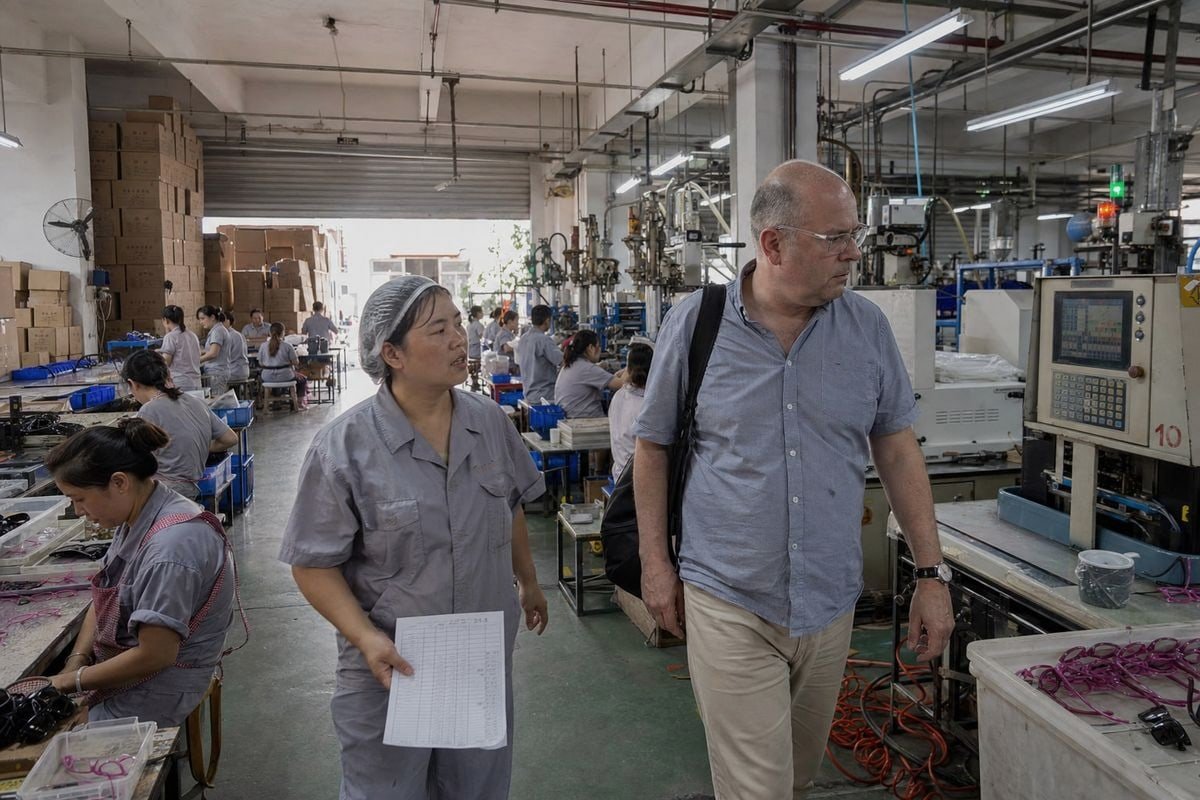
A chargeback clause is only as strong as the factory behind it. Many "manufacturers" you meet online are traders. They cannot control production dates because they do not run production. When your order slips at their subcontractor, your penalty clause hits a company with no assets in the game. So verification comes before contract language, not after.
A practical verification checklist
Here is how I would audit a kids sunglasses factory, knowing what happens inside one:
- Count what you can see. Workers on the line, injection molding machines, assembly stations. Then do simple math: can this floor produce your volume in your window alongside other clients' orders?
- Ask for the current order book. A factory at 95% capacity in April cannot absorb your June program, no matter what sales promises.
- Check the style library. A factory with a deep catalog — ours holds around 800 existing styles — can ship faster because tooling already exists. New molds add weeks and risk.
- Review workshop management. A 5S-managed workshop with visible production boards signals real planning discipline ISO 9001 6. Chaos on the floor becomes chaos in your delivery schedule.
- Request compliance documents upfront. For children's eyewear, ask for UV400 test reports 7 and safety documentation before ordering. Re-testing and relabeling delays are hidden OTIF killers.
- Talk to two existing clients. Ask one question: did shipments arrive on the confirmed date, in full?
We host buyer audits regularly, and I always tell visitors the same thing: watch how the factory handles your questions about capacity limits. A supplier who tells you "we are full in May, ship in June" is exactly the supplier whose OTIF clause means something.
Which communication and quality-control checkpoints help me prevent OTIF failures before penalties are even needed?
The cheapest OTIF penalty is the one nobody has to invoke. In our workshop, we learned years ago that a weekly photo update to the buyer prevents more late shipments than any contract clause we have ever signed.
Prevent OTIF failures with five checkpoints: written PO confirmation with ship date, pre-production sample approval, mid-production progress reporting with photos, third-party AQL pre-shipment inspection, and document verification before booking freight — each catching problems while there is still time to fix them.
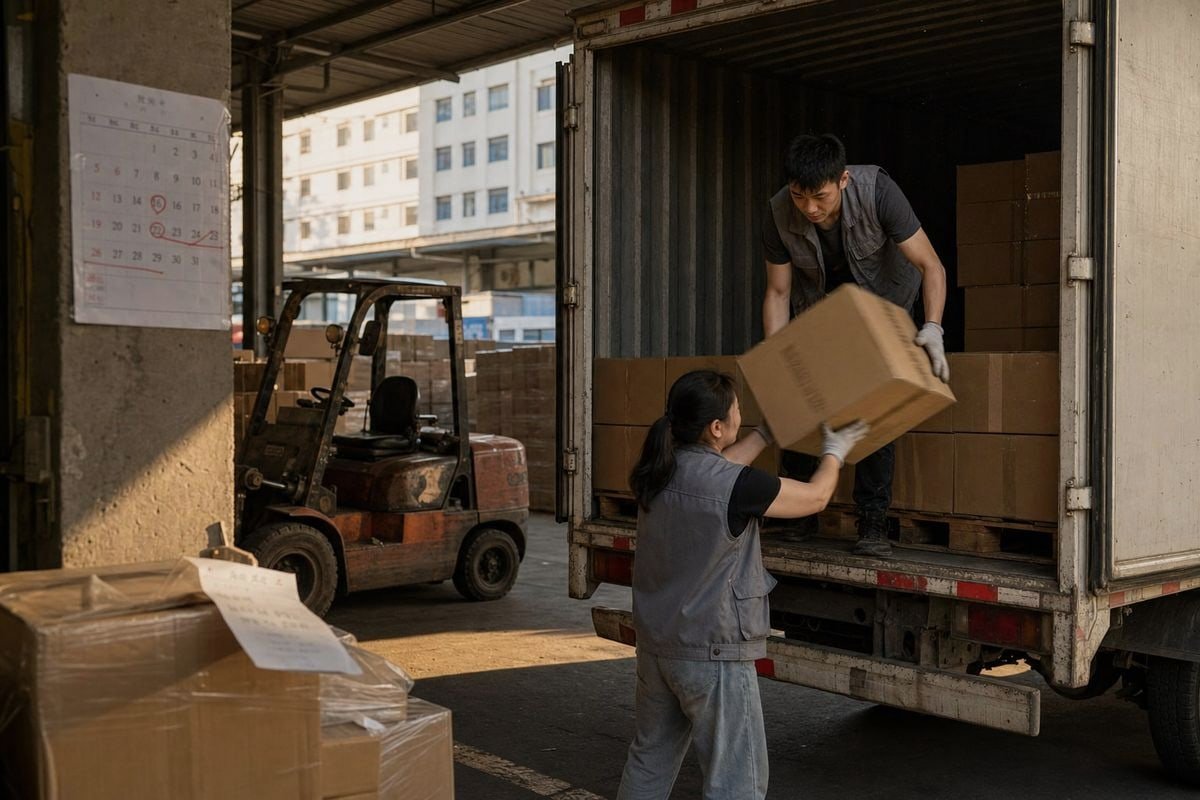
Penalties are a backstop. Checkpoints are the actual system. For children's eyewear, this matters double, because OTIF risk is both a logistics problem and a compliance problem. A carton with the wrong warning label, a missing test report, or an unapproved lens tint can hold a shipment at inspection or customs. That hold counts as an OTIF miss just as much as a slow production line does.
The checkpoint schedule we recommend to buyers
| Punto de control | Momento | What it catches | Who acts |
|---|---|---|---|
| PO confirmation | Day 0 | Date, quantity, and spec misunderstandings | Both parties sign off |
| Pre-production sample | Antes de la producción en masa | Wrong colors, lens specs, fit issues | Buyer approves in writing |
| Mid-production report | Around 50% completion | Schedule slippage, material shortages | Factory reports with photos |
| Pre-shipment AQL inspection | 80–100% packed | Defects, short counts, carton and label errors | Third-party inspector |
| Document check | Before freight booking | Test reports, packing lists, customs paperwork | Buyer or forwarder verifies |
The third-party AQL inspection deserves special attention. It does two jobs at once. It protects your quality, and it protects your OTIF accountability. When an independent inspector confirms the goods passed and were packed in full on a dated report, nobody can later blame a quantity shortfall on the factory when the real issue was a carrier delay. The evidence trail stays clean, which is exactly what your chargeback clause needs to work.
Communication style matters too. We keep one named contact per account, and we flag risks early rather than hiding them. A factory that tells you on day 20 that a lens shipment is delayed gives you options — air freight, partial shipment, window renegotiation. A factory that stays silent until day 40 gives you a penalty claim and nothing else. When you vet Chinese kids sunglasses suppliers, test their communication during sampling. How they handle a small problem then is how they will handle a big one later.
Conclusión
OTIF penalty risk destroys margins silently, one chargeback at a time. Pass it to your supplier through precise contracts, fair benchmarks, verified capacity, and early checkpoints — then penalties rarely trigger at all.
Notas al pie
1. Background reference for the international trade term used in contract clauses. ↩︎
2. ISO standards underpin third-party inspection practices used to verify shipment quality and quantity. ↩︎
3. Explains the contract law concept central to the article’s penalty clause discussion. ↩︎
4. Wikipedia background on the legal concept referenced as an excused delay clause. ↩︎
5. Background on the holiday period that significantly affects Chinese factory production schedules. ↩︎
6. ISO reference relevant to manufacturing quality management standards implied by workshop discipline. ↩︎
7. FDA guidance on sunglasses UV protection standards relevant to compliance documentation mentioned. ↩︎
Más artículos que te podrían gustar

1 de agosto de 2026
¿Debería la fábrica encargarse del embalaje y etiquetado de las gafas de sol para niños, o utilizar un proveedor designado?

1 de agosto de 2026
Almacén propio vs. Cumplimiento directo del proveedor: ¿Qué reduce los costos de devolución para las marcas de gafas de sol para niños?

1 de agosto de 2026
Directo al almacén del puerto o staging en el extranjero: ¿Cuál ahorra más en el envío de gafas de sol para niños?
¿Buscas un socio confiable en gafas para niños?
Explore más de 800 estilos listos y soporte OEM/ODM completo adaptado a su marca.
Ponte en contacto English
  Español de México
  Deutsch
  Français
  日本語
日本語  العربية
  Português do Brasil