How to Negotiate Shorter Lead Times for Limited-Edition Kids’ Sunglasses?

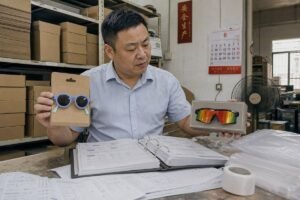
Negotiating shorter lead times for limited-edition kids’ sunglasses is a question I hear weekly at our Taizhou factory. A missed launch window can kill a seasonal drop — and the panic is real.
To negotiate shorter lead times for limited-edition kids’ sunglasses, trade something the factory values — early booking, existing frame styles, finalized artwork, or predictable repeat orders — for queue priority. Break the quoted lead time into stages, compress only the safe stages, and lock milestone dates in writing.
Lead time is not one number. It is a chain of steps. Once you see each step clearly, you know exactly where to push and where to leave things alone. Let me walk you through how we handle this with our own buyers.
What factors actually determine how fast a factory can produce my limited-edition kids' sunglasses order?
Last spring, a European buyer asked me why her 3,000-piece order needed 45 days when a competitor quoted 25. The honest answer sat inside our production schedule, not our willingness.
Factory speed depends on five stages: raw material procurement, mold or tooling readiness, sampling and approval rounds, queue position in batch production scheduling, and quality control inspections before shipment. Custom molds and out-of-stock materials add the most time; existing styles and stock materials remove it.
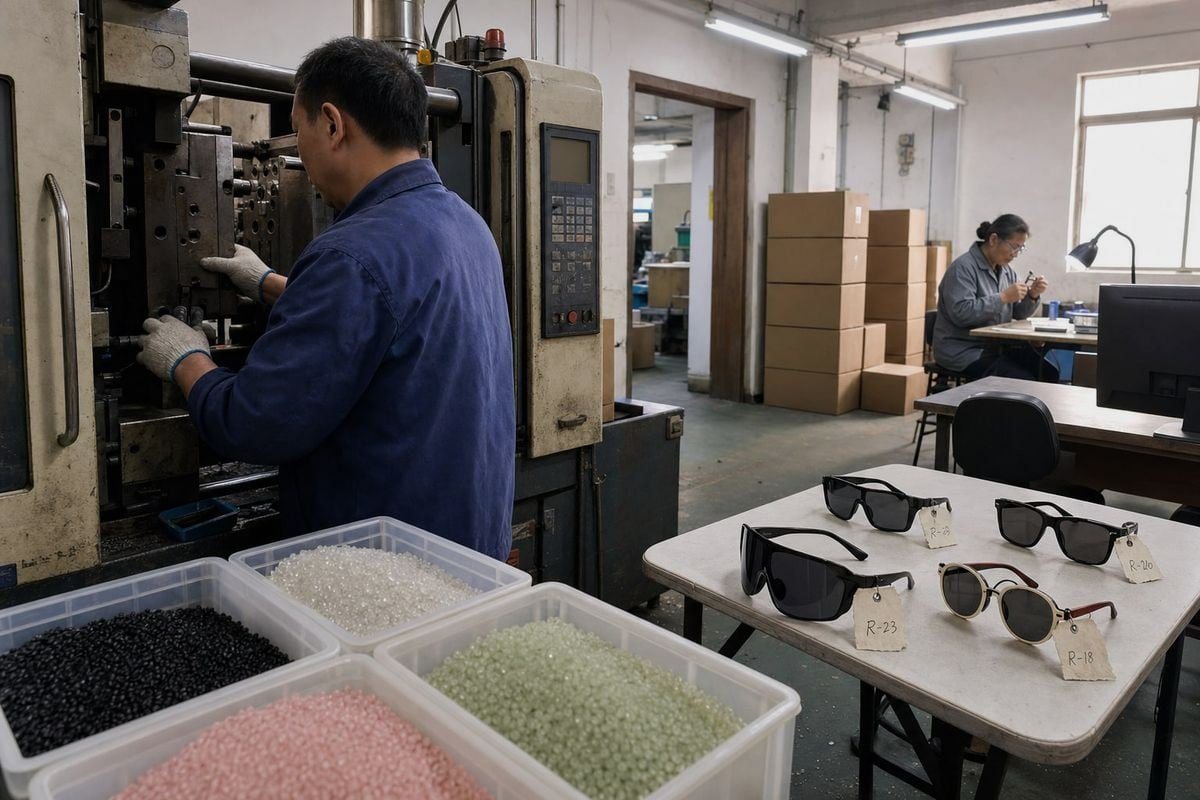
When we quote a production cycle time at our workshop, we are really adding up several smaller clocks. Buyers who understand each clock negotiate far better than buyers who argue over the total.
The five clocks inside every quoted lead time
First, raw material procurement. Safety-compliant kids' materials like TPEE y TR90 1 are not always sitting on a shelf. If our supplier needs to run a batch of a specific color masterbatch, that alone can add two to four weeks. Second, tooling. A brand-new custom mold 2 typically needs 45–60 days before a single frame exists. Third, sampling. Every revision round adds roughly a week, sometimes two, once courier time is included. Fourth, the factory queue. Our manufacturing capacity planning 3 fills up fast in Q3 and Q4, so an order placed in August waits behind orders placed in June. Fifth, quality control inspections and packing, which we never rush for children's products.
| Lead-time stage | Typical duration | Can it be compressed safely? |
|---|---|---|
| Raw material procurement | 15–30 days | Yes, with stock colors or pre-booked material |
| Custom mold / tooling | 45–60 days | Yes, by using existing molds |
| Sampling and approvals | 7–21 days | Yes, by limiting revision rounds |
| Batch production | 15–25 days | Partially, via queue priority |
| QC inspection and packing | 3–7 días | No — never skip for kids' eyewear |
Notice something important. The two biggest blocks — materials and tooling — are also the two easiest to eliminate through smart product choices, not through pressure. That is the core insight behind every successful lead-time negotiation I have seen in fifteen years of eyewear work.
Can choosing from existing frame styles help me skip mold development time and shorten my lead time?
The single biggest time-saver we offer buyers is our library of roughly 800 existing styles — from wraparound sport shields with mirrored gradient lenses to soft round two-tone frames for toddlers.
Yes. Choosing an existing frame style eliminates the 45–60 day custom tooling phase entirely, which is usually the largest single block in the schedule. You then customize colors, lenses, logos, and packaging on a proven mold, often cutting total lead time by half.
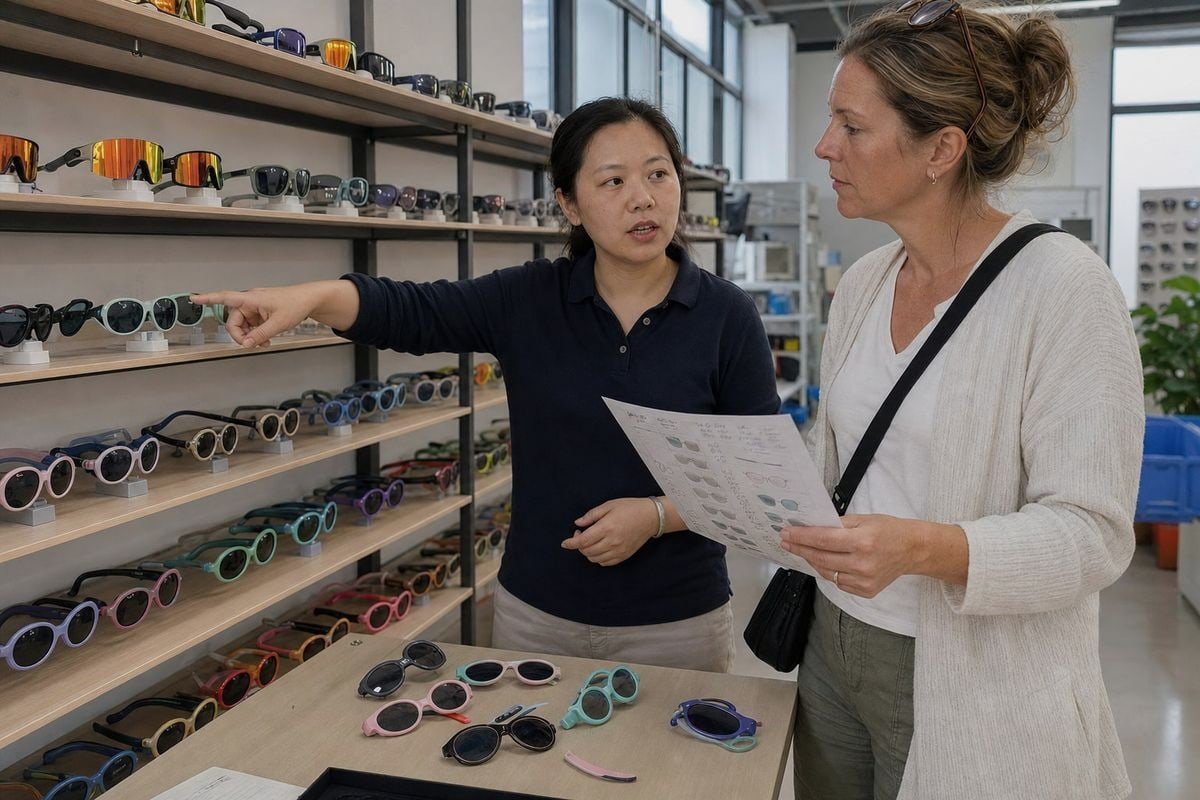
This is the open-mold approach, and for limited-edition drops it is almost always the right call. Think about what "limited edition" actually means to your customer. It means scarcity, a special colorway, a themed lens, distinctive packaging. It almost never means a frame silhouette nobody has molded before. Your buyers will not measure the mold; they will notice the vibrant orange-to-yellow mirrored shield lens or the periwinkle-and-mint two-tone combination.
A modular way to think about customization
We encourage buyers to treat the frame as a chassis and the limited-edition elements as swappable layers. The chassis — an existing TR90 frame with flexible TPEE temples — is already tooled, tested, and sized for children's faces. The edition layers are fast to change.
| Customization element | Added time on an existing mold | Impact on "limited edition" feel |
|---|---|---|
| Custom frame color (stock masterbatch) | 0–5 days | Alta |
| Mirrored or gradient UV400 lens | 3–7 días | Muy alta |
| Printed or laser logo on temple | 2–4 days | Alta |
| Custom retail packaging | 7–14 days (run in parallel) | Muy alta |
| Brand-new custom mold | 45–60 days | Low — customers rarely notice |
What about MOQ trade-offs?
Existing molds also help with Minimum Order Quantity (MOQ). A custom mold usually demands a higher MOQ to justify tooling cost. An open-mold style lets a boutique kids' label run a smaller, faster batch and protect its inventory turnover rate. For a first limited drop, that lower risk matters as much as the speed. One Australian buyer of ours launched a holiday capsule in under five weeks this way — something no custom-tooled project could match.
How should I plan my order timeline and communicate with my supplier to avoid last-minute delays?
A painful lesson from our early exporting years: a buyer approved samples on time, then changed the packaging dieline mid-production. The two-week scramble that followed taught us to fix milestones in writing.
Plan backward from your launch date, add a 10–15 day buffer for QC, freight booking, and customs, and place the order about three months before peak season. Then agree written milestones — sample approval, material ready date, production start, inspection window, and latest ship date — with your supplier.
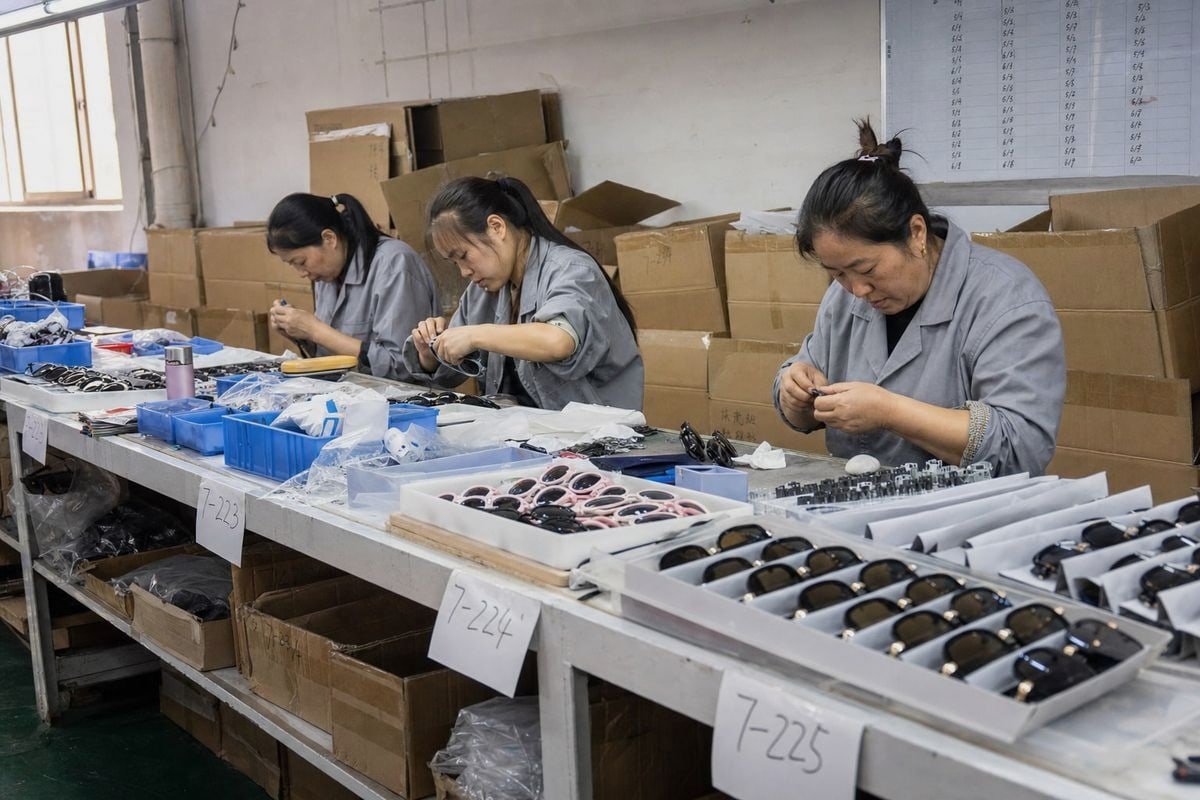
Good supplier relationship management is mostly about removing ambiguity before production starts. In our experience exporting to more than twenty countries, delays rarely come from slow machines. They come from unanswered emails, late artwork, and unclear expectations.
A practical timeline, working backward
- Fix your launch date and subtract shipping time, including customs clearance.
- Subtract a 10–15 day contingency buffer. This absorbs QC findings, vessel booking gaps 4, and port delays.
- Subtract production and inspection time from your supplier's quote.
- Subtract sampling time — and agree a fixed number of sample rounds up front, with change-order pricing defined for extras.
- The date you land on is your real order deadline. For back-to-school or holiday drops, that usually means booking roughly three months ahead of the busy season, before batch production scheduling fills the queue.
Communication habits that actually prevent delays
Send a zero-correction tech pack: finalized vector artwork, Pantone codes 5, lens specs, and packaging dielines in one complete package. Every missing file becomes an email loop, and every loop costs days. Ask your supplier which stage drives the schedule — "Is the 45 days production time, shipping time, or both?" — so you compress the right thing. Confirm whether materials are in stock before signing. And if the full order cannot land in time, negotiate a split shipment: air-freight 10–20% of priority SKUs immediately after inspection to hit the launch date, while the balance travels by sea. Expedited shipping options cost more per unit, but far less than a missed drop. Finally, put every milestone in the proforma invoice or contract. Written dates get protected; verbal dates get forgotten.
Will pushing for a shorter lead time affect the quality and safety of my children's eyewear?
Here is the trade-off I weigh on every rush order: we can compress queue time and paperwork, but we will not compress the safety gates that protect a child's face.
Only if you compress the wrong stages. Cutting queue time, tooling, and administrative loops is safe. Skipping quality control inspections, material testing, or safety compliance standards is not. The goal is the fastest reliable lead time — not the fastest possible one — at an acceptable landed cost.
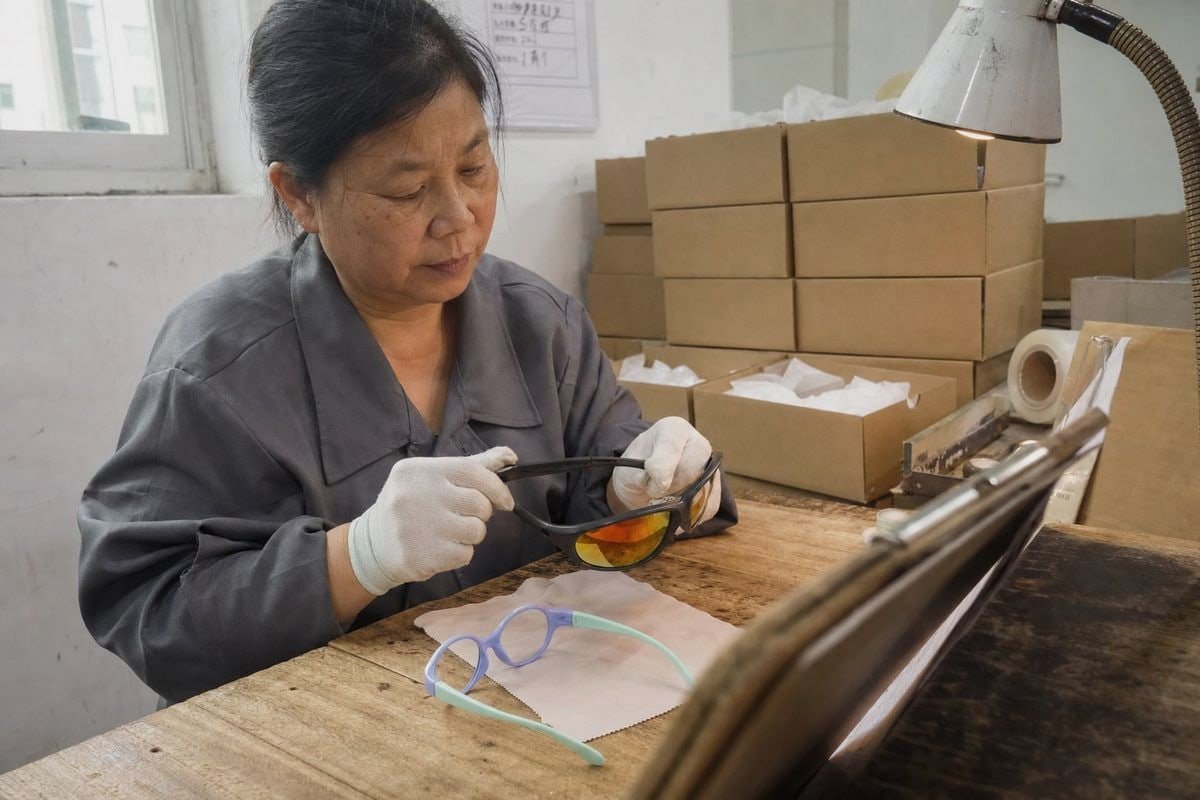
Some buyers worry that any negotiation for speed signals to the factory that quality is negotiable too. That fear is understandable, but it confuses two very different kinds of compression. Rushing often does increase defect rates — when the rush lands on production and inspection. That is a legitimate objection, and the answer is to direct the pressure elsewhere.
Safe cuts versus dangerous cuts
| Where you save time | Risk to quality and safety | Our recommendation |
|---|---|---|
| Using existing molds and stock TPEE/TR90 material | None — proven components | Always acceptable |
| Fewer sampling rounds with a complete tech pack | Low, if specs are final | Acceptable with discipline |
| Paying for queue priority or reserved capacity | Ninguno | Acceptable if the math works |
| Compressing injection, assembly, or curing time | High — dimensional and adhesion defects | Refuse |
| Skipping pre-shipment inspection or lab testing | Very high — safety and compliance exposure | Never accept |
The gates we hold even on rush orders
For children's eyewear, our QC checklist covers frame dimensions, hinge screw torque, temple flexibility, lens optical tolerances, UV400 performance 6, and surface finish. Safety compliance standards for your destination market — testing for restricted substances 7, impact resistance, labeling — stay on the critical path no matter the deadline. A smart protection for buyers: hold back a small balance payment until final inspection is confirmed. It aligns incentives without slowing anything down.
Also run the math on speed itself. Calculate the cost per day of lead-time reduction. If an expedited slot costs 8% more but saves twelve days on a trend-sensitive drop, it is usually rational. If it saves three days on an evergreen restock, keep your money.
Conclusión
Shorter lead times are earned, not demanded. Trade clarity and commitment for priority, cut tooling with existing styles, fix milestones in writing — and never compress safety.
Notas al pie
1. Technical overview of thermoplastic elastomers used for flexible and durable children’s eyewear. ↩︎
2. Detailed explanation of the injection molding process and tooling requirements for plastic parts. ↩︎
3. Authoritative Wikipedia entry providing a stable definition of manufacturing capacity management. ↩︎
4. Authoritative US government agency overseeing oceanborne international transportation and logistics. ↩︎
5. Stable Wikipedia reference for the Pantone Matching System, avoiding frequent 404s on the official site. ↩︎
6. FDA guidance on ultraviolet radiation and the importance of UV protection in eyewear. ↩︎
7. Official EU resource listing chemicals restricted in consumer products to ensure safety. ↩︎
Más artículos que te podrían gustar
1 de agosto de 2026
¿Debería la fábrica encargarse del embalaje y etiquetado de las gafas de sol para niños, o utilizar un proveedor designado?

1 de agosto de 2026
Almacén propio vs. Cumplimiento directo del proveedor: ¿Qué reduce los costos de devolución para las marcas de gafas de sol para niños?

1 de agosto de 2026
Directo al almacén del puerto o staging en el extranjero: ¿Cuál ahorra más en el envío de gafas de sol para niños?
¿Buscas un socio confiable en gafas para niños?
Explore más de 800 estilos listos y soporte OEM/ODM completo adaptado a su marca.
Ponte en contacto English
  Español de México
  Deutsch
  Français
  日本語
日本語  العربية
  Português do Brasil