How to Negotiate Buyback or Exchange Terms for Slow-Moving Kids’ Optical Frames?

Negotiating buyback or exchange terms for slow-moving kids’ optical frames worries many of our buyers. Unsold stock ties up cash, and children’s styles age fast. There is a better way.
To negotiate buyback or exchange terms for slow-moving kids’ optical frames, bring sell-through data, propose exchange credit rather than cash refunds, agree on condition rules like unworn frames in original packaging, and set a defined window such as a 90–180 day swap or an annual true-up review.
I will walk you through each step below. We will cover the conversation itself, realistic exchange ratios, timing, and how to write an agreement that works for both sides.
How can I approach my supplier about buyback terms without damaging our relationship?
A distributor in Australia once emailed our sales team, clearly nervous, asking if slow movers could be swapped. That conversation ended well because she led with data, not blame.
Approach your supplier with sell-through data and a partnership framing. Ask open-ended questions like "How do you usually support partners with slow-moving styles?" instead of demanding refunds. Propose exchange credit toward future orders, which keeps revenue with the supplier and signals long-term commitment.

The fear of damaging a supplier relationship stops many buyers from ever raising the topic. In my experience, that fear is mostly misplaced. At our factory in Taizhou, we have supplied children's and baby product brands in more than twenty countries for fifteen years. The buyers we respect most are the ones who talk openly about inventory problems. Silence is worse. A buyer who quietly stops reordering tells us nothing. A buyer who shows us an aging inventory report 1 gives us something to work with.
Frame it as risk-sharing, not a complaint
Kids' frames carry unique risk. Children outgrow sizes fast. Parents are style-sensitive. Prescriptions change. When you explain this, most eyewear suppliers already know it is true. So position your request as risk-sharing on a category you both want to grow.
Use a simple, honest script
Try something like this: "We want to keep ordering your children's line. A few shapes are moving slowly in our market. Would you consider a one-time exchange allowance, a seasonal swap program, or partial credit on frames that remain unworn and in original packaging?" This question is open-ended. It invites options instead of forcing a yes or no.
What strengthens your position
Three things give you leverage without any pressure tactics:
- Consistent order history and clear reorder intent.
- Specific data by model, color, and price point.
- A proposal that reduces the supplier's risk, such as accepting credit instead of cash.
When we see those three things, we almost always find a workable structure. Wholesale partners who bring solutions get better terms than those who bring only problems.
What exchange ratios or conditions are realistic for slow-moving kids' optical styles?
One trade-off we weigh constantly on our production line is flexibility versus cost. Every returned frame must be inspected, repacked, and restocked. That reality shapes what conditions are realistic.
Realistic terms include exchange credit rather than cash, a cap of roughly 10–30% of original order value, unworn frames in original packaging, a 30–180 day window, and a possible restocking fee. Frames fitted with Rx lenses are almost always excluded.
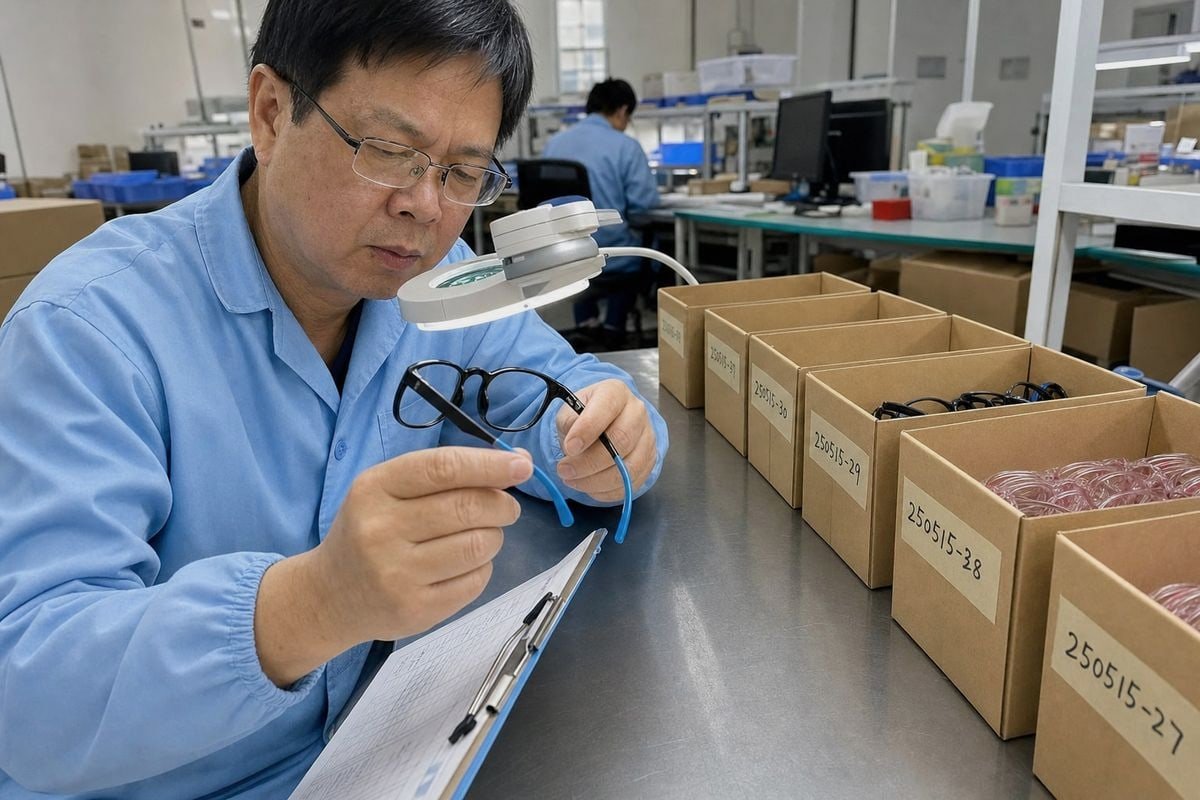
Buyers often ask me what "normal" looks like. There is no single industry standard, but retail return policy terms 3 give useful benchmarks. Many eyewear sellers allow 30-day exchanges. Some charge restocking fee 4s, either fixed amounts like five to fifteen dollars per frame, or a percentage such as 25%. Some treat frames with prescription lenses as final sale. These consumer-facing numbers set the floor. At wholesale level, you can often negotiate broader rights, but expect tighter controls in return.
Benchmark table of realistic terms
| Término | Conservative | Typical | Generous |
|---|---|---|---|
| Reimbursement type | Credit only, next order | Credit or swap | Partial cash refund |
| Exchange cap | 10% of order value | 15–20% | 25–30% |
| Time window | 30–60 días | 90–120 days | 6–12 months |
| Restocking fee | 25% | 10–15% or flat fee | Waived |
| Condition rules | Sealed original packaging | Unworn, demo lenses intact | Minor handling accepted |
| Rx-fitted frames | Excluded | Excluded | Excluded |
Why credit beats cash
An objection I hear often: "Credit is not real money." I disagree. Credit protects your cash flow 5 on the next order you were going to place anyway. It is also far easier for the supplier to accept, because revenue stays in the relationship. That is why credit-based exchanges succeed where cash buyback requests fail.
Condition requirements matter more than ratios
A generous ratio means nothing if the condition rules disqualify your stock. Define upfront how you will handle missing demo lenses, shopworn frames from your frame board, and damaged packaging. In our warehouse, a frame with intact packaging can be restocked in minutes. A shopworn frame usually cannot be resold at all.
Should I negotiate buyback terms before placing my first order or after seeing sales data?
A lesson we learned early in exporting: the buyers with the smoothest reorder cycles raised exchange terms before their first purchase order was ever signed, not after problems appeared.
Negotiate the framework before your first order, then refine the specifics after real sales data arrives. Pre-order, you have maximum leverage to secure an exchange clause. Post-order, your aging inventory report lets you adjust caps, windows, and ratios based on actual sell-through.

This is not an either-or question. The smartest buyers do both, in sequence. Before the first order, you are a prospect. The supplier wants your business, so this is when a basic exchange clause is easiest to win. After the first order, you are a known account with real numbers. That is when you can renegotiate details with credibility.
What to secure at each stage
| Etapa | What to negotiate | Your leverage |
|---|---|---|
| Before first order | Exchange clause exists, credit mechanism, condition rules | Supplier wants to win your account |
| After 3–6 months | Adjusted caps, model-specific swaps, longer windows | Real sell-through rate data |
| Annual review | Seasonal true-up, assortment rebalancing, consignment pilots | Proven order history |
Why first-order timing matters for kids' lines
New brands testing children's eyewear face real assortment uncertainty. Which colors will parents pick? Will translucent pink outsell glossy black with blue silicone temples? Honestly, nobody knows until the market answers. This is partly why we keep roughly 800 existing styles available at our factory: new brands can test the market without heavy mold investment. But even with low tooling risk, inventory risk remains. An exchange clause agreed upfront turns your first order into a lower-risk market test.
Use data to renegotiate, not to complain
After 90 to 120 days, pull sales by model, color, size, and price point. Define "slow-moving" with a hard trigger, such as no sales in 90 days or a sell-through rate below your threshold. Then return to your supplier with specifics. Vendor negotiation guidance consistently recommends reviewing terms annually and keeping communication open all year. A scheduled annual review beats ad hoc emergency requests every time. It also builds the trust that makes future flexibility possible.
How do I structure an exchange agreement that protects both my cash flow and my supplier's costs?
When our engineers cost out a TR90 frame with TPEE temples, every dollar of margin is visible. A workable exchange agreement must respect both sides of that math.
Structure the agreement with credit-only reimbursement, a percentage cap on exchangeable value, defined condition criteria, a quarterly or annual swap cadence, and a minimum reorder offset. This protects your cash flow through credit while limiting the supplier's restocking cost and volume exposure.
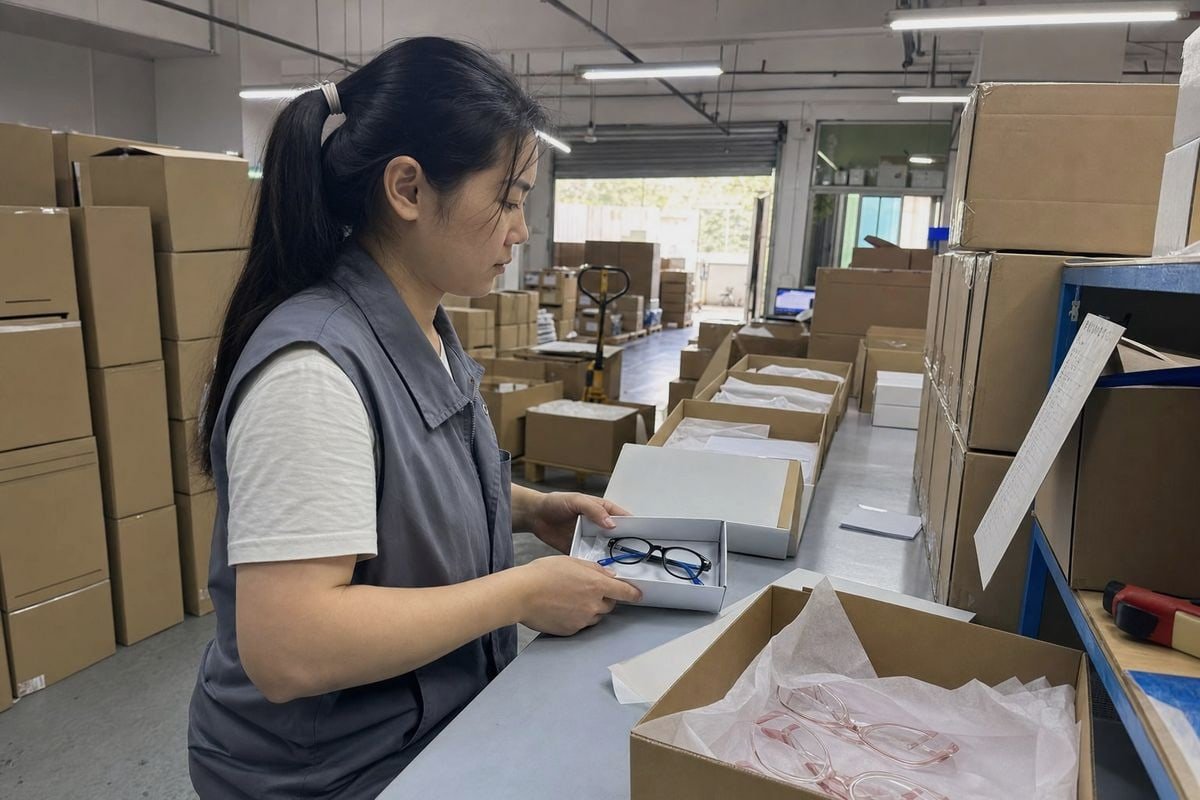
A good agreement is short, specific, and written down. Handshake deals fail when sales reps change or memories differ. Confirm everything in writing, even if it is just a one-page addendum to your vendor agreements. Here are the building blocks I recommend, based on structures we have used with importers and optical companies.
The five core clauses
| Clause | Protects the buyer | Protects the supplier |
|---|---|---|
| Credit-only reimbursement | Recovers value on stock you already paid for | Keeps cash in the relationship |
| Exchange cap (e.g., 20% of order value) | Predictable safety valve | Limits maximum exposure |
| Condition criteria | Clear rules, no disputes | Only resellable frames come back |
| Fixed cadence (quarterly or annual) | Planned inventory cleanup | Batched, low-cost processing |
| Reorder offset | Fresh, faster-moving styles on the frame board | Guaranteed continued volume |
Consider consignment for new lines
For a new or higher-value children's collection, consignment frames 7 are worth exploring. You pay only after frames sell. Not every supplier offers this, and it usually requires strong trust and reporting discipline. But it is a legitimate ask for a pilot range, especially when neither side can predict demand.
Build the internal side too
The agreement only works if your team executes it. Write a simple internal policy: how staff log slow movers, how frames are stored to stay in resellable condition, and when the quarterly swap list is compiled. Good frame board management and disciplined optical inventory management on your side directly determine how much value you recover. A frame that sits on a display for a year, handled by dozens of children, will fail any condition test. Rotate display units and keep sellable stock protected.
Protect margin when the answer is partial
If the supplier caps exchanges below what you hoped, blend strategies. Bundle slow movers with popular full-price styles. Use them in promotions. Track your inventory turnover ratio so dead stock eyewear never accumulates to crisis levels again. Strong optical dispensary profitability comes from combining vendor terms with smart selling, not from vendor terms alone.
Conclusión
Slow-moving kids' frames drain cash quietly. Left alone, the problem compounds. Negotiate buyback or exchange terms early, bring data, offer credit-based structures, and document everything — then review annually.
Notas al pie
1. Replaced HTTP 403 link with a comprehensive article on inventory aging reports from Shopify. ↩︎
2. Replaced HTTP 403 link with an authoritative Wikipedia definition of sell-through. ↩︎
3. Offers general information on retail return policies, conditions, and consumer rights. ↩︎
4. Clarifies the concept of a restocking fee, its purpose, and common applications in retail. ↩︎
5. Explains the fundamental concept of cash flow, its importance, and how it works in business. ↩︎
6. Defines store credit, which often encompasses exchange credit, and its use in retail. ↩︎
7. Describes the consignment business model, including how it works and its benefits for inventory. ↩︎
Más artículos que te podrían gustar

5 de agosto de 2026
Bio-Based vs Regular Cellulose Acetate: What's the Difference for Kids' Frames?

5 de agosto de 2026
How Recyclable Are Kids' Optical Frame Materials, and What Eco-Friendly Alternatives Exist?

5 de agosto de 2026
Do Kids Optical Frames Whiten or Age in Storage, and How to Control Warehouse Conditions?
¿Buscas un socio confiable en gafas para niños?
Explore más de 800 estilos listos y soporte OEM/ODM completo adaptado a su marca.
Ponte en contacto English
  Español de México
  Deutsch
  Français
  日本語
日本語  العربية
  Português do Brasil