How Do Kids’ Sunglasses Lenses Turn Yellow and Hazy Over Time?
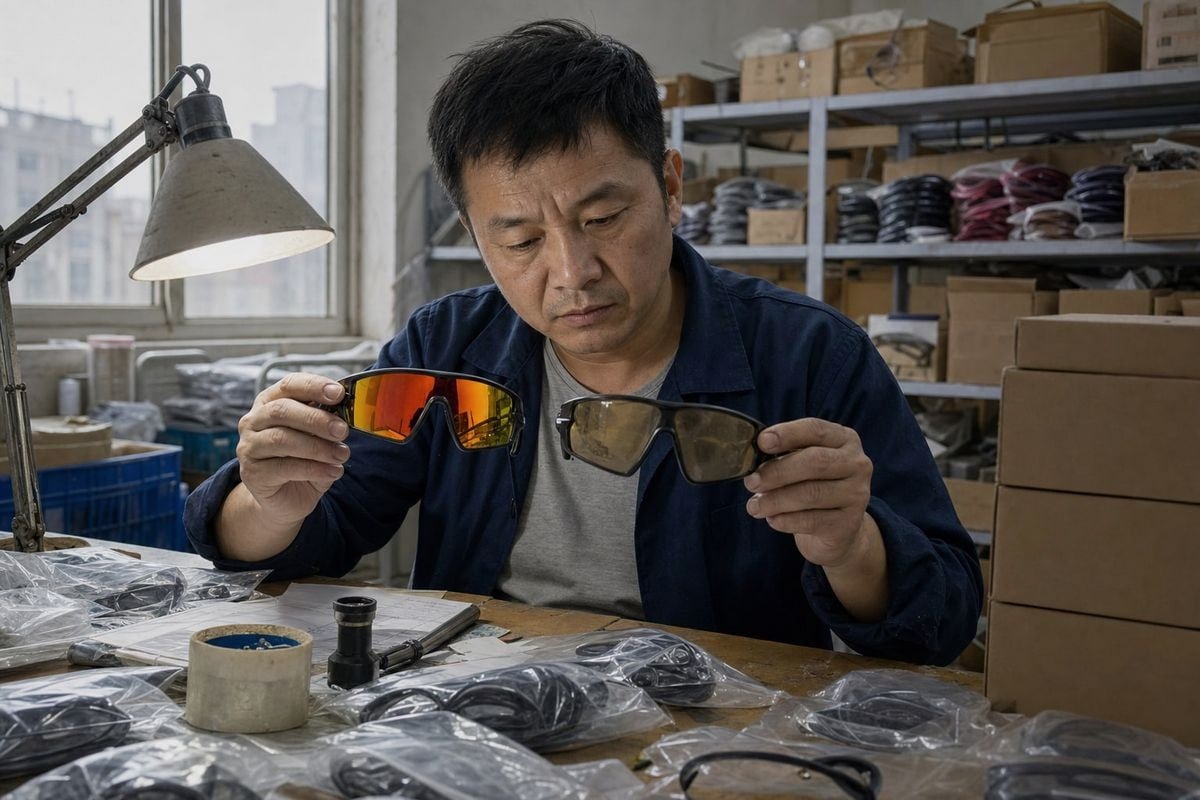
Kids’ sunglasses lenses turn yellow and hazy for reasons we see constantly on our production line in Taizhou. Buyers send us returned samples asking what went wrong. The answer usually starts with material choices — and it costs brands their reputation before they realize it.
Kids’ sunglasses lenses turn yellow and hazy because UV light, heat, and oxygen slowly break down the lens polymer and coatings. Low-quality plastics, missing UV stabilizers, sunscreen residue, sweat, and harsh cleaning accelerate the damage. Some haze is removable film, but true yellowing is permanent material degradation.
Let me break this down properly. I will explain the root causes, how to choose better materials, what standards to demand, and how to test lenses before you commit to a bulk order.
What causes the yellowing and haziness I see in kids' sunglasses lenses over time?
A buyer from Australia once shipped us a box of competitor sunglasses that had turned amber after one summer season. When we cut the lenses open in our workshop, the cause was obvious within minutes.
Yellowing comes from oxidation of the lens polymer, driven by UV exposure and heat, and made worse by cheap resins without stabilizers. Haziness comes from coating breakdown, micro-scratches, and chemical films left by sunscreen, sweat, chlorine, and salt. Kids' sunglasses face all of these at once.
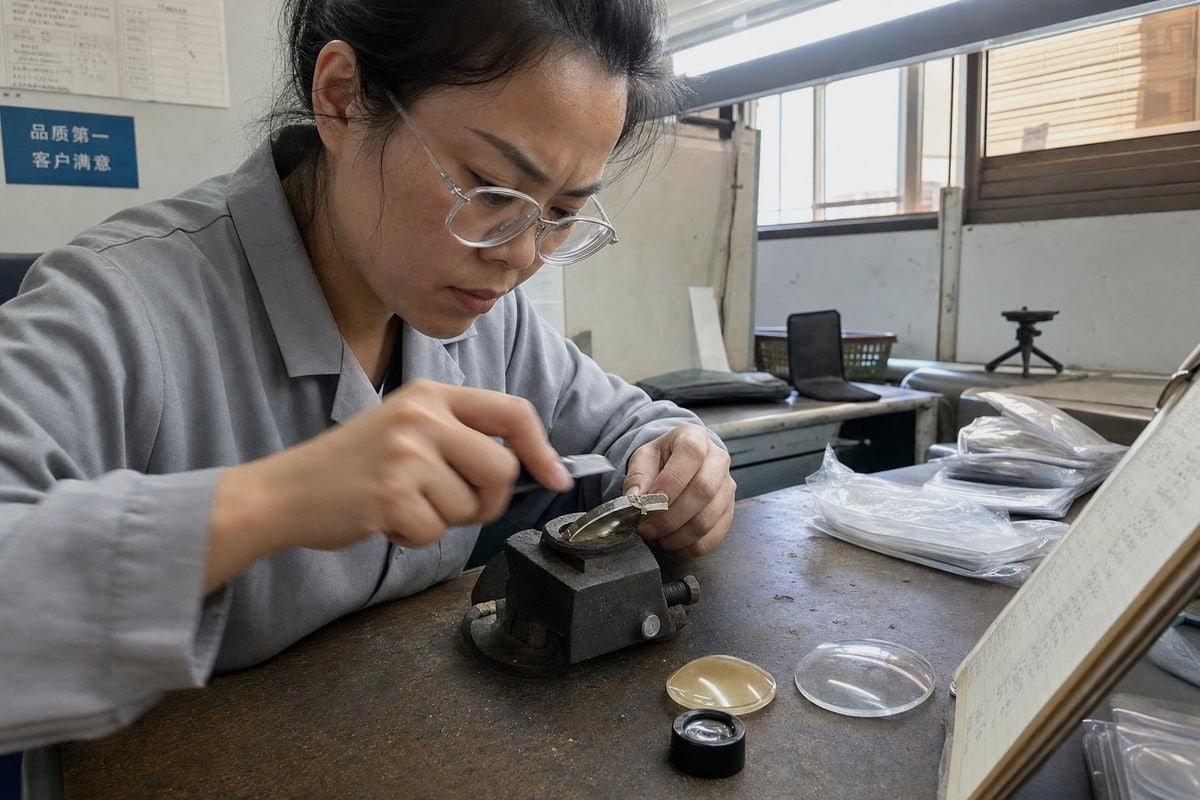
Kids' sunglasses live a hard life. They get worn for hours in direct sun, dropped in sand, left on a car dashboard, and wiped with a T-shirt. Each of those habits attacks the lens in a different way. So the yellowing you see is rarely one problem. It is usually several problems stacked together.
The main degradation pathways
First, there is polymer oxidation. Seguro durante caídas y juegos bruscos 1 and other lens plastics react with UV light and oxygen. This slowly breaks their molecular chains. The chemical byproducts absorb blue light, so the lens looks yellow. Heat speeds this reaction up dramatically. A sunglasses case left in a hot car ages a lens far faster than normal wear.
Second, there is coating failure. Most sunglass lenses carry thin hard coats or mirror coats. When these coatings crack, peel, or delaminate, light scatters instead of passing cleanly through. That scattering is what parents describe as haze or cloudiness.
Third, there is surface contamination. Sunscreen is a big offender with children. Its chemical filters react with lens coatings and leave a greasy film. Sweat, skin oils, chlorine from pools 2, and saltwater add to it. Some of this film wipes off. Some of it bonds permanently if it sits on the lens through hot afternoons.
| Symptom | Most likely cause | Reversible? |
|---|---|---|
| Even yellow tint across the lens | Polymer oxidation from UV and heat | No |
| Cloudy, rainbow-streaked surface | Coating delamination | No |
| Greasy, smeared haze | Sunscreen, sweat, and oil residue | Often yes |
| Fine dull scratches | Abrasive wiping, sand | No |
| Yellowing at edges only | Coating wear or early aging | No |
One important nuance: some lenses look slightly warm from day one because of an intentional tint or blue-light filter. That is design, not a defect. True degradation appears gradually and gets worse.
How can I choose lens materials that resist UV damage and discoloration for my brand?
There is a trade-off we weigh on every OEM project: a few cents saved on lens material versus a product that survives two summers instead of one. In our fifteen years of eyewear production, that decision has decided the fate of more brands than any logo or packaging choice.
Choose polycarbonate or PC lenses with UV stabilizers blended into the resin, not just surface-applied UV coating. Insist on UV400-rated material, a factory-applied hard coat, and virgin (not recycled) resin. Polarized PC or TAC lenses with sealed edges add further discoloration resistance.
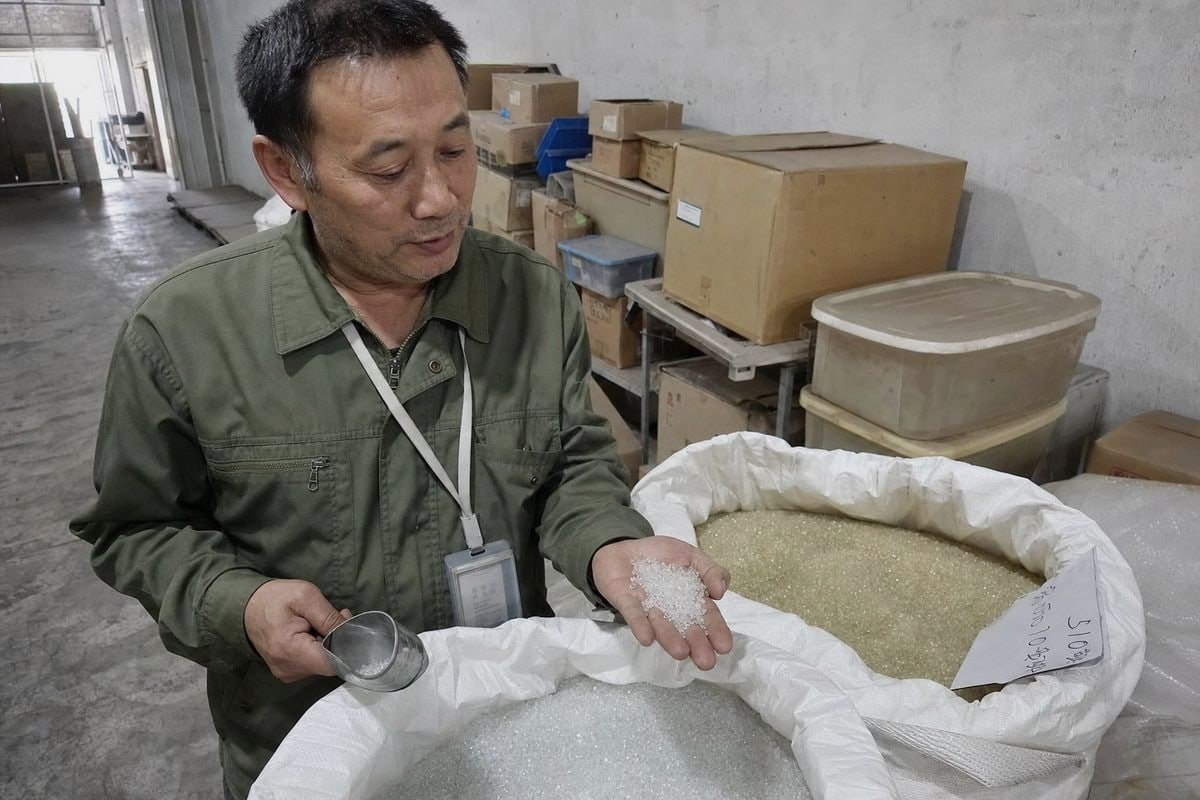
Here is the part most buyers never see. Two lenses can look identical on your desk and behave completely differently after six months of sunlight. The difference is inside the resin.
Stabilizers matter more than appearance
Quality lens resin contains UV absorbers and hindered amine light stabilizers 3 mixed through the entire material. These additives sacrifice themselves to protect the polymer chains. Cheap lenses skip them or use minimal amounts. Cheaper still, some suppliers use recycled or off-spec resin, which starts life already partially degraded. It yellows fast.
When we develop lenses for our UV400 4 and polarized options, we specify the resin grade with our lens partners, not just the finished appearance. That is the level of detail I recommend you demand from any supplier.
Comparing common lens materials for children
| Material | UV resistance | Seguridad contra impactos | Yellowing risk | Mejor uso |
|---|---|---|---|---|
| Stabilized polycarbonate (PC) | Excellent, inherent UV block | Excelente | Low with stabilizers | Everyday kids' sunglasses |
| TAC polarized film lens | Muy buena | Buena | Low if edges sealed | Beach, water, glare-heavy use |
| Acrílico (PMMA) | Moderado | Poor for active kids | Moderado | Solo artículos promocionales económicos |
| Uncoated cheap PC | Poor long term | Good initially | Alta | No recomendado |
For children, impact safety comes first. That is why we pair PC or TAC lenses with flexible TPEE and TR90 frames — the whole product needs to survive drops, twists, and sun. A UV-resistant lens in a brittle frame is still a failed product for a kids' brand.
Also ask about the hard coat. A proper anti-scratch coating resists the micro-abrasion that traps grime and creates haze. It should be applied in a dust-controlled process, then cured correctly. Rushed curing is a hidden cause of early coating failure.
What manufacturing standards should I request to prevent premature lens degradation?
A procurement manager from Japan once asked me for our full lens QC checklist before her first order. That conversation turned into a three-year partnership, because standards on paper are what protect a brand when production scales up.
Request UV400 certification with test reports, compliance with EN ISO 12312-1 or ANSI Z80.3, documented resin grade and stabilizer content, hard-coat adhesion testing, and batch-level QC records. For kids' eyewear, add impact resistance testing and restricted-substance compliance such as EN 71-relevant checks.
Standards are not paperwork for its own sake. Each one blocks a specific failure mode that ends with a yellow, hazy lens on a child's face — and a complaint email in your inbox.
The requests that actually prevent degradation
Start with the lens standard itself. EN ISO 12312-1 5 covers sunglasses sold in Europe. ANSI Z80.3 covers the US market. AS/NZS 1067.1 applies in Australia and New Zealand. These standards include UV transmittance limits, optical quality, and robustness requirements. Ask which standard your supplier tests against and request the actual reports, not just a verbal yes.
Then go one layer deeper, into process controls:
- Resin traceability. Ask for the material grade and confirmation that virgin resin is used. This is your defense against fast-yellowing recycled material.
- UV400 verification. Requerir spectrophotometer test data 6 showing transmittance below 380–400 nm is effectively blocked.
- Coating adhesion checks. A cross-hatch or tape-pull test confirms the hard coat will not peel and create haze.
- Curing process documentation. Coatings need correct temperature and time. Rushed curing looks fine at shipment and fails months later.
- Batch-level inspection records. Our 5S-managed workshop keeps inspection records per batch. Consistency across reorders matters as much as first-order quality.
- Restricted substances. For children's products, confirm heavy metals and harmful plasticizers are controlled in both lens and frame materials.
A supplier who answers these requests quickly and specifically is a factory. A supplier who stalls or gives vague answers is likely a trader reselling whatever is cheapest that week. For a children's brand, that difference shows up on the lens surface within one season.
How do I test lens durability before placing a bulk order with my supplier?
Before one of our European clients confirmed a large seasonal order, we sent extra samples specifically for destructive testing — and encouraged them to try to ruin the lenses. That is exactly the mindset I recommend to every buyer.
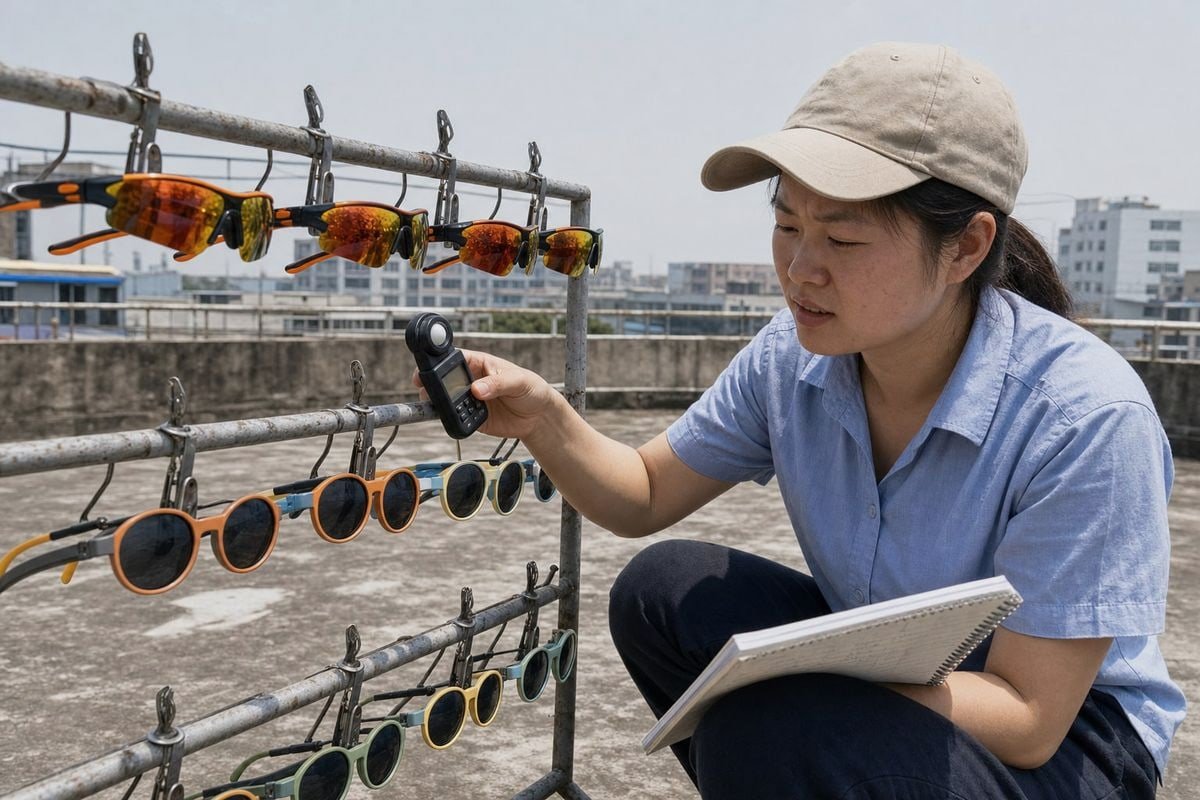
Test pre-production samples with accelerated UV exposure, heat soak at 60–70°C, sunscreen and chlorine smear tests, repeated abrasive wiping, and a tape-pull coating adhesion check. Compare results against a reference sample kept in the dark. Order only after samples survive without yellowing or haze.
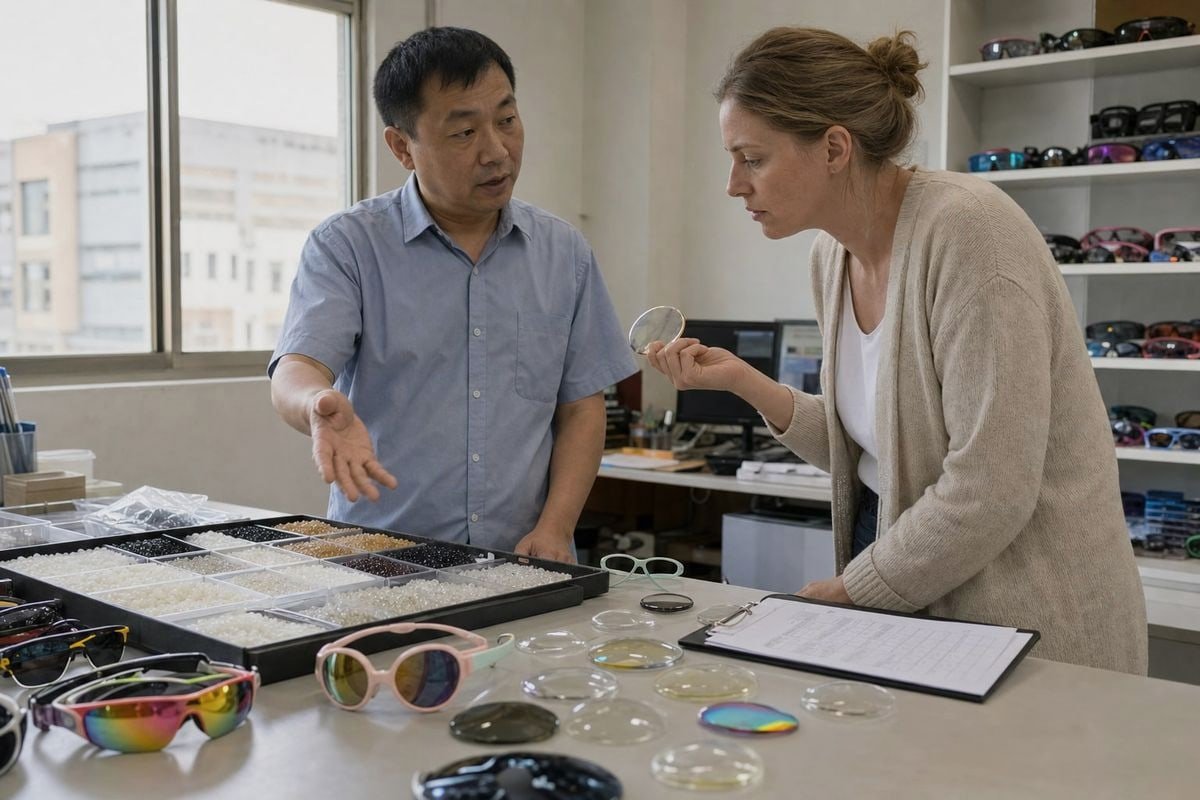
You do not need a laboratory to catch most weak lenses. You need a plan, a few sample pairs, and two to four weeks. Always keep one untouched sample sealed in a drawer as your control. Every comparison is made against that reference.
A practical pre-order test plan
| Test | How to do it | What failure looks like |
|---|---|---|
| Sunlight exposure | Place samples on a sunny windowsill or outdoors for 2–4 weeks | Visible yellow shift versus control sample |
| Heat soak | Leave samples in a parked car or 60–70°C oven-warm environment for several days | Warping, coating cracks, cloudiness |
| Sunscreen smear | Coat lens with sunscreen, leave 48 hours in warmth, then clean | Permanent film or coating stain |
| Chlorine and salt | Soak lens in pool water or saltwater overnight, air dry, repeat 5 times | Spotting, dull patches, edge delamination |
| Abrasion | Wipe 200 times with a paper towel and light pressure | Haze from micro-scratches |
| Coating adhesion | Press strong tape onto the lens and pull sharply | Coating flakes on the tape |
| Flex and drop | Twist the frame, drop from table height onto tile 10 times | Lens pop-out, cracks, frame damage |
Ask your supplier for formal accelerated aging data too. Xenon-arc or QUV weathering tests 7 simulate months of sunlight in days, and a serious lens supplier will have this data or can arrange it. When buyers ask us, we treat it as a good sign — it means they plan to reorder, and reorders are where a manufacturing partnership actually pays off for both sides.
One more tip: test samples from the actual production material, not just showroom samples. Insist that pre-shipment samples come from your production batch. That closes the gap between what you approved and what ships.
Conclusión
Yellow, hazy kids' sunglasses lenses signal material and coating failure — a risk your brand can avoid. Choose stabilized resins, demand real standards, and stress-test samples before every bulk order.
Notas al pie
1. Background on the plastic polymer used in most kids’ sunglasses lenses. ↩︎
2. CDC resource on pool chemical exposure supports the discussion of lens contamination. ↩︎
3. Explains chemical stabilizers that prevent polymer oxidation and lens yellowing. ↩︎
4. EPA UV Index resource supports the UV400 protection claims discussed for lenses. ↩︎
5. Official ISO source verifies the sunglasses safety standard referenced for Europe. ↩︎
6. Background on the measurement technique used to verify UV transmittance blocking. ↩︎
7. ASTM defines accelerated weathering test methods used
Más artículos que te podrían gustar
1 de agosto de 2026
¿Debería la fábrica encargarse del embalaje y etiquetado de las gafas de sol para niños, o utilizar un proveedor designado?
1 de agosto de 2026
Almacén propio vs. Cumplimiento directo del proveedor: ¿Qué reduce los costos de devolución para las marcas de gafas de sol para niños?
1 de agosto de 2026
Directo al almacén del puerto o staging en el extranjero: ¿Cuál ahorra más en el envío de gafas de sol para niños?
¿Buscas un socio confiable en gafas para niños?
Explore más de 800 estilos listos y soporte OEM/ODM completo adaptado a su marca.
Ponte en contacto English
  Español de México
  Deutsch
  Français
  日本語
日本語  العربية
  Português do Brasil